View as webpage

PSLadvance

Image montage of precipitation, drought, ice, and floods

SUMMER 2025

The Latest News

Weather Whiplash: From Drought to Flood - PSL Analysis

Weather whiplash’ is the abrupt transition from one extreme environmental condition to another that amplifies the effects of the individual extreme events.


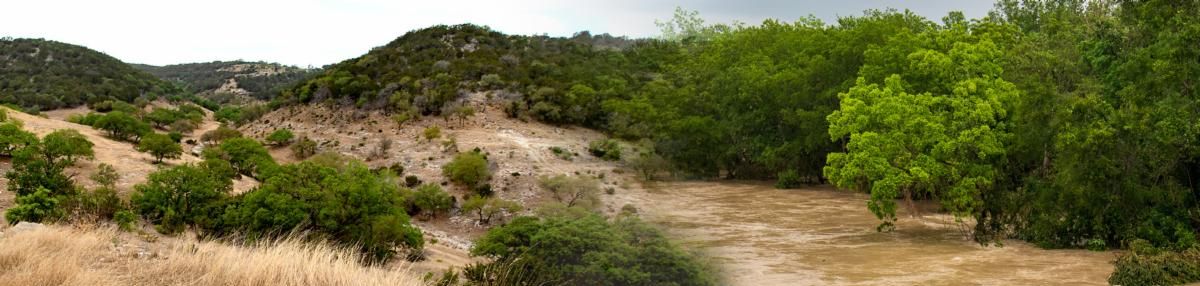
Weather whiplash of extraordinary proportions affected central Texas in early July 2025 when an exceptional and prolonged drought that led to reduced agricultural yields, livestock losses, and low water availability was abruptly followed by a 1 in 1000-year precipitation event. The result was catastrophic flooding, significant loss of life, destroyed infrastructure, and an altered natural landscape.


A joint PSL and NIDIS team documented this extraordinary transition from drought to flood and analyzed the meteorological and hydrological events to help provide improved understanding of such weather whiplash extremes and advance early warning and planning guidance.

AI Innovations: Project EAGLE Q&A

A team from NOAA Research, the National Weather Service, and the Earth Prediction Innovation Center (EPIC) recently unveiled a new, experimental environment to rapidly test and demonstrate artificial intelligence (AI) weather models in near-real time: Project EAGLE (Experimental AI Global and Limited-area Ensemble forecast system).


PSL has been heavily involved in the development of training datasets for AI models and is uniquely positioned to be part of Project EAGLE. PSL’s Sergey Frolov, Chief Scientist on the project, provided some insights into this new initiative that is a notable advance in NOAA’s AI weather prediction innovation capabilities.

Probable Maximum Precipitation Project Progressing

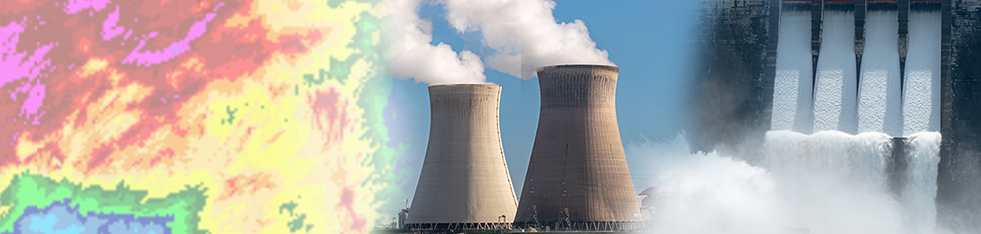
A colorful map of precipitation banding blends into nuclear cooling towers and water dam

Probable maximum precipitation (PMP) estimates are used by engineers to design large, critical facilities like dams and nuclear power plants. These estimates help them gauge the “worst-case scenario” precipitation for the area, ensuring the facility can withstand such an event, reducing the risk of a catastrophe.


The NOAA-wide effort led by PSL to modernize PMP estimates has made great strides over the past several months. This includes:

  • development of Extreme Precipitation Event Case Study webpages which will host analyses of many past events relevant for updating PMP;
  • authorship of several research papers documenting the representation of extreme precipitation in key NOAA datasets; and
  • development and evaluation of new experimental high-resolution, rapidly updating NOAA models that will also be leveraged for producing extended reforecast datasets.


More information on this important progress, other successes, and the project timeline for the remainder of the year can be found on the PSL PMP project page.

In brief: What is a ‘thirstwave’?

A new term for prolonged periods of atmospheric thirst has been coined: thirstwaves.


Meetpal Kukal, a research hydrologist at the University of Idaho, and Mike Hobbins, a CIRES researcher at PSL, describe the new term and examine past United States thirstwaves in a new paper published in Earth’s Future.

PSL and the Madden-Julian Oscillation

PSL does extensive research into the Madden-Julian Oscillation (MJO), a mode of sub-seasonal atmospheric variability over the Indian Ocean that influences the location and strength of tropical precipitation. The MJO can impact extreme weather throughout the globe, including in the United States. PSL has a recently redesigned MJO page dedicated to the latest info and research into this phenomenon.

Most recently, a new study by PSL’s Lisa Bengtsson in collaboration with other PSL researchers published in the Geophysical Research Letters has made a key discovery related to the impact of a forecast model’s starting state on the accuracy of Madden-Julian Oscillation prediction.

PSL’s atmospheric river observatories: serving up data rain or shine

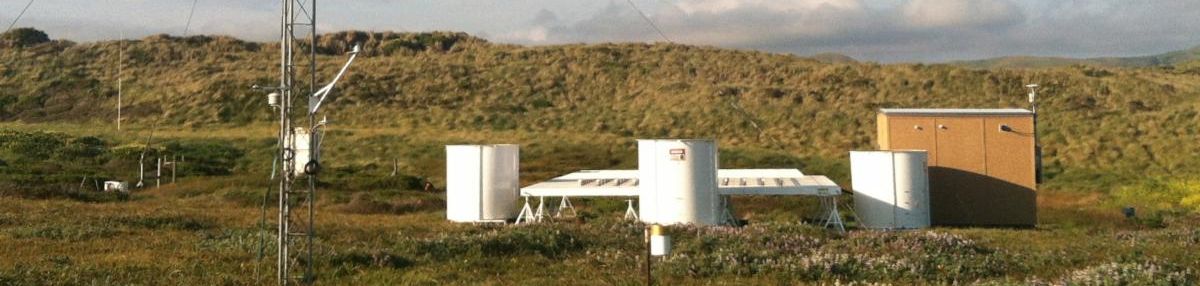
Did you know PSL operates nine (9) atmospheric river observatories at sites distributed along the coast from Washington to Southern California? These unmanned weather stations send round-the-clock observations back to the laboratory, which analyzes and displays the data publicly on its Atmospheric River Portal.


The National Weather Service utilizes this data portal to produce forecasts and weather warnings. State and local agencies also use the portal for creating water management strategies and emergency response planning.

Interested in seeing all of PSL’s observation sites? Check out the PSL Observation Network interactive tool.

Awards

Jacox, Alexander, Amaya honored with NOAA Research Outstanding Scientific Paper of the Year Award

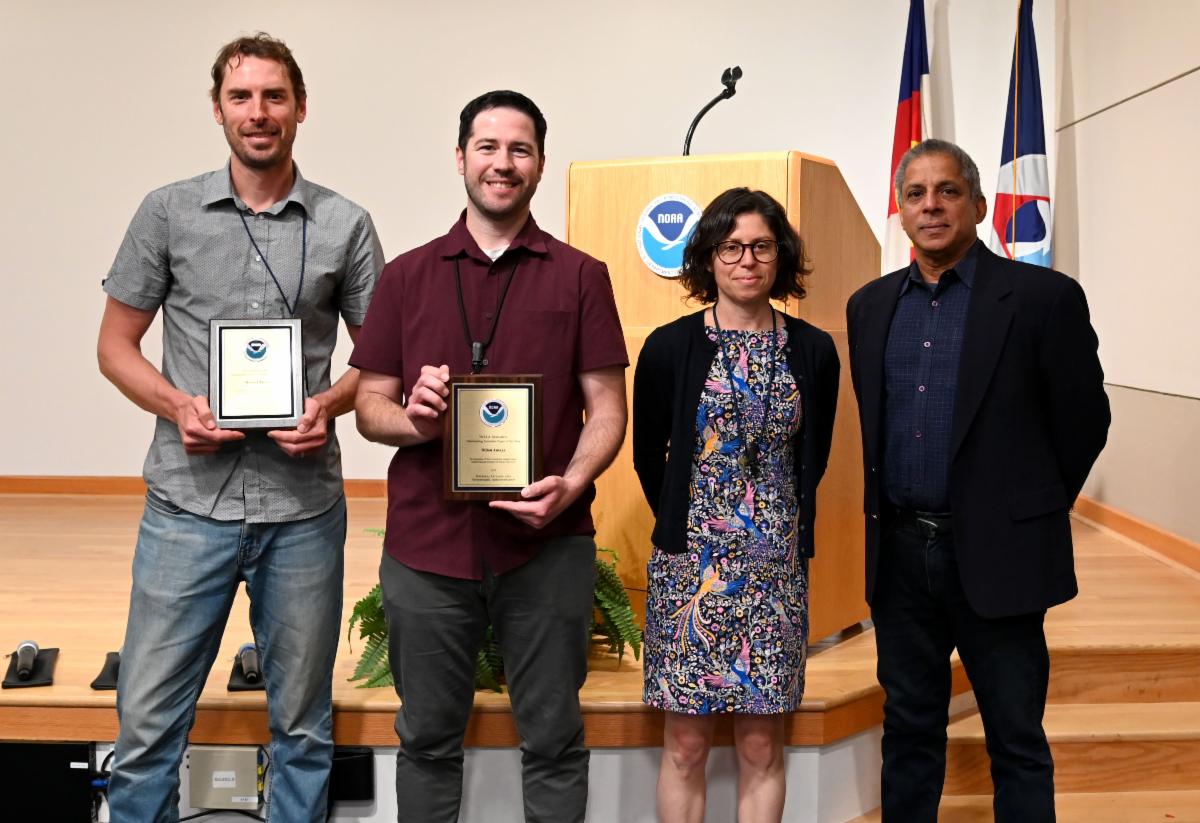
Four people stand in front of a NOAA podium with two holding awards

From left to right: Michael Jacox, Dillon Amaya, Juliana Dias (PSL Atmosphere-Ocean Processes and Predictability Division Chief), and Roger Pulwarty (PSL Senior Scientist and Acting PSL Director). Not pictured: Michael Alexander. Credit: Chelsea Thompson/NOAA/CSL

Michael Jacox (NOAA Fisheries/PSL), Michael Alexander (PSL, retired), and Dillon Amaya (PSL) recently won the NOAA Research Outstanding Scientific Paper of the Year award for their paper ‘Global seasonal forecasts of marine heatwaves’.


Their groundbreaking work used “climate forecast systems to develop global predictions of MHWs [marine heatwaves] and evaluate their skill over the past three decades…highlight[ing] the feasibility of predicting MHWs and provid[ing] a foundation for a much-needed operational MHW forecast system.”

PSL mentors high school student; wins NASA science award

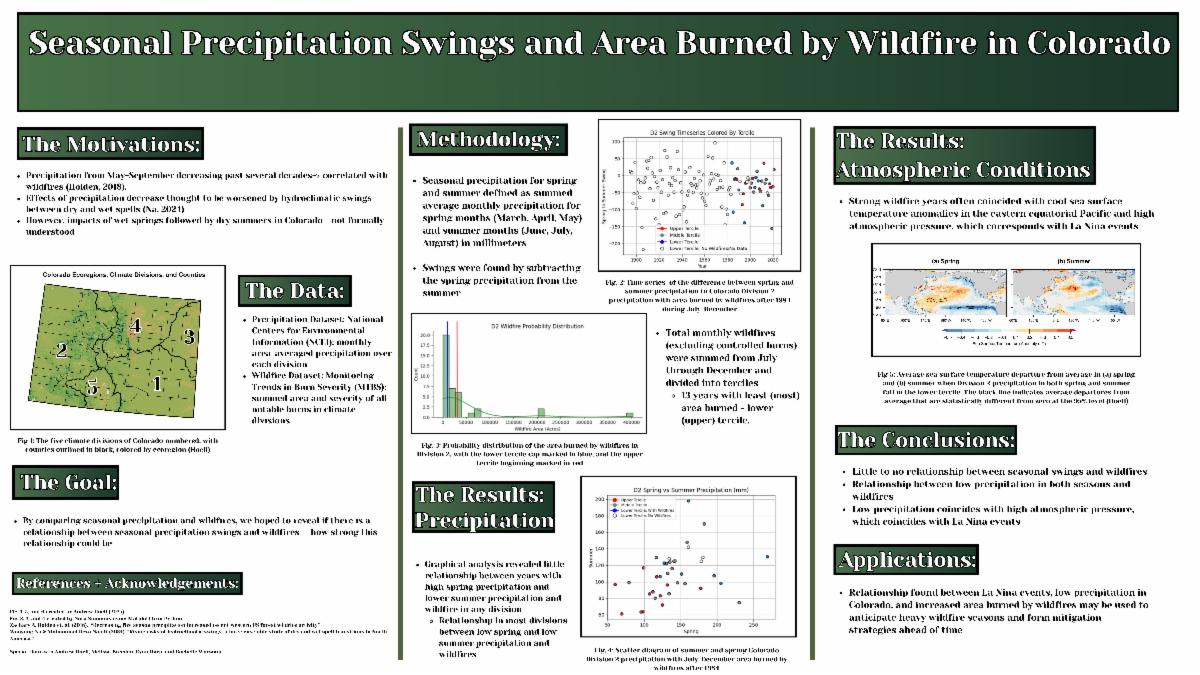
A scientific poster titled Seasonal Precipitation Swings and Area Burned by Wildfire in Colorado showing maps charts and data that link La Nina events with low precipitation and increased wildfire activity

PSL’s Andrew Hoell, Rochelle Worsnop, Melissa Breeden, and Ryan Harp mentored a Broomfield (Colorado) High School student earlier this year who won the NASA Earth System Science Project Award and placed second place at the Boulder Valley School District Science Fair. The presentation was on conditions related to area burned by wildfire in Colorado and qualified to present at the Colorado Science Fair.

Publications

Adobe Stock image of paper journals stacked on top of each other

Publication Report - 1st Half of 2025

See a list of peer-reviewed products from lead and contributing PSL authors from January through June 2025.


For a full list of PSL publications from this and past years, visit the PSL Publications database. 

Exterior entrance of the David Skaggs Research Center in Boulder, Colorado, with the NOAA logo overlaid

ABOUT PSL

The Physical Sciences Laboratory (PSL) is one of ten NOAA Research Laboratories and one of four labs co-located in the David Skaggs Research Center in Boulder, Colorado. PSL conducts research to advance the prediction of water availability and extremes.

psl.noaa.gov

Did someone send you this newsletter? Sign up to get it directly!