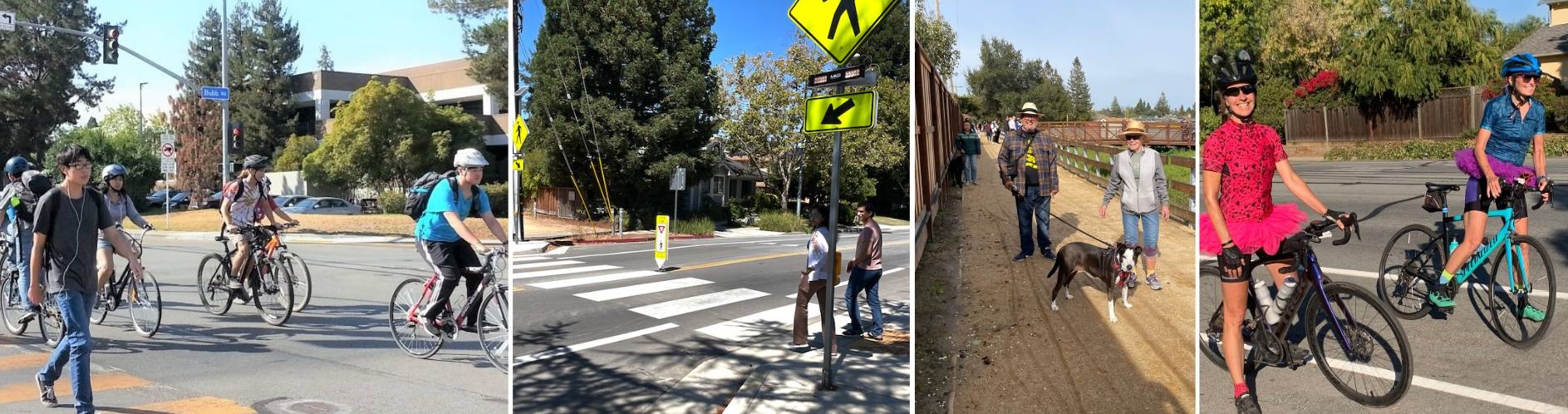
This month, we address a few threats to our safety and livability. The Bike/Ped Commission existence is under threat, we need to look at our pet and fire safety (these have a connection!), the sheriff answers questions about their enforcement of safety issues in Cupertino and near our schools, our urban canopy needs attention as it's declining, and we talk about how bike and ped infrastructure can improve the worrisome mental health of our teens. All that, plus a great short hike to a hidden waterfall! Read on for news you need. | |
The Push to Eliminate
the Cupertino Bike/Ped Commission
SOME PLANNING COMMISSIONERS ARE ENCOURAGING TAKEOVER
| | Cupertino is a community that values diversity in thought, culture, age, and identity. We celebrate major cultural festivals and host programs that support all ages and interests, for seniors, teens, hobbyists, dog lovers, the LGBTQ community, and more. When it comes to how we move around—whether by car, on foot, by bike, or via transit — our commission structure is in line with residents’ priorities as shown through numerous city surveys. | | Right now, Cupertino has a dedicated Bicycle and Pedestrian Commission, but there is a power grab underway by the recently appointed Better Cupertino Planning Commission Chair Santosh Rao, supported by two Better Cupertino Councilmembers, Mayor Liang Chao and Councilmember Ray Wang. They have stated that they want to eliminate the Bike Ped Commission and fold Transportation under the Planning Commission. | | |
That would be a mistake.
On paper, a combined Planning and Transportation Commission might sound efficient — why not let one group handle both land use and mobility? But in reality, this consolidation often leads to a narrow focus on development and cars, leaving behind the residents who walk, bike, roll, or rely on public transit.
| | | |
We need YOUR help before it’s too late
Our strength is in our numbers. It’s in people like you who care about safe walking and biking for everyone, including vulnerable seniors and students. In only five minutes you can make a difference by sending an email to Council or calling in!
Sign up here to join us in advocating that Cupertino should keep a dedicated Bike Ped Commission for all transportation issues. We’ll keep you updated with the latest news and action items on this important issue. Make your voice heard!
| |
Weeds hurt dogs and add fire risk
CUT THEM BY APRIL 30 OR RISK FINES
by Louise Saadati
| | |
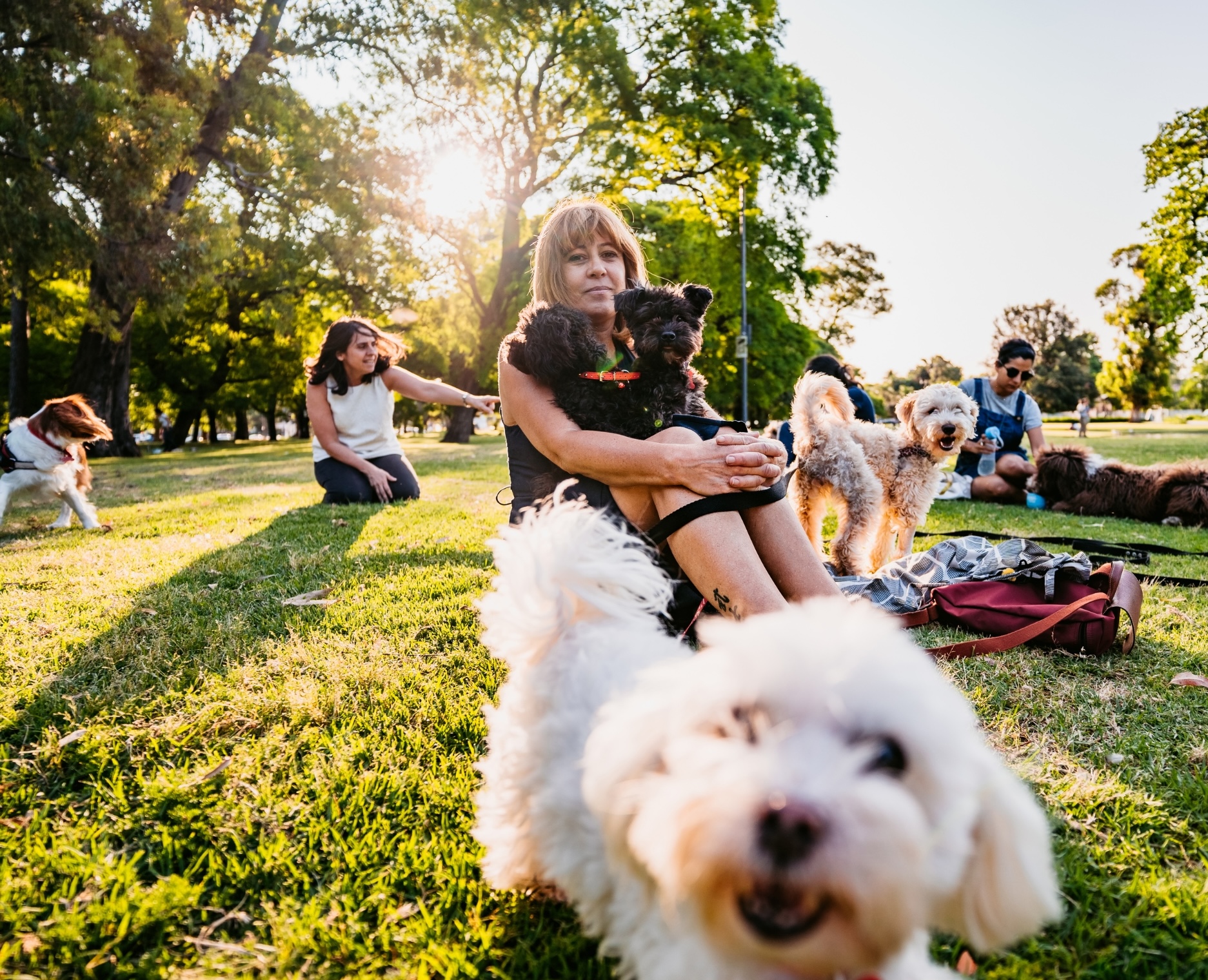
WBC members love walking in the city with their pets! Even while leashed, however, there is still a common danger for pets while out walking during late spring and through the summer – the dreaded foxtails.
Foxtails: barbed seed pots from grasses
Foxtails are the barbed seed heads of some local grasses common to our area. They can often be found in Northern California yards with high weeds and near hiking trails. These spiky barbs can easily burrow into your pet’s skin, leading to painful infections and even damage to internal organs if left untreated. The most common locations for foxtails to embed are between the toes, in the ears, or under the eyelids but they can also be found in the noses or throats sometimes. The foxtails can then borrow further deeper into the interior of the dog including the heart or brain.
What’s the best way to avoid foxtails?
Cut your weeds and ask your neighbors to cut theirs as well!
These seed pods only grow on grasses that have grown over 6 inches in height. Another good reason to cut your weeds? Property owners are legally required to do so to meet Minimum Fire Safety Standards to prevent fires during the fire season (April – October).
You can avoid foxtails by staying on paved paths, and keeping the hair on long-haired dogs trimmed, especially around their feet. Check your pets carefully after every walk – foxtails can be carried long distances by the wind. Read more...
| |
County staff will inspect properties April to October, and any property with vegetation over 6 inches will be cleared at the owners’ expense.
The inspections will start April 30.
| |
Q&A with the Sheriff
Suprising Feedback on Enforcement and Safety
by Jennifer Shearin
| | In February, our Santa Clara County Sheriffs met with Safe Routes to School Working Group members to answer their questions about key traffic enforcement questions, especially around schools. Safe Routes to School Coordinators Birgit Werner and Chelsea Biklen moderated, with Deputy Renteria and Sargeant Belligan representing the West Vally Division of the SCC Sheriff. Below is a recap of the questions and answers from that session. | | |
Birgit Werner, Safe Routes to School Coordinator Our presenters today are our [Santa Clara County Sheriff West Valley Division] traffic deputies. If you’ve ever had a meeting with either of them, they have this amazing ability for multitasking. They’re listening to the traffic radio, they’re talking to you, and they’re probably yelling at a kid who doesn’t have a helmet on his head all at the same time, and somehow they’re keeping it all straight.
Today, they’re going to take questions that you all submitted earlier. It was very interesting to get all the questions and they were wide ranging. There were also many duplicates so I combined those questions and made one question out of three very similar questions. Let’s start.
Staffing
Chelsea Biklen, Safe Routes to School Coordinator How many traffic deputies are there in Cupertino? How are they typically deployed? Specifically, how do they cover school drop-off and pick up traffic?
Deputy Renteria We have a total of 8 traffic deputies in the traffic unit. But we’re all responsible for Cupertino, Saratoga and Los Altos Hills, which means we adjust depending on needs, complaints and target enforcement. But we typically have around five assigned to Cupertino and then usually it’s two to five during the weekdays again, depending on training, or other calls for service or something like that. [For] school drop-off and pickups, we respond to traffic complaints received from public phone calls, from dispatch, and from citizen flag downs. When we’re on our motorcycles, we get flagged out. Often we get lots of questions, comments, concerns, and information provided from you guys or 311 also depending on what’s going on.
| | |
We also focus on high traffic areas, such as main thoroughfares like Stevens Creek and De Anza Boulevard, Rodrigues and Torre, lots of different areas where there’s high congestion or pedestrian traffic. We do rotate monitoring the school drop off. Some have a late bell schedule in the morning, so we like to go to the earlier [bell schedule] one, so we can provide the service to them before the late bell schedule goes and then we can assist with traffic monitoring at those later schedules. It allows us to spread out a little bit more each time or opportunity. We have to go to the schools, and then we kind of just adjust where we go throughout the week, depending on calls for service or complaints at schools.
Yielding to Pedestrians
Birgit Werner A lot of cars don’t yield to pedestrians and crosswalks about how many cars are cited for this per month in Cupertino? If an officer is present, do they stop the motorists (Sunnyvale police say they do not enforce this at pickup and drop off because cars need to get through, too).
Deputy Renteria We can’t speak for Sunnyvale because they have different
Read more...
| | |
YOUR voice is needed in the
Active Transportation Plan
| | | | |
Monday, May 5
Virtual Workshop (Zoom)
6:00 p.m. – 7:30 p.m.
Registration Link
| | |
Wednesday, May 7
In-Person Workshop at Cupertino Community Hall
6:00 p.m. – 7:30 p.m.
| | The Active Transportation Plan will determine for the next 10 years (!) which changes will be made on Cupertino's streets and sidewalks to improve safety and access for walkers and cyclists. YOUR input is needed so the needs of walking and biking community members are considered, and not just the wants of car-centric groups. | |
A Leafy Goal for the Cupertino Urban Forest
by Seema Lindskog
| | |
The Cupertino City Work Program (CWP) outlines the top priorities for the city for the next two years. For the 2025-2027 time period, the City Council met from November 2024 to March 2025 to discuss, rank, and finalize project priorities. The final list was adopted in the City Council meeting of March 18, 2025. Walk Bike Cupertino supported two new projects for inclusion into the 2025-2027 city priorities. One was adopted, one was not.
Adopted ➜ Create an Urban Forest Master Plan
Not Adopted ➜ Eliminate the 100 day restricted operation of Blackberry Farms swimming pool and picnic areas to keep them open year-round
| In this article, we’ll provide more details about the Urban Forest Master Plan. A subsequent article will discuss the proposed year-round access to the Blackberry Farm swimming pool and picnic areas. | |
Cupertino Has a Low and Declining Tree Canopy
Cupertino has a low – and steadily declining – canopy, from decades of not prioritizing the issue. Data indicates that the tree canopy in Cupertino is also not uniformly distributed throughout the city. The census block group with the lowest percent tree canopy has 8% while the highest contains 46% tree canopy. There is a marked difference in canopy between the east and west side of Cupertino with 56% of the city’s canopy concentrated in three neighborhoods – Inspiration Heights, Monta Vista North, and Monta Vista South.
| | Image courtesy of the 2019 Cupertino Tree Canopy Assessment Report by PlanITGeo. Click on the map for a larger image. | | Over the ten year period from 2009 to 2019, twelve out of the 20 neighborhoods in the city experienced either canopy loss or no gain. Again, there was a marked difference between east and west Cupertino. North Vallco lost 10% of their canopy due to the redevelopment of the Apple headquarters, but that is expected to recover as their newly planted trees get established. Read more... | |
The "Anxious Generation"
Why good bike and pedestrian infrastructure
is necessary for our children's mental health
by Hervé Marcy
| | |
Overprotecting in the Real World, Underprotecting Online
In the book The Anxious Generation, Haidt makes a very strong case that we have been under protecting teenagers in the virtual world and overprotecting them in the real world. We moved away from a “play-based” childhood–one based on synchronous relationships with a tolerance for moderate risk-taking and discovery–to a “phone-based” childhood which is based on asynchronous relationships that punish failed experiments and values superficial recognition.
“Girls are especially vulnerable in the early teenage years (11-13): starting in about 2010, suicide rates for young adolescents in the U.S. shot up (increasing 91% for boys ages 10-14 and 167% for girls). The rate of self-injury almost tripled between 2010 and 2020. Haidt uses data to make a compelling argument and writes: “Social media use does not just correlate with mental illness; it causes it.” Read more...
| | | | |
A NEW TRIAL OF
DOLA hours
AT JOLLYMAN PARK
| A trial of additional DOLA hours began in March, allowing DOLA use 9am - 11am daily. | | Kudos to the users of Jollyman Park DOLA for their ongoing compliance with the Cupertino DOLA rules which enabled this trial of expanded hours to begin! If there continues to be good compliance and no verifiable significant complaint through this trial, these new hours will be ongoing along with the current daily hours of 2 hours before sunset to 1 hour after sunset. | | If you use the DOLA, please be vigilant especially during the approaching months that you: ⬩ Stay inside the DOLA boundaries when your dog is not leashed ⬩ Remove all litter including dog waste ⬩ Observe the DOLA hours ⬩ Stay far away from the paths and restroom when your dog is not leashed ⬩ Only bring a maximum of 2 dogs per person ⬩ Confirm your dog is non-aggressive and under your control at all times. | |
Opportunities to make a difference
in neighboring Sunnyvale
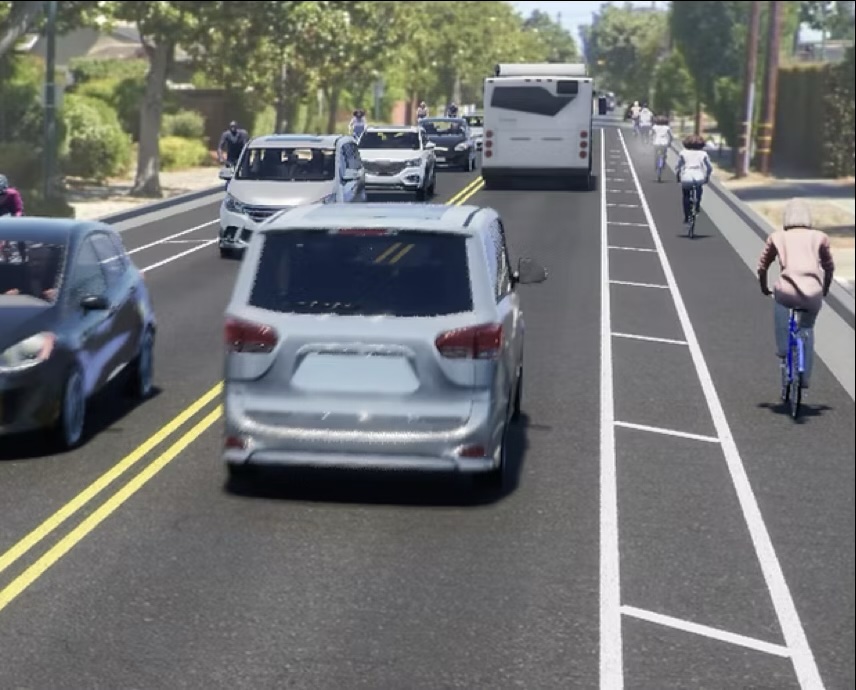
The City of Sunnyvale is proposing to put bike lanes on Hollenbeck Avenue, which is the continuation of Stelling Road in Cupertino. Please sign the Sunnyvale Safe Streets petition to ask for buffered bike lanes on Hollenbeck.
Sign the Petition for Hollenbeck bike lanes
| | | | | |
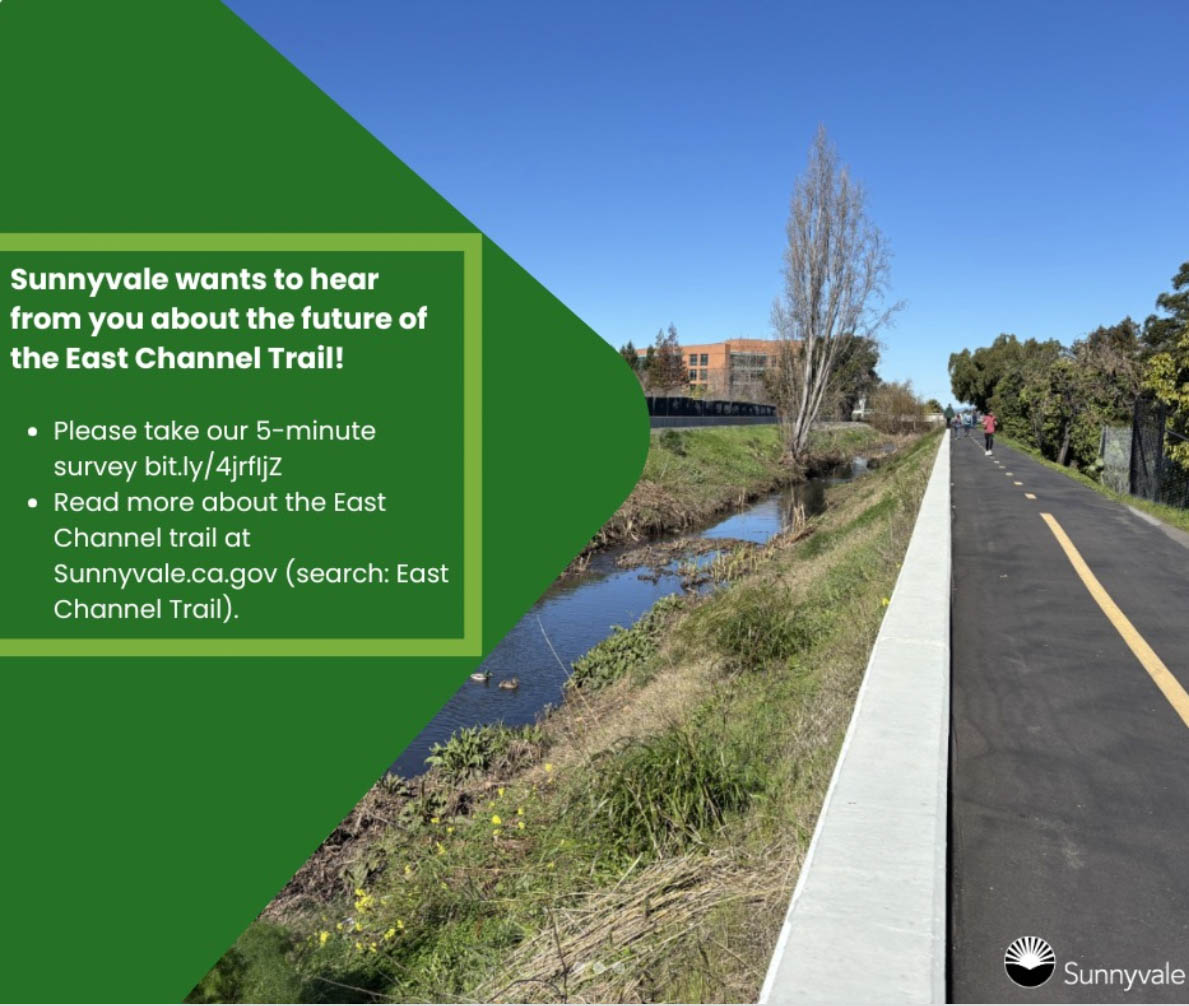
The City of Sunnyvale is conducting a study of the East Channel Trail, which will connect Cupertino (near Tantau) through Sunnyvale to the Bay. It will be part of the Bicycle Superhighway Network. Take the East Channel Trail survey to tell Sunnyvale what you want.
Take the East Channel Trail survey
(Survey window closes May 31, 2025)
| |
Hidden Waterfalls in Redwoods
A HIDDEN GEM NOT EVEN LISTED BY MIDPEN
by Jian He
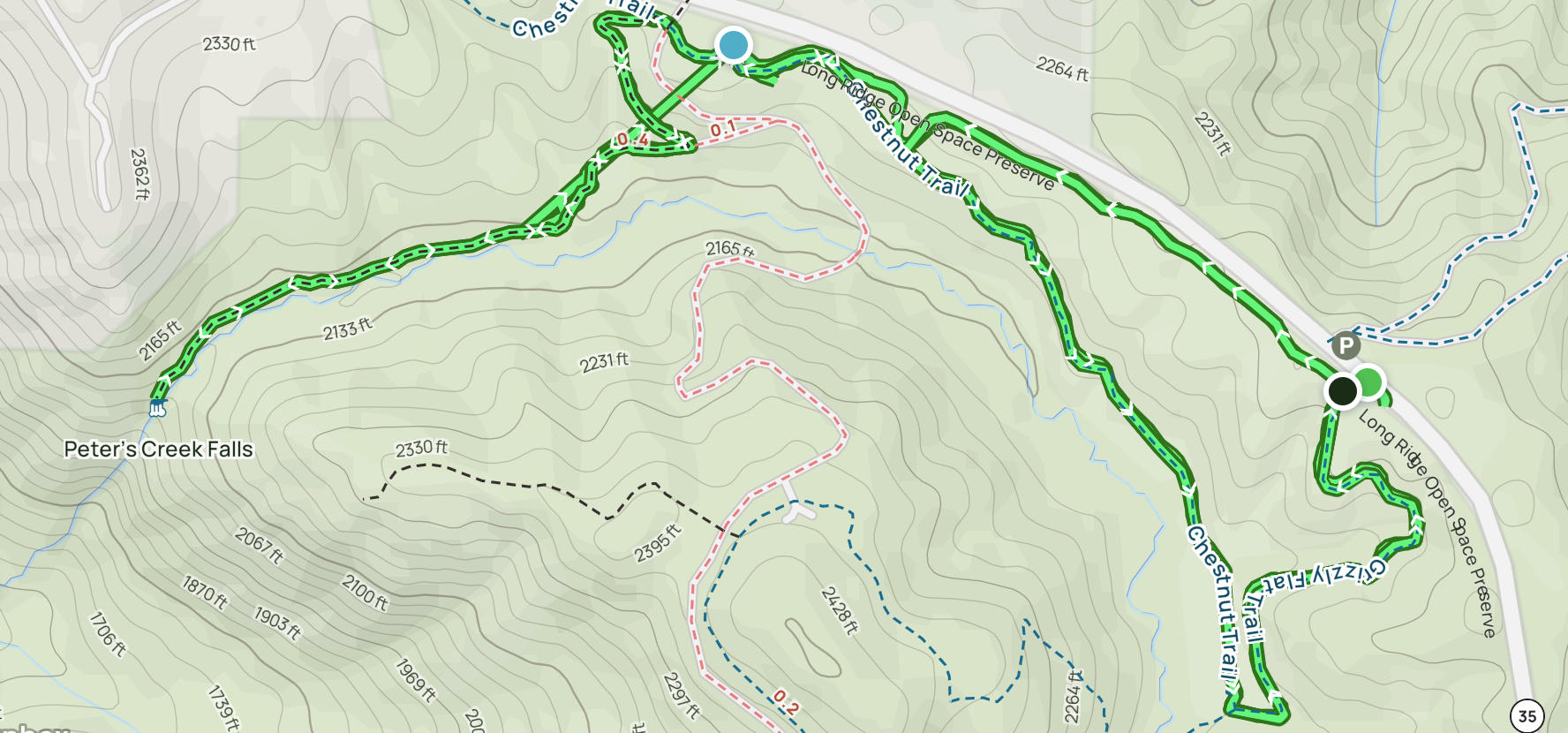
| | Do you know waterfalls promote good health? Waterfall-induced negative air ions are known to reduce stress, improve mood, and boost immune systems. On a Monday evening in the middle of February, when I was cooking in the kitchen, my friend Glenda texted me: “I wanted to share this hike that we did today. A secret waterfall….” My mind was stimulated with excitement, and my eyes were switching in between monitoring the cooking pot and admiring Glenda’s photos and videos shared on the phone. What an amazing waterfall adventure! Looking at the joyous streams cascading through moss-encrusted rocks and redwoods, I texted back “Let’s plan a hike with our group next month!” | |
Along our hike
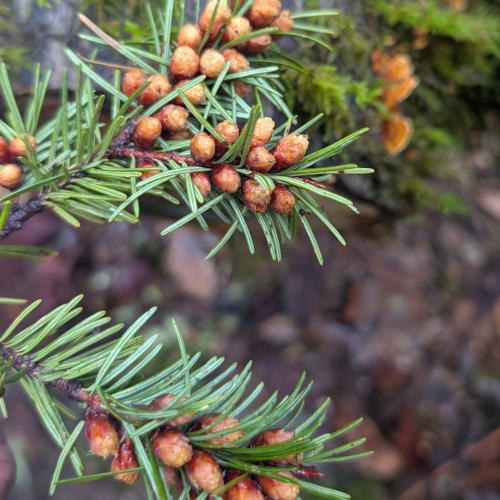
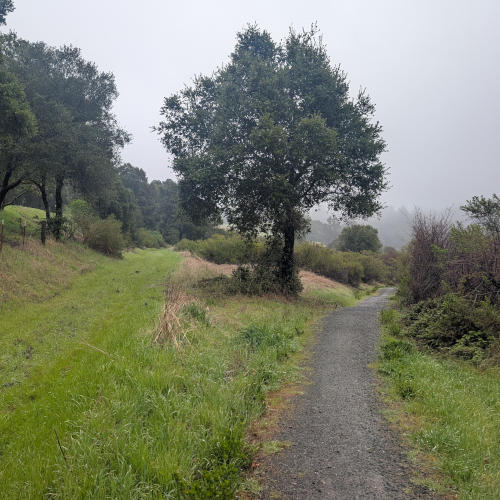
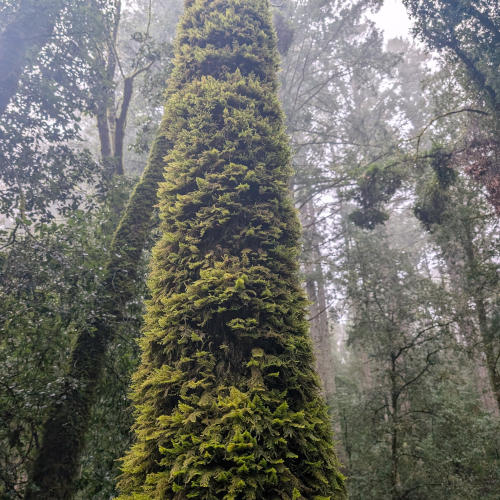
We entered the trailhead marked by a sign “No PARKING ½ HOUR AFTER SUNSET To 6AM”, and walked on a grassy path parallel to the Skyline Blvd. The path gradually changed from grass to gravel, then it was covered with fallen leaves, branches, roots and trunks. Mushrooms, ferns and moss are growing abundantly on trees and rocks. We also spotted brown newts several times climbing on our path, new buds and baby pine cones developing on branches, and tiny flowers blooming quietly in the valley. Read more...
| | Special thanks to Glenda Chang for providing the videos in this article. | | |
We'd love to spotlight you!
Do you know a great walk, ride, run or hike? Want to share an issue about walking, biking, city planning, or interesting idea?
Walk Bike Cupertino would love to spotlight it in our newsletter and on our website! Articles should be 400 words or less, and should include a picture. All submissions are subject to approval and editing, and can be used by Walk-Bike Cupertino in future publications. Contact us here.
| | |
Happy Walking and Biking,
Your friends at Walk-Bike Cupertino
Find much more, including maps, safety data, and information on all the city projects at: walkbikecupertino.org
| | | | |