|
Dear Friends,
For decades, scientists have been stuck on the idea that Alzheimer’s disease arises due to the accumulation of amyloid plaques and tangled tau proteins wreaking havoc in the brain. While those elements play a role in some aspects of the disease, they don’t tell the whole story. That’s why, despite decades of research and huge financial investments, the reality is that there is no preventative, no cure, and limited therapeutic options for this devastating disease.
That viewpoint is now changing. Salk’s cell biologists, neuroscientists, geneticists, immunologists, computational biologists, and other experts are working together to study Alzheimer’s disease from all angles. They are exploring alternative drivers of the disease—biochemical, metabolic, and inflammatory processes that, if detected and addressed earlier enough, could give us a better shot at improving patient outcomes.
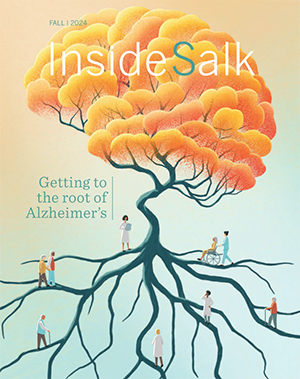
To learn more, I encourage you to check out the latest issue of our magazine, Inside Salk, where the feature story on Alzheimer’s continues our “Year of Healthy Aging.” As always, we are grateful for your support.
With warm regards,
| |
|
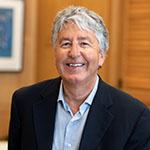
Gerald Joyce
Salk Institute President
| | |
|
This World Alzheimer's Month, learn how Salk scientists are shaking up Alzheimer’s research in the latest digital issue of our magazine, Inside Salk, now available online! Read on to meet Professor Axel Nimmerjahn, Salk’s Office of Equity & Inclusion Director Jálin Johnson, and current postdoctoral researcher Lara Labarta-Bajo (who is also featured in this month’s podcast episode!). We also celebrate the awards and discoveries made this season and honor the tremendous work of philanthropist Joan Jacobs. Read Inside Salk online or join our mailing list to receive print editions of the magazine. | |
Fuel level low! Energy deficits harm athletes’ health, new research tool reveals how | |
 | 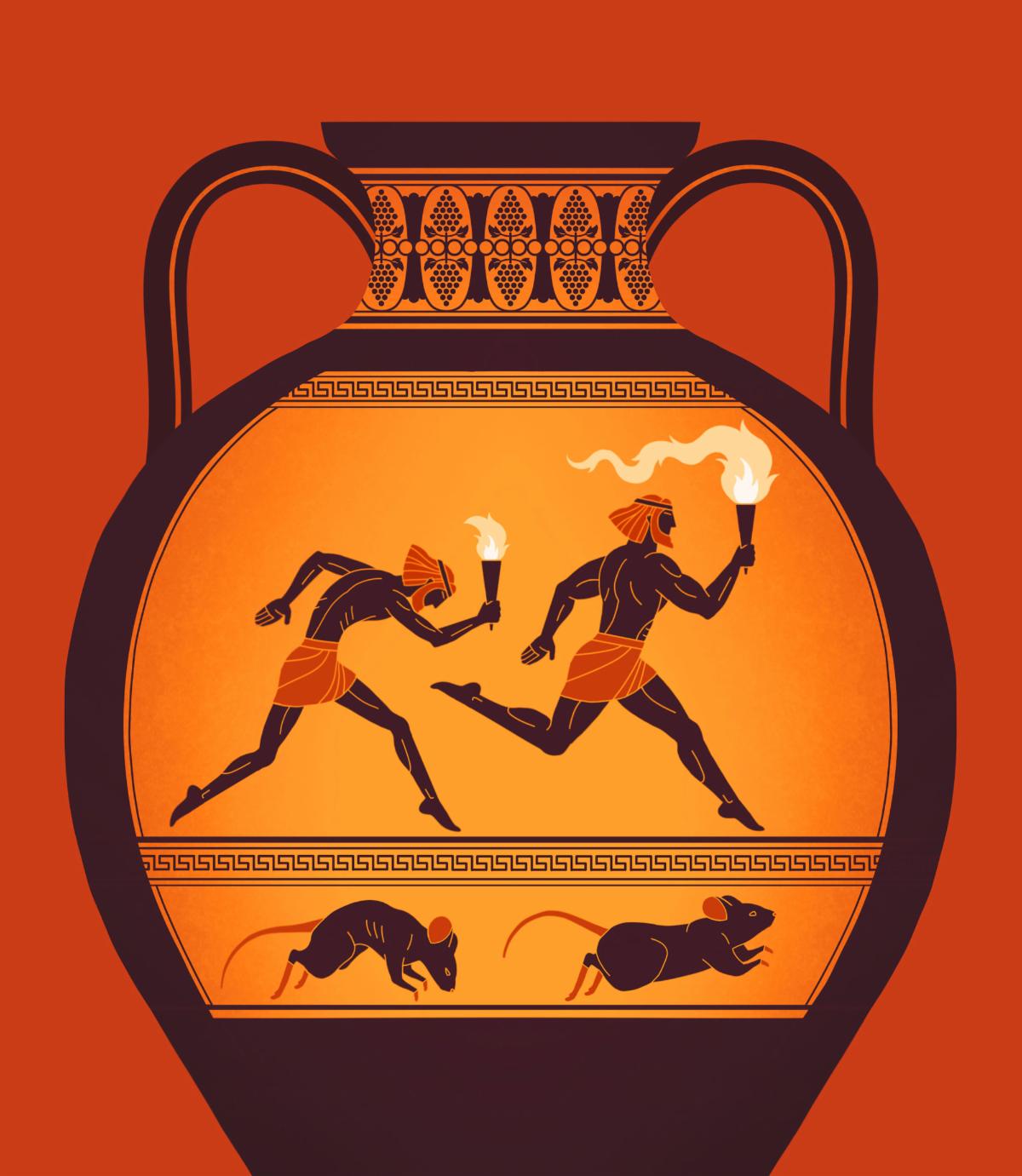 | In 2014, the International Olympic Committee named a syndrome affecting many of its athletes: relative energy deficiency in sport, or REDs. It’s now estimated that more than 40% of professional athletes have REDs, and the rate could be even higher in recreational athletes and exercisers. Athletes develop REDs when they consistently expend more energy through their physical activity than they take in through their diet. Over time, this prolonged energy deficit can lead to a wide range of symptoms, including hormonal and reproductive issues, insomnia and fatigue, bone weakness and injury, and a higher risk of anxiety and depression. Despite its high prevalence, little was known about REDs on a cellular and molecular level—until Professor Satchidananda Panda and team created a landmark mouse model of REDs that showed that it affects organ size and gene expression patterns across the entire body. What’s more, this energy deficiency appears to impact male and female mice differently: In males, kidney health was most significantly impacted, while in females, reproductive health and muscle mass were most affected. Their findings identify potential biomarkers to more conclusively diagnose REDs and provide new molecular targets for future therapeutics that could halt, reverse, or prevent the syndrome altogether.
| | |
|
Support High-Impact Science
Salk’s life-changing discoveries are not made by scientists alone. Only with the help of our supporters can we empower our globally renowned researchers, harness cutting-edge technology, and fuel bold initiatives to tackle some of the most challenging problems of our time.
| | |
In the new monthly video series “From Then to When,” we bring you the unique stories of Salk researchers, from their personal journeys into science to their motivations and goals for the future. | |
|
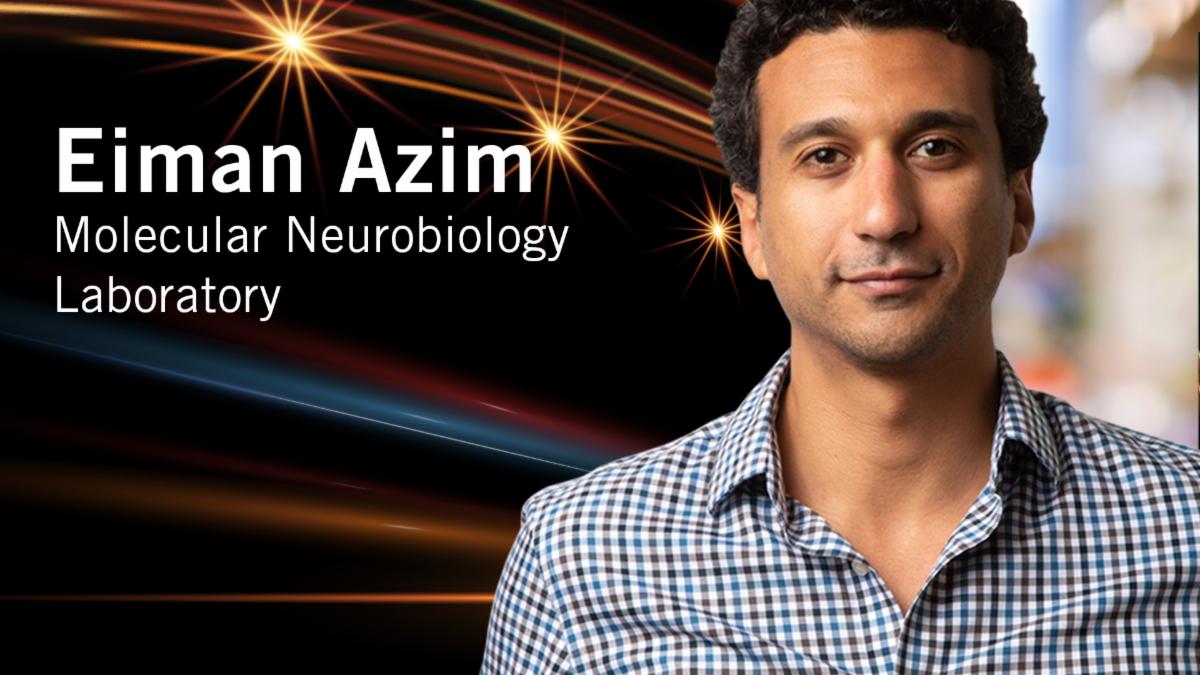
“My immediate family was me and my sister and my parents, of course, but we had a big family out in Egypt where my parents were born. My parents had a huge influence on my motivations to pursue gaining knowledge that can help society,” says Azim. “As a kid, I liked being outdoors, I liked collecting rocks, I thought I wanted to be a paleontologist, I loved dinosaurs, I loved space… I was just curious about things.”
His curiosity led Azim to begin school studying the philosophy of the mind, but he quickly turned to neuroscience in search of more definitive answers to his grandiose questions. This pivot proved immensely consequential, leading Azim down an exciting scientific path to his current position as an associate professor and holder of the William Scandling Developmental Chair at Salk. Today, Azim takes a multidisciplinary approach to map out the neural circuits responsible for movement and information processing. Learn more about his life and research in this episode of “From Then to When.”
| |
Salk's podcast "Beyond Lab Walls" | |
|
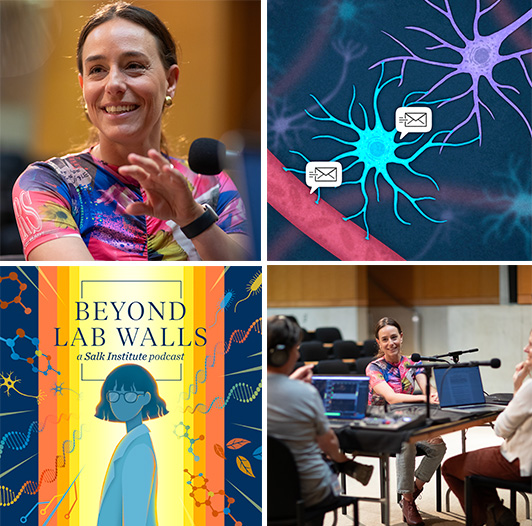
Join hosts Isabella Davis and Nicole Mlynaryk on a journey behind the scenes at the Salk Institute, delving into the captivating realms of neuroscience, plant biology, cancer research, and more. The Institute’s podcast immerses listeners in the fascinating world of science while showcasing the brilliant minds and dedicated staff who drive its discoveries.
This month’s episode of "Beyond Lab Walls" features Lara Labarta-Bajo, a postdoctoral researcher in Associate Professor Nicola Allen’s lab. Labarta-Bajo studies how the immune system and the brain communicate with each other—in the process revealing a surprising relationship between infections, brain aging, and mobility.
| |
Also find us on Spotify, Apple Podcasts, or wherever you listen. | |
|
“Historically, aging research has been approached with tunnel vision, with each discipline studying the issue in a silo. We view things differently here at Salk,” says Salk President Gerald Joyce. “Because innovation often emerges at the intersection of scientific disciplines, Salk brings together all-star teams of experts from different research areas to form collaborative groups that tackle common problems, including aging."
Just this year, Salk has received millions in funding to study the aging brain, created new tools to study how our cells change over time, and made groundbreaking scientific discoveries to help people stay healthier later in life. Get updates on Salk’s one-of-a-kind work by following our "Year of Healthy Aging" campaign on Instagram, Facebook, LinkedIn, and X .
| |
|
Medical News Today
A new drug may help treat early-stage Alzheimer’s by targeting brain metabolism
| |
Read article »
Features Professor Rusty Gage
| |  |
|
CBS8
Salk Institute researches ways to maintain future nutritious crops as temperatures rise
| |
Read article »
Features Professor Wolfgang Busch
| | |
|
Times of San Diego
A Salk researcher’s call for action on World Alzheimer’s Day
| |
Read article »
Features postdoctoral researcher Nawab John Dar
| | |
|
Fox 5 San Diego
Clouds block view of ‘Salkhenge’ at sunset on fall equinox
| |
Read article »
Features Salk Campus
| | |
|
September 16 to 20: National Postdoc Appreciation Week
The National Postdoctoral Association’s annual celebration of National Postdoc Appreciation Week celebrates postdocs nationwide. At Salk, we celebrate both our pre- and postdoctoral trainees, thanking them for their contributions to science and the Salk community.
“These talented researchers design and conduct critical hands-on experiments, collect and analyze data, and drive new research directions,” says Salk CSO Jan Karlseder. “They co-author papers and grant applications and mentor other students and lab members. In short, their knowledge, ideas, and skills are essential for advancing science. Moreover, their fresh perspectives and enthusiasm often lead to innovative approaches and groundbreaking discoveries.”
| | |
|
Your support powers groundbreaking research, and the people who bring it to life. | |
Looking for a unique background image for your computer, Zoom meeting, iPad, phone, or watch? | |
|
As summer winds down and students return to school, many young people will begin considering their futures for the first time.
Sometimes, if we’re lucky, those excited young people choose science and wind up researching life’s most fundamental questions at Salk.
To encourage current students to pursue science, Salk has a range of outreach programs designed to engage all ages with the exciting world of life sciences. Click the link below to read about these impactful programs.
Learn more about research and training opportunities at Salk »
| |
About this newsletter
Salk’s email newsletter is published monthly with updates on recent scientific publications, media coverage, awards, grants, events, and other timely information for Salk supporters and science enthusiasts.
| | | | |