-
Discoveries: The “dark side” of the human genome and how pain packs its emotional punch
-
New episode of Salk’s podcast, Beyond Lab Walls: Featuring postdoctoral researcher Aksinya Derevyanko
-
Spotlight: Professor Diana Hargreaves earns V Foundation award for pancreatic cancer project
-
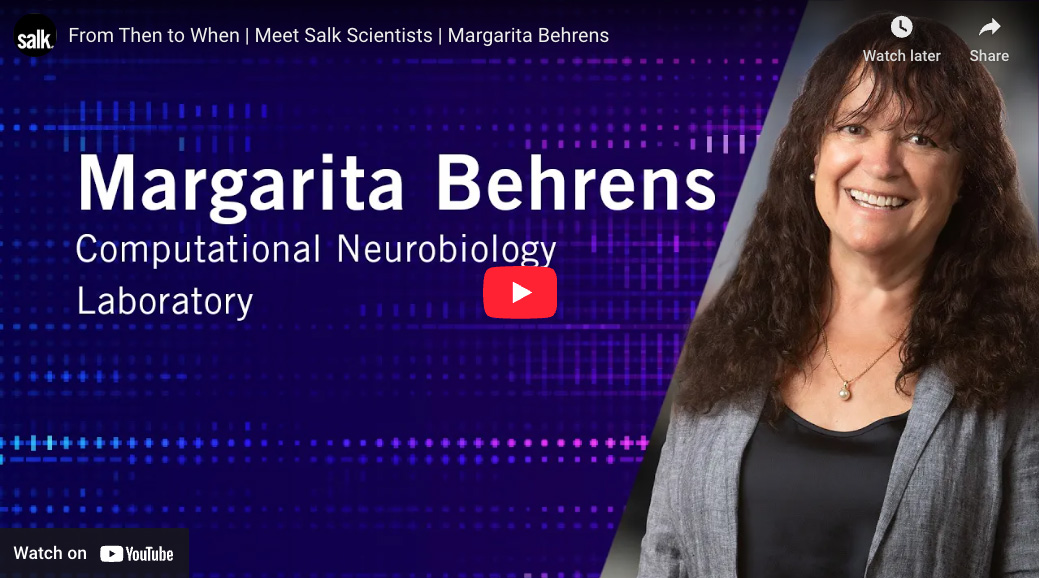
Meet a Salk scientist: Featuring Research Professor Margarita Behrens
-
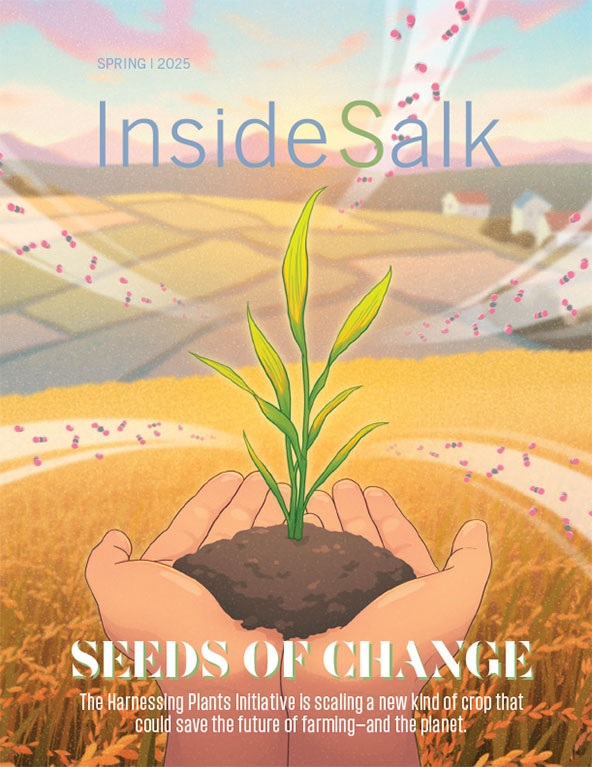
Inside Salk: Spring issue now available online! Featuring updates from the Harnessing Plants Initiative
-
In the news: Research Professor Todd Michael shares cannabis pangenome insights with KPBS
-
Symphony at Salk: Sold out! Our summer fundraiser featuring Emmy and Tony Award-winning Kristin Chenoweth
-
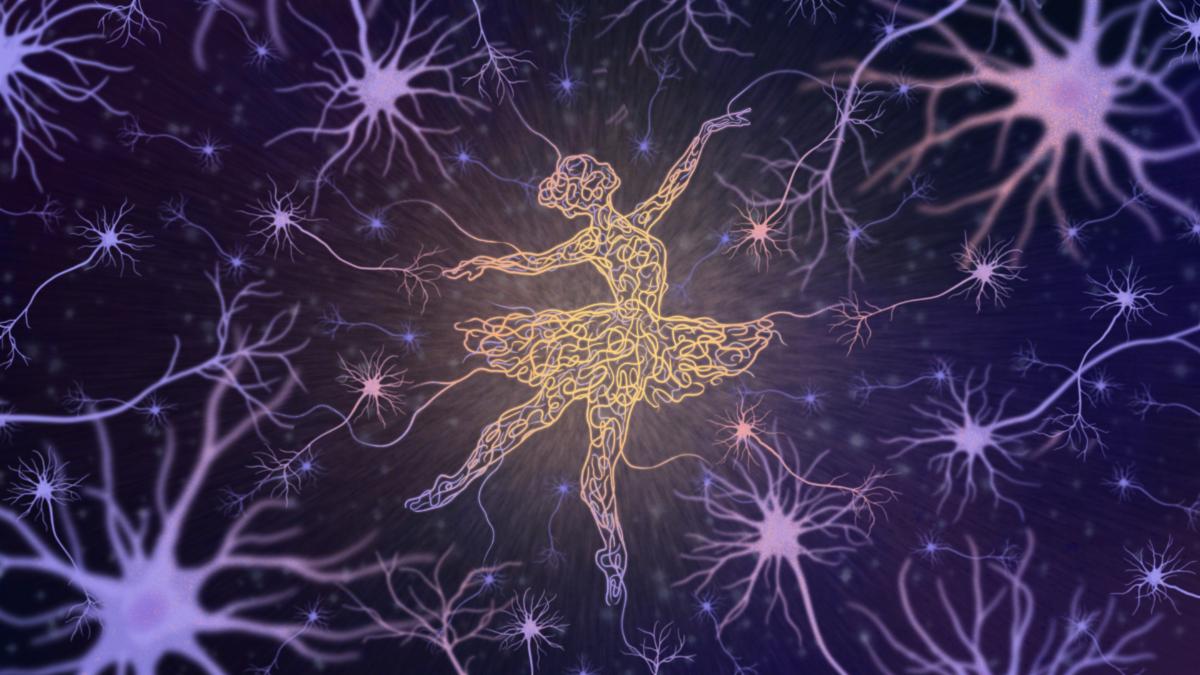
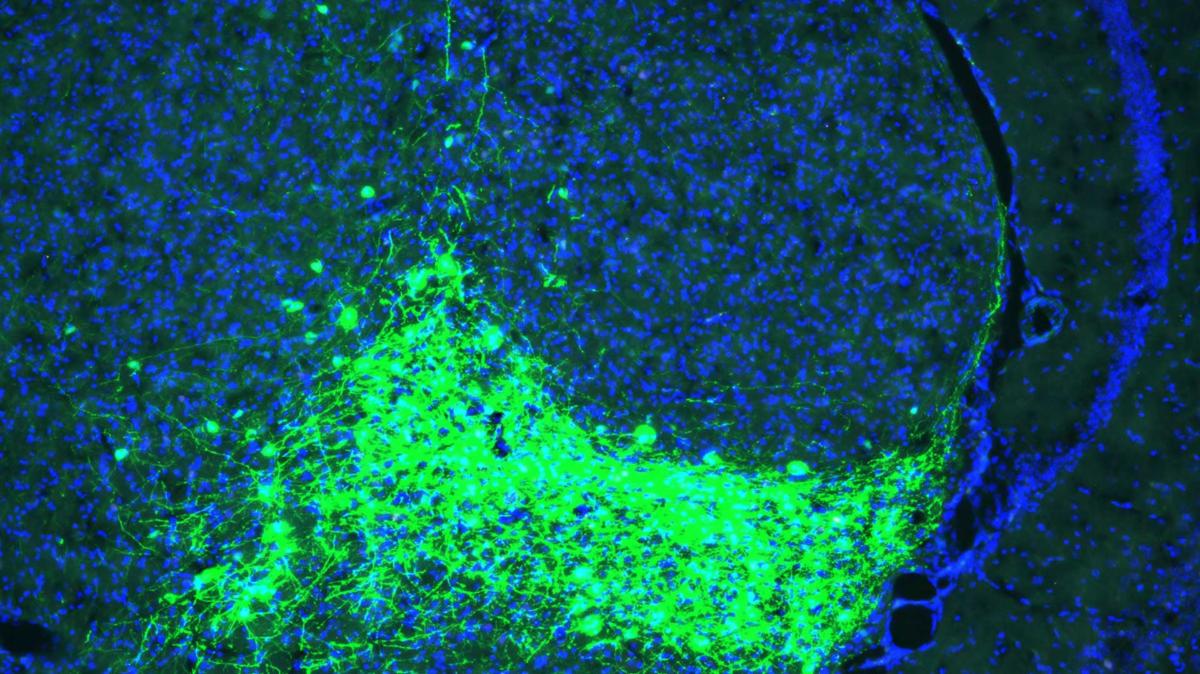
Monthly wallpaper: A new brain circuit for the emotional side of pain
| | How does the immune system prepare for breastfeeding? | | |
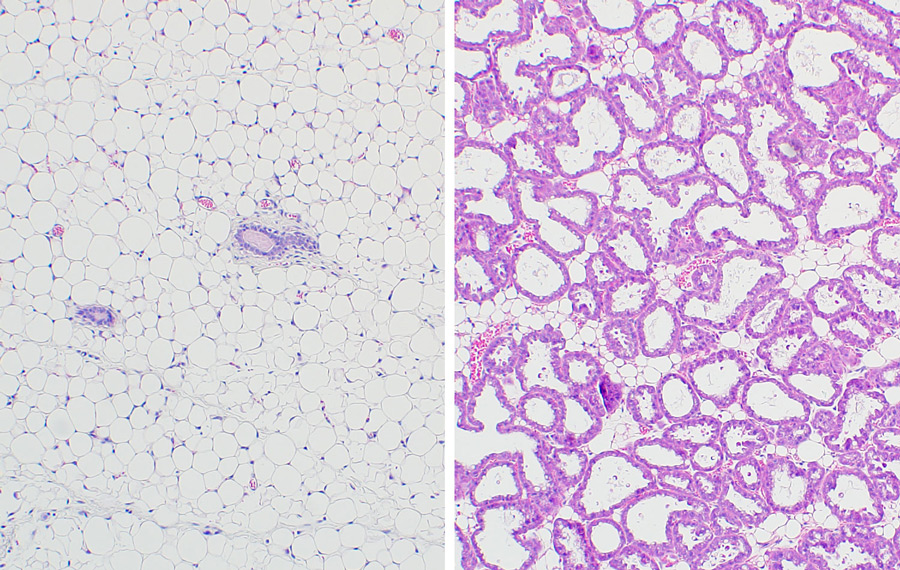
Virgin (left) and lactating (right) mouse mammary gland imaging shows the dramatic structural changes that occur to facilitate milk production, including cell proliferation and the formation of milk ducts.
Credit: Salk Institute
| | |
Of the 3.6 million babies born in the United States each year, around 80 percent begin breastfeeding in their first month of life. Breastfeeding has known benefits for both mother and child, reducing maternal risk of breast and ovarian cancers, type 2 diabetes, and high blood pressure, while simultaneously supporting the baby’s nutrition and immune system. But because pregnancy and lactation have been historically understudied, we still don’t understand the science behind many of these benefits.
Assistant Professor Deepshika Ramanan is changing that—starting with a map of immune cell migration before and during lactation. Using both animal research and human milk and tissue samples, Ramanan’s team discovered that immune cells called T cells are abundant in the mammary glands during pregnancy and breastfeeding, with some relocating from the gut. The radical changes that occur can be seen above in mouse mammary gland tissue normally (left) and during lactation (right), as cells grow and take shape to facilitate breastfeeding.
The findings, published in Nature Immunology, may help explain the advantages of breastfeeding, prompt new solutions for mothers unable to breastfeed, and inform dietary decisions that enhance breast milk production and quality.
| | New AI tool illuminates “dark side” of the human genome | | |
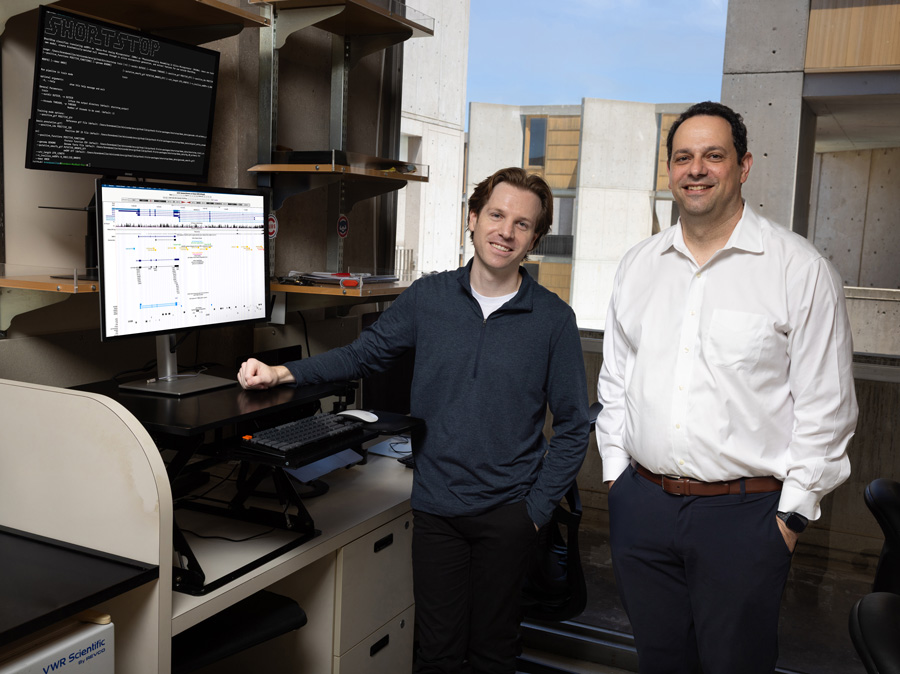
Brendan Miller (left) and Alan Saghatelian (right) stand in their lab, while ShortStop runs on the desktop beside them.
Credit: Salk Institute
| | |
Proteins sustain life as we know it, serving many important structural and functional roles throughout the body. But these large molecules have cast a long shadow over a smaller subclass of proteins called microproteins. Microproteins have been lost in the 99 percent of our DNA that was previously disregarded as “noncoding”—hiding in vast, dark stretches of unexplored genetic code. But despite being smaller and less understood than standard proteins, their impact may be just as big.
Professor Alan Saghatelian and team are now exploring the mysterious dark side of the genome in search of microproteins. With their new tool, ShortStop, researchers can probe genetic databases and identify DNA that likely code for microproteins. Importantly, ShortStop also predicts which microproteins are most likely to be biologically relevant, saving time and money in the search for microproteins involved in health and disease.
Already, the Salk team used ShortStop to analyze a lung cancer dataset and found 210 entirely new microprotein candidates—with one standout validated microprotein—that may make good therapeutic targets in the future. The findings are published in BMC Methods.
| | From injury to agony: Scientists discover brain pathway that turns pain into suffering | | |
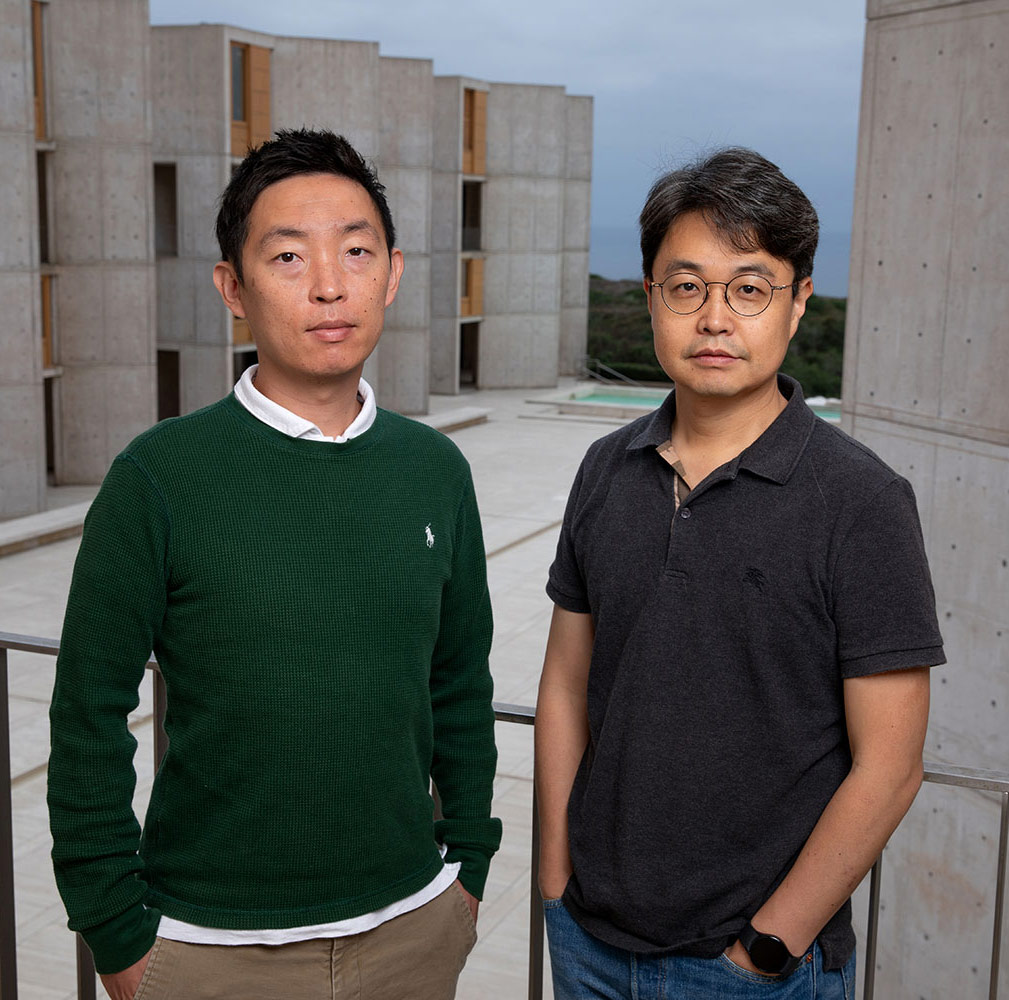
From left: Sukjae Kang and Sung Han
Credit: Salk Institute
| | |
Pain isn’t just a physical sensation—it also carries emotional weight. That distress, anguish, and anxiety can turn a fleeting injury into long-term suffering. Associate Professor Sung Han and team have now identified a brain circuit that gives physical pain its emotional tone, revealing a new potential target for treating chronic and affective pain conditions such as fibromyalgia, migraine, and post-traumatic stress disorder (PTSD).
The study identifies a group of neurons in a central brain area called the thalamus that appears to mediate the emotional or affective side of pain in mice. (These neurons are also featured as photo of the month at the end of this newsletter, along with a related Salk history fun fact!) This new pathway challenges the textbook understanding of how pain is processed in the brain and body. The findings were published in the Proceedings of the National Academy of Sciences.
| | Salk Institute appoints Marie Carter-Dubois as Chief Financial Officer | | | | Carter-Dubois will serve as Vice President and Chief Financial Officer (CFO) starting September 1, 2025. As Salk’s CFO, Carter-Dubois will lead all aspects of the Institute’s financial operations, including accounting, grants administration, procurement, budgeting, financial planning and analysis, and investment management. She will serve as a key member of Salk’s Executive Leadership Team, advising them and the Board of Trustees on long-range financial strategy and ensuring the fiscal sustainability of the Institute’s scientific mission | | Salk Professor Diana Hargreaves earns V Foundation award for pancreatic cancer research | | | | Hargreaves was named a 2025 All-Star Translational Award Program grantee in recognition of the exceptional success of her previous V Foundation grant in 2016. She and her clinical collaborator, Gregory Botta, an associate professor at UC San Diego Moores Cancer Center, will receive $1 million to advance her new project to improve immunotherapy—a treatment that utilizes the body’s own immune cells to fight cancer—in patients with pancreatic cancer. | | SOLD OUT! 29th annual Symphony at Salk: Saturday, August 16 | | |
Here at Salk, we’re gearing up for our biggest night of the year, fundraising directly for science on August 16.
Tickets are now sold out; however, sponsorships remain available. Symphony at Salk is a night where Salk’s legendary campus transforms into a stage for the San Diego Symphony and guest artist Kristin Chenoweth.
For inquiries or questions, please reach out to symphony@salk.edu.
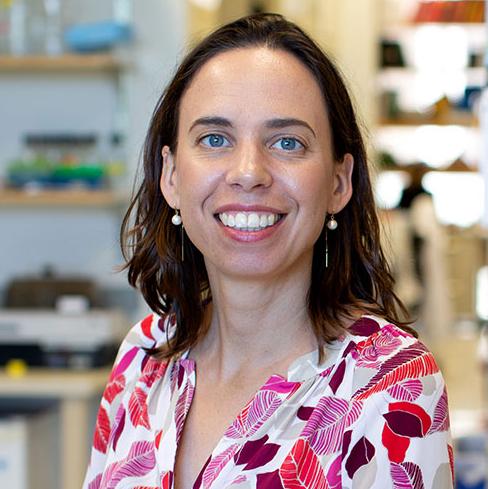
| | Margarita Behrens is a research professor in the Computational Neurobiology Laboratory who studies how our brains develop and how neurodevelopmental disorders arise. | |
“Both my parents are scientists, so it was inevitable,” says Behrens. “I was going to be an architect—I always liked the arts. I paint a little bit when I have time, but I had two loves: science and architecture. And one of them won. I thought science would fulfill me better.”
Behrens was born in Uruguay, but her “inevitable” science career moved her to Chile, Brazil, Spain, and finally, San Diego. Though she started her studies in biochemistry, Behrens eventually shifted into neuroscience—a focus she continues to this day. “That's my passion,” says Behrens. “To try to understand how the brain gets put together.”
| | SALK'S PODCAST BEYOND LAB WALLS | | This month’s episode of Beyond Lab Walls features Aksinya Derevyanko, a postdoctoral researcher in Professor Nicola Allen's lab at Salk. For Derevyanko, recounting her journey from Russia to Spain to San Diego isn't just a practice in storytelling—it's an exercise in what she studies: memory. She watches the connections between our brain cells, called synapses, form, mature, and fail throughout our lifetimes and in diseases like Alzheimer's. Outside the lab? She tests her own synaptic strength by memorizing steps as a semiprofessional dancer. | | | | The spring 2025 edition of Inside Salk shines a light on the exciting progress of Salk’s Harnessing Plants Initiative, and where it’s headed next. This issue also includes special features celebrating major anniversaries—Tony Hunter’s 50th year at Salk and the 70th year since Jonas Salk created the polio vaccine. Coming out next month: fall 2025 Inside Salk, which explains how Salk scientists are shaping the future of GLP-1 drugs, features interviews with esteemed faculty and rising-star researchers, and emphasizes the importance of empowering the next generation of scientists. Join our mailing list to be the first to receive the fall issue, or read the spring issue online now. | | |
Fox 5
Scientists uncover “fear neurons” that could make pain worse
| |
Watch now »
Features Associate Professor Sung Han
| |  | |
Better! with Dr. Stephanie: Health & Wellness for Women podcast
Could Adjusting When You Eat & Sleep Improve Digestion, Energy & Menopause Symptoms? with Satchin Panda, PhD
| |
Watch now »
Features Professor Satchin Panda
| | | |
Science
Breaking the barrier between neuroscience and immunology
| |
Read article »
Features Professors Susan Kaech, Nicola Allen, Diana Hargreaves, and Axel Nimmerjahn
| | | |
Very Well Health
Want better sleep? Shower at this time of day
| |
Read article »
Features Staff Scientist Emily Manoogian
| | | |
Knowridge
Scientists find new way to treat pancreatic cancer
| |
Read article »
Features Professor Ronald Evans
| | | |
Knowridge
New clues to memory loss found in the aging brain
| |
Read article »
Features Professor John Reynolds
| | | |
MSN
Five revolutionary insights that are transforming our understanding of life’s origins and cosmic chemistry
| |
Read article »
Features Salk President Gerald Joyce
| | | |
KPBS
San Diego scientists try to unlock the secrets of cannabis
| |
Watch now »
Features Research Professor Todd Michael
| | | |
This month, Salk Associate Professor Sung Han discovered a brain circuit that gives physical pain its emotional tone. In this circuit, pain signals are sent from the spinal cord into a different part of the thalamus that has connections to the amygdala, the brain’s emotional processing center.
This finding also relied on a piece of Salk history—this particular group of neurons in the thalamus can be identified by their expression of CGRP (calcitonin gene-related peptide, pictured in green below), a neuropeptide originally discovered in Professor Ronald Evans’ lab at Salk.
| |
About this newsletter
Salk’s email newsletter is published monthly with updates on recent scientific publications, media coverage, awards, grants, events, and other timely information for Salk supporters and science enthusiasts.
| | | | |