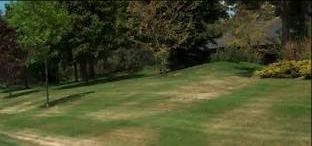
Why Does My Lawn Look Dead?? |
|
Just a few weeks ago, we had record rainfalls, with one of the wettest Mays on record.
"I had a lake in my back yard, but that area is now cracked and dry."
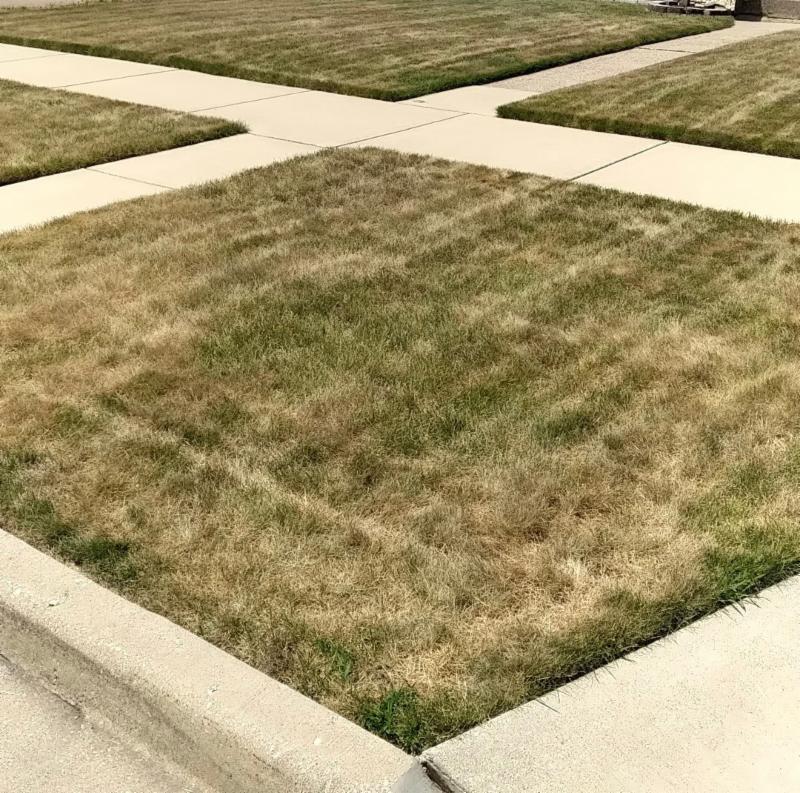
This is what we are seeing now! This turn around has been very fast and the effect on our lawns has been significant. This is very early in the summer for us to be seeing these conditions.
As I write this Turf Alert, most of our area has had less than a 1/2 inch of accumulating rain in the past week. The rainfall totals over the past month have varied enormously around the area
We also know that grass cannot store water. Grass needs at least 1 inch of water per week (EVEN if it had 9 inches a few weeks ago) in order to stay green and out of dormancy.
|
|
6/30 (today) - 89°
7/1 - 79°
7/2 - 84°
7/3 - 86°
7/4 - 87°
7/5 - 84°
7/6 - 84°
7/7 - 85°
The 7 day outlook has temperatures over 80 degrees every day but two and very little rain in the forecast. Most of that rain will be in the form of quick thunderstorms during the hot part of the day, which will evaporate before providing much moisture to the grass plants.
As temperatures continue to climb well above the June average highs of 78-80°, many lawns are stressed and should be watered
A common question we have been getting is "Why did my lawn get heat / drought stressed so quickly?" -For an answer to that, please see below (near the bottom of this email) where I discuss heat and drought stress - Warning: lots of detail and scientific explanation.
|
|
But How Did This Happen So Quickly?? |
|
A common question we have been getting is:
"Why did my lawn get heat / drought stressed so quickly?"
-For an answer to that, please see below (near the bottom of this email) where I discuss heat and drought stress - Warning: lots of detail and scientific explanation.
Heat and drought stress-some science
Most cool season lawns have an optimal temperature range in which they grow. Kentucky Blue Grass (KBG), for example, grows best from soil temps of about 50 to 70 degrees and air temps from upper 40's to the low 80's. Once soil temps get above 77 degrees, root damage begins to occur on KBG... isn't that crazy? Different grass types in your lawn or in other lawns can brown at different rates due to the soil temperatures, resulting in vastly different appearance.
Warning, science stuff incoming:
Photosynthesis is the process that plants use to make energy. While there are many steps along the way, movement of water from the roots to the leaves can be directly affected by soil temps, aka heat stress. As the soil gets warmer, grass plants struggle to move water out to the leaves for photosynthesis as fast as needed. This stressor reduces the production of energy. In fact, when soil temps get over 80 or air temps are in the mid-to-upper 90's most of our grass plants are actually using more energy to stay alive than they are creating.
Drought stress means that there is not enough water available to the roots and again, the grass plants start operating in an energy deficit situation where they are burning more energy than they are able to produce.
The combined effects of heat and drought stress have a multiplying effect though. Being hot is tough on plants, being drought stressed is like burning the candle from the other end, but that's not all. It can get worse.
This is much like humans working in high temperatures. We perspire or sweat at greater and greater amounts as the temperature goes up. Under most circumstances, if we keep ourselves properly hydrated and we keep sweating at the proper rate, we can work in the blazing heat. The moment our body isn't able to cool itself as fast as we are heating up, or we run out of water... its all over. Heat stress kicks in or for extreme cases heat exhaustion (heat stroke) sends us to the hospital.
Three other very important things people miss with regards to weather stress:
1. The Wind Factor: Heat + wind is far more stress inducing than heat alone. As wind blows across the lawn or tree leaf blades, more moisture is removed than normal. This additive process dehydrates the plants even faster. It affects us humans too. Every time one of our guys gets a case of heat stress, it wasn't any hotter than a previous day, but it was more windy. I had a customer say one time, "ahh that makes sense, you don't put your laundry in the oven... you put clothes in a clothes dryer." While not as hot as the oven, the addition of air rapidly dries out our clothing, just like our grass, trees and shrubs.
2. The Additive Process: Heat stress and drought stress are additive processes. Every day that is hotter than 85 degrees grass plants are running a deficit on energy. Lawns typically can store about 7 days worth of moisture, every day past that it runs out.
One acre of lawn respires about 2400 gallons of water per day at 75 degrees and no wind. That means a 10000 sq/ft lawn respires about 600 gallons a day. That is a ton of water. Humans need, on average, 1/2 gallon of water per day, a little more if it is hot.
3. Night Time Highs are Getting Hotter. An interesting weather trend over the last 2 decades has been seen. While average day time highs have not gotten much hotter here in the Midwest, average nighttime temps have crept up almost 5 degrees in just 20 years. This means that when a lawn typically got a break in the past from the heat, they are getting less and less of a cooling break now. That extra 5 degrees may not seem like much, but we are seeing grass varieties like ryegrass unable to recover overnight from the daytime heat and so they are just completely dying off in many lawns. This trend will continue and force us to re-think the grass types we decide to plant in our lawns.
|
|
Watering Guidelines For Lawn Health |
|
How to water when lawns are baking in the heat
If you have a sprinkler system, please don't skip this info! If your zones are set for 30 minutes are less, you need to change the settings! Many sprinkler systems are set up to water too often and too short per zone. In many cases, this is more damaging than not watering at all! Please look at ways to water each zone LONGER and LESS often.
Watering the entire lawn every other day is not healthy. Feel free to read the links below in the "science" section for the scientific data behind this).
1. Water in the morning. The air is cooler, the ground is cooler, the grass is cooler and winds are lighter most mornings. This reduces evaporation and improves absorption into the soil where the grass plants roots are located.
2. Water to soak the ground 3-4 inches deep -that may mean 30 minutes in sandy soil or 60 minutes in clay. If you don't know, it is easy to check:
Step #1: Water the lawn
Step #2: When done watering the lawn, take a long screw driver out, jam it into the ground 4-5 inches..
Step #3: Move it left to right to make a small hole.
Step #4: Check is the water at least 3-4 inches deep? If so, you did great, if not Water again.
3. Do not water at night if you can avoid it. Lawns need water at their roots, by watering at night you get the blade wet and it stays wet all night until the sun comes up. This lasting moisture on the blade encourages fungus growth. If you have no other option, water very heavy one evening and then do not water for a couple of days.
4. Use a water timer. Many people say, "I don't water because I am too busy to get back and turn the water off." I understand completely and there is a tool to help. A water timer works like a "lamp timer." They attach at your spigot, you turn the dial to run for a specific time. When the time is over the water shuts off. They are available at most of the home stores and start at $10-$25.
5. Use a moisture meter to identify areas that need more or less water.
|
|
What Happens If You Choose To Not Water |
|
If you choose not to water, it is fine, the grass will go dormant. This is a very natural process that helps the lawn protect itself from the heat. If so, make sure that you:
-
DO NOT MOW when the lawn is dormant or drought stressed.
-
Minimize all traffic on the lawn during this time. No jumpy things, no kiddie pools, no slip and slides (in fact most of these things amplify the heat underneath them so it makes the lawn stress even more).
When a lawn suffers drought, some areas may thin out, this too is natural as the plants are all fighting for soil moisture. Typically when the rains return, most areas will recover if they were not abused during the heat of the summer. (Even in dormancy, grass will need 1/4 inch of water each MONTH to keep the crown of the plant alive.)
What is Dormancy?
When soil temperatures get above 90 degrees, grass can begin survival mode which consists of first closing up the stomata (opening cells along the leaves), making the lawn look thinner. Next, it will begin to draw moisture back into the crown of the turf, leaving the grass blades to turn brown. This doesn't mean that the grass is dead, just that it is beginning to show signs of dormancy which helps the plants to survive hot, dry conditions. )
During this period of summer stress, please use caution when deciding when and how high to mow and a consistent watering plan.
|
|
MOW HIGH!: The single greatest contributor to lawn stress (which also contributes to fungal disease) is mowing too short. You should be mowing at the highest setting on your mower. Mowing height should be at least 3.5 inches, but higher is better if possible (we prefer 4-4.5 inches). You should never mow more than 1/3 of the grass blade. Consistently mowing too short will cause your lawn to die!
Under Stress Conditions - Stay Off/Don't Mow: If your lawn is showing signs of drought stress and growth has slowed or stopped, (brown spots, a silverish sheen, or it sounds crunchy when you walk on it) please stay off of it as much as you can. You do not need to mow your lawn if it is not growing!
|
|
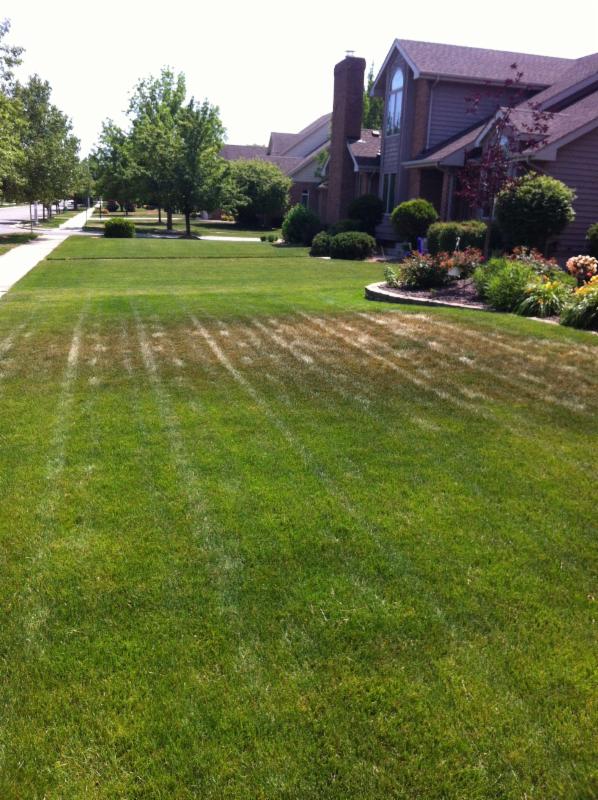
Summer stress with striping from a push mower |
|
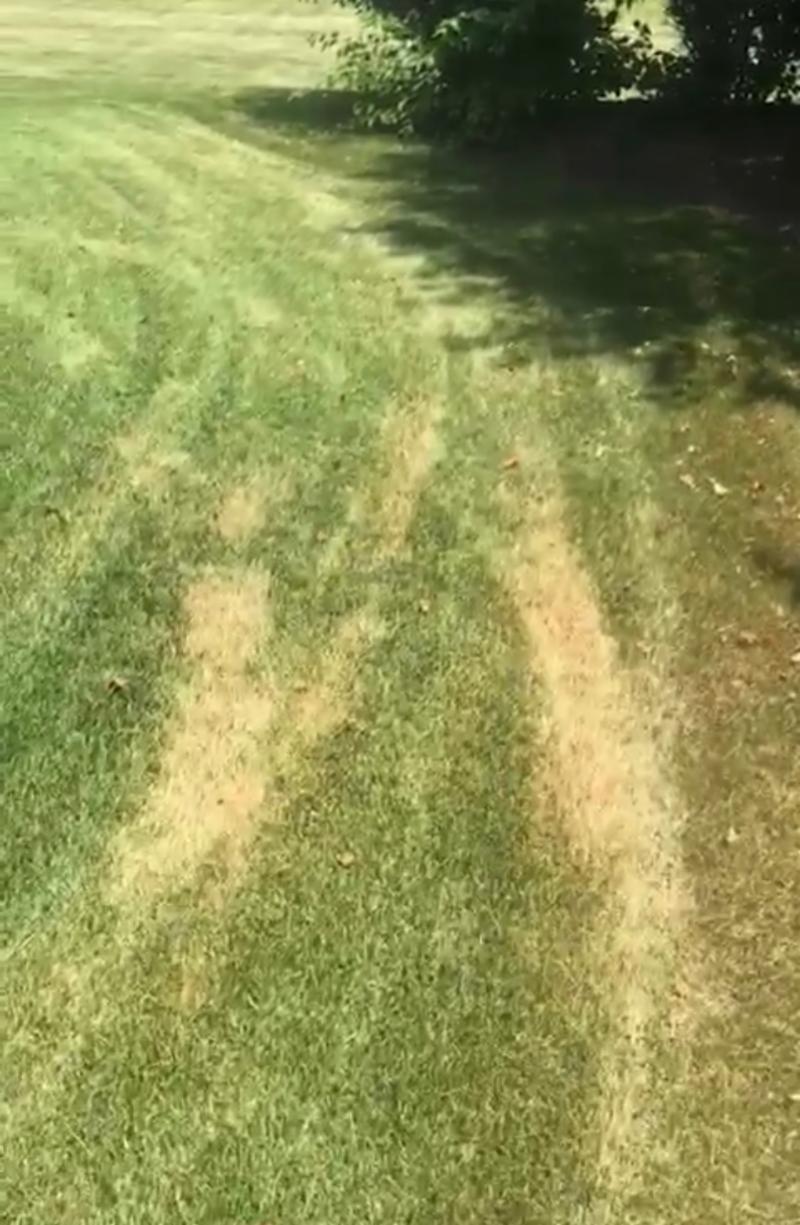
Ascochyta blight in equipment tracks (see info below) |
|
This sprinkler system has an area that it does not reach |
|
A Quick Tidbit About Fungus |
|
As I have mentioned in previous emails, these conditions promote a lot of fungal disease in lawns, as well.
The best way to minimize the fungal disease is to minimize the stress on the lawn, as we discussed previously in this email.
We are also seeing issues with Ascochyta Blight. This is a relatively minor fungal disease that can look very ugly in lawns. This can look a lot like track marks in the lawn from mowers, other equipment or even footprint marks. (see photos above) With proper watering and mowing, lawns usually make a full recovery from ascochyta blight, once weather conditions improve.
For more information about ascochyta blight:
https://extension.colostate.edu/docs/pubs/garden/02901.pdf, https://www.extension.iastate.edu/turfgrass/blog/ascochyta-leaf-blight-scorches-iowa-lawns (from 2010 in Iowa, but very applicable to our current conditions),
http://extension.missouri.edu/publications/DisplayPrinterFriendlyPub.aspx?P=IPM1029-4
|
|
Grub Prevention Starts NOW! |
|
A Grub problem can cause serious damage to the health, appearance, and natural defenses of your lawn. Grubs in your soil can attack the roots of your grass, and just a handful of grub worms can lead to serious damage over time, even if you have a healthy lawn. If in your yard you find one or two lawn grubs when digging, this is usually an indication that you have many more throughout your yard and are losing your battle with grubs.
Common Grub Misconceptions
- The products we use to prevent grubs annually in our Lawn Care Programs are used as a preventative measure and are not used to kill existing grubs, but prevent them from maturing into larvae that eat the roots of the lawn. If you have existing grubs in the spring/ early summer, you need an insecticide (curative) to kill what is existing.
- "There are skunks/moles in my lawn so I have grubs"
-
Moles do not equal grubs and grubs do not equal moles. Just because you have moles doesn’t mean you have grubs and eliminating grubs will not eliminate moles! Moles are insectivores; they eat insects, worms, and other invertebrates. Notice they eat other delicacies besides just insects; grubs are just a portion of their diet. Now if you have grubs and they are slowly decimating your turf, you probably want to control them, but don’t go applying insecticides simply thinking you’ll get rid of the moles (the same goes for skunks).
|
|
For a Successful Grub Preventative Application... |
|
-
You MUST water in the application. This is crucial for the penetration of the product and to thoroughly coat the root of the grass.
- If you mow after the application, DO NOT BAG IT for the first mow. This risks your lawn mower "sucking" up the granules.
|
|
As always, if you have questions or concerns about your lawn or property, reach out! We want to inform you and be here to help.
We truly appreciate the partnership we have with you to maintain a beautiful, green, thick and weed free lawn!
Lawn Doctor of Grand Rapids/Husdonville
|
|
*Available at participating franchise locations. Offer applicable up to 5,000 sq. ft. Offer cannot be combined with any other discouts, coupons, promotions or prior purchases. Certain restrictions apply. 2019 Lawn Doctor Inc, 142 State Route 34 Holmdel, NJ 07733. Lawn Doctor Inc and the Lawn Doctor logo are registered trademarks of Lawn Doctor.
If you don't wish to receive any further emails from Lawn Doctor, please use the unsubscribe link.
|
|
|
|
|
|
|