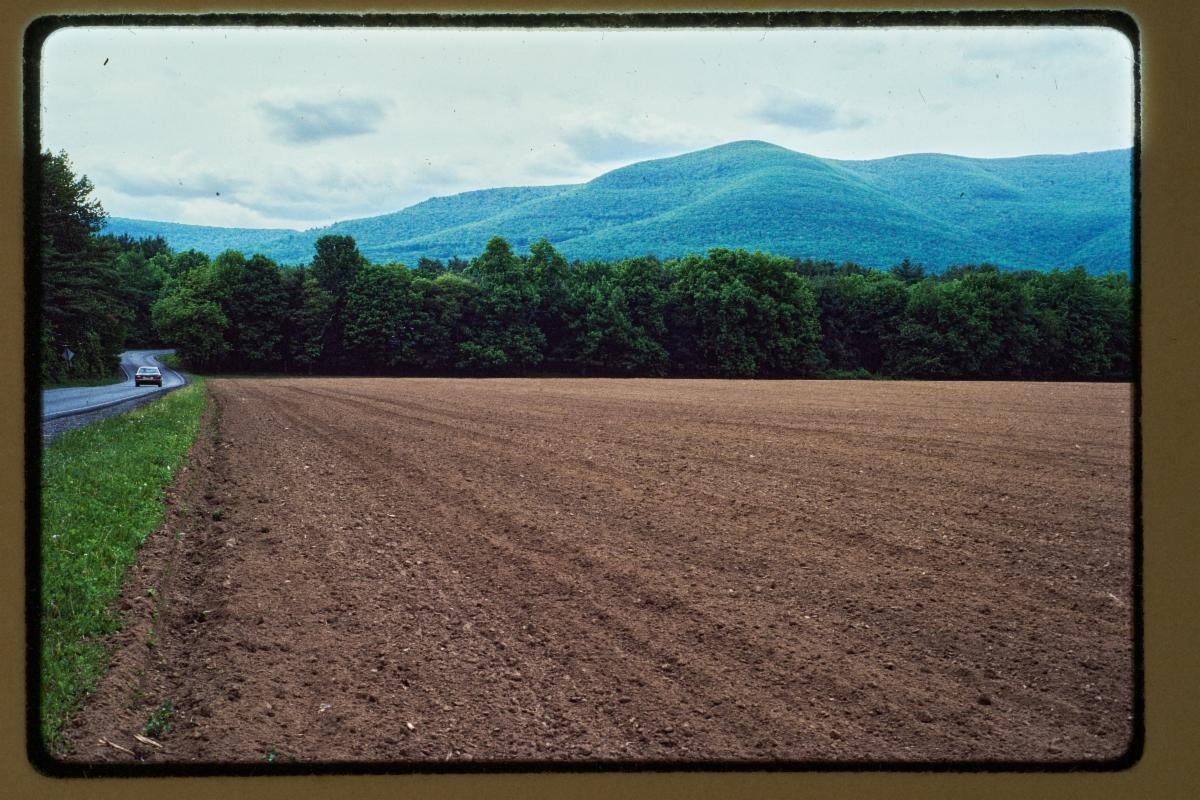
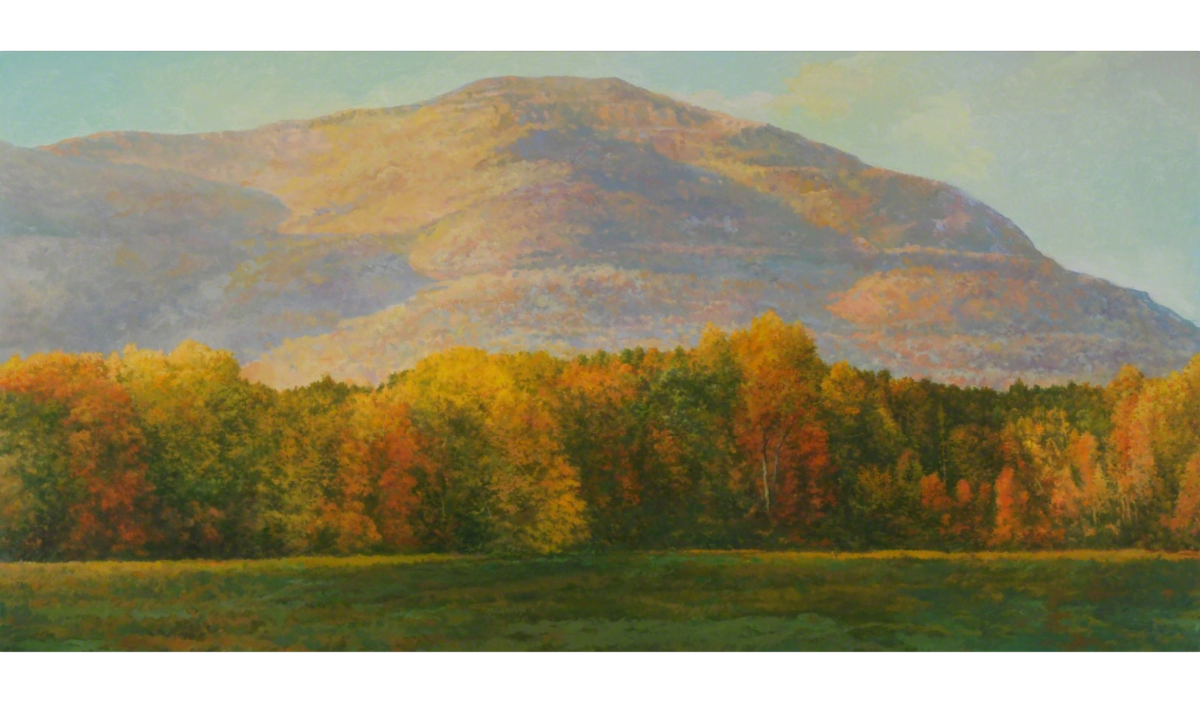
Photo: Catskill Center Archive at Ulster County Archives | | |
37 Years of Zena Cornfield
A brief tour of a field that nearly became two houses, saved in eight weeks by five hundred people, a seller who had a change of heart, and a broker willing to give up her own commission.
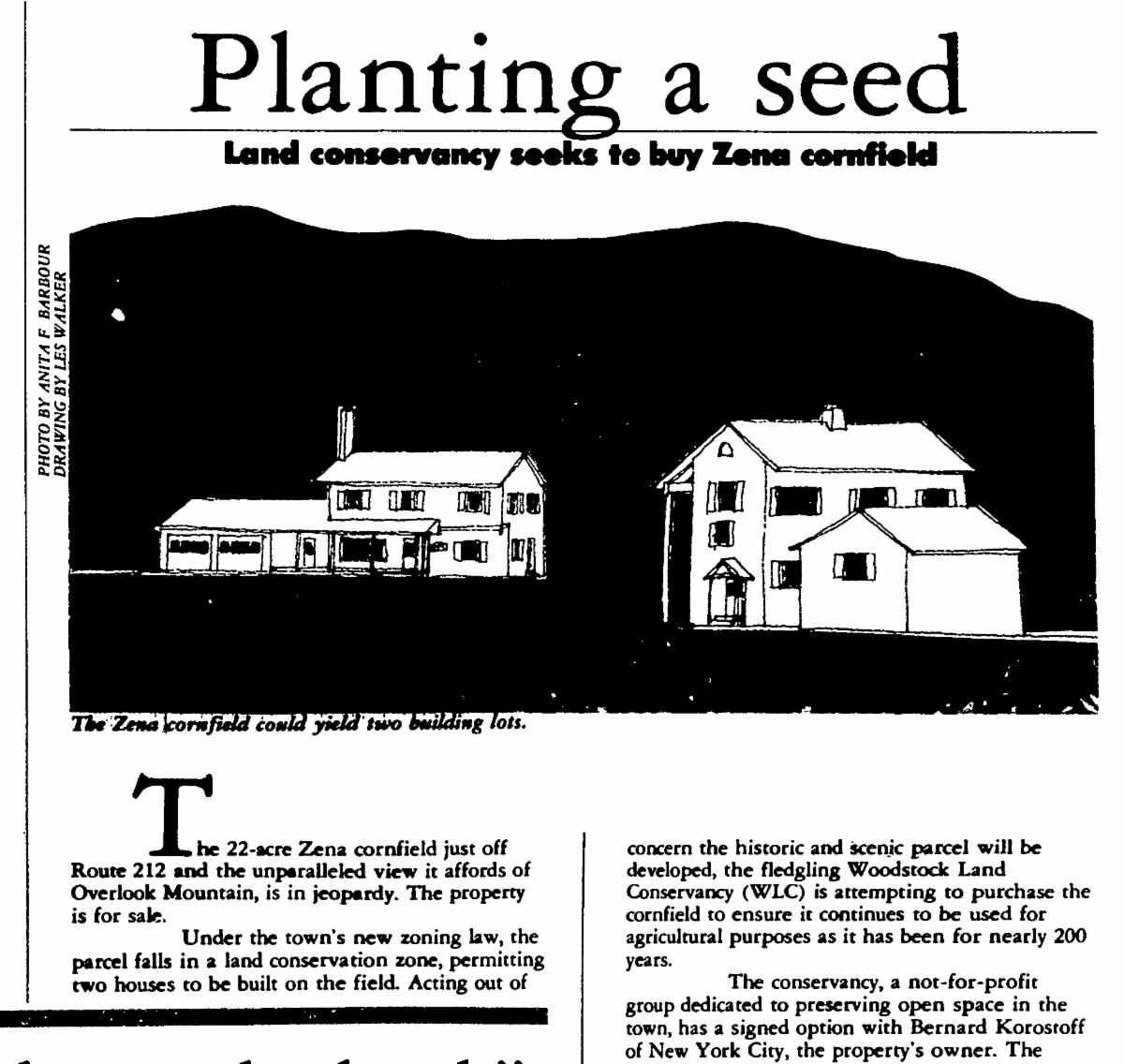
On June 29, 1989, the Woodstock Times ran a front-page story with a drawing of exactly what the Zena Cornfield was about to become: two tidy, unremarkable houses, plopped down directly in front of Overlook Mountain, the kind of thing that looks perfectly reasonable on a zoning map and genuinely tragic in person. Under the town's brand-new zoning law, the 22-acre field (21.4 acres in Woodstock, 0.8 in Saugerties), was legally entitled to hold two houses, and the newly formed, barely-a-year-old Woodstock Land Conservancy had roughly eight weeks to raise $160,000 and buy the whole thing before someone made that entitlement real.
| 1989 development rendering (Les Walker) via Andrea Barrist Stern, "Planting a Seed," Woodstock Times, June 29, 1989 | |
A Close Call
They made it, but with the kind of margin that should probably have given everyone involved an ulcer. As of that June 29 story, WLC had a $1,000 deposit down, roughly $20,000 raised, and a $16,500 payment due August 1, a deadline conservancy president Gay Leonhardt was refusing to move past without pledges in hand for the entire amount. Her fundraising math was refreshingly blunt: a $1,000 pledge broke down to $333 a year for three years, an amount she figured maybe a hundred people who actually loved the field could stomach without wrecking their budgets. If the money didn't materialize, the owner intended to relist the field by fall, view be damned.
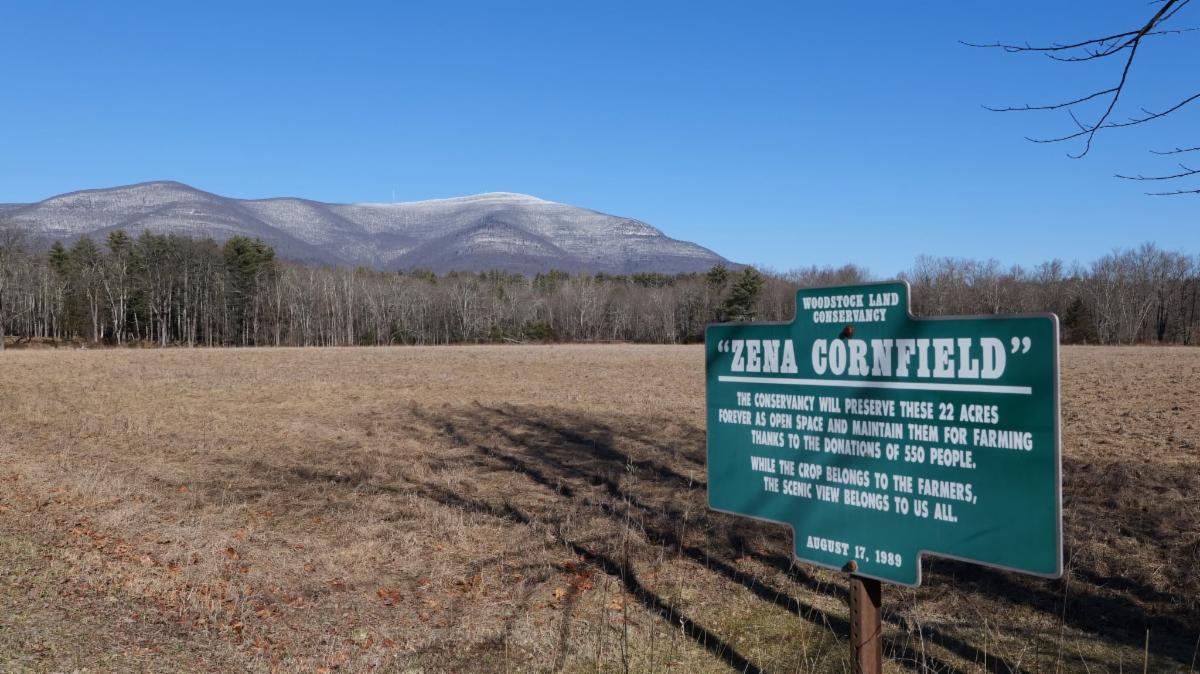
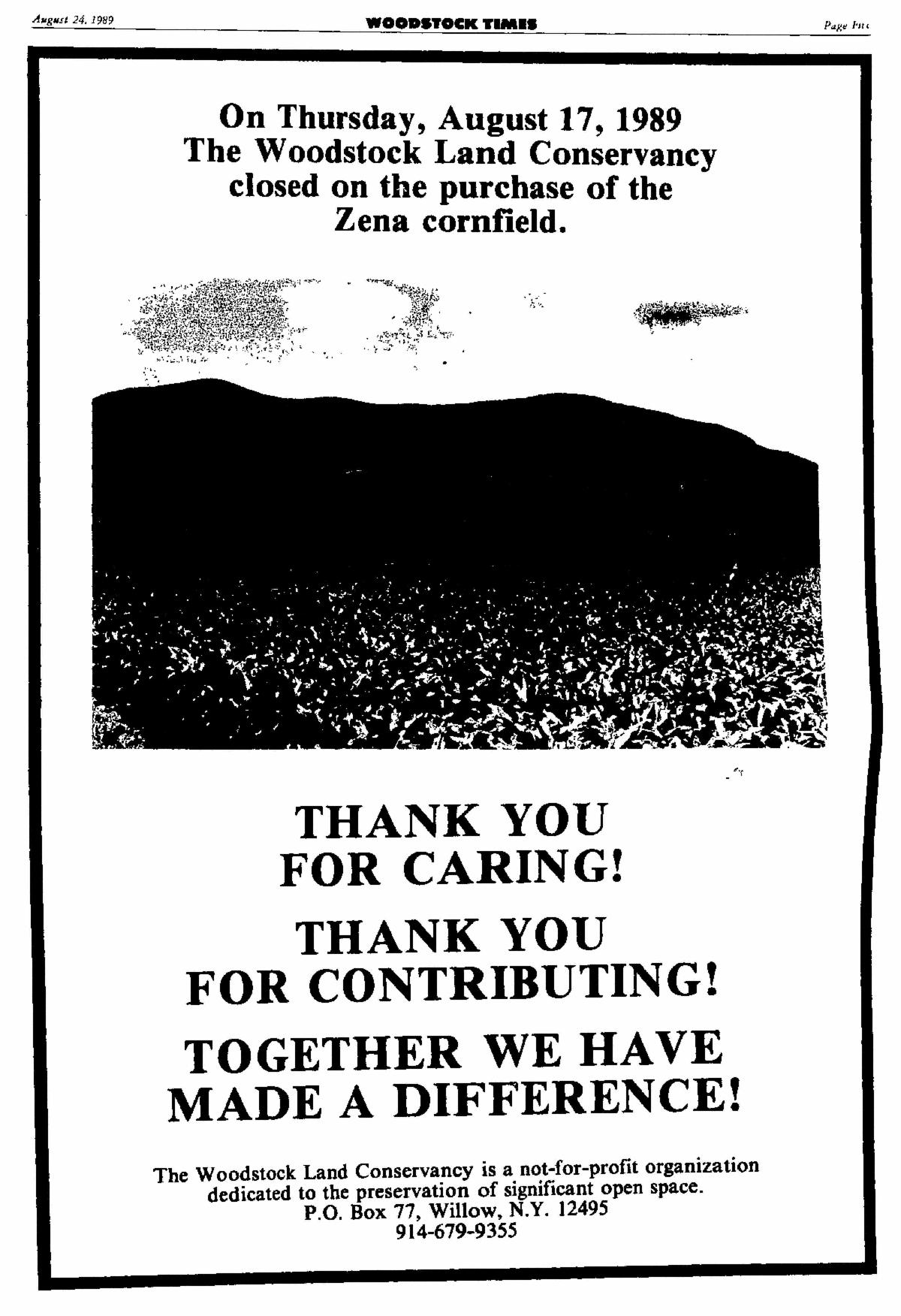
More than 500 people came through, which says something nice about community, or something practical about how cheap it is to avoid years of regret every time you'd have driven past two houses instead. Leonhardt herself put it best: it would only take everyone who'd ever "snitched an ear of corn from the field" pitching in, and the whole thing would pay for itself. On August 17, 1989, the deed was signed, Zena Cornfield became WLC's first-ever land purchase, and the organization's fundraising debut went from theoretical to real estate in a single summer.
Thirty-seven years later, it's still our (the collective "our") field.
| |
An Unlikely Cast of Funders
The threat, as it turns out, was never just "two houses"; that's simply what made it into the zoning code. The field had, at various points, been eyed for a low-cost housing development and, earlier still, floated as a possible industrial park (a plan that, mercifully, went nowhere, but which tells you everything about how commercially tempting a flat, buildable field really is to people who don't have to look at it every day).
What nobody could have scripted is who ended up on the side of saving it. It started with Frank Engel, a Woodstock attorney who, when local mortgage broker Tom Mangione was half-heartedly weighing a low-cost housing development on the site, suggested a conservancy purchase instead. From there, Bernard Korostoff, the man selling the field, donated $7,500 back toward WLC's purchase price, at Mangione's own urging. And Eliane Abramoff, the real estate broker who held the listing, and who happened to be Mangione's wife, pledged to donate $7,500 of her commission, not all of it, but a real chunk, if the sale went to the conservancy instead. Two of the people closest to the deal, with real financial interest in seeing it go the other way, chose to help save the field instead. Make of that what you will; I choose to believe it says something nice about people.
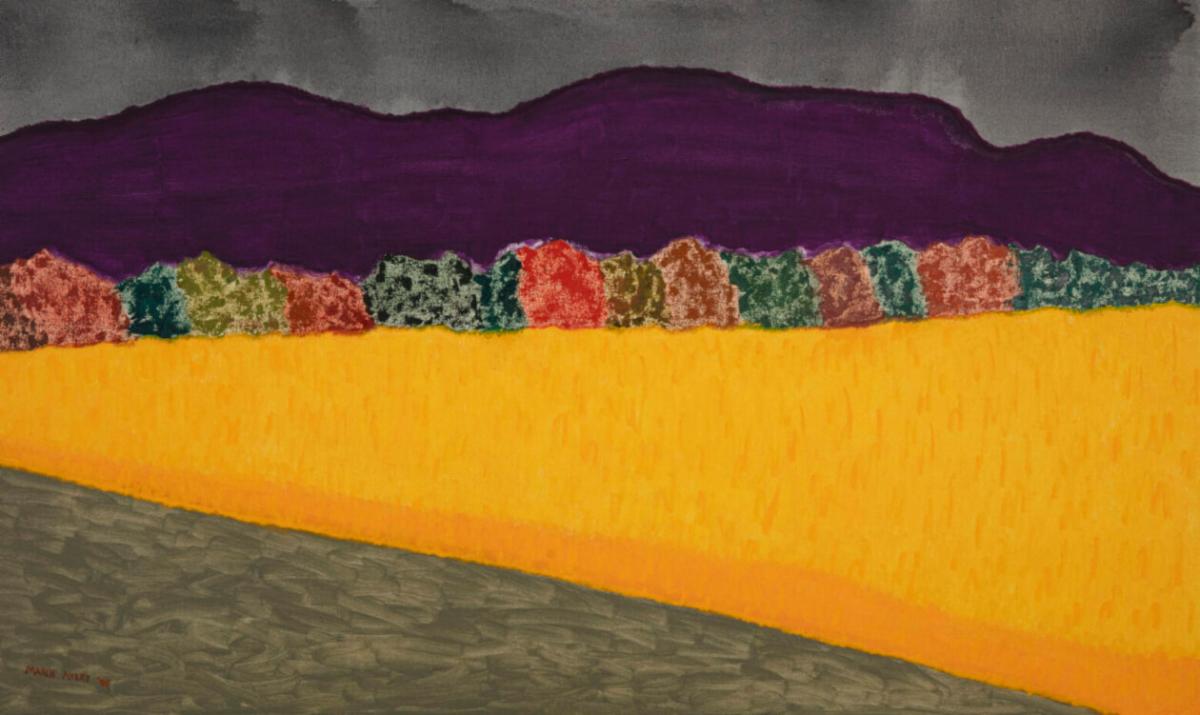
| | March Avery, Zena Cornfield, 2001, oil on canvas, 56 x 40 in | | |
What the Deed Still Protects
The deed itself carries a covenant that has held for thirty-seven years without so much as a wobble: no structures, no residential or commercial development, the land kept forever as open field and woodland, same view, same vistas, no exceptions. Agricultural use, notably, was protected on purpose, because WLC's actual 1989 plan was to keep leasing the field to local farmers for corn, using the proceeds to fund upkeep. That same year, a Hurley farmer named Robert Davenport was already leasing it, along with two neighboring cornfields—all three planted in a cover crop of rye to rest the soil.
The obvious joke about a place called Zena Cornfield is that it doesn't grow corn. The less obvious one is that these days, it doesn't grow anything you could actually sell. For years, the field was hayed by a local farmer working with balky, chronically late machinery, and in the meantime, milkweed discreetly took over the center of the field. When another local farmer was asked to weigh in on the milkweed-heavy hay as livestock feed, his assessment was "borderline acceptable," which is not exactly a selling point. In 2023, the board faced the question directly: was it worth haying off the exact plant Monarch butterflies depend on, just to keep calling this a hayfield? They chose the Monarchs. The field is now managed as open meadow and pollinator habitat, brush-hogged on a rotation, its walking path mowed, its mugwort kept in check, all still governed by the same 1989 deed, which still requires the land to hold its balance between open field and woodland.
| | |
On Giving and Taking
Every decision so far in this story, the seller giving money back, the broker walking away from her own commission, a board choosing milkweed over hay, has the same shape: someone had a chance to take more from this land than they needed, and didn't.
And yet—long before anyone had the chance to give something back, something was simply taken. Former town historian Alf Evers traced the field's paper trail to 1703, when two settlers petitioned the colonial governor for the land, in this valley that belonged to the Esopus long before it belonged to anyone holding a deed. In wider Lenape tradition, corn itself was understood as a spirit, Kahesana Xaskwim, Mother Corn. What that meant here, exactly, isn't ours to say. But we're working with partners to fill in this gap, so we can tell that story too, inspired by a field that has had thirty-seven years of people trying to get it right. It deserves the same for the years before that.
One fitting coincidence in the meantime: the Lenape name for August is Winaminke Kishux, "when the corn is ripe month," per the Delaware Tribe's own Lenape Talking Dictionary. This field's anniversary happens to land right in the middle of it.
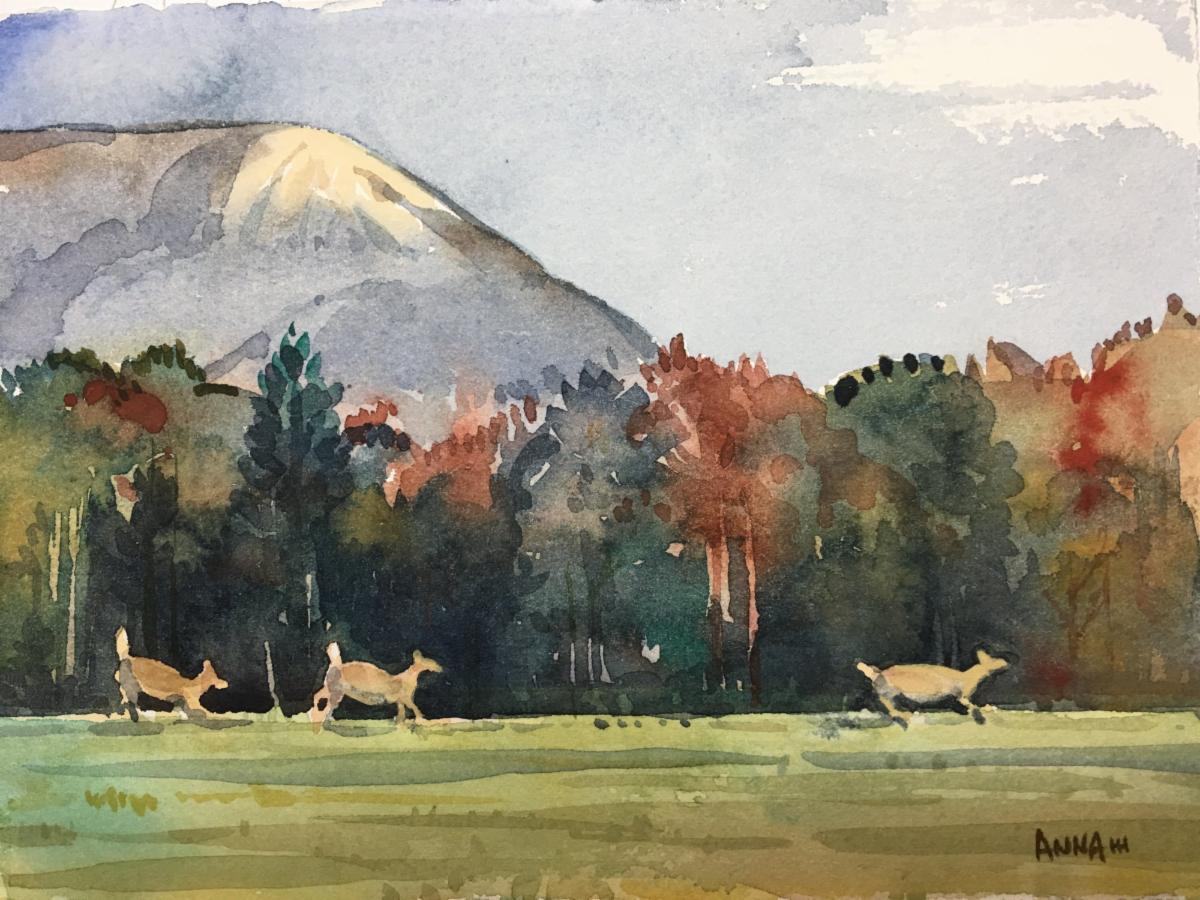
| | Anna Wang, Zena Cornfield, Watercolor, 5 x 7 in | | |
Full Circle
On August 9, 2014, WLC threw the field a 25th birthday party: corn on the cob, cornbread, strawberry lemonade, guided nature walks, a treasure hunt, live music, storytelling, even a blessing of the land, with painters and photographers working the field all day under nothing but whatever shade Overlook Mountain felt like providing.
Somewhere in the list of small 1989 donors was a Kingston resident named Marita Lopez-Mena. Twenty-five years later, she was WLC's executive director, presiding over the very anniversary she'd once humbly helped fund with a donation she herself described as small. Looking out at the field that day, she called it one of those truly iconic landscapes, which, for the record, is exactly the kind of thing you're allowed to say once you've spent a career making sure the landscape in question still exists to look at.
She wasn't the only one who felt claimed by it. Ronnie Shushan, another donor, recalled the exact moment, driving up from the city years earlier, passing this field, and knowing she'd found home. And in 2022, more than three decades after the campaign wrapped, a Woodstock resident wrote in to the local paper entirely unprompted, just to thank Leonhardt for having the foresight to save this field and the one across the road, adding that they still couldn't drive past either one without breathing a little deeper. Nobody asked them to write that. They just did, thirty-three years later, because the field was still doing its job.
There's a picnic table and a bench out there now, both angled toward the same Overlook view the 1989 campaign fought to protect. The cornfield is evoked in our logo too, the organization's first purchase, still present in spirit. That's really where WLC started, and where it's stayed: not against development for its own sake, just insistent that someone actually look, actually ask what a piece of land can hold before deciding what happens to it. Thirty-seven years ago, that meant a cornfield. Today it means a lot of things. The instinct hasn't changed.
| | | | |