New Way to See What Humans Cannot


Artificial intelligence has just spotted something in the Nevada desert that generations of geologists, prospectors, and energy developers never found. Zanskar, a Utah based geothermal exploration company, announced that its AI driven prospecting system has uncovered a large, completely hidden geothermal reservoir called Big Blind outside Tonopah, Nevada. The find represents the first time in more than three decades that the geothermal industry has identified and confirmed a commercial blind system, a resource with no visible or surface level signs.


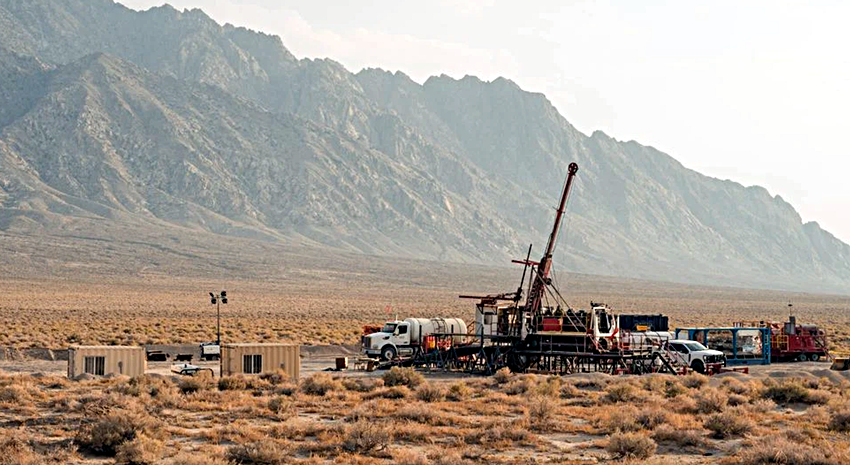
On the surface, the Big Blind site looks like any other stretch of Great Basin desert: no steam vents, no warm ground, no hot springs, nothing to hint at the energy simmering thousands of feet below. “Nobody knew this site existed,” says Zanskar cofounder Joel Edwards. “If you or I walked across it, there’d be no clue that a geothermal system was there. It’s totally blind from scratch.”


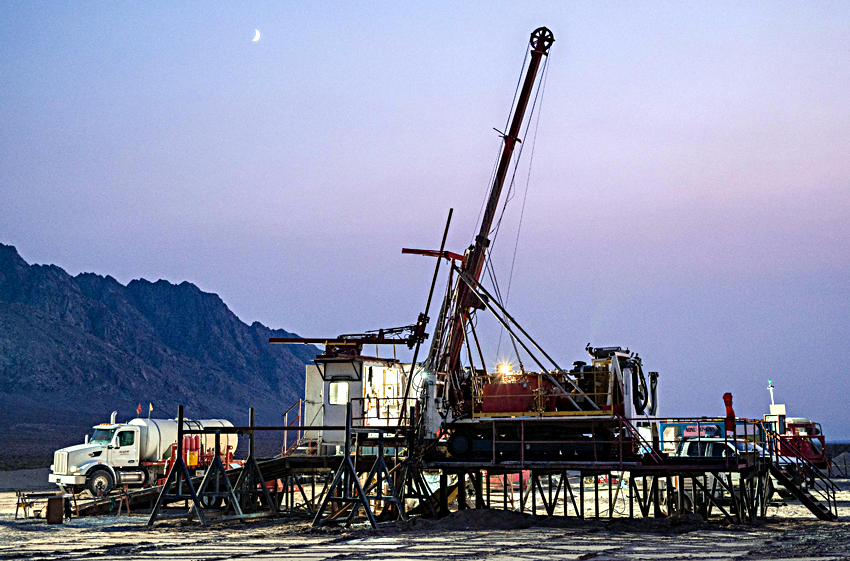
Last year, the company drilled two exploratory wells to about 2,700 feet, discovering a 250 degree Fahrenheit reservoir hot enough and permeable enough to support a utility scale geothermal power plant. To Zanskar, this is proof that its AI can illuminate vast clean energy resources that traditional exploration methods have repeatedly missed.


Most geothermal systems in the American West never reveal themselves at the surface. The question for decades has been how to find them. For Zanskar, the answer is letting algorithms ingest enormous geological data sets fault maps, conductivity surveys, seismic interpretations, historical drilling logs and identify the subtle signatures humans are likely to overlook.


The company believes Big Blind is only the beginning.

Cracking the Code of Hidden Heat


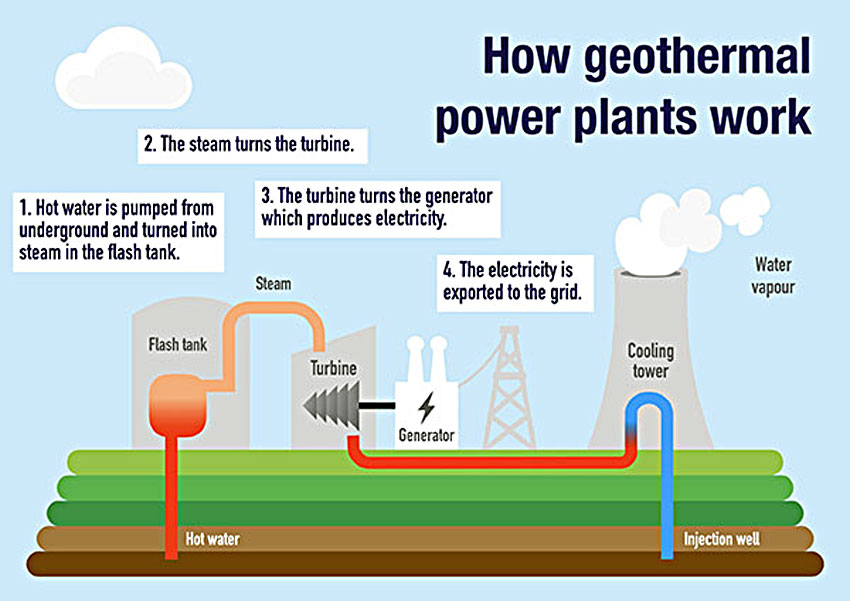
Geothermal power is a simple idea with notoriously difficult implementation. The Earth’s interior constantly produces heat; where accessibility and temperature align, the energy can be tapped to spin turbines, generating round the clock power with no combustion and no carbon emissions. The challenge is locating high temperature reservoirs before drilling begins. For conventional geothermal, an exploratory well is an expensive gamble ranging from hundreds of thousands to several million dollars.


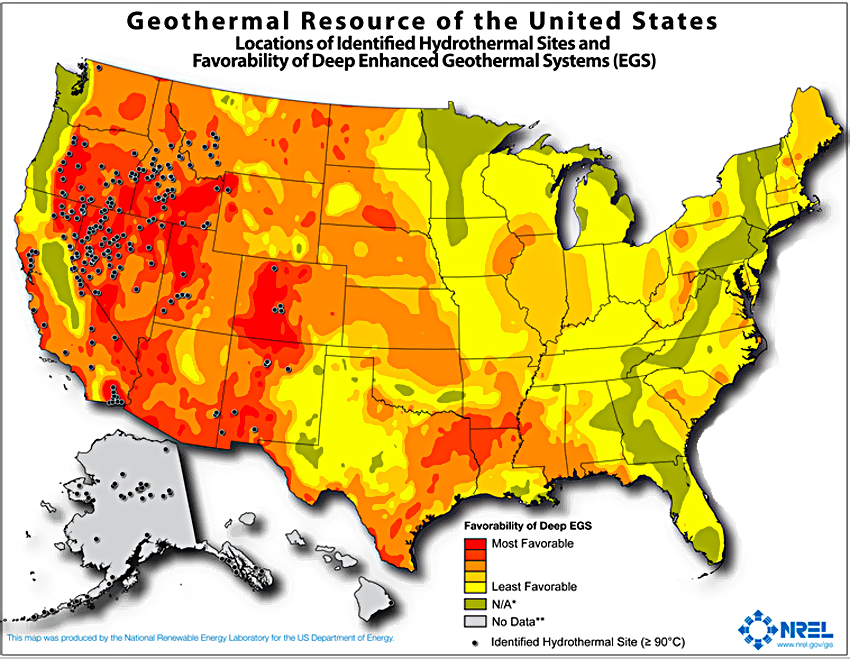
Historically, many of the United States’ most productive geothermal fields were discovered by accident oil drillers encountering steam, agricultural wells tapping unexpected hot water, or ranchers stumbling upon surface activity. The few systematic attempts, such as a 1970s federal grid drilling campaign in Nevada, produced limited success because researchers lacked meaningful subsurface heat flow data.


AI reshapes the equation. Edwards and cofounder Carl Hoiland built Zanskar on the idea that geothermal resources are far more abundant than government estimates suggest but only if a new way of finding them emerges. “We think there’s ten times more out there than anyone thought,” Hoiland says. “And each site can be dramatically more productive than earlier estimates predicted.”


Zanskar’s algorithms trace their lineage to a body of academic work led by scientists like James Faulds of the University of Nevada, Reno. Faulds spent years cataloging attributes of known geothermal systems fault offsets, structural intersections, heat flow anomalies and used those patterns to predict where blind systems might exist. His research helped locate a blind geothermal system in 2018, validating the approach but not advancing it to commercial scale.


Zanskar has expanded that methodology, feeding its models far larger volumes of geospatial, structural, and geophysical data. During surveys, the company’s geologists recently identified a geothermal anomaly west of Tonopah, indicating high heat flow. The AI system then pinpointed optimal well locations for testing. Drilling confirmed that the anomaly was not a mirage: Big Blind was real.


Its 250 degree Fahrenheit temperatures far surpass minimum requirements for utility scale power and contrast sharply with other regional areas that require drilling to depths of 10,000 feet or more. Those deeper resources are viable for next generation geothermal technologies being developed by startups like Fervo Energy, but they require more complex and costlier engineering.


By contrast, Zanskar’s resource can support a traditional geothermal plant something the industry knows how to build quickly, reliably and at scale.

Federal Momentum Meets Private Innovation


While some renewable sectors have faced regulatory pauses or political headwinds, geothermal has enjoyed rare bipartisan support. Under a recent federal energy emergency declaration, geothermal heat was identified as a domestic resource requiring urgent development. The Bureau of Land Management has accelerated environmental review timelines for several Nevada projects, and Zanskar says its federal partners have been great to work with as permitting progresses.


Big Blind sits on BLM land, meaning the project relies on close coordination between state and federal agencies. “Everybody’s really excited about this project,” Edwards says. “We’re choosing to be optimistic and drive for the most accelerated timelines we can.”


Zanskar envisions a future in which data centers colocate directly with geothermal resources, a model that could shift the geography of the digital economy. Instead of building server farms near major population centers and long distance transmission corridors, data center developers could build near geothermal plants in the rural West reducing transmission congestion while guaranteeing stable clean power.


Meanwhile, the United States remains the world’s leading geothermal nation. Yet new development has lagged. If Big Blind reaches full operation, it will be the first new conventional geothermal plant on previously undeveloped ground in nearly a decade.

Race Between Old Heat and New Technology


Todays geothermal renaissance is largely associated with enhanced geothermal systems EGS, which use techniques similar to fracking to artificially create permeability in deep, hot rock. EGS can unlock geothermal resources almost anywhere, but the approach is technologically demanding: it requires water injection, advanced drilling equipment, and precision engineering to fracture rock safely. It can also create low level seismicity, although significantly less than oil and gas fracking.


But conventional geothermal drilling into naturally permeable hot reservoirs remains the fastest and cheapest approach when available. Zanskar’s contrarian bet is that many such reservoirs remain undiscovered because the industry has lacked the tools to find them.


The interplay between the two approaches mirrors a broader trend: as drilling and data analysis technologies advance, geothermal potential as a whole expands. With deeper drilling capabilities and more powerful modeling tools, even hotter and more inaccessible reservoirs could soon become economically viable.


A 2008 federal report estimated that undiscovered geothermal systems across the US held about 30 gigawatts of potential. Faulds now believes that figure may be off by well over an order of magnitude, suggesting tens to hundreds of gigawatts could be waiting beneath the western United States. In his view, Zanskar’s discovery signals the ability to harness far more geothermal energy as drilling technology improves.

The Beginning of a New Thermal Frontier


Zanskar plans to move Big Blind into full development, a process that includes interconnection studies, environmental reviews, power plant construction, and drilling additional production wells. Hoiland calls it almost cookie cutter for the geothermal sector. “We know how to build power plants. We just haven’t been able to find the resources in the past.”


If Zanskar’s AI continues to identify similar blind systems, the company could dramatically expand the country’s conventional geothermal footprint faster, cheaper, and with less technical risk than many next generation techniques. For an energy hungry nation accelerating toward electrification, such discoveries inject new optimism into the clean firm power landscape.


To Edwards, this is not a one off success but the first signal of a long awaited shift. “Geothermal used to be seen as a graveyard of failed projects,” he says. “Now, thanks to new tools and new capabilities, we can systematically find these sites. This is the moment the tide turns.”


Big Blind may be hidden from sight, but its implications are unmistakably visible. AI has illuminated a new path in the geothermal frontier one that could redraw the map of America’s clean energy future, starting in the quiet desert just outside Tonopah.

If you know anyone who you think might be interested in my emails - Please forward to them this link.


http://www.renokelly.com/blog.html


They can click on a subject that interests them on this webpage. I will not contact your friend unless they contact me. Of course, nobody is ever given access to my email list.


Thank you very much - Kelly