View as Webpage


This Month's Newsletter is Packed with the Latest Research, Exciting Events, Plus IBD-Friendly Recipes for May!


  • Recap of our First Live Event! IBD Nutrition in Practice: A Culinary Experience 
  • Celiac Awareness Month - New Gluten-Free Label Reading Resource
  • Highlights on Celiac Disease Covered at Digestive Disease Week 2026 
  • Dietary Approaches for IBS: What Works? 
  • May 22nd is EoE Day: New partnership with APFED and DDW Core Messages 
  • World IBD Day May 19th: Raising Awareness for Crohn’s Disease and Ulcerative Colitis 
  • GI Nutrition Collaborating with ICN PFAC for Launch of Live Cooking Demo Series
  • Memorial Day BBQ Gut-Friendly Recipes

Our First Live Event! GI Nutrition Foundation Hosted IBD Nutrition in Practice: A Culinary Experience

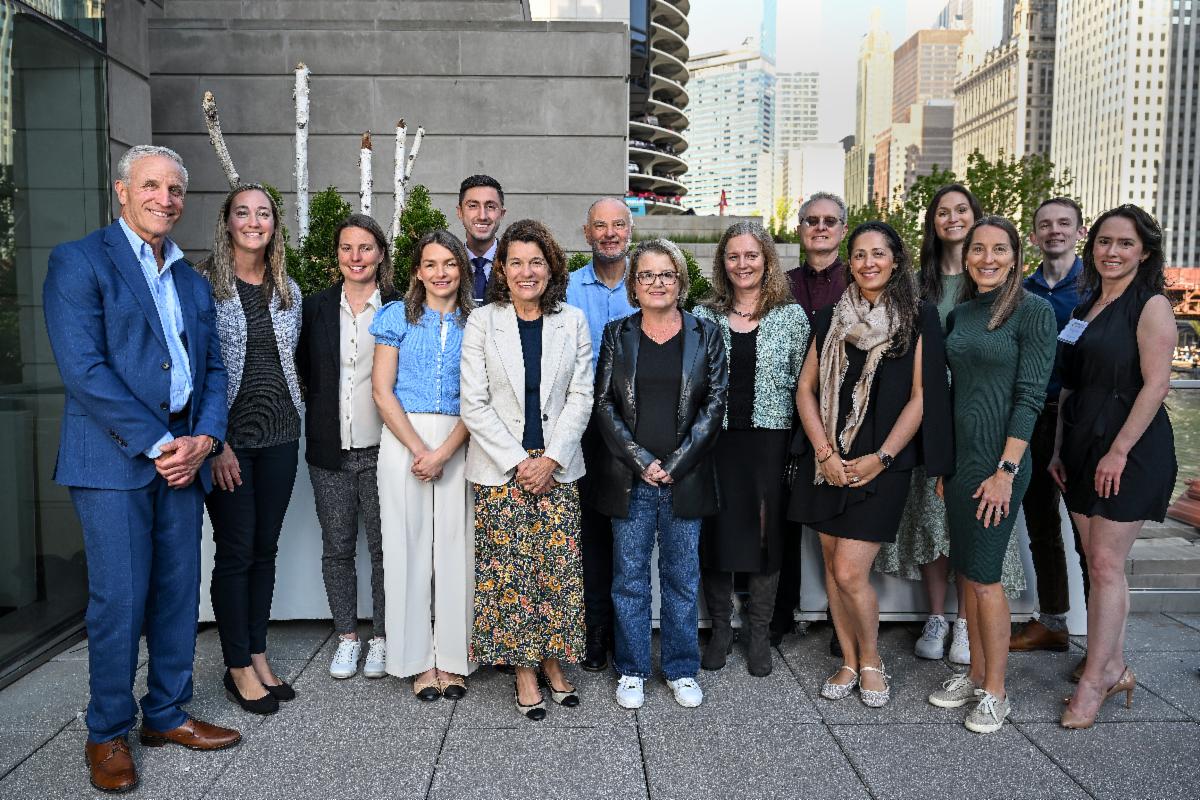
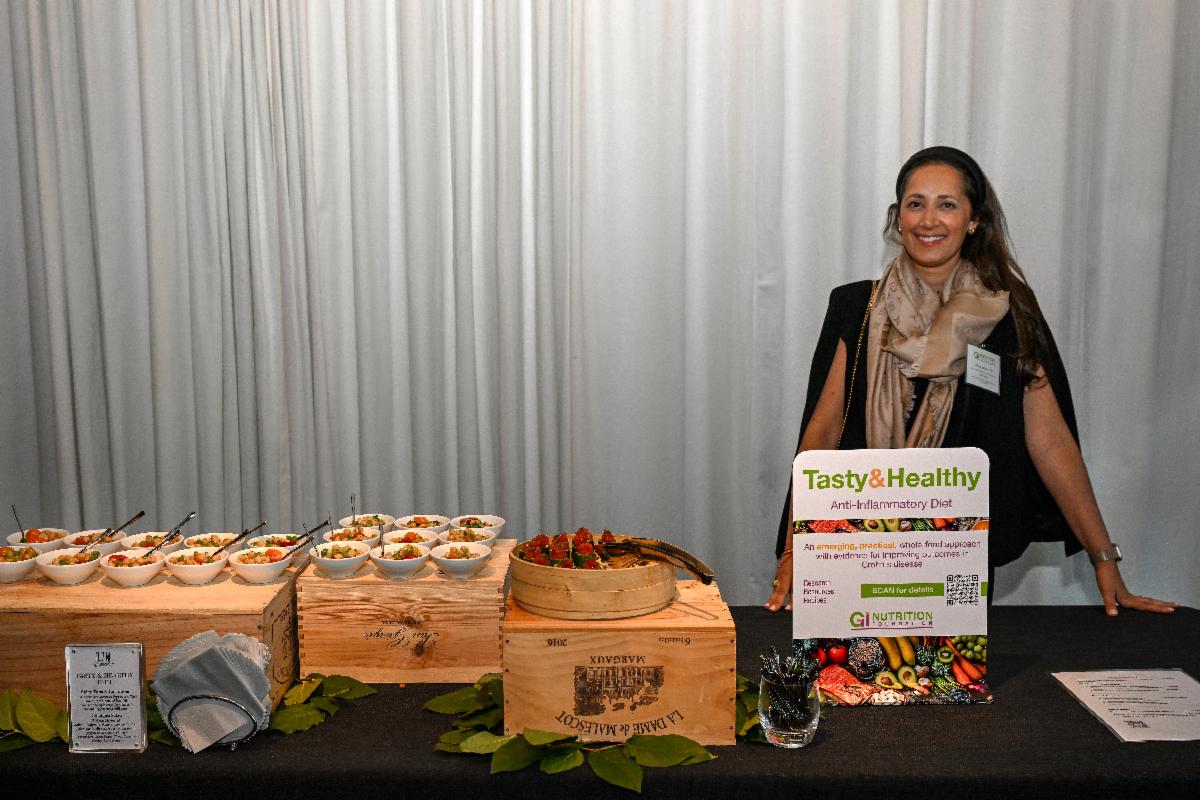
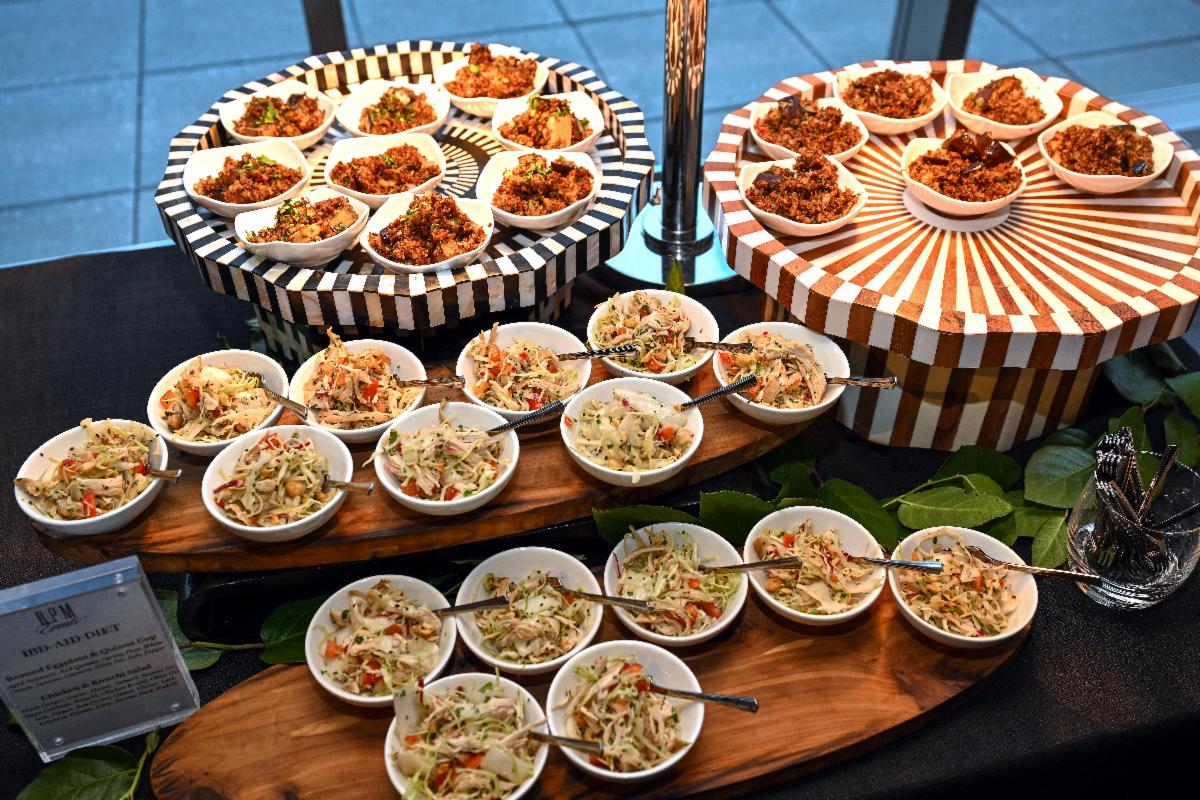
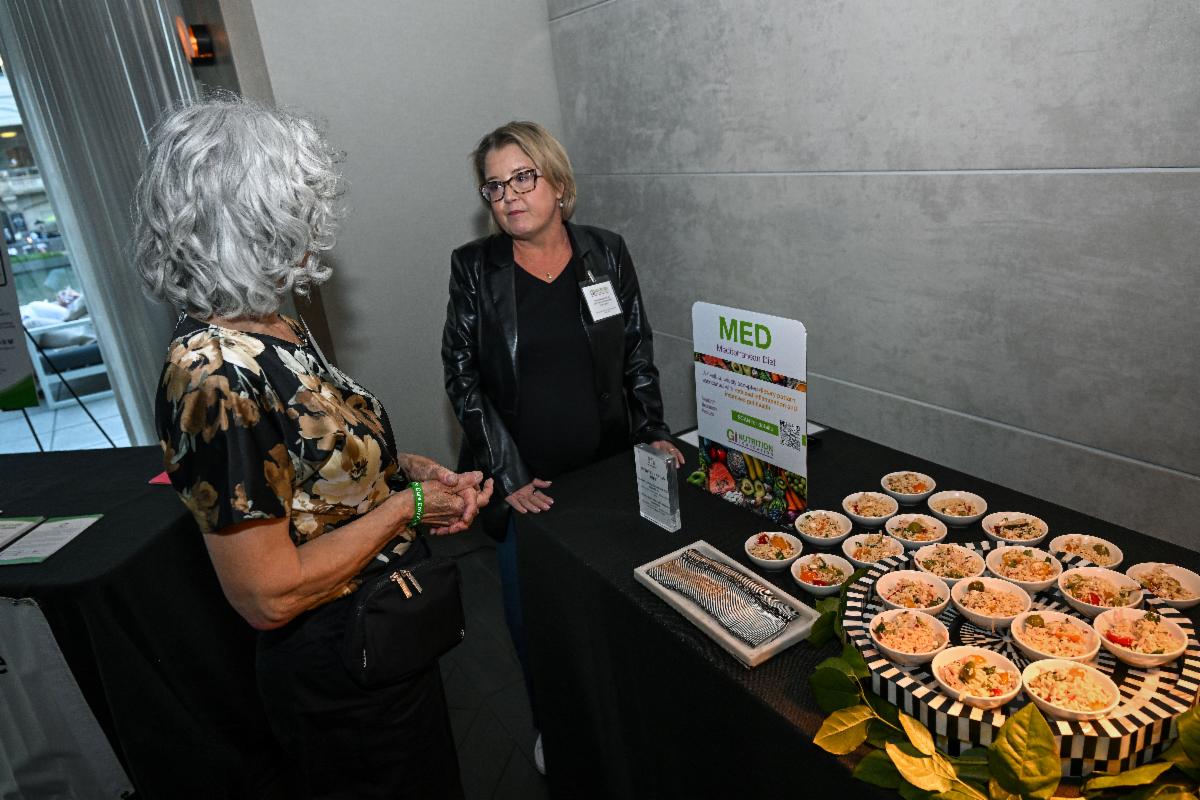
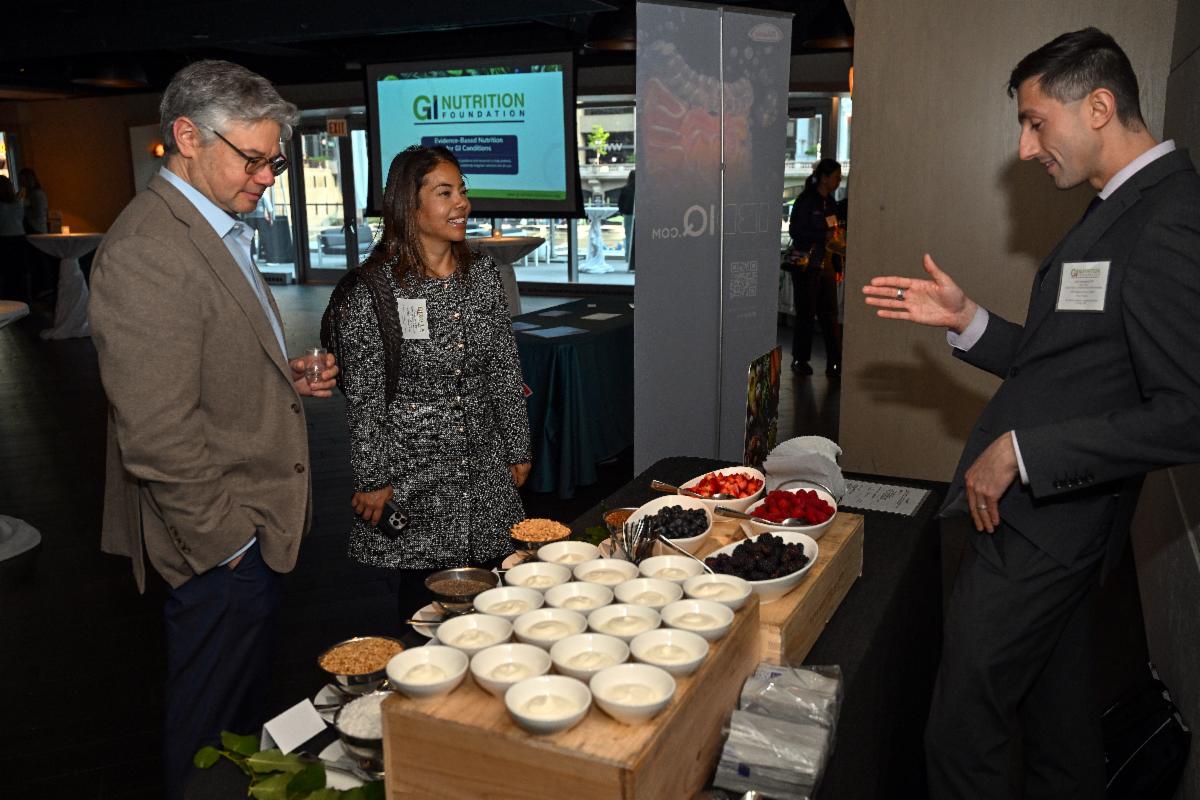
We hosted our first LIVE event during Digestive Disease Week on Sunday, May 3rd! IBD Nutrition in Practice: A Culinary Experience was an interactive evening of learning, conversation, and great food. Attendees explored how evidence-based nutrition strategies can be implemented into real-world IBD care. Each table showcased a different therapeutic diet or concept, with representative foods and expert faculty explaining the evidence behind it and the nuances of its use in IBD. It was a wonderful evening of delicious food, connection, and education! Thank you to our faculty, sponsors, and all those who joined us!

We invite you to view all the event photos here.

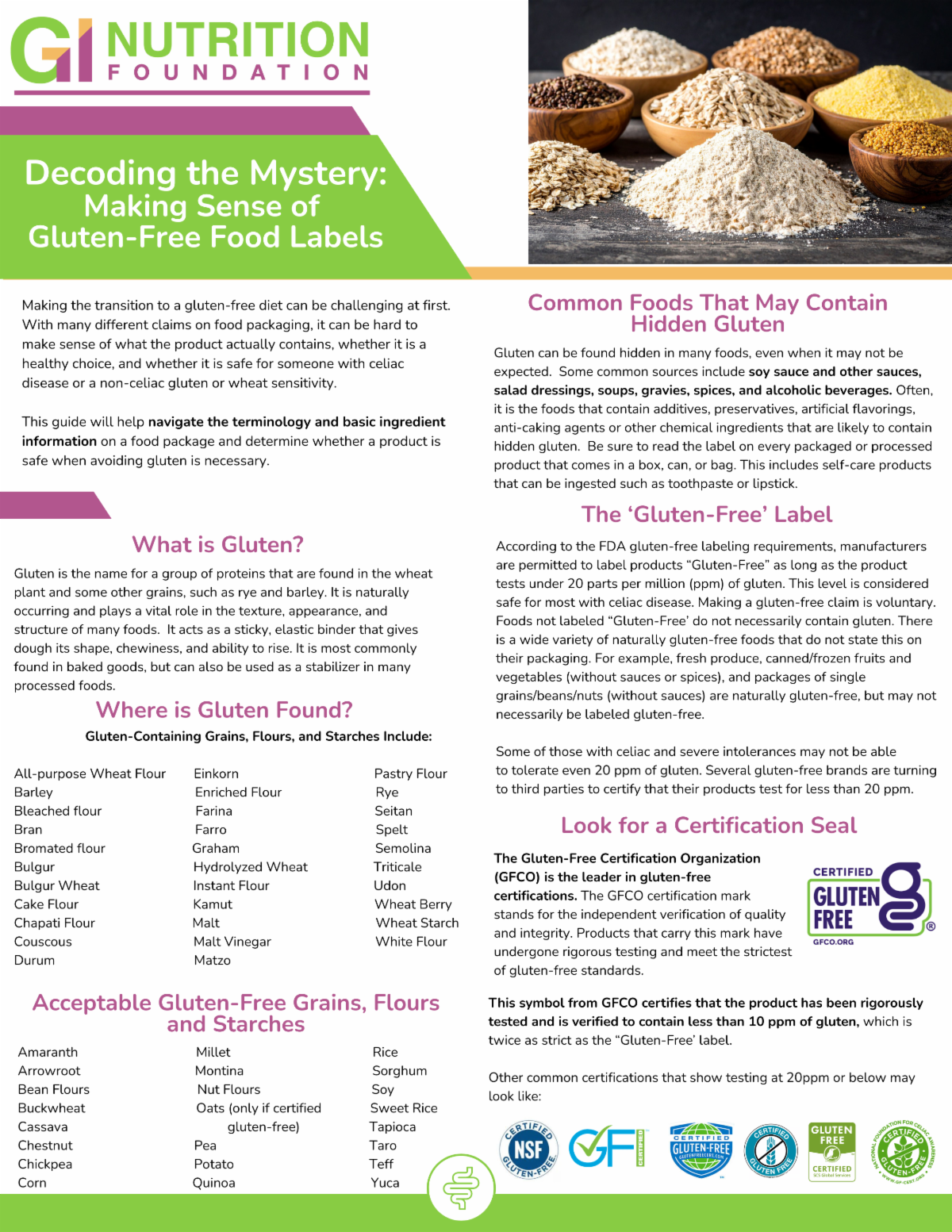
May is Celiac Awareness Month: New Gluten-Free Label Reading Resource

This May, we are raising awareness about celiac disease. It is estimated that 1 in 100 people worldwide are living with celiac disease, yet many individuals are going undiagnosed and living with symptoms without knowing the root cause. A strict gluten-free diet is the only treatment for celiac disease. Our new resource provides an in-depth look at how to read labels to determine if a food is safe for those with celiac disease. Click on the image to download and print the PDF resource. Heading

Highlights on Celiac Disease (CeD) and Gluten-Related Disorders Covered at DDW 2026:


  • Despite following a long-term gluten-free diet (GFD), people with celiac disease can experience persistent gastrointestinal symptoms and should be managed accordingly.

Source: DDW ePoster Library. van Gils T. 05/02/2026; 4196558; Sa1272. 


  • Gluten in celiac disease and gluten sensitivities:


-Even with CeD, where the GFD is mandatory, poor dietary education can result

in an unbalanced diet, eating disorders, psychological side effects, and nutrient

deficiencies. 


-Fructans and expectations around gluten intake could play a more relevant role

in symptoms in non-celiac gluten/wheat sensitivity than gluten alone.


-Expectations may play a major role in symptom generation after wheat or gluten

intake. To isolate the culprit, the following 3-phase proposed algorithm might

help: 1) Initial screening; 2) Exclusion of celiac disease and wheat allergy;

3) Controlled dietary evaluation with elimination and challenge protocols under

dietitian supervision. 

Source: Nancee Jaffe’s presentation “Making sense of gluten and gluten-related disorders”.


  • Beyond avoiding gluten, people with celiac disease should monitor iron levels and the need for iron therapy, routinely evaluate bone health, and monitor for improvement if treating these conditions.

Source: Carol E. Semrad’s presentation “Celiac disease: avoid gluten, but then what?”


Stay tuned for our upcoming article on what’s new and interesting about the role of nutrition care in celiac disease!

Dietary Approaches for IBS: What Works?

IBS is a very common condition that affects four in ten people. Patients often prefer diet as a first-line approach for IBS. In our most recent News Article, learn more about what recent evidence suggests on the efficacy of whole diets, foods, and supplements for managing IBS.

Myth or Fact: Gluten and Wheat Are The Primary Culprits in IBS


This is a myth!


Fructans (found in wheat-containing products) may be a larger culprit in IBS than gluten.


Fructans are short-chain carbohydrates that escape digestion in the small intestine and are fermented by gut bacteria, and may be the most likely triggers of bloating and flatulence.


When celiac disease is excluded, the use of a gluten-free diet is not recommended in all patients with IBS. Identifying the subset of patients who may benefit from a gluten-free diet while destigmatizing wheat and gluten in the remaining ones should be considered for effective management of patients with IBS.


Focusing on consuming less fructan-rich foods (e.g., sourdough bread (lower in fructans) instead of regular bread) could be considered, rather than removing all gluten, as a first-line dietary treatment for IBS.


Beyond fiber and the low FODMAP diet in IBS


While the low FODMAP diet is often recommended as a first-line approach for IBS, it comes with downsides:

  • A decrease in gut microbiota diversity
  • Some nutrient deficits (e.g, fiber, calcium)
  • Food anxiety
  • Poor social life
  • Long-term dietary restrictions


The goal of dietary management of IBS should be to focus on what to include rather than what to exclude.


👉 Learn more about the science-based non-restrictive dietary options that exist for IBS

here.

May 22nd is EOE Day: New Partnership Announcement and Some #DDW2026 Core Messages

The GI Nutrition Foundation is proud to announce a new partnership with The American Partnership for Eosinophilic Disorders (APFED), strengthening our shared commitment to supporting individuals affected by Eosinophilic Esophagitis (EoE). Together, we aim to expand access to reliable and evidence-based resources, raise awareness, and improve the quality of life through education and advocacy. We look forward to future collaborations with APFED in our shared mission.

Highlights on EoE covered at DDW 2026: 


  • The roots of eosinophilic esophagitis extend beyond eosinophils: genetic susceptibility interacts with environmental factors, resulting in epithelial barrier failure and eosinophil-rich inflammation, leading to esophageal remodeling and strictures. Source: Rhonda F. Souza’s presentation “Eosinophilic gastrointestinal disease: modern understanding of pathogenesis: lessons learned from eosinophilic esophagitis”.


  • Diet matters in EoE at every step of diagnosis and treatment. Shared decision-making should play a large role in determining first-line therapy with consideration of the severity of EoE. 


-In eosinophilic esophagitis dietary therapy, the question is not just what works, but how much restriction is necessary to achieve meaningful benefit.


- Available data and guidelines support using the least restrictive food elimination

diet (milk elimination) as first-line, with a sequential increase in restrictions in

nonresponsive patients who are motivated to continue. 

Source: Joy W. Chang’s presentation “How much is enough? Elimination diets in EoE”.


Read more about how effective eliminating a single food (milk) can be here and find recipes that substitute milk with coconut milk, flax milk, or oat milk. 


Stay tuned for our upcoming article on what’s new and interesting about the role of nutrition care in EoE!


World IBD Day is May 19th

World IBD Day takes place annually on May 19th to raise global awareness for Crohn’s disease and ulcerative colitis. This day focuses on highlighting the challenges of living with an invisible chronic illness including pain, mental health and social stigma. Join us in wearing purple to represent our awareness and support for the IBD community. Find more information about IBD on our website.  

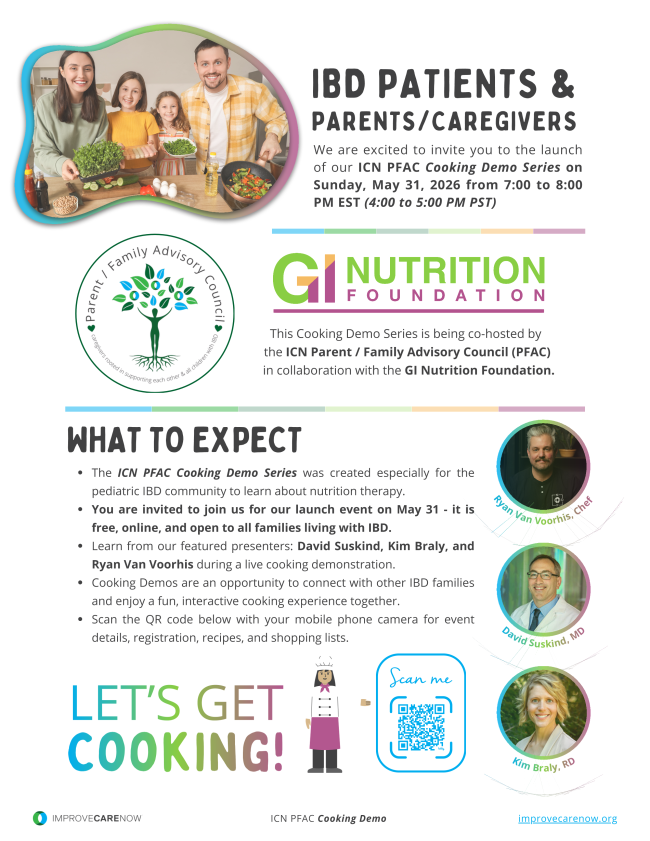
Join GI Nutrition Foundation and Improve Care Now For a Live Cooking Demonstration

GI Nutrition Foundation is collaborating with Improve Care Now’s Parent / Family Advisory Council (ICN PFAC) to launch a free, online Cooking Demo Series on Sunday, May 31st, from 7:00-8:00 pm EST. This event was created especially for the IBD community to learn about Nutrition Therapy together. Learn from our featured presenters: David Suskind, MD, Kim Braly, RD and Chef Ryan Van Voorhis during a live cooking demonstration. This is a great opportunity to connect with other IBD families and enjoy a fun and interactive cooking experience together. Click here for more information and to register.

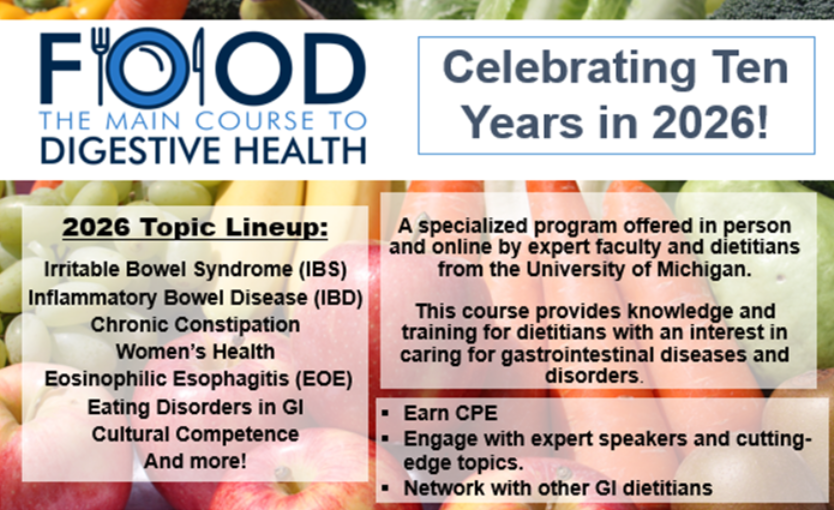
Food The Main Course to Digestive Health is Celebrating 10 years in 2026

This is the 10-year anniversary of the Food the Main Course conference! Taking place on July 29th-31st, 2026, at The Vanguard in Ann Arbor, MI, this program is offered both in person and virtually by expert faculty and dietitians at the University of Michigan. This course provides knowledge and training for dieticians with an interest in gastrointestinal diseases and disorders. Click here for more information.

Recipes for May

May is the official kick-off to the summer season for many, as the weather warms up in most of our country. We look forward to hosting some outdoor gatherings including Memorial Day BBQ towards the end of the month. Explore our database of recipes to find delicious and gut-friendly recipes to help celebrate the start of the summer season.

Know someone with IBD, IBS, Celiac, or  EoE looking for information on evidence-based nutrition? Forward them this newsletter! They can sign up to join our community and receive our monthly newsletter here.

We are grateful for the collaboration and support of our Corporate Partners!

*Please note that the GI Nutrition Foundation does not provide medical advice. The content provided here is for informational purposes only. Patients should always talk with their healthcare providers before changing their diet.*

 
Web  Facebook  Instagram  X  LinkedIn  YouTube