|
When Polarity Becomes Polarization
By Dr. Mao Shing Ni
We live in an age increasingly defined by division. Politics, culture, religion, economics, and even personal identity have become battlegrounds of opposing views. Social media and modern news cycles intensify emotional extremes, rewarding outrage over reflection and certainty over understanding. People are pressured to choose sides, defend positions, and define themselves through opposition.
Yet from a Taoist perspective, this moment presents a profound paradox: polarity itself is natural and necessary to life, yet excessive attachment to polarity becomes destructive.
Nature is built upon complementary opposites. Day transforms into night, expansion gives way to contraction and activity alternates with rest. The heart contracts and relaxes, the lungs inhale and exhale and Yin and Yang continually dance in relationship with one another, generating movement, growth, and transformation.
Without polarity, life itself could not exist. The problem, therefore, is not polarity. The problem is polarization which leads to imbalance, rigidity, and identification.
The Wisdom Hidden Within Opposites
The ancient Taoists observed that the universe functions through dynamic balance rather than static absolutes. What appears opposite is often interdependent.
There is no day without night, no strength without softness, no movement without stillness and no life without death. This understanding is beautifully expressed in the Yin-Yang symbol. Within Yin exists the seed of Yang, and within Yang exists the seed of Yin. Opposites are not enemies; they are partners participating in a larger wholeness.
Nature does not resist polarity. It harmonizes it. For example, winter does not wage war against summer, the ocean does not compete with the mountain and night does not attempt to eliminate day. Each expression yields to the other in an ongoing cycle of transformation.
Human beings, however, often lose sight of this harmony. Instead of recognizing complementary tension, we become psychologically attached to one side of polarity and reject the other entirely. This is where suffering begins.
When Polarity Becomes Polarization
Healthy polarity creates movement and balance. Unhealthy polarization creates fragmentation and conflict.
Modern society increasingly rewards absolutism. This is illustrated by the thinking: “I am right and you are wrong.” Complexity is reduced into simple binaries which hardens the mind and narrows perception.
From the Taoist perspective, excessive certainty is itself a form of imbalance. When emotion overwhelms awareness, objectivity disappears. Anger rises like uncontrolled fire and fear contracts like frozen water. Obsessive thinking stagnates the Qi and clouds judgment. The more tightly we cling to an identity or ideology, the more disconnected we become from reality’s fluid nature.
Chapter 76 of the Tao Te Ching warns repeatedly against rigidity: "…the hard and rigid are companions of the dead. The soft and supple are companions of the living."
The sage remains flexible because the sage understands that reality often contains paradox and change.
The Middle Way Is Not Weakness
In a polarized world, many people mistakenly interpret balance as indecision or passivity. Yet the Taoist teaching of balance is not apathy. The Middle Way or as my father OmNi refers to it as “The Centermost Way” does not mean refusing to care, rather it means refusing to become rigidly consumed.
One can hold convictions without hatred, pursue justice without rage and disagree without dehumanizing others. Students of the Tao seek to remain centered enough that emotions do not hijack consciousness.
This center is one of the most important concepts in Taoist cultivation. Like the still hub of a turning wheel, the center remains stable while the spokes circle around it. From this place, one can observe both sides of polarity clearly without becoming imprisoned by either. In other words, the objective is to study opposites without becoming trapped in opposition.
The Ego’s Addiction to Certainty
Much of modern polarization is fueled by ego identification. People increasingly derive identity, belonging, and emotional security from being “right.” As a result, conversations become competitions rather than opportunities for discovery.
Taoism does not deny truth but questions the ego’s claim to possess complete truth. The more rigidly the mind grasps one side of reality, the more it loses awareness of the greater whole and ends up with partial truth.
The Taoist approach invites us to listen deeply, observe carefully and remain open to learning and discovering. In other words, let’s empty our cup so it can receive.
Humility allows perception to evolve. The Taoist understands that human awareness is inherently limited and conditioned by culture, memory, emotion, and personal experience. Therefore, wisdom begins not with certainty, but with openness.
Cultivating Objectivity in a Reactive Age
Maintaining inner clarity today requires conscious practice. Our nervous system is continuously overstimulated by digital conflict, emotional media, fear, and outrage. Without grounding, our spirit becomes agitated and reactive.
That’s why I advise the following Taoist practices to help you restore equilibrium:
• Returning to Nature recalibrates the human spirit. Beneath the sky and among trees, many human conflicts regain proportion. Nature reminds us that life moves in cycles larger than our temporary emotional storms. I invite those eligible to participate in small events hosted at the Oregon Retreat Center amidst unspoiled nature.
• Practicing Stillness Meditation allows emotional sediment to settle so clarity can emerge naturally. Stillness trains the mind to witness without immediately reacting. Join the monthly taoist meditation course through ITMI.
• Embrace Change Reality encompasses the relationship and movement between polarity of Yin and Yang and change. This is why Taoist philosophy is deeply connected to the I Ching—the Book of Changes from which the understanding that transformation is woven into the fabric of existence. The universe is not static, rather it is an ongoing process of becoming. Consult the
I Ching daily to deepen your understanding of change.
• Cultivating Compassion Most people act from fear, conditioning, pain, and longing. Compassion softens rigidity and preserves our humanity even amid disagreement. Gratitude increases compassion, therefore, start each day with the Gratitude Meditation.
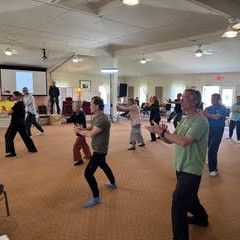
• Strengthening the Inner Center Through Qi Gong, Tai Chi, and Ba Gua and contemplative practices, we cultivate internal stability. When rooted internally, external chaos loses much of its power over us. Sign up for online classes at College of Tao and in-person classes at Yo San University.
The Deeper Spiritual Lesson
The paradox of life is that opposites are both necessary and incomplete... as Yin needs Yang, strength needs softness, action needs stillness and individuality needs community.
The Tao is not found exclusively within one pole or the other, but within the harmonious relationship between them. To walk the Centermost Way is therefore not to eliminate polarity, but to master our relationship with it.
A student of Tao learns to hold perspective without fanaticism, engage without losing peace, and discern without hatred. They also remain connected to the larger wholeness beneath apparent opposites.
In an age of fragmentation, your becoming a stabilizing presence may itself be one of the highest forms of spiritual practice. The world does not need more emotional extremes, what it needs is more grounded human beings, like you.
The Tao teaches that wisdom requires flexibility without losing integrity. Like bamboo bending in the wind rather than snapping under pressure, for perhaps true wisdom is not found in choosing one extreme over another, but in learning how to harmonize the tensions of life within the unfolding of the Tao.
|