|
APRIL 2025 MARKET SUMMARY
April 2025 saw continued economic headwinds across global markets, driven by persistent inflationary pressures, political uncertainty in Canada, and the first tangible effects of newly imposed U.S. trade tariffs.
Markets React to Tariff Implementation and Stubborn Inflation
Consumer Sentiment Remains Weak
The U.S. Consumer Confidence Index® edged lower to 91.2, marking the fifth consecutive monthly decline and reflecting growing unease about future income and labor market conditions. Elevated costs and the full rollout of the U.S. automotive tariffs weighed heavily on consumer sentiment.
Source: Advisor Perspectives
Major Index Performance
- Dow Jones Industrial Average (DJIA): Down 3.4% for the month, continuing March’s downward trend as investors digested geopolitical risks.
- S&P 500: Declined by 4.1%, with financials and industrials leading losses.
- Nasdaq Composite: Dropped another 5.6%, as tech companies remained vulnerable to valuation pressure and rate uncertainty.
Source: MarketWatch
Interest Rates & Inflation Expectations
The core PCE price index rose again in April, reinforcing concerns that inflation remains sticky. This continued upward pressure reduced the likelihood of near-term rate cuts by the U.S. Federal Reserve. Policymakers signaled a “wait-and-see” stance, closely monitoring wage growth and service sector inflation.
Source: The Guardian
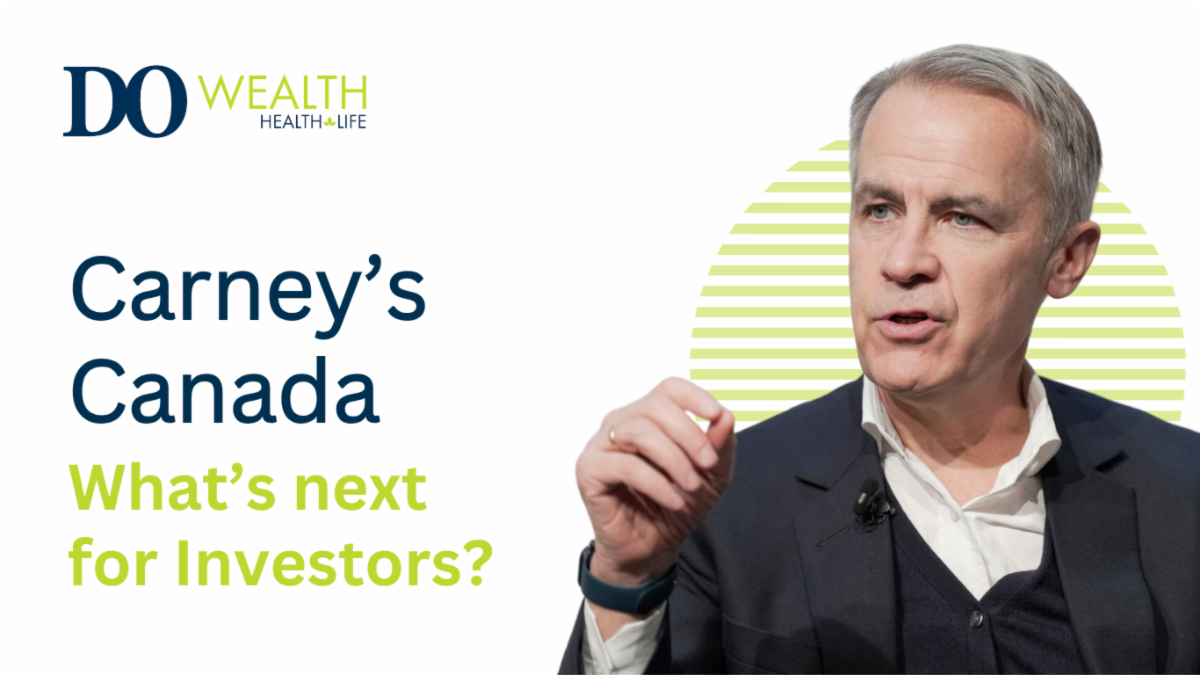
Meanwhile, Canadian markets adjusted to a new political landscape following Mark Carney’s election victory. While investor sentiment was cautiously optimistic about fiscal stability, currency markets remained volatile amid leadership transition and global trade uncertainty.
Geopolitical Developments: Trade & Transition
April marked the official start of the 25% U.S. tariff on imported vehicles, which drew strong responses from Canada, the EU, and Asia. Canada’s newly elected government began preliminary trade talks to mitigate long-term damage to domestic industries.
Sources: Reuters, Be Invested
In Europe, the ECB signaled a slower pace of rate cuts due to persistent inflation, while Chinese markets remained under pressure from both weak exports and internal credit tightening measures.
Outlook
With global inflation still elevated, interest rates holding, and geopolitical uncertainty increasing, markets are likely to remain volatile into Q2. Investors are encouraged to:
- Diversify across sectors and geographies
- Hold quality assets with strong balance sheets
- Stay disciplined in the face of short-term market noise
A long-term focus, paired with active portfolio management, remains critical in this environment.
|