Elmo Peeler Note-for-Note Piano Transcriptions | | | |
Greetings!
Today is the first day of November - time again for my monthly newsletter, to keep you informed of recent transcriptions and other news of the last month.
Please email this newsletter to your music-loving friends. Word-of-mouth advertising helps spread the word about this excellent transcription resource.
| | | | |
This month I have five brand-new transcriptions, two of which are true piano masterpieces.
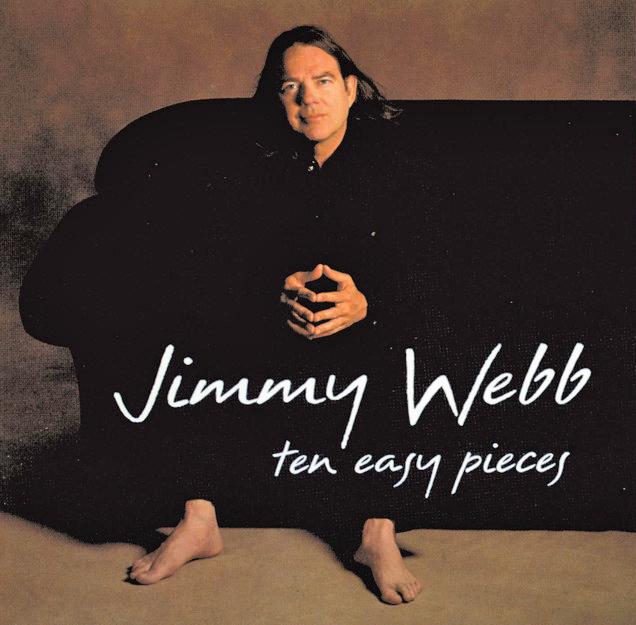
Jimmy Webb is not only one of the greatest songwriters ever, but his piano-playing is the most sophisticated I've ever transcribed - amazing, beautiful chord voicings and non-chordal tones. This month's new "By the Time I Get to Phoenix" is the successor to "Galveston" and "Wichita Lineman", both of which I've transcribed in the last three months.
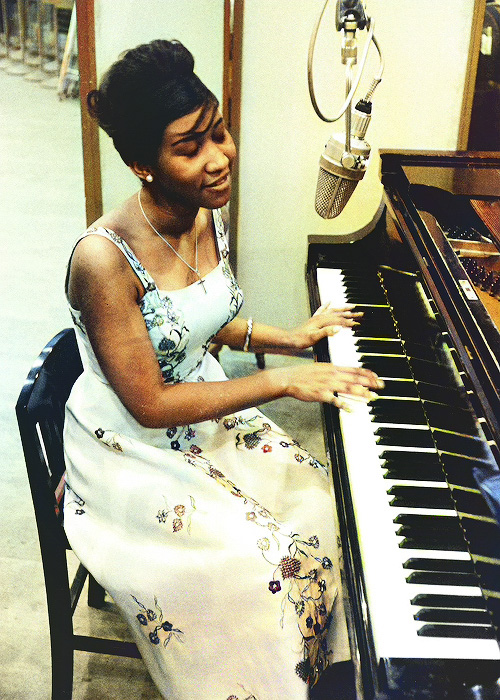
And Aretha Franklin's classic gospel-style piano-playing on "Don't Play That Song (You Lied)" is one of the very best I've ever heard, much less transcribed. It is a study in gospel piano, heavily influenced by her piano teacher, Rev. James Cleveland. This is the complete song, not just the Intro.
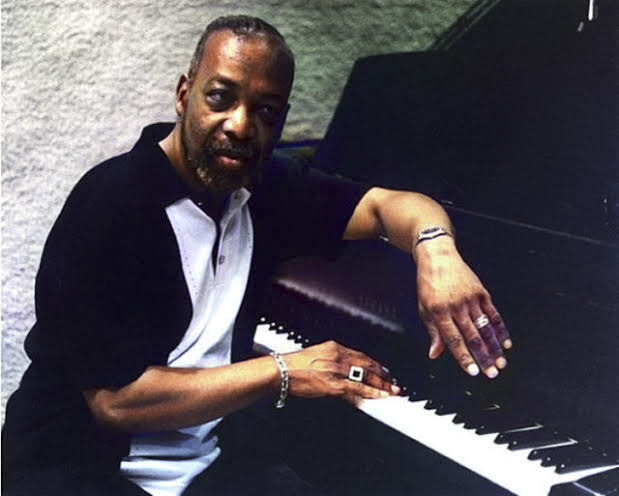
My third new transcription is of legendary R&B pianist/producer Leon Huff's (the Philadelphia sound) Gospel/R&B piano track on Harold Melvin & the Blue Notes' "Yesterday I Had the Blues" (Teddy Pendergrass singing).
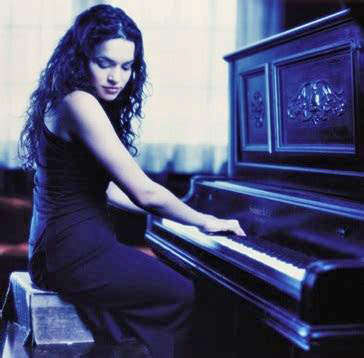
My fourth new transcription is of the two piano solos in Norah Jones' recording of the Hank Williams classic "I'm So Lonesome I Could Cry".
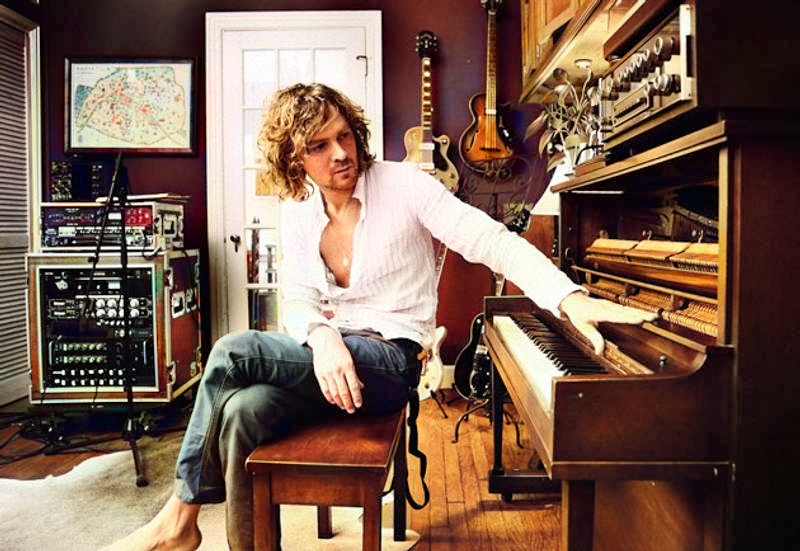
And my 5th new offering this month is the complete piano track of English musician Robyn Hitchcock's "Flavour of Night" - a moody, atmospheric night-piece.
| | |
BTW, to make sure that my email doesn't end up in your Spam folder, please add me to your Contact list and/or mark my email as "Not Spam".
Note that every Title Heading is clickable.
Elmo Peeler
| |
ALL of the Sheet Music listed on my website has been personally transcribed by me, and guaranteed to be note-for-note perfect.
Whether you:
- have a cover band and want to get your keyboard parts exactly correct,
- are a professional who wants to study the styles of rock's greatest keyboard players, or
- are a hobbyist that wants to learn how to play pop/rock and great piano music,
...these note-for-note transcriptions will prove extremely helpful.
| | |
In the News! - Jimmy Webb - "By the Time I Get to Phoenix"
Aretha - "Don't Play That Song (You Lied)"
Harold Melvin & the Blue Notes - "Yesterday I Had the Blues" - Leon Huff, piano
Norah Jones - "I'm So Lonesome I Could Cry"
Robyn Hitchcock - "Flavour of Night"
| | | | |
Born in Memphis in 1942 but raised in Detroit, Aretha Franklin discovered music through the soaring gospel traditions of her father's church.
Her dad, C.L. Franklin, was a nationally renowned celebrity preacher; and their home was filled with legendary visitors like Mahalia Jackson, Clara Ward, Nat 'King' Cole and Duke Ellington.
Aretha was a musical prodigy who taught herself to play the piano entirely by ear at a young age.
In 1951, a 20-year-old James Cleveland moved to Detroit to become the organist and choir director at C.L. Franklin’s New Bethel Baptist Church. He lived on and off in the Franklin home.
| | |
Before Cleveland stepped in, Aretha had a brief stint with a traditional piano teacher who was so strict and harsh that Aretha completely rebelled and refused to take lessons. Cleveland took over her keyboard instruction with a completely different approach.
Around this same time, when Aretha was just nine years old, her mother tragically passed away from a heart attack. Recognizing her deep grief, Cleveland famously told her, “Music will save your life.”
Instead of forcing her to read sheet music, Cleveland sat with Aretha at the Franklin family’s living room grand piano and taught her entirely by ear. He patiently broke down heavy gospel structures, showed her how to voice her first powerful church chords, and taught her how to accompany herself while singing. Because he was a brilliant young arranger living just down the hall, he took the slow, deliberate time with her that the house's more famous musical guests couldn't provide.
| | |
Aretha considered Cleveland her first true musical mentor.
If you listen closely to her heaviest piano-driven soul tracks later in life (like "Don't Play That Song (You Lied)"), her driving chord structures, phrasing, and rhythmic style are nearly identical to Cleveland's own signature piano playing.
By age twelve, her immense vocal talent took center stage as she anchored the choir at New Bethel Baptist Church and joined her father on his traveling gospel caravan tours.
Her path to global stardom required patience and a crucial change of direction.
| | | |
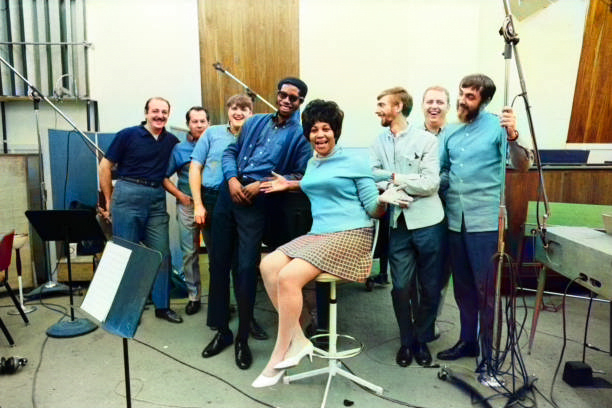
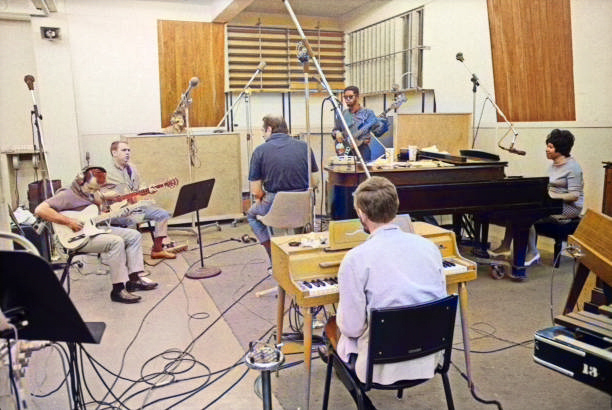
She signed with Columbia Records in 1960, but the label struggled to capture her raw power, confining her to traditional jazz and pop standards. Her true breakthrough came in 1967 when she signed with Atlantic Records. Producer Jerry Wexler brought Aretha to FAME Studios in Muscle Shoals, Alabama, where they unleashed her gospel roots.
By taking complete control of the piano and arranging her own rhythm sections, Aretha created a fiercely urgent, soulful sound. Her definitive recording of "Respect" became an anthem for both the civil rights and feminist movements.
| | |
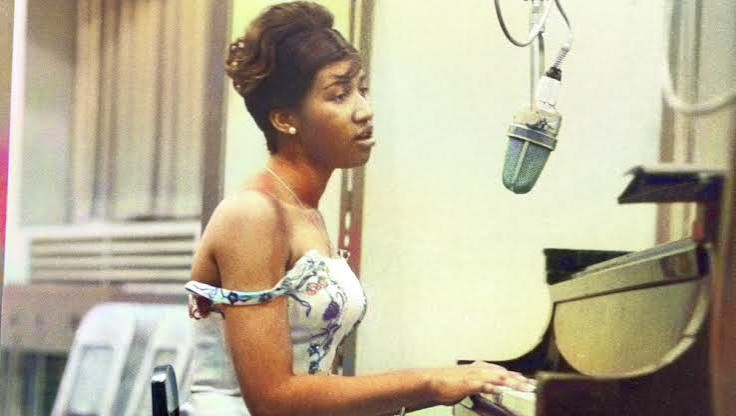
Aretha recording at Muscle Shoals
Spooner Oldham, Wurlitzer Electric piano
| | |
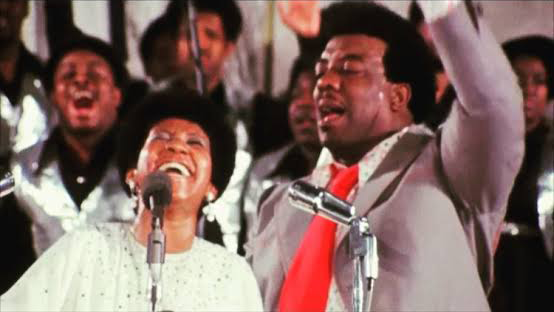
In 1972, Aretha and James Cleveland's bond culminated in a historic milestone. When Aretha decided to record her ultimate live gospel album, Amazing Grace, she called on none other than Rev. James Cleveland to be her conductor and choir director. That album is the best-selling live gospel album of all time.
Watching the live footage of them at the church, you can see the profound mutual respect of a legendary student and her childhood teacher returning to the exact roots they built together.
Her streak of hits earned her the title "The Queen of Soul," leading to 18 Grammy Awards, over 75 million records sold worldwide, and a legacy as the first woman inducted into the Rock and Roll Hall of Fame.
| | |
Jimmy Webb is widely recognized as one of the most brilliant and enduring composers of the Great American Songbook.
Born in Elk City, Oklahoma, in 1946, the son of a strict Baptist minister, Webb climbed from a small-town church pianist to the absolute peak of the American music industry.
PBS, as part of its long-running Great Performances series, just premiered (October 30, 2026) a brand-new special, Jimmy Webb: American Songwriter.
Legendary, three-time Grammy-winning songwriter Jimmy Webb takes center stage to perform his iconic catalog and share the stories behind his classic songs.
It was recorded in February 2026 at the McKnight Center for the Performing Arts at Oklahoma State University in Stillwater, Oklahoma.
| | | |
Webb is joined on stage by Vince Gill, Lyle Lovett, Ashley Campbell (daughter of Glen Campbell), and others, who perform selections and share commentary.
The concert weaves in historical clips featuring original artists such as Glen Campbell, The 5th Dimension, Richard Harris, and Donna Summer.
Until November 27th it can be watched for free on the PBS website.
Webb forged one of the most legendary singer-songwriter partnerships in music history with country-pop star Glen Campbell. Campbell recorded a string of Webb’s most enduring masterpieces:
"Wichita Lineman" - an astonishingly lonely western ballad capturing the solitude of a blue-collar worker. Bob Dylan famously lauded it as the greatest song ever written.
"Galveston" - a poignant, disguised anti-war song framed as a soldier’s homesick dream of his hometown.
"By the Time I Get to Phoenix" - a bittersweet roadmap of heartbreak that became one of the most covered and performed songs of the 20th century. Frank Sinatra called it "the greatest torch song ever written".
Here is my new Jimmy Webb transcription:
Jimmy Webb - "By the Time I Get to Phoenix" - NEW!
(listen to it here)
| | | | |
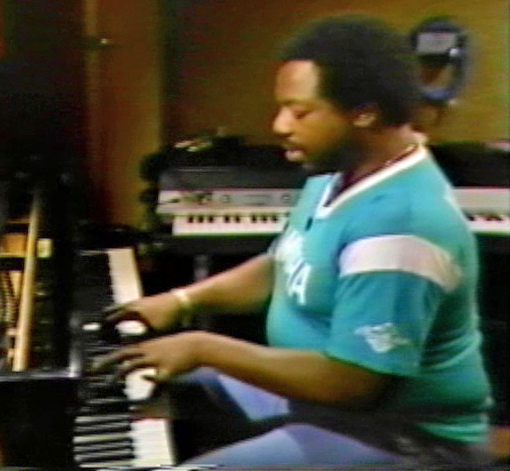
Born in Camden, New Jersey, in 1942, Leon Huff discovered the piano via his mother, a church organist. An upright piano sat in his childhood dining room, where Huff sat for hours tracing melodies by ear.
He honed his skills in local doo-wop groups before working as a prominent session pianist for legends like Phil Spector and Jerry Leiber & Mike Stoller.
The turning point came when Huff met lyricist Kenny Gamble in a Philadelphia elevator. Fusing Gamble’s poetic storytelling with Huff’s majestic piano grooves, they co-founded Philadelphia International Records in 1971.
Together, they pioneered the lush, iconic "Philadelphia Sound" - a smooth blend of sweeping strings, punching horns, and Huff’s driving, rhythmic piano chords.
| | |
Born into a musical legacy, Norah Jones discovered her true voice at the piano while growing up in Texas. Her father was the legendary Indian sitar master Ravi Shankar.
Raised by her single mother, Sue Jones, in Grapevine, Texas, Norah grew up surrounded by her mother's massive, eclectic vinyl collection. She sang in church choirs from age five and formally took up the piano, absorbing everything from Billie Holiday to Etta James.
Influenced by jazz legends like Bill Evans, she blended formal classical training with a soulful, intuitive touch that transformed her into a global phenomenon.
Her 2002 debut album, Come Away with Me, captivated millions with its intimate fusion of jazz, pop, and country. Beyond her velvety vocals, it is her understated, evocative piano playing that anchors her illustrious career.
| | | | | |
Born into a bookish London family in 1953, Robyn Hitchcock developed an affinity for the surreal from his novelist father. At age 13, marooned in the boarding school of the prestigious but strict Winchester College, he discovered his love of music through the school gramophone. Deeply rewired by Bob Dylan's "Like a Rolling Stone," which sparked his dream of songwriting, alongside a steady diet of the Beatles, Captain Beefheart, and a brief art school stint in London, Hitchcock's musical perspective matured into aural landscapes - and night-scapes.
He traded his childhood sketches of guns for a six-string guitar, eventually moving to Cambridge in 1974 to cut his teeth on the local coffeehouse folk scene.
| | |
November's New Transcriptions - Jimmy Webb - "By the Time I Get to Phoenix"
Aretha Franklin - "Don't Play That Song (You Lied)"
Harold Melvin & the Blue Notes - "Yesterday I Had the Blues"
Norah Jones - "I'm So Lonesome I Could Cry"
Robyn Hitchcock - "Flavour of Night"
Note-for-Note Accuracy
| | | | |
This month I have five brand-new transcriptions:
1) Jimmy Webb's "By the Time I Get to Phoenix" - exactly as he played it on his Ten Easy Pieces album - the most sophisticated, complex chords, chord voicings and note choices of any piece I've ever transcribed - right up there with his "Wichita Lineman" and "Galveston" that I transcribed in my August & October newsletters.
2) Aretha Franklin's "Don't Play That Song (You Lied)" - a Gospel-piano showpiece
that demonstrates that Aretha was not just a great singer but a superior gospel pianist.
| | |
3) Harold Melvin & the Bluenotes - "Yesterday I Had the Blues" - a gospel-influenced R&B piano track played by Leon Huff himself - one of the co-founders of the Philadelphia sound - the brilliant pianist-half of the legendary Gamble-Huff production team.
4) Norah Jones - "I'm So Lonesome I Could Cry" - both piano solos. During the 2020 Covid isolation period Norah sat at her piano in her own home and recorded her version of the Hank Williams 1949 classic. This transcription is of her two improvised piano solos.
5) Robyn Hitchcock - "Flavour of Night" - the complete piano part of this atmospheric song that creates a mellow, introspective mood. An Englishman whose style is often termed surrealistic, he has been respected by R.E.M., The Pixies, The Flaming Lips, XTC and Gillian Welch & David Rawlings.
| | |
My "R&B-Gospel Elements Exercise, including Substitutions" demonstrates several R&B/Gospel techniques used by Billy Preston and Richard Tee.
This 10-bar exercise demonstrates the two most important chord substitutions in R&B, gospel, rock and blues. Richard Tee used them so much they helped to define his sound.
It also demonstrates how a "Hendrix chord" can be used instead of a regular dominant V7.
And it shows how to set up a V7 chord by means of a flat-VI 9th chord.
Plus, it further illustrates an important Left Hand Gospel pattern along with Billy Preston-style chordal walk-downs.
| | | |
If you want to learn more about Gospel & R&B, this exercise combines a lot of good, important elements into a 10-bar phrase - plus, it's a lot of fun to play.
BTW, if you need other good, effective technical exercises, please check out all of the 122 exercises available.)
| | |
Gospel Corner - Say 'Amen' Somebody
The Hangout Place for Gospel Classics
| | |
You don't have to be from the Deep South to love Gospel piano, nor do you need to belong to any particular religion. All you have to have is a love for wonderful old-time, swinging, uplifting piano-playing.
Leon Russell, Billy Preston, Richard Tee, Aretha Franklin and Ray Charles, some of the greatest keyboard players ever, loved the style and infused their own performances with Gospel licks and rhythms.
Inspired by the wonderful playing of the portly Associate Pastor/Musical Director of my childhood's Baptist Church deep in the piney woods of Mississippi, in recent years I've transcribed and/or arranged a few Gospel classics.
If you have a favorite Gospel hymn that you'd like me to arrange in an authentic Southern Gospel style, let me know.
This little corner of my newsletter is where I'll keep you informed of my latest efforts to share that old-time Gospel sound.
Here are my Gospel transcriptions and/or arrangements, plus some exercises:
Full-blown Gospel:
Aretha Franklin - "Don't Play That Song (You Lied)" - NEW!
The Doobie Brothers - "World Gone Crazy" (Piano Intro) (click here to hear it)
Billy Preston & The Beatles - "Without a Song" (click here to hear it)
"I'll Fly Away" - arranged by Elmo Peeler (click here to hear it)
"Leaning on the Everlasting Arms" - arranged by Elmo Peeler (click here to hear it)
"Amazing Grace" - as played by Ethel Caffie-Austin (click here to hear it)
"Victory in Jesus" - as played by The Gaithers (click here to hear it)
Heavily Gospel Influenced:
Billy Preston - "Will It Go Round in Circles"
Merry Clayton (Billy Preston, piano) - "Grandma's Hands"
Richard Tee - Contemporary Piano - First Piece
Floyd Cramer - "One Day at a Time (Sweet Jesus)"
Don Henley - "You Don't Miss Your Water"
Mavis Staples - "Hard Times Come Again No More"
Van Morrison - "Benediction"
Richard Tee - "Happy Birthday" (version 1)
Richard Tee - "Happy Birthday" (version 2)
Jeff Beck Group (Nicky Hopkins) - "Girl from Mill Valley"
Plum Nellie - "A Love Like Yours"
Plum Nellie - "That Lucky Old Sun"
Bill Payne (of Little Feat) - "The Ballad of Davy Crockett"
Lari White (Bill Payne on piano) - "Lead Me Not"
Ray Charles - "Sweet Sixteen Bars"
Billy Preston - "Will It Go Round in Circles"
The Rolling Stones (Billy Preston on piano) - "Shine a Light"
Delaney & Bonnie (Leon Russell) - "Faded Love"
Leon Russell - "She Belongs to Me"
Don Henley - "You Don't Miss Your Water"
Moderately Gospel Influenced:
Harold Melvin & the Blue Notes - "Yesterday I Had the Blues" - NEW!
Bob Dylan & Clydie King - "Abraham, Martin and John"
Billy Vera & the Beaters - "At This Moment"
Bob Dylan - "Piano Mood" - Gospel-style piano improvisation
Delaney & Bonnie (Leon Russell) - "Don't Deceive Me"
Jackson Browne (Craig Doerge on piano) - "Rock Me on the Water"
Jerry Lee Lewis - "When the Saints Go Marching In"
James Taylor (Clarence McDonald on piano) - "Steamroller Blues" - Piano Solo
Leon Russell - "Old Masters"
Ray Charles - "Heartbreaker"
Ray Charles duo with Billy Joel - "Baby Grand"
Gospel-related Exercises:
Exercise in Blues Substitutions
Transform a Melody into Floyd Cramer's Style - Mary Had a Little Lamb
ii-chord Bump Exercise
Gospel Chord Exercise No.1
Gospel Chromatically-Descending Riff Exercise - Ethel Caffie-Austin's Signature Lick
Gospel Rhythm Exercise (in the style of Lari White's Good Good Love)
Descending R&B-Gospel Riff Exercise - Billy Preston-Richard Tee Style
R&B-Gospel Elements Exercise, incl. Substitutions - Billy Preston-Richard Tee Style
Exercise in Contrary Motion - Gospel-Rock
Exercise in Gospel - Walk-ups & Walk-downs, IV-chord Bumps & Strums
Exercise - How To Transform a Melody into Gospel
Gospel & Stride Exercise - Crossing the Left Hand over the Right
Exercise - Ray Charles Ending (Extended Walk-down)
| | |
MIDI Corner - Transcriptions Turned into MIDI Files
Helpful for Those that Don't Read Sheet Music Well
| | |
If you're using a vintage synthesizer, please check out our synth patches here.
These are the most highly-organized and best-sounding synth patches available anywhere, guaranteed. Get the most out of your vintage hardware with these large patch libraries:
| | |
Even if you don't use the actual hardware synthesizers, there are software emulations that will allow you to play these patches on your computer, as VSTI's in your DAW. These include:
Nils' K1v – Kawai K1 Emulation Plugin
Korg Legacy Digital Edition (for M1 & T1 synths)
Native Instruments FM8 (for DX7 synths)
Aurora FM (for DX7 & TX81Z synths)
SQ8L (for ESQ-1 synths)
| | |
Have you always wanted the sheet music for a particular piano or organ solo? or perhaps an entire keyboard part? maybe it was a song you played in your high school rock band but never picked it out exactly right...
Send me your custom transcription requests. New stem-separation technology can create multi-track-clear keyboard parts from most recordings. It works magic even on old recordings from the 1930s, 1940s and 1950s.
It works so well that I've revised a couple of my most important transcriptions because this new technology has revealed the notes/rhythms significantly better than my original source files: "Rockin' Pneumonia", "Feelin' Alright", The Animals' version of "Bring It On Home to Me", and Etta James' "At Last". And additional sections have been added to "Will It Go Round in Circles" and my recent brand-new complete transcriptions of "She's Not There" and "What'd I Say" - all 285 bars (6:27 long). Ray Charles' 1959 electric piano track was revealed as clearly as if I'd been working from the original multi-track master tape, as was July's "Honky Cat" transcription.
Let me know which songs you're most interested in.
| | |
Welcome to November, and as the leaves start falling and the nights get longer (bye-bye Daylight Savings Time), embrace your passions - and those you love - and make the most of every day. If you're lucky enough to play piano, practicing piano should be high on your list of priorities. Dust off old repertoire that you haven't played in years, learn new styles that you've always wanted to play (e.g., Aretha's amazing Gospel style), and enjoy the process. Magic is hard to define, but making music might be considered a manifestation.
I've had the good fortune to have worked with some of the biggest names in the entertainment industry; and if you're serious about learning, I'll be happy to help you enjoy the process, too.
By means of Zoom lessons (or in-person if you're in L.A.), I can coach you and help you to improve your technique, your rhythm, your ability to improvise, your knowledge of music theory, your sight-reading, and to develop relative pitch.
I've had the good fortune to have toured the world playing keyboards and arranging/conducting for these Rock and Roll Hall of Fame Artists:
| |
- The Beach Boys
- Rod Stewart - All 'Unplugged' Concerts
- Ricky Nelson - Stone Canyon Band
And I've also won classical piano competitions performing Beethoven, Rubinstein and Saint-Saens' Piano Concerti. See me playing here. "Josie's Boogie" is quite the virtuoso dramatic minor-key showpiece; check out the ascending double-octave run at the ending... :)
Thanks to the internet, I can help you play piano better - rock or classical, by ear or by note.
Or if you live near the Hollywood Hills, I'll teach you in my home or yours.
If you'd like to improve, drop me a note at info@manymidi.com. Tell me three things:
1) Your musical background
2) Where you are currently, musically-speaking
3) Your musical goals
If you'd like to step back in time, watch me playing piano with Ricky Nelson on the Tonight Show - click here.
And here is a video of us playing three songs on The Midnight Special. And here we are on Tom Snyder's Tomorrow Show.
| | | |
My students include members of:
- Weezer (Rivers & Brian)
-
Vampire Weekend (Ezra & newest addition, Greta)
- Incubus (Mike)
- The Strokes (Nick)
- Rooney (Robert)
- Christian Madden (touring keyboardist for Oasis and Liam Gallagher)
-
Jason Schwartzman (The Hunger Games - 2023, Asteroid City, Mozart in the Jungle)
- Courteney Cox
- Pablo Dylan
| | |
| |
Hi Elmo:
"Galveston". What can I say except -- incredible work! I have been through it about 10 times now. I can't play it for crap, but don't care a bit. A labor of love indeed. I very much enjoy listening to the midi track through a lovely sampled piano and following along with the sheet music. Now I just need to figure out how to get the midi track into my Yamaha Clavinova as I have some very lovely sampled pianos in there as well. I am also waiting for some osmosis to kick in regarding actually being able play it. I am so pleased with these two JW pieces. I am simply thrilled beyond belief.
- D. D.
|
|
|
Los Angeles, CA
323-650-6602
| | | | | |