View as Webpage


This Month's Newsletter is Packed with Some Exciting Announcements, Upcoming Events, and Opportunities for You to Participate in Research.


Plus, Highlights from the 2026 FOOD The Main Course Conference

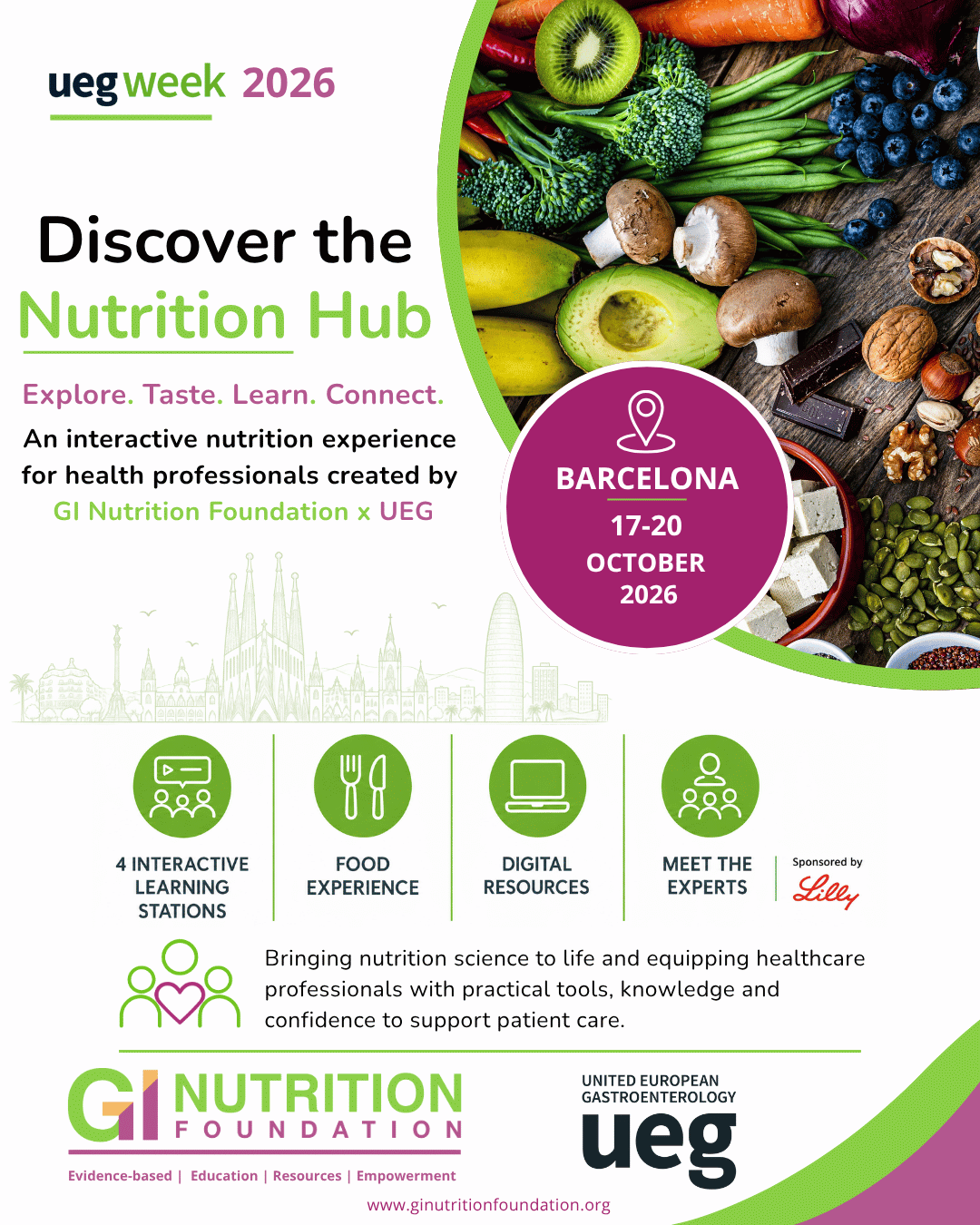
Discover The Nutrition Hub at UEG Week 2026

Explore. Taste. Learn. Connect.


From October 17-20, the GI Nutrition Foundation will be at UEG Week 2026 in Barcelona to help healthcare professionals integrate nutrition and diet into gut disorder care.


Step inside the Nutrition Hub, an exciting, interactive destination created by GI Nutrition Foundation in collaboration with UEG.


“What should I eat?” is one of the first questions patients ask following a GI diagnosis. The Nutrition Hub brings nutrition science to life, helping healthcare professionals navigate that question with greater knowledge, practical tools, and confidence.


Explore evidence-based nutrition through four interactive learning stations, digital resources, a food experience, and the "Meet the Experts" presentation series, sponsored by Lilly, featuring leading international GI experts. Discover the latest research, learn about dietary approaches used in GI care, explore the essential role of fiber, and take away practical strategies to support nutrition conversations with patients.


Designed to go beyond the science, the Nutrition Hub is a place to discover what’s new, connect with experts, and see how evidence-based nutrition can be practical, approachable, and integrated alongside medical care. Click Here to learn more.


ACG 2026 in Nashville

Come visit us at Booth #2510 at the Music City Center in

Nashville during ACG 2026! 


ACG (American College of Gastroenterology) 2026 offers clinicians, academicians, researchers, trainees, advanced practice providers and other professionals in the field access to experts for in-depth discussions on a broad range of cutting-edge topics in GI, hepatology, and endoscopy, along with the opportunity to network, share experiences, and see the latest advances in gastrointestinal technology and therapeutics throughout the Exhibit Hall. This year's conference is taking place October 9-14th and offers both in-person and virtual educational sessions. Click Here for more details and registration information.

Malnutrition Awareness Week 2026

Malnutrition Awareness Weekᵀᴹ is an annual campaign organized by the American Society for Parenteral and Enteral Nutrition (ASPEN) to provide healthcare professionals with tools for identifying and treating malnutrition in their patients. Taking place from September 14–18, 2026, the main theme for this year is "Nutrition Care is a Team Effort." The campaign focuses on early screening, treating malnutrition, and bringing healthcare teams together. Throughout the week, ASPEN will offer live webinars and various complimentary resources addressing malnutrition in both adult and pediatric patients. 


Visit ASPEN’s page Here to learn more about events taking place during this week. To learn more about combating this condition, visit the GI Nutrition Foundation's page Here.

FOOD The Main Course 2026

In August 2026, GI Nutrition Foundation attended FOOD The Main Course Conference virtually, covering topics relevant to patients with IBD, IBS, eosinophilic esophagitis, and chronic constipation.


Expanding the menu of dietary therapies in IBS


The low FODMAP diet is difficult to maintain and not all patients with IBS respond to it:


🔸 Diet is not the only treatment option for IBS

🔸 Not all FODMAPs are created equal

🔸 Less restriction of the low FODMAP diet may be enough for many people with IBS


Discover how to personalize the low FODMAP diet based on symptoms, nutrition status and personal goals >>


Chronic Constipation is not only a problem of slow transit


đź’ˇ Chronic constipation is a heterogeneous disorder comprising: 

👉 slow transit

👉 disorders of rectal evacuation including dyssynergic defecation

👉 normal transit constipation (this is by far the largest group)


Non-dietary means to improve gut health


🔸Non-dietary means may support patients with gut disorders who do not respond to diet or cannot change their current diet

🔸Rather than following a high-fiber diet for constipation, it is better to focus on particular high-fiber foods

🔸Psychosocial issues matter in gut disorders


Learn more about science-based non-dietary means to improve gut health >>


Up to 40% of patients in IBD in remission still struggle with symptoms


🔸Remission with advanced therapies is not complete restoration

🔸Altered dietary, microbial and metabolic signatures may persist despite successful immune suppression in Crohn’s disease

🔸Beyond calming down inflammation, diet, gut barrier and gut microbiota should be targeted for better outcomes in IBD


How to address disordered eating in gut disorders


đź’ˇ Psychological support is not only for patients with severe symptoms and can be integrated into the treatment plan from the beginning for improved symptom control and quality of life


Discover what’s new and interesting in nutrition care of gut disorders >>

Not All Fiber Is Created Equal For Constipation

The advice of eating a high-fiber diet from different sources to improve constipation is not backed by science.


👉 Some dietary fibers (e.g., prunes) contain sugar alcohols that attract water to the colon to promote laxation, irrespective of fiber content


👉 Coarsely ground wheat (not finely ground wheat) may promote laxation through mechanical stimulation of fluid and mucous secretion, but it is not always well tolerated in IBS


👉 There is no evidence that constipation can successfully be treated by increasing fluid intake unless there is evidence of dehydration


đź‘€ Learn more about the role of diet in the management of chronic constipation.

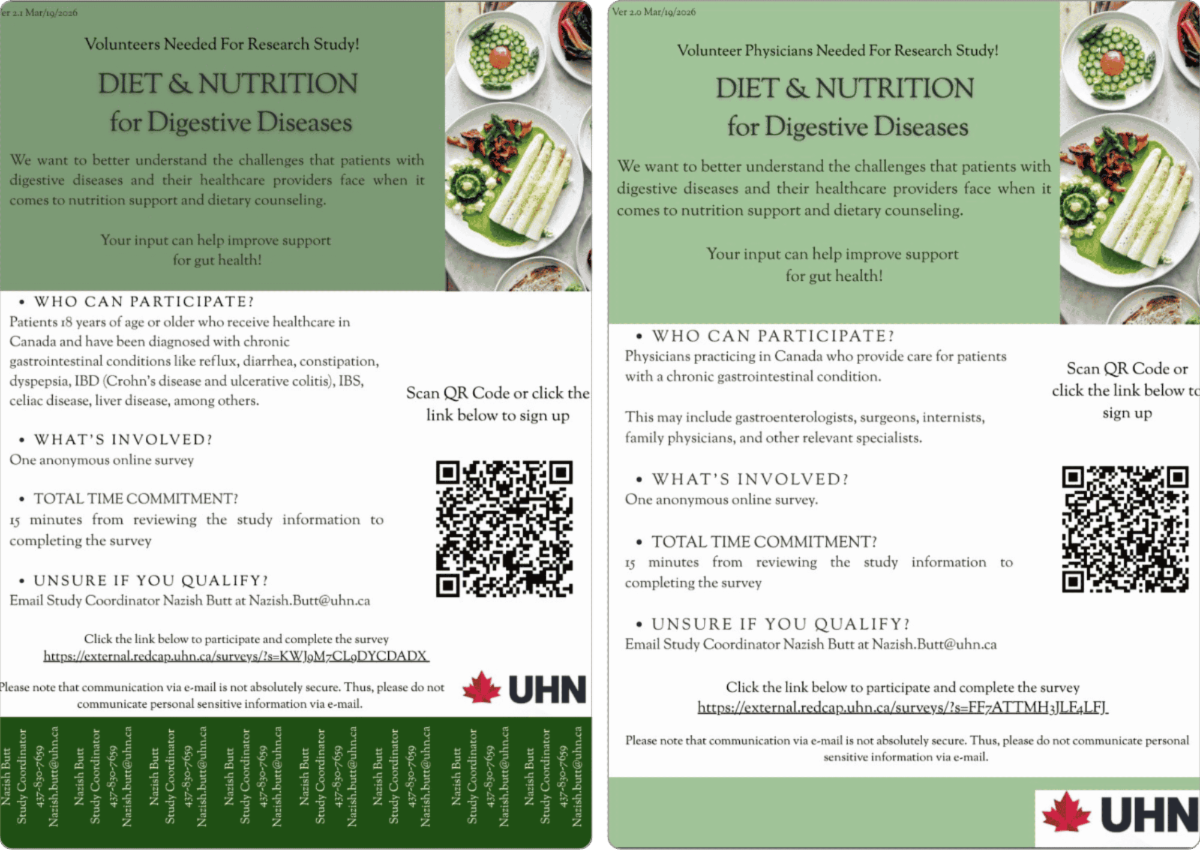
Calling all Patients and Physicians in Canada: Survey on Diet and Nutrition Care for Chronic Digestive Diseases

Researchers at Toronto Western Hospital–University Health Network and the University of Toronto are inviting patients and physicians in Canada to participate in a research study examining nutrition care for chronic digestive diseases.

The study aims to better understand how patients perceive the nutritional support and dietary guidance they receive, as well as how physicians view their own knowledge, efforts, and experiences providing nutrition-related care. Researchers will compare the perspectives of patients and physicians to identify potential differences, challenges, and barriers that may help inform future clinical practices.


Survey for Patients: Survey for Physicians:

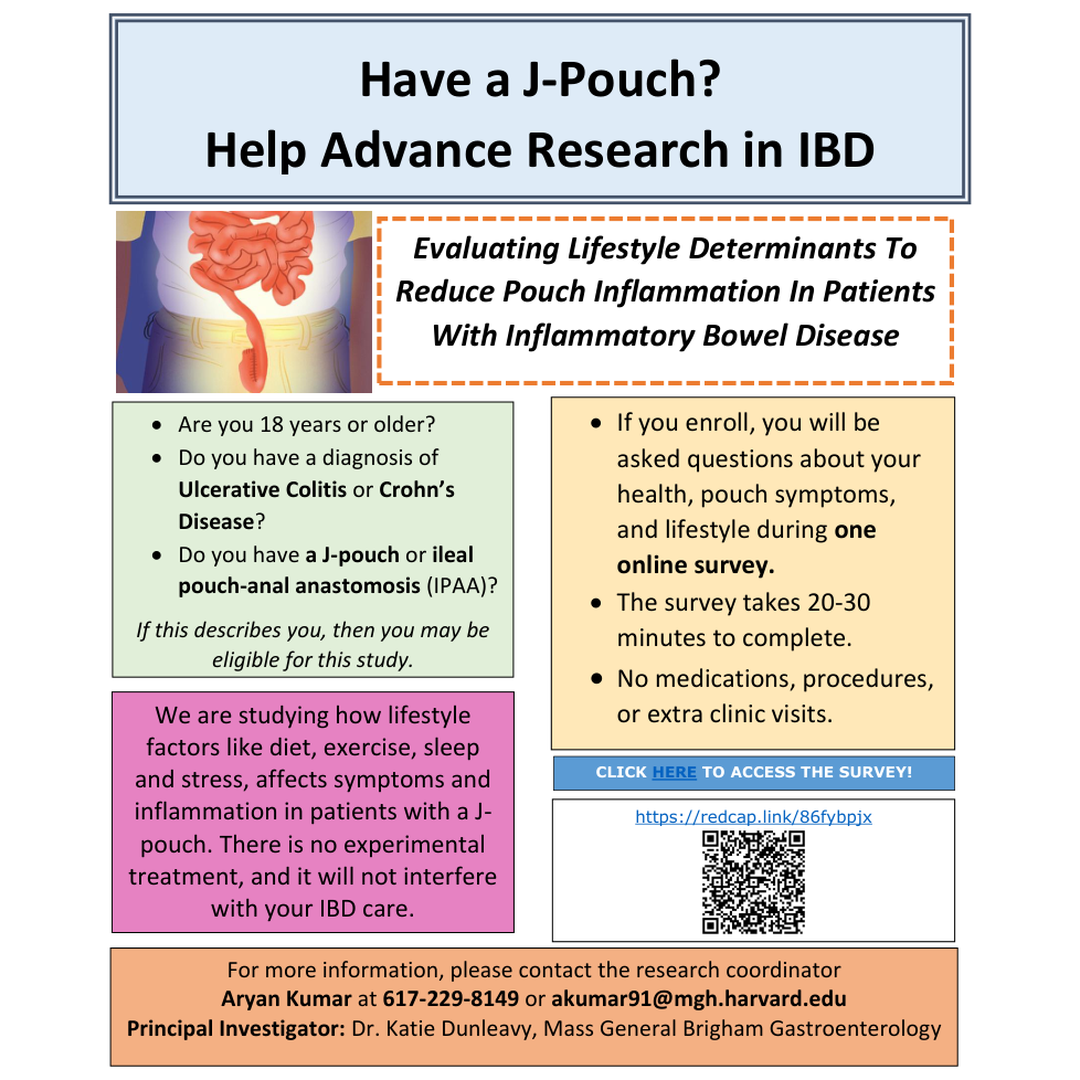
Have a J-Pouch? Help Advance Research in IBD

Principal Investigator, Dr. Katie Dunleavy, MB, BCh, BAO, from Mass General Brigham Gastroenterology, is conducting a research survey evaluating lifestyle determinants to reduce pouch Inflammation in patients with IBD. This study is looking at how lifestyle factors like diet, exercise, sleep, and stress affect symptoms and inflammation in patients with a J-pouch. Must be 18 or older and have a diagnosis of Crohn’s Disease or Ulcerative Colitis with a J-pouch or ileal pouch-anal anastomosis (IPAA). 

 We are thrilled to welcome several new members to our Medical Advisory Board and Board of Directors. We will be showcasing them throughout our next few newsletters.

Anna Hunter, MD - Board of Directors

Dr. Anna Hunter is a pediatric gastroenterologist and Associate Professor of Pediatrics at Oregon Health & Science University (OHSU), where she founded and directs the Pediatric Inflammatory Bowel Disease (IBD) Program at Doernbecher Children’s Hospital. Her clinical and research interests focus on pediatric IBD, nutrition, the gut microbiome, and noninvasive monitoring strategies, including intestinal ultrasound.

James St. Aubin, Treasurer 

James St. Aubin is Chief Investment Officer of Ocean Park Asset Management, a Santa Monica-based asset manager offering mutual funds and ETFs. His career as an investment professional spans over 25 years, with deep expertise in asset allocation, manager research, portfolio construction, and product development.

A passionate advocate for the power of nutritional therapy, James is a strong believer in its potential to transform the treatment of GI conditions and broader health challenges.

Know someone with IBD, IBS, Celiac, or  EoE looking for information on evidence-based nutrition? Forward them this newsletter! They can sign up to join our community and receive our monthly newsletter here.

We are grateful for the collaboration and support of our Corporate Partners!

*Please note that the GI Nutrition Foundation does not provide medical advice. The content provided here is for informational purposes only. Patients should always talk with their healthcare providers before changing their diet.*

 
Web  Facebook  Instagram  X  LinkedIn  YouTube