|
I hope everyone had a wonderful, restful and joyful Thanksgiving. I have found that the holidays can be both a particularly happy time and a particularly sorrowful time. There are two sides to every coin - two things can be true at the same time. In my family, my sisters and I always return to my parent’s home in Michigan. We celebrate the newer members of the family – my younger sister’s daughters and my older sister’s children and grandchildren. We also celebrate and remember those family members no longer with us by leaving an empty chair at the dinner table, lighting candles and saying prayers. I hope this holiday season, that you have friends, family, furballs and loved ones to celebrate with, and that you remember – fondly - friends, family, furballs and loved ones now passed.
In December, along with religious holidays, and keeping with the underlying themes of many of our religious holidays, we celebrate both Universal Human Rights Month and National Human Rights Month along with Human Rights Day on December 10 and Bill of Rights Day on December 15. In the United States and abroad, we are encouraged to come together this and future months and stand up for equality, justice and dignity for all humans regardless of gender, sexual orientation, age, disability, race, political views, or social status. Challenge yourself to spread goodwill and kindness this month – whether it is holding the door for someone, donating time or food to a foodbank or shelter, giving gifts to unprivileged children, or any other of the countless ways we can celebrate each other and our uniqueness this season. If you have not already done so, check out the Section’s social media for timely contributions from Dr. Brittany Love (5 keys for empathy) and Dr. Michelle Greenberg (Face Book Live on mindfulness).
As we look forward to next year, we have a number of exciting events planned which I have touched on in prior FAMSEG’s and which bear repeating. First, the Marital & Family Law Review Course is taking place January 24-25, at the Loews Royal Pacific Resort, Orlando, Florida. The Review Course is held in conjunction with the Section’s “Tips and Nibbles” program Wednesday for prospected Board Certification test takers, a full day of Section Committee Meetings on Thursday, and an Executive Council meeting Saturday afternoon. If you have not already registered for this event or booked your room – today is the perfect day to do so! If you have never attended a Section event, or if you have not attended a Section event recently, come join us. See the business of the Section in action! Raise your hand, get involved! Give back to the Section that gives so much to Florida’s Families. Second, the Section’s annual all-day Live CLE will take place on February 21, in Jacksonville at the Hyatt Waterfront. This years’ program is “Consultation to Courthouse Steps.” This intermediate CLE is being planned by Anastasia Mahone, Cash Eaton and Jamie Epstein and it is available and appropriate for both new and seasoned practitioners. Registration is open so register today. Third, and finally, the Section’s In-State Retreat is being hosted this year by Chairs Jamie Epstein, Kristin Kirkner & Yanae Barroso along with the indefatigable Willie Mae Shepherd at the W Fort Lauderdale on May 1-4, where we will focus on beachfront Zen. We have planned a variety of family friendly events – so bring the kids and grandkids! Registration will be opening shortly!
As we round out this year, I would like to personally thank, Tiffany Mody (moderator) and Lisa LeSueur, Suicide Prevention Coordinator of the National Alliance on Mental Illness - Miami (presenter), for their CLE 8771 Suicide Prevention Training: Question, Persuade, Refer. This CLE and many others are available for after-market viewing, check out the Section website for more information HERE. On the subject of CLEs, be sure to check out Janice Feldman, Jessica Ledingham & Jennifer Kipke (presenters) during their taxation CLE, CLE 8746 Divorce and Income Taxes: Relief from Joint Income Tax Liability on December 12, 2024, at noon.
I would also like to personally thank the following individuals for their hard work and devotion to the Section. These individuals make the business of the Section possible by their tireless efforts and their willingness to put the Section first. Those individuals include: Willie Mae Shepherd, Program Administrator, Julie Mullen, Social Media Guru, Holly Clark, Web Master, Bascom Communications, Publicists, Lisa Hurley, Lobbyist, Amber Kornreich, Facebook Live, the Members of Executive Committee, the Members of Executive Council and Trustees, the Committee Chairs, Co-Chairs, and Secretaries, the Section’s Sponsors, and you, most importantly, the Section’s Members.
A final thanks to our annual sponsors: Signature Sponsors- Florida Appeals, Schipani, Norman & McLain, PA, and Smolin – Advisory, Tax, Accounting; Platinum Sponsors- Ari Harper, CPA and OurFamilyWizard; Gold Sponsors- DPA Family Legal and Freeman Mathis & Gary, LLP; Silver Sponsors- Green Cardigan Marketing and Psychological Affiliates; and Bronze Sponsor- Milestone Reporting Company. I appreciate each of you and your willingness to support the Family Law Section.
Sincerely,
Christopher W. Rumbold, B.C.S.
Section Chair, 2024-2025
| | |
|
|
CLE Webinar - Divorce & Income Taxes: Relief from Joint Income Tax Liability
12 p.m. - 1 p.m. EST
| | | |
|
|
Mid-Year Committee Meetings and AAML and The Family Law Section Marital & Family Law Review Course
Loews Royal Pacific Resort, Orlando
| | | |
|
|
In-Person CLE: Consultation to Courthouse Steps
Jacksonville, FL. Registration is now live!
| | | |
|
|
In-State Retreat
W Fort Lauderdale Hotel, Fort Lauderdale, Info coming soon!
| | |
Sponsor Spotlight
OurFamilyWizard is an app for divorced and separated families to communicate. It is used in lieu of text, emails, and voice calls, and gives the families the tools they need to coparent successfully. It is highly documented and court admissible. With OurFamilyWizard, family law professionals and parents have access to a suite of tools designed to support effective co-parenting, help assure compliance and deliver more optimal results for children.
Learn more about this sponsor's fee waiver program, free professional access, updated model order language, or schedule a demo of the app with Rebecca: rperra@ourfamilywizard.com.
OurFamilyWizard has been a proud sponsor of The Florida Bar Family Section for two years.
| | | |
Statutory Changes to Florida Statute
§ 63.097
By April E. Rolle, Esq., Director of Strategic Initiatives, Florida Department of Children and Families
The Department of Children and Families (DCF) would like to notify attorneys of the following laws that went into effect July 1, 2024, related to private adoptions:
-
Fla. Stat. § 63.097(3), “The court must issue an order pursuant to s. 63.132(3) if the total of amounts permitted under subsection (2) exceeds:
- $5,000 in legal or other professional fees;
- $800 in court costs; or
- $5,000 in reasonable and necessary living and medical expenses.
-
Fla. Stat. § 63.097(4), “Any fees, costs, or expenses not included in subsection (2) require court approval and entry of an order pursuant to s. 63.132(3) before payment and must be based on a finding of extraordinary circumstances.”
- Fla. Stat. § 63.097(5)(c), “The following fees, costs, and expenses are prohibited: . . . Any fee on the affidavit which is not a fee of the adoption entity; is not supported by a receipt; does not specify the service that was provided and for which the fee is being charged, such as a fee for facilitation, acquisition, or other similar service; or which does not identify the date the service was provided, the time required to provide the service, the person or entity providing the service, and the hourly fee charged.
- Fla. Stat. § 63.097(7), “Beginning January 1, 2025, an adoption entity shall report quarterly to the department information related to the age, race, ethnicity, sex, and county of birth of the adopted child and the county of residence of the adoptive family for each finalized adoption. The adoption entity shall also report for each finalized adoption the fees, costs, and expenses that were assessed by the adoption entity or paid by the adoption entity on behalf of the prospective adoptive parents, itemized by the categories enumerated in subsection (2), and any fees, costs, and expenses approved by the court under subsection (4). The confidentiality provisions of this chapter do not apply to the fees, costs, and expenses assessed or paid in connection with an adoption. In reporting the information required by this subsection to the department, the adoption entity shall redact any confidential identifying information concerning the child, the child’s biological parents, and the child’s adoptive parents. The department shall report quarterly on its website information for each adoption entity, including the actual fees, costs, and expenses of finalized adoptions. The department shall adopt rules to implement this subsection.”
The link for the online tool will be on https://www.myflfamilies.com/services/licensing to obtain an account prior to entering information into the dashboard. This tool will be used to capture information for each finalized adoption completed by an adoption entity, pursuant to Chapter 63.097, Florida Statute. Information must be submitted no later than the 15th day of the month following the preceding quarter.
Reporting quarters are:
- Quarter 1 is January – March
- Quarter 2 is April- June
- Quarter 3 is July – September
- Quarter 4 is October - December
| | | |
Celebrations Abound this Holiday Season
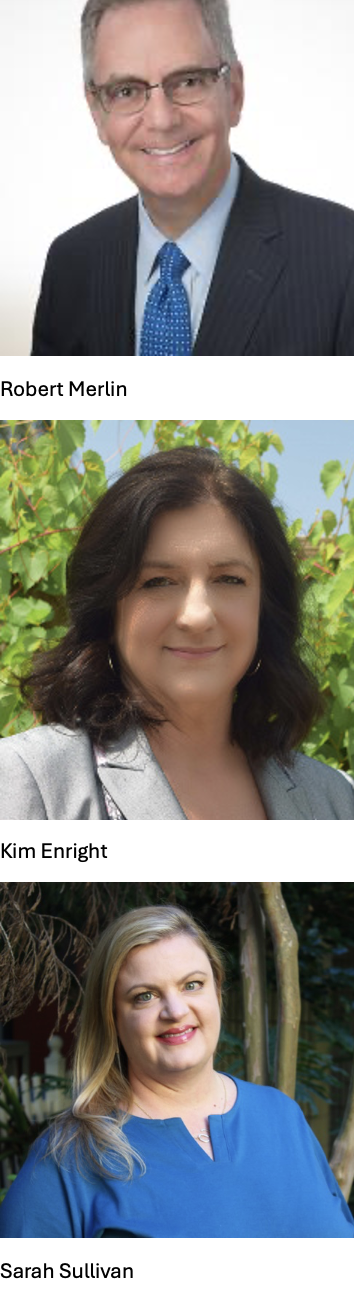
By Sarah Sullivan, Kim Rommel-Enright and Robert Merlin on behalf of the Diversity and Inclusion Committee
In the United States, we are already preparing for the holiday season—including some of myneighbors putting out their twinkle lights! It seems to get earlier and earlier each year! However, some may not know that there are even more religious and cultural celebrations during the month of December beyond our Judeo-Christian American traditions.
Depending on where you live, the Catholic traditions for celebrating Christmas vary widely! I am planning on spending the holidays in Italy and can hardly wait to see all the lights, the nativity scenes in every Duomo, the Feast of the Holy Family and Watchnight Mass on December 30-31. Hispanic Christians may also celebrate Feast Day of Our Lady of Guadalupe (Mexican/Catholic) and Posadas Navidenas (Hispanic Christian/Interfaith) during the month of December.
Although Hanukkah has commercially become a big celebration in the United States, and is definitely a holiday young children look forward to, it is considered a minor holiday on the Jewish calendar and it is not mentioned in the Bible. The origin of Hanukkah, or the Festival of Lights, is a celebration of the Maccabean revolt around 200 B.C. against the Seleucid Empire (Syrian Greeks) who were imposing their Hellenistic culture on the Jews. The Seleucid Empire also desecrated the Holy Temple in Jerusalem. The Maccabees fought the Seleucid Empire and restored the Holy Temple and traditional Jewish worship. The menorah was a symbol of that restoration with the miracle of a tiny jar of oil keeping the candles burning for eight full days. Hannukah will be celebrated this year from sundown on December 25 until sundown on January 2.
Wiccans celebrate the Winter Solstice/Yule on December 21 when the sun is furthest from the earth. Yule, a fire festival, is a time of celebrating the return of the light. From this point forward, the days will gradually grow longer again, until the Summer Solstice. This recognition is a reminder for believers to have patience—the waning half of the year is over, and warmth, growth, and light will return.
Rohatsu, or Bodhi Day, is a Buddhist holiday celebrated on December 8 by Buddhists. Siddartha’s decision to sit under the bodhi tree (also known as the peepal or religious fig tree) until he reached enlightenment is the inspiration for this religious celebration. It is said that Siddartha sat through three stages of meditation until he found the root of suffering, and how to liberate oneself from it. At the end he reached Nirvana/enlightenment and became Buddha.
Created in 1966 by Dr. Maulana Karenga, Kwanzaa is a celebration of family, community and culture and is observed from December 26- January 1 every year. During this cultural festival, activities are centered around the Nguzo Saba (Swahili for the Seven Principles). Each of the seven days is dedicated to a principle: Umoja (Unity); Kujichagulia (Self-determination); Ujima (Collective work/responsibility); Ujamaa (Cooperative economics); Nia (Purpose); Kuumba (Creativity) and Imani (Faith). People celebrate Kwanzaa through food, music, dance, poetry, the lighting of the seven candles and most importantly--reflection.
What is fascinating from these many celebrations is that they commemorate overcoming hardship and experiencing renewal and hope through reflection May your holidays deliver you from hardship and bring you renewal, hope and joy—however you celebrate.
| | | |
Case Law Update
Ospina-Shone v. Shone, 49 Fla. L. Weekly D2220a (November 6, 2024)
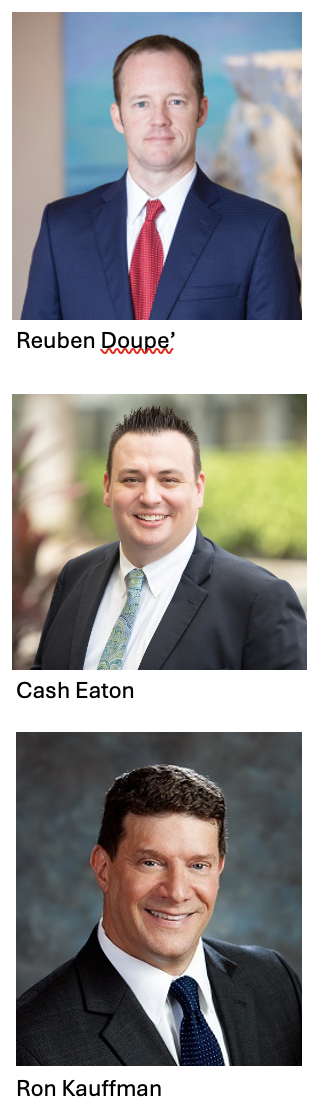
By Reuben A. Doupé, Esq.
This is a §61.16 attorney’s fees case. In this case, the husband argued, post-trial, that the wife had “vexatiously” litigated the dissolution case, one of the Rosen factors. The husband offered evidence of rejected settlement offers that he had made before and during trial, that would have left the wife in a better position, and also demonstrated that the wife took multiple positions in the trial that were later conceded. These facts, he argued, supported a conclusion that the wife had simply wanted to force the husband to attend the hearing and to incur attorney’s fees.
The Third District reversed because the trial court failed to make any findings of financial need or ability to pay. Despite being a “vexatious litigation” case, the husband was still proceeding based upon §61.16 and Rosen. While the merits of the parties’ positions and the litigation history are factors the trial court may consider, Rosen is clear that the financial resources of the parties is the “primary factor” and must still be considered by the trial court.
It is worth noting that the fee request was based upon §61.16, and was NOT a bad faith litigation claim following the trial court’s inherent authority. In such a ruling under the court’s inherent authority, the financial circumstances are not relevant. Hahamovitch v. Hahamovitch, 133 So.3d 1020 (Fla. 4th DCA 2014) (note that such a claim, however, is “rarely applicable” and reserved for extreme cases).
O'Brien v. O'Brien, 2024 WL 4684277 (Fla. 4th DCA 2024)
By Cash A. Eaton, Esq.
In O’Brien, the Former Husband’s expenses had increased significantly more than his income had increased, leaving him with a substantial deficit. The Former Husband’s increased expenses were due, in part, to his previously living in a home owned by his mother rent free. However, the Former Husband’s mother sold the property. The Appellate Court held it was not an abuse of discretion to find that the Former Husband showed a substantial change in circumstances supporting a modification of his alimony award.
Moreover, the Appellate Court addressed other “sub-issues” related to alimony modifications.
1. Support of a New Partner:
The Former Wife argued that the Former Husband's inability to pay alimony is voluntary, because he is supporting his new partner and not requiring her to contribute to his expenses even though she earns income. The Appellate Court held that this argument is flawed because the legal concept of “supportive relationship(s)” only applies to an obligee’s relationship, not to an obligor’s relationship. Outside of the “supportive relationship” concept, the Court cannot consider the potential support from an obligor’s new relationship. The trial court can only consider the actual support received by an obligor’s new relationship, and the Former Wife would have had to present evidence of such support, which she didn’t.
2. Nominal Alimony:
The Appellate Court held that the trial court erred in not awarding the Former Wife nominal alimony. The general rule is that where there is a likelihood of a change in circumstances in the future that would warrant an award of alimony, the court should retain jurisdiction. In this case, the Husband could have made more income in the future. Therefore, the trial court should have awarded at least nominal alimony.
Bravo v. Johnson, No. 1D2024-1057, (Fla. 1st DCA Nov. 13, 2024)
By Ronald H. Kauffman, Esq.
A Father sought a writ of prohibition to prevent the trial court from exercising jurisdiction over a petition to modify an Australian child support order filed by the Mother. The parties and now adult child are Australian. An Australian court entered a consent order allowing Mother and daughter to relocate to the U.S. and incorporated an agreement which terminated their child support agreement while the minor daughter remained in the U.S.
Mother and daughter moved to Florida without providing Father their new address. Father filed to register and enforce the Australian order under the UCCJEA. Mother filed to modify timesharing and to modify child support. Trial court then denied Father's motion to dismiss as Florida could not exercise jurisdiction under UIFSA over an Australian support order.
Under UIFSA a Florida court may modify foreign orders only when a foreign country lacks or refuses jurisdiction to modify its child support order pursuant to its laws. Mother never alleged that Australia lacked jurisdiction or refused to modify, nor did she seek modification in Australia. Because Australia did not lack jurisdiction or refuse to exercise jurisdiction to modify support, the trial court could not exercise jurisdiction under UIFSA to modify the Australian child support order. Further, Father never waived his challenge to the trial court's jurisdiction to modify the Australian order terminating child support. Because the Australian court has continuing, exclusive jurisdiction to modify its support order, the trial court lacked jurisdiction over Mother's petition to modify child support. Prohibition was granted and the case was remanded with directions to grant Father's motion to dismiss Mother's petition to modify the foreign child support order.
| | | |
Signature Annual Sponsors | | | | |