|
I am thrilled to announce this year’s annual excursion to Orlando, from Wednesday’s “tips and nibbles” to Saturday’s Executive Council Meeting - while chilly, was a resounding success! I would like to personally thank the members of Executive Council (and the many guests in attendance) for working together, professionally and productively, to address the very important topics we confronted that day. Thanks to Section Administrator, Willie Mae Shepherd, for making the entire week so very special.
The Marital & Family Law Review Course took place on January 24-25, 2025 brought to you by the work of our good friends and colleagues at the AAML-Florida Chapter, including, President, Laura Davis Smith and Executive Director, Susan Stafford and the Section’s Marital & Family Law Review Course Committee Chaired by Julia Wyda, and included Jack Moring, Autumn Graham and Carolyn Ware. Thank you to this year’s esteemed lecturers: Natalie Lemos, Caryn Green, Judge Jessica Costello, David Hirschberg, Ronald Kauffman, Elisha Roy & Dr. Deborah Day, Shannon Novey, Dori Foster-Morales & Meghan Clary, Charles Fox Miller, David Manz, Judge Fredrick L. Pollack & Jon Johnson, Abigail Beebe, and Thomas Sasser. Written materials were also prepared by Kenneth Gordon, Kristin Kirkner and Andrew Salvage. Please mark your calendar for January 30-31, 2026 at the Walt Disney World, Swan & Dolphin Resort. Kudos to all involved for another smashing success.
Registration is live for “Consultation to Courthouse Steps”, the Section’s annual all-day CLE for both new and seasoned practitioners taking place on February 21, 2025, in Jacksonville at the Hyatt Regency Waterfront. Thank you to event chairs Anastasia Mahone, Cash Eaton and Jamie Epstein for their work in planning what promises to be a great event. For more information on our incredible line up of speakers and to complete your registration, click HERE. Please note that if you are not able to attend this CLE in person, you may certainly attend virtually. Separately, sponsorships for this event remain available – click HERE for more information. We truly look forward to seeing you in Jax soon!
Save the date and join us for the In-State Retreat hosted by Chairs Jamie Epstein, Kristin Kirkner & Yanae Barroso along with Willie Mae Shepherd at the iconic W Fort Lauderdale on May 1-4! With a special event at Xtreme Action Park and an incredible dinner at STK954, you won't want to miss it! This year’s retreat also coincides with another can’t miss event - the Fort Lauderdale Air and Sea Show. Our beachfront location will provide the perfect spot to see it all! You can learn more HERE.
It is that time of year to begin thinking about what your leadership goals are for the next bar cycle. Applications for Executive Council, Section Secretary and the Legislation Committee, along with Committee Preference forms and Executive Council Disclosure forms are due by March 15, 2025. There’s no time like the present – submit your applications today! Just click HERE to get started.
Lastly, I would like to announce the Dedication Ceremony of the James Fox Miller Hearing Room at the Broward County Judicial Complex on February 7, 2025 at 11:00am. A former Florida Bar President, he was an attorney, a teach, and a mentor to so many of us over the past fifty (50) years. Mr. Miller is survived by his wife of 63 years, Barbara, his three children - Beth, Charles and Steven, and seven grandchildren.
Sincerely,
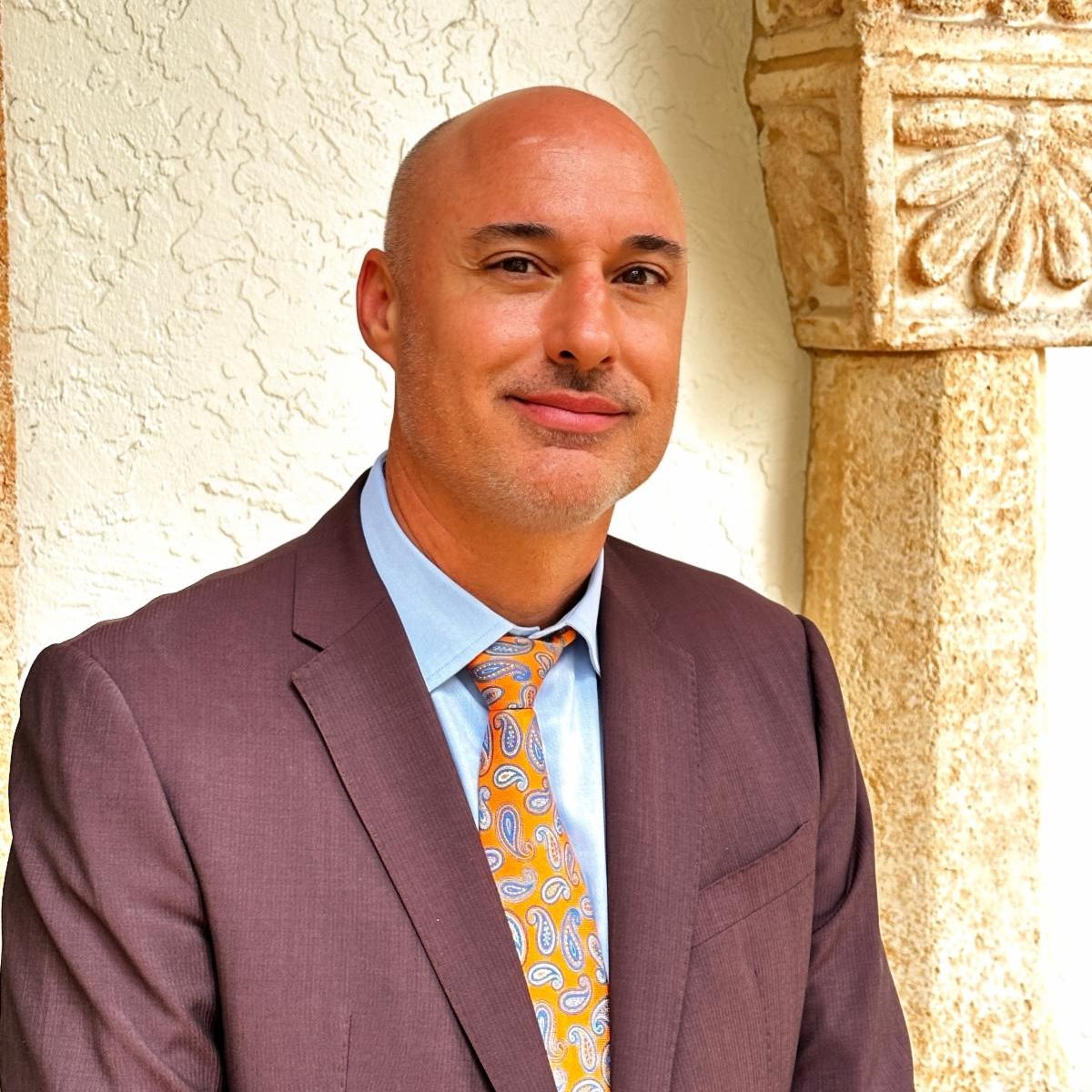
Christopher W. Rumbold, B.C.S.
Section Chair, 2024-2025
| |
Upcoming Section Events & Deadlines | | |
|
|
In-Person CLE: Consultation to Courthouse Steps
Jacksonville, FL. Attend in person or virtually!
| | | |
|
|
CLE Webinar: Crossover Issues – Family Law and Immigration
Presented by Roxanne Fraser, BCS
| | | |
|
Leadership Applications and Committee Preference Forms are Due
| | | |
|
|
CLE Webinar: Fee Arbitration/Malpractice
Presented by Alex Diaz
| | | |
|
Nominations for the 'Alberto Romero Making a Difference Award' are Due | | | |
|
|
In-State Retreat
W Fort Lauderdale Hotel, Fort Lauderdale, Registration opening soon!
| | | |
|
|
The Florida Bar Annual Convention
The Boca Raton
| | | |
|
|
Trial Advocacy Workshop
JW Marriott Miami
| | |
Seen on the Scene - Photos from Marital & Family Law Review Course | |
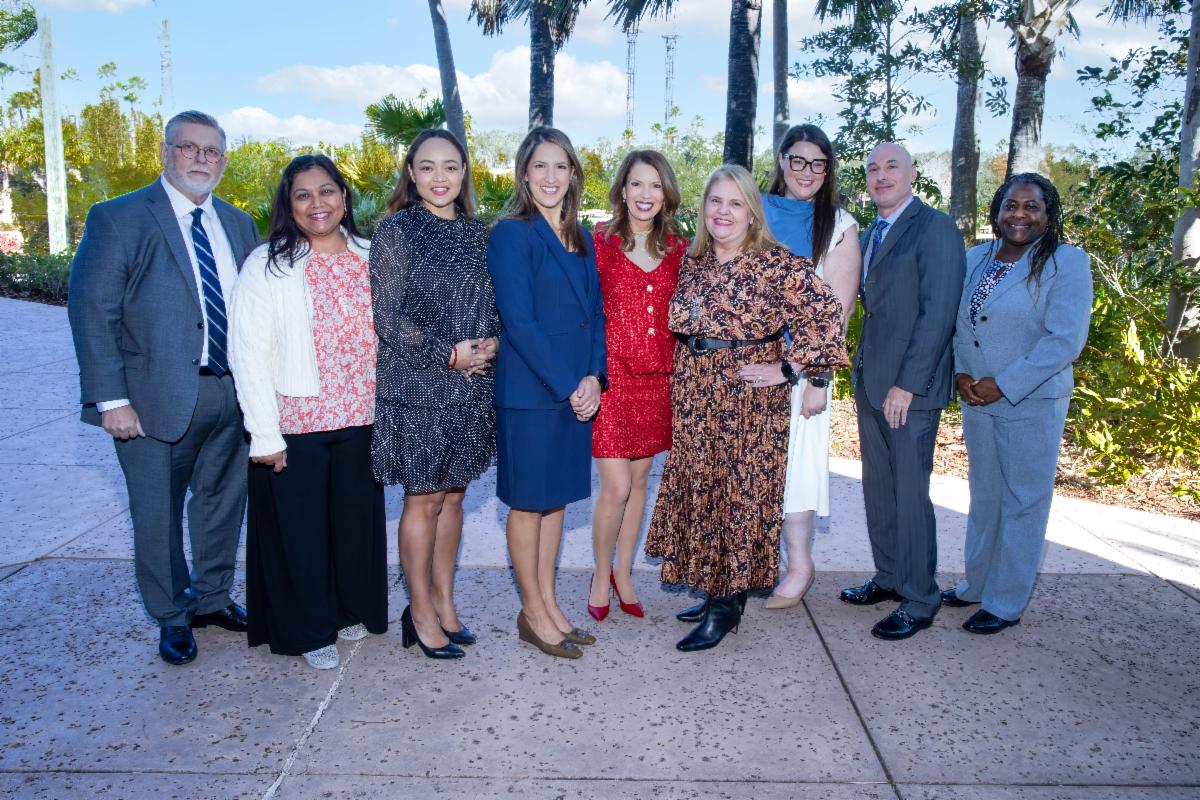
Congratulations to the 2025 Marital and Family Law Review Course Committee and Leadership for another outstanding conference! To see photos from the event, click HERE! | |
|
For this month’s Sponsor Spotlight, we would like to again thank the generous sponsors of the 2025 Marital and Family Law Review Course:
Platinum Plus Sponsor – CBIZ; Platinum Sponsors – Annex Wealth Management, Smolin, Bakertilly, and Eisneramper; Diamond Sponsors – MSF McCain, Samons & Fiorini; Gold Sponsors – Brinkley Morgan and O’Shell Daun CPAs; Silver Sponsors – SoberLink, Dean Dorton, FAZ Forensics and Hawk PI of Florida, Inc.; Bronze Sponsors – FAC/CPA, Matthew Lundy Law – QDRO Law, DPA FamilyLegal, Elkhorn Wealth Advisors, VECON – Voit Econometrics Group, Inc., Milestone Reporting and Girard & Johnson, LLC; and Exhibit Sponsors – Grass I Tamayo Group, QDRO Queen, Family Law Software, and The Florida Law Weekly.
Please consider these generous entities the next time you are looking for related professional services.
| |
Nominations Now Open for 'Alberto Romero Making a Difference Award' | |
|
Do you know a Family Law Section member (attorney, member of the Judiciary, Non-attorney professional/affiliate, etc.) who is truly making a difference in the lives of Florida’s families through pro bono work or significant community involvement, and who deserves recognition for their incredible commitment? If so, we encourage you to nominate them today for the prestigious 'Alberto Romero Making a Difference Award.'
Click HERE for criteria and the nomination form. The deadline for submissions is May 1, 2025.
| |
Florida's African American Legal Pioneers: A Legacy of Courage and Achievement
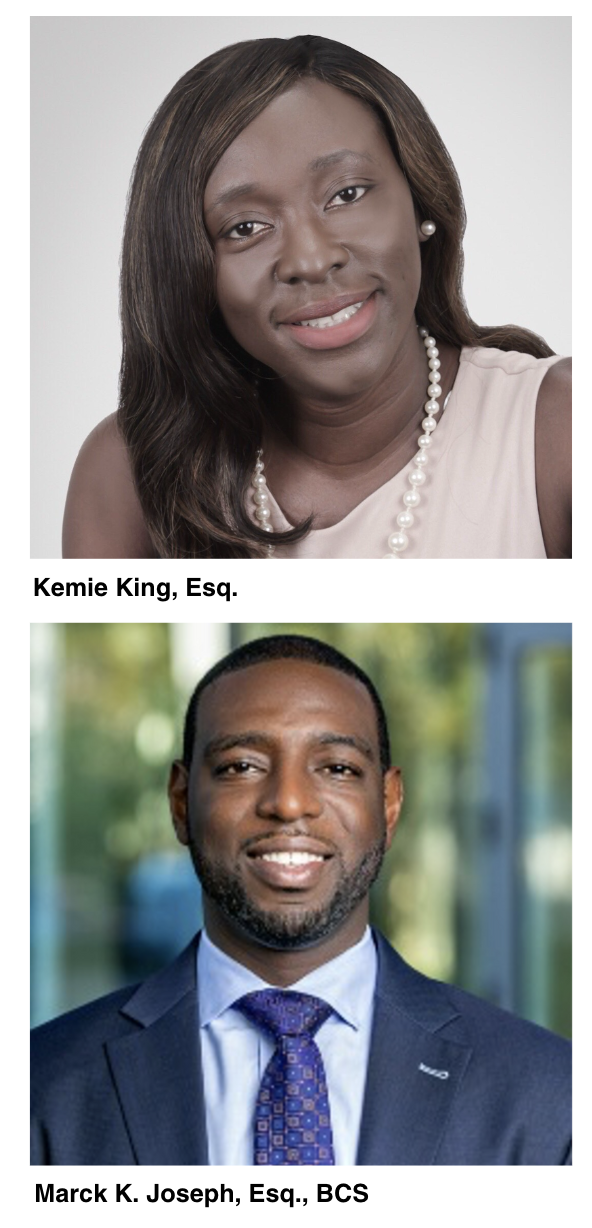
By Kemie King, Esq. and Marck K. Joseph, Esq., BCS
Throughout U.S. history, African Americans have faced systemic barriers in law and other fields. In Florida, African American legal pioneers have fought discrimination, paving the way for future generations of lawyers.
In the late 19th and early 20th centuries, African Americans in Florida battled disenfranchisement, segregation, and unequal justice. Legal trailblazers like Henry S. Harmon and James Weldon Johnson led efforts for equality. Harmon, the first African American admitted to the Florida Bar in 1869, became a symbol of resilience during a segregated era. Johnson, admitted in 1897, also championed civil rights and wrote the iconic “Lift Every Voice and Sing.”
The Civil Rights Movement of the 1950s and 1960s brought further progress. Virgil Hawkins' legal fight for admission to the University of Florida Law School broke educational barriers, while Bernice Gaines became the first African American woman admitted to The Florida Bar in 1958, both of whom have inspired future generations.
Modern pioneers continue this legacy. Eugene Pettis became the first African American president of The Florida Bar in 2013, symbolizing progress in the legal field. Rosalyn Sia Baker Barnes, the first African American woman president-elect of The Florida Bar, highlights the ongoing strides toward diversity and inclusion.
Leaders like Tenesia Hall, poised to become the first Black chair of the Florida Bar’s Family Law Section, advocates for underserved families, reflecting increased representation and equity in Florida’s legal community.
Florida’s African American legal pioneers have reshaped the legal system, proving that perseverance and courage can overcome entrenched barriers. Their legacy inspires future generations to champion justice and equality for all.
| | | |
Tech Tip – Making Connections with Love, Friendship and QR Codes: A Modern Guide to Networking
By Jenny Vargas de Perez-Corujo, Esq.
For family law practitioners, thoughtful greetings can help build rapport with others, such as clients, especially those from diverse backgrounds. When wishing a non-English-speaking client, “Happy Valentine’s Day,” making the effort to greet them in their native tongue can leave a lasting impression. A culturally sensitive phrase to use is “¡Feliz Día del Amor y la Amistad!”
This translates verbatim into “Happy Day of Love and Friendship!” This heartfelt message is not only warm and inclusive but shows your care for their culture. This can go a long way in building or strengthening professional connections and developing genuine bonds.
Valentine’s Day isn’t just about romance, it’s about recognizing and celebrating all the meaningful relationships in our lives - both in and out of the courtroom. As a family lawyer, expanding your network and forming meaningful connections with clients or colleagues is integral to your success.
And what better way of forming connections—especially in professional settings—than by using a handy QR code at your next networking event?
What is a QR Code?
With just one scan of a QR code (short for "Quick Response" code), anyone can easily save your contact details, visit your website, pay one of your invoices or simply connect with you on social media, such as LinkedIn.
How Do You Create a QR Code?
Creating a QR code is a cost-free, surprisingly simple, and requires no technical expertise! There are several user-friendly online tools available, such as QR Code Generator, Canva, or Google Chrome.
You could link your QR code to your firm website, your digital business card or even your LinkedIn profile. Once created, you can print it on business cards, display it on your phone, or even add it to your email signature.
Embracing Technology to Build Relationships
In a world where first impressions matter, using a QR code is a modern, efficient and tech-savvy way to stand out. This tool will prove your forward-thinking adaptability—qualities that people value in both personal and professional relationships. So, the next time you find yourself at a networking event, don’t worry about a business card. Simply pull up your QR code, and you’ll be making meaningful connections in no time. Who knows? That scan might just lead to a coffee, a future bestie, or even valuable business opportunities for years to come.
Here’s a pro tip: To make your QR code even more engaging, customize it with your law firm’s logo or brand colors. This subtle personalization can further enhance your professional image or business branding. Thus, making a lasting impression on clients and colleagues alike.
Celebrating Love as Well as Friendships
On this day of not only Love but also Friendship, let’s embrace the spirit of connection, creativity, and convenience in all its forms—whether it’s sharing your details through the simplicity of a QR code or wishing a non-English speaking client a heartfelt “¡Feliz Día del Amor y la Amistad!”
Technology may, at times, make our lives easier, but it’s the human connections we create that truly enrich our experiences.
Happy Day of Love AND Friendship, folks!
| | | |
Case Law Update
Kerrigan v. Kerrigan-Page, 2024 WL 5230427 (Fla. 2d DCA 2024)
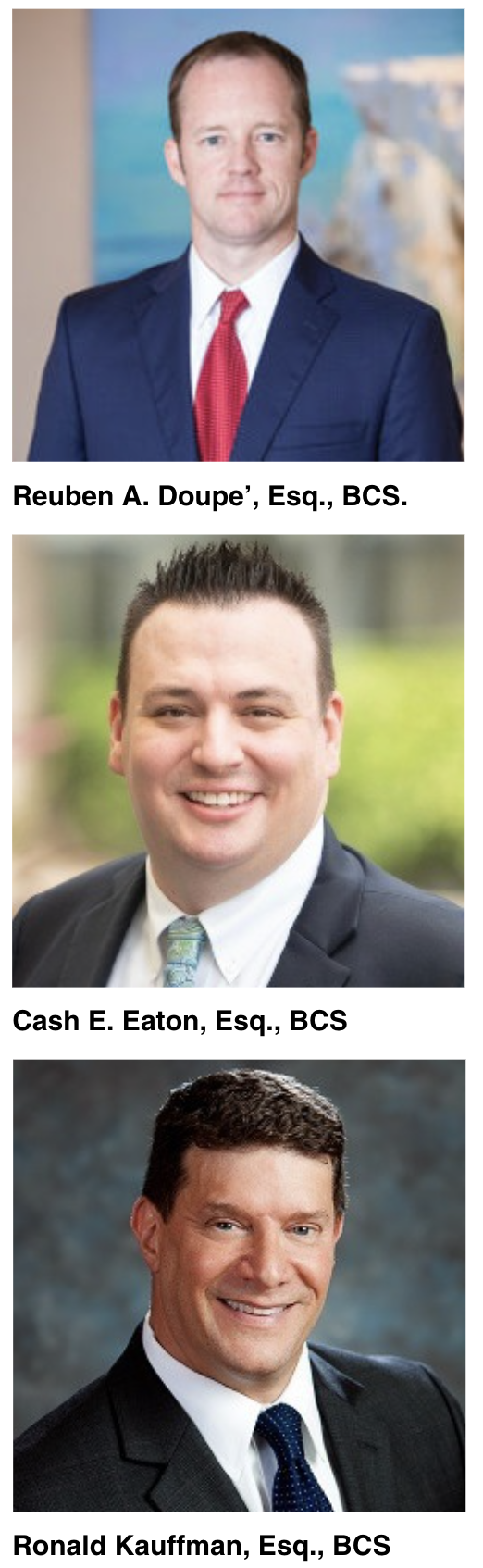
By Reuben A. Doupé, Esq., BCS
The Second District has shown us an imperfection in the Kaaa fix statute, 61.075 (6)(a)1.c. There is long-standing law that the use of a non-marital asset as security for a marital loan, does NOT change the status of the non-marital asset. Farrior v. Farrior, 736 So. 2d 1177 (Fla. 2d DCA 1998). The pledging of such an asset as security does not create any enhancement of the asset.
Turning to the relatively new statute, a coverture fraction is used and calculates the marital contribution to the equity of a non-marital property. The numerator of that fraction is “the total payment of principal from marital funds of all notes and mortgages secured by the property during the marriage….” The plain language of this statute is clear, it looks at ALL mortgages, even if the mortgage is taken during the marriage and is a marital debt. Kerrigan, demonstrates this exact situation. The husband owned a premarital home, where the parties resided, and during the marriage the parties took out a $1 million mortgage loan against the premarital home. This marital debt is a mortgage, so the principal paydown has to be used to create the formula.
As a result of the statute, the Farrior rule has been hollowed. It has been hollowed because the use of the asset as collateral has not changed the classification of that asset. However, the paydown of the resulting loan, with marital funds, has created a marital asset, in the form of the total amount paid and the resulting equity. Moreover, if this additional loan was incurred to purchase an additional asset during the marriage, it has now created another marital asset, in the form of the equity of that new asset.
Woodward v. Woodward, 2025 WL 258917 (Fla. 2d DCA 2025).
By Cash A. Eaton, Esq.
Happy New Year to all! In a brand new case from the Second District, we revisit an old friend, permanent alimony.
In this divorce case, the parties were married 24 years. The trial court awarded the Former Husband permanent alimony. The final judgment of dissolution was rendered February 17, 2023. The Former Wife appealed, and that appeal remained pending past July 1, 2023.
Effective July 1, 2023, § 61.08, Fla. Stat. was significantly amended, and permanent alimony was no longer available. These amendments applied to cases that remained pending as of July 1, 2023. The Former Wife argued that, because the appeal was pending, the case remained pending, and, therefore, permanent alimony could no longer be awarded by the trial court.
The Appellate Court agreed with the Former Wife. It held that, “The general rule is that an action remains pending in the trial court until after a final judgment and such time as an appeal is taken or time for an appeal expires. If an appeal is taken, the action is still pending until final disposition.” As the matter remained pending on July 1, 2023, the Former Husband was no longer entitled to permanent alimony.
Separately, the Appellate Court held that the trial court erred by using the Former Wife’s monthly gross income in determining her ability to pay. As has been held in numerous prior opinions, it is reversible error to base an alimony award on gross income rather than net income. The trial court calculated the Former Wife’s monthly net income to be $15,116. This was despite the fact that the parties had agreed that $15,116 was the Former Wife’s gross income. Therefore, this was reversible error.
Rojas v. Londono, No. 3D24-0455, 2025 WL 44389 (Fla. 3d DCA Jan. 8, 2025)
By Ronald H. Kauffman, Esq.
A husband appeals the denial of his petition for annulment. The husband testified he never proposed to his wife, they just mutually agreed to marry. He wanted a companion as he was getting older, and that he never consummated the marriage, had never seen her naked, didn’t know her bra size or any intimate detail about her body. He testified that she only married him to obtain legal status.
The wife admitted she never received an engagement ring, but said she signed a prenuptial agreement, that they had consummated the marriage, and had intercourse on several occasions, but only in the dark. Accordingly, she had never visually inspected his body. The husband’s girlfriend testified he told her he was married and was in process of divorcing. On those fact the trial court found it was a real marriage and they did have sex.
On appeal, the court found the record contained ample evidence supporting the trial court's findings that the parties consummated the marriage, she did not enter the marriage to commit fraud. The panel cited to Sack v. Sack, 184 So. 2d 434, 436 (Fla. 3d DCA 1966) (“Where a marriage is validly contracted it should not be dissolved other than by divorce, or by a decree of annulment supported by allegation and proof of recognized grounds for annulment of marriage.
The record of this case discloses no asserted ground or evidence to justify a decree of annulment in favor of the husband ... Here the parties, according to the allegations and proof, entered into a valid marriage contract ... The evidence does not establish existence of any of the grounds for annulment as outlined above.”). The court held the petition was properly denied.
| | | |
Signature Annual Sponsors | | | | |