|
"We can't help everyone, but everyone can help someone." —Dr. Loretta Scott
Fall brings with it a feeling of transition and reflection, and, this October, it’s also a time to raise awareness of numerous issues that impact Florida’s families daily - Domestic Violence, Breast Cancer, and ADHD Awareness. It is also National Depression and Mental Health Screening Month. As family lawyers, each of these matters have likely been part of our own personal lives, of someone we know, or someone we have represented. Now is a good time to take a moment and see if there is someone in our life who may need our help and support.
Our Fall meetings in Clearwater Beach were a big success, bringing new ideas and lots of brainpower together to help accomplish our Section goals for the year. Each committee is hard at work, including our Ad Hoc Emerging Family Lawyers Committee, as they are doing a great job getting young lawyers involved in the Section, and our Legislation Committee, which is gearing up for the upcoming legislative session in hopes of further improving the lives of Florida’s families. NOTE: If you are interested in participating on the Legislation Committee in future years, learn more by contacting our Committee Chairs William “Trace” Norvell and Kimberly Rommel-Enright, at legislation@familylawfla.org. If there are other committees that pique your interest, just reach out via our website at familylawfla.org or email me directly at chair@familylawfla.org.
Next up – our In-State Retreat at the Omni Resort in Amelia Island from Oct. 29 through Nov. 2nd. UPDATE: Our special room rate has been extended to Monday, Oct. 6, so book your room(s) TODAY! We’re excited to see the leaves changing, gorging on delicious food and candy, and watching some great football. The Resort offers so many activities for the time on your own, we will have a trolley ride and tour into downtown Amelia Island, and a delicious Section dinner as we head into the Saturday tailgate at the Florida-Georgia game. If you’re interested in sponsoring, we have a few very affordable options still remaining – click HERE for more info.
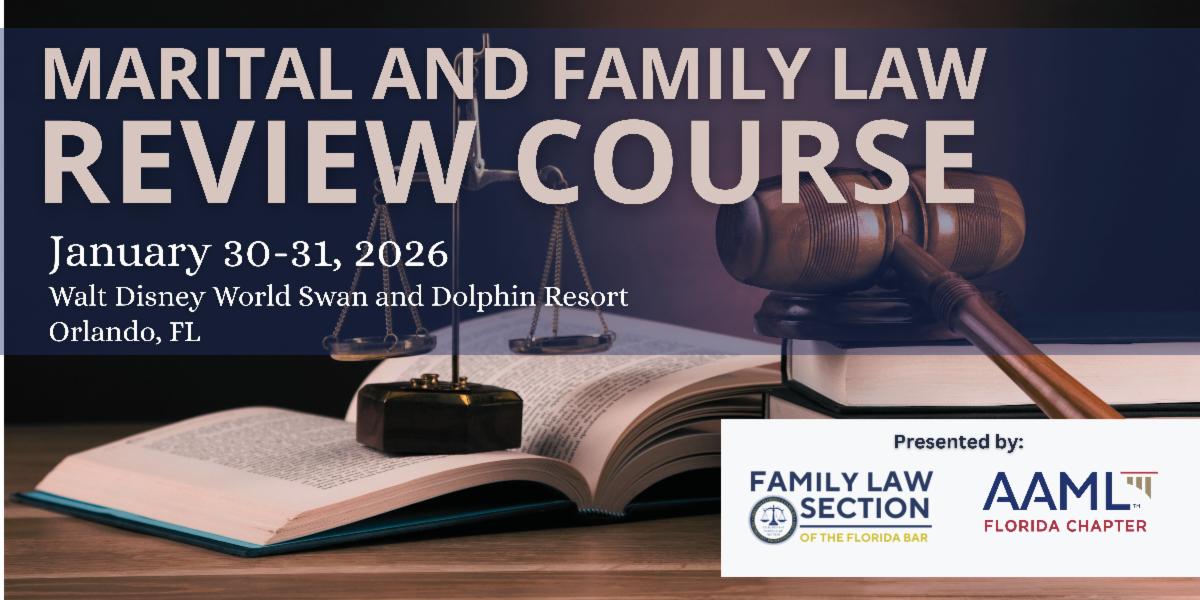
Registration is now open for the 2026 Marital and Family Law Review Course at the Walt Disney World Swan & Dolphin Resort, Jan. 30-31. It’s right by the entrance of Epcot and a short bus ride to Hollywood Studios and Magic Kingdom. Our committee has done a fantastic job securing incredible speakers for this renowned annual event. We’ll also hold our annual committee meetings, Jan. 29th, and our Executive Council Meeting following the conclusion of Thomas Sasser’s always anticipated Case Law Update on January 31st. Rooms are booking up very quickly, so reserve it now!
We have some great CLE courses coming up, including "The Law of Protection: Domestic Violence and Interpersonal Injunctions,” on Thurs., Oct. 9th with our Immediate Past Chair, Christopher Rumbold, Esq., Carolyn Ware, Esq., and the Honorable Lauren Alperstein. Click HERE to register. We have now confirmed our Live CLE on March 27, 2026, at Sandestin Golf and Beach Resort. Stay tuned for more info.
As we transition from the first quarter of the Bar cycle, I want to personally thank each of our annual sponsors, Dean Dorton; EisnerAmper; Florida Appeals; Smolin; Soman Stewart; Schipani Law Group; Ari S. Harper, CPA; Our Family Wizard; and Matthew Lundy Law, for all their support. So many great events and opportunities provided by the Section are made possible by them, and we are so appreciative! We still have annual and event sponsorships available, so click here to learn more.)
Looking forward to seeing you in Amelia Island and Orlando. Please feel free to reach out to me with any questions about the Section, or if I can help in any way, at chair@familylawfla.org.
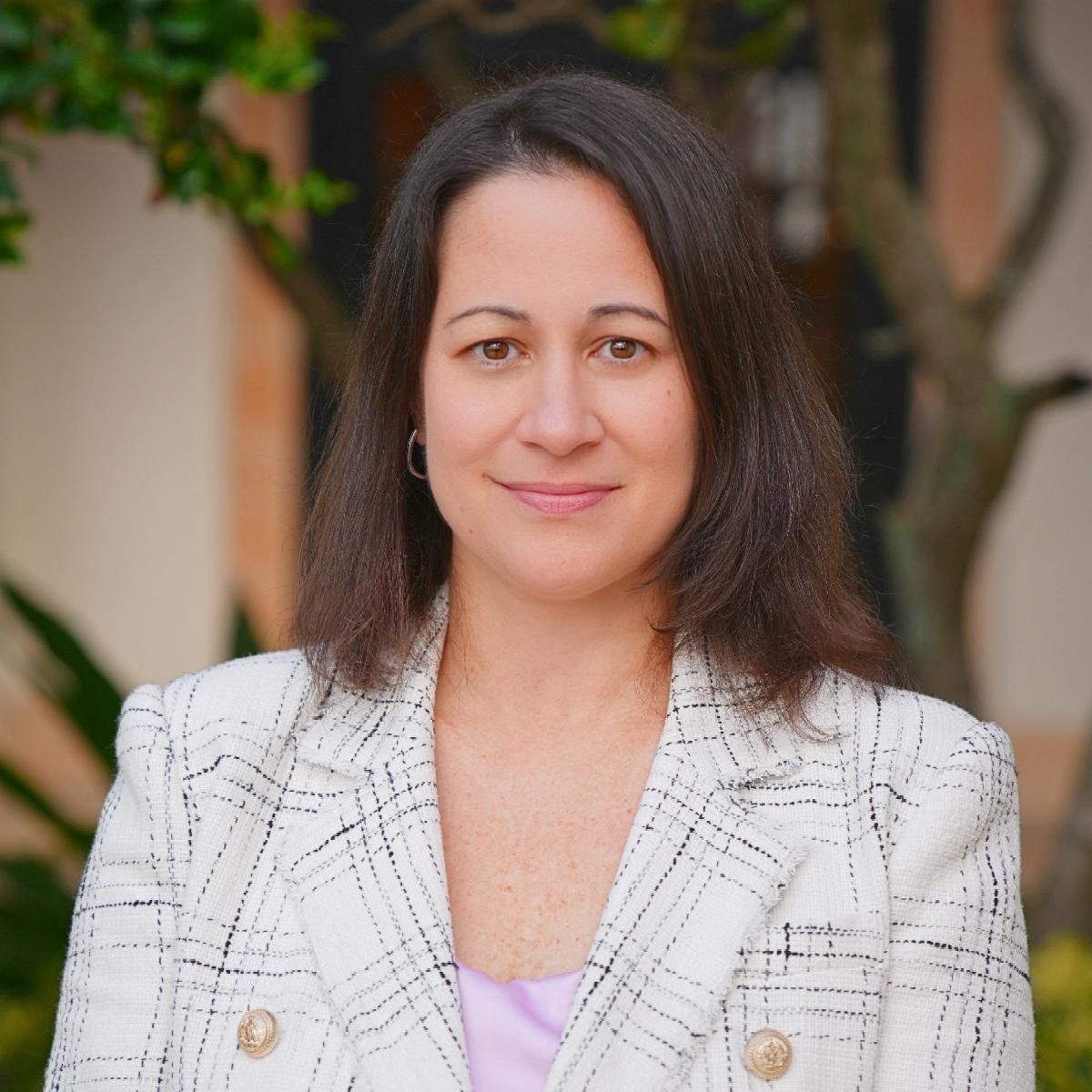
Aimee Gross, B.C.S.
Section Chair, 2025-2026
| DEADLINE EXTENDED TO OCT. 6 FOR IN-STATE RETREAT | The Omni Amelia Island Resort has graciously extended our special room rate through Monday, Oct. 6 at 5PM EST! So, if you're on the fence about attending our In-State Retreat Oct. 29 - Nov. 2 celebrating all things Fall, here's your sign and now's the time!
Sponsorships are still available, as well - click HERE to learn how your company or firm can support the Section while having a little Fall fun! | CLE WEBINAR "The Law of Protection: Domestic Violence and Interpersonal Injunctions," Thurs., Oct. 9, 12PM - 1PM EST | | This program provides an overview of domestic violence law in Florida, with a focus on interpersonal injunctions as both a protective measure and a legal remedy. Participants will learn the statutory framework under Chapter 741, Florida Statutes, and related provisions governing injunctions for protection against domestic, dating, repeat, sexual, and stalking violence.
The CLE will be led by Board Certified Family Law Attorneys Christopher Rumbold and Carolyn Ware and will feature insights from the Honorable Lauren Alperstein. | | DON'T DELAY, REGISTER TODAY! | | Now is the time to register and reserve your hotel room(s) before this premier Family Law Review Course sells out! Click the link below to our co-presenter's website (AAML Florida Chapter). Can't wait to see you there! | | |
If you received the most recent issue of The Florida Bar Journal, you may have seen the article, Prejudgment Interest: Is the Time Value of Money Overlooked in Divorce Proceedings?
It's definitely a must-read and we're so proud of Family Law Section members Natalie Lemos and Matthew E. Cambo for providing this important information to Bar members!
Read the online version HERE!
| | | | Special Room Rate Deadline for In-State Retreat at the Omni Amelia Island Resort | | | | | CLE Webinar - "'The Law of Protection: Domestic Violence and Interpersonal Injunctions," featuring the Honorable Lauren Alperstein, and Board Certified Family Law Attorneys Christopher Rumbold and Carolyn Ware. 12PM - 1PM EST. | | | | | In-State Retreat Omni Amelia Island, Fernandina Beach. Registration and hotel now open! | | | | | Mid-Year Meetings and Marital and Family Law Review Course. Save the dates now, more info coming soon! | | | | | Out of State Retreat. The Landing Tahoe Resort & Spa, Lake Tahoe. Save the dates now, more info coming soon! | | | |
EisnerAmper offers businesses, government organizations, and individuals a comprehensive set of accounting and audit, tax, advisory, and outsourcing services to help them respond quickly to urgent issues, anticipate opportunities and risks, and grow profitably. We are honored to have EisnerAmper as a Signature Annual Sponsor - thank you for supporting the Section!
| |
|
Interested in Becoming a Sponsor?
Now’s the perfect time to get involved. Explore sponsorship opportunities and learn how your organization can gain visibility while supporting our mission.
Download the PDF here!
| Spotlight: Domestic Violence Committee | |
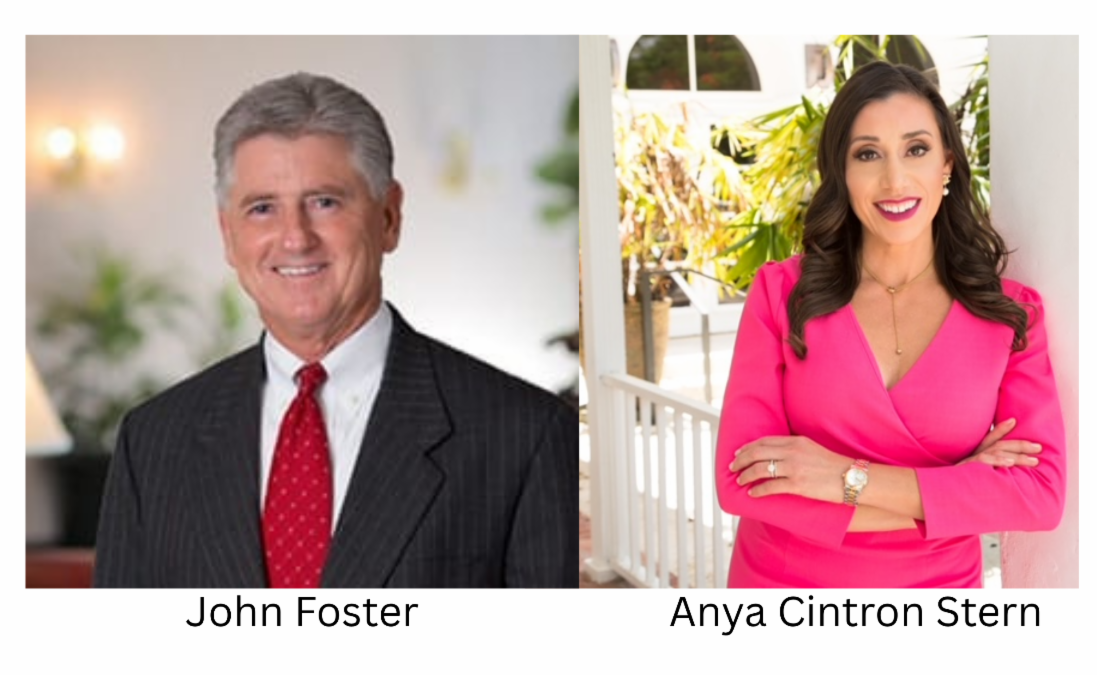
Chaired by Jack Foster and Anya Cintron Stern:
The Domestic Violence Committee of the Florida Bar Family Law Section, co-chaired by John Foster of Orlando and Anya Cintron Stern of Miami, is dedicated to advancing awareness, education, and advocacy on issues related to domestic violence. Comprised of committed members of the judiciary, attorneys dedicating 100% of their practice to domestic violence, and experienced family law attorneys, the Committee serves as a vital resource in addressing one of the most pressing challenges faced by families and the courts.
The Committee’s mission extends beyond the courtroom. Its members actively collaborate with organizations across the state to promote effective responses to domestic violence concerns and to improve the lives of survivors and their families while protecting due process for all litigants. By fostering dialogue and working partnerships, the Committee has contributed to meaningful legislative initiatives aimed at strengthening protections for survivors and ensuring fair, consistent practices within Florida’s family law system.
In addition, the Committee takes a leadership role in offering insights on emerging trends, best practices, and the intersection of domestic violence with broader family law issues. Through these efforts, the Domestic Violence Committee underscores its commitment to creating safer communities and ensuring that the legal system responds with both compassion and accountability.
If you are interested in becoming a member of the Domestic Violence Committee, please email dv@familylawfla.org.
| | |
Tech Tip: Harnessing Technology for Demonstrative Aids in Family Law Cases
By Fritznie Jarbath, Esq.
In today’s courtroom, technology is more than just a convenience—it is a powerful tool that can transform how attorneys present evidence and arguments. In family law cases, where emotions often run high and complex financial or parenting issues must be explained, demonstrative aids supported by technological tools can make a decisive difference.
Judges are tasked with evaluating a wide range of evidence in family law matters, from financial records to parenting schedules. Presenting this information in a clear and compelling way helps ensure that the court fully understands your client’s position. Visual aids—such as timelines, charts, and graphs—can simplify complex data and highlight key points. Technology makes it possible to create these visuals efficiently and tailor them to the unique facts of each case.
Modern courtroom technology allows attorneys to move beyond static paper exhibits. Software such as Excel, PowerPoint, and specialized case management platforms enable seamless digital presentations. Attorneys can highlight portions of documents, zoom in on critical details, and switch between exhibits with ease. This not only keeps the judge’s attention, but also demonstrates professionalism and organization.
For example, in child custody disputes, digital parenting plan calendars can be projected to illustrate proposed schedules. In high-net-worth divorce cases, financial spreadsheets can be converted into color-coded charts that reveal income disparities or asset divisions at a glance. These tools help the court digest complicated material quickly and accurately.
Technology is also changing how demonstrative aids are shared with the court and opposing counsel. Instead of relying solely on paper copies, attorneys can use secure digital platforms to submit exhibits in advance or provide the judge with tablets containing key visuals. In cases involving remote hearings—now increasingly common in family law—screen-sharing and electronic exhibit management systems allow everyone in the courtroom, whether virtual or in person, to access the same information at the same time. This reduces delays, minimizes disputes over missing documents, and ensures the court has a complete and organized view of the evidence.
While technology is invaluable, it must be used strategically. Attorneys should ensure that demonstrative aids are accurate, easy to follow, and directly relevant to the issues at hand. Overly complex visuals can confuse rather than clarify. It is also critical to comply with evidentiary rules, providing opposing counsel with copies of demonstrative exhibits in advance, and ensuring the courtroom is equipped for digital presentations.
In family law, where the court’s decisions deeply affect families’ futures, clarity and precision are essential. By leveraging technology to create effective demonstrative aids, attorneys can better communicate their clients’ stories, simplify complicated evidence, and ultimately assist the court in reaching fair and informed outcomes. The thoughtful use of technological tools not only strengthens advocacy, but also reflects a modern approach to client-centered representation.
| | |
Case Law Update
By Ronald Kauffman, Esq.
Rushing v. Rushing, No. 6D2024-1357, 2025 WL 2679794, (Fla. 6th DCA September 19, 2025)
The Former Husband appealed a supplemental final judgment awarding the Former Wife nearly twenty-five percent of his military pension, which he accrued over twenty-four years of service in the Air Force. The parties’ MSA calculated the pension formula as (143/AD) x 0.5 where ‘AD’ is defined as the actual number of months of creditable active-duty time accrued by the Husband as of the date of his retirement. Because the Former Husband served in the Air Force for several years before the parties’ marriage, and six years after their divorce, the “AD” was 288, and the calculated percentage was 24.83%. The parties did not dispute this. But the agreement also dictated the Former Wife's “percentage share” of the pension “shall be calculated” at his salary and rank at the time he filed for divorce.
The Former Husband retired in 2018 after twenty-four years (288 months) of service. Former Husband's additional years of service after the parties’ divorce meant that his monthly pension payment was 60% of the average of his monthly pay for his most lucrative three years of service, instead of the 45% he would have received had he retired the day the parties divorced.
The Former Wife sought modification claiming the final judgment only allowed the trial court to apply the formula and nothing else. If accepted, it would allow the Former Wife to take 24.83% of the Former Husband's pension without regard to his rank or salary when the parties divorced. Instead, she would receive that percentage over his entire military career.
The trial court determined the agreement was ambiguous and subject to differing interpretations. It found all the trial court needed to do to calculate her percentage of Former Husband's pension was the formula.
The Sixth Circuit reversed, finding the MSA unambiguous, and that the trial court erred by relying on parol evidence to explain an unambiguous agreement in several ways having nothing to do with its technical terminology. The appellate court found that the trial court's contrary interpretation misapplied the plain language of an unambiguous agreement, and remanded to include a military retired pay division order containing: 1) the 24.83% contemplated by the formula; 2) the hypothetical retirement date (April 11, 2013); 3) the Former Husband's rank when the parties divorced (E-7); 4) the Former Husband's years of service when the parties divorced (eighteen); and 5) the Former Husband's retired pay base ($3,822.51) when the parties divorced.
| |
Part IV: '12 Habits of Highly Successful Family Law Attorneys' | | In our fourth article, former Family Law Section Chair (2023-2024) and board certified family law attorney Sarah E. Kay of Kay Family Law PLLC in Tampa shares her thoughts on why setting boundaries is important in becoming a successful family law practitioner. | |
A Successful Family Law Attorney Has Healthy Boundaries
By Sarah E. Kay, Esq., B.C.S.
With nearly fifteen years in family law, I’ve learned that healthy boundaries are more than a self-care tool—they’re a cornerstone of a successful practice. In a field where empathy is essential and emotional intensity is routine, boundaries are what allow us to show up fully—without succumbing to burnout, compassion fatigue, or the cumulative toll of secondary trauma.
Early in my career, I mistakenly believed being always available meant I was truly dedicated. I answered emails around the clock, took calls during family time, and carried my clients’ pain as if it were my own. It took time—and a few hard lessons—to realize that, without boundaries, compassion becomes unsustainable, and advocacy dulls.
Establishing boundaries starts with clarity. Define your availability, your scope of representation, and your communication protocols early—and revisit them often. What works for other practitioners may not work for you, so take a close look at the rhythm of your life and your other responsibilities and adjust as needed. Then, communicate your boundaries early and consistently to those you work with. Clients and other professionals benefit from knowing what to expect, and you benefit from preserving the energy it takes to advocate effectively. Boundaries aren’t barriers—they’re bridges to more focused, ethical, and responsive lawyering.
Boundaries require consistency and courage. They ask us to resist the urge to “rescue” others by overextending, and instead to empower through structure and transparency. They ask us to say no when necessary, even when yes feels easier. And they ask us to model the very stability we hope those with whom we work will discover.
Boundaries also protect our relationships. They help us sidestep reactive behavior, reduce conflict, and sustain professionalism under pressure. In my experience, all participants in family law respond more favorably to attorneys who lead with clarity and restraint—hallmarks of healthy boundaries.
Boundaries safeguard our humanity. They make space for family, personal growth, and a purposeful return to our work. They remind us we are not our caseloads—and our worth is never measured by our sacrifice.
To my fellow family law attorneys: feeling stretched thin is a signal, not a failing. Boundaries aren’t indulgent—they’re strategic. They sustain our impact, preserve our integrity, and protect our longevity. Let’s keep showing up for Florida’s families—and for ourselves. The success of our families and our practices depends on it.
| | | | | | |