|
Community Association Update: Issue # 60
Annual Legislative & Case Law Update (2025-2026)
| | |
Dear ,
Below you will find an overview of the 2025 legislation and case law impacting California HOAs as we head into 2026. The material below is not meant to be an exhaustive list; we have summarized what we believe is the most important to the majority of our HOA clients and the industry professionals who service them.
If you have any questions regarding the information below, feel free to email us.
| | | | |
Steve Tinnelly, Esq.
Managing Partner
| | |
AB 130 | ENFORCEMENT PROCEDURES;
LIMITATION ON ALLOWABLE FINE AMOUNTS
(Effective June 30, 2025)
| | |
Places a general cap on fines for violations to $100; Requires changes to HOA violation enforcement process and procedures.
New Law. AB 130 was signed into law on June 30, 2025 and took effect immediately. This controversial bill was drafted as part of California's ongoing efforts to address affordable housing by limiting what the California Legislature believes to be too much power in the hands of HOA Boards of Directors to impose discipline (levy fines) against HOA members for violations of the HOA's governing documents.
As a result of AB 130's passage, Civil Code §§ 5850 and 5855 have been amended in significant ways. Here are the key points:
-
Fines for violations are capped at $100 unless the violation may result in an adverse health or safety impact on the common area or another member's property.
-
Member must be given an opportunity to cure the violation prior to the hearing. If the member cures, or provides "financial commitment to cure", then no fine may be levied.
- No late charges or interest on fines.
- If an agreement is reached with the member at the hearing, then the Board is required to draft a written resolution signed by the Board and the member.
- If no agreement is reached with the member at the hearing, then the member must still be given the opportunity to request IDR.
- Notice of hearing results must be provided within 14 days following the decision to impose discipline (previously it was 15 days).
As a result of AB 130, most HOA enforcement policies and fine schedules have been rendered unenforceable. TLG has adopted an AB 130 "Flat Fee Program" to provide our clients with everything they need to not only comply with the new law, but to also facilitate as effective an enforcement procedure as possible under the new statutory framework. More information on the program and on AB 130 is available by clicking on the following links:
AB 130 Flat Fee Program | AB 130 Blog Post | AB 130 Video Reel
| | |
SB 31 | WATER QUALITY; RECYCLED WATER
(Effective January 1, 2026)
| | |
Irrigating HOA common areas adjacent with recycled water does not convert individual homes into "dual-plumbed" systems
New Law. Water Code § 13552.4 was amended to clarify that an HOA's "outdoor landscape irrigation of common areas that does not enter the boundaries of a residence is not to be considered part of the same premises as an individual residence" and therefore not considered a "dual-plumbed" system requiring individual backflow devices.
Reminder. AB 1572 (effective January 1, 2024) prohibits the use of potable water to irrigate nonfunctional turf in HOA common areas by January 1, 2029.
| |
SB 410 | EXTERIOR ELEVATED ELEMENT (SB 326)
INSPECTION REPORTS
(Effective January 1, 2026)
| |
Inspection report now an "association record" subject to inspection; increases disclosure and record-keeping requirements.
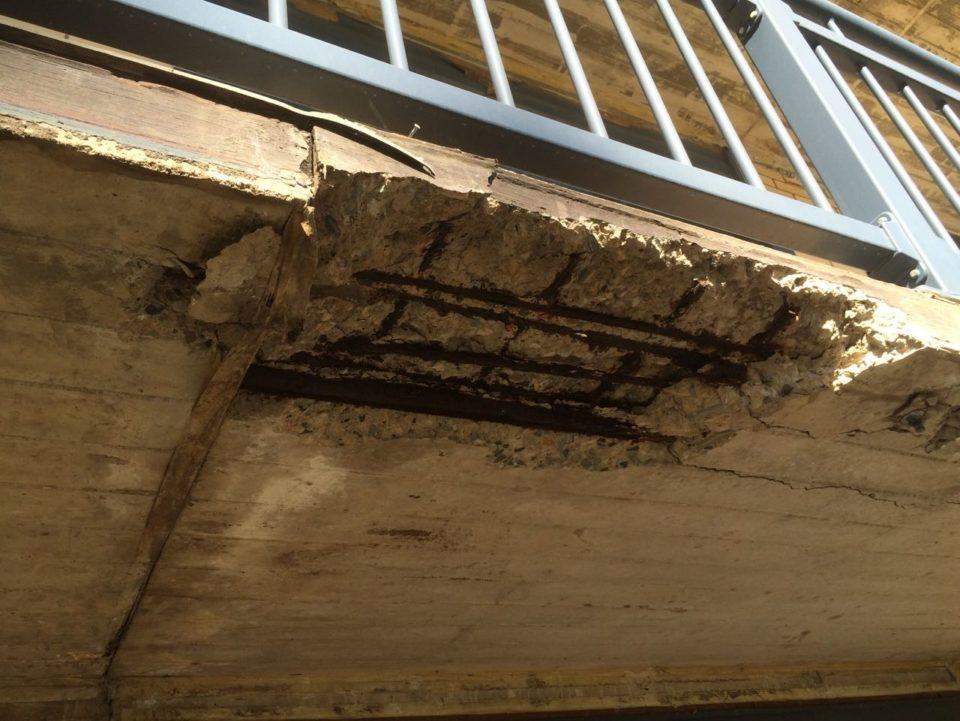
In 2020, SB 326 (commonly known as the "Balcony Bill") was enacted to require, among other things, that condominium HOAs conduct mandatory inspections for exterior elevated elements (i.e., decks, balconies, and walkways). The inspections are intended to determine whether these exterior elevated elements are in a generally safe condition and performing in accordance with applicable standards. These inspection requirements were proposed by the California Legislature in response to the catastrophic balcony failure in Berkely, California that resulted in a number of tragic deaths. These inspection requirements were codified within Section 5551 that was added to the Civil Code in 2020.
New Law. AB 410 was enacted primarily to increase the disclosure and record-keeping requirements for these inspection reports by:
- Amending § 4525 to include these reports within the list of documents a seller of a unit is required to provide to a prospective purchaser in escrow;
- Amending § 4528 to include these reports within the statutory form for disclosing charges for documents produced in escrow;
- Amending § 5200 to include these reports within the definition of "association records" that are subject to inspection by the HOA's members;
- Amending § 5210 to require that these reports be made available for inspection for at least two (2) inspection cycles; and
- Amending § 5551 to require that the report include additional information (date of inspection, total number of units, number of units inspected, number of units with safety threats, etc.).
Click here for more information on SB 410
| | |
SB 547 | ONE (1) YEAR INSURANCE MORATORIUM
(Effective January 1, 2026)
| | |
Prohibits policy cancellation or non-renewal of a commercial property insurance policy for a property near a fire perimeter for one (1) year.
New Law. In an effort to combat the insurance affordability and availability crisis, Insurance Code § 675.55 has been amended to prohibit a carrier from cancelling or non-renewing a commercial property insurance policy for one (1) year after a declaration of a state of emergency simply because the insured structure is located in an area in which a wildfire has occurred.
This applies to commercial property insurance that insures against loss to real property used primarily for commercial residential or habitational purposes, including policies insuring HOAs, condominium associations, condominium complexes, and multifamily dwellings with greater than five (5) units.
| | |
SB 625 | RECONSTRUCTION AFTER DISASTER
(Effective January 1, 2026)
| | |
Streamlines the approval process to rebuild a substantially similar residential structure damaged or destroyed in a government declared disaster.
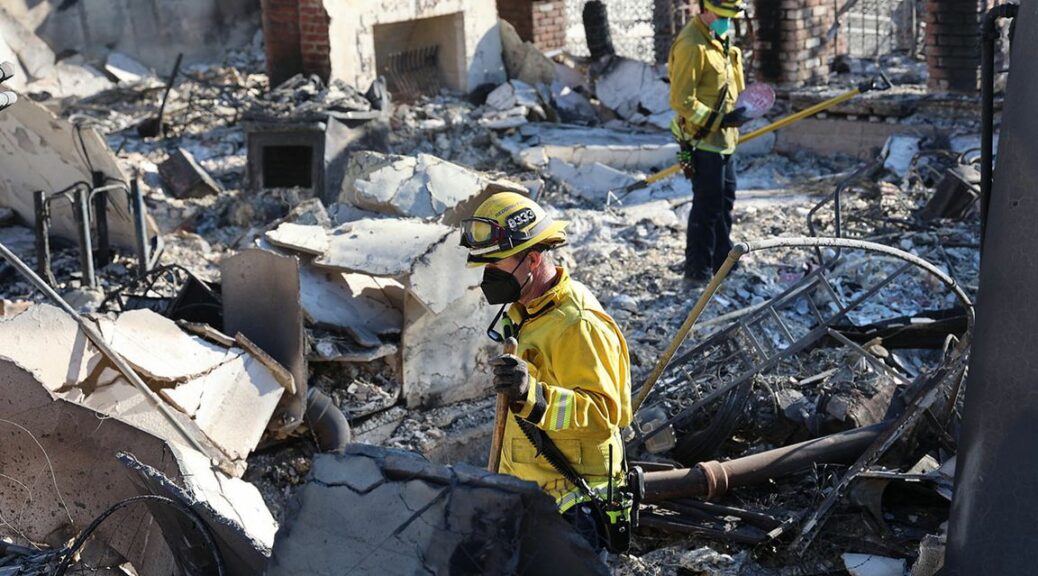
New Law. SB 625 adds new Sections 4752 and 4766 to the Civil Code to fast track and streamline the architectural approval process an HOA may require for a member to rebuild a residential structure that was damaged or destroyed in a government declared disaster. Where the member desires to perform a "substantially similar reconstruction of a residential structure" as defined under the new law, the HOA may only impose "objective design standards," and the HOA is additionally required to comply with specific review timelines/procedures contained in the Civil Code. If an HOA does not comply and legal action is instituted by the member, the member is entitled to their attorney's fees if they prevail but the HOA is not entitled to its attorney's fees if it prevails.
Click here for more information on SB 625.
| |
SB 770 | ELECTRIC VEHICLE CHARGING STATIONS
(Effective January 1, 2026)
| |
Relaxes insurance requirements for owner-installed EV charging stations.
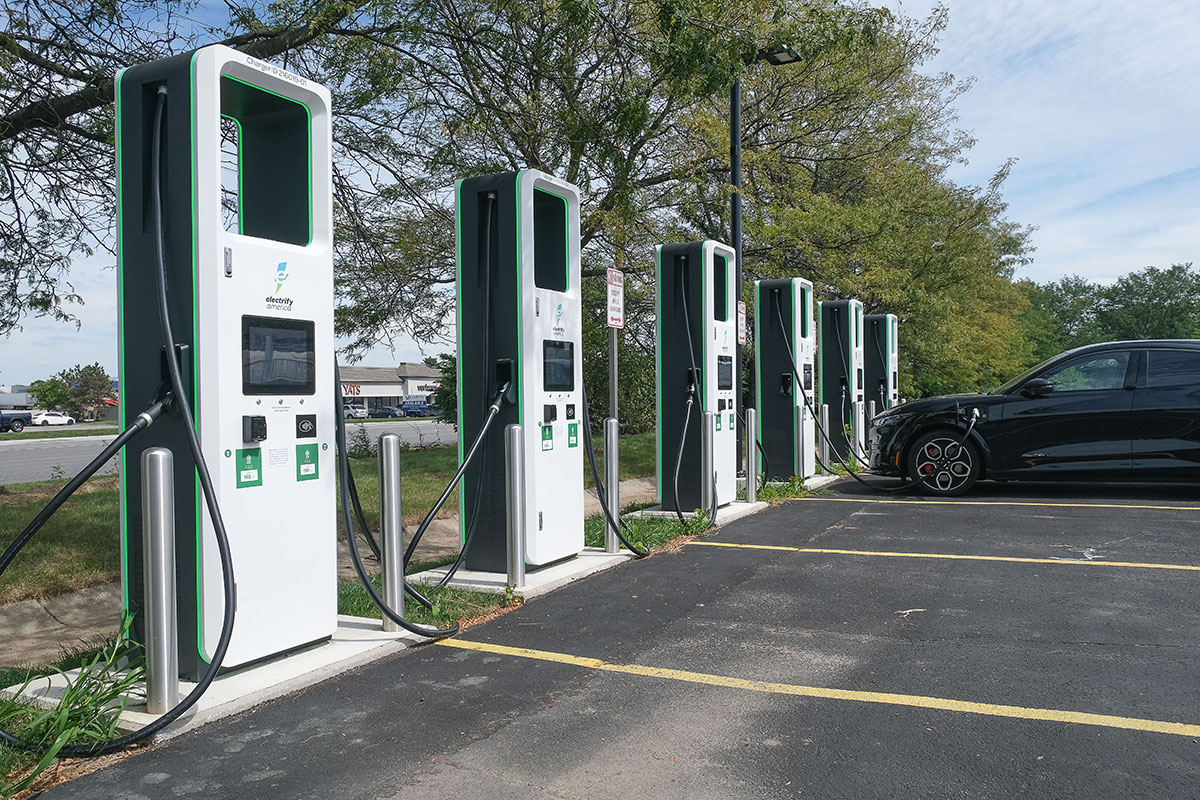
Civil Code § 4745 grants homeowners within HOAs certain rights to install electric vehicle (EV) charging stations. When installing an EV charging station in a portion of common area or exclusive use common area, the member is required to, among other things, maintain a liability coverage policy and to provide their HOA a certificate of insurance within 14 days of the HOA's approval of the member's application to install the EV charging station. The law also required that the certificate of insurance name the HOA as an additional insured under the policy.
New Law. While the member is still required to maintain the liability coverage policy and provide a certificate of insurance to their HOA within 14 days of approval, § 4745 has been amended to no longer require that the certificate name the HOA as an additional insured.
Click here for more information on EV charging stations in HOAs.
| | |
RIDLEY v. RANCHO PALMA GRANDE HOA
Business Judgment Rule and Judicial Deference Defenses to Board Liability
$7,104 repair becomes a $1.8 million lawsuit
| | |
The Business Judgment Rule and Judicial Deference do not Protect an HOA Board that fails to conduct a reasonable investigation or acts in bad faith.
Factual Background. In 2018 the plaintiff began noticing ongoing water pooling in the crawlspace beneath their unit—an area designated HOA common area. The owners reported water in the crawl space. The City and the local Water District advised that the water likely came from an abandoned well. Multiple experts and contractors recommended investigating and remediating the suspected well. The HOA ignored (and in some instances, manipulated) those expert opinions and delayed meaningful repairs for more than 19 months, during which the unit suffered water, mold, and termite damage.
Court’s Ruling. The court rejected the HOA’s reliance on judicial deference and the business judgment rule, finding those defenses unavailable because the HOA had not acted upon reasonable investigation or in good faith. In fact, evidence showed intentional misrepresentations and bad faith conduct by the board leadership.
Click here to read the court's ruling.
| | |
WOOLARD v. REGENT REAL ESTATE
Neighbor-to-Neighbor Disputes
| | |
HOAs and their managing agents do not have a legal duty to prevent and resolve neighbor-to-neighbor disputes.
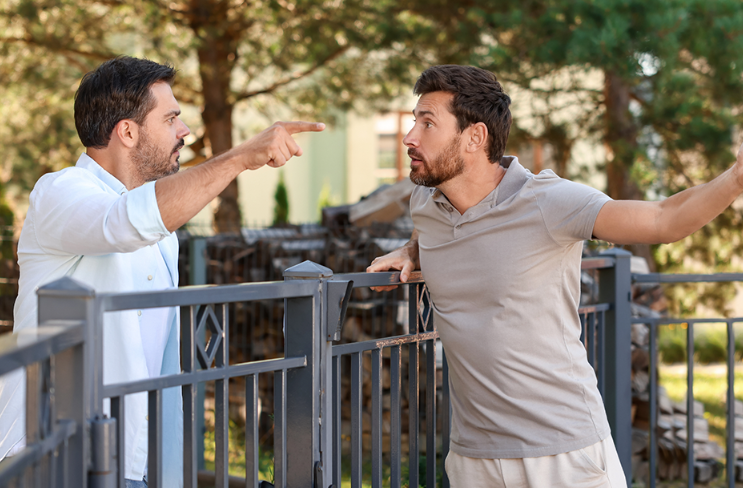
Factual Background. The Woolard case stemmed from a violent, physical altercation between neighboring residents at a condominium complex. Two residents involved in the altercation filed a cross-complaint alleging negligence against the HOA and its community manager. The residents, who were tenants of a homeowner, alleged that the HOA and its managing agent were aware of a longstanding history of harassment and conflicts between the involved parties and thus had a duty to intervene, de-escalate, and prevent the violent dispute.
Court’s Ruling. The Court of Appeals upheld a trial court’s summary judgment in favor of the HOA and its community manager, ruling that they had no duty to intervene in neighbor conflicts.
Click here to read our blog post on this case.
| | |
MORE GROWTH & MORE TOP TALENT JOINS OUR TEAM
We've been building over these past couple years.
Significant investments have been made to our operations, technology systems, and--most importantly--our human capital. We welcomed these attorneys below not only because of their varied experience and skillsets, but also their alignment with our firm's values and client-focused practice approach. They've added tremendous value from their start and have helped make our attorney team stronger than ever.
| | | | |
...and we're still hiring!
We were thrilled to welcome over 200 new communities to our HOA client family in 2025 and it's our privilege to now represent over 1,800 communities throughout California.
Talented, driven, and forward-thinking attorneys that are interested in joining our growing team may send us an email with their resume at careers@tinnellylaw.com or go to our careers page.
All applications will be kept confidential.
| | |
ALTERRA COMPLETELY SMASHES (YET ANOTHER) RECORD
- OVER $6.2 MILLION RECOVERED IN 2025 -
| |
TLG is proud to provide HOAs throughout the state with access to advanced, comprehensive, and attorney-supervised collection services through our affiliate company, Alterra Assessment Recovery.
Since its founding, Alterra's mission has been to provide the most efficient and effective assessment collection services by leveraging advanced technology, a team of dedicated professionals, and the backing of expert HOA attorneys to deliver results for its clients day after day.
Alterra continues to perform and raise the bar.
Here are its annual debt recovery stats just since 2020:
2020: $1,986,452.12
2021: $2,956,996.85
2022: $3,840,099.64
2023: $3,986,724.03
2024: $4,556,752.93
2025: $6,223,692.19
Total debt recovered since 2020: $23,550,717.76
Reserve funds replenished, budgets balanced, assessment increases avoided, and property values protected.
Click here to request a proposal from Alterra
| | TLG'S CAM UNIVERSITY IS UP AND RUNNING | |
In October of 2025 we announced an exciting new venture, CAM University, powered by Tinnelly Law Group.
CAM University was established to support and empower the next generation of community managers. We are leveraging our legal and community expertise to provide an exceptional training and development program for individual managers to obtain their CMCA designation.
We are incredibly proud of Ramona Acosta, TLG's Director of Business Development and Vice President of CAM University for her years of work in making CAM University a reality.
TLG is now the only law firm in the world that offers aspiring community managers a California-focused, CAMICB approved prerequisite course that complies with state certification requirements.
Click here to learn more about CAM U and its upcoming educational offerings.
| | | | |