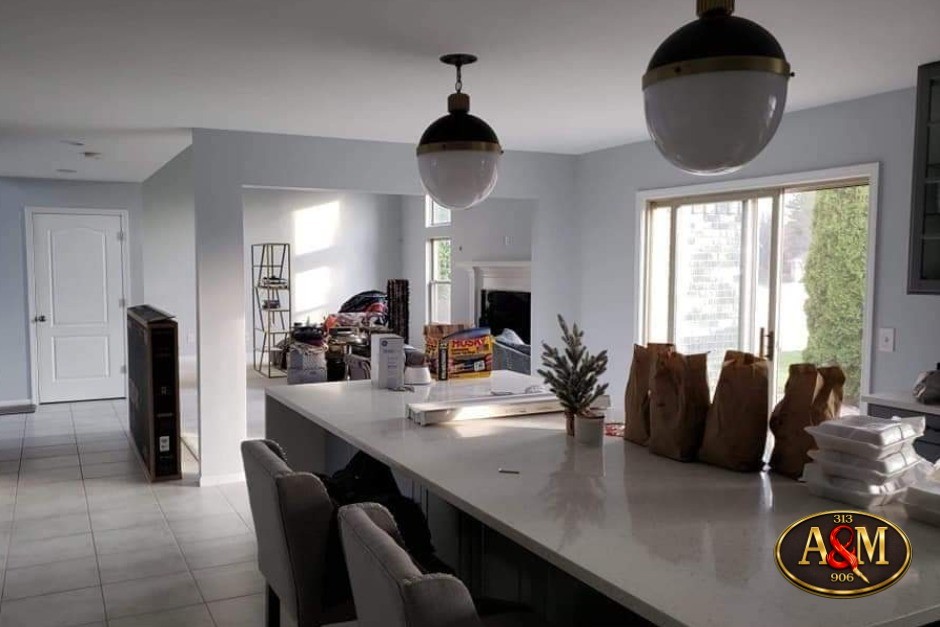
THE HOUSE STILL HAS TO WORK.
The hallway does not stop being a hallway because it is being painted.
You still need to get to the bedroom. The dog still needs to go out. There may be someone working from home in the next room.
Once you have a painting project in mind, those everyday details are worth talking about. They help turn an idea into work that can actually be planned around your household.
I would start with three questions:
Which spaces do you need to keep using?
Think about the stairs, the route between rooms and any space that is important to your daily routine.
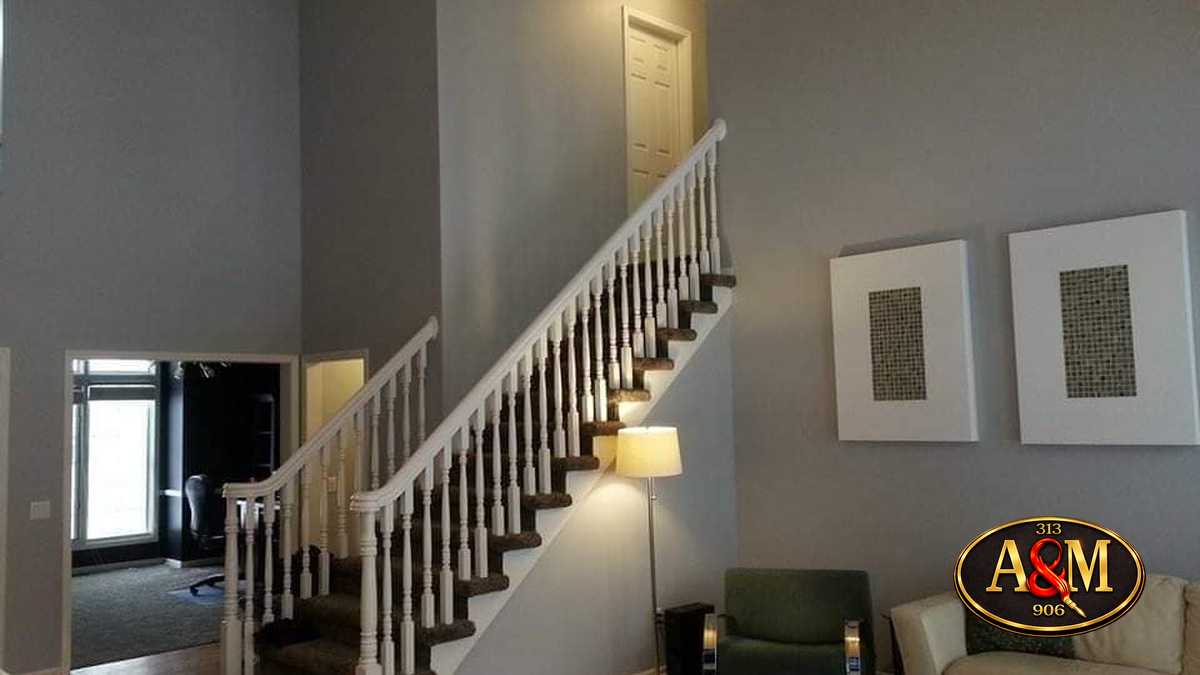
If we're painting a hallway or stairway, people may still need to get from one part of the house to another. If we're working in a kitchen or family room, there may be parts of the day when access matters more than others.
Those are things we should talk about before the work begins.
Who handles the belongings?
Pictures, furniture, electronics and fragile items all need a plan.
Sometimes moving something is simple. Sometimes a television, large bookcase, artwork or something fragile needs a little more thought.
We should agree ahead of time on what you will handle and what belongs in our painting scope.
That way everybody knows what to expect when the crew arrives.
What does the timing need to fit around?
Maybe somebody works from home. Maybe you have visitors coming. Maybe there is a room you simply cannot have unavailable at a certain time.
Or maybe there is nothing unusual at all.
Either way, tell us.
A work schedule, visitors, pets and the normal way your household uses the space can all matter when we talk about how the project should be approached.
A good painting plan isn't only about what we're painting. It should also account for how you need to keep using your home while we're doing it.
|