|
Jarbidge: Where the Sun Don't Shine Much and the Gold Does
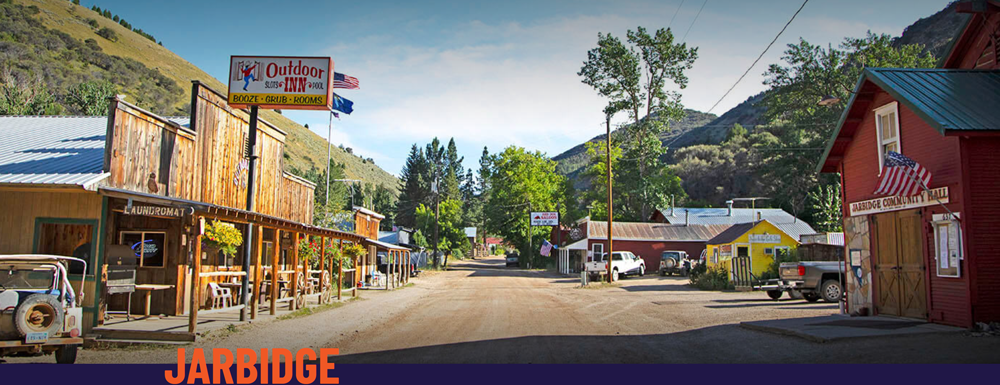
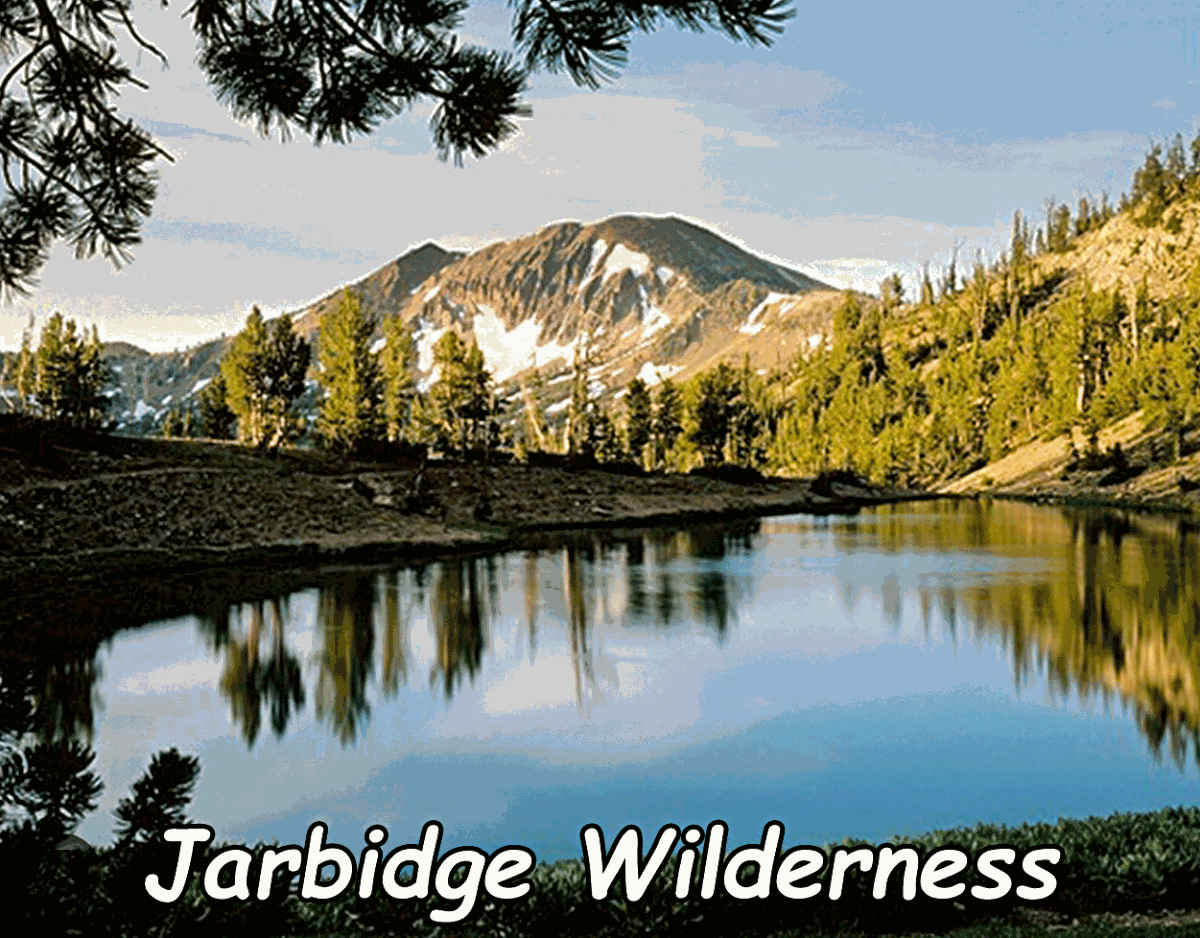
The population of Jarbidge is usually around a dozen people, but increases to about a hundred in the spring through fall because it is a popular destination for outdoor activities like camping, hunting, fishing, and hiking.
Jarbidge is known as the most remote town in the lower 48 states. The name Jarbidge comes from a Shoshone word meaning “a bad or evil spirit”
Nestled in a narrow canyon, this ain't your average whistle-stop. We're talking about a place nine miles south of the Idaho border, practically spitting distance from nowhere. Situated 6,500 feet above sea level. Picture this: steep walls of rock like nature's own prison, where the ice plays hide-and-seek all summer and winter stretches.
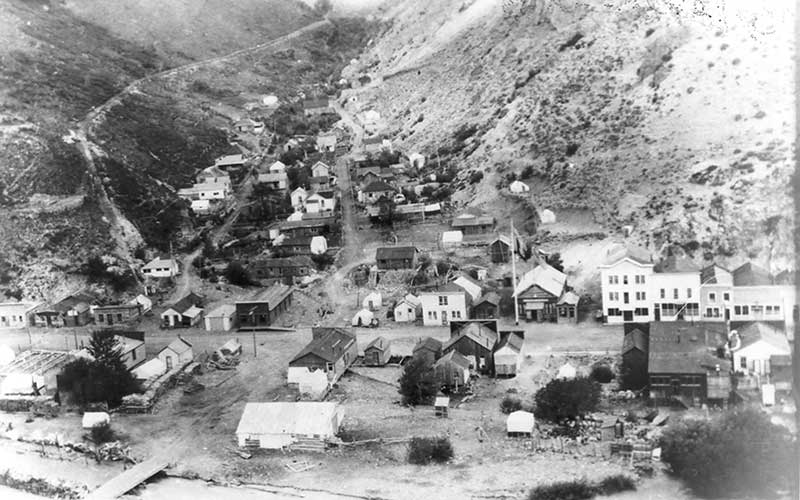
Back in 1916, Jarbidge was a boomtown, the kind where dreams were as big as the mountains and just as likely to crumble. A bustling mining camp, full of prospectors, gamblers, and fellas lookin' to make a quick buck. Of course, few got rich. But hey, that's the story of every gold rush.
| |
A Blizzard, a Stagecoach, and a Whole Lotta Trouble
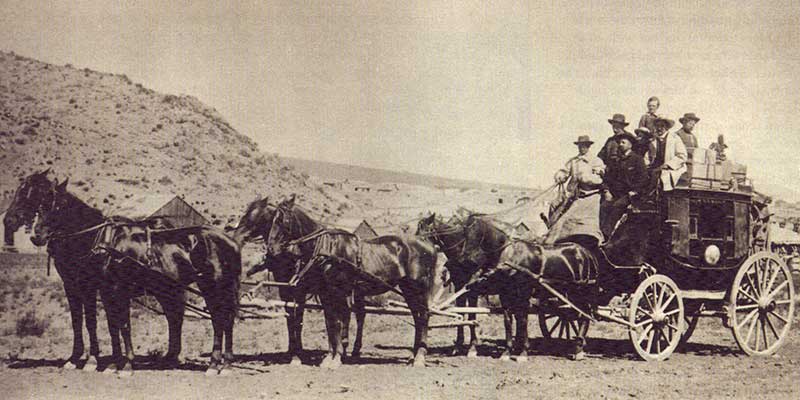
Postmaster Scott Fleming, a man whose collar was tighter than his patience, was pacing his office like a caged cougar. The snow was comin' down hard and the stagecoach from Rogerson, Idaho, was late. Three hours late, to be exact. Now, in Jarbidge time, that's practically an eternity.
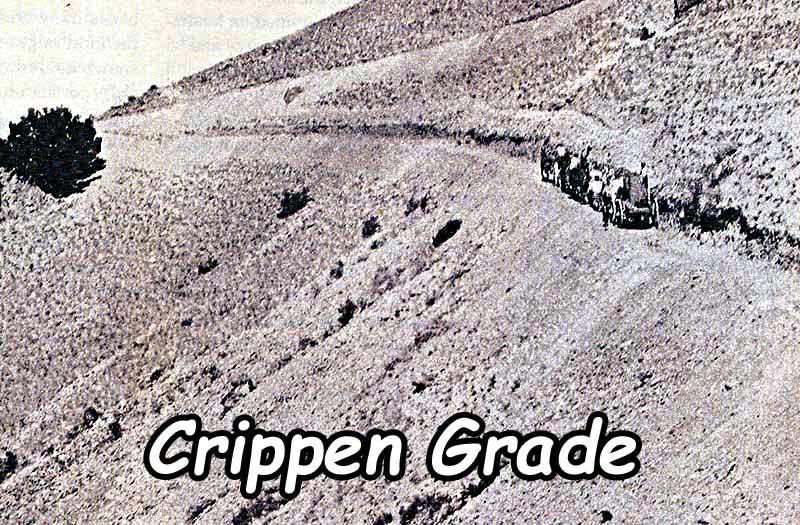
Fleming knew the Crippen Grade was a treacherous beast, especially with three feet of snow. But he also knew Fred Searcy, the stage driver was tough. Still, worry gnawed at him. Among the fellas waitin' for the stage was Newt Crumley, the saloon owner, eager to get his hands on a shipment of payday cash. See, in a town like Jarbidge, payday was the only day that mattered.
| |
Missing: One Stagecoach and Four Horses
As the hours ticked by, the tension in the post office grew thick. A miner named Frank Leonard mentioned that the outbound drivers had seen the stagecoach headin' down the Grade hours ago. So where in tarnation was it? Fleming, knowin' somethin' was rotten, hired Leonard to ride up the Grade and find out what happened.
Leonard returned two hours later, colder than a well digger's posterior, with nothin' to report. No stagecoach, no sign of Fred, just a whole lot of snow and a growin' sense of dread. A search party was suggested, but Fleming, a man who liked to think before he acted, decided to do some more diggin'.
Fleming called up Rose Dexter, who lived on the edge of town. Rose reported that the stage had passed her place around 6:30 PM. She even waved at Fred, but he was bundled up and didn't respond. Just then, a teamster barged into the post office, claimin' he'd seen the stagecoach just a few hours ago, right here in town.
"How in the hell," Fleming exclaimed, "does a stagecoach with its driver and four horses disappear from a city street?" That, my friends, was the million-dollar question.
| |
Tracks in the Snow and a Grisly Discovery
A search party was formed, flashlights flickerin' like nervous fireflies in the dark. They found wagon tracks leading away from town, towards the river. And then, they found the stagecoach. The horses were alive but shivering, and Fred Searcy was slumped over in the driver's seat.
At first, they thought Fred had frozen to death. But Justice Yewell, a man who knew the difference between a blizzard and a bullet, found a hole behind Fred's right ear. A bullet hole. This wasn't just a case of bad weather; this was murder.
The town was locked down tighter than a drum, and Sheriff Harris was summoned from Elko. Meanwhile, Yewell and a group of outdoorsmen followed a set of tracks in the snow, tracks that led them to a dog print. Now, I know what you're thinkin': a dog? But in a town like Jarbidge, even a stray mutt can be a key witness.
| |
A Dog, a Hat, and a Trail of Clues
Yewell rounded up every dog in town and compared their paw prints to the one in the snow. The winner? A big yellow stray. They let the dog loose, and he led them straight to a bloody overcoat and a sack of mail. Then, they found a hat with a bullet hole and a streak of blood on the road. The pieces were coming together, and they painted a grim picture.
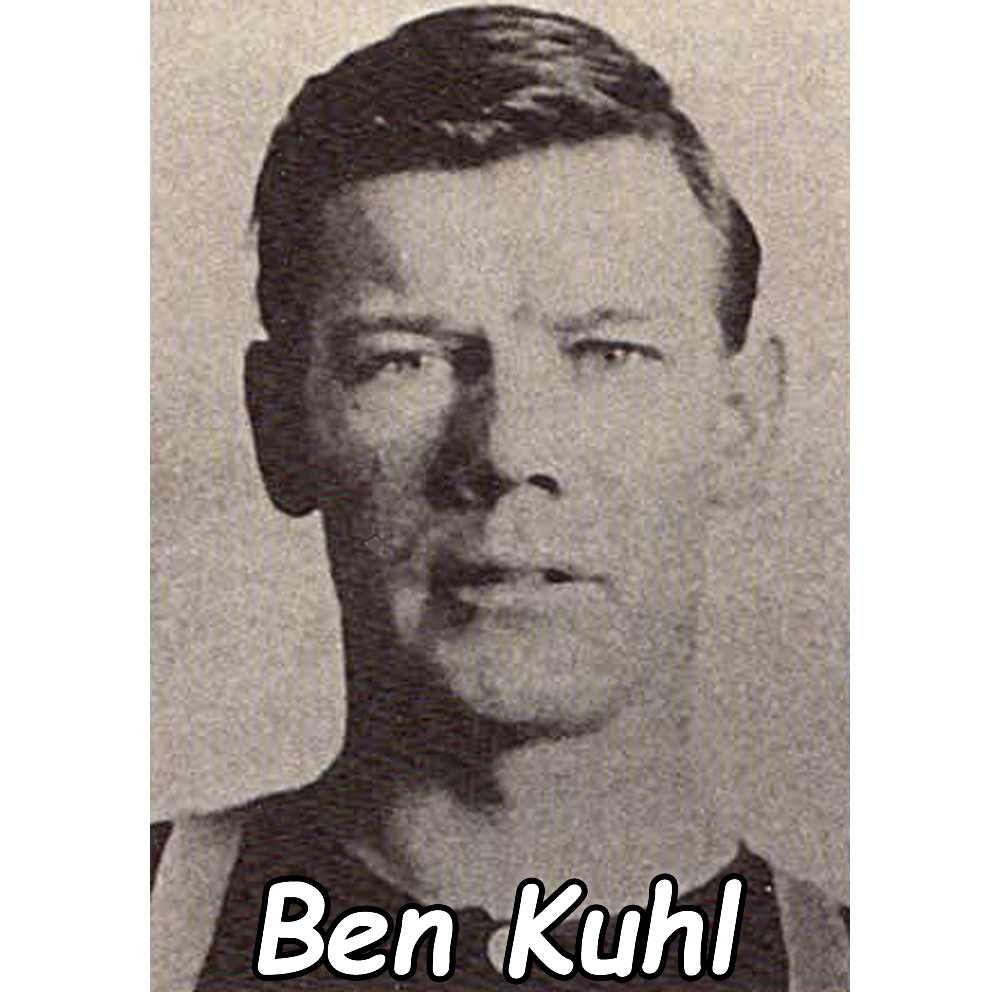
The evidence pointed to one man: Ben Kuhl. Ben was a cook who'd come to Jarbidge lookin' for easy money. He was also a squatter who'd tried to claim land that wasn't his. Ben was arrested and confessed to the State Pardons Board that he had killed Fred Searcy, the stage driver. He said that Searcy was going to help fake the holdup, but at the last minute he had refused to go through with it. They had struggled over the gun and Searcy had been killed accidentally.
Ben’s sentence was life in prison, and for 27 years attended to the chickens at the prison farm, providing fresh eggs for the prison kitchen.
Six months after his release he died of pneumonia in Sacramento to close a chapter in American history. No-one again robbed a horse-drawn stage or murdered its driver. Ben Kuhl was the last of his breed.
| |
If you know anyone who you think might be interested in my emails - Please forward to them this link.
http://www.renokelly.com/blog.html
They can click on a subject that interests them on this webpage. I will not contact your friend unless they contact me. Of course, nobody is ever given access to my email list.
Thank you very much - Kelly
| |