March 2025

Roundup


The Latest...


Teacher Advisor Signs on for Statewide Student Outreach Program

This year MSM educators are working with Allison Poulin, a Grade 7/8 social studies teacher at MSAD 54 in Skowhegan. Allison has been hired as a contractor and will lend her expertise, creativity, and enthusiasm to an exciting new museum program in alignment with our reopening in 2026.


Allison is writing a series of lesson plans that museum educators will use to work with schools across the state. The pilot program, to be launched later this year, will feature student voices on-site in the museum building as well as online.

New teacher advisor Allison Poulin

Allison Poulin, MSM's new teacher adviser from Skowhegan, is ready to get Maine students engaged!


Education Team Gears Up for Maine Council for Social Studies Conference

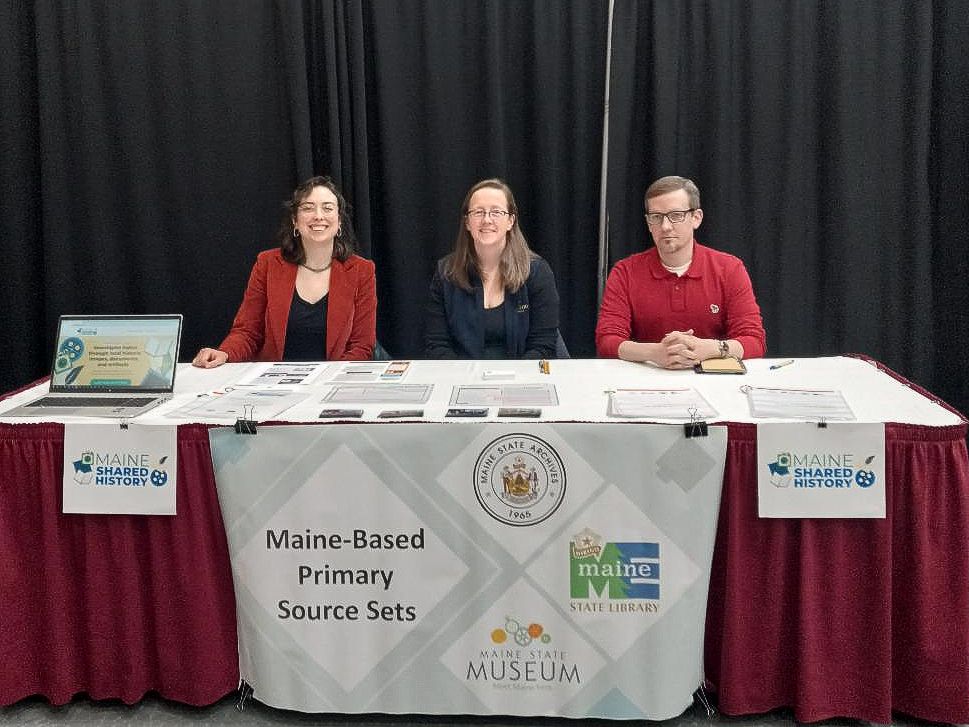
The Maine State Museum education staff is excited to talk with teachers at the upcoming Maine Council for the Social Studies Conference on March 24, hosted at the Augusta Civic Center. As in years past, Maine State Archives and Maine State Library staff will join museum educators to promote our joint primary source teaching materials, found on MaineSharedHistory.org.

Educators pictured at the 2024 conference.

Kate Webber (Maine State Museum), Kelli Burnham (Maine State Library), and Jon Roscoe (Maine State Archives) at the Maine Conference for Social Studies in Augusta, April 2024.

Recently Discovered Charts Link Maine to Slave Economy

Sixteen nautical charts, discovered walled up in a downtown Brunswick business’s upstairs room, were recently donated to the Maine State Museum. The charts, used by Brunswick sea captain and shipping agent Robert T. Giveen (1808-1862) were published between 1831 and 1858, and detail shipping between European and American Atlantic and Gulf ports.


Giveen was an accomplished sea captain who, with his father-in-law Clement Martin, operated a successful shipping company out of Brunswick. With its 15 vessels, the company primarily shipped goods from the American South and Caribbean to European ports. The goods, produced by slave labor, included tobacco and cotton from Mobile (Alabama) and New Orleans, and sugar and other products from Matanzas and Havana, Cuba.

One of Capt. Giveen’s annotations from 1848 [MSM2024.59].

One of Capt. Giveen’s annotations from 1848 [MSM2024.59].

One chart, published in 1832 and heavily annotated by Capt. Giveen, documents the movements of three of his ships over several decades. Showing detailed routes, with dates and destinations, Giveen's annotated chart illustrates the movement of slave economy goods between American Gulf and European ports. More broadly, this chart, hidden inside a wall for over 130 years, reveals the ties of one Maine business to the Atlantic slave economy prior to the Civil War.


Giveen’s annotated 1832 chart was heavily used, with considerable damage and staining. The museum has sent it out for conservation treatment to ensure that this unique document will be available for future researchers seeking to better understand Maine’s merchant shipping history and the voyages of Capt. Giveen.

 
Read the Full Story Here


Innovative Digital Learning Experience Underway for Lunder Education Center in 2026


A Revolutionary War naval defeat, a scuttled ship, and an underwater dig...What do these things have to do with the Maine State Museum’s new Lunder Education Center?


Among other educational displays, the Lunder Education Center will highlight artifacts excavated from the Defence, a Revolutionary War privateer that was involved in the 1779 Penobscot Expedition and was one of many ships scuttled and burned by its sailors to prevent capture by the British. The Defence lay underwater, covered in mud for almost 200 years before being discovered in the early 1970s. What remained of the ship was then partially excavated by the Maine State Museum and its partners. Artifacts from the dig were conserved and now reside in the museum’s collection.  


The story of the Defence and its sailors will come alive in the Lunder Education Center when the museum reopens. An innovative digital touch table will allow students and families to examine these artifacts like archeologists, virtually 'mend’ objects that started as shards, identify mystery pieces, and learn about life aboard the ship.


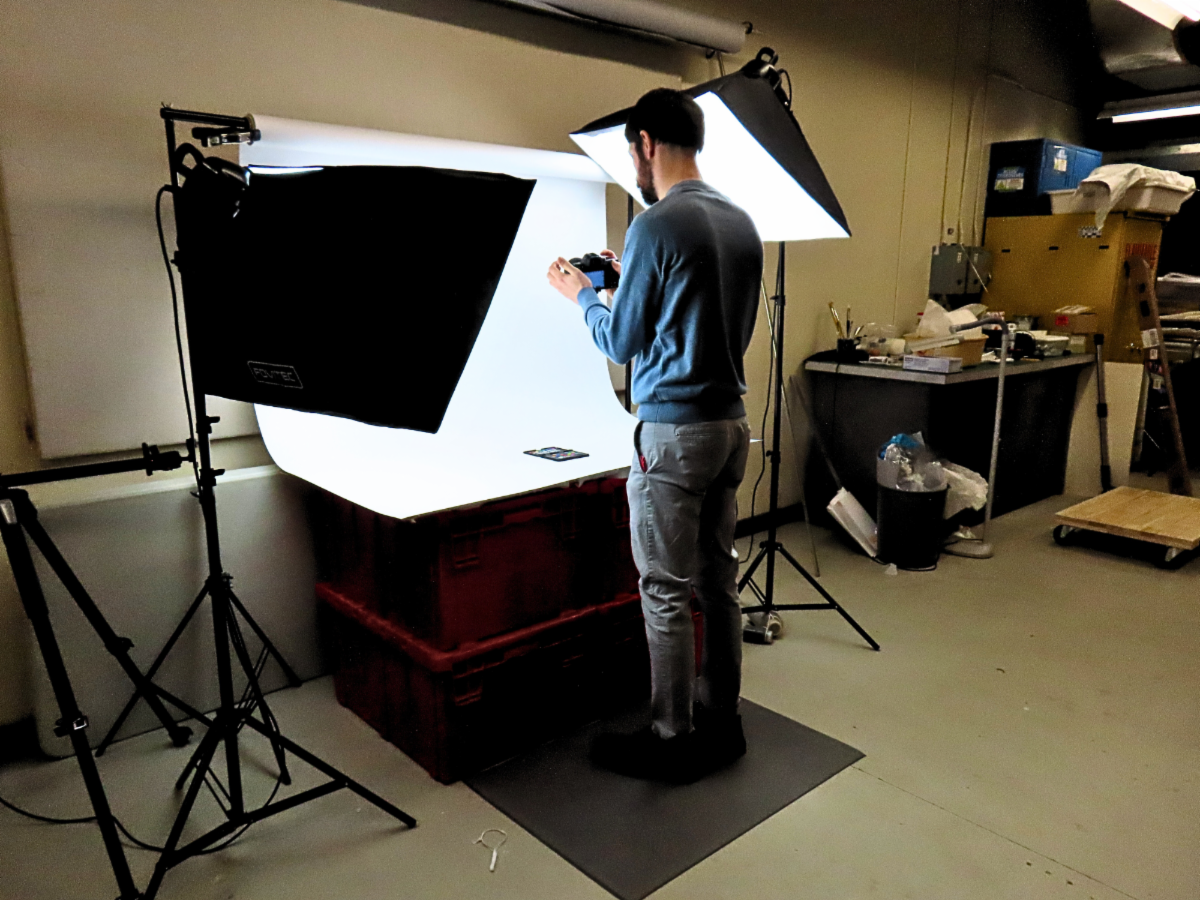
In order to complete the touch table activities, high-quality photographs of each artifact are crucial. Luckily, the museum can create these images using in-house curatorial, conservation, and photographic talents of staff members Dr. Andrew Beaupre, Teresa Murphy, Zach Selley, and Ben Stickney.


Image of Curator taking a photograph of historical artifacts.

Ben Stickney, Curator of Photography, captures high-resolution object images for the Defence exhibit's interactive digital touch table, enabling visitors to try their hand at virtual archaeology.

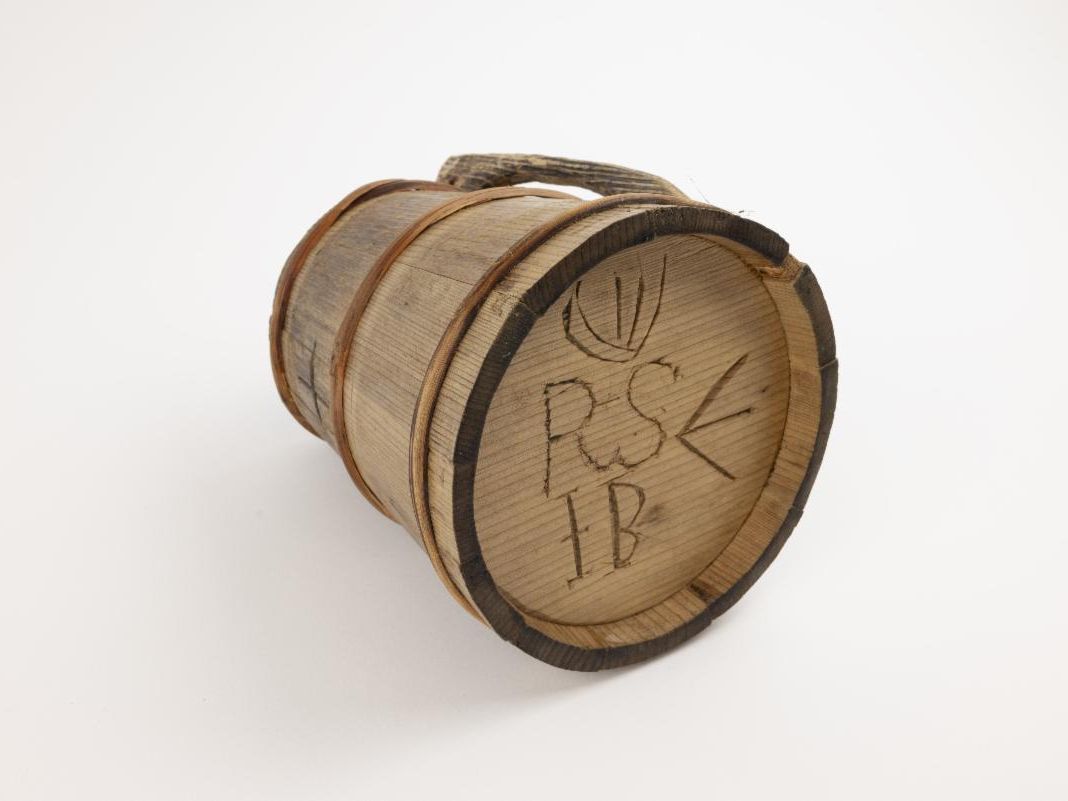
Wooden tankard from the shipwreck of the 'Defence'.

Wooden tankard excavated from the Defence bearing the carvings of crewmen. Due to the chemical composition of the Penobscot River sediment, many artifacts remain remarkably intact nearly 250 years later. MSM Collection 83.61.23. Ben Stickney photo.


Learn More About the Penobscot Expedition


Did you miss last month's Roundup? You can always read back issues here.


Follow Us:

Facebook  Instagram  YouTube
 
Visit our Website
Become a Member
 

NOTE: To ensure this newsletter stays out of your spam box, add info@mainestatemuseum.ccsend.com to your contacts or add this email to your “Priority” inbox.

View this email as a webpage


Maine State Museum | 230 State Street | Augusta, ME 04330 US