|
Pulled into the Nation’s Conflict
Nevada had barely begun to recover from the Great Depression when the storm clouds of World War II gathered overhead. For much of the 1920s and 1930s, the state had embraced America’s isolationist mood. But as Europe unraveled and old allies fell under siege, Nevada’s political leaders and ordinary citizens alike began to reconsider their place in a rapidly shrinking world.
That shift was symbolized by Key Pittman, Nevada’s senior senator and one of Washington’s most influential voices on foreign policy. Once a defender of neutrality and arms embargoes, Pittman reversed course in 1939 during the fierce debate over the Neutrality Act, arguing that the United States could no longer pretend the rest of the world was someone else’s problem.
By 1940, Congress had instituted the nation’s first peacetime draft. Across Nevada, registration days became civic spectacles, complete with parades, speeches, and flag waving. Patriotic fervor only intensified in the months that followed. When Japan attacked Pearl Harbor in December 1941, Nevadans in uniform joined millions of Americans headed into battle.
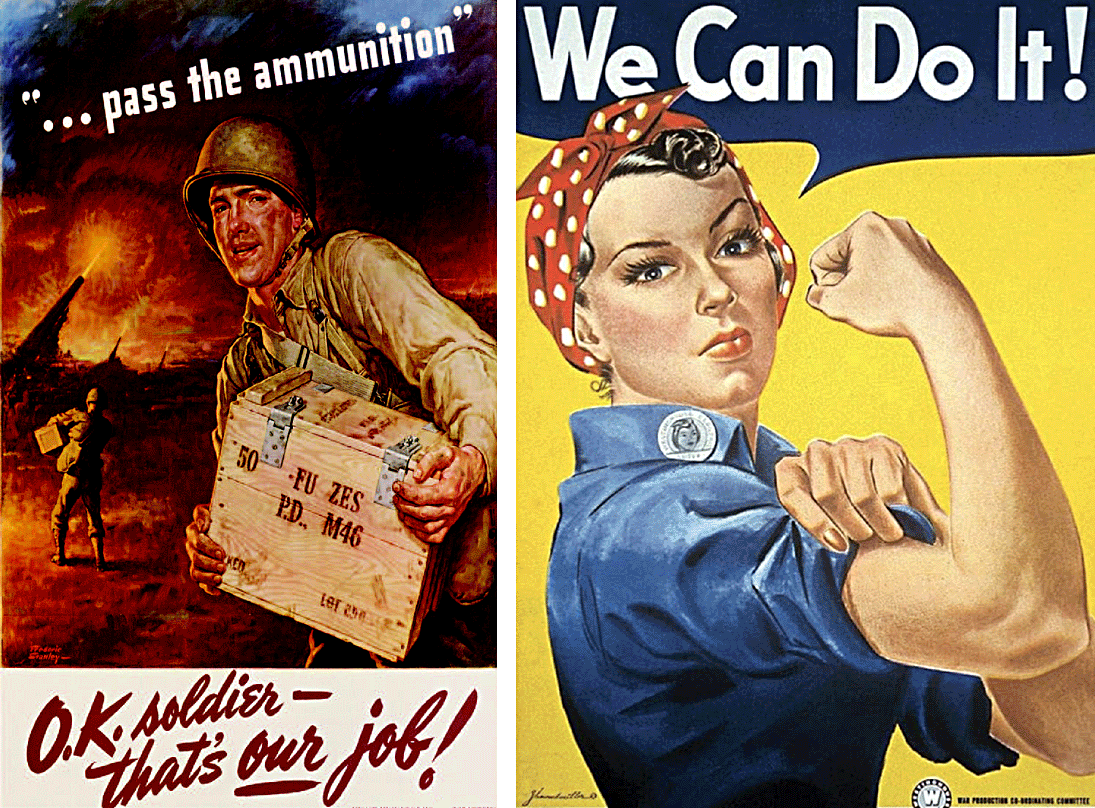
Yet Nevada’s wartime contribution went far beyond the men it sent overseas. The state’s minerals, power, geography, and growing industrial capacity made it one of the West’s most valuable strategic assets. In the process, Nevada was transformed. A state long defined by mining camps and scattered ranch towns suddenly found itself helping fuel a global war and laying the foundation for its modern future.
| |
The Desert Turns Into an Arsenal
Nevada’s greatest wartime strength lay beneath its soil. Long before America officially entered the war, the state’s mines were shipping copper and other critical minerals abroad. By 1940, Nevada’s mineral production had soared to record levels, and mining towns that had once feared decline were humming again.
Copper, in particular, was indispensable. It was needed for wiring, munitions, vehicles, and communications systems. Nevada’s miners, already veterans of hard times, found themselves at the center of an industrial surge that gave the state renewed purpose. Scrap drives also swept across communities. Schoolyards became makeshift salvage depots as children and adults collected aluminum, metal, and rubber for the war effort.
The most dramatic symbol of Nevada’s industrial rise emerged in 1941, construction began on the massive Basic Magnesium, Inc. plant near present day Henderson. Powered by Hoover Dam, the plant was tasked with producing magnesium, the so called miracle metal used in aircraft, bombs, flares, and ammunition.
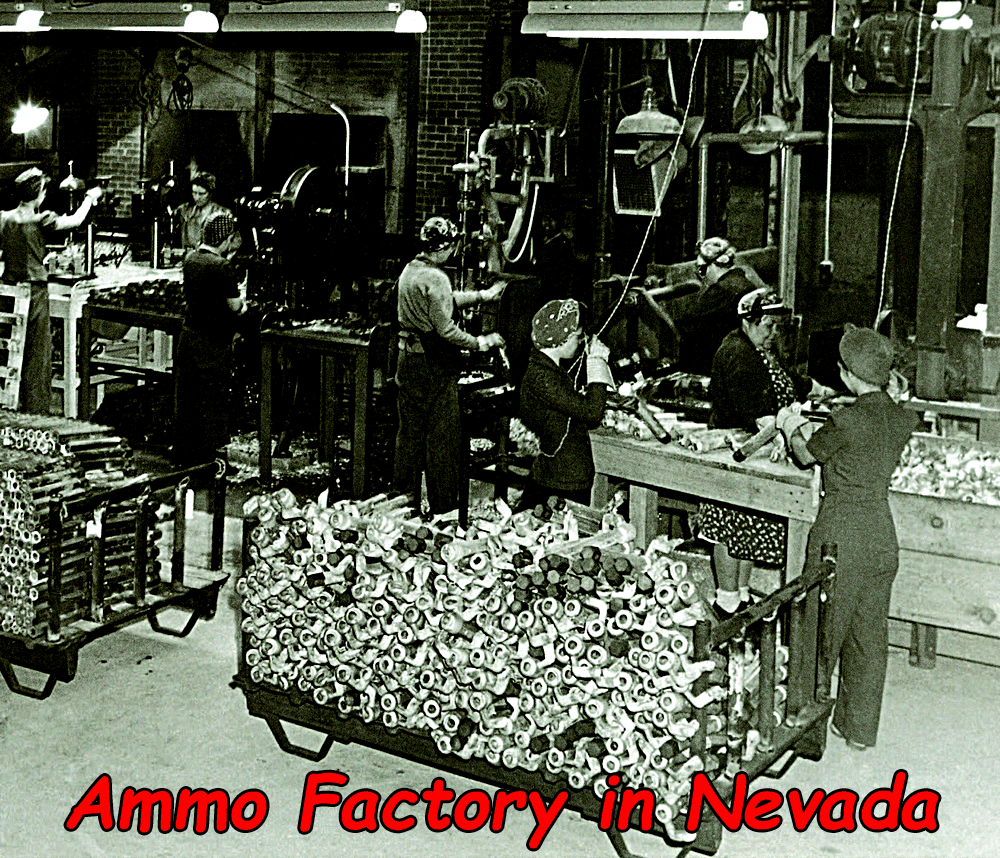
The scale was staggering. Basic Magnesium quickly became one of the nation’s most important wartime plants, producing roughly a quarter of America’s magnesium supply. Thousands of workers, many of them women, poured into the desert to keep the furnaces running.
A company town sprang up around the plant and eventually evolved into Henderson itself. What began as a wartime necessity became one of Nevada’s great postwar success stories. The war may have created Henderson by accident, but the city’s long term survival was no accident at all.
| |
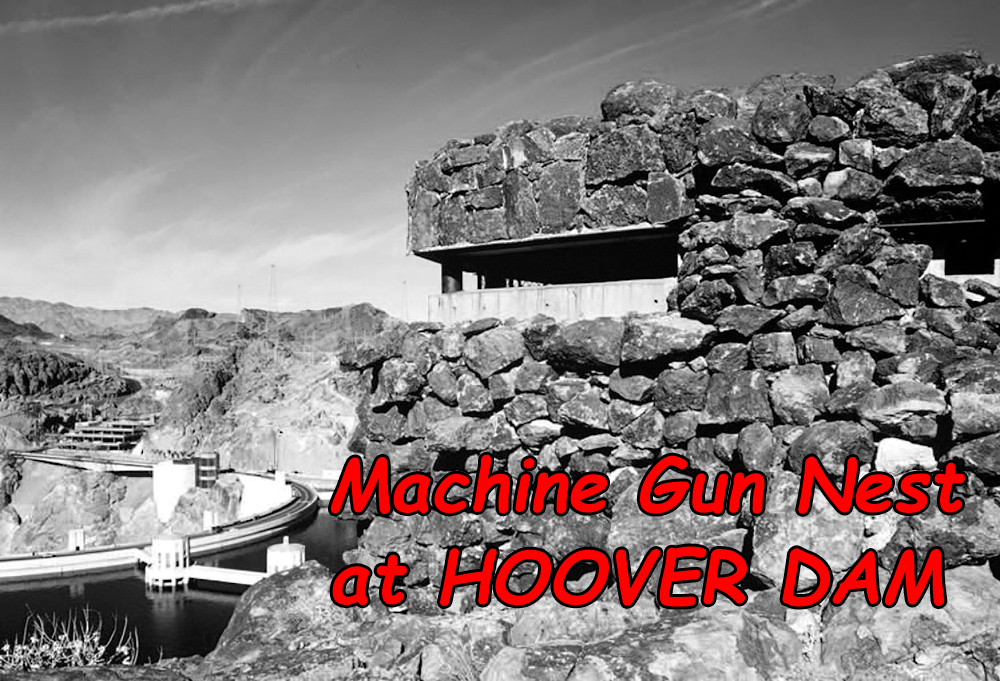
Hoover Dam was an obvious target.
Federal officials understood the danger, but their response was often a study in bureaucratic confusion. Responsibility for protecting the dam was split among agencies that did not always agree on what to do, or who should pay for it. The U.S. Bureau of Reclamation was initially tasked with protecting a structure of enormous national importance using little more than a small force of deputized rangers.
In late 1939, fears of sabotage turned concrete. American officials uncovered intelligence suggesting German agents had plotted to attack Hoover Dam by boat, posing as fishermen and targeting the intake towers. The response was immediate. Boat traffic on Lake Mead was restricted, patrols increased, floodlights installed, and protective barriers added.
J. Edgar Hoover was even asked to review dam security. His recommendations included inspection gates, better ranger training, and tighter scrutiny of visitors and packages. Some improvements were made, though never as comprehensively as officials hoped.
After Pearl Harbor, security tightened further. Visitors were barred, inspections became routine, and fears of air attacks loomed. Yet the Army remained reluctant to fully commit troops to dam defense. In the end, for much of the war, civilian agencies were left protecting one of the nation’s most essential wartime assets. It was a strange and uneasy arrangement, one that reflected both the urgency and improvisation of the home front.
| |
Airfields, Ammunition, and a New Nevada
Nevada’s wide open spaces, clear skies, and sparse population made it ideal for military expansion. Almost overnight, the state became a giant training ground for the air war.
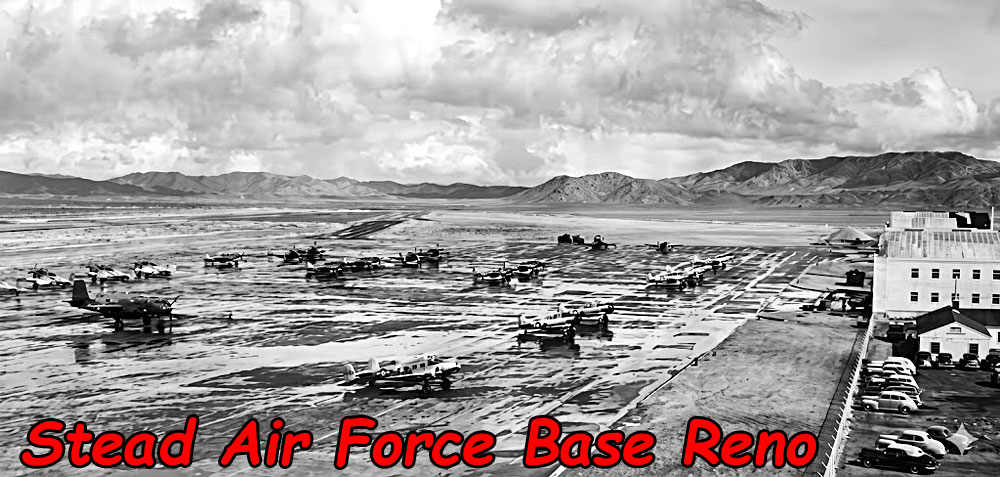
In northern Nevada, wartime growth was especially visible around Reno and Fallon. Stead Air Force Base, established just north of Reno in 1942, became a major training center for signal companies, navigation crews, and radio specialists. Its presence brought jobs, construction, and a steady influx of military personnel to the Truckee Meadows, helping push Reno toward a more modern, urban future.
To the east, Naval Air Station Fallon emerged as another key wartime hub. Originally a modest airfield, it was expanded by the Navy in 1943 into a full scale training base. Pilots trained there in Nevada’s wide open skies, while the installation also served as part of the West Coast’s broader defensive network. Together, Stead and Fallon helped make northern Nevada an essential part of the nation’s wartime aviation effort.
The huge Tonopah Army Air Field prepared bomber crews for high altitude missions. It was also one of the state’s most dangerous installations. Fighter aircraft and bombers alike crashed with alarming frequency, especially in the thin air and rugged terrain around Tonopah. Training accidents claimed the lives of scores of young airmen, a sobering reminder that even far from the front lines, war carried a steep cost.
Meanwhile, the Hawthorne Army Depot became a vital storage and shipping point for bombs, rockets, and explosives. Thousands found work there, and nearby communities grew quickly.
The war changed Nevada’s population map almost overnight. Once largely rural, the state became more urban and more connected. New jobs, new roads, and new industries reshaped the desert. Nevada was no longer just a remote Western outpost. It had become part of the machinery of modern America.
| |
From Wartime Boom to Neon Empire
War did more than bring soldiers and factories to Nevada. It accelerated the state’s evolution into a national destination.
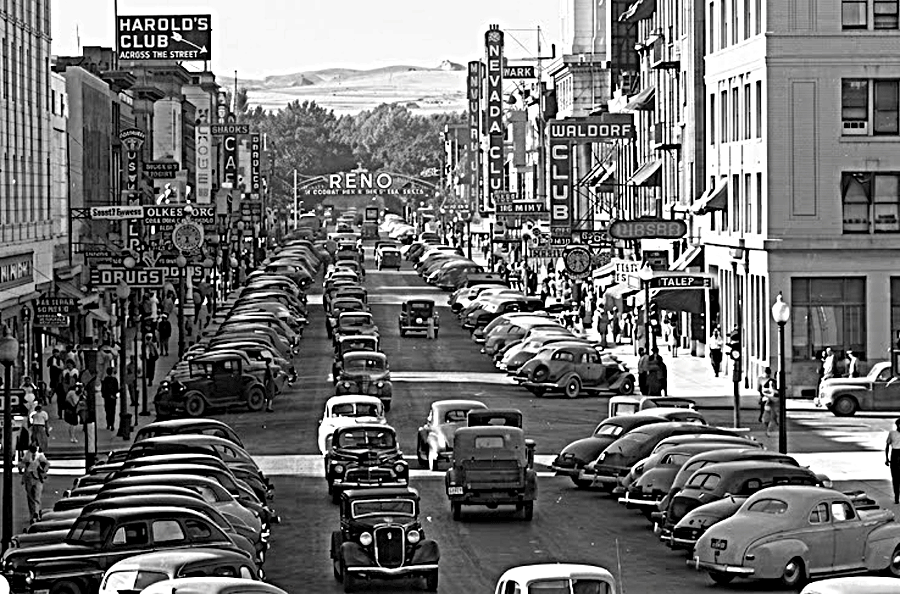
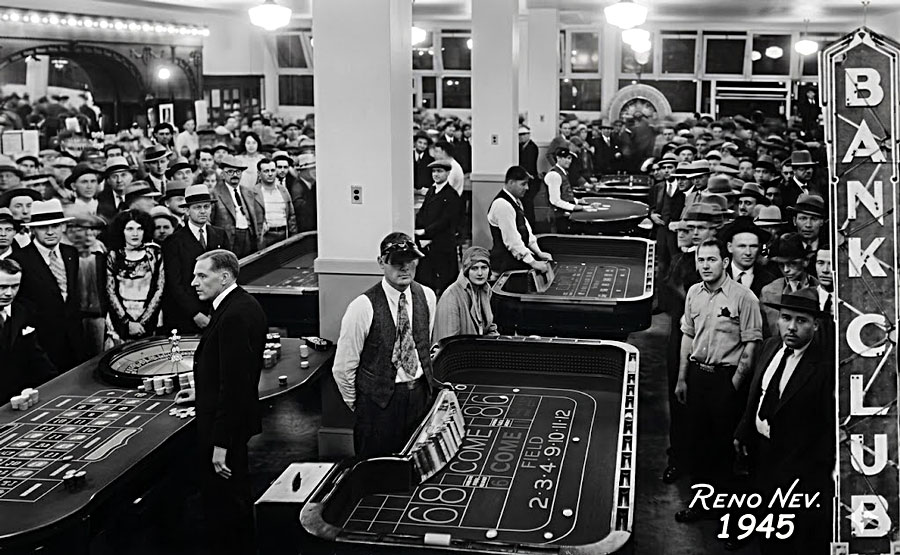
Towns near military bases suddenly filled with young servicemen eager to escape drills, dust, and the daily strain of wartime life. Reno and Las Vegas, already known for gambling and nightlife, were perfectly positioned to cash in. Hotels filled, casino floors buzzed, and bars stayed crowded.
The federal government was less thrilled by Nevada’s freewheeling culture, particularly prostitution. Wartime officials pushed to shut down brothels in the name of public morality and troop health. Some establishments were boarded up, but vice, like water, tends to find a crack. Much of the trade simply moved indoors.
More important was the entertainment revolution that followed. In Elko, hotel owner Newton Crumley Jr. had a simple but brilliant idea: give gamblers a reason to leave the tables without leaving town. He booked major national acts, proving that first class entertainment could drive tourism and gaming profits alike.
Reno and Las Vegas quickly took note. Soon, casinos were pairing cards and craps with orchestras, comedians, and headline singers. By the war’s end, Nevada was emerging as a tourism capital, its clubs glowing late into the night while the rest of the country was still dimming its lights.
That wartime boom also opened the door to less welcome guests. Organized crime figures saw opportunity in Nevada’s fast growing casino economy and moved in. By the late 1940s and early 1950s, Mob backed money was helping finance major resorts on the Strip.
Still, the larger story is less about gangsters than reinvention. World War II did not simply pull Nevada into a global conflict. It propelled the state into a new era. Out of wartime necessity came cities, industries, infrastructure, and an entertainment culture that would eventually make Nevada famous around the world.
| |