|
“Thankfulness is the beginning of gratitude. Gratitude is the completion of thankfulness. Thankfulness may consist merely of words. Gratitude is shown in acts.” – Henri Frederic Amiel
As we begin November and approach Thanksgiving, I encourage everyone to take a moment each day to reflect on something, large or small, for which to be thankful.
Before I share updates, I want to first recognize the people of Jamaica, who are recovering from a devastating storm. While my theme this year, Supporting Today, Reshaping Tomorrow, is focused on Florida’s families, I ask that we extend our compassion beyond our borders. Just as we work daily to help families rebuild their lives, let’s do the same for those in Jamaica. Whether through donations, supplies, or services, please consider helping however you can. I am deeply thankful to all of you for your generosity during this tragedy, and for all you do all year long.
October ended with a spooky and wonderful in-state retreat at the Omni Amelia Island Resort, expertly chaired by Trace Norvell and Magistrate Sheena Benjamin-Wise. From the welcome reception to the Halloween “Haunting Project” party, trolley tours, and tailgate at the Georgia/UF game, it was a memorable weekend of connection and fun. A special thank you to our incredible retreat sponsor, Coral Gables Trust. (And, we appreciate you providing swag and goodies - Smolin, Florida Appeals, and Matthew Lundy Law!) Our upcoming out-of-state retreat in Lake Tahoe promises to be equally exciting, but this time in the snow! Stay tuned for more details soon.
I remain grateful for our dedicated Section members and especially our committee chairs and volunteers, who have devoted countless hours to legislation and to expanding engagement with young lawyers and law students.
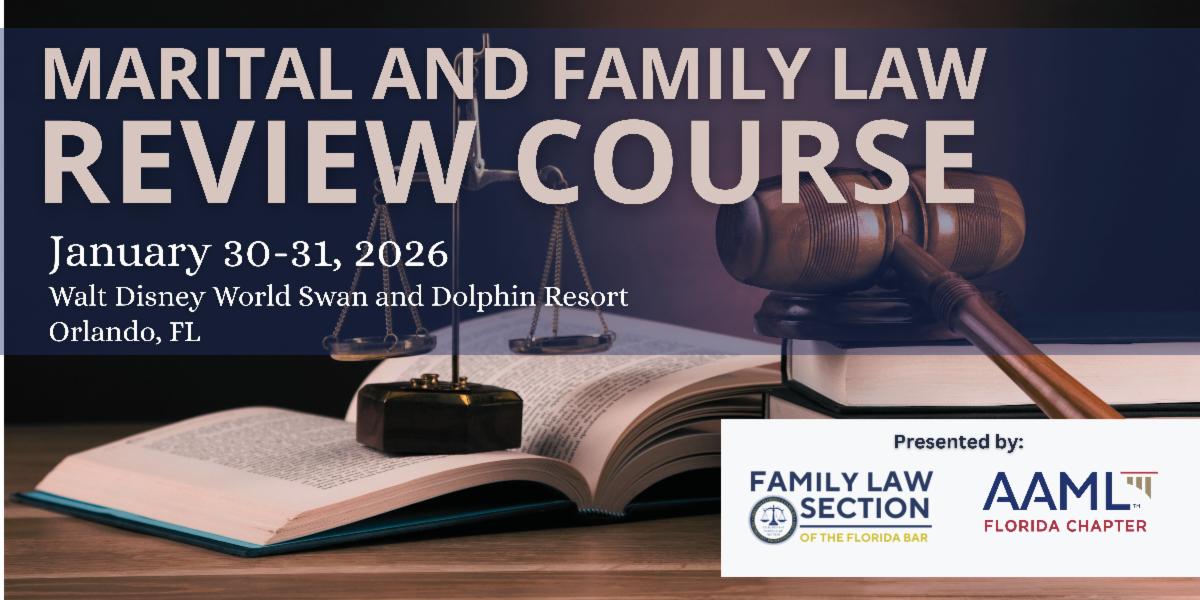
Next up: our Mid-Year Meetings in conjunction with the Marital & Family Law Review Course at Disney’s Swan & Dolphin Resort. If you haven’t registered, do so soon before early bird rates disappear on December 9! Finally, don’t forget our upcoming November 13 CLE, ‘3 Lawyers and a Case Law Update’ with Reuben Doupé, Cash Eaton and Ronald Kauffman. Registration info is below.
Personally, I’m thankful for my wonderful family, my son’s smile, my law practice (and my incredible paralegal, Janine Bartels), and my colleagues and friends, along with the privilege of serving as Chair. These first few months have been beyond rewarding, and I look forward to the rest of the Bar year.
Have a joyful and gratitude-filled Thanksgiving, everyone!
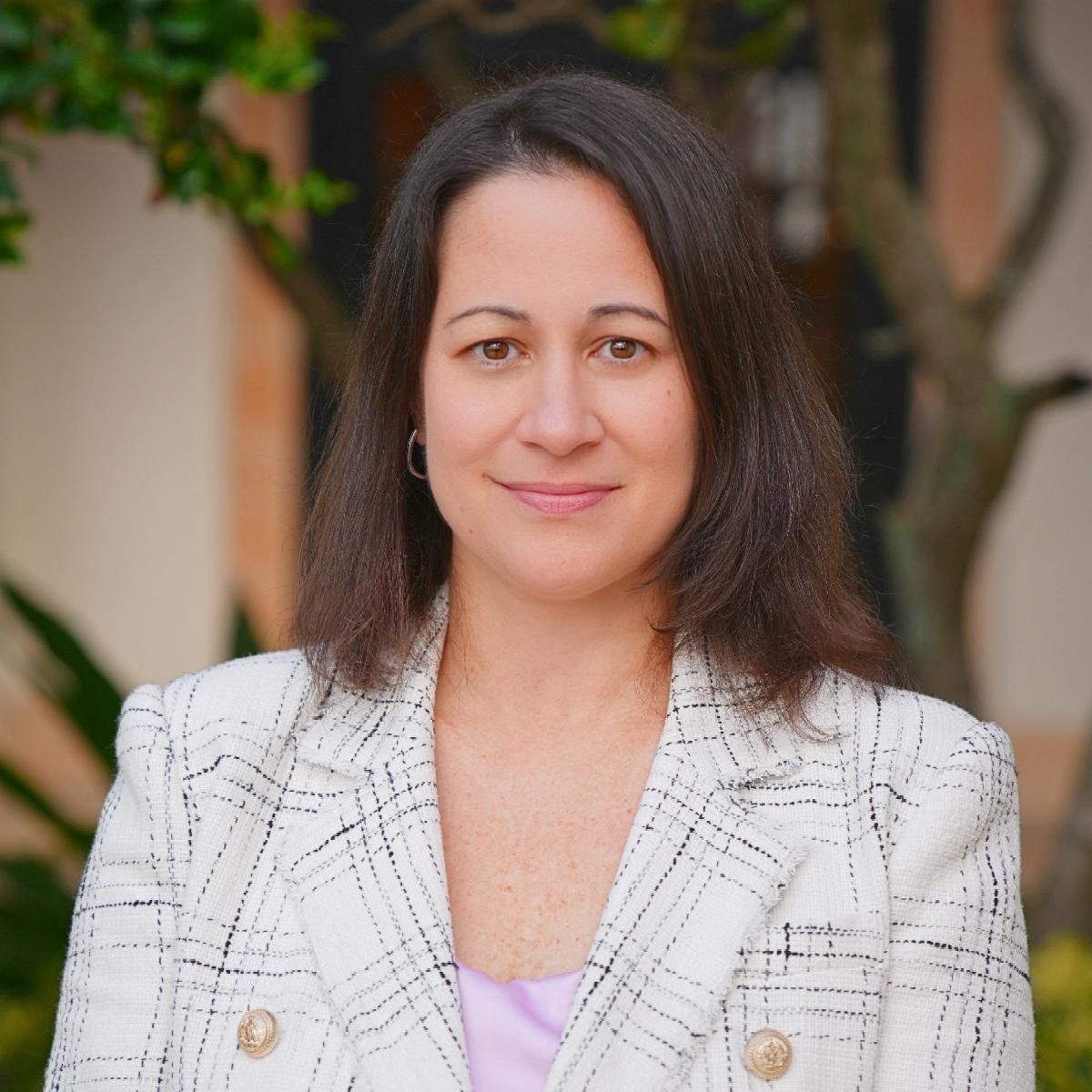
Aimee Gross, B.C.S.
Section Chair, 2025-2026
| SAVE THE DATE: Out-of-State Retreat in Lake Tahoe, March 4-8, 2026 | Take care of business while taking in breathtaking beauty! Our Out-of-State Retreat takes place March 4-8, 2026 at The Landing Tahoe Resort & Spa in stunning Lake Tahoe.
Sponsorships are available now, and registrations and room reservations will be open very soon. Stay tuned and mark your calendars for this can't miss Section event! | CLE WEBINAR: "3 Lawyers and a Case Law Update," Thurs., Nov. 13, 12PM - 1:30PM EST | | |
Join this panel of board certified, case law experts for an update on Florida Supreme Court decisions affecting Family Law matters in 2025.
SCHEDULE
12:00 PM – 12:10 PM
Introductions
Tina El Fadel, Shamy El Fadel & Mahone, PLLC Boca Raton, FL
12:10 PM – 1:20 PM
Case Law Review
Cash A. Eaton, Esq. Sasser, Cestero & Roy, P.A. West Palm Beach
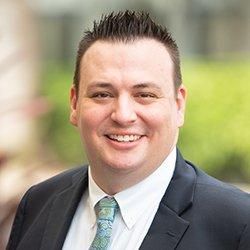
Ronald H. Kauffman, Esq. Ronald H. Kauffman P.A. Miami
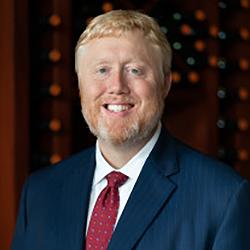
Reuben A. Doupé, Esq. Coleman, Hazzard, Taylor, Klaus, Doupe & Diaz, P.A., Naples
1:20 PM – 1:30 PM
Questions and Answer Session
| | REGISTER NOW - RATES INCREASE DEC. 9! | | Now is the time to register and reserve your hotel room(s) before this premier Family Law Review Course sells out! Click the link below to our co-presenter's website (AAML Florida Chapter). Can't wait to see you there! | |
Gearing Up For the Florida Georgia Matchup at our In-State Retreat! For more photos from the event, click HERE.
| | | | CLE Webinar - "'The Lawyers and a Case Law Update," with Board Certified Family Law Attorneys Reuben A. Doupé, Cash A Eaton, and Ronald Kauffman. 12PM - 1:30PM EST. | | | | | Last Day for Discounted Rates to the Marital and Family Law Review Course in January! | | | | | Mid-Year Meetings and Marital and Family Law Review Course. Save the dates now, more info coming soon! | | | | | Out of State Retreat. The Landing Tahoe Resort & Spa, Lake Tahoe. Save the dates now, more info coming soon! | | | |
Smolin, Lupin & Co., LLC is a full-service accounting and advisory firm dedicated to supporting Family Law attorneys. We provide expert business valuations, forensic accounting, and litigation support to help attorneys navigate complex financial matters with confidence and clarity. We are truly grateful for their ongoing and enthusiastic support of the Family Law Section through the years!
| | Spotlight: Equitable Distribution Committee | |
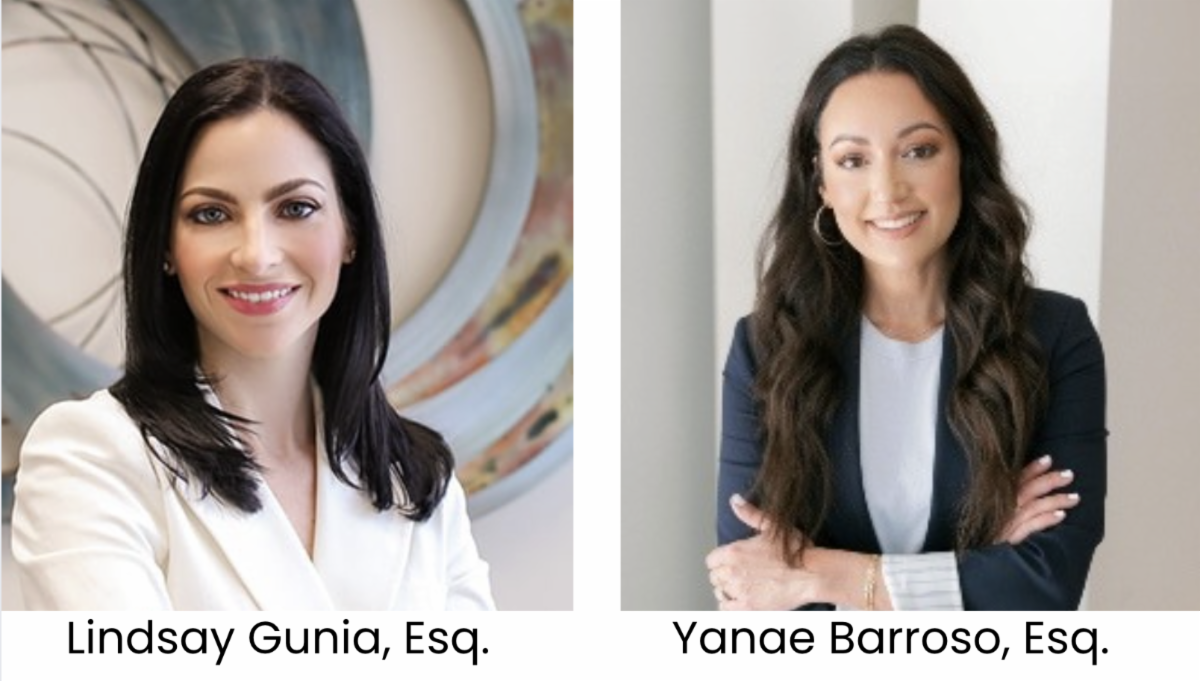
Chaired by Lindsay Gunia, Esq. and Yanae Barroso, Esq.
The Equitable Distribution Committee of the Florida Bar Family Law Section is dedicated to all issues regarding the division of marital assets and liabilities in dissolution of marriage proceedings within the State of Florida. Composed of family law practitioners, members of the judiciary, and other family law professionals from around the State, the Committee serves as a key resource in one of the most intricate and consequential areas of family law.
The Committee is working on two focused subcommittees to address emerging and recurring issues regarding equitable distribution. The first subcommittee is examining challenges surrounding the post-filing use of marital funds. The second subcommittee is reviewing and proposing refinements to the portion of the Equitable Distribution statute, which was previously revised to codify the Kaaa v. Kaaa decision.
In addition to the foregoing initiatives, the Committee continues to monitor legislative developments, analyze new case law, address issues within the statute, and contribute to continuing legal education programs for Section members.
If you are interested in joining the Equitable Distribution Committee, please email: equitable@familylawfla.org.
| | |
Tech Tip: Guardrails for Use of Generative Artificial Intelligence
By Matthew Thatcher, B.C.S.
The technology surrounding artificial intelligence has increased substantially in ways that is directly impacting the practice of law. In some ways these changes have been beneficial. But in other ways, the growth of artificial intelligence has created significant problems.
In Goya v. Hayashida, a pro-se appellee in an appeal submitted an answer brief that was “replete with and entirely supported by fake cases and legal propositions, presumably generated by artificial intelligence (AI).” 2025 WL 2326544 (Fla. 4th DCA August 13, 2025) at *2-3. The Goya court declined to impose sanctions on the pro se party while still admonishing the conduct. Id. at *3.
In Clerk of the Court and Comptroller for the 13th Judicial Circuit, Hillsborough County v. Rangel, an attorney delegated the drafting of an answer brief to an independent contract paralegal who utilized generative AI in the creation of the brief. 2025 WL 2486314 (Fla. 2nd DCA August 29, 2025) at *1-3. That attorney failed to adequately review the AI generated brief before submitting it to the appellate court. Id. at *2. The appellant’s reply brief brought to the appellate court’s attention nine misrepresentations of the holdings of cases, ten quotations of language from cases where that text is not in those cases, and citation to one case that did not appear to exist. Id. at *1. The Rangel court referred that attorney to the Florida Bar for sanctions. Id. at *2-3.
The Florida Bar and the Florida courts have attempted to proactively get in front of this issue. On January 19, 2024, the Florida Bar issued Ethics Opinion 24-1, which among other things stressed the need for attorneys to supervise and confirm the accuracy of work performed by generative AI. On August 29, 2024, the Florida Supreme Court approved amendments to the comments to rules 4-1.1, 4-1.6, 4-5.1, and 4-5.3 of the Rules Governing the Florida Bar to expressly provide “a warning about the necessity to take care in using generative artificial intelligence.” In re: Amendments to the Rules Regulating the Florida Bar – Chapter 4, 393 So. 3d 137. 138-139 (Fla. 2024). More recently, the Florida Bar Special Committee on AI Tools and Resources Best Practices Subcommittee published the Florida Bar Guide to Getting Started with AI. See https://www.legalfuel.com/guide-to-getting-started-with-ai/
The proverbial genie is out of the bottle. More and more software platforms are utilizing artificial intelligence. These are tools that can greatly increase the efficiency of our law practices. They help us organize and understand discovery, summarize documents, and improve the presentation of our client’s cases. But no matter how useful, the ultimate responsibility falls upon us as practitioners to make sure that the positions we take and advance are valid, meritorious, and supported by the actual facts and correct law.
Almost no one handwrites or uses a typewriter to draft a motion or a pleading. These are drafted in computer word processing software because it is more efficient. We SHOULD utilize AI to become more efficient in our practices. But our duty to the court, to opposing parties, and ultimately to ourselves requires that we don’t use it blindly. None of us would blindly trust the initial work product of a law clerk, a paralegal, or recently graduated associate attorney. So why then are practitioners exposing themselves to potential sanctions by blindly trusting the documents and analysis generated by artificial intelligence?
Take advantage of these new AI tools. But also make sure that what you submit in a case has been thoroughly reviewed so that your position is based upon an accurate recitation of facts, an accurate procedural history, and an accurate recitation of the case law and legal rulings supporting your arguments.
| | |
Case Law Update
By Cash A. Eaton, B.C.S.
Marin v. Marin, 2025 WL 2922260 (Fla. 2d DCA 2025).
The Marin case involved a post-judgment contempt and enforcement action. The Former Wife initiated a contempt action because the Former Husband failed to maintain a $700,000 life insurance policy. After an evidentiary hearing, the trial court found the Former Husband in willful contempt and ordered that if he couldn't secure the policy within sixty days, a $700,000 money judgment would be entered against him. The money judgment was subsequently entered, leading to the appeal.
On appeal, the Former Husband argued that the monetary sanction imposed was improper because it was not commensurate with the loss actually sustained by the Former Wife. The Appellate Court agreed and overturned the money judgment.
The Appellate Court reaffirmed that when an agreement requires the performance of a specific act, such a requirement can be enforced through contempt. Trial courts have broad discretion in implementing contempt sanctions, but that discretion is subject to restrictions. To that point, contempt sanctions fall within two categories: 1) coercive contempt sanctions; and 2) compensatory contempt sanctions. Coercive contempt sanctions are intended to secure compliance. Compensatory contempt sanctions are intended to compensate for actual losses incurred due to the contemptuous conduct.
The trial court’s entry of the $700,000 money judgment was not coercive in nature, as it did not ensure the Former Husband's future compliance. As this was a compensatory sanction, the Former Wife was required to prove her actual loss, and actual loss cannot be contingent or speculative in nature.
The Appellate Court ruled that entry of the money judgment was improper because the loss was contingent and speculative. The Former Wife’s entitlement to the life insurance death benefit ($700,000) was contingent on the Former Husband predeceasing her, a condition impossible to determine at the time of the hearing.
| |
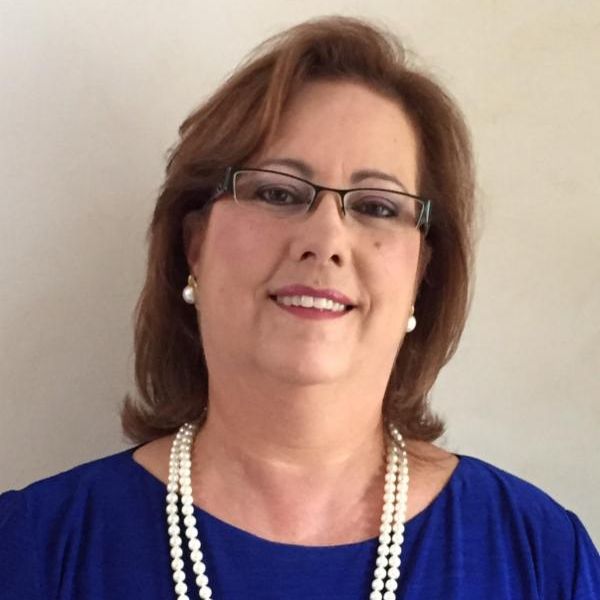
Part V: '12 Habits of Highly Successful Family Law Attorneys' | | In our fifth article, we learn from Maria Gonzalez, a Board Certified Marital & Family Law Specialist. She is a Fellow of the American Academy of Matrimonial Lawyers (Florida Chapter) and currently serves as Secretary of the Chapter. Maria is also past-Chair of the Family Law Section of the Florida Bar. She is an experienced and highly regarded trial attorney, and a Florida Supreme Court Certified Family Law Mediator who is routinely chosen by her colleagues to mediate issues in their cases. | |
Listen, Learn, Be A Mentee and Become A Mentor
By Maria C. Gonzalez, Esq., B.C.S.
It is a privilege to have the opportunity to learn from those who paved the way to significant improvement in the practice of marital and family law. The lawyer/mentor is a teacher, advisor, role model, tutor, confidante, guide, and good listener. As a trusted counselor, they are key to an effective mentor/mentee relationship over a period of time, which often is long-term. The mentor shares their skill and expertise to help the mentee grow and develop in their practice. They give of their time, offer constructive feedback and invite the mentee into their networking circles. Learn from those with experience. An important aspect of mentoring is also learning a balance between your work and personal life. The mentee’s development of leadership skills is often a positive and direct result of the mentoring experience. Many seasoned and highly accomplished lawyers today will readily admit that they may not have applied for a leadership position but for the advice and encouragement of their mentor.
Invest the time, be a sponge and learn from more seasoned lawyers on professional development, ethics and professionalism, health and wellness, and substantive legal issues. Join your local Chapter of the American Inns of Court. The Inns of Court offer an opportunity to learn professional values from senior members of the community (both bench and bar). Regardless of your level of expertise, Chapters offer an opportunity and means to mentor through regularly scheduled meetings, dinners and skit presentations. But for the Inns ‘experience,’ young lawyers may never have the opportunity to speak one-on-one with a judge or general magistrate or seasoned lawyer outside of a courtroom setting.
The opportunity to observe a seasoned lawyer in action in court, mediation or engaging in negotiations is invaluable. Do not hesitate to attend in-person trials if you have the opportunity. Likewise, the ability of a mentor to invite a mentee to join a variety of networking opportunities will expose the mentee to a wide range of professional social settings with the opportunity to influence your interactions. Every interaction affords an opportunity to promote and incorporate how to improve your practice with professionalism and civility especially in marital and family law when client emotions are often raw.
Mentoring also develops character, competence and leadership skills. Similar to pro bono work, being a mentor is an invaluable contribution to your profession and extremely gratifying. It is a wonderful thing when a mentee transforms and blooms into a mentor and is then able and willing to pass along special skills they learned from their mentor plus their own experiences. As your expertise grows, challenge yourself and consider becoming a Board Certified Specialist as well as lecturing at local voluntary bar associations. With support and your commitment and drive, you can become a specialist in marital and family law and proudly display ‘B.C.S.’ after your name.
| | | | | | |