Follow us on social media!
|
|
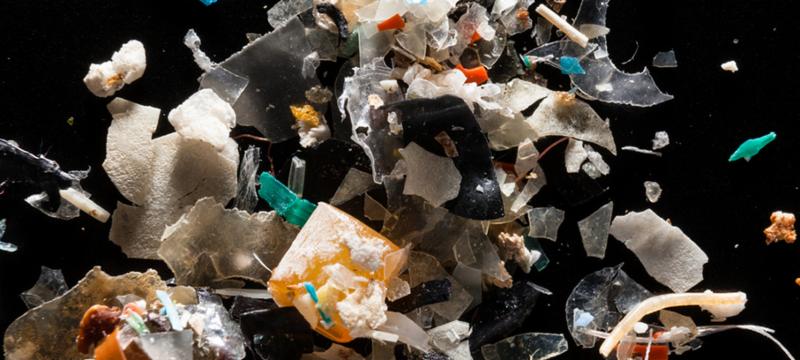
Microplastics Pollution Continuous 'Oil Spill'
More than 10 million tons of plastic debris escape the waste stream and enter the sea every year, degrading into tiny shards called microplastics, according to Tracy Mincer, Ph.D., who is investigating how plastics disrupt ocean health and sea life.
“In terms of fossil hydrocarbon tonnage, plastic pollution can be viewed as one of the biggest oil spills in history, reoccurring each year, but no one is looking at it that way,” says Mincer, research professor at FAU Harbor Branch and Harriet L. Wilkes Honors College. Mincer, part of a growing international effort to learn how to measure and understand marine microplastics, is featured inside the Spring 2019 issue of Owl Research and Innovation.
READ MORE.
|
|
'When an Elder Dies, a Library Burns'
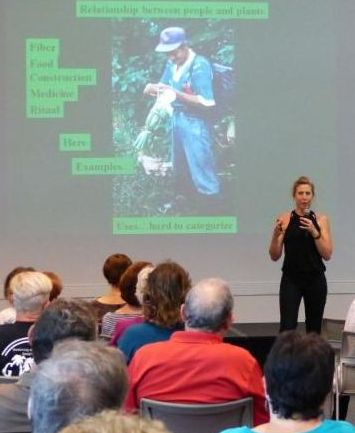
Maria Fadiman, Ph.D., is an ethnobotonist with a passion to create lasting records of the various ways indigenous people interact with plants, in preservation for younger generations.
"We need to record this information, so its use and understanding are not lost when older generations pass on," Fadiman said last week to a group of more than 80 people gathered to listen to her talk about her journeys. Named an Emerging Explorer by National Geographic, Fadiman's research focuses on Latin American and African ethnobotany, with a focus on rainforest cultures.
Fadiman's presentation was part of FAU's Research in Action series hosted at the Boca Raton Public Library. Join the next Research in Action dialogue with Rindy Anderson, Ph.D., as she presents "Why Bird Sing, Why it Matters."
READ MORE
|
|
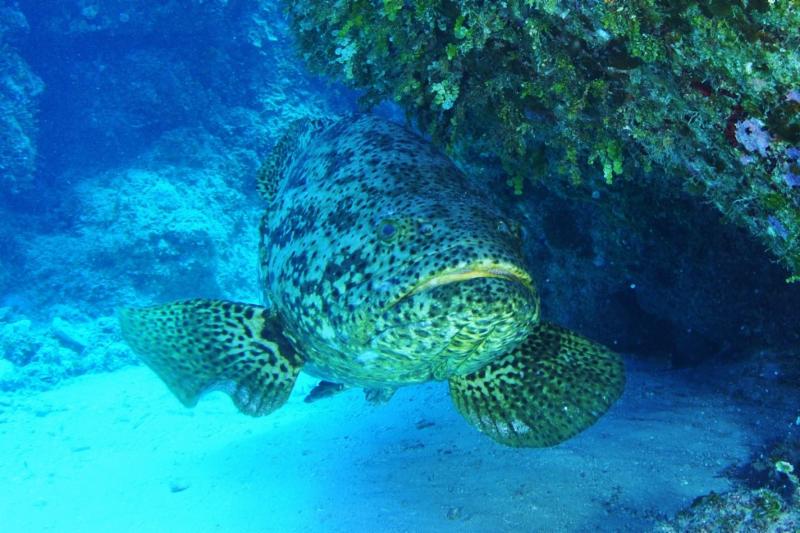
'Grouper Guard' to Protect National Undersea Security
Researchers from FAU’s Harbor Branch Oceanographic Institute are using Goliath groupers as the focus of a smart sensing system that will remotely alert authorities of incoming manned and unmanned underwater vehicles.
With a nearly $5 million grant from the Defense Advanced Research Projects Agency (DARPA) as part of the Persistent Aquatic Living Sensors (PALS) program, the program, dubbed “Grouper Guard,” will record and analyze vocalization cues from Goliath groupers and then send alerts to a remote end user. Goliath groupers, which can reach up to 700 pounds, generate characteristic low-frequency "boom" sounds when they mate as well as when they are approached by divers.
READ MORE.
|
|
Unlock the Power of FAU's Research Hub
Connect, collaborate and find research funding by joining the hundreds of faculty and students who have signed up for the FAU Research Hub.
The hub is a new web and mobile platform that connects researchers with students, collaborators and funding opportunities. Investigators are encouraged to post projects in just minutes.
LEARN MORE
.
|
|
Recent Sponsored Research Awards
|
|
Investigator Name and Project
|
|
Sponsor Name and Total Anticipated Funding
|
|
Alex Keene
Regulation of sleep and metabolism by hypothalamic Nts-Hcrt-Mch neuronal circuitry
|
|
US-Israel Binational Science Foundation
$135,000
|
|
Pierre-Philippe Beaujean
Mini DAQ
|
|
Sandia National Laboratories
$36,000
|
|
Kwang Soo Yang
CAREER: Spatial Network Database approach for Emergency Management Information Systems
|
|
National Science Foundation
$500,011
|
|
6
p.m.,
TODAY
,
College of Nursing auditorium, Boca Raton campus
|
|
3-5:30 p.m., March 9, FAU University Theatre
|
6:30 p.m., March 19, Carole and Barry Kaye Performing Arts Auditorium
|
May 20-21, Universal City, Los Angeles, Calf.
|
|
Due: March 28
Due: April 23
Due: May 6
Due: May 8
Due: May 15
Due: May 17
Due: June 3
Due: Multple
|
|
Click
here
to share your research, scholarship and
creativity success stories.
|
|
|
|
|
|
|