|
The IRS Gets Scammed
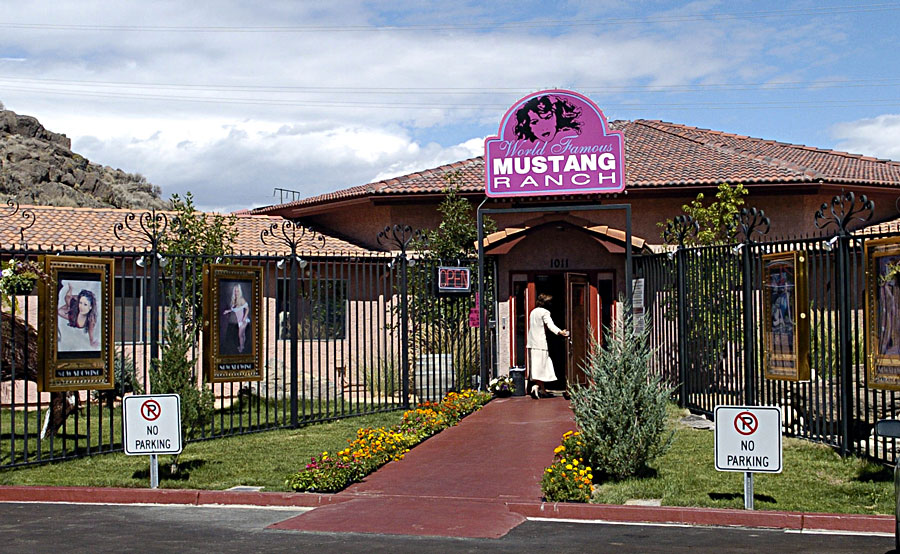
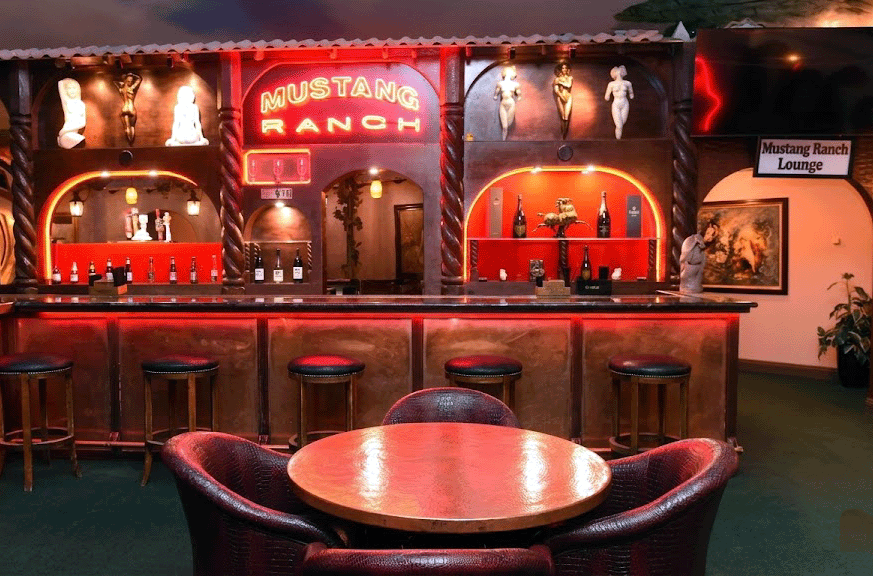
In the late autumn of 1990, the United States federal government found itself in an unprecedented and highly ironical role as the proprietor of a fully operational house of ill repute. For decades, the Internal Revenue Service had pursued the elusive financial records of the Mustang Ranch, a sprawling pink stucco compound located just ten miles east of downtown Reno in Storey County, Nevada.
When federal prosecutors finally secured an emergency forfeiture order, armed Treasury Department agents marched onto the property to seize the assets of America’s most famous bordello. The move was designed to satisfy a mounting tax debt that had ballooned into many millions of dollars, a penalty for decades of cash transactions and systematically incinerated financial ledgers.
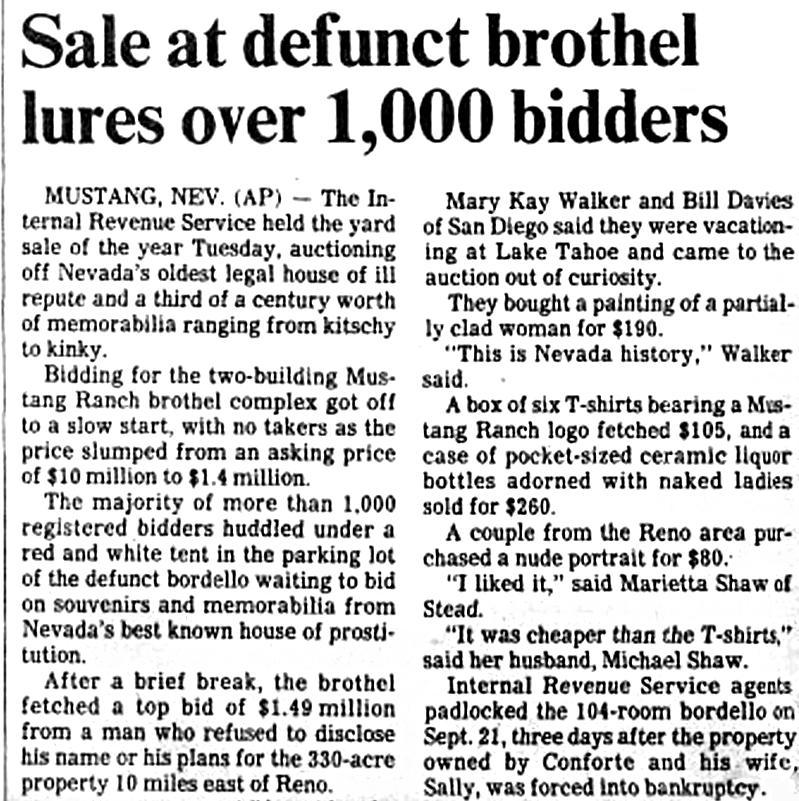
Realizing the immense public relation liabilities of managing a stable of active courtesans, the Internal Revenue Service quickly pivoted to liquidation. They organized a massive asset auction that drew curiosity seekers, reporters, and eccentric collectors from across the nation.
The government intended to sever the connection between the property and its notorious founders permanently, but the subsequent bidding war took a bizarre turn. A seemingly unrelated shell company stepped forward and purchased the entire property for 1.49 million dollars.
Federal authorities soon discovered to their intense chagrin that this proxy corporation was merely a front overseen by the original owner and his primary defense attorney. The master manipulator had managed to buy back his own empire from the very government that had just confiscated it, paying pennies on the dollar for his outstanding tax obligations.
This stunning maneuver effectively completed an administrative swindle, leaving the federal authorities empty handed while the enterprise returned to its familiar patterns.
| |
The Rise of the Boy from Sicily
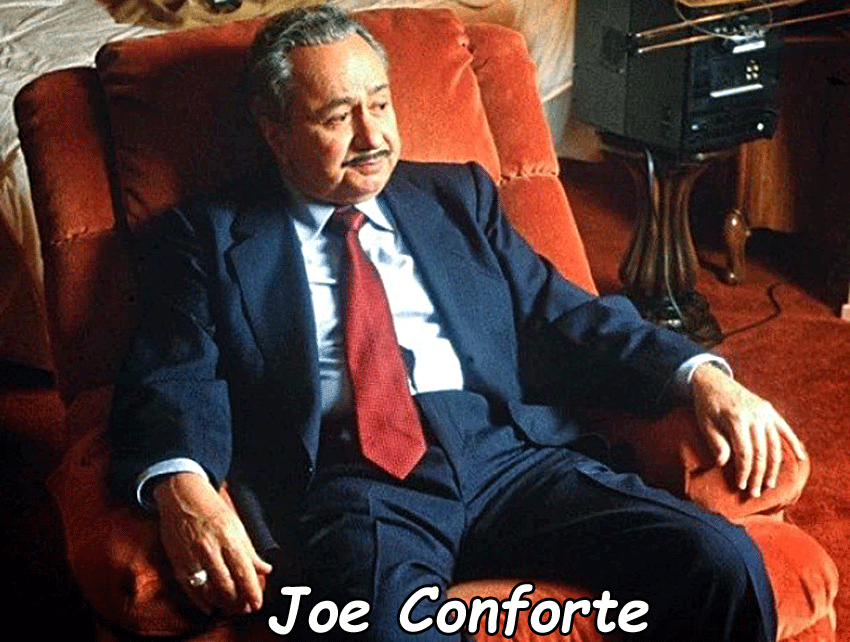
To understand how a remote Nevada desert property became the center of a multi million dollar federal showdown, one must examine the turbulent life of Giuseppe Christophe Conforte. Born in Augusta, Sicily, in December of 1925, the pudgy youth lost his mother at the tender age of five.
In December of 1937, he boarded the steamship Rex and arrived at Ellis Island, where immigration officers promptly Americanized his name to Joseph. Settling in Boston, his father Agostino ran a modest produce shop. It was here that young Joe learned the foundational mechanics of salesmanship, street smarts, and underground economics, as his father supplemented the vegetable earnings by selling bootleg alcohol.
Restless and aggressively ambitious, Conforte ran away from home to Manhattan at fifteen, eventually migrating westward to Los Angeles by 1942, where he leased a produce stand in West Hollywood. A brief stint in the United States Army followed, where he served in the military police and achieved the rank of staff sergeant before his discharge in 1950.
The rigid discipline of the military did little to curb his entrepreneurial appetite for illicit markets. By 1952, Conforte had relocated to northern California, opening illegal houses of prostitution in Oakland. When local law enforcement pressure intensified, he turned his sights toward the more permissive landscape of Nevada.
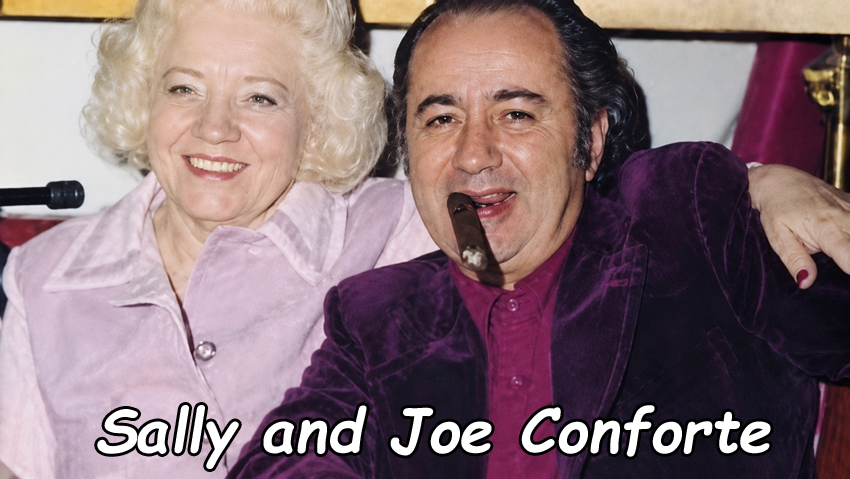
Arriving in Wadsworth, Nevada, in 1955, Conforte established the Triangle River Ranch. It was during this formative era that he crossed paths with Sally Burgess, a fellow brothel operator who possessed sharp business acumen and a matching tolerance for risk. Together, they expanded their network of border brothels. This aggressive expansion instantly earned them the fierce enmity of local law enforcement officials across multiple jurisdictions.
Sheriffs and district attorneys throughout Washoe County, Clark County, and Ormsby County issued public decrees warning Conforte that he would be arrested on sight if he dared let the sun set on his face within their borders. In 1960, Washoe County District Attorney William Raggio successfully convicted Conforte of extortion, sending him to state prison. Undeterred, Conforte married Sally Burgess in August of 1961 while entangled in legal appeals, and subsequently pleaded guilty to federal tax evasion in 1963.
| |
The Birth of Legal Sin
Upon his release from prison in December of 1965, Conforte was more determined than ever to legitimize his highly lucrative trade and insulate himself from further criminal prosecution. In 1967, Joe and Sally took control of the Mustang Ranch in Storey County, a strategic location situated perfectly outside the legal jurisdiction of the more conservative neighboring counties.
To shield himself from the legal definitions of pimping and to deflect the relentless scrutiny of the Internal Revenue Service, Joe made a critical administrative decision. He placed the entire business operation and the property deeds exclusively under Sally’s name. The turning point for the American adult entertainment industry arrived in February of 1971. Nevada Governor Mike O’Callaghan signed Senate Bill 214 into law, an historic statute known popularly as the county option brothel bill.
This legislation granted individual Nevada counties the explicit authority to license, regulate, and tax brothels, while outlawing the practice in populous counties such as Las Vegas and Reno.
Because Storey County was fully prepared to embrace the tax revenue, the Mustang Ranch became the very first house of prostitution in the United States to secure an official, valid municipal license.
This landmark event transformed Joe Conforte into an overnight celebrity and the self proclaimed champion of the legalized prostitution movement. He became a fixture in the local community of Sparks, Nevada, projecting the persona of a benevolent, populist godfather.
He frequented local establishments, drove flamboyant vehicles, and openly flaunted his wealth, reveling in his status as a folk hero who had successfully beaten the system by turning an ancient vice into a legitimate, tax paying corporate enterprise.
| |
Blood, Fire, and Flights to Rio
The golden era of the Mustang Ranch was frequently punctuated by extreme violence, mysterious fires, and relentless legal warfare. In 1975, a devastating blaze tore through the compound in a suspected case of arson, yet Conforte quickly utilized his massive cash reserves to rebuild the facility bigger and more opulent than before.
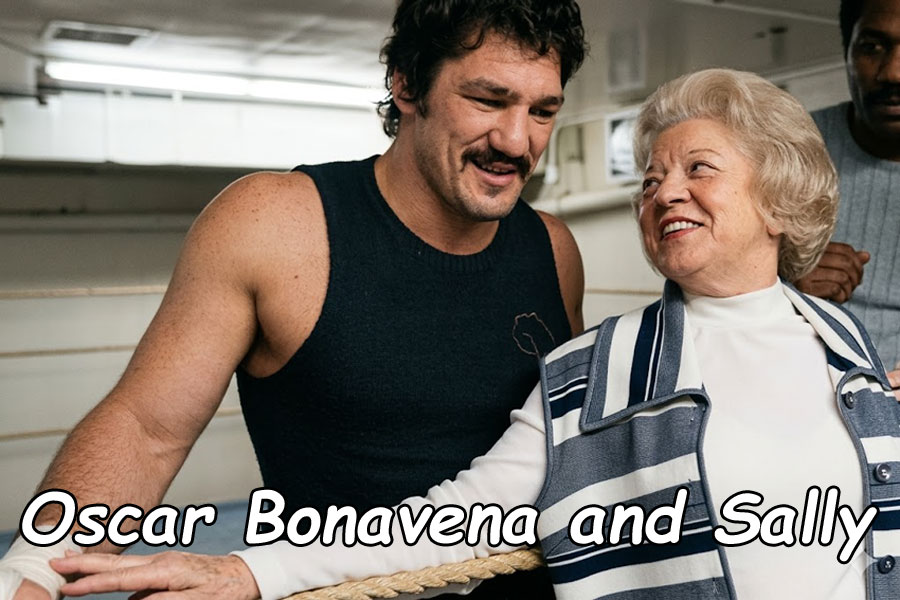
The following year brought a dark, international scandal to the gates of the ranch. The famous Argentine heavyweight boxing contender Oscar Bonavena, who was being managed intimately by Sally Conforte, arrived at the property in a state of high agitation. Bonavena was shot to death by a Mustang Ranch bodyguard at the front gates, an event that triggered a massive media frenzy and intensified federal scrutiny into the inner workings of the compound.
Throughout the late 1970's and 1980's, the Confortes operated almost entirely in cash, maintaining minimal accounting records. The federal government fought back through the courts, targeting the ranch for failing to file employment taxes, withhold income taxes, or pay social security for auxiliary personnel such as maids, bartenders, cashiers, and security guards. Conforte argued that these workers were compensated via a tip fund managed by the independent courtesans, but federal judges rejected the claim, noting that Conforte exercised complete control over hiring, firing, and shift wages, and that the daily ledger sheets were systematically burned in a fireplace every evening to erase the paper trail.
By the dawn of the 1990's, with Sally’s health declining significantly, the legal walls finally closed in completely. Following the 1990 Internal Revenue Service raid and the subsequent proxy buyback circus, federal prosecutors unleashed a devastating wave of fresh racketeering, conspiracy, and tax fraud indictments.
Realizing that a lengthy prison sentence was inevitable, Conforte chose flight over fight. In 1991, he slipped out of the United States and fled to Brazil, establishing a permanent beachside exile in Rio de Janeiro. Safe from extradition due to favorable rulings by the Brazilian Supreme Court, Conforte lived as a wealthy fugitive for nearly three decades until his death in 2019, frequently calling into Nevada radio stations to comment on the fate of his beloved ranch.
| |
The Rebirth of Mustang Ranch
Following Conforte’s permanent departure, the original Mustang Ranch limped through years of mismanagement and legal entanglements until it was officially forfeited to the Bureau of Land Management in 1999. The iconic painted lady of the Nevada desert sat entirely abandoned for years. In a final act of institutional disrespect, the federal government placed the historic structures up for auction on the digital marketplace eBay in 2003.
Brothel owner Lance Gilman recognized the immense historical and marketing value of the brand, securing the winning bid for $145,100 by adding a single hundred dollar bill in the final seconds of the auction. Gilman faced an extraordinary logistical challenge, as the Bureau of Land Management required the physical structures to be entirely removed from the federal land tract.
In September of 2004, local residents witnessed an astonishing spectacle when the massive, timber framed entry parlor where the ladies historically lined up for guests was stripped to its core bones and literally flown via helicopter to a new private property four miles to the east.
Gilman invested over six million dollars to relocate and completely refurbish twelve original buildings and the resurrected Mustang Ranch officially reopened for business, meticulously retaining its signature pink stucco exterior while upgrading the interior into a luxury resort.
Today, the legendary institution continues to operate legally, standing as a strange monument to Nevada history, bureaucratic failure, and the enduring legacy of a Sicilian immigrant boy who turned a outlawed trade into an empire.
| |