The Gold Standard of Urban Revitalization


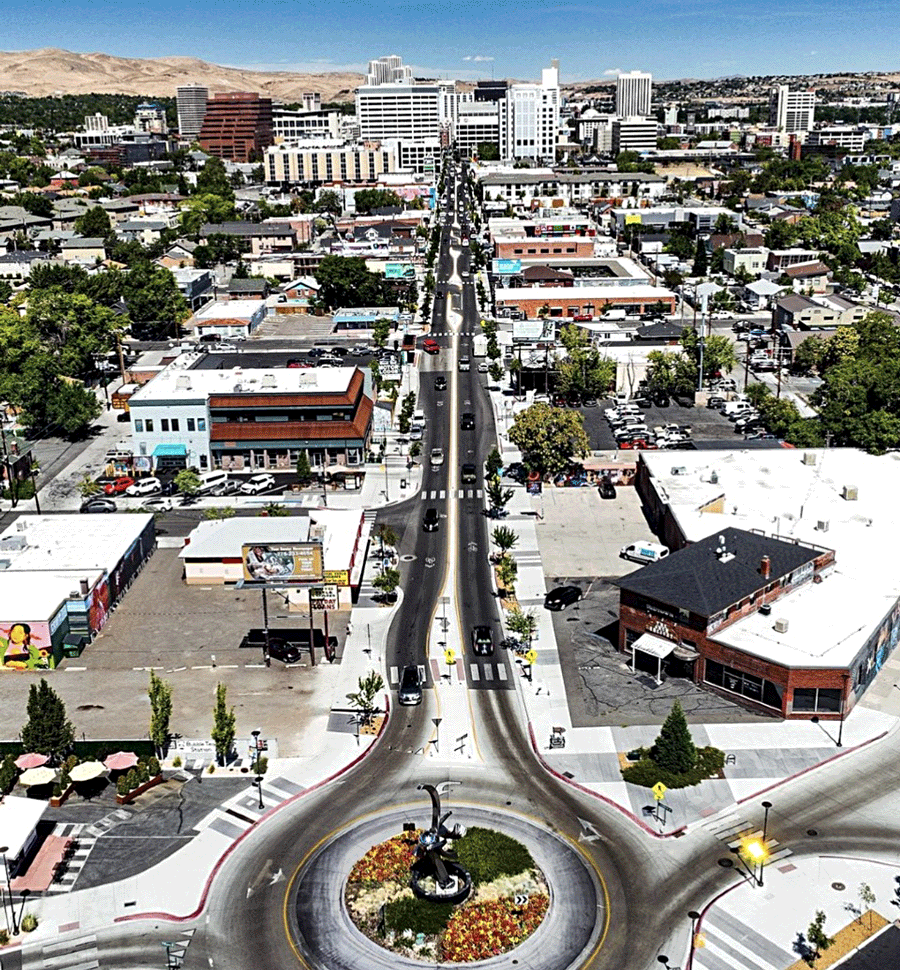
The year 2026 marks a historic milestone for the city of Reno as the MidTown district officially received the Accredited Main Street America designation. This honor is not merely a local badge of pride but represents the highest national recognition awarded by Main Street America for commercial district revitalization programs.


Achieving this top tier status requires a local program to demonstrate exceptional performance across 6 specific areas of evaluation.


The district must show strategy driven programming for economic development and a dedication to preservation based development that maintains the historic character of its buildings. Most importantly, the organization must provide evidence of demonstrated results and a tangible economic impact.


The accreditation process looked closely at the measurable success of recent initiatives. One standout example of this success is the event known as Dancing in the Streets. Held along South Virginia Street, this massive community celebration featured 9 stages dedicated to music and art while offering a wide array of food and drinks. The event drew over 30,000 attendees and generated approximately $1.4 million in economic activity for the local businesses in the area.


This recognition signals that a community is successfully employing the national strategy for revitalizing commercial districts, which opens doors to grants, partnerships, and increased interest from investors.

From Roadside Motels to Creative Hubs


To appreciate the current success of MidTown, it is necessary to look back at the state of the district 15 to 20 years ago. Before 2010, the stretch of South Virginia Street between Liberty Street and Plumb Lane was far from the trendy destination it is today. In those years, the area was largely characterized as a declining commercial strip. The landscape was dominated by aging motels and weekly rentals that had seen better days.


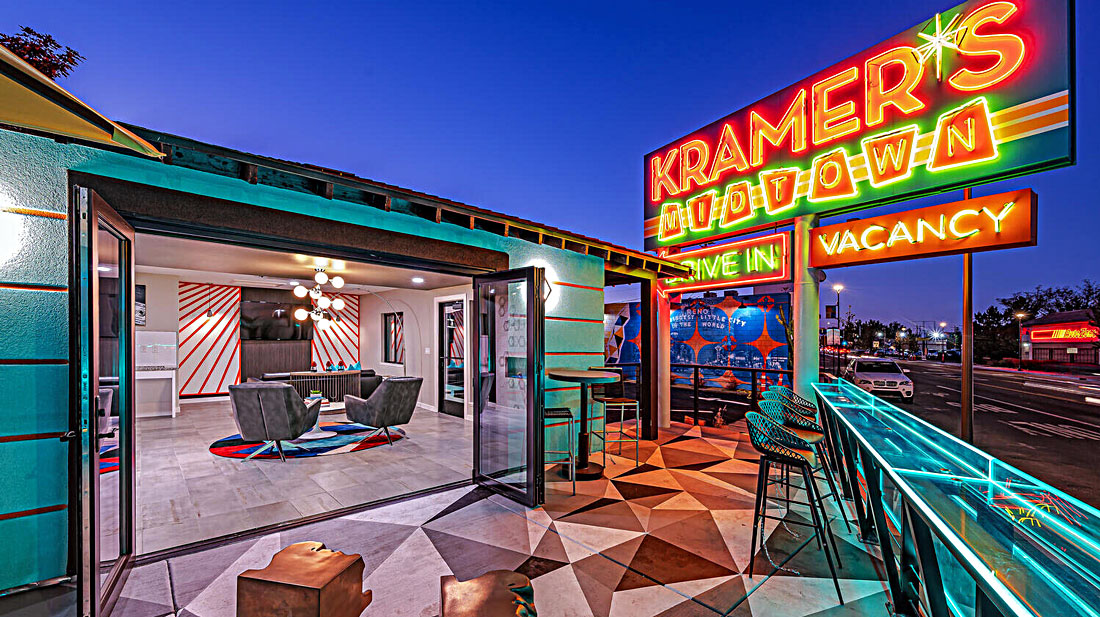
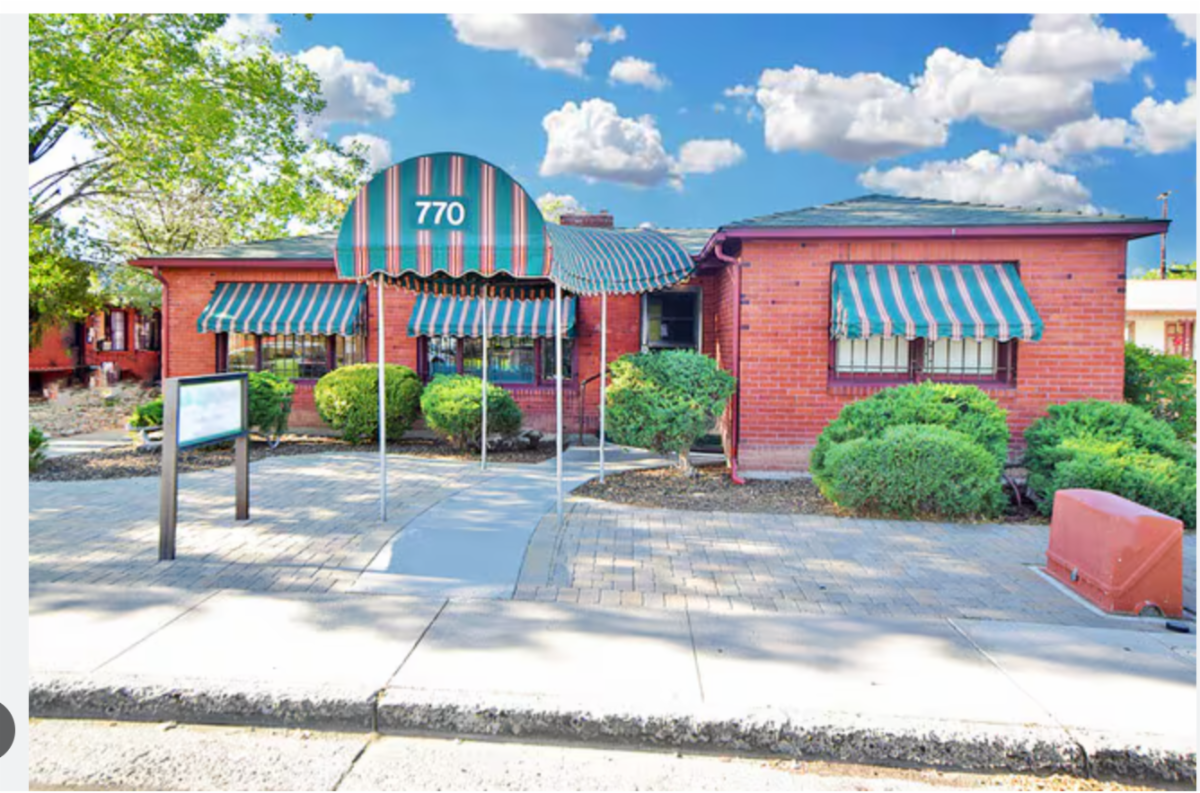
Many of these buildings were products of the 1940s to 1960s roadside motel era when South Virginia Street served as the primary highway through Reno before the construction of I 580. Alongside these motels, the street was home to various auto repair shops, tattoo parlors, dive bars, and thrift stores. It was a gritty part of town where property values remained relatively low. However, it was this exact lack of high cost real estate that planted the seeds for the future. When the Great Recession hit around 2008, the affordable rents in this overlooked corridor began to attract a different kind of tenant.


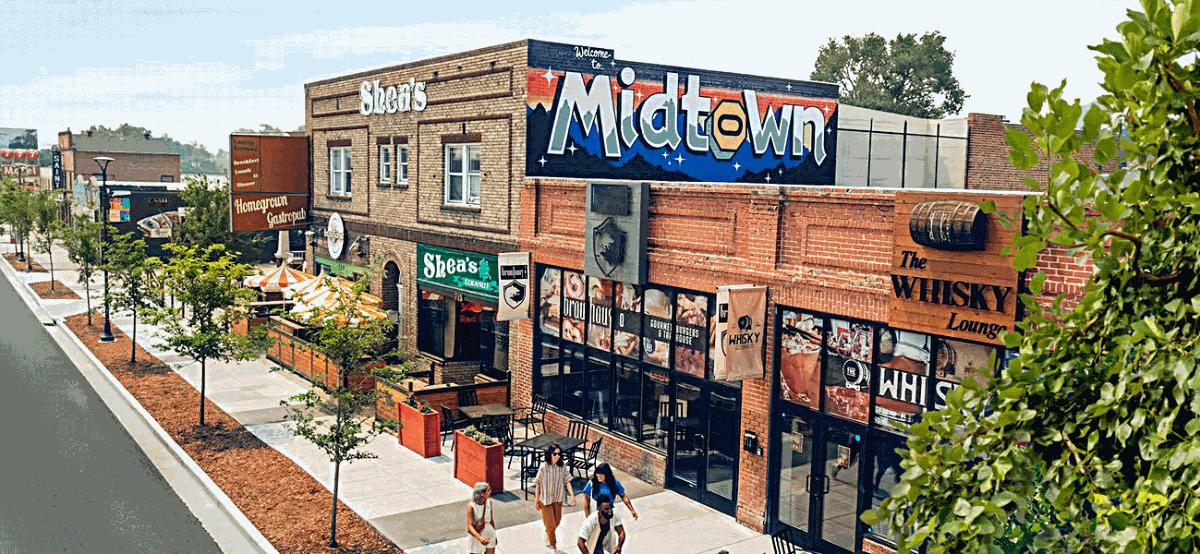
Between 2008 and 2015, the early revitalization phase took hold as artists, boutique retailers, and young entrepreneurs began to move into the vacant or underused spaces. A small but dedicated group of business owners formed the MidTown Reno organization to promote the unique identity of the neighborhood. This period was defined by the birth of the arts district persona. Public murals and vibrant street art began to cover the drab walls of older buildings. Art walks and boutique festivals started to draw a local crowd that was looking for something more authentic than the traditional casino experience downtown.


Independent coffee shops and vintage stores became the anchors of the neighborhood, creating a sense of community that had been missing for decades. This organic growth was the foundation of the district, proving that a mix of historic preservation and creative entrepreneurship could breathe new life into a forgotten part of the city. By the end of this period, MidTown had successfully rebranded itself as Reno’s primary hub for independent retail and local culture.

The Industrial Catalyst and the MidTown Boom


The trajectory of MidTown Reno accelerated significantly during the major growth phase that spanned from 2016 to 2023. This era was defined by a massive tech migration and regional economic expansion that fundamentally changed the demographics of the city. As giant companies like Tesla, Panasonic, and Switch expanded their operations near the Tahoe Reno Industrial Center, thousands of new workers flooded into the region.


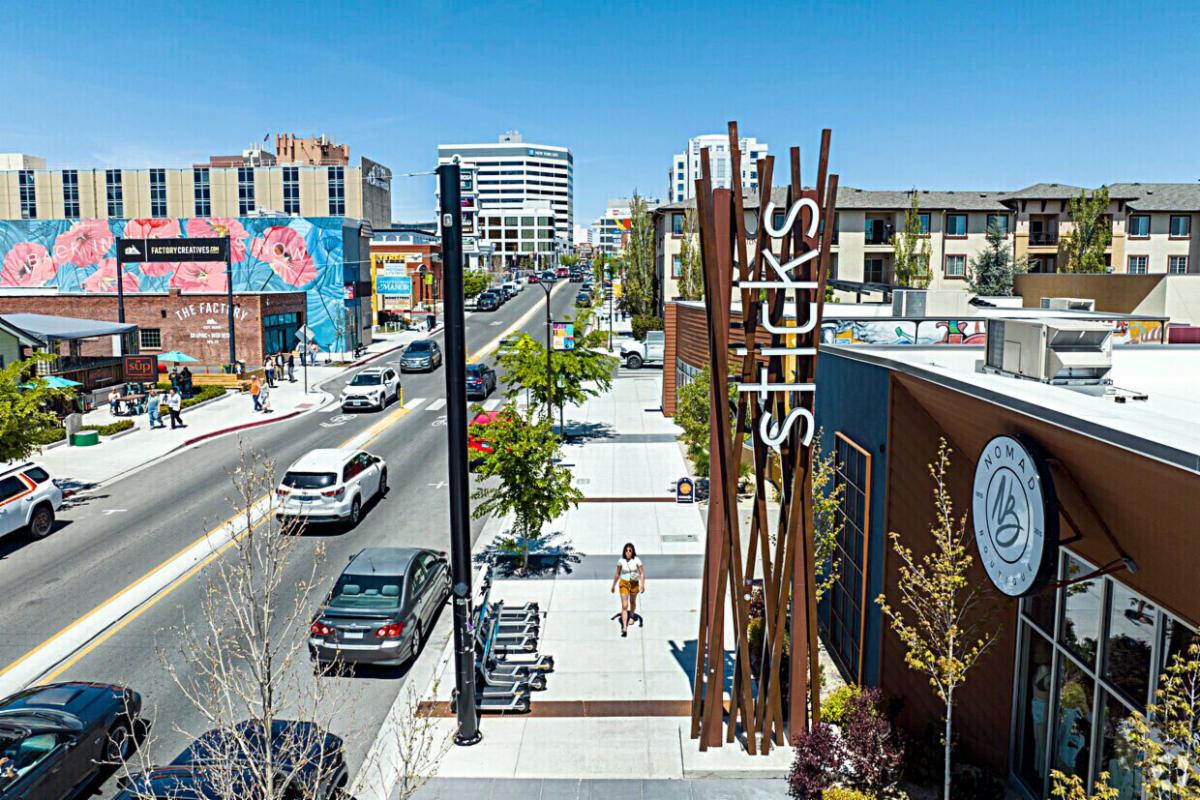
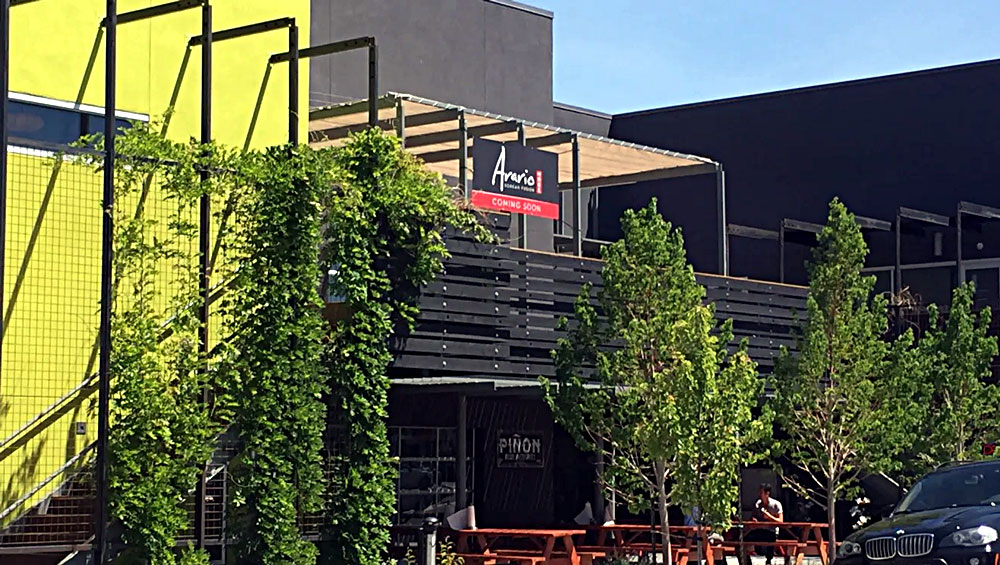
These new residents, many of whom were younger professionals, sought out walkable neighborhoods that offered a sophisticated mix of restaurants, nightlife, and cultural amenities. MidTown was perfectly positioned to meet this demand. The district evolved from a small arts enclave into the primary independent dining district for the entire city. Restaurants like Two Chicks and Great Full Gardens became local institutions, while Noble Pie Parlor helped establish the area as a destination for nightlife and high quality casual dining.


During these years, the physical environment of MidTown underwent a dramatic facelift. The city and private developers invested heavily in streetscape improvements to make the area more pedestrian friendly. Older motels that once served as weekly rentals were purchased and renovated into boutique retail spaces or modern apartments.


The focus remained on preservation based development, ensuring that the new projects maintained the historic scale and character of the 20th century architecture. The influx of capital allowed for more ambitious programming, including the expansion of events like Dancing in the Streets, which became a cornerstone of the Reno summer calendar.


This phase of growth proved that MidTown was no longer just a local secret but a significant economic driver for the region. The transition from a run down commercial strip to a vibrant urban corridor was nearly complete, attracting a level of national attention that eventually led to the 2026 accreditation.

The Economics of a Rising Skyline


The financial transformation of MidTown Reno is perhaps most visible when examining the property values along South Virginia Street and its surrounding blocks. Since 2010, many properties have seen their values skyrocket as the district shifted from a low rent zone to one of the most desirable areas in Nevada.


A prime example of this shift is the Reno Public Market located at 299 East Plumb Lane. Originally built in the 1970s as Shopper’s Square, the property functioned as a grocery anchored shopping center for years before falling into a state of underuse.


In the late 2010s, developers purchased the site and converted it into a 40,000 square foot food hall and retail complex. The value change was staggering. In the early 2010s, the property was estimated to be worth between $8- $10 million. Following its redevelopment, the estimated value jumped to a range between $35- $40 million. This project now serves as a massive economic anchor for the southern end of the district.


The surge in value was not limited to large shopping centers. Small motel properties along the Virginia Street corridor that were selling for $500,000 to $1,500,000 in 2010 are now frequently valued between $4-$8 million.


The economic data suggests that the MidTown model has been incredibly successful at attracting reinvestment and creating a sustainable commercial ecosystem.

A Blueprint for the National Main Street


As MidTown Reno celebrates its status as an Accredited Main Street America program, it joins a broader national movement that is reshaping cities across the country. One of the most compelling statistics cited by the organization is that for every $1 spent on operating a Main Street program, approximately $23 is reinvested back into the local economy. This ratio highlights why the Accredited designation is so sought after by municipal leaders and economic development experts.


MidTown has become a successful example of urban redevelopment that other cities now look to for inspiration. The journey from a collection of roadside motels 20 years ago to a nationally accredited hub of commerce and culture is a testament to the power of community driven planning.


MidTown stands as a vibrant proof of concept for the Main Street Approach, proving that with the right strategy, any declining district can find its way back to the top tier of American commercial life.