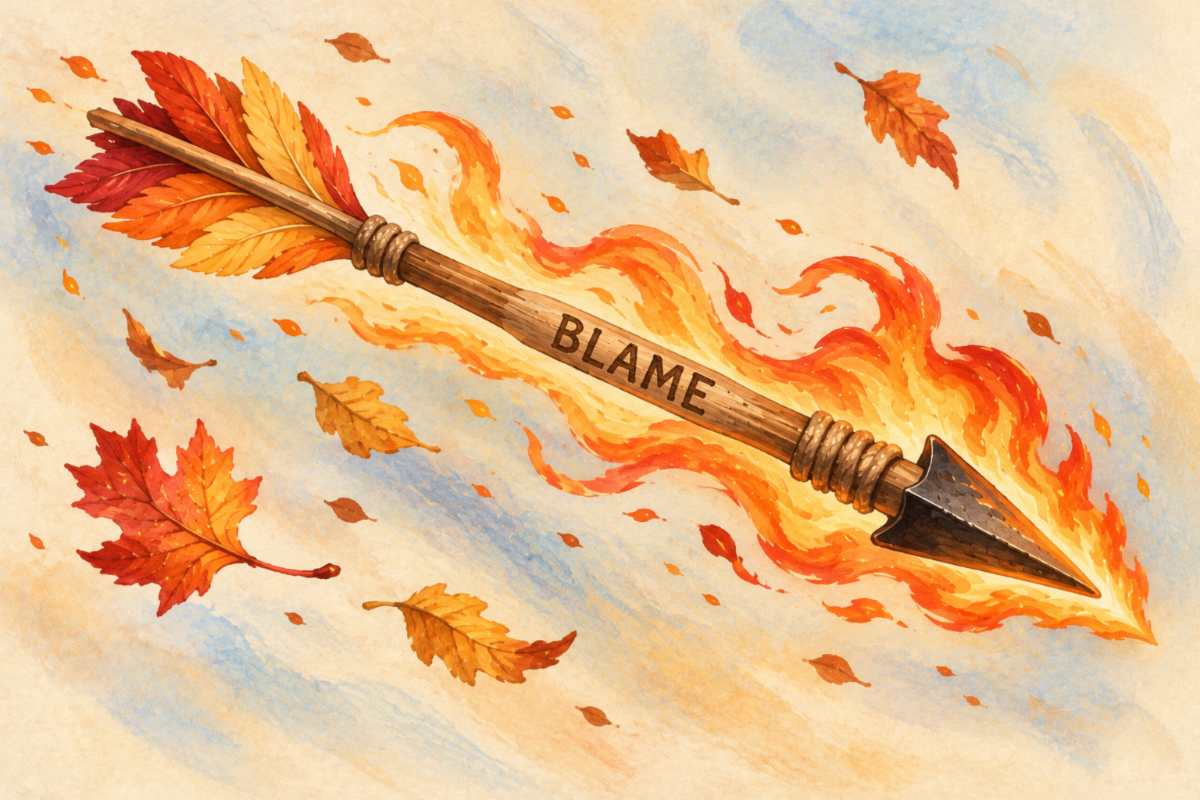
The Blamethrowers: When Everything Is Somebody Else's Fault
We've all met a blamethrower.
The kid who loses a game because somebody cheated. The one who gets in trouble because another kid made them mad. The child who trips over something and immediately blames whoever left it there.
Nothing is ever their fault.
And if we're being fair, we probably know a few grown-up blamethrowers, too. 😊
In psychology, we sometimes talk about externalizing and internalizing. Some people tend to look outward for the cause of their problems, while others turn that blame inward.
Today, we're talking about the outward-looking crowd.
Here's what's interesting about blamethrowers. They aren't necessarily trying to be dishonest or difficult. Sometimes blaming something or someone else is a way of protecting themselves from an uncomfortable feeling.
It's easier to say, "That game is stupid!" than to admit you're disappointed you lost.
It's easier to say, "He made me mad!" than to acknowledge that you lost your temper.
And it's certainly easier to blame the chair you bumped into than to admit you weren't watching where you were going.
Blame gives us somewhere to put the frustration.
The trouble is, when everything is somebody else's fault, we don't leave ourselves much room to learn, make repairs, or do something differently next time.
And that can become a real problem in friendships.
Other kids get tired of always being the reason something went wrong. They don't want to play with someone who can't lose gracefully, acknowledge a mistake, or take responsibility for their part in a disagreement.
So how do we coach this?
First, we don't need to argue about whose fault it was. That can turn into a pretty exhausting back-and-forth.
Instead, we can acknowledge the feeling without automatically agreeing with the blame.
"I can see you're frustrated that you lost."
"You were really upset when he grabbed the ball."
"That must have hurt when you tripped."
And then we can gently shift the conversation.
"What part of this was in your control?"
Maybe another child really did something unfair. Maybe the rules weren't clear. Maybe someone genuinely contributed to the problem.
We don't have to dismiss any of that.
But we can help kids recognize the difference between what happened to them and what they chose to do in response.
Because here's an important distinction:
Fault and responsibility aren't always the same thing.
Something can happen that isn't your fault, and you can still have some responsibility for what happens next.
You didn't choose to lose the game. But you can choose whether to congratulate the winner or storm away.
You didn't choose to feel angry. But you can learn what to do with that anger.
And sometimes? Nobody did anything wrong. Something just didn't go the way we wanted.
That's worth learning to live with, too.
The goal isn't to turn our blamethrowers into kids who think everything is their fault.
It's to help them recognize that taking responsibility for their own choices isn't the same thing as taking the blame for everything.
And perhaps the most useful question we can teach them is:
"Okay, that happened. What can I do now?"
Because once we stop looking for someone to blame, we can start looking for something that helps.
|