📬 Welcome to this week’s

Social Coaching Scoop!

📍 657 Hill Road, Boxborough MA

📞 978-413-1965

✉ dshea.peterpancenter@gmail.com

📂 In This Issue:


🧠 Coaching Corner

🎒 Weekly Social Groups

💬 Individual & Family Coaching

🎤 Workshops & Presentations

📚 Featured Resource

🎓 Academic Tutoring

❤️ Closing Thought

🏡 Peter Pan Coaching Library

🧠 Coaching Corner

You Can Still Be Mad After Someone Says Sorry


It was our very first social group of the new school year when one of my third graders came looking for me in tears.


Another child had gotten dirt all over his brand-new, absolutely amazing sneakers.


And to him, this was genuinely upsetting.


He was sad. He was angry. And I heard quite a bit about the injustice of what had happened as we sat together on the picnic table bench.


Before we did anything about the other child, though, we dealt with the actual problem.


We emptied the dirt out of his shoes. He brushed off his socks. I found some wet wipes, and he carefully cleaned his sneakers.


Then I asked him, “How can I help?”


“I want him to apologize.”


That seemed reasonable.


I told him I couldn't promise an apology, but we could certainly try.


The younger child came over when I called him. We talked briefly about what had happened and determined that the dirt incident had been accidental. And without any prompting from me, he apologized.


Problem solved?


Not quite.


My third grader was still mad.


And that's where another growing power came into play.


I told the younger child that he had done everything he could do to repair the situation and sent him back to play.


Then I turned back to my still-angry friend.


He didn't have to suddenly feel better because someone had apologized. He didn't have to decide that what happened no longer mattered. But he did have a choice about what happened next.


He could stay angry and let it ruin the rest of his afternoon. He could call his mom and go home. Or he could still be mad for a while and eventually go back to playing.


There was a little more fussing.


He definitely didn't want to go home.


And eventually, he got up to play.


Before he went, I gave him one more piece of coaching: being angry was okay. Revenge wasn't. If he was still too angry to make good choices around the other child, giving him some space for a while would probably be wise.


🌱 The Growing Power


An apology is an attempt to repair something. It isn't a magic button that makes the other person's feelings disappear.


Sometimes the other person has done everything they reasonably can do. They acknowledged what happened. They apologized. They helped fix the problem if they could.


And we may still be mad.


That's okay.


The next growing power is learning that once the repair has happened, what we do with the rest of our feelings belongs to us.


We can take some space. We can be disappointed. We can need a little more time.


And then we get to decide what happens next.

🎒 Weekly Social Groups

Our Weekly Social Coaching Groups are underway for the new school year, and it’s been wonderful to welcome everyone back!


Several groups are already full or have only one or two openings remaining.

Through real play and real-time coaching, children build friendship skills, flexibility, confidence, and problem-solving in a warm, supportive environment.


If you’ve been thinking about a group for your child this fall, now is a good time to check on remaining availability.


Learn More About Weekly Groups:

👉 https://peterpancenter.com/social-skills-programs/

💬 Individual & Family Coaching

Every child has moments when worry, frustration, friendship struggles, or negative self-talk begin getting in the way of everyday life.


Through individual coaching, I help children and families build practical strategies they can use in real life—from managing anxious thoughts and navigating friendships to developing confidence, flexibility, and resilience.


Together, we'll identify what's getting in the way and create tools that help your child move forward, one small brave step at a time.


Sessions are available in person or virtually.

🎤 Workshops & Presentations

Workshops are available for schools, parent groups, and professional teams looking for practical, real-world strategies to support kids socially and emotionally.


Topics include relationship-based, real-time social coaching, behavior, friendship skills, anxiety, and practical strategies that translate directly into everyday interactions with children.


Presented virtually or in person.


➡️ Explore Donna's Workshop Catalog


📖 Featured Resource:

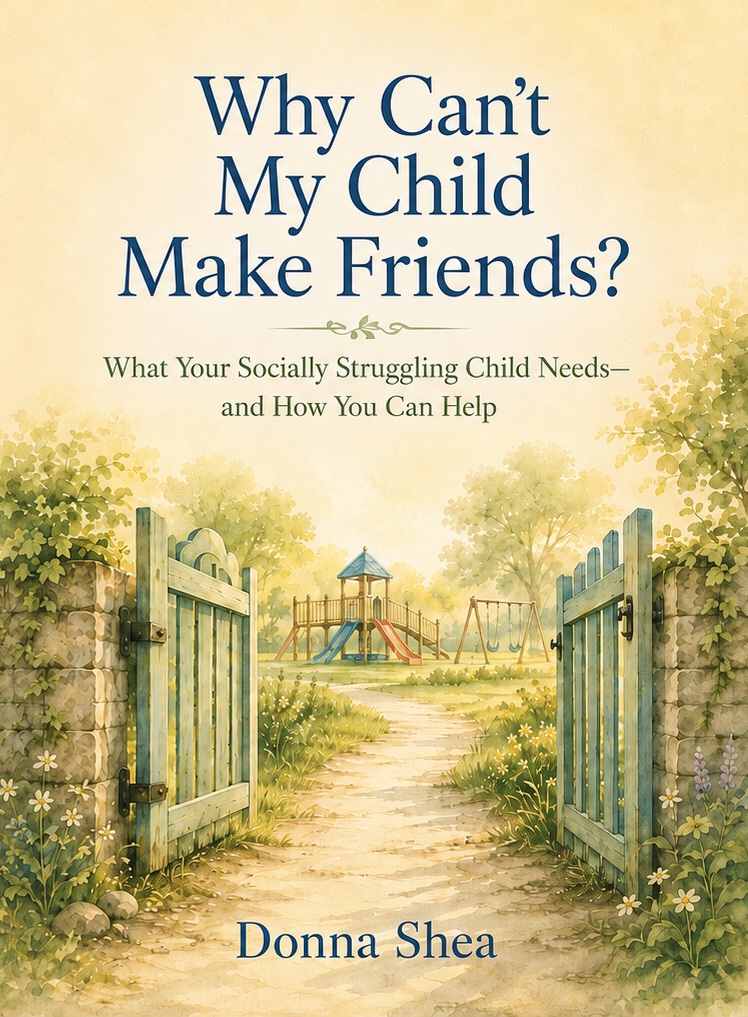
Why Can’t My Child Make Friends?

Friendship struggles can leave both kids and parents wondering what keeps going wrong.


Why Can’t My Child Make Friends? offers practical, real-world guidance for understanding the skills behind friendship—and helping kids build them without trying to change who they are.


If your child wants friends but has trouble making or keeping connections, this short parent guide is a place to start.


📖 Available on Amazon in Kindle and paperback.


🎓 Academic Tutoring Services

Confidence in Skills — and in Social Communication


For families who need academic support alongside social coaching, I highly recommend working with Megan — someone I trust to support both learning and how kids express what they know.


Megan’s K–5 academic tutoring supports both neurotypical and neurodivergent learners with:


✅ Reading, writing, and math

✅ Executive functioning and organization

✅ Gentle coaching around classroom communication and self-advocacy


Using a strengths-based, multimodal approach, Megan helps kids build confidence — not just in their skills, but in how they participate, communicate, and show up in the classroom.


📚 Contact Megan directly to learn more or schedule a session.


Neuro Nurture Education

Tutoring for all kinds of minds


Megan Livingstone, M.Ed.

📞 508-631-8261

✉ milv3415@gmail.com

❤️ Closing Thought

An apology can help repair a hurt, but it can’t always make the hurt disappear.


Kids need room to feel disappointed, frustrated, or angry even after someone has tried to make things right. The growing power comes in learning what to do with those feelings next.


We can take some space. We can need a little more time. And we can still choose not to let one hard moment decide what happens to the rest of our day.


Sometimes moving forward doesn’t mean we’re no longer mad.


It just means we’re ready to move forward. ❤️


Peter Pan Coaching Library


📚 Children & Parent Books


🖨️ Printable Coaching Resources

X Post
LinkedIn Share
 

It is never my intention to send unwanted emails. If you do not wish to receive emails from me, please use the unsubscribe feature at the bottom of this email.