Report from Redfin


The American dream used to include a moving truck every few years. There was a time, not so long ago, when the white picket fence was merely a temporary backdrop for a single chapter of life before the next promotion or the next child prompted a relocation. In the early two thousands, specifically around 2005, the typical homeowner stayed in their property for just six and a half years. 


It was an era defined by mobility, characterized by the rapid turnover of real estate and a general sense that a house was a stepping stone rather than a final destination. However, the landscape of American residency has undergone a profound transformation.


According to a recent and comprehensive report from Redfin, the era of the frequent move has effectively ended. Today, the typical homeowner in the United States stays put for approximately twelve years. This is nearly double the tenure seen during the days when flip phones were the height of technology. 

Aging in Place


Americans are rooting themselves more deeply into their soil than at almost any other point in modern history. This trend is not uniform across the country, but it is pervasive. The data derived from an analysis of county property records through the end of 2025 highlights a nation that is aging in place. This lack of movement has created a tightening effect on the market, as the fluid exchange of properties that once defined the American economy has slowed to a crawl. When homeowners stay in their properties for twice as long, the natural flow of inventory into the market is halved, leaving those on the outside looking in with fewer options than ever before. 


By remaining in place, current owners are effectively throttling the supply of homes that would typically be available to those looking to enter the market for the first time. The result is a housing ecosystem that feels increasingly static, where the players are staying in their positions and the spectators are finding it harder to join the game.

Financial Anchors 


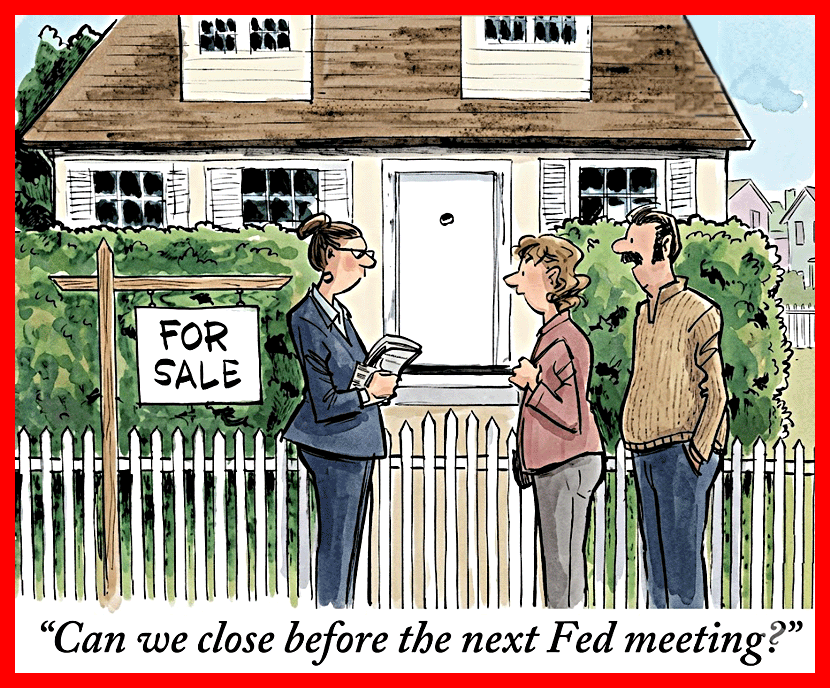
The primary driver behind this sudden lack of mobility is often referred to by economists as the mortgage lock in effect. This phenomenon is a direct result of the historic lows in interest rates seen during the pandemic era. During that time, millions of homeowners were able to secure or refinance mortgages at rates sitting between two and three percent. 


In the current economic climate, where rates have fluctuated at significantly higher levels, the prospect of selling a home and taking on a new loan is financially daunting. To move would mean voluntarily trading a very low monthly payment for one that could be hundreds or even thousands of dollars more expensive for a comparable property. This creates a powerful financial anchor that keeps people exactly where they are.


Data from the Federal Housing Finance Agency reinforces the strength of this deterrent. Research suggests that for every percentage point gap between an existing mortgage rate and the current market rate, the probability of a sale drops by over eighteen percent. This has resulted in what experts call missing home sales, with estimates suggesting that over one million transactions did not occur between 2022 and 2024 simply because owners could not justify the cost of moving. 


Furthermore, Freddie Mac research indicates that nearly six in ten borrowers currently hold rates at or below four percent. For these individuals, the home is no longer just a place to live; it is a financial asset that is too valuable to give up. Federal Reserve Chair Jerome Powell recently noted that many people are stuck in these low rate mortgages, making it incredibly expensive for them to move. It appears that we are a long way from seeing this dynamic change in a meaningful way.

California Exceptionalism


While the national average for homeowner tenure sits at twelve years, certain regions of the country are experiencing much more extreme levels of stability. California serves as the primary example of this trend, with several of its major metropolitan areas posting tenure numbers that far exceed the national median. In Los Angeles, the typical homeowner has held their property for twenty years as of 2025. 


This is an increase from the previous year and represents the longest span among major American cities. Other California hubs follow a similar pattern, with San Jose reaching eighteen point seven years and San Francisco sitting at sixteen and a half years. San Diego and Riverside also show significantly higher tenures than the rest of the nation.


The reasons for this California exceptionalism are twofold. First, there is the influence of state tax laws, specifically Proposition thirteen. These regulations limit property tax increases, effectively rewarding those who stay in their homes for long periods with significantly lower tax burdens than they would face if they moved to a new property at current market values. This creates a massive financial incentive to stay put. 


Second, the state faces a desperate need for more housing units. The lack of new construction means that even if a homeowner wanted to move, there is very little available for them to buy. This creates a cycle of stagnation where the lack of supply discourages moving, and the lack of moving further restricts the supply. 

A Generational Divide


One of the most striking aspects of the current housing market is the demographic imbalance regarding who owns what. As the population ages, Baby Boomers and members of Generation X are increasingly choosing to age in place. Many of these homeowners have either completely paid off their mortgages or are making payments that are far below what a new buyer would face today. Because they are often in a stable phase of life, they have fewer reasons to relocate for work or family expansion. 


This has led to a situation where a large portion of the nation’s housing stock is held by older generations who may no longer need the space they occupy. The statistics are telling. Empty nest Baby Boomers currently own 28 percent of homes with three or more bedrooms in the United States. This is roughly double the share held by Millennials with children. This concentration of family sized homes in the hands of older owners who are not moving has created a massive hurdle for younger families trying to find adequate space. 


For many new buyers, the combined pressure of high prices, low supply, and elevated interest rates has made the market nearly impossible to navigate. The National Association of Realtors reported that the share of transactions made by first time buyers fell to a record low in 2025. In many cases, these potential buyers are simply abandoning their search altogether, trapped in a rental market because the traditional ladder of homeownership has lost its rungs.

A New Real Estate Reality


Looking forward, the question remains whether this trend of long tenure will continue or if the market will eventually return to its more mobile roots. The future will likely depend on the interplay of mortgage rates, housing supply, and inevitable demographic shifts. There is a glimmer of hope on the horizon. Chen Zhao, the head of economics research at Redfin, suggests that if mortgage rates begin to settle below six percent, some of the financial pressure may ease. 


Improved affordability and a slowing of home price growth could encourage more Americans to consider moving again. If the gap between old rates and new rates narrows, the golden handcuffs of the pandemic era mortgages may finally begin to unlock.


As older homeowners eventually pass their properties to heirs or decide to enter assisted living, we may see a gradual increase in turnover, but this is a slow process that unfolds over decades rather than years. 


For the time being, the housing market is defined by a simple, stubborn reality. Most homeowners are comfortable where they are, or at least they are financially compelled to stay there. Until the incentives for moving outweigh the benefits of staying, the twelve year tenure may become the new standard for the American home.