|
May is Mental Health Awareness Month – the annual observance was founded in 1949. The purpose of recognizing mental health this month is to highlight the importance of mental health well-being, educate the public, reduce stigma, and promote support for those affected by mental health conditions. Estimates of mental illness including the following:
- 1 in 5 US adults experience mental illness each year
- 1 in 20 US adults experience serious mental illness each year
- 1 in 6 minors have a mental health condition, with approximately 50% seeking some form of treatment
- 20% of high school students have contemplated suicide
The statistics are staggering – and, those are the individuals who self-report or seek treatment. Separately, we know, that the rates of mental illness, substance abuse and suicide among attorneys are as much as 3X higher than the average non-attorney adult. If you are struggling (or finding life on life’s terms difficult), The National Institutes of Health provide “Wellness Toolkits” where you can find tips and tricks for improving your mental health. Those include, but are not limited to: 1) regular exercise; 2) eat healthy, stay hydrated; 3) prioritize sleep; 4) find a relaxing activity; 5) set goals and priorities; 6) practice gratitude; 7) focus on positivity; and 8) stay connected. You can show your support for May’s Mental Health Awareness Month by donning a green ribbon. Additional resources are available at The Florida Bar's resource center, and the Family Law Section's website. And, as a member of The Florida Bar, you qualify for five free counseling sessions per year. This year, let’s talk about mental health and wellness! It is okay not to be okay. Support is available.
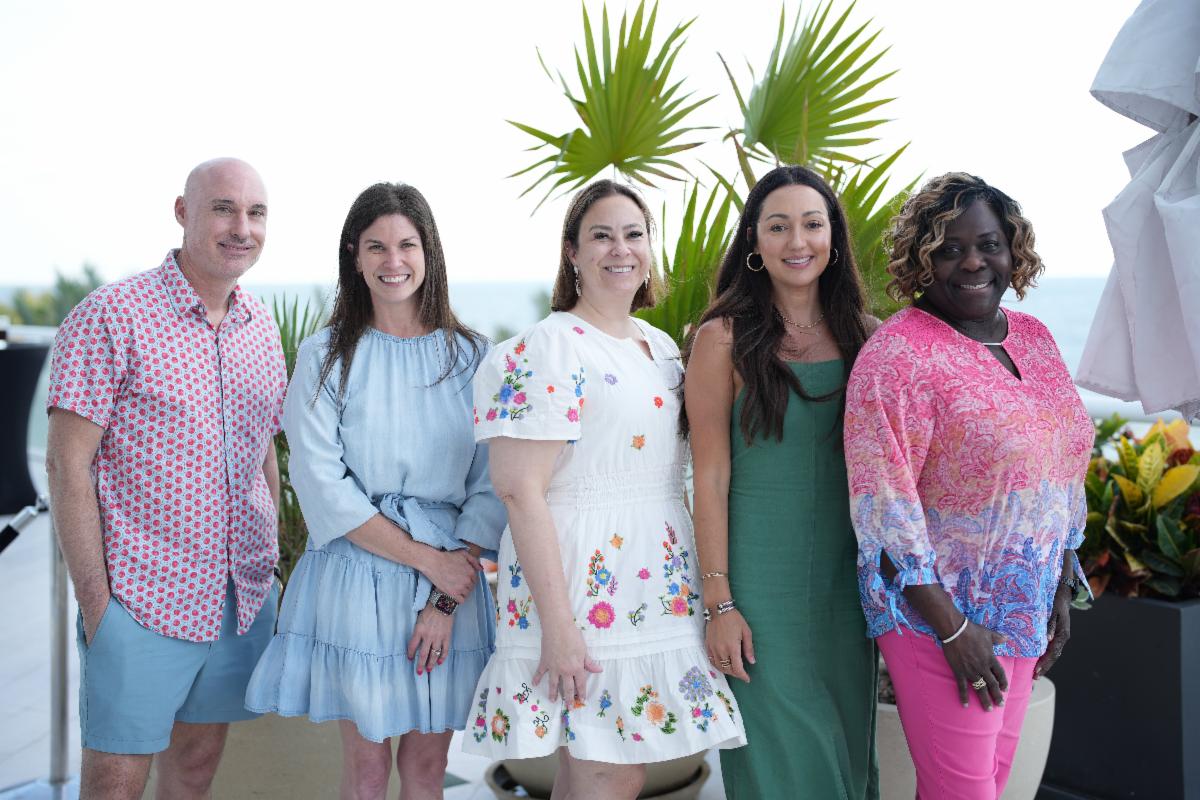
Next, I am pleased to report that the Section’s Annual In-State Retreat was a smashing success! The hotel and the event both sold out! This year, we were at W Fort Lauderdale on May 1-4, 2025, and the theme was Beachfront Zen. The Retreat was chaired by, Jamie Epstein, Esq., Kristin Kirkner, BCS, & Yanae Barroso, Esq., along with Willie Mae Shepherd. Some of the many highlights from the event included: the speaker on vicarious trauma, the beach during the Fort Lauderdale Air and Sea Show, the reception with high-speed go-karts, arcade games and laser tag/trampoline park/obstacle course, and the final farewell dinner at Steak 954. This event was incredibly special for me as it was the last official event of this year. And, more importantly than that, it was a real opportunity for me to get to know members of the Section I have not spent substantial time with before. 😊 A special thanks to our many sponsors: Sapphire Sponsors – Apicella Law Group, PA, Rachael Silverman, Psy.D., and Soberlink; Cocktail Sponsors – Milestone Reporting, Vasquez De Lara Law Group and The Virga Law Firm; and Breakfast Sponsors – Kaufman Rossin, Brinkley Morgan, and Rossway Swan. You guys are awesome, and I appreciate your support! Thank you.
Next, we have two important upcoming CLEs. First, on May 9, 2025, the Appellate Committee is presenting a roundtable discussion with Judge Adam Tanenbaum of the First District Court of Appeal. The CLE: 9127 Statutory Interpretation in Florida Family Law Cases is particularly timely. Jennifer Patti and Erin Pogue Newell are the moderators and presenters, in addition to Judge Tanenbaum, include Robert Scavone, Jr., Esq., Shannon McLin, BCS, and Matthew Thatcher, BCS. You do not want to miss this discussion! Thereafter, on June 12, 2025, the Family Law Section is sponsoring a free webinar/Section service on Substance Abuse, Treatment & Recovery. I am particularly pleased that this important CLE is being presented this year. 😊 The presenters for that CLE are Philip Schipani, BCS and John Lesko of Florida Lawyers Assistance, our moderator is Tiffany Mody. Please make sure to mark your calendars accordingly.
As many of you know by now, The Florida Bar’s upcoming Annual Convention is June 25-28, 2025. We are in Boca this year at The Boca Raton for our Section committee meetings, Executive Council Meeting and the Annual Awards and Installation Luncheon. Please mark your calendars accordingly. Attending the meetings and the luncheon are great ways to mix and mingle with Section members. I am so proud to be passing the gavel to our Chair-Elect, Aimee E. Gross, who will do great things! The Section is in good hands for many years to come – Tenesia Hall, Andrea Reid and nominee Michelle Klinger-Smith.
On a final note, this is the second to last FAMSEG that I will pen – the last being next month. I cannot believe that this year is almost over – it's bittersweet. I have made it my mission this year to lead with kindness, thoughtfulness, and compassion, traits that prior Chairs of the Section have employed as well. I truly hope that I have lived up to those ideals and that I have done right by this position and by each of you. It has been an absolute honor, and I will be forever grateful for this experience and for each of you. 💙
And, finally, a shout out to our annual sponsors: Signature Sponsors - Florida Appeals, Schipani, Norman & McLain, PA, and Smolin – Advisory, Tax, Accounting; Platinum Sponsors - Ari Harper, CPA and OurFamilyWizard; Gold Sponsors - DPA Family Legal and Freeman Mathis & Gary, LLP; Silver Sponsors - Green Cardigan Marketing and Psychological Affiliates; and Bronze Sponsor- Milestone Reporting Company. I appreciate each of you and your willingness to support the Family Law Section and the great work it does. Thank you.
Christopher W. Rumbold, B.C.S.
Section Chair, 2024-2025
| | Congratulations to our creative and hard-working In-State Retreat Chairs Jamie Epstein, Kristin Kirkner, and Yanae Barroso and a special shout-out to the incomparable Willie Mae Shepherd, our Administrator, for making this year's retreat fun, informative, and most importantly - mindful and relaxing! | | Upcoming Section Events & Deadlines | | | | |
CLE: Statutory Interpretation in Florida Family Law Cases
Discussion with Judge Adam Tanenbaum of the First District Court of Appeal, Robert Scavone, Jr. of 'Summarily – A Podcast for Busy Lawyers,' and board-certified family attorneys
| | | | | Deadline for Trial Advocacy Workshop Scholarship Applications | | | | | |
The Florida Bar Annual Convention
and Family Law Section Annual Meetings
The Boca Raton
| | | | | |
Trial Advocacy Workshop
JW Marriott Marquis Miami
| | | |
Psychological Affiliates is a well-established group practice of licensed psychologists and mental health professionals with offices in Winter Park and Palm Beach, Florida. We specialize in forensic psychological evaluations, parenting plan recommendations, therapy, expert testimony, and consultation services for complex family law cases.
Our psychologists perform thorough assessments and provide expert support to attorneys and the courts throughout the state. In addition to Social Investigations, we offer a range of other forensic evaluations, including substance abuse evaluations, parenting risk assessments, and comprehensive psychological testing. Section members may be interested to know that we also offer parenting coordination, collaborative law services, and supervised visitation. Our team of experienced providers is committed to delivering high-quality services to support Florida’s families.
| | 2025 Trial Advocacy Program Scholarship Applications Due May 17 | |
The Family Law Section of The Florida Bar is offering five (5) needs-based scholarships and two (2) diversity-based scholarships, each up to $2,195.00, to attend the Family Law Section Trial Advocacy Workshop at the JW Marriott Marquis Miami, taking place Wednesday, July 23, 2025 – Sunday, July 27, 2025, in Miami.
To learn more and apply, click the button below. The application deadline is Friday, May 17, 2025 at 5 p.m. EST.
| New Florida Bar Guide Helps Lawyers Incorporate AI Responsibly in Their Work | | The Florida Bar News and Journal recently published an article outlining that Florida Bar members now have a comprehensive guide for incorporating generative AI into a legal practice while being mindful of the ethical implications. The Florida Bar Guide to Getting Started with AI is free and available on LegalFuel. | |
Navigating Health Changes Like Frozen Shoulder and Early Menopause - While Still Practicing Law
By Cynthia J. Hernandez, Esq.
The legal profession is demanding—long hours, high stress, and constant mental exertion. But what happens when the demands of your body start competing with the demands of your career?
Many attorneys, especially women in their 40s and 50s, find themselves quietly managing significant health challenges like frozen shoulder (adhesive capsulitis) and the onset of early menopause. These changes can feel isolating and frustrating, but with awareness and proactive management, they don’t have to derail your career or quality of life.
Frozen Shoulder: When Even Putting on a Jacket Hurts
Frozen shoulder can creep up subtly—stiffness, discomfort, a nagging pain in your shoulder. Over time, it can become severely limiting, making even routine tasks like dressing or reaching for files painful. It's most common in women between 40 and 60 and often linked to hormonal changes or autoimmune conditions.
What helps:
- Early intervention: Physical therapy is often the first line of treatment. Don’t “power through” the pain—see a specialist early.
- Workspace modifications: Simple changes like using a vertical mouse, repositioning monitors, or switching to voice dictation software can reduce strain.
- Patience and self-compassion: Recovery takes time. Respect your limits as you heal.
Early Menopause: More Than Hot Flashes
Early menopause—before age 45—can bring a range of physical and emotional symptoms: fatigue, brain fog, mood changes, anxiety, sleep disruptions, and more. These symptoms can impact concentration, memory, and decision-making—skills that are the core of legal work.
What helps:
- Talk to your doctor: Hormone therapy may be appropriate and can significantly relieve symptoms.
- Build a routine that supports brain health: Prioritize sleep, hydration, exercise, and whole foods.
- Mindfulness and stress reduction: Even 5 minutes a day of meditation or deep breathing can help regulate mood and focus.
Thriving in Practice, Even Through Change
Health transitions like these aren't a sign of weakness—they’re part of life. The key is staying informed, seeking support, and adjusting your work habits as needed.
Lawyers are trained to problem-solve, adapt, and advocate. Apply that same fierce advocacy to your own well-being. You’ll be a better attorney—not in spite of, but because of—your commitment to health.
| | | |
|
Why we celebrate Cinco De Mayo in the United States and other Myths
By Sarah Sullivan, Esq.
Cinco de Mayo (May 5) is believed to be the celebration of Mexico’s Independence from Spain. And we like to celebrate it in the United States by drinking margaritas, tequila, and eating Mexican food. Don’t be offended. I will not endeavor to taco shame you, nor do you have to clutch your favorite Margarita glass. But, when you don that larger-than-life sombrero at your favorite American chain Mexican restaurant, do so without guilt, but also with the knowledge that the Americanized Cinco de Mayo can still be a celebration of a deep Mexican cultural heritage.
So, is Cinco de Mayo a significant day in Mexico’s history? Yes and no. The actual Mexican Independence Day is one of the largest holidays in Mexico. It commemorates Mexico’s independence from Spain on September 16, 1810. That date marks the first of many revolts by rebels (some led by Catholic priests) versus Spanish royalists. Over the next decade, the conflicts in Mexico combined with global changing sentiments led to an acknowledgment of Mexican Independence. The first uprising, called the Cry for Delores, took place only two years after Napoleon invaded Spain. The Spanish monarchy was changing, and Mexicans, discontent with the 400-year rule of Spain, decided to fight back. The merging of Vicente Guerrero (insurgent leader) and Augustin de Iterbides (a former Spanish general) by treaty, created the Trigarante Army (Army of the Three Guarantees). Spain, reading the political climate, agreed to Mexican Independence. At first an empire, Mexico chose Iterbides to lead, but he was overthrown in favor of a republic. The first Mexican Constitution was adopted in 1824. Spain’s formal recognition of Mexico’s independence came from Queen Isabella II in 1836.
Now, that we have addressed the real Spanish Independence, what is Cinco de Mayo? Fast forward 50 years from the Cry for Dolores. The American Civil War was raging, France saw Mexico as a territory to conquer, and two factions of Mexicans are battling each other over religion’s role in government. On May 5, 1862, Mexican forces overcame the French in the Battle of Pueblo also known as Cinco de Mayo. It was significant because after decades of financial strife, due in part to Spain withdrawing its resources, Mexico had defaulted on its financial agreements, and France, Great Britain and Spain came calling. While Great Britain and Spain negotiated agreements, France decided to take their due by force, leading to what is known as the “Franco-Mexican” war. While the Battle of Pueblo wasn’t a significant victory in the course of the war, it was socially significant because the outmanned and outgunned Mexican army lost 1/5 of the amount of soldiers to the French, which became a symbol of Mexican independence (especially to indigenous Mexicans). Puebla is one of the few regions who formally celebrate Cinco de Mayo in Mexico, and one of the favorite dishes connected to the region and the holiday is Mole Poblano—which I had the other day, by pure coincidence, at one of my favorite Mexican restaurants in Northeast Florida. Celebrating Cinco de Mayo, while not historically Mexican Independence Day, is still a celebration of independence, liberty and freedom, something we can all appreciate. So, whether you have some Mole Poblano, or enjoy sharing some Margaritas with friends, your celebration commemorates the many sacrifices made by indigenous Mexicans to preserve their freedoms and way of Mexican culture for centuries to come.
| | | |
Case Law Update
Reaves v. State of Florida, 50 Fla. L. Weekly D887a (Fla. 4th DCA April 16, 2025)
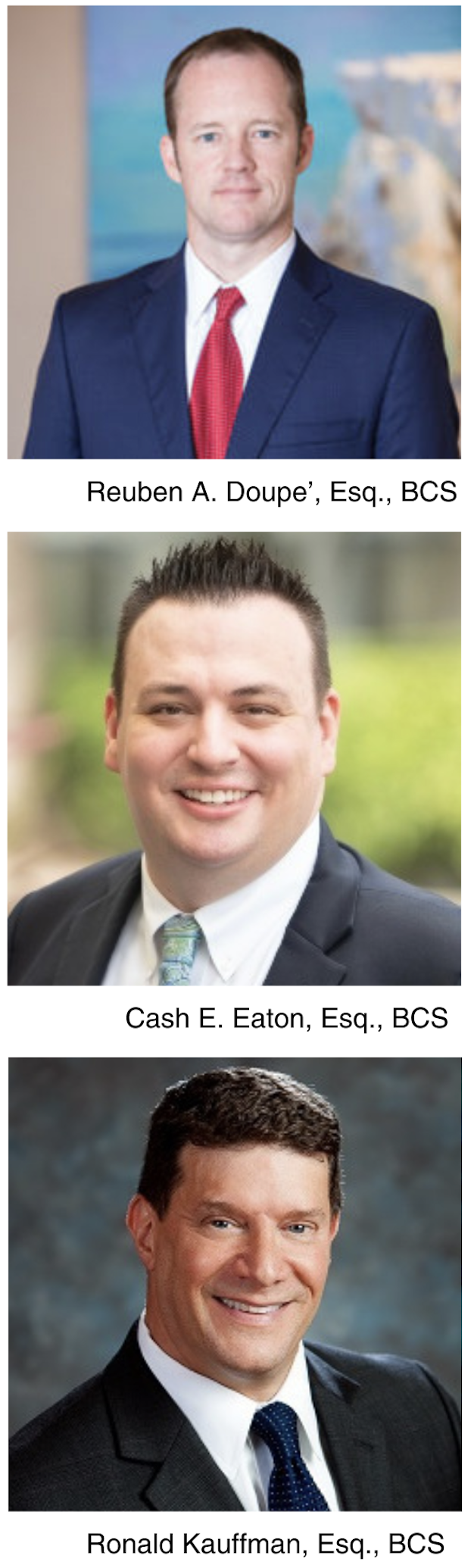
By Reuben A. Doupé, Esq., BCS
While this decision is of a criminal case, the ruling is applicable to all trial courts. The issue addressed herein is the legal impact of taking judicial notice of the court file. In nearly every trial, one attorney or the other starts by asking the judge to take judicial notice of the court file, and it is routinely granted without objection or comment. In Reaves, the Fourth District recognizes that hearsay may be in the file, and the question of whether the information is admissible is separate from whether judicial notice is proper.
“[T]he fact that a record may be judicially noticed does not render all that is in the record admissible.” Dufour v. State, 69 So.3d 235, 253-54 (Fla. 2011). Similarly, “documents contained in a court file, even if that entire court file is judicially noticed, are still subject to the same rules of evidence to which all evidence must adhere.” Stoll v. State, 762 So.2d 870, 877 (Fla. 2000).
Consider all of the things in a dissolution court file. There could be numerous motions filed, containing reems of unproven hearsay and unauthenticated attached exhibits. Practitioners should take care to do a couple of things 1) do your homework and only ask the trial court to take judicial notice of the items in the file that should be admitted (which would primarily be court orders); and 2) when defending this request, make sure you object to all hearsay and admissibility objections within the court file.
Carrasco v. Jimenez, 2025 WL 699035 (Fla. 4th DCA 2025)
By Cash A. Eaton, Esq.
The parties moved from Venezuela to Texas, where they had two children. Later, the Wife and children moved to Florida continuously residing in the United States. In April 2022, the wife petitioned for dissolution of the marriage with the trial court. The Husband moved to dismiss the wife’s petition claiming that the parties’ divorce was already adjudicated in Venezuela.
The Wife was unaware of the Venezuelan divorce. It was determined that the Wife’s notice of the Venezuelan proceedings was based on her “cousin” having been served in Venezuela and accepting service on her behalf. As such, the Wife’s petition for dissolution of marriage did not mention the Venezuelan divorce decree. Nevertheless, the Husband moved to dismiss the Wife’s petition on the basis of comity. The trial court granted the Husband’s motion to dismiss.
The Appellate Court overturned the dismissal. Florida law is unwavering in that motions to dismiss are meant to only address the sufficiency of a party’s pleadings. When evaluating the sufficiency of a party’s pleadings the trial court may NOT look beyond the four corners of the document. By considering the sufficiency of the Venezuelan divorce decree (which the wife’s petition did not acknowledge existed) the trial court looked beyond the plain language of the wife’s petition in granting dismissal, which constitutes reversible error.
Moreover, the Appellate Court determined that the trial court misapplied the rule of comity. It was clear that the Venezuelan court did not have personal jurisdiction over the Wife or UCCJEA jurisdiction of the minor children. A judgment or order of a foreign country is not entitled to comity if the parties were not given adequate notice and the opportunity to be heard and/or if the foreign court did not have jurisdiction.
Bechert v. Bechert o.b.o. O.B., (Fla. 4th DCA Apr. 9, 2025)
By Ronald H. Kauffman, Esq.
Four years after their divorce, a DV injunction was filed by the mother on behalf of their fourteen-year-old daughter. She alleged the father punched the daughter; grabbed her by the hair and sat on her and “squish[ed]” her head into the floor while sitting on top of her.
Father testified that they had just returned from a ski vacation. He searched her room and found marijuana, a pipe, and a vape pen. He announced he was taking her phone as punishment, but she refused to give it up, obviously. They “tussled” over it. The daughter snapped the father's finger back and broke it. The father refused to return the phone, and the daughter threw a metal thermos and an orange juice bottle. Father denied punching her, pulling her hair, or sitting on her. A neighbor testified he did not see any bruises or red marks. The mother testified she saw a bruise on the daughter's back, leg, and arm. The mother took pictures of the bruises. CPI testified there were “no indicators of mental or physical injury because the parties were deemed as mutual combatants.” The CPI observed “a little black and blue” on the daughter's shoulder and arm but no bruising or marks. The GAL testified it was a mutual combatant situation, and “absolutely 100 percent inappropriate.”
The trial court found there was competent substantial evidence that the daughter is in fear, and granted the injunction for six months. Father appealed. The 4th DCA reversed. The father's physical and verbal actions in taking away the daughter's cell phone was a form of physical discipline, not corporal punishment. Even if it was, it was not excessive punishment because the daughter refused to surrender the phone and there was no evidence of disfigurement or significant bruising.
| | Signature Annual Sponsors | | | | |