|
February 16, 2o26
Dear Members,
Happy Presidents Day. Today we recognize leadership, service, and vision — qualities that are deeply reflected in our own community. It feels especially fitting as we share several important updates and opportunities with you.
First, we are thrilled with the overwhelming response to this year’s awards nominations. Thank you to everyone who took the time to submit nominations, and a very special thank you to our Owner Members for your thoughtful feedback and participation. To all our associate members and friends, being recognized by your clients is one of the most meaningful ways to celebrate your accomplishments.
We will be sending a separate email tomorrow announcing all finalists — stay tuned!
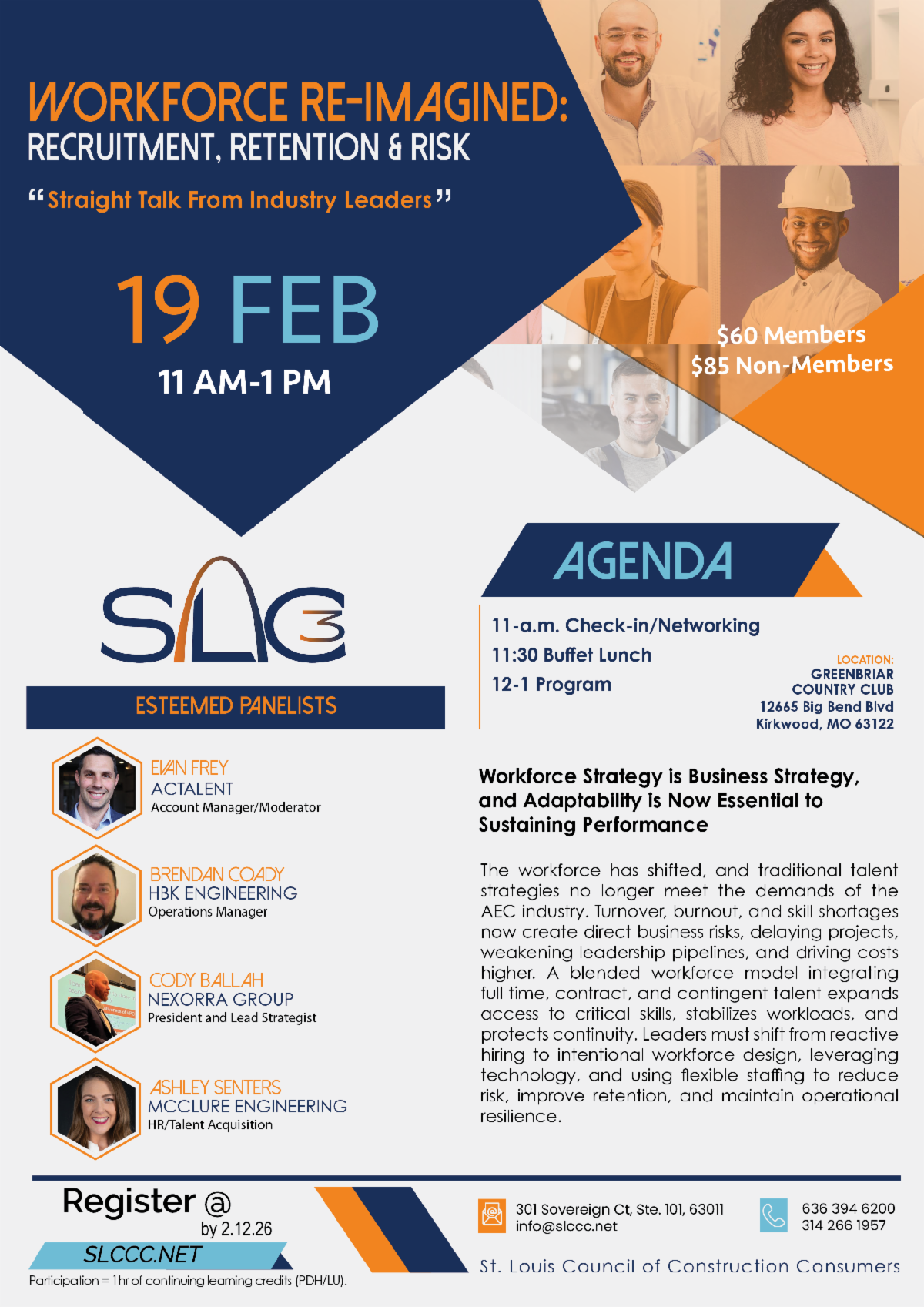
This is also the final call to register for our Workforce Program. Workforce development impacts every organization in our region, and this program delivers real insight, practical strategy, and continuing education credits. If you have not yet registered, now is the time.
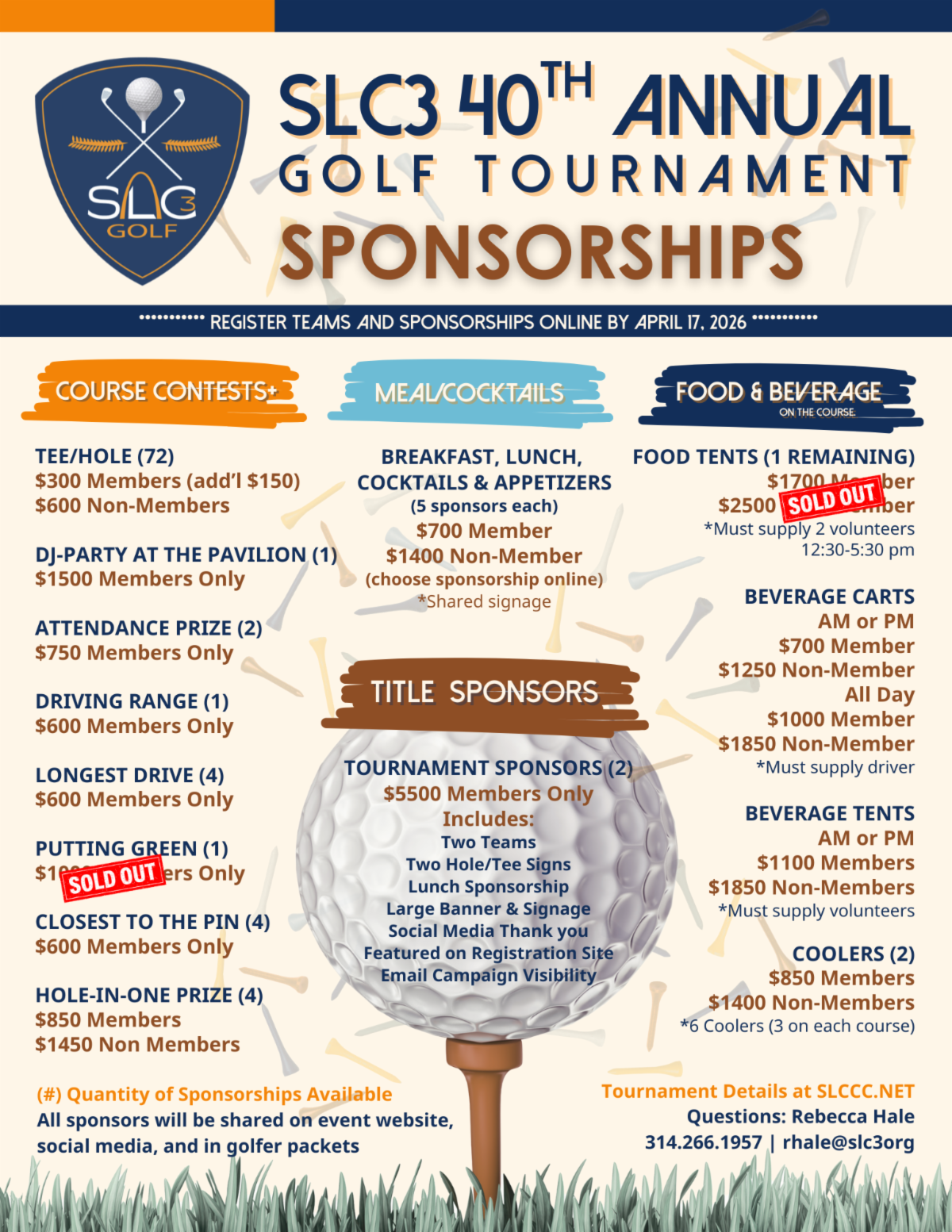
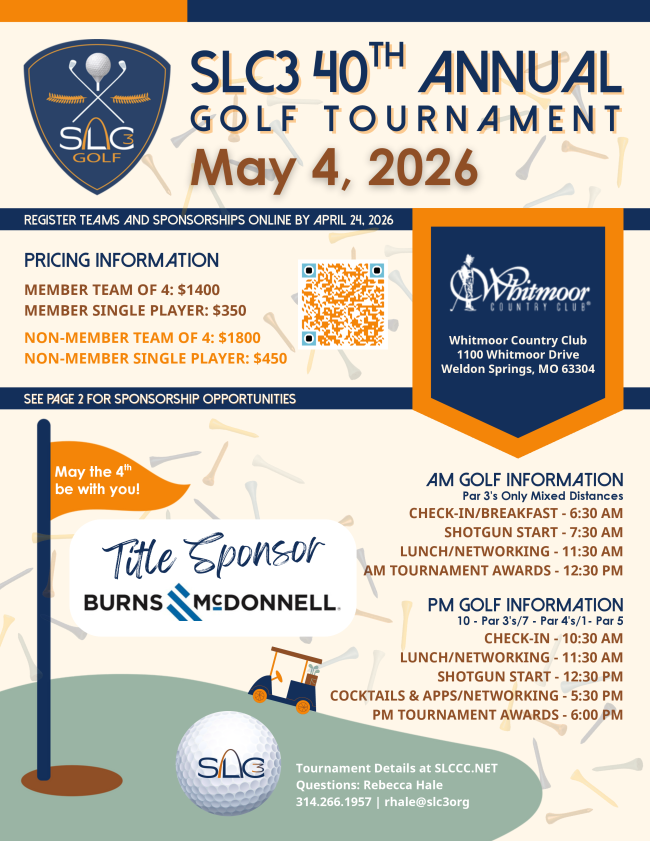
And mark your calendar — our Golf Tournament is May 4th. Popular sponsorships are nearly sold out, so secure yours as soon as possible. We are also filling golfer spots quickly, and registration is first-come, first-served for morning and afternoon preferences. In addition, we are excited to share that we will be hosting two awards events this year — more opportunities to celebrate excellence across our region.
Now, an important request.
Each week we provide valuable content, resources, and opportunities designed to strengthen and advance the AEC region. But our impact depends on you. If you believe in the value we provide, please share our content with your coworkers, leadership teams, and peers. Share our events.
Forward this newsletter. Our mission cannot be fulfilled with only the contacts in our database — it grows through your advocacy.
I have also heard conversations about owner participation. Our membership is diverse, and members engage in different ways based on their needs and priorities. We do have owners attending our events, and we also host specific owner-driven programming.
Many of our owner members prefer our educational offerings, particularly those that provide continuing education credits. If you primarily attend networking events, you may not encounter as many owners — but they are engaged, especially in our educational forums.
On behalf of the Board, I want to emphasize that our purpose is impact. We are committed to delivering high-quality programming, meaningful connections, and unmatched communications within our region. No other member organization provides the level of visibility and reach that we do. Supporting this newsletter and our programming is more than participation — it is smart PR, it is leadership, and it is an investment in the future of our industry.
If you value what we provide, take action:
Register. Sponsor. Attend. Share.
Together, we strengthen the AEC community and elevate our entire region.
With appreciation,
Kelly Jackson
Kelly Jackson
SLC3
|
|
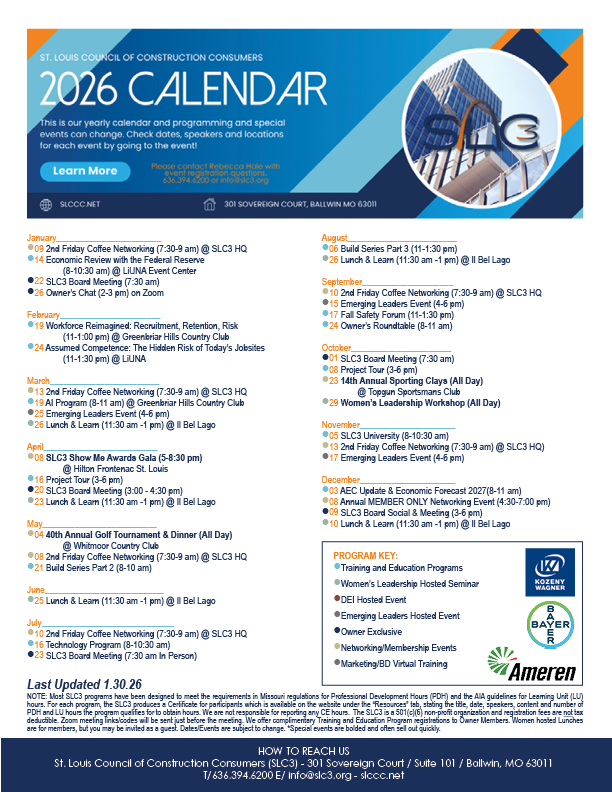
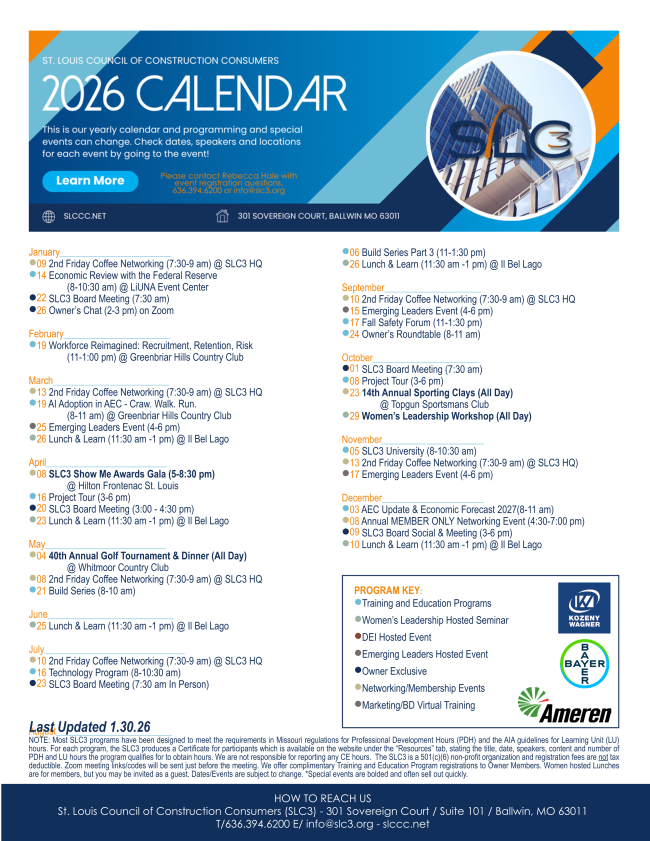
Mark Your Calendars – Exciting Events Ahead!
📅 FEBRUARY 19: Workforce Reimagined
(11:00 AM - 1:30 PM) @ Greenbriar Hills Country Club
RSVP HERE
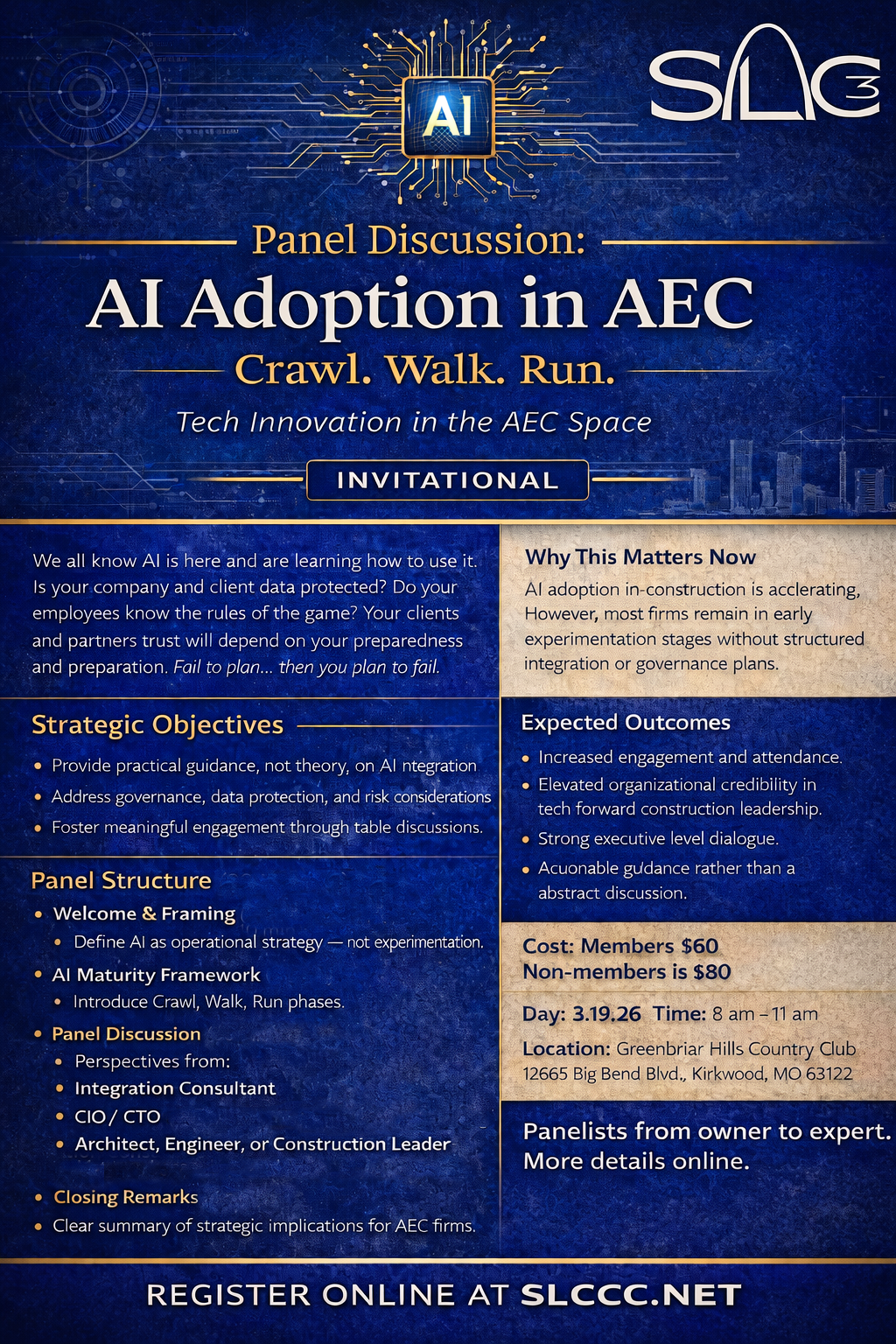
📅 MARCH 19: AI Adoption in AEC - Crawl. Walk. Run.
(8-11: 00 AM) @ Greenbriar Hills Country Club
RSVP HERE
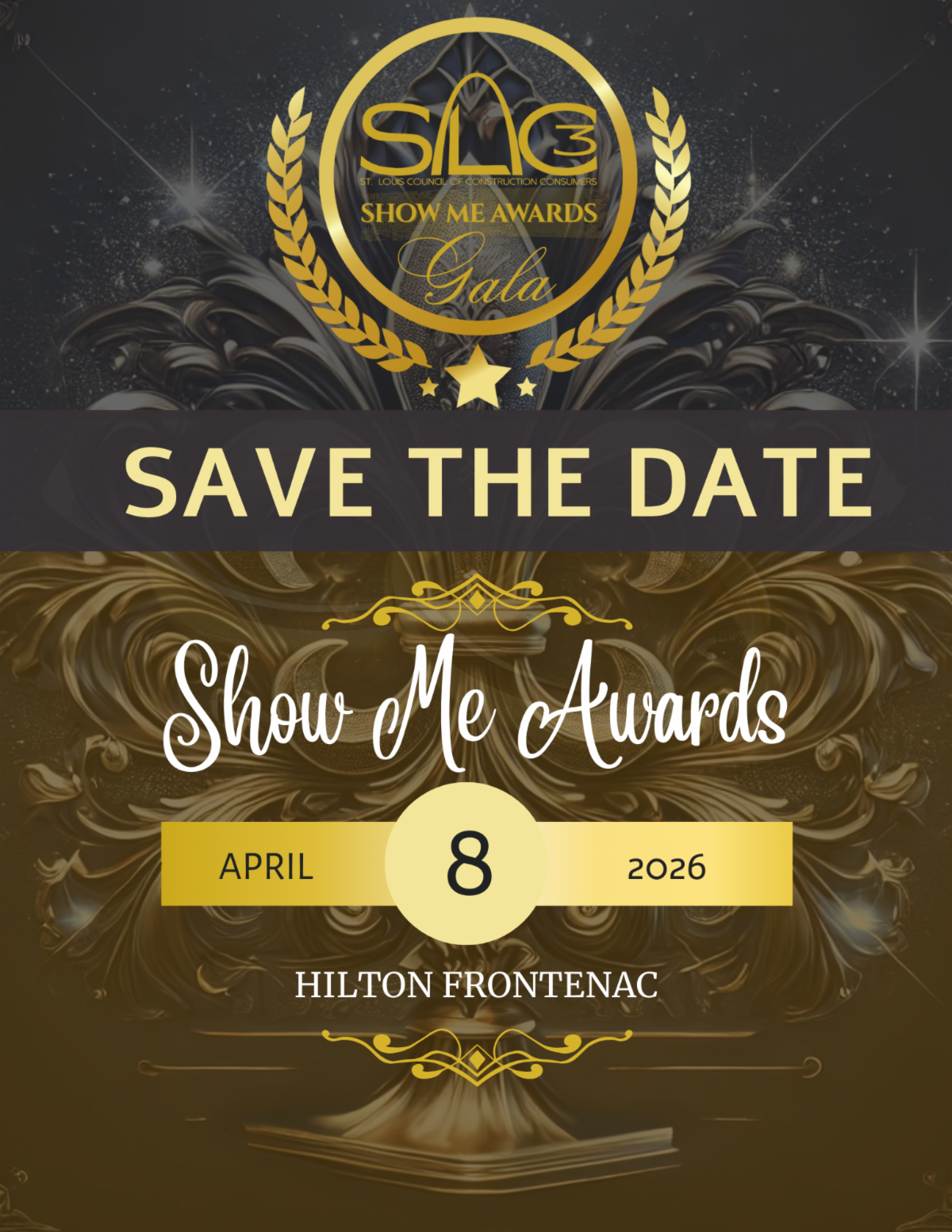
📅 April 8: AEC Show Me Awards Gala
(5:00 PM - 8:30 PM)@ Hilton Frontenac
📅 May 4: 40th Annual SLC3 Golf Tournament
(6:30 am-6:30 pm)Whitmoor Country Club
RSVP HERE
| |
INSIDE THIS ISSUE
News & Updates
Help Us Keep Current
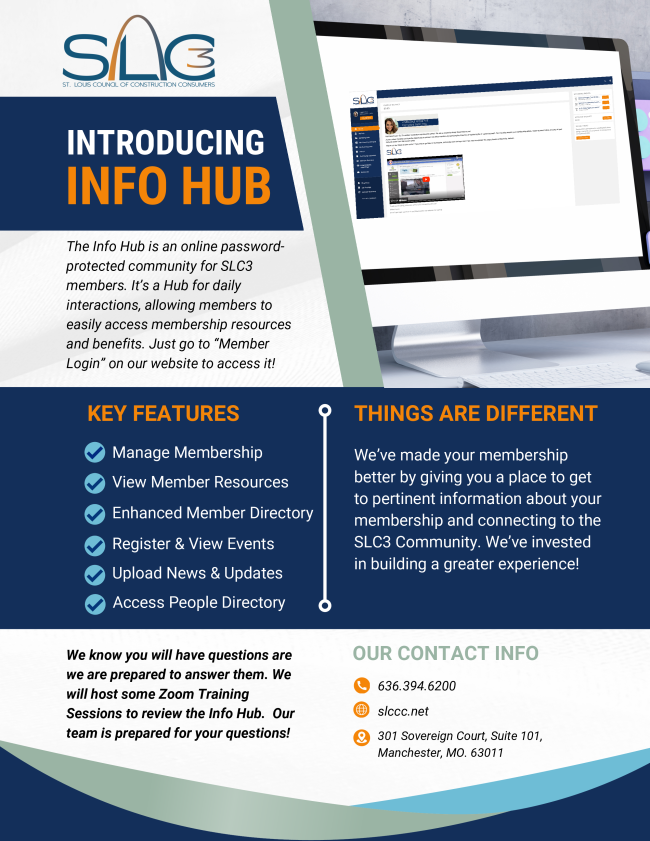
Updating You on InfoHub
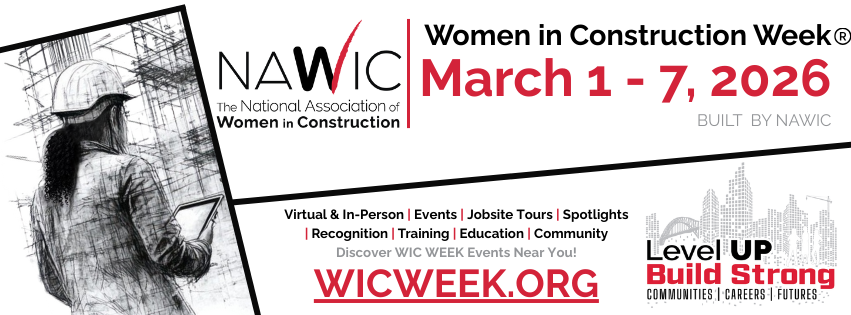
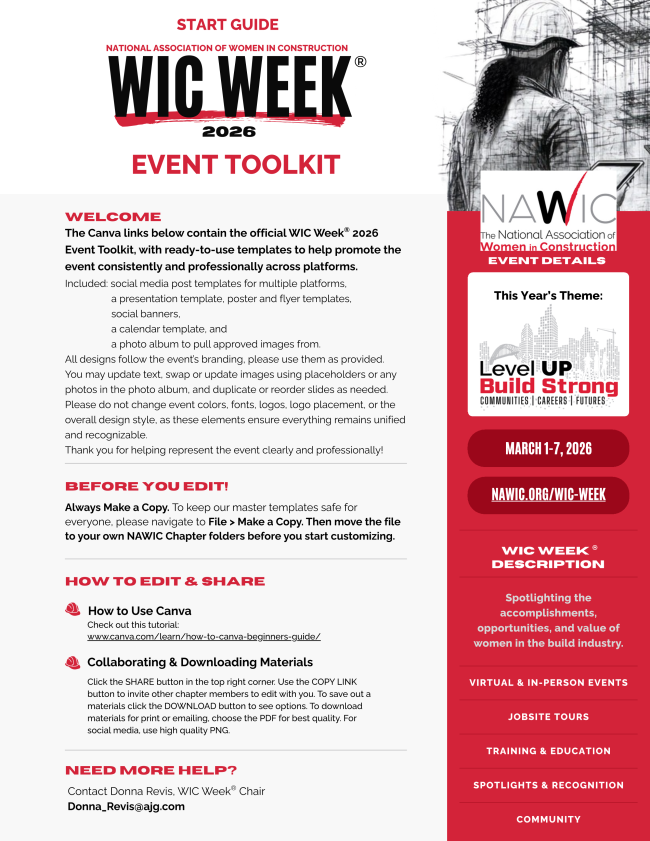
WIC: Women in Construction Week is Coming Up - 1 Month!
Training/Education
Time Management Isn’t Generational — It’s Behavioral
Building Equity: The Lasting Impact of Black Leaders in Design and Construction
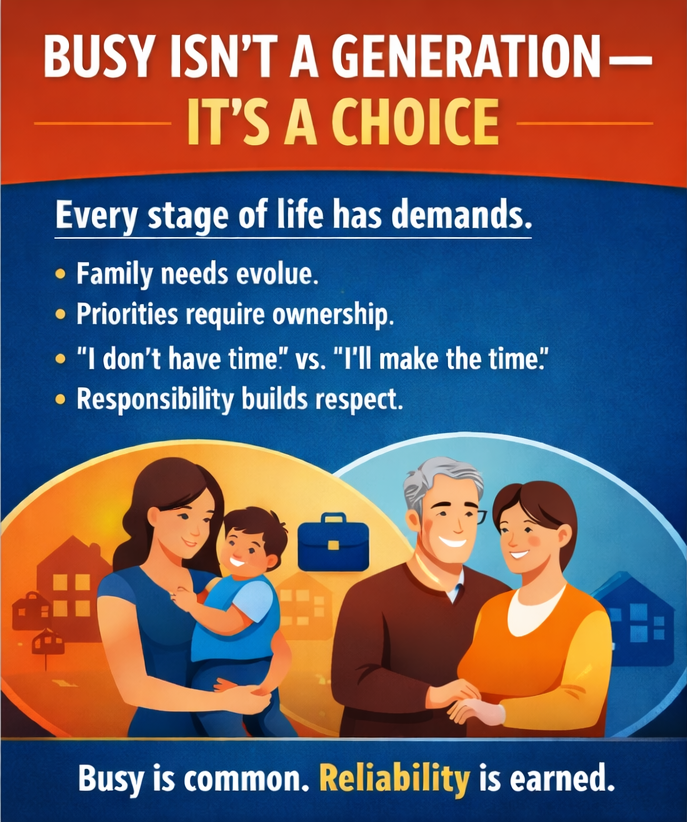
Busy Is Not a Generation: Time, Priorities, and Professional Accountability
10 Facts Facts
| | ARE YOU WANTING TO BE AN ANNUAL SPONSOR? | | Want to sponsor our newsletters? Contact us! 40-50% Open Rates! Great opportunity for visibility and showing support! | | UPCOMING PROGRAMS & EVENTS | | |
** LAST CHANCE! **
to Register
| | STAY TUNED! WE ARE BUSY ASSESSING ENTRIES! WE WILL ANNOUNCE FINALISTS 2.17! | |
GOLF REGISTRATION IS OPEN!
SPONSORSHIPS AVAILABLE TOO!
| | |
SLC3 40TH ANNUAL GOLF TOURNAMENT
*** REGISTRATION OPEN ***
| | LET'S GET YOUR KNOWLEDGE INCREASED | | For those who took the time to answer, we thank you! We believe the tool we felt would be so advantageous to you has not been received as expected. Although there is a lot of praise for its tools, it's still not overly understood. Join us as we help you navigate this significant resource. I will be sharing webinars here for you to review at your leisure to learn more about the tool. I will also schedule a Q&A. Stay tuned! In the meantime, if you have not logged in, we hope you will do that! And, fyi, the "Resources" tab is an asset to our members. Look at what you have there. We will continue to add unique resources to this section for members only. Soon, you will have access to not just a member directory but a regional contact directory! It's coming and it is again not available anywhere else. | | CALL FOR COMMITTEE MEMBERS? TIME TO HELP... | |
Much of the work we do is driven by member volunteers, and right now our committees could use a few more voices and helping hands. Committee service offers an opportunity to influence priorities, collaborate with peers, and support initiatives that impact the industry and our region. If you’re willing to get involved—even in a small way—we invite you to sign up.
info@slc3.org
| |
LET'S RECOGNIZE...
WOMEN IN CONSTRUCTION WEEK MARCH 1-7
| |
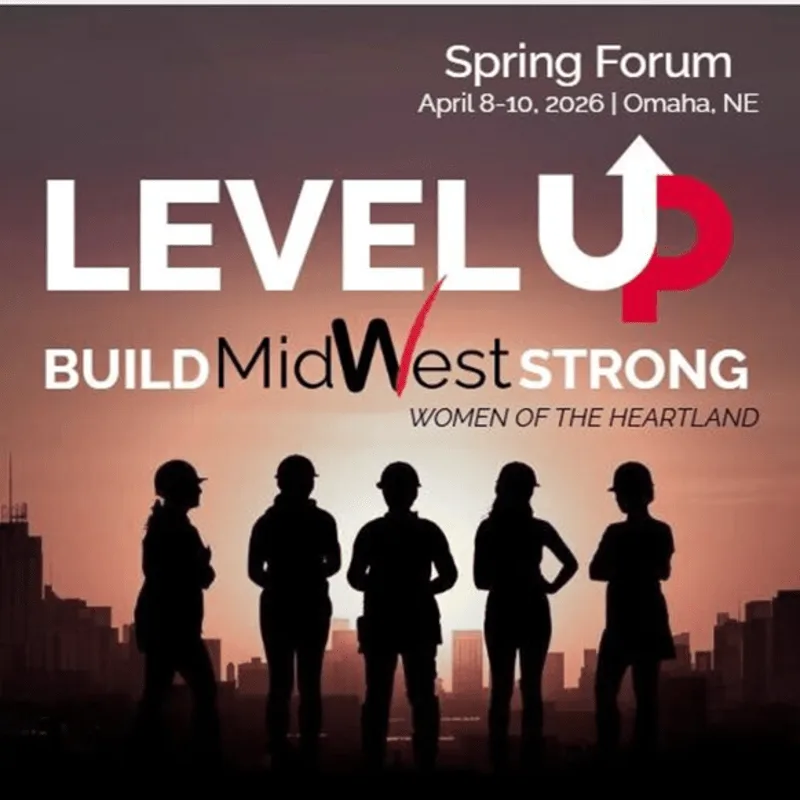
NAWIC - LEVEL UP Spring Forum
April 8-10, 2026 | Omaha, NE
Build MidWest Strong
| |
About the Event
This year’s theme — Level Up: Build Midwest Strong — celebrates the power, resilience, and growth of women across our region.
Get ready for an inspiring weekend of connection, learning, and empowerment. Stay tuned for registration details!
More Info
| | HELP US KEEP THE PICTURE CURRENT | | |
The construction and development landscape across the region continues to move quickly—and keeping our information accurate and relevant matters.
We’ve recently updated our construction and development listings to reflect new projects, changes in scope, and activity across the greater St. Louis area. These updates help ensure that our members have access to timely, useful insight into what’s being built, redeveloped, and planned throughout the region.
That said, no one has a better pulse on what’s happening than the people working in it every day. If you’re aware of a project that’s underway, planned, or evolving—or if you notice something that needs to be updated—we invite you to share it with us. Your input helps strengthen the resource for everyone.
Keeping this information current is a collaborative effort, and we appreciate your help in making it as accurate and valuable as possible.
| | |
Have something to share? Reach out anytime—we’re always glad to hear from you.
| | |
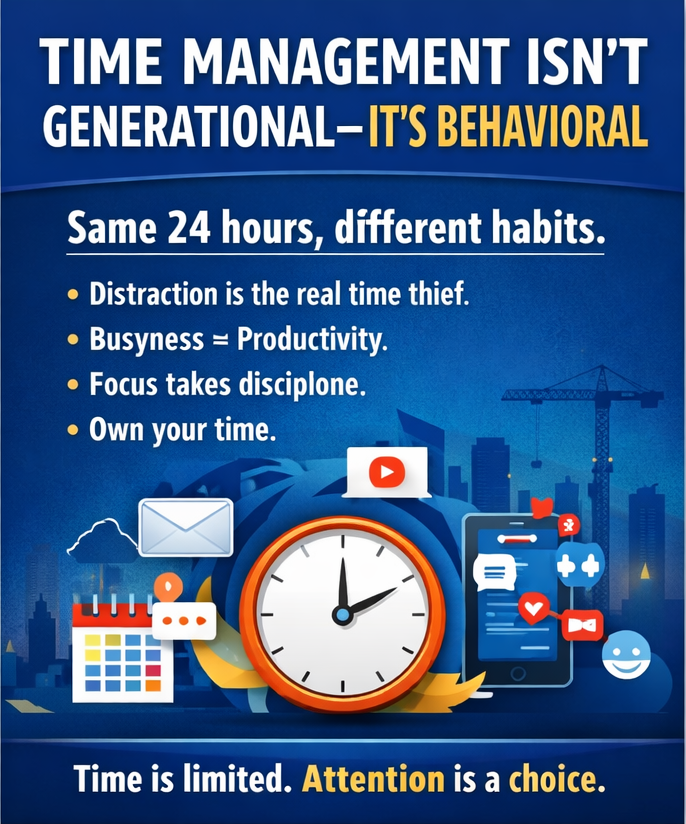
Time Management Isn’t Generational — It’s Behavioral
In today’s workplace, particularly in design and construction, one complaint is increasingly common:
“There just aren’t enough hours in the day.”
You hear it from project managers juggling RFIs and site visits. From designers facing compressed schedules. From field teams coordinating trades. And yes, often from younger professionals who feel overwhelmed by competing demands.
But here’s the truth: every generation has had the same 24 hours.
Baby Boomers built careers without smartphones.
Gen X managed projects before cloud-based collaboration.
Millennials and Gen Z operate in a hyper-connected world.
Time hasn’t changed.
How we use it has.
The Real Issue: Attention Fragmentation
In previous decades, workdays were structured around focused blocks of time:
- Phone calls were returned at set times.
- Meetings were scheduled in advance.
- Documents required physical delivery or deliberate review.
- The office door, quite literally, could close.
Today, attention is constantly interrupted:
- Email notifications
- Messaging platforms
- Project management software alerts
- Social media
- Text messages
- Group chats
- Industry news feeds
The modern professional doesn’t have less time — they have less uninterrupted time.
And that fragmentation carries a cost.
Studies consistently show that after an interruption, it can take 20–25 minutes to regain full focus. Multiply that by dozens of daily distractions, and the productivity drain becomes obvious.
Busyness vs. Productivity
In construction and design, being busy is often worn like a badge of honor.
But busyness is not the same as productivity.
Answering 80 emails isn’t the same as resolving a scope issue.
Attending six meetings isn’t the same as moving a project forward.
Constant communication isn’t the same as strategic decision-making.
Earlier generations were not necessarily “less busy.” They simply had fewer digital distractions competing for their time.
The modern challenge is not workload — it’s discipline.
Technology: Tool or Time Thief?
The same tools that make today’s professionals more connected can also make them less efficient.
Consider:
- Checking email every five minutes.
- Responding instantly to non-urgent messages.
- Scrolling industry updates during work hours.
- Participating in meetings that could have been a two-sentence email.
Technology increases capability. It does not automatically improve time management.
In fact, without boundaries, it reduces it.
What Effective Time Management Looks Like Today
Time management in 2026 requires intentional control over attention.
That applies to every generation.
Strong time managers:
- Block uninterrupted focus time.
- Schedule email responses instead of reacting instantly.
- Decline unnecessary meetings.
- Prioritize high-impact work over low-value tasks.
- Separate “urgent” from “important.”
- Protect mornings for deep work whenever possible.
These are learned behaviors — not generational traits.
| | |
The Construction Industry Reality
Design and construction operate on deadlines that don’t move. Concrete cures when it cures. Permits take as long as they take. Subcontractors arrive when scheduled.
Complaining about time doesn’t change project schedules.
What does change outcomes is:
- Structured planning
- Delegation
- Clear communication
- Eliminating avoidable distractions
- Owning responsibility for focus
Blaming generational differences doesn’t improve performance.
Building stronger habits does.
A Shared Opportunity
Instead of framing time management as a generational divide, the industry has an opportunity to create cross-generational mentorship around productivity.
Experienced professionals can model:
- Decisiveness
- Prioritization
- Boundary-setting
- Accountability
Younger professionals often bring:
- Technical fluency
- Process automation skills
- Efficiency tools
- Collaborative technology knowledge
When combined, these strengths create high-performing teams.
The Bottom Line
No generation has less time.
But modern professionals do face more distractions.
Time management is not about age. It’s about ownership.
The question isn’t, “Why don’t we have enough time?”
The question is, “Where is our attention going?”
In design and construction — where margins are tight and schedules matter — that distinction makes all the difference.
| |
Building Equity: The Lasting Impact of Black Leaders in Design and Construction
Black History Month offers more than a moment of reflection—it presents an opportunity for the design and construction industry to recognize the individuals who have shaped our built environment while advancing equity, innovation, and opportunity within the profession.
From architecture and engineering to construction management and development, Black leaders have made lasting contributions to the industry—often while overcoming significant structural barriers. Their impact continues to influence how we design, build, and think about the communities we serve.
Designing Beyond Barriers
The history of Black professionals in architecture and construction is rooted in perseverance.
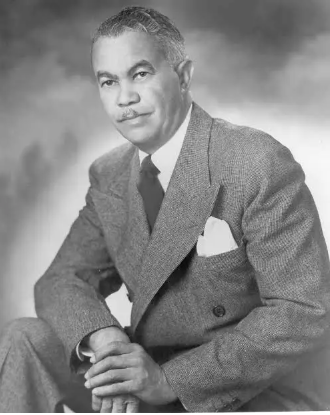
In 1923, Paul R. Williams became the first Black member of the American Institute of Architects (AIA). Over his career, he designed more than 3,000 buildings, including public institutions, residences, and commercial projects across the United States. Working in an era defined by segregation, Williams developed the habit of drawing upside down so clients uncomfortable sitting beside a Black architect could still view his designs across the table. His technical skill and adaptability allowed him to reshape expectations in both design and business.
Williams’ legacy extends beyond architecture—it represents resilience within a system not built to accommodate diversity. Today, his career remains a reminder that talent and innovation thrive when barriers are removed.
Building Opportunity Through Construction Leadership
Construction has long been a pathway to economic mobility. Yet minority representation among licensed contractors, developers, and executive leadership roles remains disproportionately low compared to the broader workforce.
Black-owned construction firms have played a critical role in:
- Community-based development
- Workforce training and apprenticeship programs
- Local economic reinvestment
- Infrastructure delivery in underserved areas
Many of today’s Black construction executives are not only delivering complex projects—they are mentoring emerging professionals, advocating for supplier diversity, and pushing for more inclusive procurement practices.
For firms navigating public-private partnerships, infrastructure funding, or community development initiatives, supplier diversity is no longer a symbolic commitment—it is increasingly a competitive differentiator.
The Built Environment and Social Impact
The design and construction industry directly shapes quality of life. Housing access, transportation infrastructure, public space design, and healthcare facilities all influence equity outcomes.
Black architects, planners, engineers, and developers have often led work that centers community voice—prioritizing:
- Affordable housing design
- Culturally responsive planning
- Adaptive reuse in historically underinvested neighborhoods
- Transit-oriented development
- Resilient infrastructure in vulnerable communities
These projects are not just socially responsible—they are strategically aligned with ESG goals, municipal funding priorities, and long-term urban growth strategies.
For industry leaders, understanding this intersection between equity and the built environment is increasingly essential to winning work and building lasting impact.
Workforce Development: The Industry’s Shared Responsibility
The construction industry continues to face workforce shortages across trades, project management, and technical design roles. Expanding access to underrepresented communities is not simply a diversity initiative—it is a workforce sustainability strategy.
Programs that partner with:
- HBCUs (Historically Black Colleges and Universities)
- Community colleges
- Trade schools
- Apprenticeship networks
- Youth mentorship organizations are helping close talent gaps while broadening the pipeline.
Companies that actively invest in mentorship, internships, and leadership pathways are better positioned to compete in a tight labor market.
| | |
Moving From Recognition to Action
Black History Month is an opportunity not only to celebrate historic figures but to examine how the industry can move forward.
Consider these questions:
- Are we expanding access to leadership roles within our firms?
- Are procurement policies supporting diverse contractors and suppliers?
- Are we investing in long-term workforce development partnerships?
- Does our project portfolio reflect the communities we serve?
The built environment tells the story of who we prioritize. As designers, builders, and developers, we have the ability—and responsibility—to shape spaces that are inclusive, resilient, and economically empowering.
Looking Ahead
The future of design and construction depends on innovation, collaboration, and expanded opportunity. Recognizing the contributions of Black professionals—past and present—strengthens the industry as a whole.
Black History Month reminds us that progress in the built environment has always been driven by those willing to challenge limitations and build something better.
As an industry, we are still building that future.
| | Busy Is Not a Generation: Time, Priorities, and Professional Accountability | | |
In administrative, marketing, and sales roles within the design and construction industry, one phrase has become increasingly common:
“I just don’t have the time.”
It’s often followed by legitimate reasons — young children, school schedules, activities, family responsibilities.
Those pressures are real.
But they’re not new.
The Myth of the Unique Work-Life Struggle
Each generation sometimes believes its challenges are unprecedented. Today’s professionals balancing work and young families may feel uniquely stretched.
Yet Gen X professionals often find themselves managing:
- Aging parents or in-laws
- Adult children navigating early careers
- College tuition
- Health-related family obligations
- Grandchildren
- Peak-career responsibilities
Many are part of the “sandwich generation,” supporting both older and younger family members simultaneously — while holding senior roles with higher expectations.
The demands didn’t disappear. They shifted.
The difference is not who has more pressure.
The difference is how those pressures are framed in the workplace.
Professional Roles Require Reliability
In design and construction, administrative, marketing, and sales teams are not peripheral — they are operational drivers.
- Proposals have deadlines.
- Client communications require responsiveness.
- Contracts must be processed.
- Invoices must go out.
- Pursuits are won or lost on coordination.
When internal colleagues hear, “I don’t have time,” what they often interpret is:
“This isn’t a priority.”
That perception — whether fair or not — can erode trust.
The Real Conversation: Boundaries and Ownership
Work-life balance is essential. Flexibility matters. Family responsibilities deserve respect.
But professionalism requires something equally important: ownership.
Experienced professionals often develop habits such as:
- Blocking non-negotiable work time.
- Setting clear expectations on response windows.
- Avoiding overcommitment.
- Communicating constraints early — not at the deadline.
- Separating “can’t” from “won’t.”
Saying “I can’t do that by 3 p.m., but I can deliver it by 10 a.m. tomorrow” is different from “I don’t have time.”
One signals responsibility.
The other signals deflection.
Time Is Finite for Everyone
No generation has had uninterrupted careers free from family strain.
Previous decades included:
- Limited parental leave policies.
- Less workplace flexibility.
- Fewer remote options.
- Longer in-office expectations.
- Minimal technological efficiencies.
Today’s workforce benefits from greater flexibility — remote work, hybrid schedules, digital collaboration tools — but also faces constant connectivity and blurred boundaries.
The pressure is different, not greater.
| | |
What High-Performing Teams Do Differently
Across generations, high-performing administrative and marketing teams share similar traits:
- They understand business impact.
- They prioritize revenue-driving work.
- They communicate proactively.
- They manage expectations clearly.
- They avoid using personal circumstances as a default explanation.
This doesn’t mean ignoring family.
It means integrating responsibility with clarity.
In many cases, seasoned professionals have learned that if something is important enough — to the company, the client, or the team — time is made.
Not because they have fewer obligations.
But because they manage them differently.
A Call for Mutual Respect
This is not a generational critique.
Younger professionals deserve flexibility.
Mid-career professionals deserve understanding.
Senior professionals deserve acknowledgment of their invisible responsibilities.
The opportunity lies in shared accountability:
- Respect personal boundaries.
- Avoid competitive “who’s busier” narratives.
- Replace “I don’t have time” with clear commitments.
- Recognize that everyone is balancing something.
In a relationship-driven industry like design and construction, responsiveness and reliability build credibility.
And credibility — more than busyness — drives long-term success.
The Bottom Line
Family responsibilities evolve.
Career expectations evolve.
Workplace structures evolve.
Time does not.
Every generation is managing competing demands. The professionals who thrive are not those with fewer obligations — but those who take ownership of their priorities.
Because in the end, “busy” is universal.
| | Let's be sure to welcome our newest members! We look forward to partnering with you! | |  | |
SLC3 2026 Officers:
Michael Hargrave (BJC Health) - President
Vince Nutt, (BJC Health)- 1st Vice President
Mark Flannery (Bayer), 2nd Vice President
Rich Unverferth (MSD), Secretary
Danielle Thomas (Hazelwood SD), Treasurer
Frank Niemerg (Ameren), Immediate Past President
Kelly Jackson, Executive Director
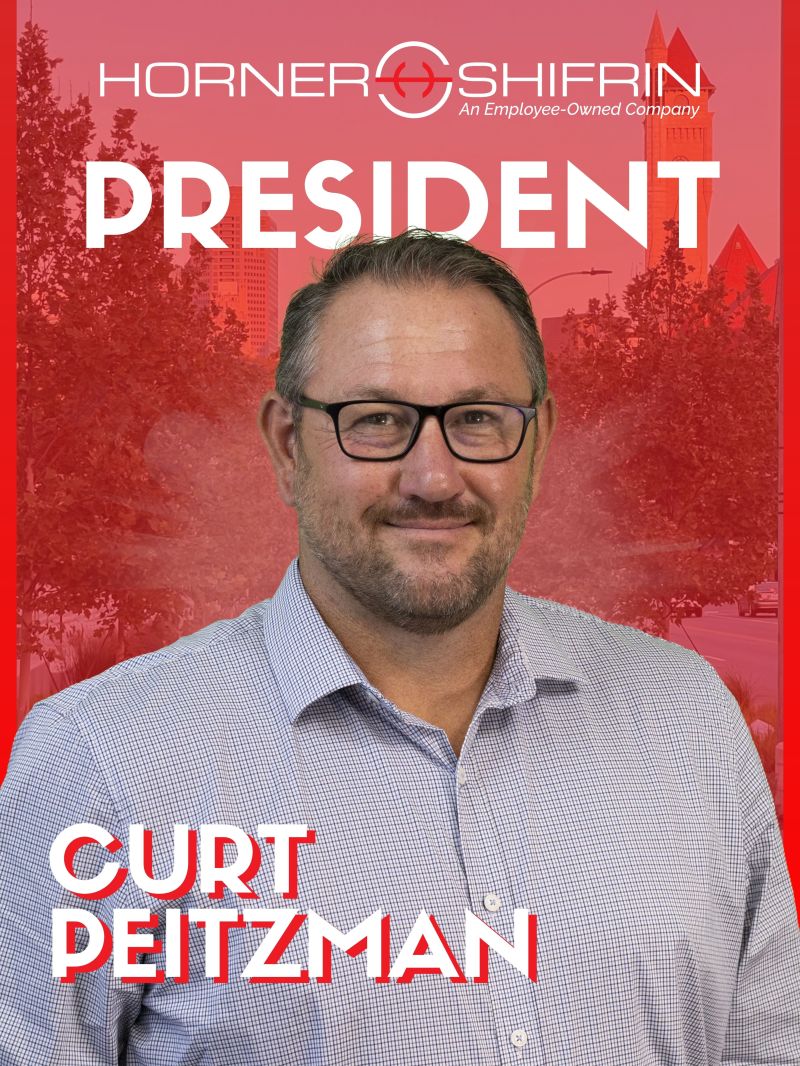
| DON'T FORGET: If you are a member of the SLC3 you can access all our members in the InfoHub. Make sure to login and regularly check it out! | If you are considering joining us, contact Kelly Jackson about Membership. Don't miss our member-only activities and perks! | | SEND US YOUR COMPANY UPDATES! | | Curt Peitzman announced as President of Horner & Shifrin | |
Horner & Shifrin is proud to announce that Curt Peitzman has been named President of the firm.
Curt’s leadership and dedication have played a vital role in the firm’s growth and continued success. His commitment to serving clients, supporting communities, and strengthening their team has helped shape who they are today.
| |
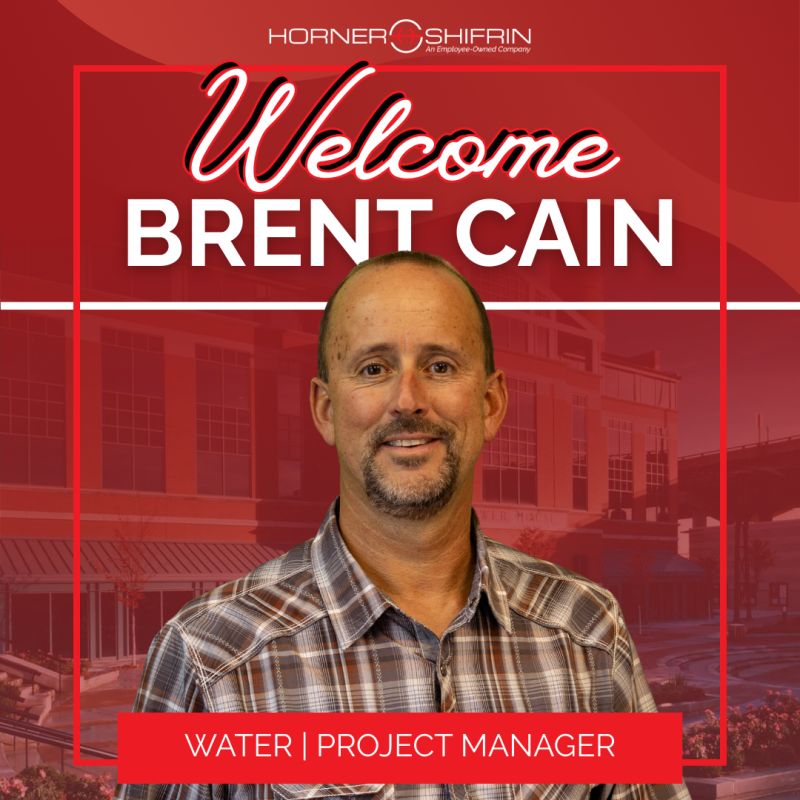
BRENT CAIN
Water | Project Manager
| Horner & Shifrin is excited to welcome Brent Cain to SLC3 as a Project Manager in our Water group. With more than 25 years of leadership experience in water and wastewater management, Brent brings deep industry expertise, practical insight, and a strong commitment to delivering successful outcomes for our clients and communities. | | Ramon Ligabo De Abreu has been promoted to Vice President of Operations at LUZCO Technologies | |
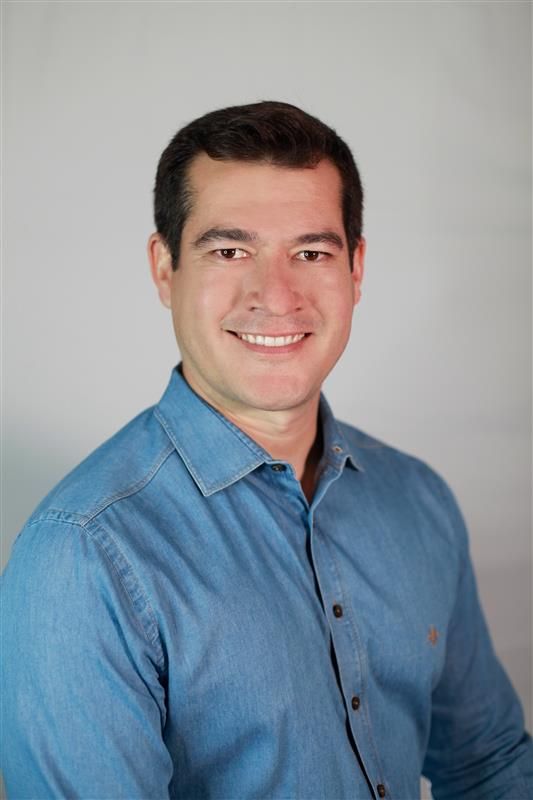
RAMON LIBAGO DE ABREU
Vice President of Operations
| Since joining the company in its early days as a Project Management Analyst, Ramon has grown with the organization, helping build the systems and structure that enable LUZCO to scale and deliver consistently to clients. Known for his continuous improvement expertise and people-first leadership, he has fostered a culture of accountability, trust, and ownership within Operations. Congratulations to Ramon on this well-deserved promotion. | |
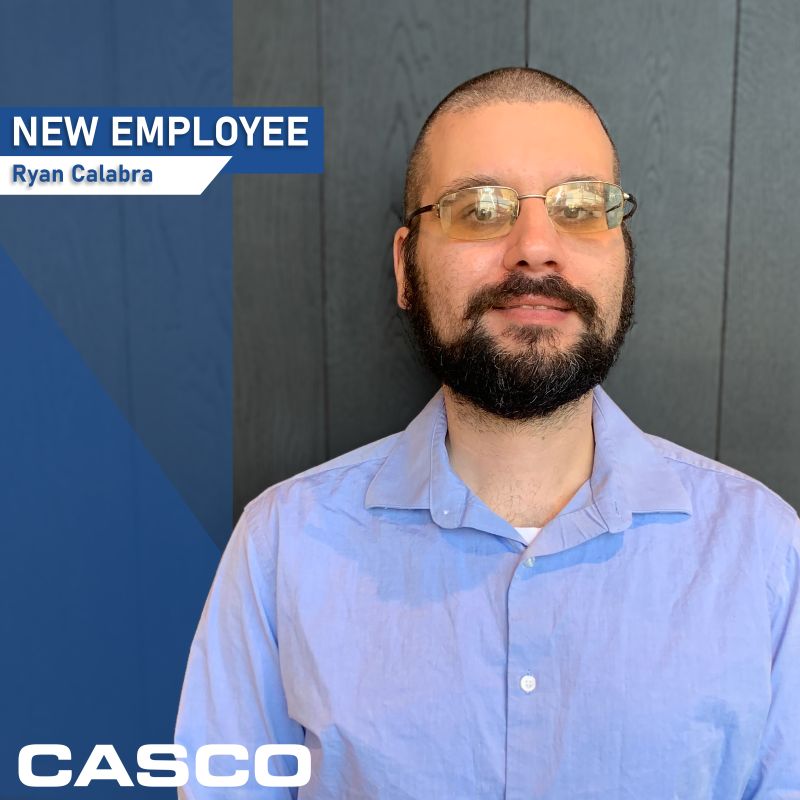
RYAN CALABRA
Mechanical Designer
| CASCO Architecture and Engineering welcomes a new Mechanical Designer to their team - Ryan Calabra! Ryan received his Bachelor of Science in Mechanical Engineering from Southern Illinois University Edwardsville and has 8 years of experience as a design engineer. | | |
BRONZE SPONSORS
(WE SHOULD HAVE MORE SPONSORS HERE????)
| |
SEND US YOUR JOB POSTINGS!
YES, THEY DO GET LOTS OF CLICKS!
| | |
St. Louis Council of Construction Consumers
301 Sovereign Ct, Suite 101, Ballwin, MO 63011
636.394.6200 | info@slccc.net | slccc.net
Staff:
Kelly Jackson // Executive Director
Rebecca Hale // Event & Office Manager
| | CONNECT, INTERACT & SHARE WITH US! | | Please note unsubscribing from this communication will unsubscribe you from ALL communications from the SLC3. | | | | |