animated hands in a circle pointing to words surrounding the theme of culture: traditions, heritage, ethnicity

ACCESS CULTURE - Vol. 2-2022

June 19th, "Juneteenth," commemorates the emancipation of enslaved African-Americans. On January 1, 1863, President Abraham Lincoln issued the Emancipation Proclamation, which freed all but a portion of the nation’s four million enslaved African Americans residing in Confederate-controlled territories. Areas already under Union control were exempt, along with several other states, including: Delaware, Kentucky, Maryland, and Missouri, thereby requiring action at the state level in those states to eradicate slavery. Of those enslaved people who were granted emancipation by President Lincoln’s January 1, 1863 edict, many were not immediately made aware that they were free and thus remained enslaved well beyond January 1, 1863. With limited technology and resources—along with uncooperative enslavers and Confederate sympathizers— news traveled slowly to enslaved people. On June 19, 1865, 2,000 Union soldiers arrived in Texas, the westernmost Confederate state, to announce that the state’s approximately 250,000 enslaved people were freed two years prior by the Emancipation Proclamation.


Juneteenth has become more popularly recognized across the nation and among different races over the last few years. Last year, Juneteenth became a federally recognized holiday. However, the holiday has long been celebrated by many in the Black community as a teaching moment, a moment of reflection, and a time to celebrate Black American culture. It is not uncommon for African American-led organizations to host parades or large gatherings on this day, and for people to attend small barbecues or cookouts with their loved ones, at which traditional foods are often prepared and served. Locally, Saginaw has held Juneteenth celebrations for many years and Midland hosted it first celebration earlier this month.

juneteenth menu show pictures of various foods popular at Juneteenth Celebrations

Click the image to read more about the rich history of

traditional Juneteenth celebration menus.

A DIFFERENT JUNETEENTH PERSPECTIVE


As we prepare to celebrate Independence Day this week, it seems altogether fitting and proper to consider the meaning on independence and how the experience of independence may differ greatly among societal groups and personal backgrounds.


As we discuss complicated topics like intersectionality, it also seems fitting and proper to consider Juneteenth from the perspective of slaves with disabilities, if such a perspective has survived over time. 

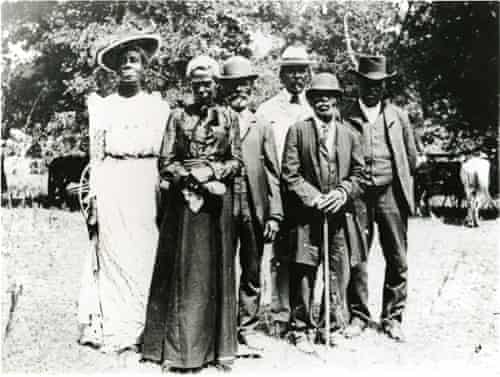
black and white photo of slaves with disabilities

In his essay, "The Continuation of Slavery: The Experience of Disabled Slaves During Emancipation," Dr. Jim Downs examines this perspective in detail. He remarks:


"the story of emancipation has often been told in terms of how freed slaves strove toward ideas of free labor, and how their labor exemplified their independence and political will. Yet, when raising the question of what was the experience of disabled slaves during the Civil War and Reconstruction—a population of people that could not work independently because of their physical condition—a different narrative about emancipation emerges. In this version, labor was not the battle ground where one proved his independence, but rather the shackle that prohibited disabled slaves from escaping the plantations of the South."


CLICK HERE TO READ THE

FULL ARTICLE BY DR. DOWNS


(Editor's Note: Seriously, it's a great article and

well worth your time.)


Without taking away from the celebratory aspect of this holiday, I think it is at least worthy of our time to reconsider "freedom," what it means, and for whom it was meant. Slaves with disabilities were not gifted freedom by the Emancipation Proclamation, nor by the military's June 19th decree. Because they were viewed as unable to work, they were returned to the plantations or, in many cases, sent to asylums. Their struggle for independence, already mired by the hell of enslavement, continued under the shackles of institutionalization.


As Dr. Downs observes: "The experience of disabled slaves challenges our understanding of freedom. Forced to remain in slavery during emancipation and then placed against their will in makeshift almshouses and asylums, which often depended upon their labor, disabled slaves' experiences during Reconstruction, a period of great political promise and opportunity, were limited and dismal. Disabled freed slaves were, in many ways, placed from one institution to the next."


And as we all know, it would not be until July 26, 1990 before that institution's "shameful wall of exclusion" would finally come tumbling down.

Disability symbols for blind, deaf, cognitive, and physical disabilities
map of michigan with service area counties selected: alcona, arenac, bay, clare, gladwin, gratiot, iosco, isabella, midland, ogemaw, roscommon, and saginaw


DISABILITY NETWORK OF MID-MICHIGAN

800-782-4160 | www.dnmm.org

 
Facebook  Twitter  Instagram