|
Anna May Wong
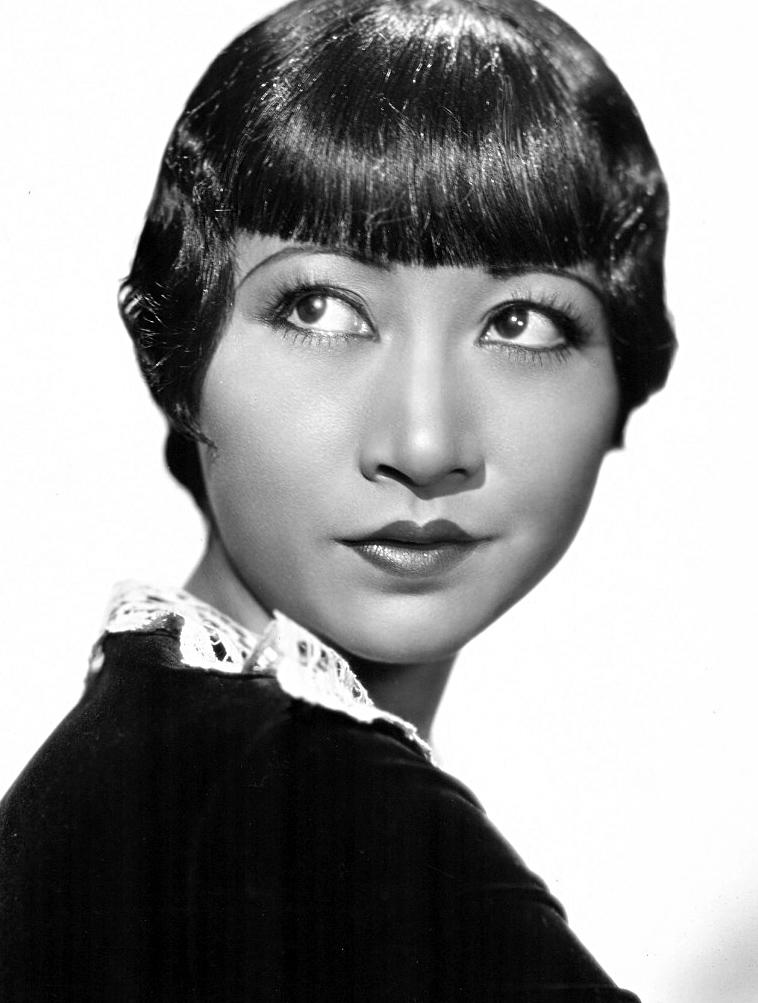
The first Chinese-American movie star, Anna May Wong spent her life struggling against prevailing attitudes and discrimination. Frequently cast stereotypically as either a delicate victim or a menacing "dragon lady," Wong did land a huge role in The Thief of Bagdad (1924) alongside Douglas Fairbanks, but struggled to find leading roles since the law prohibited her kissing a co-star of a different race.
Understandably frustrated by the prejudices of Hollywood, Wong left for Europe. “I was so tired of the parts I had to play. Why is it that the screen Chinese is nearly always the villain of the piece, and so cruel a villain—murderous, treacherous, a snake in the grass? We are not like that," she said.
While in Europe she befriended Marlene Dietrich and received the acclaim long denied her in America with such films as Shanghai Express in 1932. Upon returning to America in 1937, she suffered a major public blow when she was passed over for The Good Earth in favor of white actress Luise Rainer in Asian-inspired makeup, and encountered animosity from white as well as Chinese audiences. Rainer ended up winning the Oscar for Best Actress – an achievement considered by some to be one of the worst affronts in Hollywood history.
Wong did go on to start her own production company, star in her own TV show and film a major documentary about her travels in China, but unfortunately, Wong died of a heart attack on 1961, bringing an abrupt end to a tumultuous career.
Wong has since been immortalized with a star on the Hollywood Walk of Fame and in a sculpture as one of four pioneering "Ladies of Hollywood." She never received her fair due as a cinematic and pop cultural icon, but, decades later, critics and fans alike began to reclaim her hugely deserved legacy as a gifted actress whose jaw-dropping resilience in the face of an unsympathetic and racist world and industry, was matched only by her enormous artistic talent.
|