League Logo.jpg

2025-2026 Legislative Bulletin

August 4, 2025

In this edition of the League's Legislative Bulletin, you'll find:

1. Legislative Agenda in Action on Transit Funding

2. NLC Joins the League at Chief Executives Event

3. Recently Introduced Legislation of Municipal Importance

4. Agency Anecdotes on Comment Periods and More

5. Special Deal for League Fall Conference Registration

6. Reading Room - Policy Forum Analysis of the 2025-2027 Budget 

League Legislative Agenda in Action


The League’s 2025-2026 Legislative Agenda, supplemented by our 2025-2027 Budget Talking Points, touch on a myriad of issues important to Wisconsin’s municipal leaders. One of the topics of concern expressed by League members relates to the funding of transit services. Your League Government Affairs Team listened and recent action in the state budget puts our Legislative Agenda in action.


Wisconsin is home to 79 transit systems, including one in Tier A-1, one in Tier A-2, 26 in Tier B, and 51 in Tier C. While transit systems across all tiers have faced funding troubles in recent years, the impact can be devastating in Tier C communities which serve populations under 50,000. If transit is eliminated in these municipalities, the impact is heavily felt due to a lack of other options for transportation needs. The unavailability of Uber or Lyft services and less walkability to necessary grocery stores, healthcare, and other important services make Tier C transit critical.


While inflation continues to cause the prices of capital and operational investments in transit systems to rise, Mass Transit Operating Assistance investments from the state have failed to keep pace. In the 2023-2025 State Budget, a 2% increase was funded for calendar year 2024. Prior to this increase, the state had only twice increased their investment in the prior six budgets with a 2% increase in calendar year 2020 and a 4% increase in calendar year 2015.


While the investment in the 2023-2025 State Budget was appreciated as one of the only increases in state transit funding over the past decade-plus, it didn’t fully address the operating deficit many transit systems were facing, causing some transit systems to alter their routes and service and others, particularly in Tier C, to consider removing this service entirely. The local investment necessary in these systems was rising past what was viable to be sustained in many local budgets.


Through targeted advocacy with members of the Joint Finance Committee and other key legislators, the League made the case for more transit funding. In a last-minute addition to the budget, $1,875,000 in new funding was provided to Tier C systems. This funding would be available for calendar year 2026 and would set a new base funding amount in 2026 and thereafter, representing a 27.8% increase in state funding for Tier C Mass Transit Operating Assistance.


This investment is historic for Tier C systems and demonstrates the largest show of support for transit that we’ve seen in recent budgets. However, while this funding is greatly appreciated, it is worth noting that, in calendar year 2024, state funding was only 13.0% of total Tier C expenses, with federal funding at 41.0%, local investment at 27.0%, and farebox revenues (amounts paid by users of the system for rides) at 19.0%. This additional funding will be noticed and helpful for municipalities with Tier C systems, but state investments will remain a lower share of total revenue streams than other sources.


Along with the investment in Tier C Mass Transit Operating Assistance, the 2025-2027 State Budget also provided $687,600 over the biennium to fund a 10% increase in the first year of the biennium to Paratransit Aids. 

NLC Joins the League at Chief Executives Event


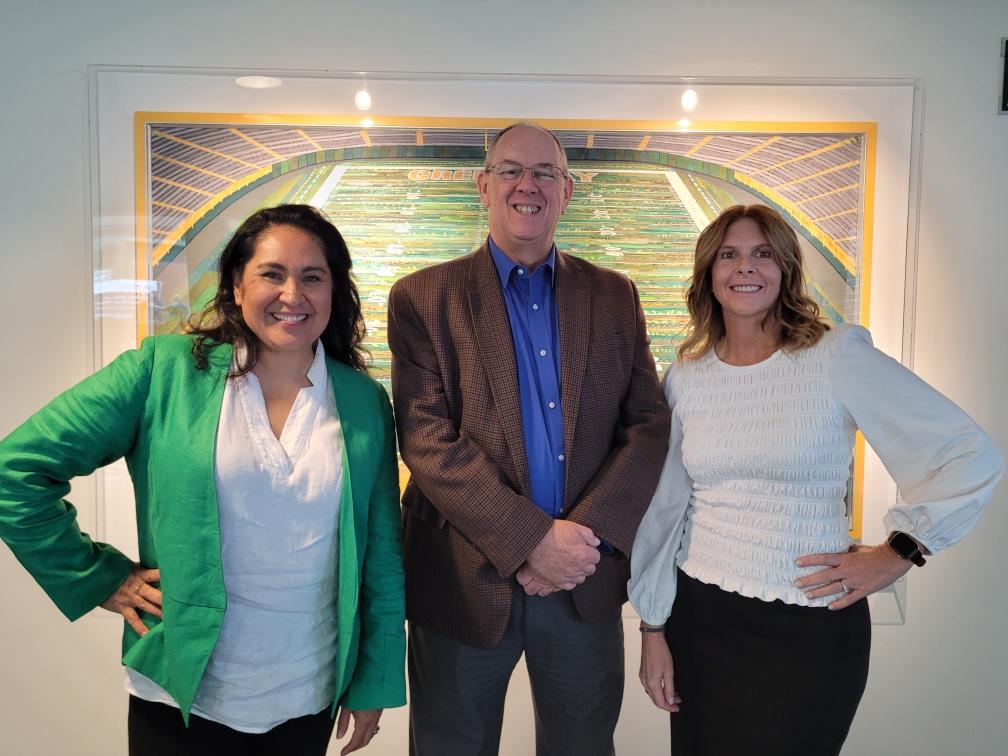
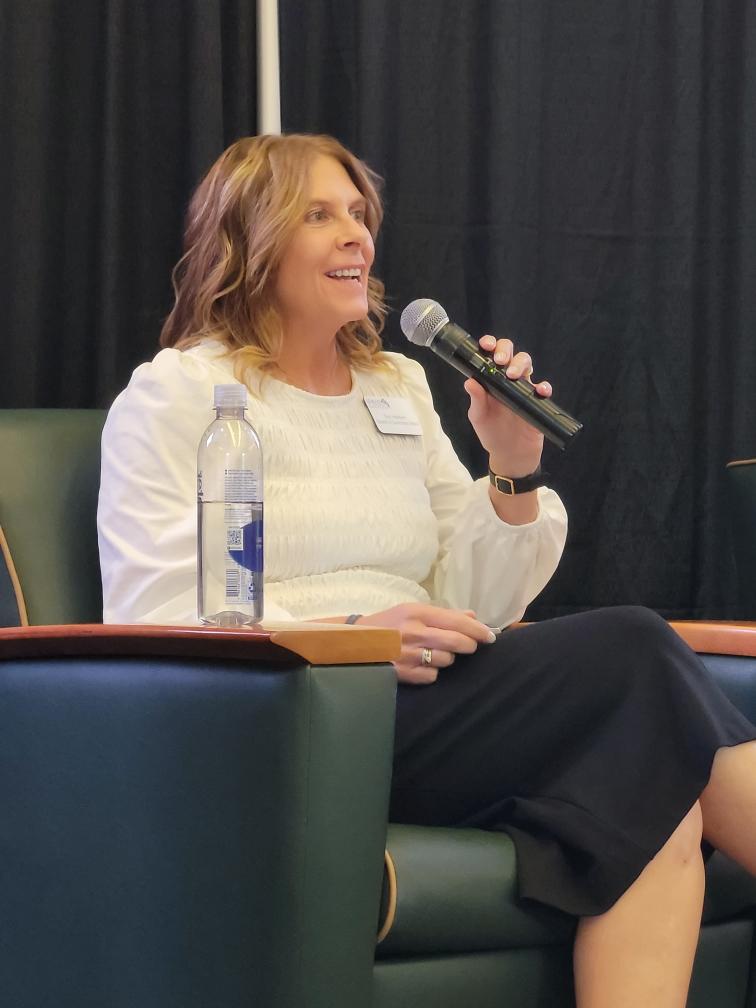
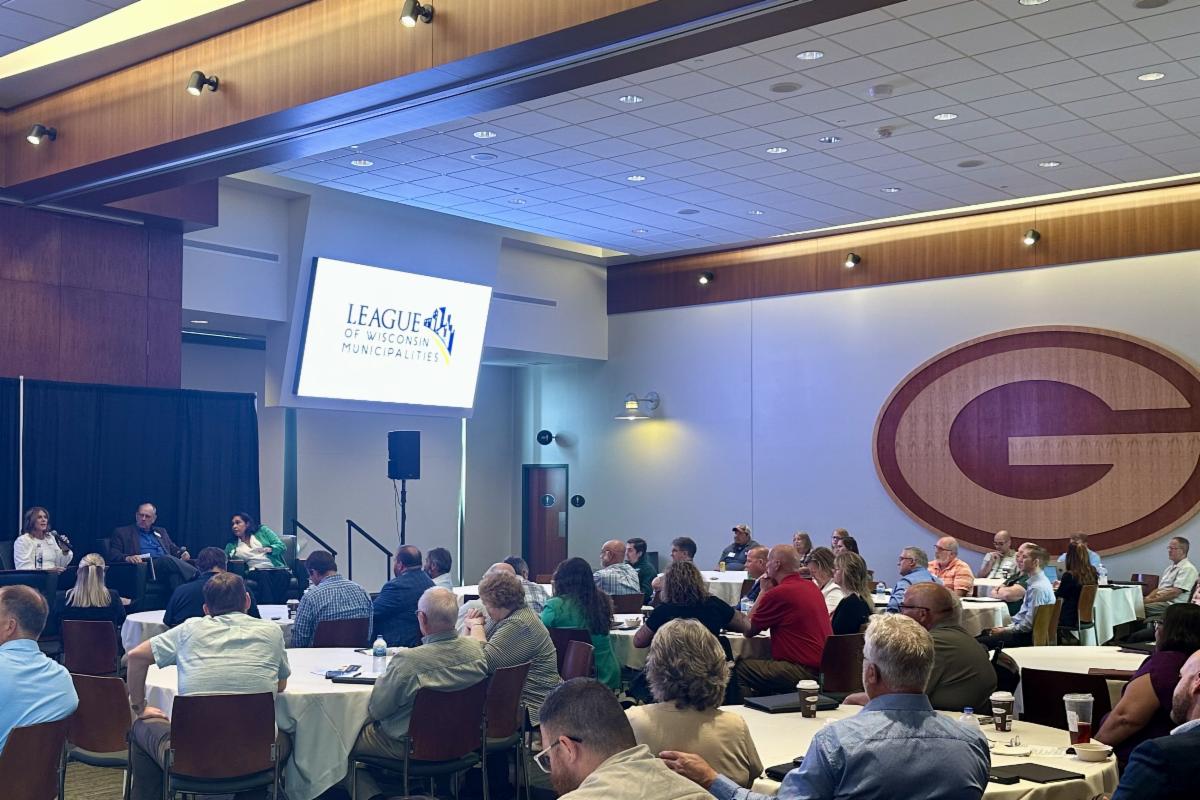
Last Thursday, the League hosted Mayors, Village Presidents, Managers, and Administrators from around the state at our Chief Executives Summer Meeting at Lambeau Field. After welcoming comments by host municipalities, League Executive Director Jerry Deshane kicked off the event with a conversation about federal and state affairs with League Government Affairs Director Toni Herkert and our special guest, National League of Cities (NLC) Senior Executive and Director of Federal Advocacy Irma Esparza Diggs. We are very thankful we had Irma in attendance providing her expert insight into the federal government and the importance of local advocacy in government affairs. Together, we provided a glimpse into government affairs, policy development, and state and federal advocacy. We hope all attendees enjoyed this conversation. 

Recently Introduced Legislation of Municipal Importance


The following bills were recently introduced in the Wisconsin State Legislature and have been added to the list of those being monitored by the League. Unless otherwise indicated, no formal position has been taken on these proposals to date. 


  • Senate Bill (SB) 382: Historic Rehabilitation Tax Credit Modifications - Sen. Feyen (R-Fond du Lac) and Rep. Armstrong (R-Rice Lake) - Under state and federal law, a taxpayer may receive a credit for certain expenses to rehabilitate certified historic structures. This legislation makes modifications to the state program. First, it clarifies that so long as the claimant has expended $50,000 or more on the rehabilitation, they may receive the 20% credit, avoiding additional federal requirements on investment thresholds. Second, it removes the requirement that the State Historic Preservation Officer recommend the improvements to the US Secretary of the Interior. Third, it allows the full state credit to be claimed in one year as opposed to five. Finally, it clarifies that the $3.5 million cap on credits only applies within a single ten-year period. 

⭐If you would like to contact your legislators on any bills mentioned in the Legislative Bulletin, you can find contact information for all legislators here. To find out which legislators represent your community, use the "Find Your Legislator" function on the right side of the page. 

Agency Anecdotes


First 2025 Shared Revenue Distribution Sent


Last Monday, July 28th, the Wisconsin Department of Revenue (DOR) sent the first shared revenue distribution of 2025 to municipalities and delivered notices of those distributions electronically or by mail. These distributions are based on the 2025 estimates issued in September 2024 and include the 2.3% increase in shared revenue and supplemental shared revenue payments due to growth in distributions being tied to growth in the sales tax. This 2.3% increase represents only the second increase in shared revenue payments over the past two-plus decades, with the first seen in last year’s historic increase. To learn more, visit DOR’s website. 


Alcoholic Beverage Regulation Rule Hearing


As a result of 2023 Wisconsin Act 73 which overhauled much of the state’s regulatory scheme on alcoholic beverages, DOR has been undertaking revisions to their administrative code to reflect these changes and further implement statutory provisions. An emergency rule took effect on December 14th and is now in place as DOR continued work on the permanent administrative rule.


DOR is now accepting comments on the proposed permanent administrative rule, Clearinghouse Rule (CR) 25-050. Public comments on this rule are being accepted through tomorrow, August 5th at 11:59pm, and DOR will be holding a public hearing to accept verbal comments from 9:30am to 11:00am on August 5th through Microsoft Teams. Find more information and register for the virtual public hearing here. 


League Comments on the Clean Water Fund Program


Last month, the League submitted comments on the Wisconsin Department of Natural Resources’ (DNR) Clean Water Fund Program State Fiscal Year 2026 Intended Use Plan. Among the changes the DNR proposed in this plan includes moving water quality trading projects from a standalone program into the general program and awarding these projects a base priority of 25 points. Along with highlighting the substantial investment achieved in the 2025-2027 State Budget for this program, the League’s comments encourage the DNR to raise the priority points for these projects to a higher amount than 25 points given their potential to reduce capital costs. The League’s full comments are linked here.


2026 Property Assessment Manual Accepting Comments


Now through Friday, August 22nd, DOR is accepting public comments on its Draft 2026 Wisconsin Property Assessment Manual with a public hearing scheduled for 9am on Wednesday, August 13th. DOR is proposing updates in ten different chapters of this manual, including two complete chapter reorganizations and updates. Assessors or other municipal officials interested in reviewing these updates may see the update summary, changes, and details on providing comments on DOR’s website. 


Election Observers Rule Now In Effect


On August 1st, Clearinghouse Rule 24-032 that addresses the conduct, regulation, and accommodation of election observers went into effect, making these administrative rules law. This rule was drafted following an advisory committee recommendation with municipal input included and articulates the boundaries of what election observers may and may not do at polling places. Clerks not already familiar with these procedures may want to familiarize themselves with the new rules prior to the next election. 

Special Deal for Fall Conference Registration

We’re just six weeks away from the League’s 2025 Fall Conference, taking place this year in Milwaukee. We hope you’ll join us and local government officials from across Wisconsin to share experiences and shape the future of our communities. If you plan on attending, get a few others from your municipality to join to take advantage of the buy three registrations, get one free offer happening now! And be certain you don’t wait too long. Registration closes on September 4th and the hotel block closes on August 26th. 

📚Reading Room


Want to learn more about the 2025-2027 State Budget? Wisconsin Policy Forum has you covered. Recently, they published a report titled An All the Above Budget: State Budget Draws Down Balances to Cut Taxes, Increase Spending. This detailed analysis breaks down the major provisions of the budget and addresses uncertainties the budget creates moving into the next biennium. While the report does touch on some issues of municipal concern, for more details on those items, be certain to revisit the League’s analysis from our July 7th Legislative Bulletin. 

Email questions or comments to:

Toni Herkert, Government Affairs Director, therkert@lwm-info.org

Evan Miller, Government Affairs Specialist, emiller@lwm-info.org

Facebook  Twitter  LinkedIn  Web