¡Versión en español a seguir! | |
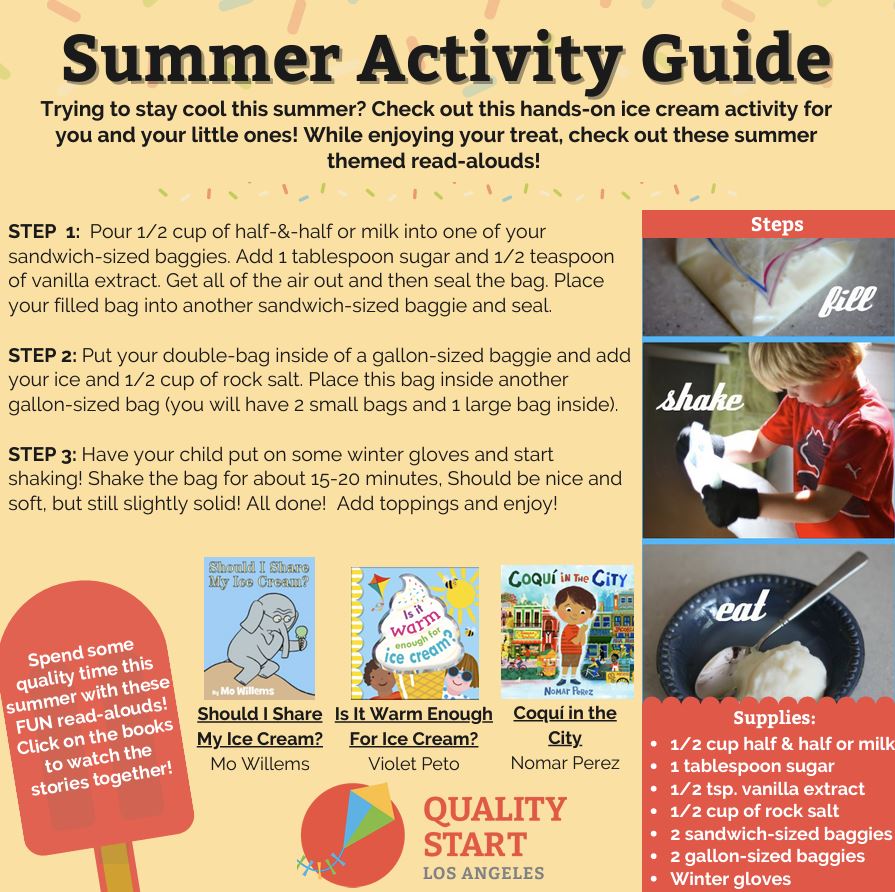
This month at QSLA, we focus on encouraging families to get creative with summer learning! | |
Welcoming Environment
Ensure Your Program Feels Inviting
| |
|
Figuring Out Screen Time For Young Children This Summer | |
Did you know the American Academy of Pediatrics currently recommends that children between the ages of two and five should view no more than one hour of “high-quality programming” per day, preferably with a parent? Check out this article by Rasmussen University, "Screen Time Recommendations: ECE Experts Shed Light on the Pros and Cons of Screen Time for Kids," to dig into the challenges families and educators are conflicted with around how much screen time to allow. Technology is an ever-present part of living in the digital age, and the question of screen time isn’t going away anytime soon. Read on in the article to hear from ECE experts to get their take on some pros and cons of screen time for kids. | |
|
This resource will support ECERS-R: Item 9 and FCCERS-R: Item 35- Provisions for Parents, PAS: Item 16- Family Communications, and BAS: Item 7- Provider Parent Communications. | |
Family Partnerships
Work with Families to Build a Stronger Program
| |
|
Learn and Play with QSLA! | | |
Summer is the perfect time to explore "Learn and Play with QSLA," your home for fun and educational video activities designed to ignite curiosity and spark joy in kids! Dive into a world of wonders as your little ones embark on captivating adventures, from crafting snow to nurturing a budding plant. Our QSLA teammates are here to lead the way, offering guidance through these delightful learning experiences. Each activity video also comes with a downloadable activity sheet available in English, Spanish and Chinese. Start exploring today and watch as your child’s imagination blossoms! | |
|
Learn and Play with QSLA YouTube Playlist | |
This resource will support ECERS-R: Item 38 and FCCERS-R: Item 35- Provisions for Parents, PAS: Item 16- Family Communications, and BAS: Item 7- Provider Parent Communications. | |
Community Partnerships
Use Community Resources to Strengthen Program Quality
| |
|
Summer Fun & Back to School Prep! | |
|
Supporting Summer Learning with Reading Rockets
The research is clear that children who don't read (or aren't read to) during the summer can lose up to three months of reading progress and that loss has a cumulative, long-term effect. Reading Rocket's "Adventures in Summer Learning" offers practical suggestions for families about how to create a literacy-rich summer, as well as information of effective formal programs for at-risk youth and children with learning disabilities! Their informative resource page offers videos stories, research, webcasts, parent-oriented tips, and links to more organizations - all geared towards "keeping the learning faucet" on during the summer! Check out their video playlist and hand resources, including this "Stopping the Slump" video below:
| |
|
Back to School Prep
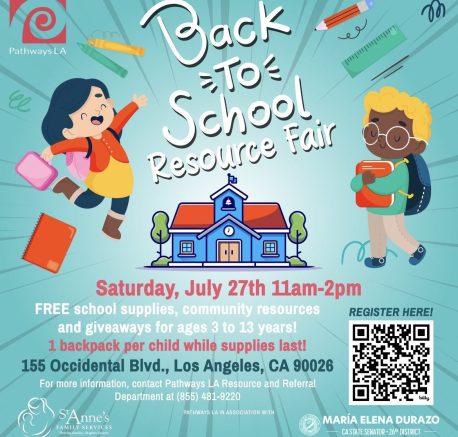
As summer moves along, this is also a great time for families to take advantage of free community events for their young ones, including movie nights and live music at our local parks as well as these fairs, park camps, and summer library programming. Check out these upcoming FREE Back to School Fairs all around Los Angeles County offering giveaways and activities for families. Share the flyers or links with families so they can register!
| |
|
Knowing and using these community resources will support PAS: Item 17- Family Support Involvement, BAS: Item 8-Community Resources, and NAEYC Accreditation: Standard 7-Families | |
Staff Development and Support
Enhance Your Family Engagement Knowledge and Skills
| |
|
Taking Advantage of Professional Development to Support Summer Learners | |
|
How Young Children Learn? The “3” E’s of Learning: Exposure, Experience, Empowerment
This workshop, offered by Hively, is an “interactive” presentation focused on how young children from birth to 5 years of age learn primarily through “hands on concrete experiences, interactions, play” and “developmentally appropriate” processes. As a participant, you can expect to:
- Acquire a knowledge of the importance of “play” and how young children learn
- Acquire an understanding of the importance of “modeling” the behavior they want young children to learn
- Acquire a skill in “facilitating” young children learning
| |
Time/Date: Wednesday, July 31st, 6:30 - 8:30PM
| |
|
|
5 Fun Strategies to Kick-Start Social-Emotional Learning for Back to School
Did you know that students who are taught and modeled social-emotional skills and have the opportunity to practice these skills have positive long-term academic and social outcomes? This 1-hour self-paced recorded webinar "5 Fun Strategies to Kick-Start Social-Emotional Learning for Back to School" from edWeb is designed to equip educators with the knowledge and practical social-emotional strategies to build a welcoming and supportive environment where children learn integral social-emotional habits like self-management and relationship skills.
| |
Self-Paced Module (1 hour)
| |
|
|
Supporting Young Children’s Development and Learning
This three-module self-paced series from CECO, "Supporting Young Children's Development and Learning" (12 hours total) explores the exciting ways young children develop and learn. In this module series, you will strengthen your observation skills. These skills will help you uncover important information you can use to support children’s development and learning from birth through age five - including valuable information to share with families to help with summer learning!
- Describe key areas of development and ways young children learn.
- Recognize multiple methods to observe and record children’s development and learning.
- Practice analyzing and making sense of observations.
- Identify ways to use observations and understanding of development to plan learning experiences.
| |
Self-Paced Module (12 hours; 3 modules)
| |
|
These trainings support ECERS-R: Item 43- Opportunities for Professional Growth, PAS: Item 3- Staff Development, FCCERS-R: Item 37- Opportunities for Professional Development, and BAS: Item 1-Qualifications and Professional Development | |
Equitable Approaches to Supporting Children and Families
| |
|
Screens May Affect Children's Brain Development | |
|
Children using screens from an early age impacts the development of their brain. Watch this 3-minute video from NBC News to explore the impact, as there are both positive and negative aspects to consider! As we consider the changing landscape of learning at all ages, our early learning programs and families can get more informed about how to best approach technology habits to support our youngest learners in having the best start during their early years.
| |
|
Were you forwarded this email?
Would you like to sign up to receive our Family Engagement Newsletters?
| |
Check out our QSLA pages below! | | | | |