¡Versión en español a seguir! | |
This month at QSLA, we focus on raising awareness and creating inclusive spaces for young children with autism and their families. | |
Welcoming Environment
Ensure Your Program Feels Inviting
| |
Strategies for Supporting Autistic Children in Early Childhood Settings | |
|
Autistic children are very capable of learning new skills and of interacting successfully with peers and adults. In some cases, they may need more or different types of support to thrive in a busy, and sometimes overwhelming, early childhood environment. This article from the Education Hub in New Zealand provides over 12 simple strategies for supporting autistic children in an early childhood setting - covering strategies for increasing engagement and participation, supporting communication and understanding, responding to a range of behaviors, and teaching new skills. The value of including families is also discussed. Invite your program staff to select strategies based on their knowledge of the needs and interests of the child and the desires of the families you each work with!
| |
This resource will support ECERS-R: Item 9 and FCCERS-R: Item 35- Provisions for Parents, PAS: Item 16- Family Communications, and BAS: Item 7- Provider Parent Communications. | |
Family Partnerships
Work with Families to Build a Stronger Program
| |
Learning & Recognizing the Early Signs of Autism | |
|
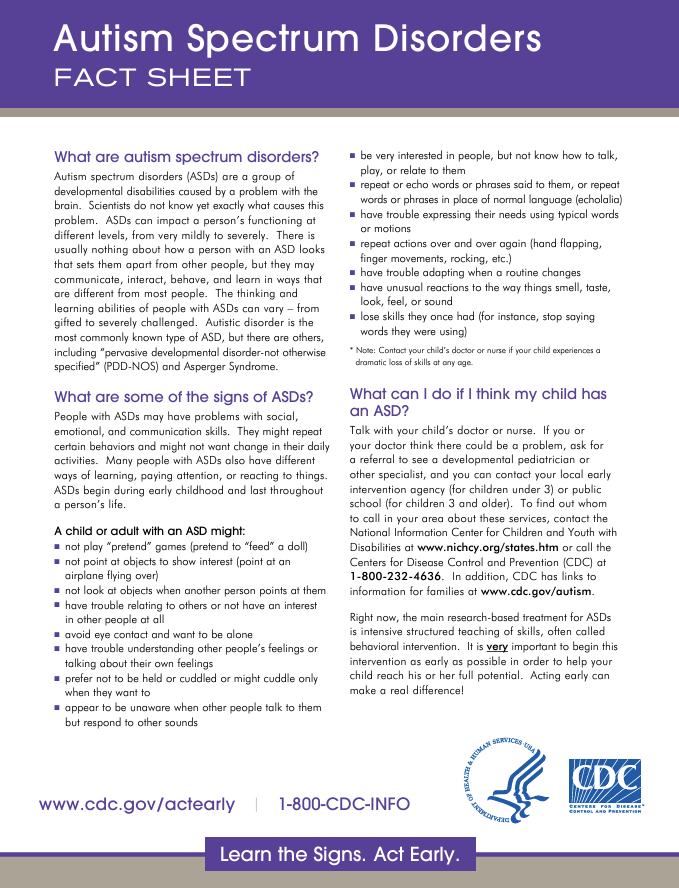
As we navigate Autism Awareness Month, consider working with families to share information and supportive resources to strengthen families' understanding of autism spectrum disorders. Check out this webpage "Autism Awareness and Acceptance in Early Childhood Education" and the accompanying fact sheet from the U.S. Office of Early Childhood Development Share the fact sheet below with families or colleagues whom you think would be interested in learning more:
| |
|
This resource will support ECERS-R: Item 38 and FCCERS-R: Item 35- Provisions for Parents, PAS: Item 16- Family Communications, and BAS: Item 7- Provider Parent Communications. | |
Community Partnerships
Use Community Resources to Strengthen Program Quality
| |
Special Needs Resource Fair & Sesame Workshop's Autism Resources | |
|
The Help Group's 11th Annual Special Needs Resource Fair
Offered by The Help Group and LA Parent, this 11th Annual Special Needs Resource Fair is a FREE opportunity for families and early educators, like yourself, to discover the wonderful resources that Los Angeles has to offer its special needs community! Share this affirming and supportive event with families in your program, to connect them with the fun activities and food, as well as the many exhibitors who will be representing a wide variety of support services.
When: Sunday, April 28th from 11:00AM - 2:00PM
Where: The Help Group's Autism Center | 13164 Burbank Blvd, Sherman Oaks, CA 91401
| |
|
Sesame Workshop's Autism Resources
Autism and other developmental delays can be a confusing, concerning mystery for families. Learn what autism is and how to celebrate and support the amazing in all children. Take advantage of Sesame Workshop's family-friendly resources pages for autism that include videos, storybooks, coloring sheets, playful activities, games, workshops, and a webinar - in English and Spanish! Invite families and colleagues to explore Sesame Workshop's free, bilingual resources to help support the autistic children in our lives! Check out these resources categories:
Watch this video where Abby from Sesame Street explains that, even though all of her friends are unique, they all want love, friendship, and to have fun!
| |
Knowing and using these community resources will support PAS: Item 17- Family Support Involvement, BAS: Item 8-Community Resources, and NAEYC Accreditation: Standard 7-Families | |
Staff Development and Support
Enhance Your Family Engagement Knowledge and Skills
| |
Training Opportunities to Support Autism Awareness & Inclusion | |
|
Overview of Autism with Options for Learning
This live virtual 2-hour training, offered by Options for Learning, will review the characteristics of autism, the importance of early intervention, and practical strategies for parent engagement social-emotional support, and academic modification. Gain essential skills to create inclusive classrooms and support the development of children with Autism Spectrum Disorder.
| |
Date/Time: Wednesday, April 24th from 6:30 - 8:30PM
| Contact Information: Josefina Medina, jmedina@optionsforlearning.org, (626) 479-8861 | |
|
|
加入我們學習創建包容性環境並支持自閉症障礙兒童發展!
該培訓將回顧自閉症的特徵、 早期介入的重要性以及家長參與、社會情緒支持和學業修改的實用策略。 參與者將學習創建包容性環境並支持自閉症譜系障礙兒童發展的基本技能。
| |
Date/Time: 4/23, 6:30PM - 4/23, 8:30PM
| |
|
|
Inclusion Works! Through Collaboration with Families and Service Providers
All children, including children with disabilities or other developmental delays, deserve access to quality child care programs. If you're looking to deepen your understanding and expand your toolkit, consider these 2 trainings available through CECO. CECO offers this 4-hour set of training modules, "Inclusion Works! Through Collaboration with Families and Service Providers," developed to help child care providers learn strategies that promote inclusion and a sense of belonging for all children.
Note: You can take these free trainings with CECO by first making a free account on their website.
| |
Self-Paced Course (4 hours)
| |
|
|
Inclusive Practices for Children With Disabilities or Delays
Looking for a more focused training series to better equip you in working with young children who have/may have autism? CECO offers "Inclusive Practices for Children with Disabilities or Delays." This 4-hour self-paced course (available in English and Spanish) from CECO provides you with information, resources, and guidance on how to:
- Describe elements of inclusive practice,
- Build responsive partnerships with families and specialists,
- Advocate for the rights and unique developmental and learning needs of children with disabilities or delays,
- Create intentionally inclusive environments and experiences.
Note: You can take these free trainings with CECO by first making a free account on their website.
| |
Self-Paced Course (4 hours)
| |
|
These trainings support ECERS-R: Item 43- Opportunities for Professional Growth, PAS: Item 3- Staff Development, FCCERS-R: Item 37- Opportunities for Professional Development, and BAS: Item 1-Qualifications and Professional Development | |
Equitable Approaches to Supporting Children and Families
| |
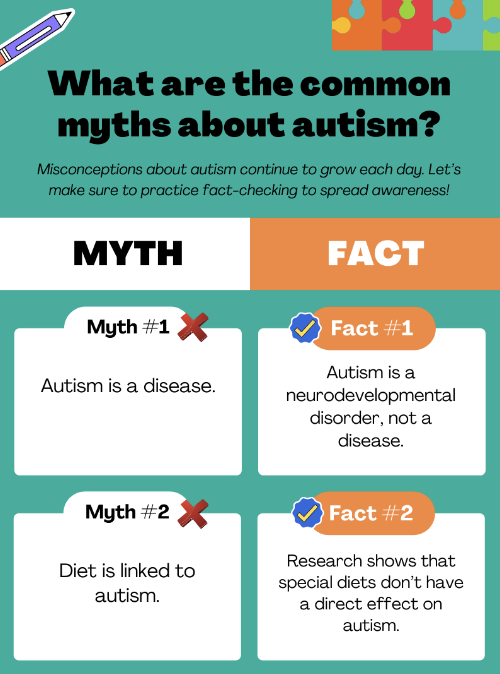
With the rise of social media and its share buttons, misconceptions about anything can be easily seen as truth, including autism. While the internet can be helpful in spreading awareness about autism spectrum disorders (ASD), it’s important to practice fact-checking to avoid promoting myths - particularly with families and staff in our early learning programs. Check out this infographic "What are the common myths about autism?" from Elegant Care Villa and consider sharing it with families! | |
|
Research shows that children who receive an early diagnosis of and interventions for autism are more likely to have major long-term positive effects on symptoms and later skills. | |
Early intervention programs help children gain the basic skills they usually learn in the first 2 years of life, such as: physical, thinking, communication, social, and emotional skills. Early interventions occur at or before preschool age, as early as 2 or 3 years of age. In this period, a young child's brain is still forming, meaning it is more "plastic" or changeable than at older ages so treatments have a better chance of being effective in the longer term. Early interventions not only give children the best start possible, but also the best chance of developing to their full potential. | |
|
|
Utilize community support by connecting with your local regional center for possible early intervention services. Visit Help Me Grow's webpage to find your local community supports, including regional centers.
| |
|
Were you forwarded this email?
Would you like to sign up to receive our Family Engagement Newsletters?
| |
Check out our QSLA pages below! | | | | |