League Logo.jpg

2025-2026 Legislative Bulletin

August 18, 2025

In this edition of the League's Legislative Bulletin, you'll find:

1. State and Federal Disaster Declaration FAQs

2. ReVITALize Campaign Launches in Waterloo

3. Reading Room on General Fund Balance and Local Government Fund

4. Recently Introduced Legislation on Crypto Kiosks and a Brief Survey

5. One Month Until the League Fall Conference

6. Agency Anecdotes on a Commercial Building Code Webinar, Brownfield Redevelopment Learning Sessions, League Comments on Alcohol Rule, and Final Equalized Values 

State and Federal Disaster Declaration FAQs


Following historic and devastating floods in Southeast Wisconsin, local officials may have questions about the role of state government in the response to these floods and how a federal disaster declaration may be issued to provide access to additional resources that will aid in the recovery of the region.


On Sunday, August 10th, the Governor issued an official state of emergency declaration, authorizing the use of emergency funds and beginning the process of requesting federal assistance. Also on August 10th, the State Emergency Operations Center was activated, enabling coordination between Wisconsin Emergency Management (WEM), the Department of Natural Resources, the Wisconsin National Guard, and other state and local agencies to collaborate in providing assistance to impacted communities. 


With a declaration issued on the state level, Wisconsin is eligible to seek federal disaster relief and recovery resources through the Federal Emergency Management Agency (FEMA). To learn more about the process of disaster declarations and to see the answers to some frequently asked questions, view this document from WEM. For those interested in the City of Milwaukee's recovery efforts, see an update here.

ReVITALize Campaign Launches in Waterloo


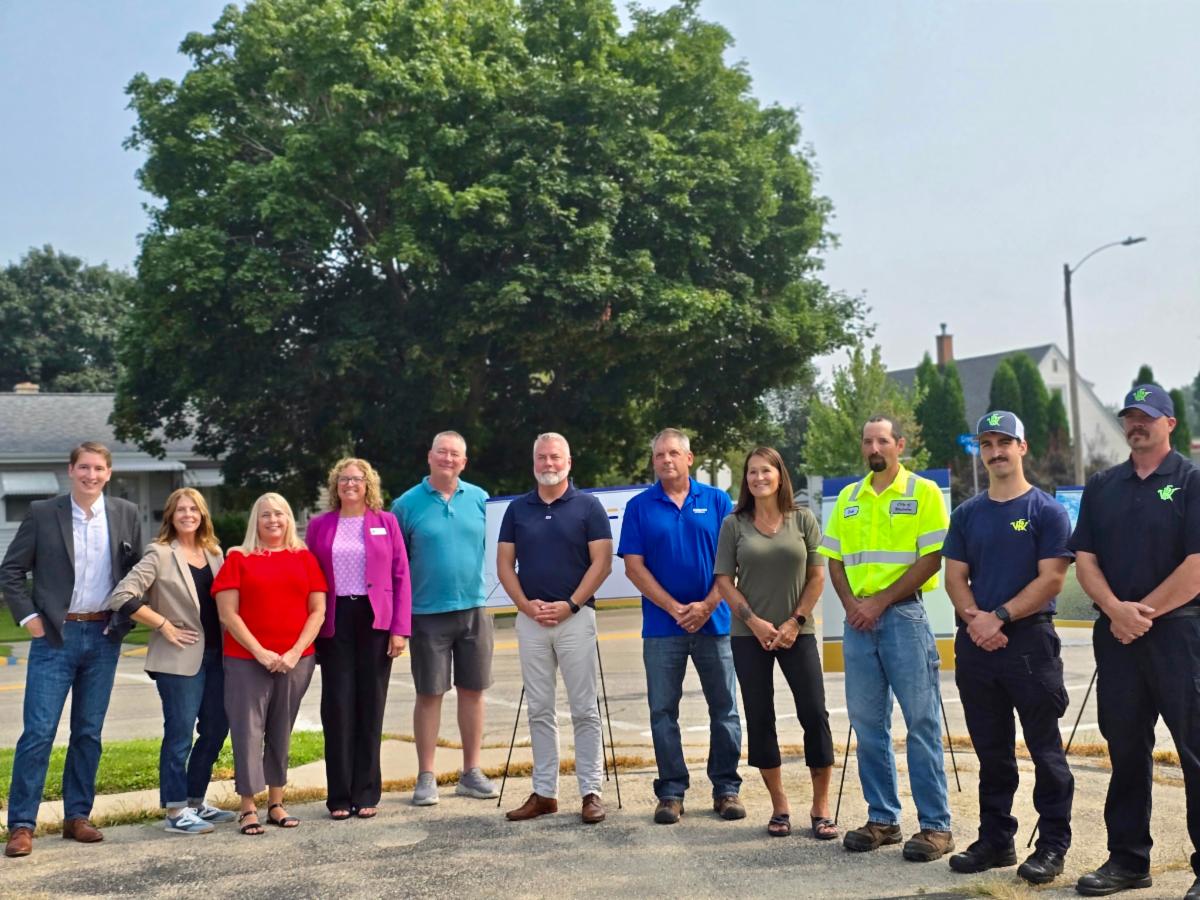
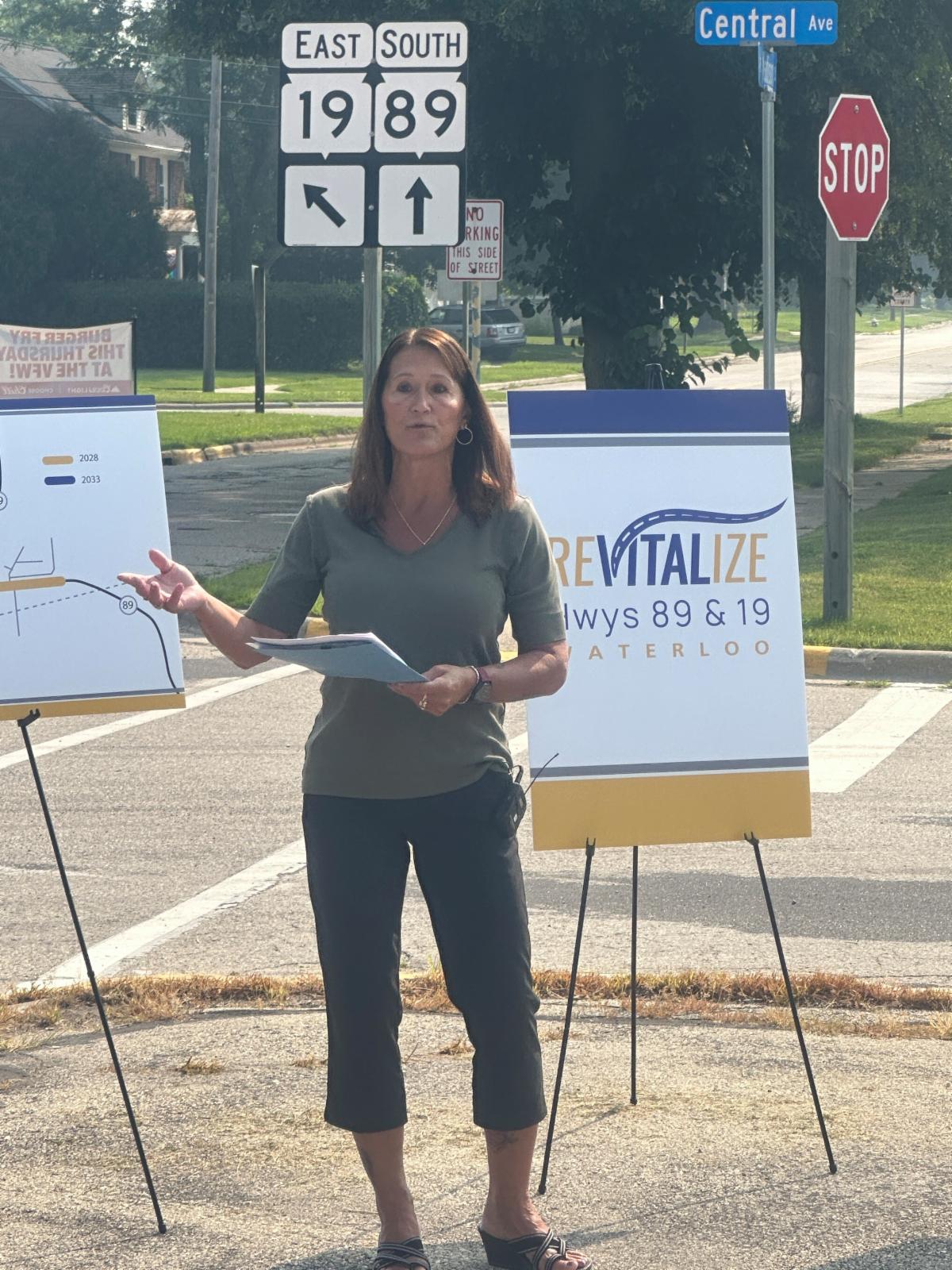
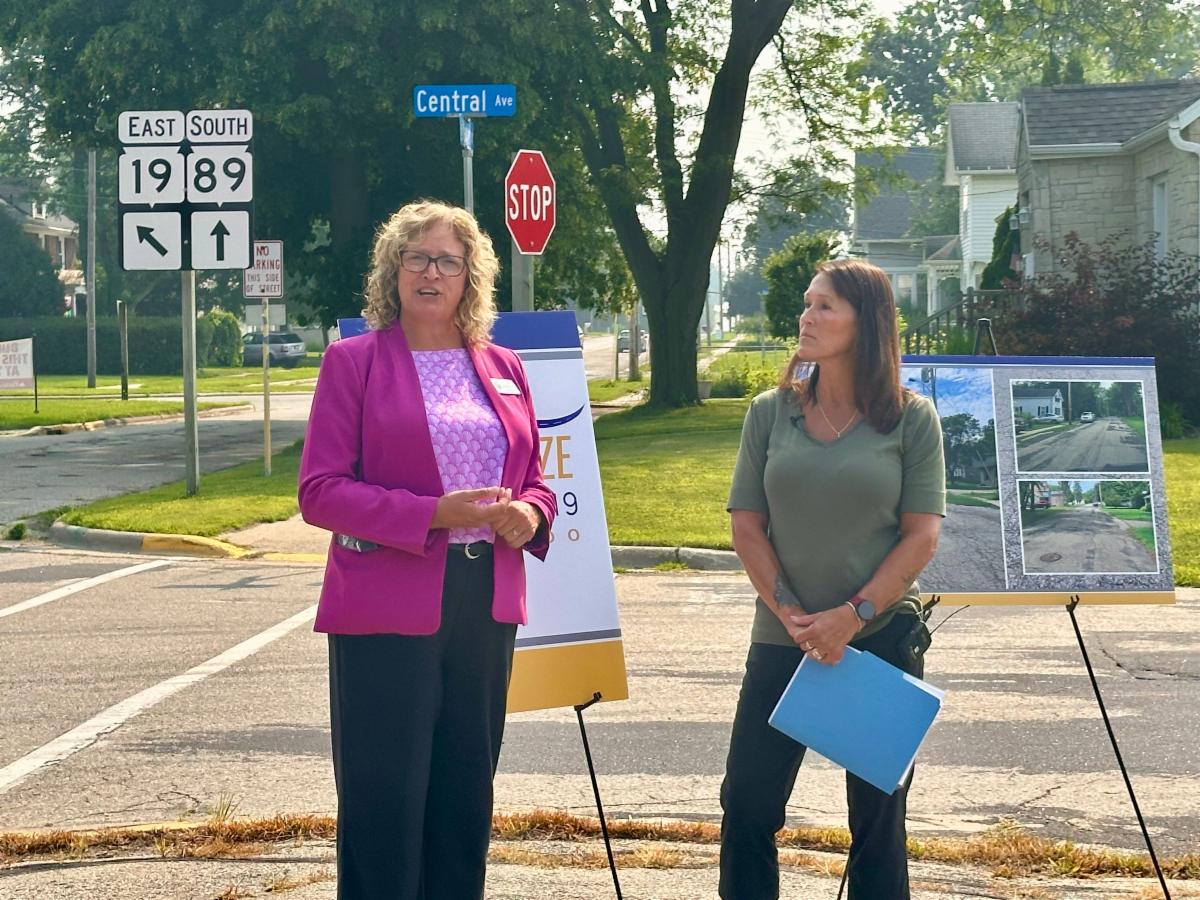
On Monday, August 4th, the League joined Mayor Quimby, other local officials, and community leaders in the City of Waterloo to launch a new statewide campaign titled Re-VITAL-ize Wisconsin Community Highways. Joining the Transportation Development Association and Transportation Builders Association, the League is shepherding this initiative to promote a long-term sustainable funding solution for Wisconsin’s transportation needs.


While the legislature and Governor have shown a commitment to transportation, in recent budgets, transportation revenues have still fallen well short of transportation funding needs. With large one-time surpluses available, the state has been able to transfer general tax revenues to make up that shortfall. But the state won’t always have a sizable balance heading into a budget cycle, meaning the ability to fill the deficits in the Transportation Fund won’t always be practical. That’s where ReVITALize comes in. This campaign is looking to shine a spotlight on cities and villages that have state trunk highways serving as their main street or other key artery in their municipality. These critical throughfares are at the mercy of DOT and due to funding constraints have been neglected and fallen in disrepair as a result of a lack of proper state investment.


Local Impact:

Because these are state highways, major reconstruction projects are the state’s responsibility, but the state doesn’t have the funding to keep projects on schedule. In many cases, the local government is on the hook for patching and maintaining these rundown roads, throwing good money at short term fixes and reducing the funding available for other truly local roads. When the state finally comes through to do a major reconstruction project, the local match required can be nearly prohibitive. State highway reconstructions can eat up large amounts of the local transportation budget all for a roadway the municipality doesn’t own.


During the launch event in Waterloo, speakers pointed to the condition of their two state highways, parts of which are in disrepair. This situation is postponing critical underground utility upgrades, delaying first responders from getting to the scene of accidents, and deterring residents and businesses from investing in the community, among other impacts. When the state does reconstruct these highways, it will take roughly their full year’s transportation budget for the local match in 2028 and three years’ worth of local transportation funding for the local match in 2033. That’s four years of transportation expenditures that won’t factor into the state transportation formula, causing a reduction in the city’s aid and forcing Waterloo to delay projects on local roads that also need serious attention. 

Media:

A synopsis of the this first event is captured in this two-minute video and our joint press release from the event. The event in Waterloo also had some great press coverage (Channel 15, Leader Independent, Channel 3000).


Be sure to follow the new ReVITALize Wisconsin Community Highways Facebook page to see the stories, event photos, and links from the Waterloo event and stay up to date on the future ReVITALize stops.  

📚Reading (and 🎧Listening) Room


On August 1st, the nonpartisan Legislative Fiscal Bureau (LFB) released its 2025-2027 and 2027-2029 General Fund Budget memo providing an overview of the state’s General Fund revenues and expenditures under the funding levels passed in the 2025-2027 State Budget. As noted in the memo, under current spending levels, the state is projected to see a $2.1 billion structural deficit in the next fiscal biennium. We are past the years of surplus. The next budget will be a challenge.


Under LFB’s current projections, the Governor and Legislature will need to find ways to cut spending or increase revenues by $2.1 billion to meet the requirement in the State Constitution to pass a balanced budget.


While the next budget cycle could be very challenging to pass a balanced budget, this also highlights the importance of 2023 Wisconsin Act 12. Not only did Act 12 provide an historic increase to shared revenue and create the new supplemental shared revenue payments, but it segregated these aids in the Local Government Trust Fund, removing them from the General Fund where they could be seen as an avenue to address the state’s projected shortfall.


On August 4th, League Executive Director Jerry Deschane joined Wisconsin Today on Wisconsin Public Radio (WPR) to discuss the importance of Act 12 and how the Legislature and Governor kept the promise of Act 12 in the recent state budget. Listen to that interview on WPR’s website. 

Recently Introduced Legislation of Municipal Importance


The following bill was recently introduced in the Wisconsin State Legislature and has been added to the list of those being monitored by the League. Unless otherwise indicated, no formal position has been taken on this proposal to date. 


  • Senate Bill (SB) 386: Regulation of Crypto Kiosks - Sen. Roys (D-Madison) and Rep. Spaude (D-Ashwaubenon) - Virtual currency, better known as cryptocurrency, may be purchased online, but increasingly may also be purchased at kiosks in convenience stores through these devices that look like TYME machines. Law enforcement officials have been raising concerns about these crypto kiosks as reports of fraud and money laundering have emerged from the use of these devices. This legislation requires that crypto kiosks are licensed and regulated by the Wisconsin Department of Financial Institutions as a money transmitter, requiring that users of the device provide identification, limiting the amount of a daily transaction, and limiting device fees. 

The League is asking for your engagement. Does your municipality have an ordinance regulating crypto kiosks? Tell us more about those regulations by filling out this short survey. Your responses will help the League Government Affairs team best advocate for statewide policies that bolster, not inhibit local regulations on crypto kiosks. 

⭐If you would like to contact your legislators on any bills mentioned in the Legislative Bulletin, you can find contact information for all legislators here. To find out which legislators represent your community, use the "Find Your Legislator" function on the right side of the page. 

One Month Until the League Fall Conference -

DON'T MISS OUT!

We’re just one month away from the League’s 2025 Fall Conference. We hope you’ll join us and local government officials from across the state in Milwaukee to share experiences and shape the future of our communities.

Packed with informative programming, engaging speakers, and networking opportunities, you’re not going to want to miss this event! If you’re not already registered to join us, don’t wait long. Registration for this annual event closes on September 4th and the hotel room block closes on August 26th. 

Agency Anecdotes


Webinar on Commercial Building Code Updates


As mentioned in last week’s Wheeler Report Bulletin, the Wisconsin Department of Safety and Professional Services (DSPS) will be overhauling the state’s commercial building code, which also impacts multi-family residential buildings, on September 1st with an effective date for new building plan submissions of October 1st. These code updates will largely reflect the 2021 International Building Code standards with some Wisconsin specific adjustments.


Municipal officials interested in learning more about the Wisconsin Commercial Building Code revisions and how this may impact development in Wisconsin should join one of two webinars DSPS is hosting. The first was held last Thursday and a recording will be available on DSPS’s YouTube page. The second will be held on Thursday, August 28th beginning at 9am and lasting approximately five to six hours. Join the webinar on Microsoft Teams at this link.


Brownfield Redevelopment Learning Sessions


This fall, the Wisconsin Department of Natural Resources (DNR) is bringing back a series of free in-person Learning Sessions for Local Governments on Brownfield Redevelopment. The first session is just three weeks away, taking place on Wednesday, September 10th in Stevens Point beginning at 10am and lasting until noon. The remaining three sessions are October 7th in Ashland, October 8th in Eau Claire, and October 28th in Fond du Lac.


In municipalities throughout the state, brownfields, which are abandoned or idle properties with contamination or perceived contamination, are inhibiting redevelopment and the beneficial use of these properties. These sessions are meant to explain the process of brownfield cleanup and redevelopment, give an overview of resources to aid in these redevelopments, and provide connection to other municipalities that have successfully remediated and redeveloped a brownfield in their community.


To learn more about what you can expect to learn by attending one of these events and to find additional event details, including registration information, please visit the DNR’s website.


League Comments on Alcohol Permanent Rule


In the August 4th edition of the Legislative Bulletin, we provided information on the public comment period and public hearing on the Wisconsin Department of Revenue’s (DOR) proposed permanent administrative rule, Clearinghouse Rule (CR) 25-050. This rule is being proposed as a result of 2023 Wisconsin Act 73 which overhauled much of the state’s regulatory scheme on alcoholic beverages. An emergency rule took effect on December 14th and is now in place as DOR continued work on the permanent administrative rule.


Because municipalities play a leading role in the regulation of alcohol beverages, the League has been working with DOR since Act 73’s passage on implementing the state’s new role in licensing and regulation in a cooperative and communicative manner with Wisconsin municipalities. While many of the League’s comments and concerns have already been addressed by DOR, on August 5th, the League submitted comments to DOR with our remaining requests on the proposed rule. Read the League’s comments on CR 25-050 here.


DOR Publishes Final Reports on Equalized Values


On Friday, August 15th, DOR finalized and published the 2025 Equalized Values. According to DOR, Wisconsin saw an increase of about 8% in equalized value over 2024, amounting to an increase of $75 billion. Of the $75 billion, about 2% was due to net new construction with the remaining due to market value increases.


Along with the 2025 final Equalized Values, DOR also published the 2025 Tax Incremental District Values, Net New Construction Report, and County Apportionment Report. More information and links to these values and reports is available on DOR’s website. 

Email questions or comments to:

Toni Herkert, Government Affairs Director, therkert@lwm-info.org

Evan Miller, Government Affairs Specialist, emiller@lwm-info.org

Facebook  Twitter  LinkedIn  Web