League Logo.jpg

2023-2024 Legislative Session

September 5, 2023 | Number 8

Back to Session


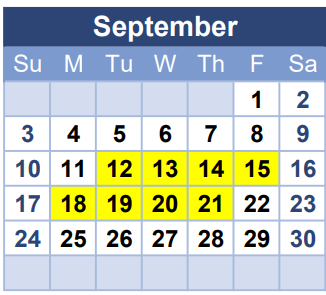
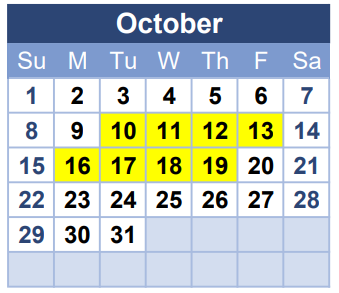
Just as students head back to school in the fall, after a summer recess the Wisconsin Legislature will resume work on the 2023-2024 session this week. As we turn to fall, legislators are slated to be taking votes on the floor of the Senate and the Assembly between September 12-21. To prep for session committee work will continue this week. Significant items for fall floor period consideration include the Republican tax cut proposal, childcare legislation, a compromise on the Milwaukee Brewers stadium, and a potential attempt to override some of the Governor's vetoes.


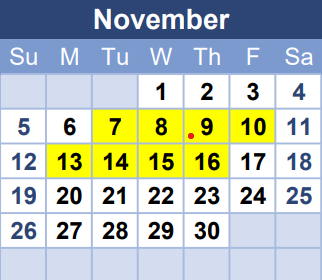
Possible Legislative Floor Session Dates 👇

Tax Cut Package Take Two 🎬


After the Governor vetoed a healthy portion of the tax cut package in the budget, Republicans have endorsed and released a second version for action this fall. The bill, AB 386, lead by Representative Steffen (R-Green Bay) and Senator Cabral-Guevara (R-Appleton) decreases income taxes for Wisconsin's third tax bracket from 5.3 to 4.4 percent starting in tax year 2023. This reduction impacts a large bracket of individuals making $27,630 to $304,170 in annual taxable income or joint filers making between $36,840 to $405,550. Republican's contend that the package impacts the middle class with inflationary relief. The $2.9 billion plan utilizes the state surplus to provide and average tax reduction of $772 per filer.


AB 386 increases and expands the individual state income tax subtraction for payments or distributions received from qualified retirement plans or certain individual retirement accounts beginning in tax year 2023 for those of 67 years of age. Under the Republican's plan up to $100,000 or $150,000 (for joint filers) of payments or distributions received may be subtracted annually from an individual's (or combined) taxable income. Representative Steffen, a lead author of the bill, stated that AB 386 will "help our fixed-income retirees retain more of their retirement savings and ultimately to give them the financial freedom to stay here in Wisconsin."


AB 386 was introduced on August 29th and received a public hearing in the Assembly Ways and Means Committee the next day. The bill is on a fast track this fall and will likely be on the floor in September.


The ABC & D's and R's of Childcare

On August 8th, Governor Tony Evers signed Executive Order #208, calling a special session of the Wisconsin State Legislature on Wednesday, Sept. 20, 2023, to take up his executive plan to address the state’s workforce challenges. Part of the Governor’s workforce plan includes a more than $365 million investment in child care, including in the existing Child Care Counts and Partner Up! Programs at the Department of Children and Families (DCF). 


The Legislature will most certainly gavel in and out of the Governor's special session as they have in the past, but that doesn't mean the conversation on the state's childcare needs and challenges will be dismissed. The legislature has unveiled a package of bills aimed to assist this workforce sector and families with childcare needs. The Republican package includes:


  • AB 387, Child Care Reimbursement. This bill creates a child care pre-tax savings account for up to a $10,000 reimbursement annually for child care expenses and provides an income tax subtraction for certain contributions to a child care reimbursement account. Authored by Representative Goeben and Senator Quinn.
  • AB 388, Child Care Centers. The second proposal in the package creates a child care center renovations revolving loan program, under which the Wisconsin Economic Development Corporation must award loans to licensed child care providers for the purpose of making renovations to their facilities. Lawmakers included $15 million for the fund in the state's budget, the financing option could help providers expand capacity. By Representative Hurd and Senator James.
  • AB 389, Large Child Care Centers. AB 389 requires DCF to establish a category of licensed child care centers that provide care and supervision for 4 to 12 children called large family child care centers. The legislation will provide additional child care slots be increasing the ability for home child care to operate with additional children. By Representative Goeben and Senator Ballweg.
  • AB 390, Assistant Child Care Teachers. This bill modifies the DCF rules to lower the minimum age at which a person may become an assistant child care teacher or school-age group leader from 17 to 16 and to lower the minimum age at which an assistant child care teacher or school-age group leader may provide sole supervision to a group of children from 18 to 16. Authored by Representative Goeben and Senator Ballweg.
  • AB 391, Child Care Workers. This proposal modifies existing administrative rules regarding the number of child care workers and children in group child care centers. In addition, group centers could change their ratios of workers to children to match the average teacher-pupil ratio in the local school district. By Representative Goeben and Senator Ballweg.
  • AB 392, Child Care Operators. AB 392 allows certified child care operators to provide care to up to six children under the age of seven in total, regardless of whether the children are related to the operator. Authored by Representative Goeben and Senator Quinn.


The League's Government Affairs team is reviewing the package of childcare bills. We are encouraged that the conversation on this critical topic will continue this fall. The League thanks the Governor and the legislature for putting forth thoughtful proposals to attempt to meet the needs highlighted in municipalities across the state.

DOR 2023 WI Act 12 TID Adjustment Process


DOR's State and Local Finance Division is providing additional information about the impact of 2023 Wisconsin Act 12 to Tax Incremental Districts (TIDs).


General 2023 WI Act 12 Information - Effective January 1, 2024 Act 12 exempts certain personal property from taxation and allows municipalities to request that DOR adjust a TID’s base value to account for exempt personal property


Details - Due date – October 31 to request an adjustment effective in the following tax year. DOR will review requests received:

  • By October 31, 2023 – for adjustment in the 2024 tax year
  • Between November 1, 2023 and October 31, 2024 – for adjustment in the 2025 tax year


Process

  • Review TID's creation or territory addition documents to identify and determine the amount of personal property included in a TID's base value
  • Complete the Personal Property Removal Workbook if any personal property will be exempt in 2024
  • List all personal property included in the TID base value that is tax exempt starting January 1, 2024
  • Do not include personal property assessed as real estate (ex: buildings on leased land)
  • If you are unsure whether personal property included in the TID's base value is tax exempt in 2024, review with your municipal assessor


Note: Personal property currently assessed in the TID may be different than the personal property included in the TID's base value


Submit - Email the completed Personal Property Removal Workbook to tif@wisconsin.gov


⭐ Additional Information

DOR 2023 Municipal Levy Limit Worksheet


DOR State and Local Finance Division also posted the 2023 Municipal Levy Limit Worksheet (Form SL-202M) on the website.


⭐ Due date – December 15, 2023

  • Municipal clerk must e-file in MyDORGov
  • Use the worksheet as a tool during the budget process to determine your allowable levy limit before adopting a budget


⭐ Review these resources before e-filing:


⭐ Questions - Contact lgs@wisconsin.gov.

RECENTLY INTRODUCED LEGISLATION

of Municipal Importance


Below is a continuing summary of the 2023-2024 Legislative proposals the League is monitoring.


AB 379/SB 376, Local Regulation of Vegetable Gardens. This bill provides that a political subdivision may not require a permit for or prohibit the cultivation of a vegetable garden on property not owned by the political subdivision. This bill does not affect the power of a municipality to do any of the following if the regulation does not specifically regulate vegetable gardens:

  • Enact a zoning ordinance.
  • Regulate the use of water or fertilizer.
  • Control noxious weeds, as defined under s. 66.0407 (1) (b), or invasive species

Authored by Representative Sortwell and Senator Jacque.


AB 380/SB 379, Absentee Ballot Watermark. This bill requires that all absentee ballots mailed to eligible voters contain a watermark that identifies the ballot as an official absentee ballot. By Representative Allen and Senator Quinn.

Email questions or comments to:

Toni Herkert, Government Affairs Director, therkert@lwm-info.org or

Katie Scott, Government Affairs Specialist, kscott@lwm-info.org

Facebook  Twitter  LinkedIn  Web