-
Science can’t wait: Dmitry Lyumkis shares how funding uncertainties impact his research
-
Discoveries: Julie Law is using plants to discover how cells create new epigenetic patterns
-
Spotlight: Celebrating eight Salk scientists who were named among the most highly cited researchers in the world
-
In the news: Satchin Panda and Emily Manoogian share circadian rhythm tips and tricks
-
Salk’s podcast, Beyond Lab Walls: Meet Alzheimer’s researcher Joseph Herdy
-
Inside Salk: Learn what makes basic science special in the upcoming winter 2025 edition of our magazine
-
Social media highlight: Honoring Salk veterans this Veterans Day
| | |
In this season of gratitude, the Salk Institute is thankful for the generous donors and exceptional faculty, staff, and trainees who drive our science and society forward. Our Science Can’t Wait campaign celebrates the influence you can have on Salk science in the face of funding challenges that threaten to slow scientific progress.
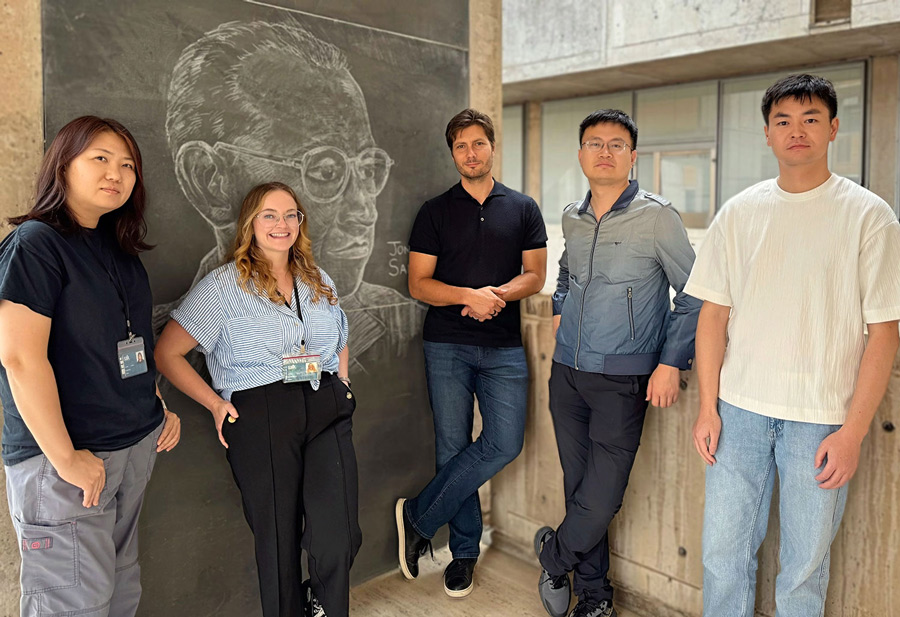
Salk scientists like Dmitry Lyumkis, PhD, are helping explain why public support for science matters now more than ever. Hear how his research on cancer and HIV has been affected by recent federal funding delays, and how even small philanthropic gifts have helped his team keep their critical research going. Read more about Dmitry's story »
| | From left: Hye Jeong Shin, Gennavieve Gray, Dmitry Lyumkis, Tao Jing, and Zelin Shan. Credit: Salk Institute | | | |
Epigenetic changes regulate gene expression, but what regulates epigenetics?
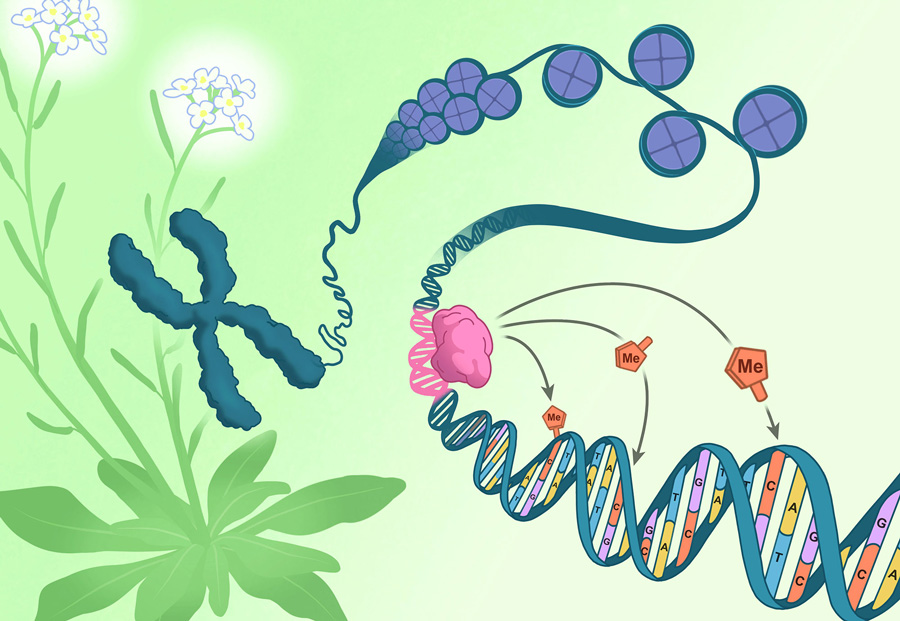
All the cells in an organism have the exact same genetic sequence. What differs across cell types is their epigenetics—meticulously placed chemical tags that influence which genes are expressed in each cell. Salk scientists have now used plant cells to discover that a type of epigenetic tag, called DNA methylation, can be regulated by genetic mechanisms. Prior to this study, scientists had understood only how DNA methylation was regulated by other epigenetic features, so the discovery that genetic features can also guide DNA methylation patterns is a major paradigm shift. Their findings could inform future epigenetic engineering strategies aimed at generating methylation patterns predicted to repair or enhance cell function, with many potential applications in medicine and agriculture. Read more »
| A chromosome pulled from the flowers of Arabidopsis thaliana (green and white) unspools to reveal DNA (blue) coiled around packaging-proteins called histones (purple). The direction of epigenetic changes by genetic features begins as the RIM transcription factor (pink) docks on a corresponding DNA sequence (pink). Once docked, the RIM transcription factor directs methylation machinery to tack methyl groups (orange) onto specific nearby cytosines (orange). Credit: Salk Institute | | |
Eight Salk scientists named among the most Highly Cited Researchers in the world
Salk faculty members Joseph Ecker, PhD, Ronald Evans, PhD, Rusty Gage, PhD, Christian Metallo, PhD, Satchin Panda, PhD, Reuben Shaw, PhD, and Kay Tye, PhD, as well as research assistant Joseph Nery have all been named in this year’s Highly Cited Researchers list by Clarivate.
Citations are one of several ways to measure a scientist’s broader impact in their field. When researchers publish their latest discoveries in peer-reviewed scientific journals, they cite the previous studies that informed their current work. A highly cited study is one that has informed numerous other studies and been widely discussed within the field. The 2025 list includes 6,868 researchers from 60 countries who have demonstrated “significant and broad influence in their fields of research.” Read more »
| | |
NPR
To optimize health, sync your habits with your body clock. Here’s how
Features Satchin Panda, PhD, and Emily Manoogian, PhD
The Scientist
Integral HIV protein structure paves the way for new therapeutics
Features Dmitry Lyumkis, PhD
ECO Magazine
Genome-informed restoration could be the answer
Features Todd Michael, PhD
The Scientist
Living maps: Uncovering the spatial biology of plants
Features Joseph Ecker, PhD
| | |
Fox 5 San Diego
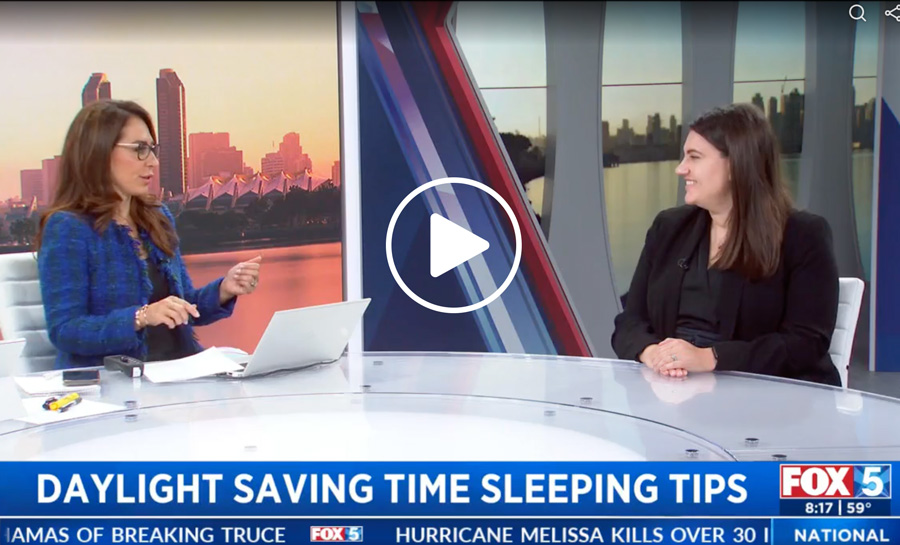
Daylight saving time sleeping tips
Features Emily Manoogian, PhD
| | Salk's podcast Beyond Lab Walls | | While you might not appreciate a shipment of live, wriggling lamprey, Joseph Herdy, PhD, will tell you the parasitic fish can actually teach us quite a bit about our own genomes. Studying lamprey set Herdy off on a genomic journey, as he continued over the years to study the organization, flexibility, and instability of genomes. Today, he’s a postdoctoral researcher in the lab of Rusty Gage, PhD, where he researches how genomic plasticity influences Alzheimer’s disease progression. Listen now » | | | | | |
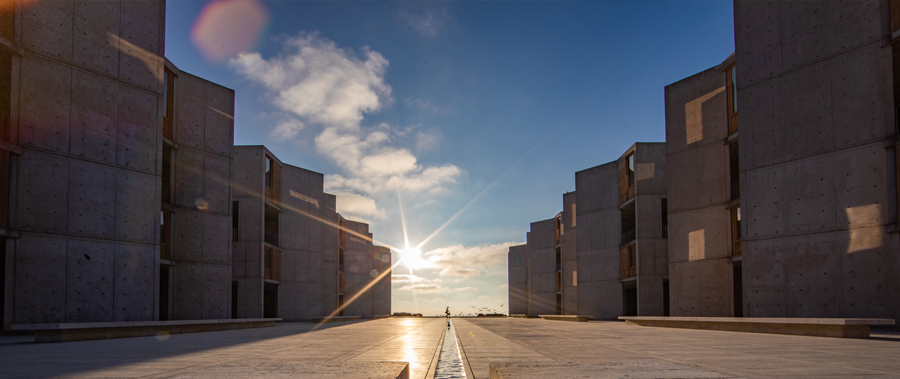
What is foundational science? This question was top of mind for Salk Institute founder Jonas Salk, who envisioned a foundational research institute whose knowledge flowed forth from its campus into the world. The iconic “River of Life” that runs through the center of Salk’s courtyard symbolizes this flow—and, crucially, positions Salk as its origin, where cures begin.
The focal point of the winter 2025 issue of Inside Salk magazine is the critical role foundational research plays in sustaining medical and industry innovation. Join our mailing list and be one of the first to receive this exciting new magazine, or check out our archives online to read the fall issue (and our past issues!) now.
| | | | |
At Salk, we are proud to have veterans among our community. Please join us in thanking and honoring the many colleagues at Salk who have served our country. We’re spotlighting just four Salk veterans: Christopher Pryor, Brian Kirk, Cory Kelly, and Lloyd Austin. Their dedication to duty continues to inspire in their roles here at the Institute, and we are grateful for their contributions, both past and present.
See Instagram post »
| | Your support keeps discovery alive. Donate today. | |
About this newsletter
Salk’s email newsletter is published monthly with updates on recent scientific publications, media coverage, awards, grants, events, and other timely information for Salk supporters and science enthusiasts.
| | | | |