September 2026 Edition

MICEF Testifies on Electricity Market


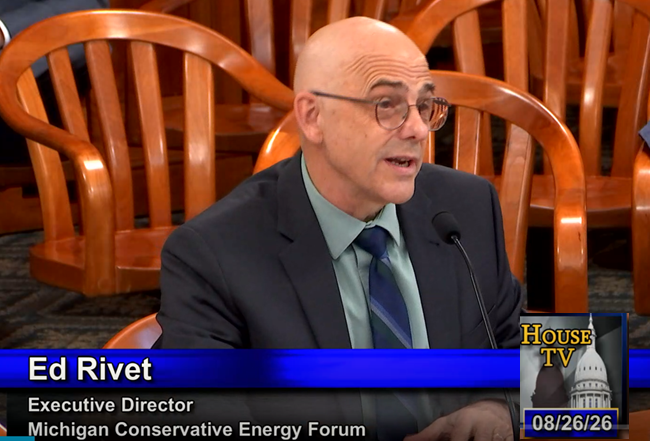
MICEF executive director Ed Rivet was asked to make a presentation before a Michigan House subcommittee on the status of Michigan’s electricity market, with a focus on its impact on economic development. Rivet first provided a broad historical overview of Michigan policies dating back to 2000. He then dove deep into the current status of the market structure, the overall grid, and the direction things are headed.


The major takeaway of his testimony is that the “old paradigm” of large central generation plants sending power out to customers in one direction must be transformed into a two-way grid where energy flows to and from a highly diverse set of “distributed energy resources” (DERs). Rivet responded to numerous Subcommittee on Corporate Subsidies & State Investments member questions, focusing further on the need for innovation, competition and diversification of the market and the technology that makes up our electricity delivery system. Watch it here beginning at the 17:00 mark.

MICEF Attends Roundtable with Sec. Burgum

Critical Mineral Supply is National Priority


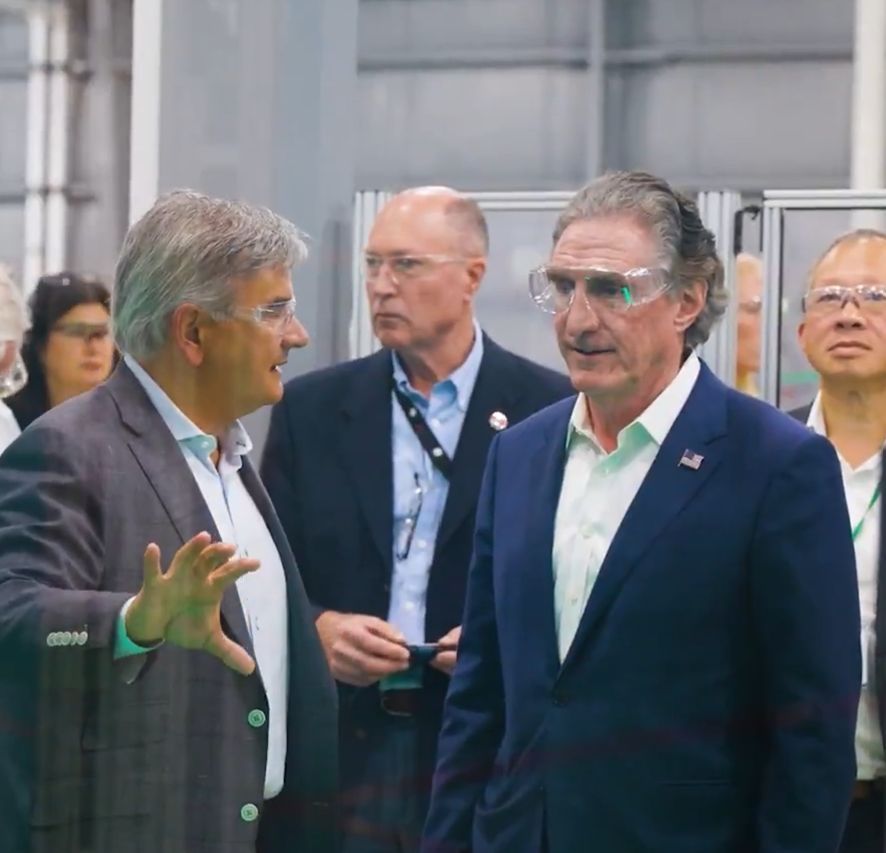
MICEF executive director Ed Rivet participated in an exclusive roundtable event with the U.S. Interior Secretary Doug Burgum at tech incubator LIFT in Detroit, focused on critical minerals and creating a U.S.-based mine to market supply chain. Key policy staff from the largest international mining corporations operating in the U.S. flew into Detroit for the meeting, along with major Michigan-based entities like General Motors represented. 


Being among only 15 people at the table, Rivet was able to ask about federal permitting reform legislation needed to supply energy and produce minerals. “Secretary Burgum’s engagement was extraordinary,” Rivet said. “He took our questions, asked insightful questions seeking to learn more and personally took copious notes, despite having two staff people sitting nearby. He meant business. I wish the average American could have seen this cabinet secretary demonstrating a 100% commitment to strengthening our country.”

Statewide Updates

First Renewable Project Approved Under PA 233

MPSC finalizes developer-townships negotiated settlement 


On August 27, the Michigan Public Service Commission approved a settlement agreement reached between three townships and solar developer, Ranger Power, finalizing the first project approved under Public Act 233. Terms of the settlement (as required by PA 233) include a one-time $180,000 community benefit agreement (CBA) to be divided among the townships. The 90MW project located in southern Ingham County will also provide a CBA of $180,000 to the county. All jurisdictions will see a meaningful increase in tax revenue paid by Ranger in contrast to the tax value as farmland. 


There are 10 more cases before the MPSC (1 wind, 8 solar, 1 solar-battery hybrid) in various stages of progress. It remains to be seen if more cases will be resolved by mutual agreement like the first case, or if the MPSC will ultimately decide for an approval or denial. Together the 11 projects total over 2 GW of capacity.


State Infrastructure Office Dangles Geologic Hydrogen Funding


The Michigan Office of Infrastructure has offered $7.5 million in grant funding for enterprises looking to explore Michigan’s potential underground geologic hydrogen. “Geo H2” is simply naturally-occurring hydrogen gas contained in subsurface rock formations much like methane (natural gas). If there is enough present, it can in theory be extracted just like natural gas through fracking technology.


The incredible advantage of H2 is that it can be burned like methane, but its only by-product is water. Additionally, the hydrogen can be streamed through a fuel cell to directly produce electricity, again with water being the only by-product. Because of its unique geology, Michigan is considered one of the top prospect states for Geo H2. Various geological surveys and test wells will be needed to determine if there are meaningful amounts of H2 to extract.

Challenges in Energy Siting


The past month has seen conflicts over the siting of energy projects across Michigan move into potentially lengthy and expensive legal battles.


In Newaygo County, the Garfield Township Zoning Board of Appeals overturned the denial of a special use permit for a utility-scale solar project. A group of 35 residents has since challenged the ZBA’s decision in circuit court, seeking to block the project. The plaintiffs will have to demonstrate they are uniquely harmed by the solar farm and that the ZBA didn’t properly interpret the township’s zoning ordinance.


Livingston County is considering noise restrictions based partly on an outdated World Health Organization study on noise and public health. Similar restrictions have already faced legal problems in St. Clair County, raising questions about whether unusually restrictive noise standards applied specifically to utility-scale projects could withstand a legal challenge. The Livingston Board of Commissioners ultimately voted 7-2 in favor of directing the county's health department to develop a health-protective sound ordinance. Commissioner Gross, one of the two voting against the motion, stated his objections being that the World Health Organization is suspect in many areas, as well as the study being partly based on data from the state of New York, was also suspect in his eyes. Those ultimately led to him not being convinced the decibel thresholds referenced were relevant at this point.

Michigan Schools Gain Certainty from Solar

The Michigan Schools Energy Cooperative (MISEC) and NorthStar Clean Energy announced that the MISEC Genesee Solar Farm in Genesee County is now operational and will provide renewable energy to dozens of Michigan school districts. The partnership is expected to provide schools with more predictable energy costs and significant long-term savings—approximately $80,000 in 2026 and more than $18 million over the 15-year agreement compared with current electric rates paid by the schools.


The partnership demonstrates how flexible solar policies can create innovative partnerships that directly benefit Michigan energy customers. Expanding options for distributed and locally generated solar could allow more schools, businesses, municipalities, and other organizations to pursue similar arrangements, increasing competition and providing additional tools to lower and stabilize electricity costs and greater reliability.


See more about the project HERE

About MICEF: Michigan Conservative Energy Forum is a chapter of The Conservative Energy Network (CEN), a 501(c)(3) non-profit coalition of 27 state-based conservative clean energy organizations advancing policy solutions that emphasize market competition, consumer choice, and innovation. Learn more at https://www.micef.org

Facebook        X