|
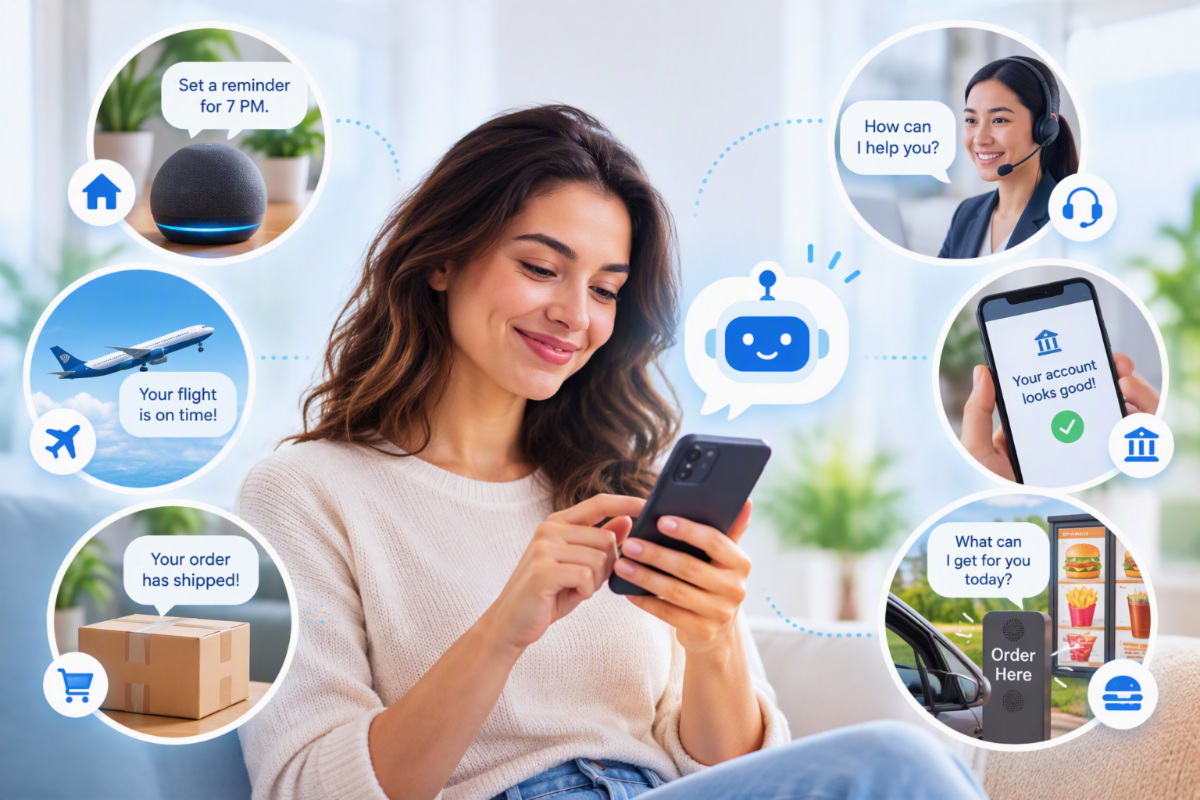
AI bots are all around us. You just have to pay attention.
And once you start looking for them, you may be surprised by just how much of your everyday life already involves interacting with AI and, more importantly, how often those interactions are actually pretty good.
AI bot technology has come a LONG way in the past two years. The conversations are becoming remarkably difficult to distinguish from those with a human. Tone, empathy, cadence, natural language, dialect recognition, response time, and the ability to understand context have all improved dramatically. In many cases, you may not even realize there is a bot on the other end of the conversation.
Take Rally's, for example. If you've been through a Rally's drive-thru recently, you may not have realized that the person or "person" taking your order was actually an AI voice assistant. Rally's is just one example of a growing number of businesses using AI to handle the front end of customer interactions.
And here's the interesting part: the interaction isn't necessarily bad.
In some cases, I'd actually prefer an AI bot to the person working the drive-thru. And if you've visited enough drive-thrus, that's probably not as controversial as it sounds.
If customers continue to embrace the technology, which they increasingly appear willing to do, the potential benefits are significant. AI can answer calls, take orders, handle routine questions, process information, and operate 24/7. This can reduce labor needs, improve consistency, shorten wait times, and allow employees to focus on work that truly requires a human touch.
We're seeing the same thing in the automotive service industry. One of the automotive retail service chains we work with uses AI to answer incoming phone calls and schedule appointments during lunch, after hours, and other times when those calls historically would have gone to voicemail hopefully to be returned the next day.
But they're taking it a step further.
The same organization uses AI to analyze and score every customer interaction with a sales associate. The AI evaluates predetermined talking points, the tone and quality of the conversation, customer sentiment, and other performance indicators. Instead of a manager randomly listening to a handful of calls, the business can gain insight from virtually every interaction and choose to take action near real-time.
Think about that for a minute.
We've gone from "AI might someday be able to have a conversation with you" to "AI is having millions of conversations with people every day and many of those people don't even realize it."
Right or wrong, I've started to assume that almost every interaction I have, whether it's a phone call, text, chat, or even an email, could involve AI somewhere along the way.
And I've come to terms with something else:
If I accomplish what I needed to accomplish quickly, efficiently, and satisfactorily, does it really matter whether there was a human on the other end?
That's probably the bigger question we're all going to have to answer as AI becomes less visible and more integrated into our everyday lives.
The technology isn't coming.
It's already here. And they're already talking to us.
|