Health Coverage for GLP-1 Drugs: Employer Considerations | | |
Glucagon-like peptide-1 (GLP-1) medications have evolved from their initial use in managing Type 2 diabetes to becoming widely popular treatments for obesity. Their high cost, combined with the large number of people who might benefit and the potential for long‑term use, has intensified employers’ concerns about the financial burden of covering GLP‑1 medications for weight management.
Employers may be facing difficult decisions about whether to broaden health plan coverage for GLP‑1 medications to include weight loss, as well as determining what conditions or limitations should apply to that coverage. Although federal law does not require health plans to cover GLP‑1 medications for obesity treatment, the legal landscape is still developing regarding how such exclusions may be viewed under federal nondiscrimination rules, including the Americans with Disabilities Act (ADA), the Affordable Care Act (ACA), the Health Insurance Portability and Accountability Act (HIPAA), and the Mental Health Parity and Addiction Equity Act (MHPAEA).
| |
Medicare Part D Changes May Impact Creditable Coverage Status
of Employer Plans for 2026 and 2027
| | As the calendar year progresses, employers that sponsor group health plans should take steps to stay ahead of key midyear compliance obligations. Federal reporting and disclosure requirements under laws such as the Employee Retirement Income Security Act (ERISA), the Consolidated Omnibus Budget Reconciliation Act (COBRA), and the No Surprises Act must be addressed during the spring and summer months to avoid potential penalties and ensure participants receive required information. | | Medicare Part D Changes Affecting Employer Plans for 2026 and 2027 | | The Inflation Reduction Act of 2022 (IRA) continues to reshape the Medicare Part D program through calendar years 2026 and 2027. While many provisions are designed to reduce costs for beneficiaries, they may also impact employer-sponsored prescription drug coverage. Key changes include the following: | | |
Calendar Year 2026
- Indexed annual out-of-pocket limit (OOP): The annual OOP threshold is capped at $2,100 for 2026, reflecting an inflation adjustment to the $2,000 cap introduced in 2025.
- Revised liability framework: Part D includes revised liability to reflect negotiated prices taking effect for selected drugs in 2026.
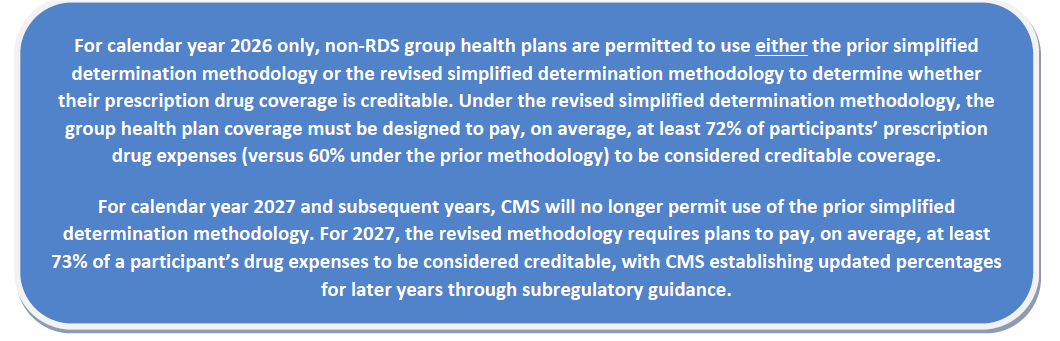
- Revised creditable coverage method: For 2026 only, non-retiree drug subsidy (RDS) plans may use either the prior simplified method or a revised simplified method to determine whether their coverage is creditable.
| | |
Calendar Year 2027
- Coverage gap formally eliminated: The Part D coverage gap or “donut hole” was eliminated in 2025 and is codified under the redesigned benefit.
- Annual OOP limit: The annual OOP cap remains in effect and continues to be indexed annually; once the limit is reached, enrollees have no additional cost-sharing for covered drugs.
- Prior creditable coverage method expires: For 2027 and beyond, non-RDS plans can no longer use the prior simplified determination method; only the revised simplified method may be used.
| | Please contact The BenefitWorks for more information about any articles in this month's newsletter, or to learn how we can help control your benefit costs. | |
EEOC Plans to Eliminate EEO-1 Reporting Requirements
for Private Employers
| | |
On May 15, 2026, the Equal Employment Opportunity Commission (EEOC) submitted a plan to the White House to eliminate EEO-1 reporting requirements for private employers.
Background
The EEO-1 reporting is a federally mandated survey that collects workforce data categorized by race, ethnicity, sex, and job category. Under Title VII of the Civil Rights Act, employers with 100 or more employees and certain federal contractors must report this data to the EEOC by March 31 of every year.
| | DOL Rescinds 2024 Final Overtime Rule | | On May 14, 2026, the U.S. Department of Labor (DOL) announced a technical amendment rescinding the department's 2024 final overtime rule. The 2024 final rule amended requirements that employees in white-collar occupations must satisfy to qualify for an overtime exemption under the Fair Labor Standards Act (FLSA). This action formalizes the removal of the regulatory text of the now-vacated 2024 final rule from the Code of Federal Regulations and, in its place, republishes the regulatory text that existed prior to the final rule's effective date. | |
CMS to Offer Medicare Beneficiaries $50 Per Month
for GLP-1 Access Starting July 1
| |
The Centers for Medicare and Medicaid Services (CMS) has announced that it will provide eligible Medicare beneficiaries access to certain GLP-1 medications for $50 per month beginning July 1, 2026, through Dec. 31, 2027.
Medicare GLP-1 Bridge
On July 1, CMS will launch the Medicare GLP-1 Bridge, a short-term pilot program providing eligible Medicare Part D beneficiaries with access to certain GLP-1 medications at a cost of $50 per monthly supply. Part D plan sponsors are not required to opt in to the Medicare GLP-1 Bridge and will not carry risk for GLP-1 drugs furnished under the program. CMS will manage prior authorization, claims adjudication and pharmacy payments centrally through a single processor. The Medicare GLP-1 Bridge will be nationwide and available in all states and territories.
| | More Information You Need | |
How an Extra Biweekly Payroll Period in 2026 Impacts
Employee Benefits
| | |
For employers that use a biweekly payroll schedule, 2026 will be an unusual year. Due to the way the calendar falls and the placement of the New Year's Day federal holiday, many organizations that typically run 26 biweekly payrolls will instead issue 27 paychecks during the year.
At first glance, this may seem like a payroll-only issue affecting pay timing or salary calculations. While payroll is part of the overall situation, an extra cycle can also have significant downstream effects on employee benefits, including contribution limits, payroll deductions and employee communications. HR and benefits teams should understand these impacts early to avoid benefits issues and employee confusion near the end of the year.
This article explores how an extra biweekly payroll period this year impacts critical aspects of employee benefits.
| | |
Health insurance can feel confusing, especially if your employer offers a new option during open enrollment or if you enrolled in a different plan this year. One option you may be covered under or could hear about is the individual coverage health reimbursement arrangement (ICHRA). If your employer offers an ICHRA, it works differently from a traditional group health plan.
Under an ICHRA, employers solely fund an account-based group health plan through employer contributions for medical care expenses, up to a specified maximum for a coverage period. Instead of an employer selecting one group plan for everyone, an ICHRA allows eligible employees to purchase their own individual health insurance coverage. The employer then reimburses its employees, tax-free, for their premiums and certain qualifying medical expenses.
| | More Information You Need | | Please contact The BenefitWorks for more information about any articles in this month's newsletter, or to learn how we can help control your benefit costs. | | The Top 5 Questions You Need to Answer for Your Employees | | Coach Amy Atherton does the bulk of the succession-related work here at ActionCOACH, and she's noticing a disconcerting trend: Owners think you have an exit strategy through one of your employees or family members; maybe you had a conversation about it at some point over a cocktail, but then when it's time to actually transition out, your employee balks. So you, the owner, are left with no plan, no strategy, and no financial benefit from this business you've spent years building. | | |
Susan Thomson
CEO, Licensed Coach
ActionCOACH Business & Executive Coaching
Direct: 608-441-5374
MakeMoreWorkLessWI.com
| | Team Engagement & Summer Fun:
Connecting Across the Organization | | As summer rolls in, the workplace naturally shifts—vacation calendars fill up, energy feels lighter, and routines become a bit more flexible. While this seasonal change can be refreshing, it also creates a real opportunity: strengthening connection across the organization at a time when engagement can easily drift. | | |
Angie Addison, SHRM-CP, PHR
Milestones HR, LLC |
Owner & Founder
www.milestoneshr.com
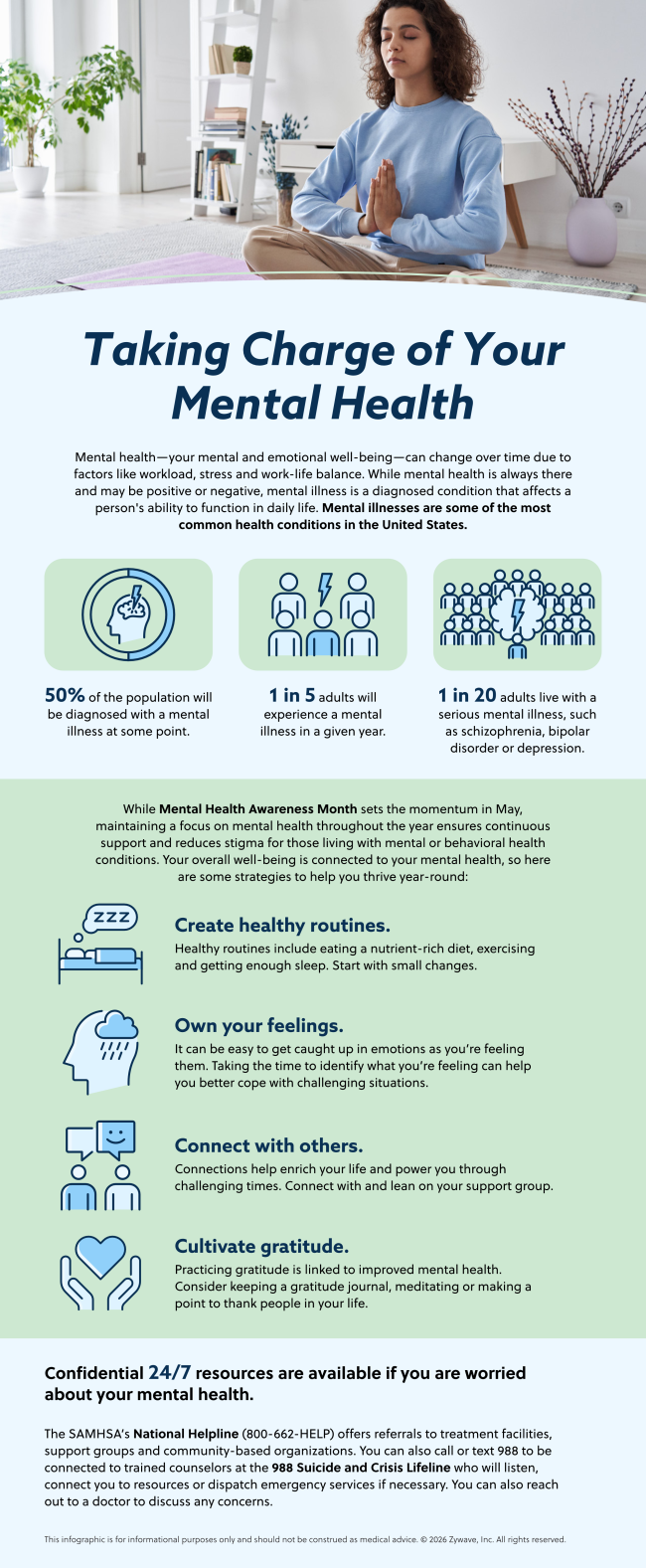
| | Taking Charge of Your Mental Health | | Mental health—your mental and emotional well-being—can change over time due to factors like workload, stress, and work-life balance. While mental health is always there and may be positive or negative, mental illness is a diagnosed condition that affects a person's ability to function in daily life. Mental illnesses are some of the most common health conditions in the United States. | | | Stay Active While Working from Home | | |
Working from home has many perks, but it may leave you at risk for developing a sedentary lifestyle and unhealthy habits. It may be easy to forget about exercise when you’re home all day. The good news is you’re in control of keeping yourself active while also getting your work done; it all comes down to building healthy habits throughout the day.
This article explores the importance of an active lifestyle and how to incorporate daily movement into your work while still getting your work done.
| | | | | |