|
Good morning and happy Monday from your Hometown Lender!
While we can certainly correlate the recent bond rally with uncertainty in the tech sector, it's also fair to say that yields were high enough to be on the lookout for a correction (so fair that it was a fixture in our commentary for most of September and early October). In other words, the tech stock slide could be viewed as the spark, but the fuel was already in place. The implication of viewing that rally as a correction is that the rally momentum is finite unless there's extraordinary levels of additional motivation. Instead, we got higher inflation reports and a supportive bounce in stocks.
That provided a clear impetus for the correction to--well... correct. As of last Friday, that bearish correction showed early signs of running its course and this morning is offering a bit more confirmation. From here, bonds are as free as they've been in a while to flip a coin to choose the direction of the next move.
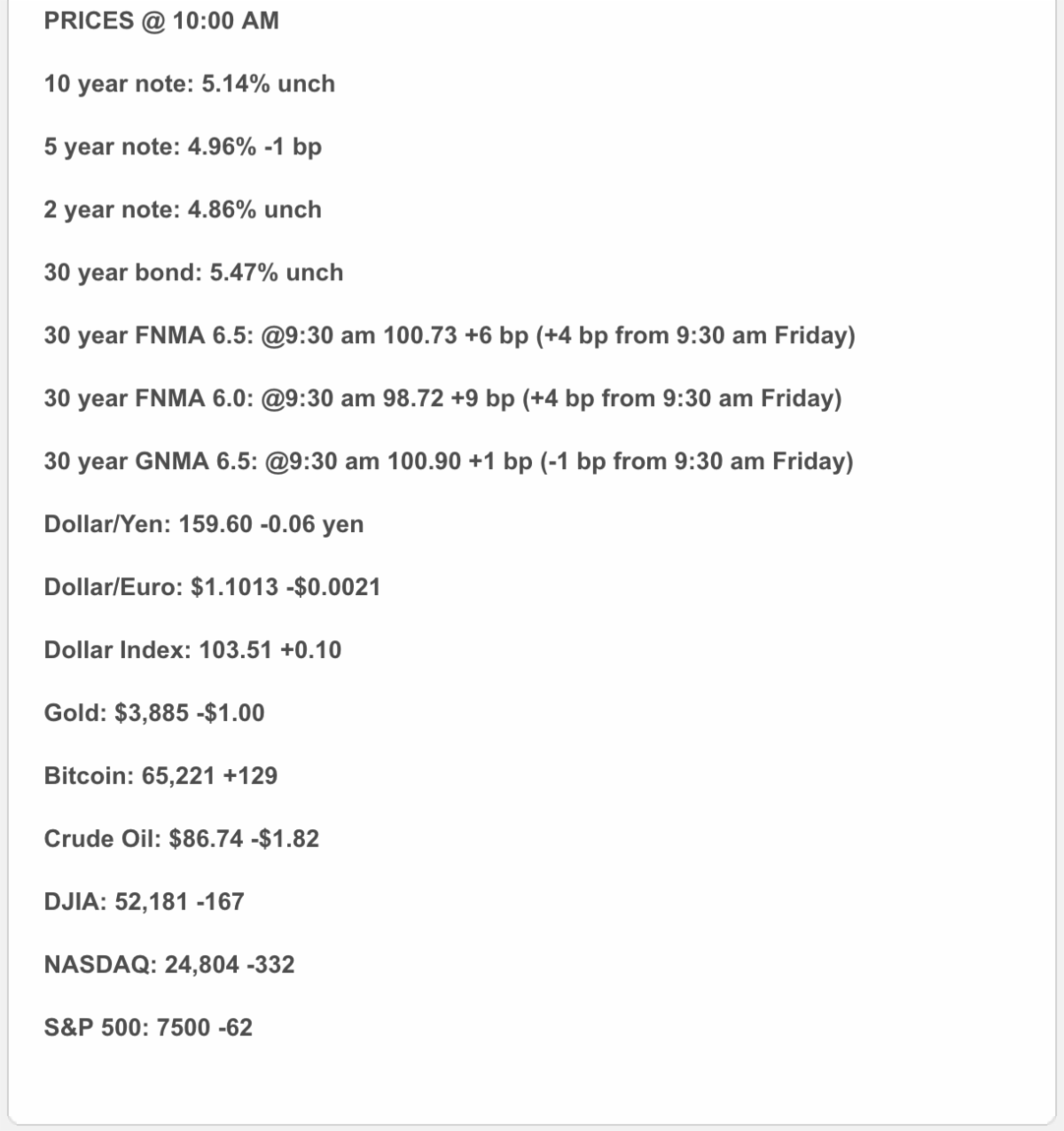
This morning’s rates should are similar to Friday’s, maybe a little better if we’re being optimistic, as mortgage bonds are up a few basis points to start the day and there’s nothing on the economic calendar that should shake things up. Repricing risk on the day is low, and we’ve seen signs that bonds have hit a floor, so hopefully we can start to see some recovery this week.
There’s certainly no need to worry about locking as we start the day, so let’s float and keep our fingers crossed.
And from a higher and better view:
A little bond-market relief is welcome after last week’s mortgage-rate climb. But before anyone sends rates a thank-you basket, let’s see whether the improvement sticks. This week brings fresh economic data, Fed minutes and major technology headlines.
Quick Snapshot
-
Latest completed MND 30-year fixed benchmark: 7.50%, November 13. [1]
-
Monday bond snapshot: 10-year Treasury 5.131%, down 1 basis point; UMBS 6.0 at 98.75, up 0.06. Exact quote time unavailable. [1]
-
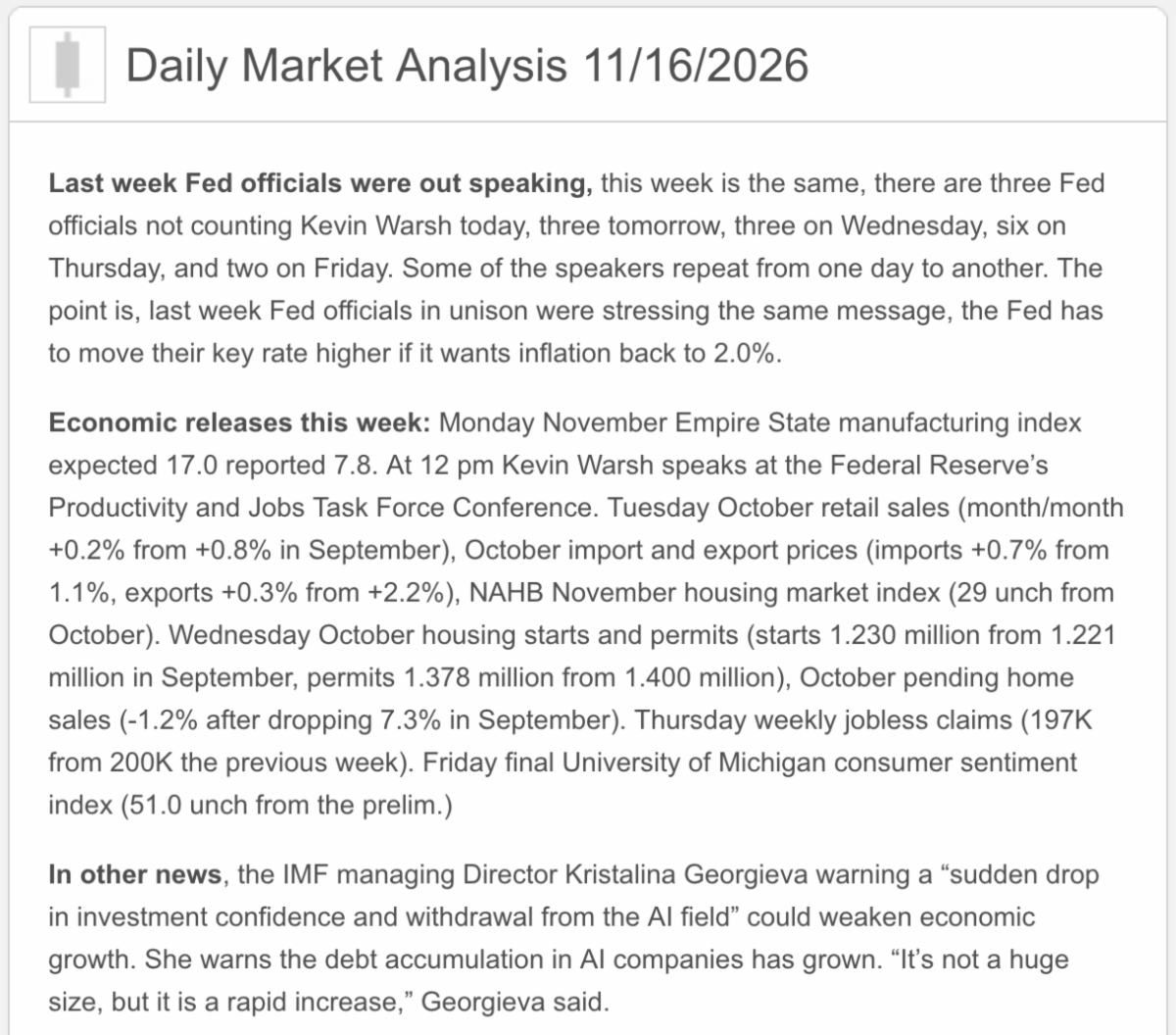
November Empire State manufacturing index: 7.8 versus 25.5 in October; still positive. [2]
-
October existing-home sales: 3.75 million annualized; inventory: 5.1 months of supply. [4]
1 | What Hit This Morning
New York manufacturers reported slower expansion, while hiring strengthened and price increases moderated but remained elevated. [2] This is a regional survey, not a national growth report.
My read: cooling activity offers some encouragement for inflation, but firm employment complicates the picture. One report will not settle the interest-rate debate.
Global equities also softened as investors awaited important AI-sector events. [3] For borrowers, market volatility makes current pricing more useful than last week’s screenshot.
2 | Fed Watch & This Week
Reuters reports that markets largely expect a quarter-point December increase. [3] That is market pricing, not a Fed commitment. Mortgage rates also reflect longer-term inflation expectations and investor demand for mortgage bonds.
Two verified calendar items, in Pacific time: Tuesday, November 17, industrial production at 6:15 a.m.; Wednesday, November 18, October FOMC minutes at 11 a.m. [5] Minutes explain the previous meeting; they are not a new rate decision.
3 | Where Mortgage Rates Actually Are
MND’s completed November 13 indexes show 30-year fixed at 7.50%, 15-year fixed at 7.03%, and 30-year jumbo at 7.50%. These national benchmarks are not Noble offers or APRs. [1]
MND reports that the 30-year measure rose 0.32 percentage point over three trading days. [6] Monday’s modest bond improvement does not erase that move or guarantee better lender pricing. Compare rate, points, fees and lock period together.
4 | Housing Market Check
MND’s report on NAR’s October figures shows existing-home sales down 5.5% monthly, with the national median price at $416,700, up 0.4% annually. Inventory stood at 1.59 million homes. [4]
My takeaway: buyers may have more choices and negotiating room, depending on the property and neighborhood. Slower sales do not automatically mean falling prices everywhere. Compare seller credits, permanent rate buydowns and price reductions using the same financing assumptions.
5 | Political Backdrop
President Trump’s Asia visit puts U.S.-China relations and advanced-chip export restrictions in focus. Reuters describes potential tighter chip controls as an issue surrounding the Trump-Xi summit. [7]
My interpretation: trade restrictions can affect business costs and confidence. Announcements, implementation and economic effects are separate stages; a political headline is not a mortgage-rate forecast.
6 | Rate Scenarios
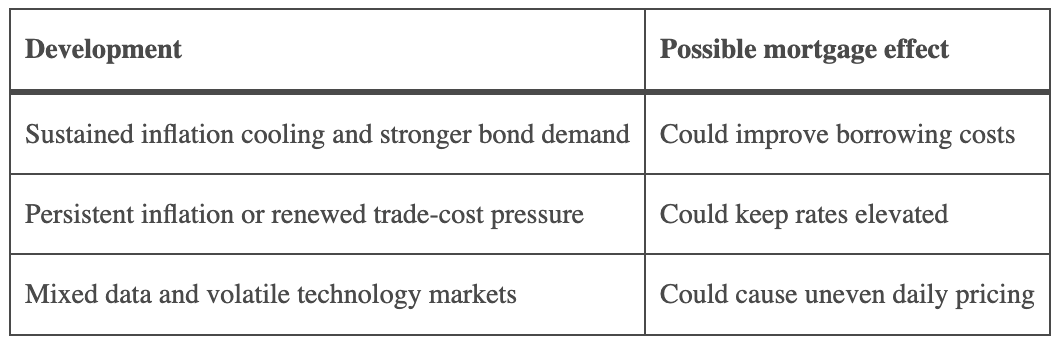
Possibilities, not predictions:
|