|
September 28, 2026
A Note from Kelly: Different Is Not Less
As we share our new article, “DEI and What Now? The New St. Louis AEC Inclusion Playbook,” I feel it is important for me to address this subject personally. We have been quiet on this front for some time—perhaps too quiet—as the legal, political and administrative landscape surrounding diversity, equity and inclusion has continued to change.
As the Executive Director of SLC3, I understand my responsibility to remain as neutral and nonpartisan as possible. We represent a broad and diverse membership, and our role is to inform, educate and bring people together.
But being nonpartisan does not mean being without principles. It does not require us to stop caring about fairness, opportunity or the experiences of people whose lives may be very different from our own.
I admit that I struggle with this—not only as a woman and an advocate for genuine inclusion among all workers, but also as a mother.
My daughter was adopted from Guatemala 24 years ago. Throughout her life, I have worried about how she would fit in and how she might be treated by classmates, teachers, parents, employers and members of the community. Like many parents, I tried to prepare her for situations I wished she would never have to encounter.
Today, I carry a different fear: What if her immigration status or citizenship is questioned? What if someone makes an assumption based on how she looks or where she was born? What if an official gets it wrong?
These thoughts keep me awake at night. There is only so much preparation a parent can provide and only so much any one person can do to protect someone they love from being misunderstood or unfairly judged.
I am reminded of a philosophy class I took at Webster University decades ago. The course focused on ethics, and by the end of those eight weeks, I remember thinking, I am a different person than I was when this class began. It had such a profound effect on me that I continued taking philosophy classes, searching for more of that same understanding.
What I recognize now is how difficult it can be to fully appreciate the experiences of people of another race, ethnicity or gender when we have never personally faced the same circumstances. An issue can feel distant or theoretical—until it happens to us, to someone we love or directly in front of us.
That is when the abstract becomes deeply personal.
We may never completely understand what it is like to walk in someone else’s shoes. Each person’s experiences are uniquely their own. But we can pause. We can listen. We can believe people when they share what they have experienced. We can examine our assumptions and consider how our decisions affect people whose lives and circumstances differ from ours.
That is where empathy begins.
In our industry, equity is often discussed through percentages, certifications, participation goals and procurement requirements. Those things matter, and our accompanying article explains how the contracting playbook is changing across the St. Louis region.
But equity is about more than compliance. It is also about people having a fair opportunity to be seen, considered and included. It is about expanding relationships, welcoming different perspectives and recognizing talent wherever it exists. It is about ensuring that qualified people and businesses have a meaningful opportunity to compete, contribute, grow and lead.
Different does not mean less capable, less deserving or less valuable. Different is simply different—and those differences can make our workplaces, project teams and communities stronger.
My challenge to each of us this week is to pause and consider our mindset, understanding and attitudes toward people who are different from us.
Whose experiences have we not taken the time to understand? Who might be missing from our professional relationships, project teams or decision-making tables? Are we making room for people to contribute meaningfully, or are we simply returning to the people and practices most familiar to us?
We can choose to build more relationships, embrace more differences and educate ourselves about the lives others lead. When we do, our hearts become more open because our minds have led the way.
If we sincerely make that effort, our lives—and our industry—will be fuller, richer, and more productive.
Have a wonderful week. And remember: Different isn’t bad. It’s simply different.
Warmly,
Kelly
Kelly Jackson
Executive Director
St. Louis Council of Construction Consumers (SLC3)
| | |
INSIDE THIS ISSUE
News & Updates
The 2027 Construction Outlook: A K-Shaped Horizon
DEI: What Now?
Ferguson Data Center Plan Moves Forward with Major Incentive Package
Fairview Heights Explores New Tool for Major St. Clair Square Redevelopment
Lambert’s London Connection Expands for 2027
Training & Education
The Capacity Reset: Is It Urgent—or Did It Just Arrive?
Your Best Training Program May Already Work for You
From Attendance to Application: Did the Training Actually Change Anything?
Stop Training for Yesterday’s Job: The Skills AEC Teams Need Next
| | ARE YOU WANTING TO BE AN ANNUAL SPONSOR? | | Want to sponsor our newsletters? Contact us! 65% Open Rates! Great opportunity for visibility and showing support! | | UPCOMING PROGRAMS & EVENTS | | |
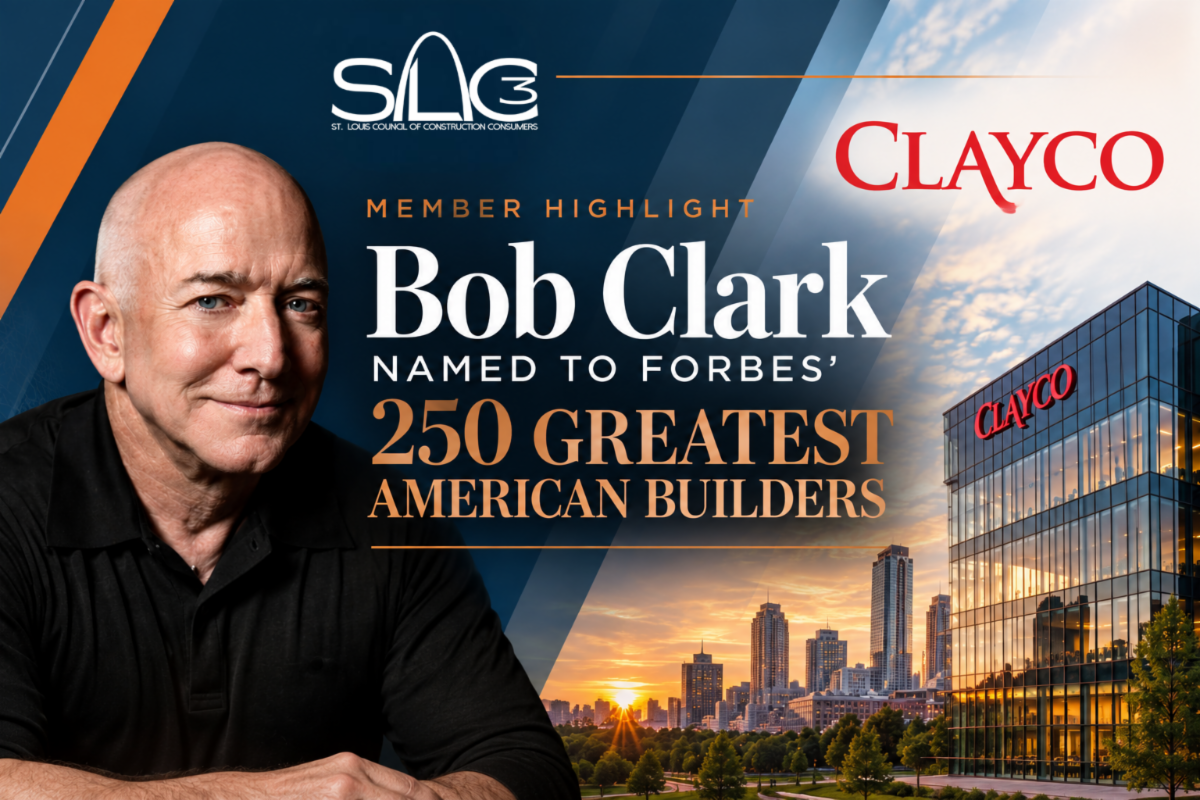
Clayco Founder Bob Clark Named Among Forbes’ 250 Greatest American Builders
A St. Louis construction leader is receiving national recognition as America marks its 250th anniversary.
Bob Clark, founder and executive chairman of Clayco, has been named No. 25 on Forbes’ “250 Greatest American Builders” list, recognizing individuals whose ideas, companies and innovations have helped shape modern America.
Clark founded Clayco in St. Louis in 1984 as a two-person operation after leaving college to pursue the business. More than four decades later, Clayco has grown into one of the nation’s leading design-build firms, with more than 4,000 employees and more than $8.1 billion in U.S. revenue in 2025, according to the announcement.
From St. Louis Startup to National Design-Build Leader
Clayco’s growth represents a remarkable St. Louis success story. What began as a small local operation has developed into a major integrated design and construction enterprise with projects and teams across the country.
Throughout that growth, Clark has remained closely connected to the St. Louis region, where Clayco was founded and where its story began.
Forbes’ new list is part of its Forbes 250 initiative, created in conjunction with the nation’s 250th anniversary. The publication is recognizing 250 builders and innovators whose work has contributed to the development of American business, infrastructure and industry.
Clark’s placement at No. 25 puts a St. Louis-born construction story on a national stage and highlights the impact the region continues to have on the broader design and construction industry.
Congratulations to Bob Clark and the entire Clayco team on this national recognition.
| | |
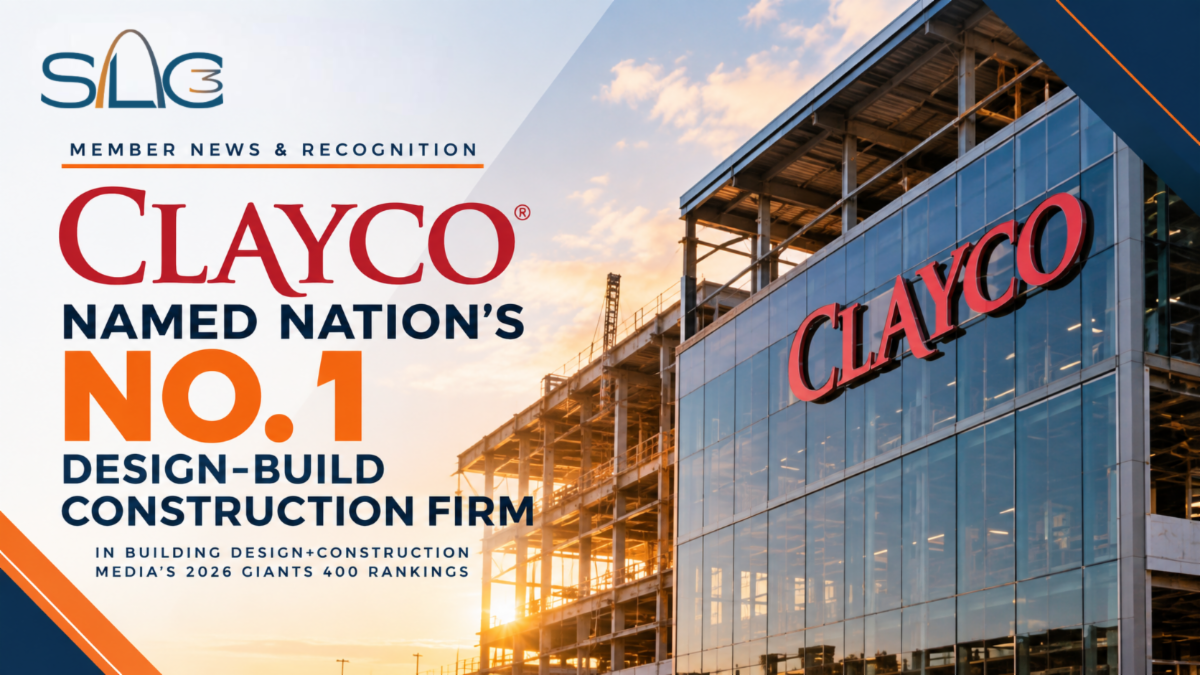
Clayco Named Nation’s No. 1 Design-Build Construction Firm
St. Louis-based Clayco has earned the top spot among the nation’s design-build construction firms in Building Design+Construction’s 2026 Giants 400 rankings, marking a major recognition for one of the region’s most prominent construction and design companies.
The annual Giants 400 report ranks architecture, engineering and construction firms across a wide range of building sectors and specialties. Clayco’s No. 1 ranking in design-build reflects the company’s scale and continued growth across complex projects throughout the United States.
In announcing the recognition, Clayco CEO Anthony Johnson emphasized that the company measures its work not simply by size, but by the impact of the projects its teams deliver.
Clayco’s portfolio spans several of the fastest-growing and most technically demanding areas of the construction industry, including advanced manufacturing, life sciences, healthcare and data centers. These sectors continue to drive significant investment in facilities requiring increasingly sophisticated design, engineering and construction expertise.
Johnson credited the achievement to Clayco’s designers, builders and problem-solvers who bring complex projects from concept to completion.
Congratulations to the entire Clayco team on this national recognition and an achievement that brings attention to the depth of design and construction expertise rooted here in St. Louis.
| |
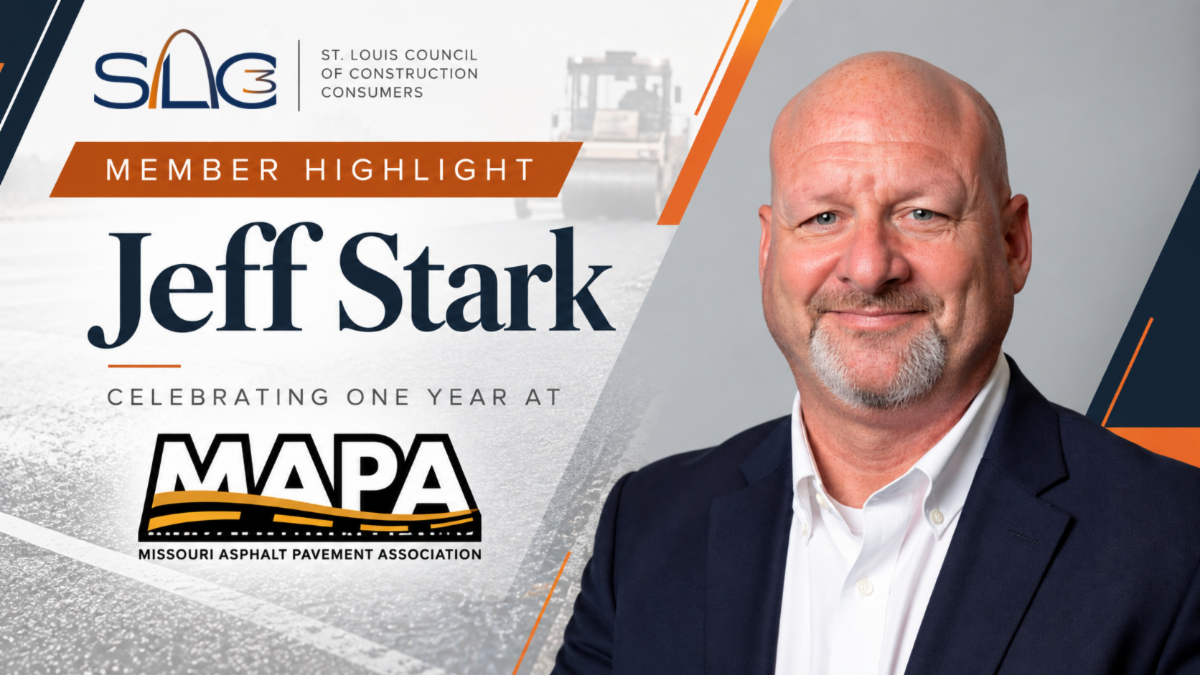
Jeff Stark Celebrates One Year with MAPA
Congratulations to Jeff Stark on celebrating his one-year anniversary with the Missouri Asphalt Pavement Association (MAPA)!
Over the past year, Jeff has become a valued part of the MAPA team, bringing a positive attitude, approachable personality and willingness to step in wherever needed.
SLC3 is proud to recognize the people who strengthen our member organizations and the Greater St. Louis construction community. Congratulations on one year, Jeff!
| |
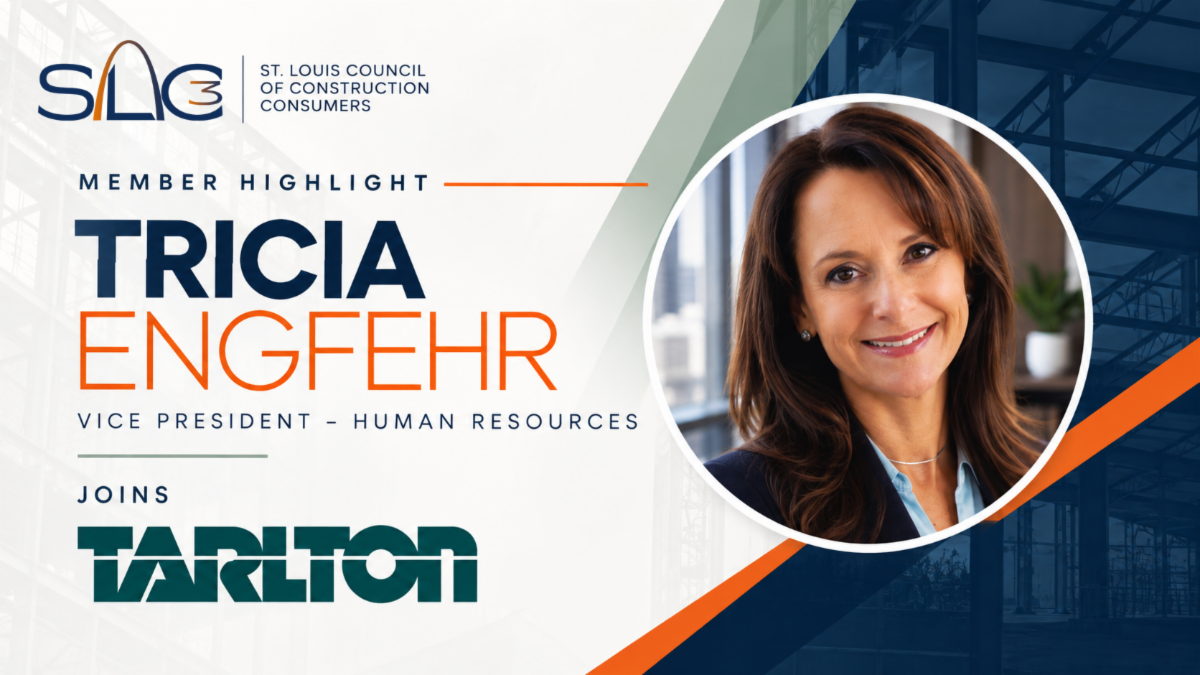
Tricia Engfehr Joins Tarlton Corporation
Congratulations to Tricia Engfehr on joining Tarlton Corporation as Vice President of Human Resources! In her new leadership role, Engfehr will support Tarlton’s people and culture while helping advance the company’s continued growth.
SLC3 congratulates Tricia and our member Tarlton on this exciting addition to their leadership team.
| |
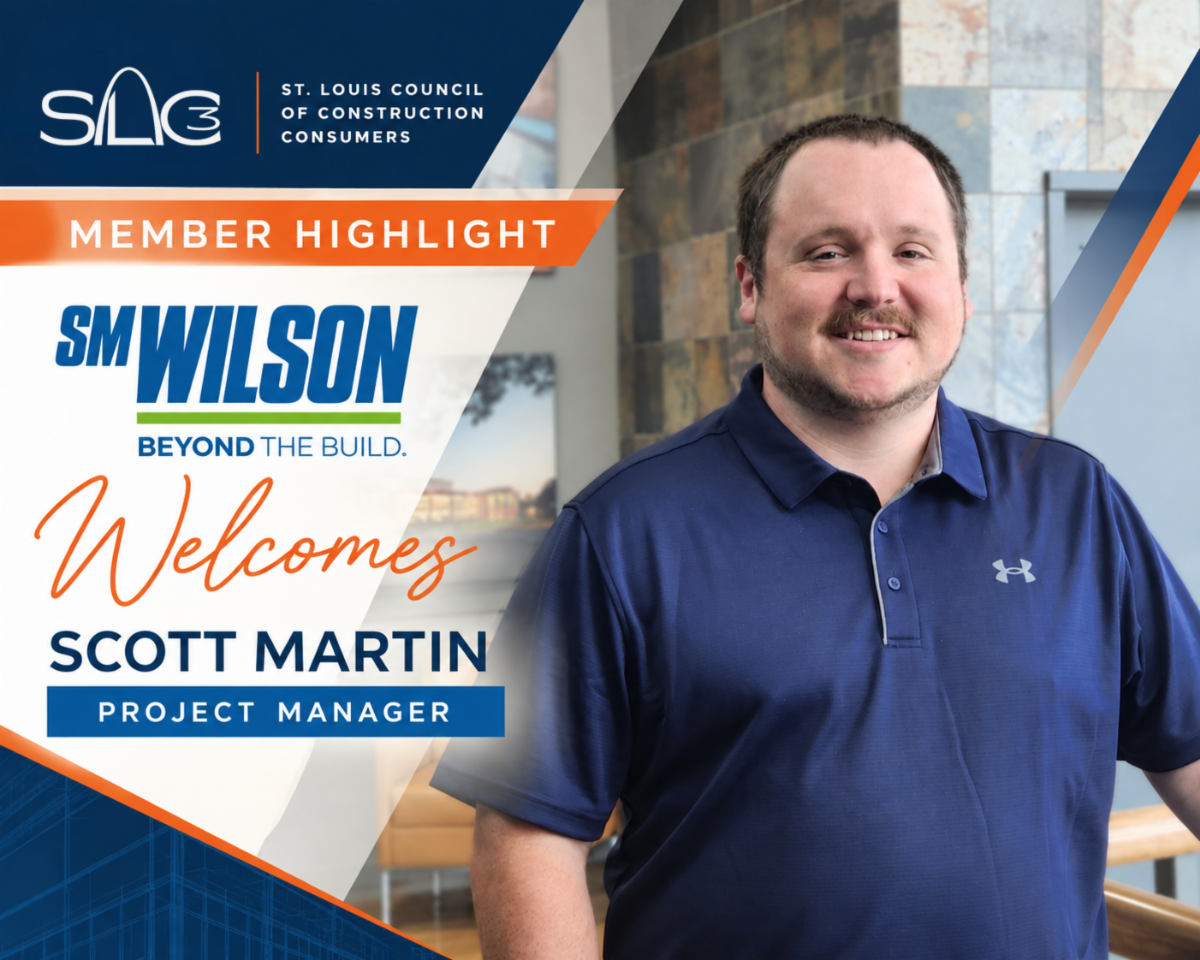
S. M. Wilson Welcomes Scott Martin as Project Manager
Congratulations to Scott Martin, who has joined S. M. Wilson & Co. as a new Project Manager! Scott brings experience serving as a project engineer, assistant project manager and project manager across a variety of sectors, including restaurant, education and industrial construction.
His diverse project experience will be a valuable addition to the S. M. Wilson team as the company continues delivering projects throughout the region.
Congratulations to Scott on his new role and to S. M. Wilson & Co. on the addition to their team!
| |
DEI and What Now? The New St. Louis AEC Inclusion Playbook | |
For years, many people across the St. Louis architecture, engineering and construction industry have worked to create a more equitable marketplace—one in which qualified minority- and women-owned firms have a fair opportunity to compete, grow and lead.
Recent legal challenges, federal policy changes and local administrative decisions have created understandable uncertainty. Some organizations have become quieter about diversity, equity and inclusion. Others are reconsidering the language they use, the programs they maintain and the methods through which participation goals are established.
But quieter does not mean the need has disappeared.
The question facing our industry is no longer simply, “Do we still support inclusion?” It is: How do we continue advancing opportunity in a changing legal and procurement environment?
In St. Louis, the emerging answer is more localized, more project-specific and increasingly grounded in documented market data.
One Region, Different Procurement Environments
AEC firms should not assume that one inclusion policy applies throughout the St. Louis metropolitan area. The City of St. Louis, St. Louis County, state agencies, federal programs and private institutions may each operate under different requirements.
City of St. Louis: The Program Has Resumed
After temporarily pausing portions of its Minority- and Women-Owned Business Enterprise program in August 2025, the City resumed M/WBE certification and contracting activity through Mayor Cara Spencer’s Executive Order 91.
The executive order directed the St. Louis Development Corporation and City departments to establish M/WBE subcontracting goals on a contract-by-contract basis, using findings from the City’s 2024 Disparity Study and the availability of qualified firms within the relevant work categories.
This is an important distinction. The familiar 25% MBE and 5% WBE benchmarks remain part of earlier City frameworks and continue to appear in some development requirements, but Executive Order 91 does not simply apply one flat percentage to every new City contract. Firms must review the requirements established for the individual solicitation.
Ordinance 72161 subsequently extended the City’s M/WBE program through December 31, 2026, providing additional time for stakeholders and City leaders to develop the next legislative framework.
For the AEC community, the practical message is clear: The City’s program is active, but compliance must be evaluated one project at a time.
St. Louis County: Uncertainty Remains
The County’s situation is more complicated.
County Executive Sam Page’s administration has taken the position that the County’s M/WBE ordinance reached its sunset date in May 2026 and must be reestablished through County Council legislation. Some Council members dispute that interpretation, arguing that the ordinance’s 2022 repeal and reenactment may have restarted the sunset period.
That disagreement has created uncertainty rather than a simple, settled conclusion that the program no longer exists. The County’s website also continues to describe M/WBE monitoring, goal achievement, good-faith efforts and workforce utilization as active program functions.
The County’s 2024 Disparity Study adds urgency to the discussion. According to information presented to the County Council, M/WBE firms represented approximately 44% of available businesses for contracts covered by the study but received roughly 17% of the associated contract dollars. On contracts where the program did not apply, their share reportedly fell to approximately 5%.
Until the legal and legislative questions are resolved, firms should review each County solicitation carefully and seek written clarification when participation or reporting requirements are unclear.
The Shift Away From One-Size-Fits-All Goals
The most significant operational change is the move toward narrowly tailored, project-specific goals.
Under the City’s framework, officials consider the scope of a contract and the availability of certified firms capable of performing the relevant work. An electrical engineering contract, roofing package, civil infrastructure project and vertical building project may therefore carry very different participation expectations.
This approach is intended to connect goals to actual marketplace conditions and the disparities documented within specific industries.
For owners and procurement teams, this means inclusion planning must begin before an RFP is released. The organization needs to understand the project’s work categories, available firms and applicable legal requirements.
For prime consultants and contractors, it means past experience is no substitute for reading the current solicitation. A participation plan that worked on one project may not satisfy the requirements of another.
For M/WBE firms, certification, service classifications and directory information become even more important. If a qualified firm is missing from the certification database—or listed under incomplete or inaccurate work categories—it may not be counted when agencies measure availability.
The Private and Institutional Market Still Matters
Public policy may establish minimum requirements, but owners do not need to view compliance as the ceiling of their commitment.
Private developers, nonprofit organizations, healthcare systems, universities and corporations can continue expanding access through supplier outreach, transparent procurement, mentorship, joint ventures, prompt-payment practices, capacity building and inclusive bid lists—provided their programs are structured appropriately and reviewed by legal counsel.
Cortex offers a visible local example. Its published construction requirements reference 25% MBE and 5% WBE participation goals, along with workforce goals of 25% minority labor hours, 5% women labor hours, 20% City-resident labor hours and 15% apprentice labor hours for qualifying projects. These requirements are connected to applicable City ordinances and development obligations, rather than operating entirely apart from government policy.
The broader lesson is that inclusion is not limited to subcontracting percentages. Owners can also examine:
- Who is invited to compete
- Whether large packages can reasonably be unbundled
- Whether smaller firms receive adequate notice and project information
- How quickly subcontractors and consultants are paid
- Whether emerging firms have access to bonding, financing and technical assistance
- Who performs the work and gains experience on the jobsite
- Whether diverse firms are repeatedly confined to minor roles or given opportunities to lead
The Growing Role of Race-Neutral Measures
As public agencies respond to legal scrutiny, many are giving greater attention to measures that expand competition without relying exclusively on race- or gender-conscious classifications.
These strategies can include:
- Small Business Enterprise and Local Business Enterprise participation
- Breaking large contracts into competitively viable packages
- Simplifying prequalification requirements when appropriate
- Improving forecasts of upcoming contracting opportunities
- Offering technical assistance and procurement education
- Strengthening prompt-payment enforcement
- Expanding access to bonding and working capital
- Encouraging mentor-protégé and joint-venture relationships
- Tracking participation, awards and actual dollars paid
These measures are not replacements for every legally supported M/WBE program. They are additional tools that can remove structural barriers and help more qualified firms compete successfully.
What AEC Organizations Should Do Now
Owners and institutional buyers: Review procurement policies with legal counsel, use current availability data and begin inclusion planning during project development—not after the RFP is issued.
Prime contractors and consultants: Read every solicitation carefully. Confirm the applicable goals, documentation, reporting procedures and good-faith-effort requirements rather than assuming the standards are the same as the previous project.
M/WBE firms: Keep certifications, contact information and work classifications current. Make sure procurement officials and prime firms can accurately identify what your company is qualified and prepared to perform.
All industry organizations: Continue building meaningful relationships before a bid opportunity is released. Inclusion is weakened when outreach begins only after the project team is already established.
What Now?
The language surrounding DEI may be changing. The legal structure of public contracting may continue to evolve. Programs may be revised, renamed or more narrowly designed
| | | |
The 2027 Construction Outlook: A K-Shaped Horizon | |
As the construction industry looks toward 2027, the outlook is neither a traditional boom nor a broad downturn. Instead, the market is following what economists describe as a K-shaped path—some sectors are expanding rapidly while others remain flat or continue to contract.
Total U.S. construction spending is expected to remain above $2.2 trillion, demonstrating the industry’s enormous scale. Yet that headline number does not tell the full story. Opportunities will differ dramatically depending on what is being built, where it is located and how the project is financed.
The American Institute of Architects’ July 2026 Consensus Construction Forecast projects that nonresidential building spending will increase approximately 3.0% in 2027. That represents an improvement from the weaker conditions experienced in 2026, but the growth is concentrated in only a handful of markets.
For owners and AEC firms, the message is clear: The market may grow in 2027, but it will not lift every sector equally.
The Sectors Driving the Market
Data Centers and AI Infrastructure: The Dominant Growth Engine
Few sectors illustrate the upper arm of the “K” more clearly than data centers.
The AIA forecasts data center construction spending will grow another 25% in 2027, following an estimated 33% increase in 2026. By 2027, data centers could represent approximately 8% of all nonresidential building spending.
This activity is influencing the broader commercial forecast, which is projected to grow 5.8% in 2027. However, without data centers, commercial construction would grow by only about 1%.
That distinction matters. While the commercial category may appear strong on paper, traditional office, retail and other privately financed projects are not experiencing the same momentum.
Data centers also create opportunities beyond the building itself. They require substantial electrical capacity, cooling infrastructure, backup power, telecommunications, security, controls and specialized construction expertise. At the same time, their energy, water and infrastructure demands require early coordination among owners, utilities, design teams, contractors and public agencies.
Healthcare: A Dependable Anchor
Healthcare continues to offer one of the more stable construction pipelines. Spending is forecast to increase approximately 4.4% in 2027, driven by an aging population and continued demand for hospitals, outpatient facilities, specialized treatment centers, senior care environments and medical renovations.
For the St. Louis region—with its significant healthcare, research and institutional presence—this sector should remain an important source of opportunity. Firms with experience navigating occupied facilities, infection-control requirements, complex building systems and phased construction may be especially well positioned.
Hospitality and Recreation: Selective Strength
Hotel construction is projected to grow approximately 5.2% in 2027, while amusement and recreation construction is forecast to increase about 3.0%.
These markets are still selective, but investment in sports facilities, entertainment venues, performance spaces, hotels and visitor experiences could generate opportunities in communities seeking economic development and tourism growth.
Education and Retail: Modest Movement
Education construction is forecast to grow just 0.9% in 2027, while retail and other commercial construction may increase approximately 2.7%.
These markets are not disappearing, but much of the work may center on modernization, renovation, adaptive reuse and improvements to existing facilities rather than large waves of new construction.
Manufacturing: Stabilizing After a Historic Surge
Manufacturing construction reached extraordinary levels following major investments in semiconductor, battery and advanced-manufacturing facilities. That expansion is now cooling.
The AIA forecasts manufacturing construction spending will decline 0.6% in 2027, following a much sharper contraction in 2026. This should be viewed as a normalization after an unprecedented investment cycle—not the disappearance of industrial work.
Opportunities may increasingly shift toward facility improvements, utility upgrades, automation, process changes and expansions within existing operations.
Traditional Office Construction: Continued Pressure
Traditional office construction remains one of the weakest sectors. Spending is projected to decline another 4.5% in 2027as organizations continue evaluating space needs, hybrid work arrangements and existing vacancies.
For design and construction firms, the greater opportunity may be in repositioning older buildings, consolidating workplaces, modernizing amenities and converting underused properties to new purposes.
| | | | |
Lambert’s London Connection Expands for 2027
St. Louis Lambert International Airport will see significantly expanded nonstop service to London next year, as British Airways increases its seasonal route to daily flights during portions of summer 2027.
The expanded schedule represents an 80% increase in available seats compared with summer 2026, adding more than 35,400 seats between St. Louis and London. The route, which launched in April, connects St. Louis directly with London Heathrow and British Airways’ broader international network.
The expansion is another sign of St. Louis’ growing global connectivity, creating greater access for business travel, tourism, conventions and international investment while strengthening Lambert’s role as a major regional economic asset.
| |
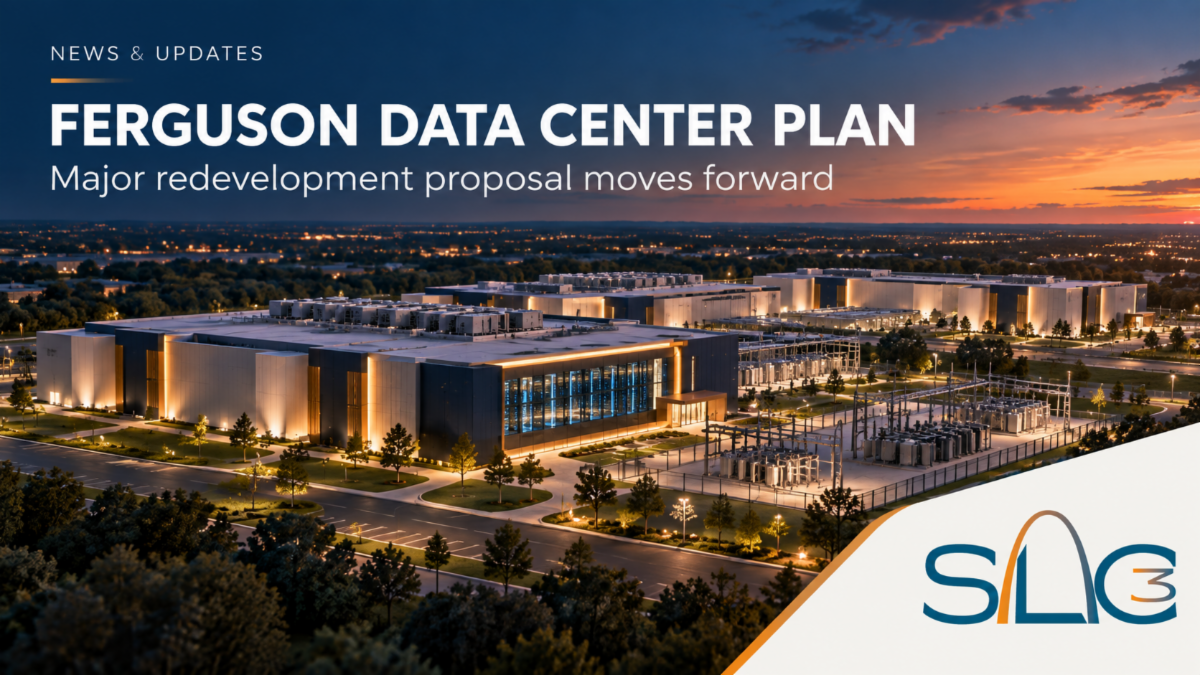
Ferguson Data Center Plan Moves Forward with Major Incentive Package
A massive redevelopment proposal for the former Emerson campus in Ferguson is moving forward after the Ferguson City Council approved an incentive package that could support one of the largest private investments ever proposed in North St. Louis County.
The 217-acre former corporate campus at 8000 West Florissant Avenue is being positioned for redevelopment as a technology and data center campus. The proposal calls for an initial private investment of at least $1.8 billion, with the potential for substantially more investment as the campus develops.
The Ferguson City Council voted 4-3 to approve an incentive package that could provide up to $1.5 billion in tax incentives over 15 years.
The redevelopment comes as data centers continue to emerge as a significant new construction market throughout the St. Louis region. Large-scale facilities require extensive electrical infrastructure, mechanical systems, site development and specialized construction expertise, creating a different project profile than the office campus the Ferguson property has historically supported.
The former Emerson campus encompasses approximately 217 acres, providing significant room for phased development. Plans contemplate data center and technology uses while retaining jobs already associated with the property and adding new employment as investment occurs.
The proposal has also generated significant public discussion surrounding the size of the incentives, infrastructure demands and the long-term impact on local taxing districts.
The Ferguson project still has significant development work ahead, but the latest approval represents an important step toward transforming one of North County's largest corporate properties into a new technology-focused campus.
| | |
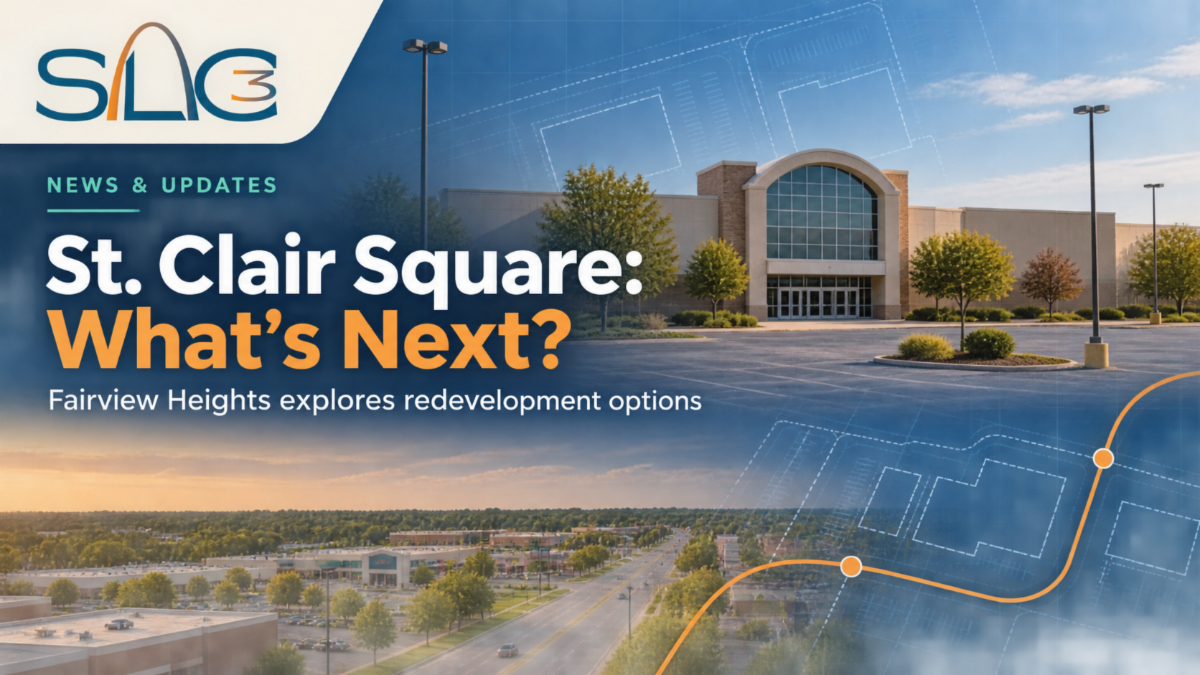
Fairview Heights Explores New Tool for Major St. Clair Square Redevelopment
Another major Metro East redevelopment opportunity may be beginning to take shape.
Fairview Heights is exploring the creation of a STAR bond district encompassing St. Clair Square and surrounding commercial properties, potentially opening the door to significant new investment along one of the Metro East's largest retail corridors.
The Fairview Heights City Council authorized a contract with St. Louis-based PGAV Planners to conduct the feasibility work required to pursue the district. The proposed area would include St. Clair Square and additional properties along Illinois Route 159.
STAR — Sales Tax and Revenue — bonds allow qualifying development costs to be financed using future sales tax revenue generated within a designated district. Illinois expanded the program statewide in late 2025, creating a new economic-development tool for communities pursuing large tourism, entertainment, retail and mixed-use projects.
Fairview Heights has not approved a specific redevelopment project, selected a developer or announced future tenants for St. Clair Square. The current work is an early planning step.
The feasibility study will examine market demand, tourism and visitation, economic impacts and potential tax revenue to determine whether the area could support a STAR bond district and future redevelopment.
The effort also reflects a larger development trend taking shape on the Illinois side of the St. Louis region.
Glen Carbon has already received state approval for a STAR bond district associated with the proposed Destination Illinois development, a nearly $2 billion mixed-use project envisioned with retail, entertainment, hotels and other attractions.
If Fairview Heights ultimately follows with a large redevelopment of its own, the STAR bond program could become an increasingly important piece of the Metro East development landscape — and potentially create a significant pipeline of planning, design, infrastructure and construction work in the years ahead.
| | |
Arcturis Helps Shape the Guest Experience at The Noble Crown
A new dining destination in St. Louis’ Central West End is putting design collaboration on display.
The Noble Crown, a modern American bistro, has opened with a warm, highly detailed interior that brings together architecture, lighting, graphics and construction to create a distinctive new space in the neighborhood.
SLC3 member Arcturis was part of the project team, collaborating with lead design firm HOK and providing lighting design and graphic design for the restaurant. Pinnacle Contracting, Inc. was also part of the team.
The finished space demonstrates how several design disciplines can work together to shape the way guests experience a hospitality environment. Among the notable elements are:
- Layered architectural and decorative lighting throughout the dining room
- A prominent bar that serves as a visual focal point
- Custom graphic details incorporated into the restaurant’s identity
- Warm wood tones, greenery and neutral finishes
- Indoor and outdoor dining areas designed to feel connected
- A mix of intimate seating and more energetic gathering spaces
For Arcturis, the project is an example of design work that extends beyond the traditional boundaries of architecture and interiors. Lighting and environmental graphics become part of the experience itself, helping establish atmosphere, reinforce identity and guide how a space feels to the people using it.
The Noble Crown adds another hospitality destination to the Central West End while showcasing the collaborative work of St. Louis' architecture, design and construction community.
Project Team: Arcturis — Lighting Design & Graphic Design | HOK — Lead Design Team | Pinnacle Contracting, Inc. — Construction
| |
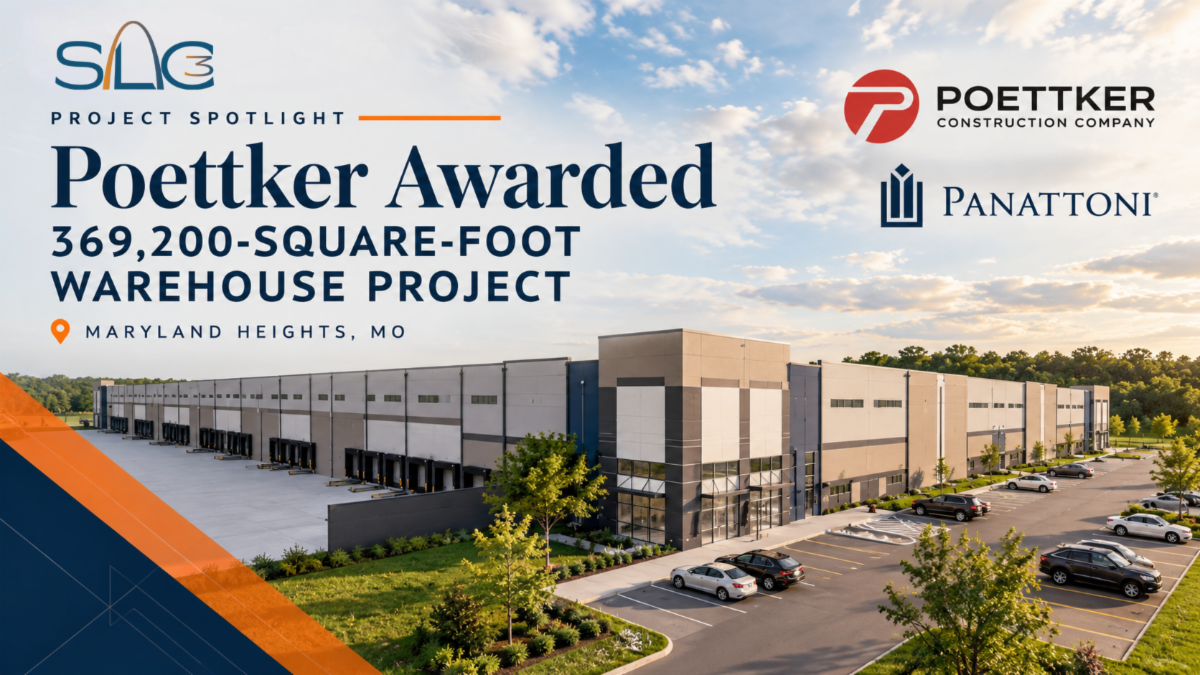
Poettker Awarded 369,200-Square-Foot Warehouse Project in Maryland Heights
A major industrial development is moving forward in Maryland Heights, with Poettker Construction Company selected to build a new 369,200-square-foot speculative warehouse for Panattoni Development Company.
The project, identified as Commerce Center Lot 3, will add a sizable new distribution and logistics facility to the St. Louis region’s industrial market.
Plans call for a concrete tilt-up building designed to accommodate modern logistics and distribution operations. The cross-dock warehouse will feature a 36-foot clear height, 48 dock doors and four drive-in doors, providing the flexibility needed for a range of potential industrial users.
The development will sit on approximately 22 acres and include 238 automobile parking spaces and 72 trailer positions, supporting the movement and storage demands associated with a large-scale distribution operation.
Poettker announced the project award as part of its distribution and warehouse portfolio and will work with Panattoni Development Company to deliver the facility.
The project is another notable addition to the industrial construction pipeline in Maryland Heights, a strategically located part of the St. Louis metropolitan area with access to major transportation corridors and an established concentration of commercial and industrial development.
For the regional AEC community, Commerce Center Lot 3 represents a substantial new construction project spanning site development, concrete tilt-up construction, building systems and the infrastructure required for a modern logistics facility.
Project at a Glance
-
Project: Commerce Center Lot 3
-
Location: Maryland Heights, Missouri
-
Developer: Panattoni Development Company
-
General Contractor: Poettker Construction Company
-
Size: 369,200 square feet
-
Site: 22 acres
-
Building Type: Speculative cross-dock warehouse
-
Clear Height: 36 feet
-
Loading: 48 dock doors and 4 drive-in doors
-
Parking: 238 automobile spaces and 72 trailer positions
| |
Lawrence Group Designs Five Iron Golf Experience in Clayton
SLC3 member Lawrence Group recently highlighted its work on Five Iron Golf in Clayton, where thoughtful design transformed an existing street-level retail space into a destination for golf, entertainment and social gatherings.
The space features 10 high-tech golf simulators, flexible areas for private events, expansive storefront windows and custom artwork from local artists that brings St. Louis character into Five Iron Golf’s national brand. Lawrence Group is also continuing its work with Five Iron as another location prepares to open at The District in Chesterfield.
The Clayton project team also included Pinnacle Contracting, Inc. and Cobalt Construction Consulting.
| | |
50-Unit Senior Housing Development Breaks Ground in North St. Louis
A long-planned senior housing development is moving from plans to construction in North St. Louis. Fields Place at Natural Bridge has broken ground in the Greater Ville, bringing 50 new mixed-income apartments to the neighborhood at 4300 Natural Bridge Avenue.
The approximately $17.9 million development will create a four-story residential building designed for seniors age 62 and older. Plans include one- and two-bedroom apartments, with a combination of affordable and market-rate units.
The project is being developed by Efficacy Consulting and Development and has assembled financing from multiple public and private sources. The City of St. Louis Community Development Administration previously committed funding to the development, which also utilizes Low-Income Housing Tax Credit resources.
Of the 50 apartments, 32 are planned for households at 60% of area median income, eight at 30% of area median income and 10 as market-rate units.
Beyond adding housing, the project represents continued investment along the Natural Bridge corridor and in the Greater Ville, where new construction can play a larger role in neighborhood redevelopment.
Fields Place is particularly notable because it combines new construction with a specific community need. As the St. Louis region's housing stock ages and demand for accessible senior housing grows, developments like this require the construction industry to think beyond simply adding units. Accessibility, building systems, energy efficiency, security and connections to surrounding services all become important pieces of the project.
| |
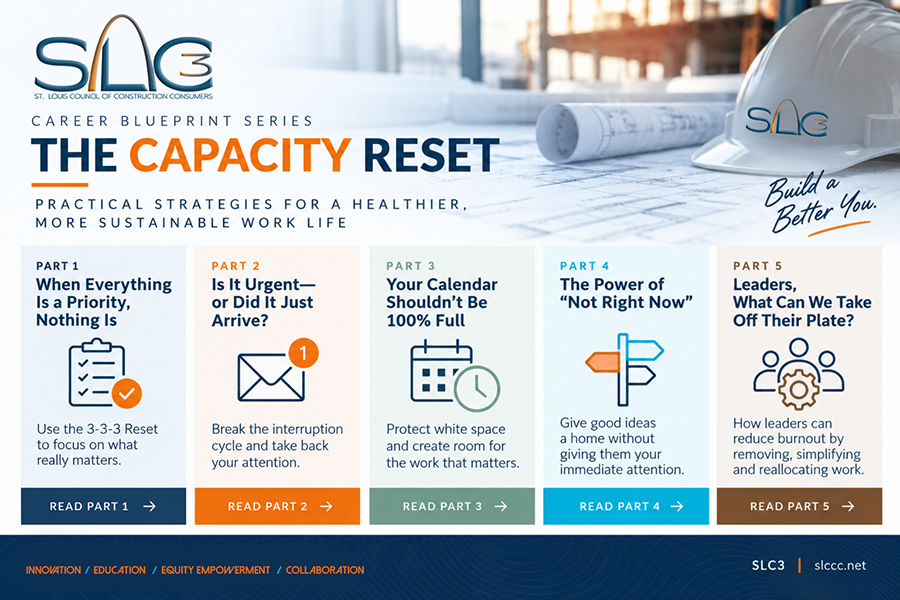
Is It Urgent-or Did It Just Arrive? | |
Your email notification pops up.
You look.
A Teams message comes in.
You answer.
Someone texts.
You respond.
Then you return to what you were doing and try to remember exactly where you left off.
Sound familiar?
One of the biggest drains on our capacity isn’t necessarily the amount of work we have. It’s the constant interruption of that work.
And somewhere along the way, many of us started confusing something new with something urgent.
Incoming Doesn’t Mean Important
When a message arrives, it immediately gets our attention simply because it’s new.
But ask yourself:
Is this actually urgent—or did it just arrive?
Those are two very different things.
Some things absolutely require an immediate response. A jobsite issue affecting safety, a client emergency or a decision holding up a project can’t necessarily wait.
But that doesn’t describe every email in your inbox.
Yet when we treat every incoming request with the same urgency, we’re allowing other people to continuously rearrange our priorities.
The Cost of “Just Checking”
We often tell ourselves:
“I’ll just check my email really quickly.”
But checking rarely ends with checking.
| | | | |
Owner Perspective Series | Week 5 |
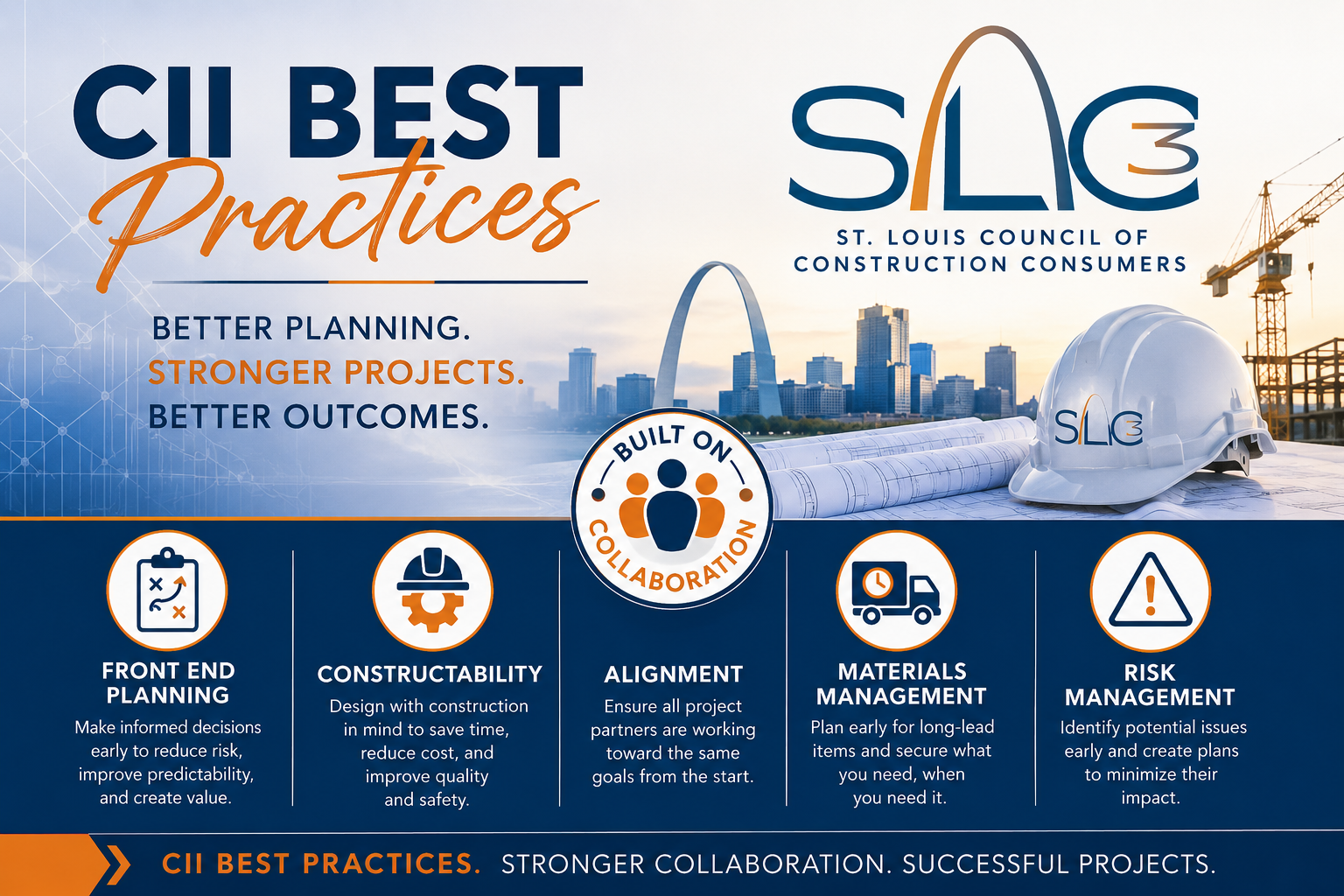
Risk Management: Solving Tomorrow’s Problems Before They Happen
Every construction project carries risk. The difference between successful projects and struggling ones often isn’t the number of risks—they all have them. The difference is how early those risks are identified and managed.
The Construction Industry Institute (CII) recognizes Risk Management as a Best Practice because proactive planning consistently delivers better outcomes than reacting to problems after they occur.
Today’s construction environment presents more uncertainty than ever. Labor shortages, volatile material pricing, supply chain disruptions, permitting delays, weather events, and evolving regulations all have the potential to impact project success. Waiting until these issues surface in the field often results in costly schedule delays and budget overruns.
Leading owners are shifting from asking, “What went wrong?” to “What could go wrong, and how do we prepare for it?”
Effective risk management begins early by identifying potential challenges, evaluating their likelihood and impact, assigning ownership, and developing mitigation strategies before construction begins.
Questions Every Project Team Should Be Asking
- What are the greatest threats to our schedule?
- Which materials or equipment present procurement risks?
- Are there labor shortages for critical trades?
- What site conditions could impact construction?
- What contingency plans are in place if key assumptions change?
Projects that openly discuss risks at the beginning create fewer surprises later. They also make better decisions because everyone understands where the greatest vulnerabilities exist.
Perhaps most importantly, risk management should not be a one-time exercise. The strongest project teams revisit their risk register throughout design and construction, adjusting as conditions evolve.
| | | |
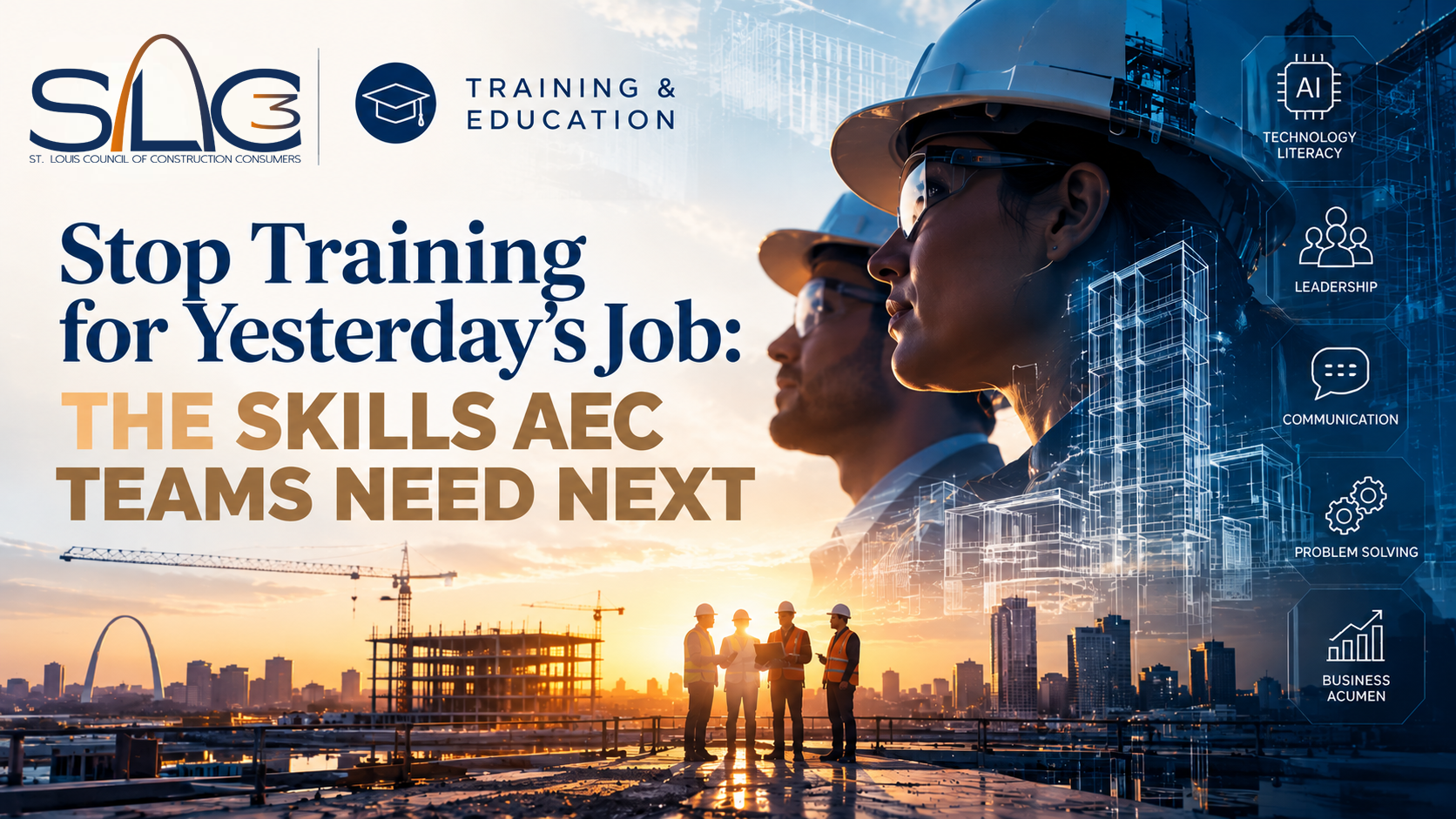
Stop Training for Yesterday's Job | |
The construction industry has always trained people to do their jobs better. But there is a new question worth asking:
Are we training people for the jobs they have today, or for the jobs those roles are becoming?
The distinction matters.
A project manager’s job is changing. So is the work of an estimator, superintendent, architect, engineer, safety professional, marketer and owner representative.
Technology is part of that change, but this conversation is bigger than software.
Today’s AEC professionals are being asked to interpret more information, coordinate across more disciplines, make decisions faster, communicate with increasingly complex project teams and adapt to tools that may not have existed when they entered the industry.
That means continuing education has to evolve, too.
Technical Knowledge Is Still Essential. It Just Isn’t Enough.
Knowing your discipline remains the foundation. The industry still needs people who understand how buildings go together, how projects are delivered, how risk is managed and how quality and safety are maintained.
But technical knowledge increasingly sits alongside another set of capabilities.
The professionals positioned to grow over the next several years will need to know how to:
- Use technology intelligently, not simply operate it.
- Evaluate information and recognize when something doesn’t look right.
- Communicate risk before it becomes a crisis.
- Work effectively across generations and disciplines.
- Understand the business behind the project, not only their piece of it.
- Learn new tools without abandoning sound judgment.
- Lead conversations even when they aren’t the person with the highest title.
Those aren’t “soft skills.” On a complicated project, they are performance skills.
| | | |
Your Best Training Program May Already Work for You | |
Some of the most valuable construction knowledge has never appeared in a manual.
It lives in the superintendent who can walk onto a project and immediately sense that sequencing is going to become a problem.
It's in the project manager who knows which questions to ask before approving a change.
It's in the estimator who remembers what went wrong on a similar project ten years ago.
And it's in the owner, engineer, architect, safety professional or craft worker who has learned hundreds of small lessons through years of experience.
We call it experience.
Organizations should also think of it as knowledge that needs to be transferred.
When Someone Leaves, What Leaves With Them?
The AEC industry spends significant time talking about recruiting the next generation. That's important.
But recruiting someone into the industry and preparing that person to succeed are two different challenges.
As experienced professionals retire, change companies or move into different roles, organizations can lose knowledge that took decades to build.
The problem is that much of it isn't written down.
Think about what an experienced employee knows:
- Why a certain process exists.
- Which early warning signs deserve attention.
- Which questions should be asked before construction begins.
- Where projects have historically gotten into trouble.
- How to navigate difficult conversations.
- Which shortcuts aren't worth taking.
- When to stop and ask for another opinion.
- How a decision made today may affect someone six months from now.
You won't find all of that in an employee handbook.
| | | From Attendance to Application: Did the Training Actually Change Anything? | |
We measure training in familiar ways.
How many people attended?
Did they like the speaker?
How did they rate the program?
Did they receive a professional development hour or learning unit?
Those measurements matter.
But there is another question that may matter even more:
What did anyone do differently afterward?
That's where education becomes performance.
A Full Room Isn't the Finish Line
The AEC industry has no shortage of information.
There are conferences, webinars, safety meetings, lunch-and-learns, leadership programs, technology demonstrations, professional development courses and online resources available on nearly every topic imaginable.
The challenge isn't always access to information.
Increasingly, the challenge is turning information into behavior.
Someone can attend an excellent session on communication Monday morning and handle a difficult conversation exactly the same way Tuesday afternoon.
A project manager can attend technology training and return to the spreadsheet they have used for ten years.
A leadership team can hear an outstanding presentation on developing employees and never discuss it again.
The training wasn't necessarily unsuccessful.
The learning simply stopped too soon.
Try the 48-Hour Rule
What if every professional development program ended with one simple expectation?
Use something you learned within 48 hours.
Not five things.
One.
After a training session, ask participants to identify:
- One idea worth remembering.
- One behavior worth changing.
- One person who needs to hear what they learned.
-
One action they can take within 48 hours.
That last step matters.
Application strengthens learning.
| | | | CALL FOR COMMITTEE MEMBERS? TIME TO HELP... | | |
Much of the work we do is driven by member volunteers, and right now our committees could use a few more voices and helping hands. Committee service offers an opportunity to influence priorities, collaborate with peers, and support initiatives that impact the industry and our region. If you’re willing to get involved—even in a small way—we invite you to sign up.
| | | HELP US KEEP THE PICTURE CURRENT | | |
The construction and development landscape across the region continues to move quickly—and keeping our information accurate and relevant matters.
We’ve recently updated our construction and development listings to reflect new projects, changes in scope, and activity across the greater St. Louis area. These updates help ensure that our members have access to timely, useful insight into what’s being built, redeveloped, and planned throughout the region.
That said, no one has a better pulse on what’s happening than the people working in it every day. If you’re aware of a project that’s underway, planned, or evolving—or if you notice something that needs to be updated—we invite you to share it with us. Your input helps strengthen the resource for everyone.
Keeping this information current is a collaborative effort, and we appreciate your help in making it as accurate and valuable as possible.
| | |
Have something to share? Reach out anytime—we’re always glad to hear from you.
| | SEND US YOUR COMPANY UPDATES! | | |
Your SLC3 Membership, in your Pocket
Stay connected wherever the workday takes you. With the free MemberPlus app, you can browse upcoming SLC3 events, register from your phone, catch up on news, find fellow members in the directory, and access member resources. You can also update your profile on the go.
Download MemberPlus from the Apple App Store or Google Play, then sign in with your existing InfoHub credentials. Your app access will match your InfoHub access.
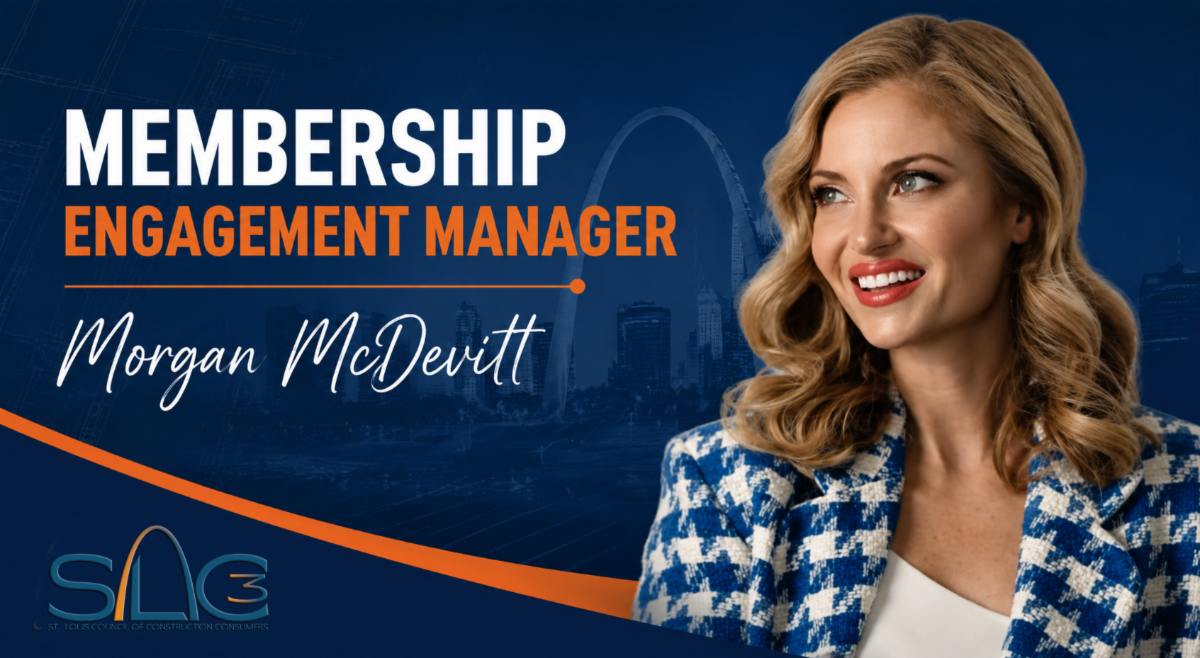
| | If you are considering joining us, contact Morgan McDevitt about Membership. Don't miss our member-only activities and perks! | Let's be sure to welcome our newest members! We look forward to partnering with you! | |  | |
SLC3 2026 Officers:
Michael Hargrave (BJC Health) - President
Vince Nutt, (BJC Health)- 1st Vice President
Mark Flannery (Bayer), 2nd Vice President
Tiffanie Toles, (Kwame Building Group)
Secretary
Danielle Thomas (Hazelwood SD), Treasurer
Frank Niemerg (Ameren), Immediate Past President
Kelly Jackson, Executive Director
| DON'T FORGET: If you are a member of the SLC3 you can access all our members in the InfoHub. Make sure to login and regularly check it out! | | Looking to fill a position? Send us your roles and we will promote them! | | |
BRONZE SPONSORS
(WE SHOULD HAVE MORE SPONSORS HERE????)
| | |
St. Louis Council of Construction Consumers
301 Sovereign Ct, Suite 101, Ballwin, MO 63011
636.394.6200 | info@slccc.net | slccc.net
Staff:
Kelly Jackson // Executive Director
Morgan McDevitt // Membership Engagement Manager
| | CONNECT, INTERACT & SHARE WITH US! | | Please note unsubscribing from this communication will unsubscribe you from ALL communications from the SLC3. | | | | |