|
November 2, 2026
Hello SLC3 Community,
When calendars are full, every commitment has to earn its place. I understand that. So I want to share why I believe making time for SLC3’s educational programs deserves a place on yours.
For those who provide AEC services, meeting clients matters. Understanding what those clients need, what challenges they face, and how to help them achieve better outcomes matters just as much. That is where learning together becomes especially valuable.
As an owner-led organization, SLC3 brings those perspectives into our education. Owners value opportunities to explore better approaches, learn from others’ experiences, and discuss what makes projects more successful. For architects, engineers, contractors, and service providers, participating in those conversations can deepen your understanding of the people you serve.
The conversation that helps you understand a client’s challenges can also be the beginning of a stronger relationship.
Our mission is to make SLC3 a place where the industry learns together—and where promising ideas become shared best practices. That takes owners sharing their experiences, practitioners contributing their expertise, and people willing to bring what they learn back to their teams. Our programs and committees provide opportunities to do exactly that.
We hear often that there are too many commitments and too little time. That is real. But the challenges consuming our time—communication gaps, project delays, difficult decisions, and workforce pressures—are also reasons to keep learning.
Here is my invitation: Choose one upcoming SLC3 educational program that addresses a challenge your team is facing. Put it on your calendar, invite a colleague, and bring a question. If you cannot attend, consider who on your team would benefit. If you want to help shape the conversation, join a committee.
Your time is valuable. Our responsibility is to make that time worthwhile, and your input helps us do that. Tell us what you need to learn, what your team is navigating, and where a shared conversation could help.
We have an opportunity to make our industry better together. Let’s make room for it.
Warmly,
Kelly
Kelly Jackson
Executive Director
St. Louis Council of Construction Consumers (SLC3)
| |
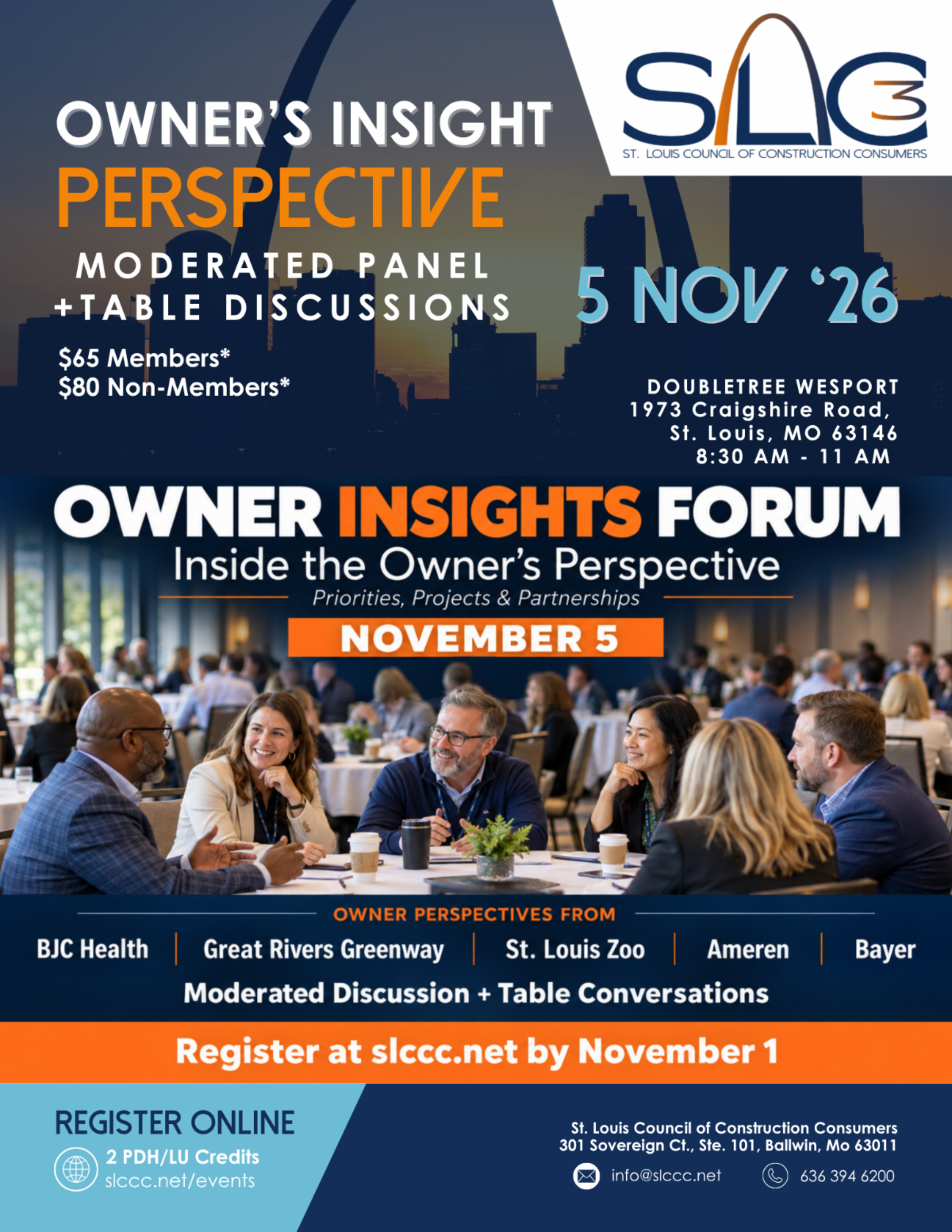
Extending until noon! LAST CHANCE TO REGISTER!
Before your next proposal, project meeting, or client conversation, wouldn’t it help to hear directly from the people buying AEC services?
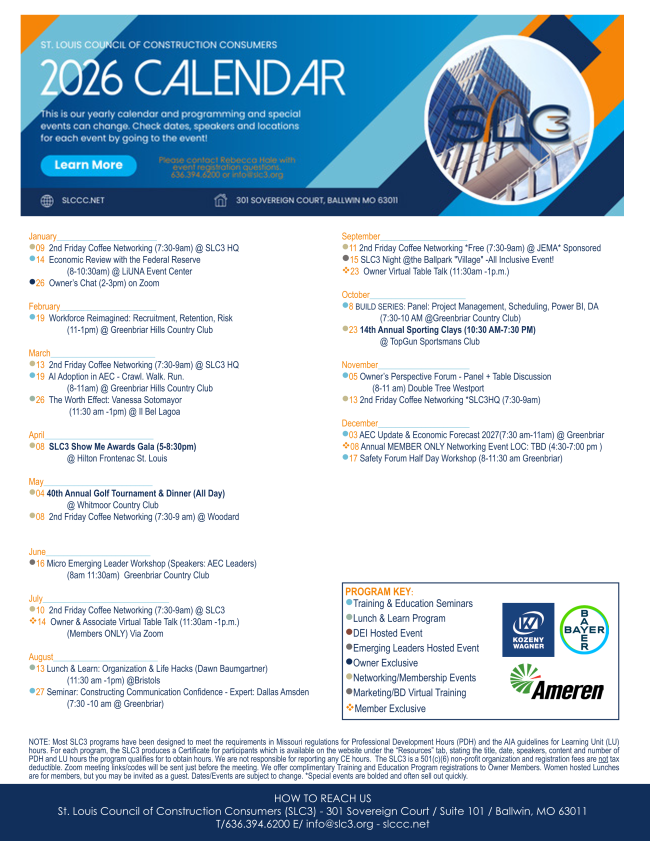
This Thursday, November 5, SLC3 is bringing owners and industry partners together for a candid discussion about the concerns shaping our industry—and we want you at the table.
The program begins with an owner panel sharing their perspectives, followed by table conversations where you can ask questions, contribute your experience, and explore key topics together.
For architects, engineers, contractors, and service providers, this is an opportunity to better understand your clients’ challenges. For owners, it is a chance to compare experiences with peers and discuss concerns with the industry partners who help deliver your projects.
Come with a question your team is facing. Leave with perspectives you can bring into your next client conversation or project decision.
| | |
INSIDE THIS ISSUE
News & Updates
Madison County Limits Data Center Tax Incentives as Development Interest Grows
Building a Stronger Support Network: St. Louis Trades Wellness Coalition Names Advisory Board
Reading the Pipeline: Architecture Billings Weaken as Midwest Conditions Hold Steady
Training & Education
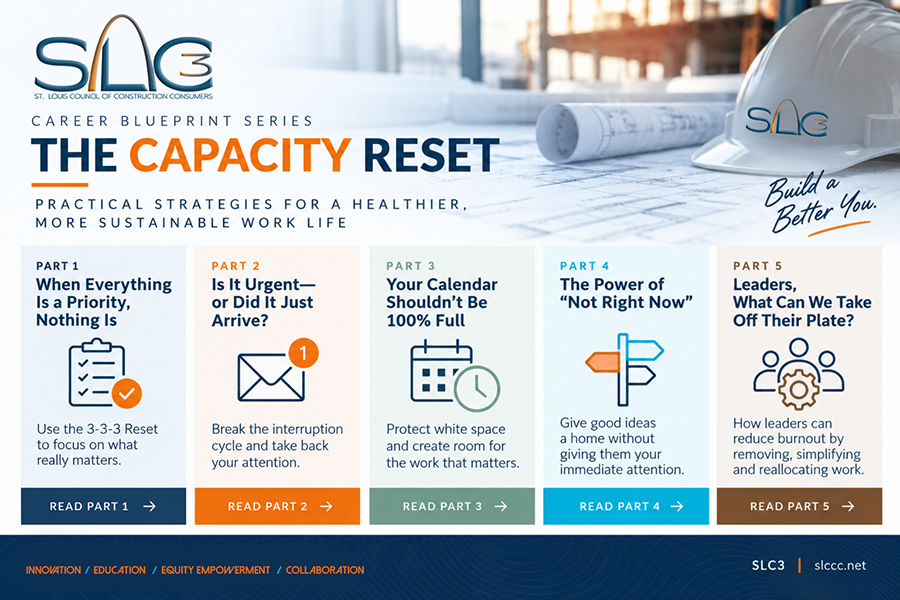
Leaders: What Can We Take Off Their Plate?
Innovation: Building Smarter, Not Just Faster
| | What interests you the most? | | | | ARE YOU WANTING TO BE AN ANNUAL SPONSOR? | | Want to sponsor our newsletters? Contact us! 65% Open Rates! Great opportunity for visibility and showing support! | | | | |
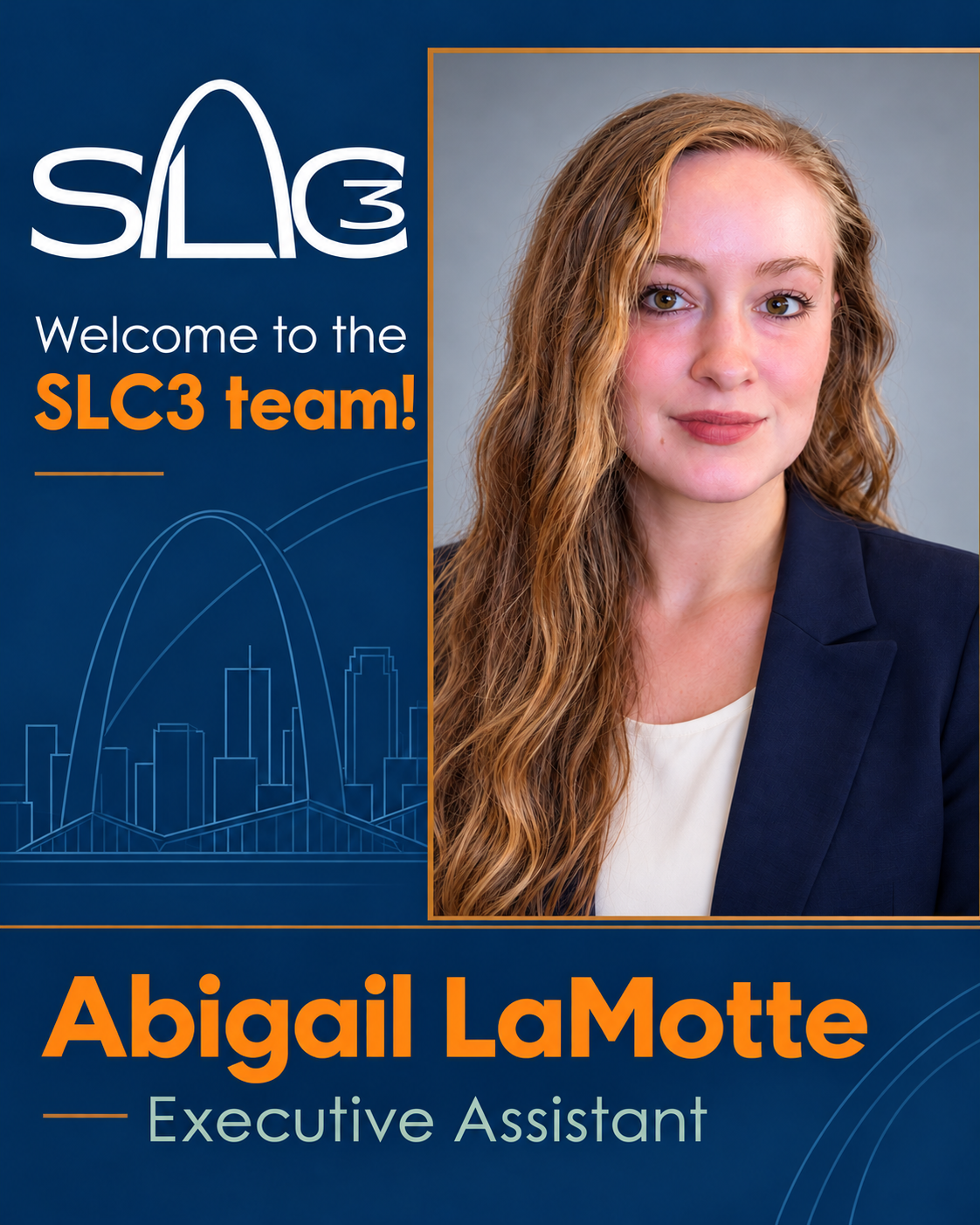
Abigail LaMotte serves as Executive Assistant at SLC3, supporting the organization’s events, publications and administrative operations. She brings two and a half years of administrative experience in the architecture, engineering and construction industry, where she first learned about SLC3. Her background includes coordinating calendars and travel, managing websites and social media, and planning company events.
Abigail previously served in the Air Force Reserve as a medic, supported newcomers to her unit and helped coordinate morale events. She enjoys learning new systems and finding ways to keep teams organized and operations running smoothly.
Outside the office, Abigail enjoys home improvement projects, including converting her dining room into a library, filling its shelves with books and making time to read.
| | UPCOMING PROGRAMS & EVENTS | | |
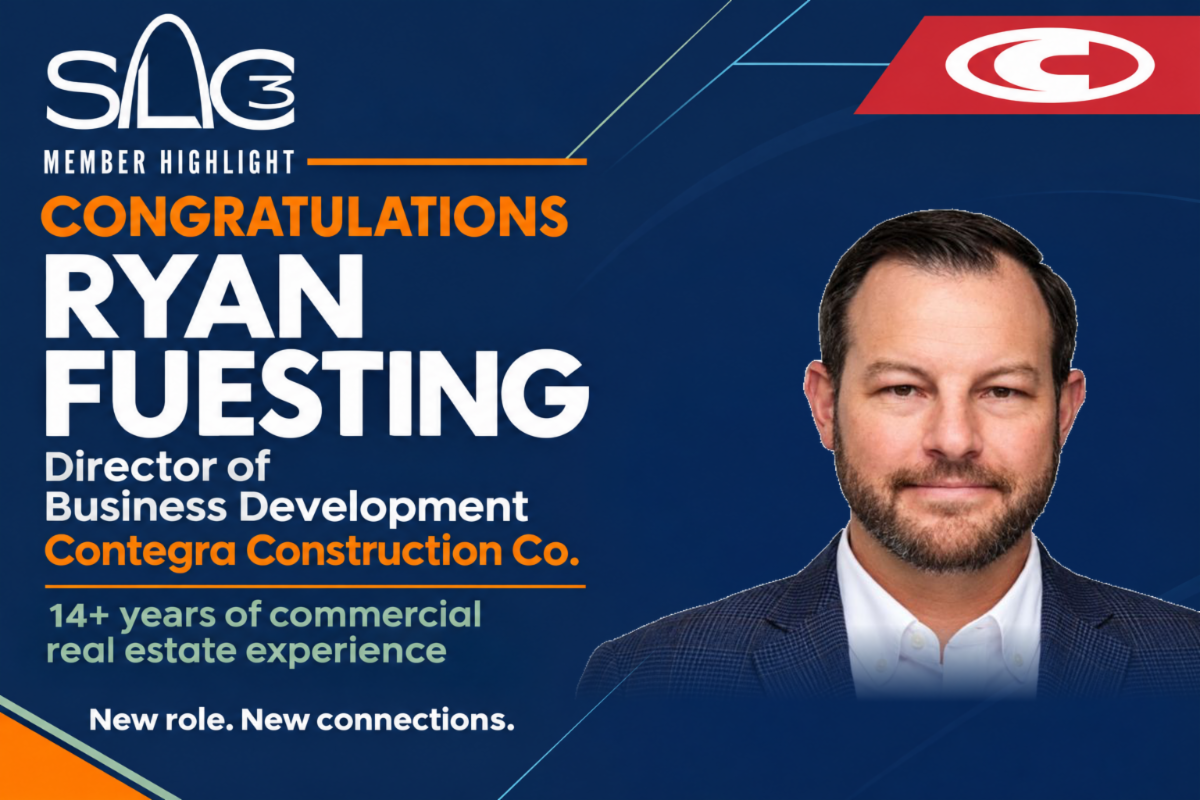
Member Highlight: Ryan Fuesting Joins Contegra as Director of Business Development
SLC3 congratulates Ryan Fuesting on joining Contegra Construction Co. as Director of Business Development!
Ryan brings more than 14 years of commercial real estate experience spanning industrial distribution, cold storage, senior living, multifamily and retail.
In his new role, Ryan will collaborate with Contegra’s leadership, preconstruction and operations teams to support growth across national markets. His work will focus on identifying opportunities, building strategic partnerships and advancing business development strategies aligned with the company’s goals.
| |
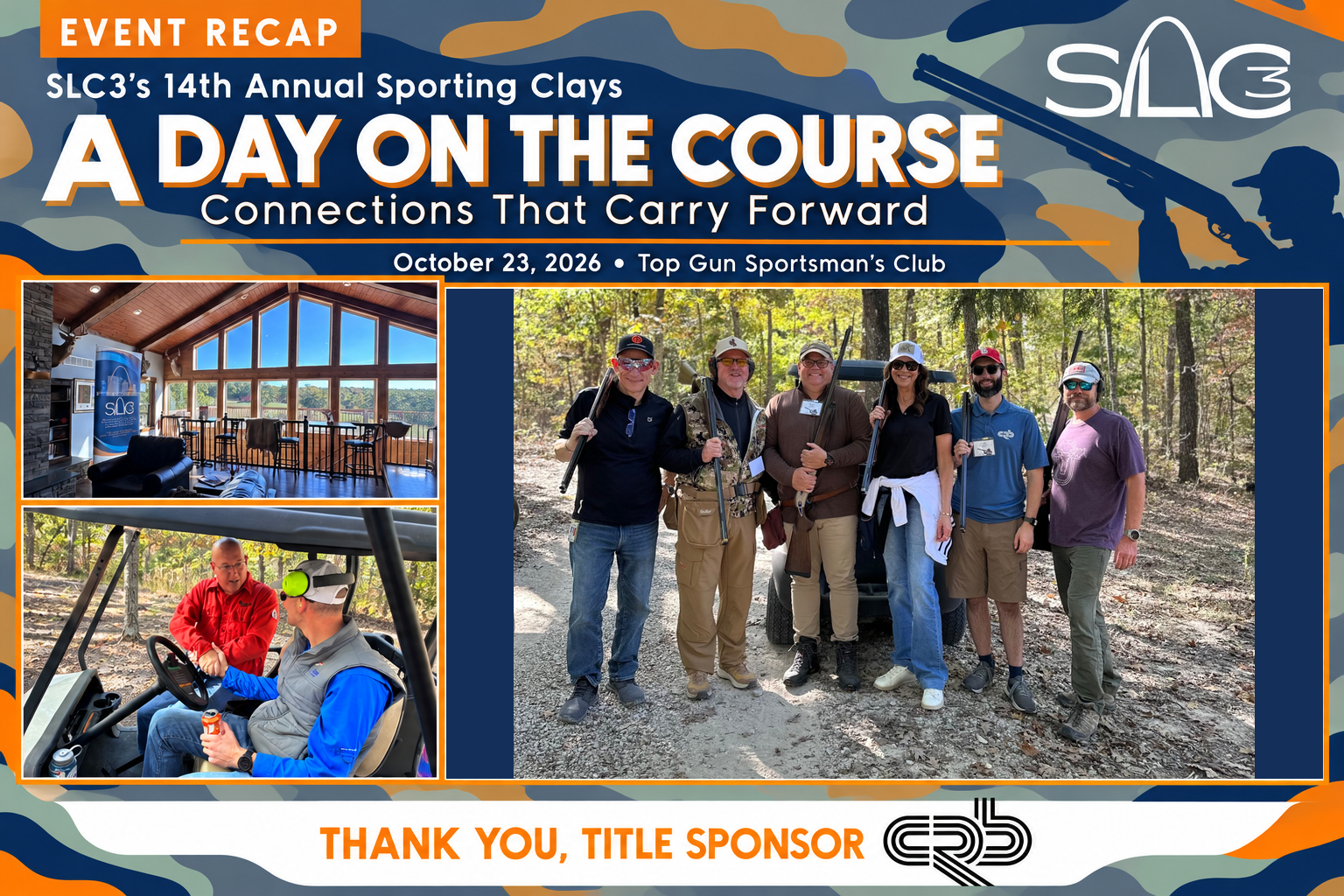
SLC3's 14th Annual Sporting Clays Brings the Construction Community Together | |
The conversations started before the first clay took flight.
On Friday, October 23, SLC3 members and industry partners gathered at Top Gun Sportsman’s Club in Lonedell for our 14th Annual Sporting Clays. With teams representing the region’s construction community, the day offered an opportunity to step away from daily responsibilities, spend time with colleagues and make new connections.
Presented with the support of Title Sponsor CRB Group, the event brought together friendly competition and the relationships that keep our industry connected.
Connections Beyond the Jobsite
Construction depends on coordination across companies, specialties and perspectives. Opportunities to get to know the people behind those roles help strengthen the relationships we bring back to work.
Throughout the day, participants had room to connect naturally, whether over lunch, along the course or during the afternoon reception.
For SLC3, creating those opportunities is central to bringing the region’s owners, designers, contractors and industry partners together.
Closing the Day Together
After the shoot, participants gathered for the cocktail reception, followed by dinner and awards. The evening’s firepit recognition provided another opportunity to acknowledge the people and support behind the event.
It was a fitting close to a day built around participation, connection and a little competition.
Thank You for Making It Possible
Thank you to CRB Group, our title sponsor, and to all the sponsors, participants and volunteers who helped make the 14th Annual Sporting Clays possible.
We also appreciate Stan, Amy and the Top Gun Sportsman’s Club team for welcoming SLC3 and supporting the day’s activities.
To everyone who joined us: thank you for showing up, taking part and helping carry this SLC3 tradition forward. We look forward to seeing you at our next event.
| | | |
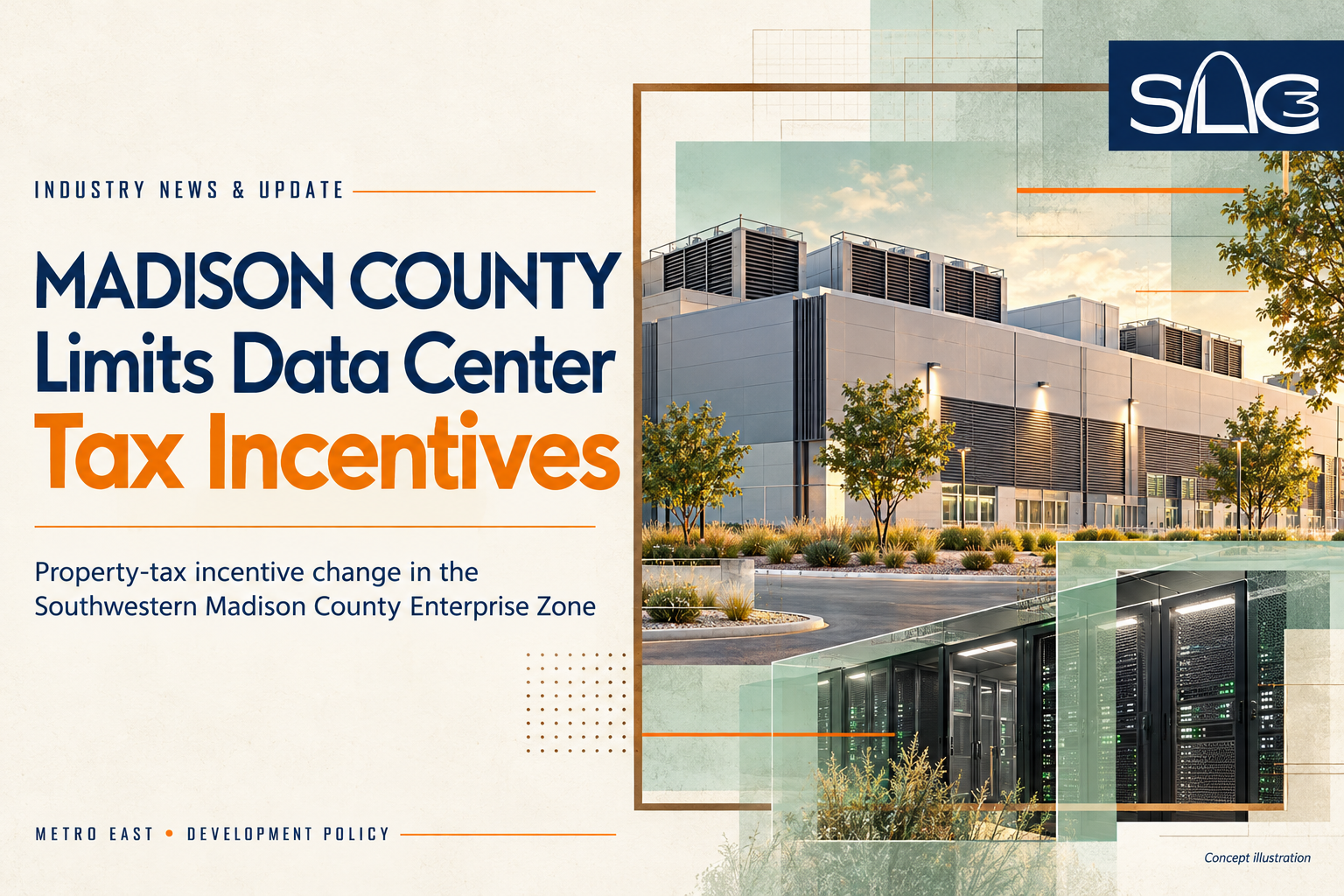
Madison County Limits Data Center Tax Incentives as Development Interest Grows | |
The change excludes data centers from one enterprise zone’s property-tax benefits while leaving communities able to consider development proposals.
The Madison County Board has voted to exclude data centers from property-tax abatements offered through the Southwestern Madison County Enterprise Zone, adding a new policy development to the region’s ongoing debate over these facilities.
The decision affects incentives available through that specific enterprise zone. It does not prohibit data centers from locating in Madison County, and municipalities retain the ability to consider separate incentives for individual projects.
Strong Developer Interest Drives the Decision
County Board Chairman Chris Slusser said demand for data-center sites makes property-tax incentives unnecessary to attract developers. He also expressed interest in pursuing similar restrictions in other nearby enterprise zones.
The Southwestern zone includes Granite City, Madison and Venice. Qualifying projects receive property-tax abatements on eligible improvements through a 10-year schedule, with benefits phasing out over time. The amendment removes data centers from eligibility for that benefit.
Property-tax abatements generally reduce the taxes associated with new development rather than eliminate the existing tax bill on the underlying land. For example, when farmland is developed into a warehouse, an eligible abatement can apply to the increased property value associated with construction while taxes on the underlying land continue.
By excluding data centers, the county is withholding that development benefit from a sector Slusser believes already has sufficient interest in building locally.
| | | |
Building a Stronger Support Network: St. Louis Trades Wellness Coalition Names Advisory Board | |
A new advisory board brings construction, labor and community partners together around workforce well-being.
The St. Louis Building Trades Wellness Coalition has appointed a 17-member advisory board, strengthening its network of partners focused on mental health, substance misuse and support for construction workers.
Introduced October 9, the board includes representatives from organized labor, contractors, healthcare and community organizations. Its members include professionals associated with Ameren, Guarantee Electrical, Millstone Weber, AGC of Missouri and Washington University.
Turning Collaboration Into Support
The advisory board will help guide the coalition’s programs, partnerships, training priorities and fundraising. Its mix of professional backgrounds brings perspectives from across the construction industry and the broader community to that work.
The coalition emphasizes peer support and connecting workers and families with assistance. Its website also identifies training opportunities that can be delivered in union halls, contractor meetings and jobsite settings, bringing education into places where workers already gather.
Making Resources Easier to Find
The coalition’s approach addresses both access to assistance and awareness of available services. Having resources in place is one part of the effort; helping workers understand where to turn and how to take the first step is another.
Its services include wellness navigation, educational opportunities and resources designed specifically for the building trades and their families. Together, those offerings provide a regional connection for people seeking support and organizations looking to strengthen conversations about workforce well-being.
Peer support is central to that approach, creating opportunities for workers to connect with others who understand the demands and culture of the trades.
| | | |
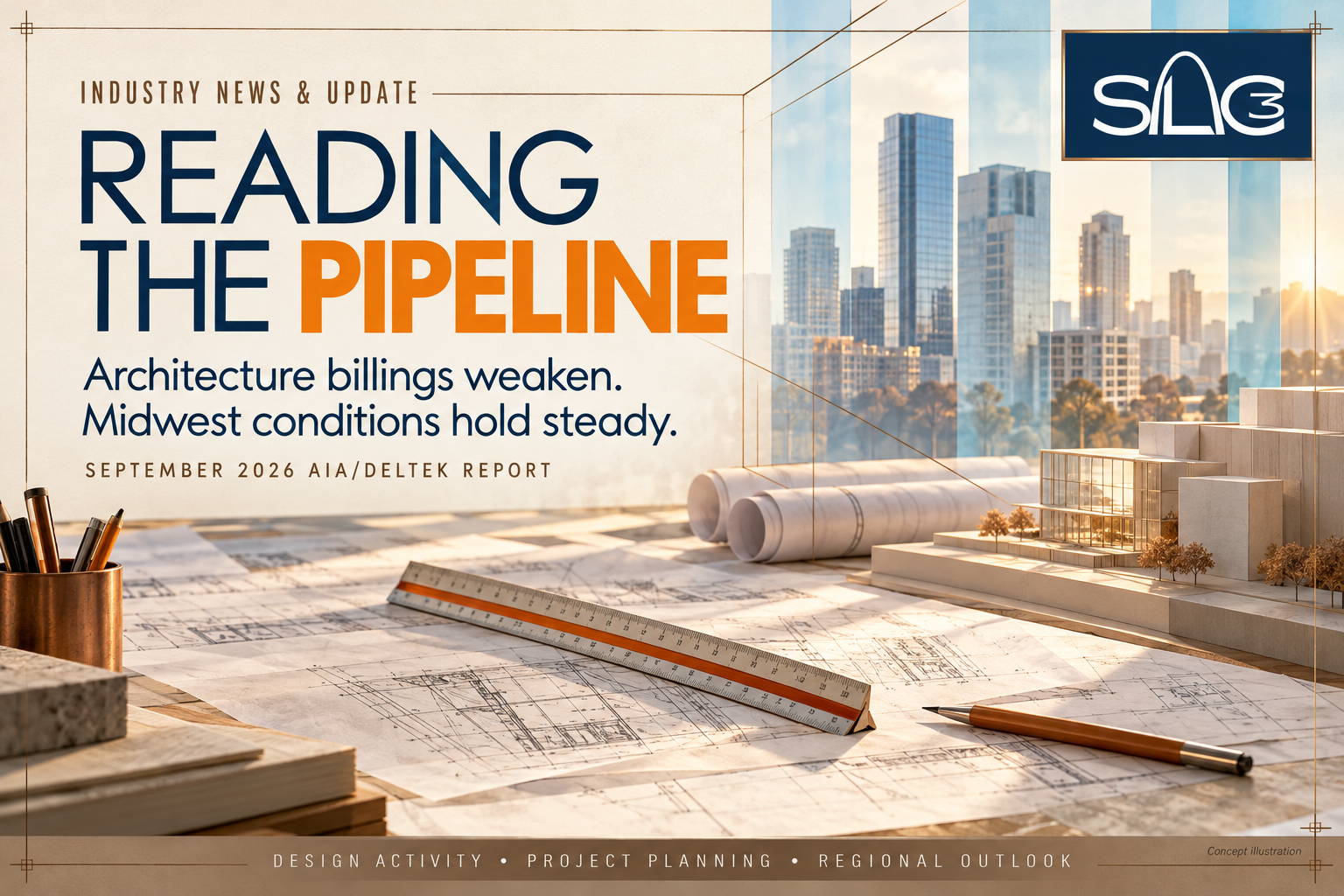
Reading the Pipeline: Architecture Billings Weaken as Midwest Conditions Hold Steady | |
AIA’s latest report offers a mixed picture for design firms and the construction work that follows.
The latest design-market report points to continued caution across the architecture industry, with a more stable picture in the Midwest.
Released October 21, the September AIA/Deltek Architecture Billings Index registered 44.7, down from 47.2 in August. A score below 50 indicates declining billings compared with the previous month.
The Midwest’s regional reading was 50.6, suggesting approximately stable conditions. Regional readings use three-month moving averages, so they should not be treated as direct equivalents to the monthly national figure.
Interest Is Not Yet Translating Into Commitments
The report showed a gap between potential work and signed agreements:
Project inquiries: 53.2
New design contracts: 43.7
Average firm backlog: 6.2 months, compared with 6.6 months at the end of the first quarter
Commercial and industrial practices reported modest billings growth, while institutional and multifamily practices continued to experience declines.
An Early Signal for Construction Planning
AIA describes the index as a leading indicator of nonresidential construction activity, typically preceding that activity by approximately nine to twelve months. It provides context for planning rather than a forecast for any individual St. Louis project.
Planning Around Confirmed Work
Owners can help project partners plan by communicating funding decisions and anticipated release dates. Designers and contractors can review which opportunities have firm commitments, which remain contingent and where schedule changes could affect staffing.
The Midwest’s steadier reading offers useful regional context, while the national decline reinforces the value of realistic pipeline assumptions and regular communication among owners, designers and builders.
Source: American Institute of Architects, September 2026 Architecture Billings Index report, released October 21, 2026.
| | | |
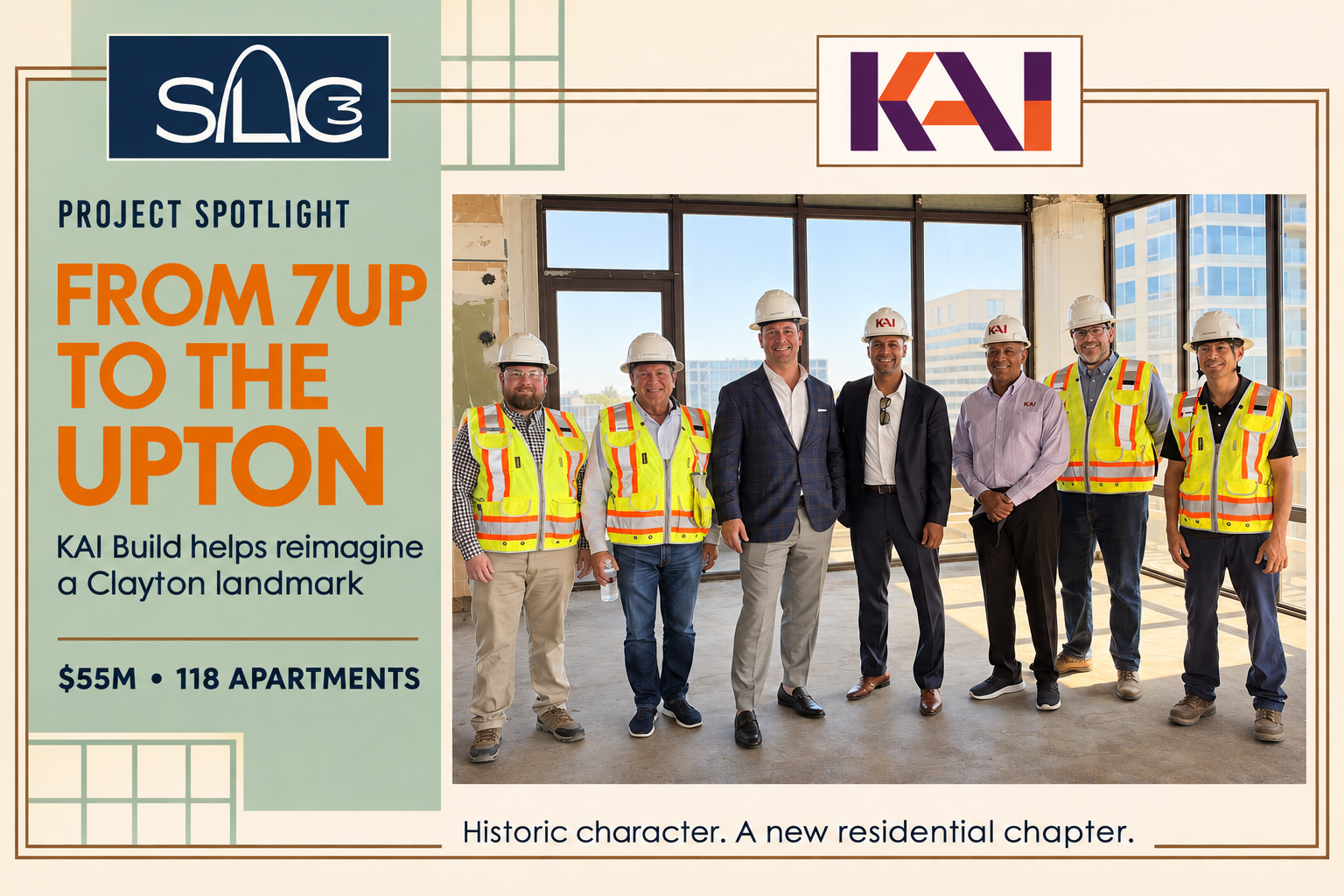
From 7UP to The Upton: KAI Build Helps Reimagine a Clayton Landmark | |
The $55 million redevelopment will transform the former headquarters into 118 apartments while preserving its midcentury modern character.
A familiar Clayton landmark is beginning a new chapter.
Construction is underway to transform the former 7UP world headquarters into The Upton, a residential community at 121 S. Meramec Avenue near Shaw Park. Crews broke ground October 6 on the redevelopment, led by Revive Capital Development with KAI Build overseeing construction.
A Landmark With a New Purpose
The 11-story building once served as the headquarters of a beverage brand known for its memorable “Uncola” campaign. After 7UP relocated to Dallas, St. Louis County purchased the property in 1988 for its World Trade Center. The building subsequently stood vacant for more than a decade.
The current redevelopment gives the existing structure a residential future while retaining its architectural identity.
Preserving Character Through Construction
Lead designer Chris Cedergreen is collaborating with Kent Wagster and HDA Architects, the architect of record, on the historic rehabilitation.
The work includes restoring exterior materials, repairing copper fascia, replacing deteriorated windows and curtain wall systems, and rehabilitating the elevated outdoor plaza. Planned landscape and pedestrian improvements will complement the building’s original features.
For the construction community, that scope illustrates the coordination involved in adaptive reuse: decisions about restoration, replacement and contemporary building needs must come together within an existing structure.
| | | |
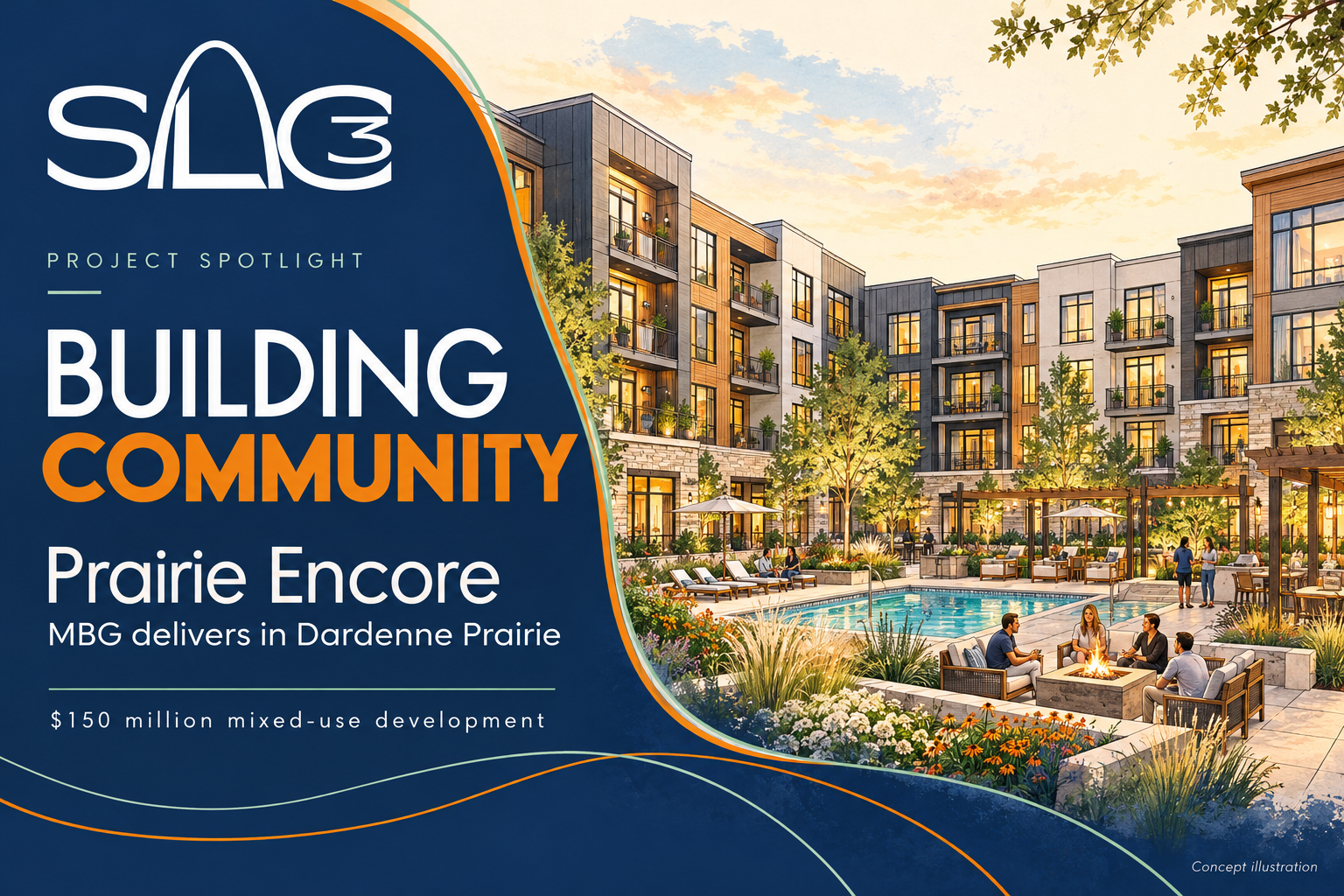
Building Community: MBG Delivers Prairie Encore in Dardenne Prairie | |
The $150 million mixed-use development brings modern living, new amenities, and a growing sense of community to St. Charles County.
A growing community in St. Charles County is welcoming a major new development designed to bring residents together through modern housing, shared amenities, and thoughtfully planned gathering spaces.
Prairie Encore, a $150 million mixed-use development in Dardenne Prairie, Missouri, is taking shape with the help of St. Louis-based contractor MBG and developer Mia Rose Holdings.
The project combines contemporary residential living with community-focused design, while demonstrating the importance of construction planning, coordination, and adaptability in delivering a complex development.
A New Approach to Community Living
Located approximately 40 minutes west of downtown St. Louis, Dardenne Prairie has evolved into a growing residential community of approximately 15,000 residents.
Prairie Encore introduces a modern multifamily living experience to the area, with its first phase featuring a 190-unit, four-story apartment community.
Designed by Glen Carbon, Illinois-based Hurford Architects, the development incorporates clean architectural finishes, contemporary layouts, and amenities that encourage residents to connect.
Community features include:
- Modern apartments with nine-foot ceilings and in-unit laundry
- Backlit vanity mirrors and updated interior finishes
- Two interior courtyards featuring a swimming pool, grilling stations, and fire pits
- Indoor lounge areas and shared gathering spaces
- A fitness center, conference rooms, and leasing office
- Outdoor recreational amenities, including a dog park and covered parking
These features reflect a growing emphasis on creating residential environments that extend beyond individual living spaces to support a connected community.
| | | |
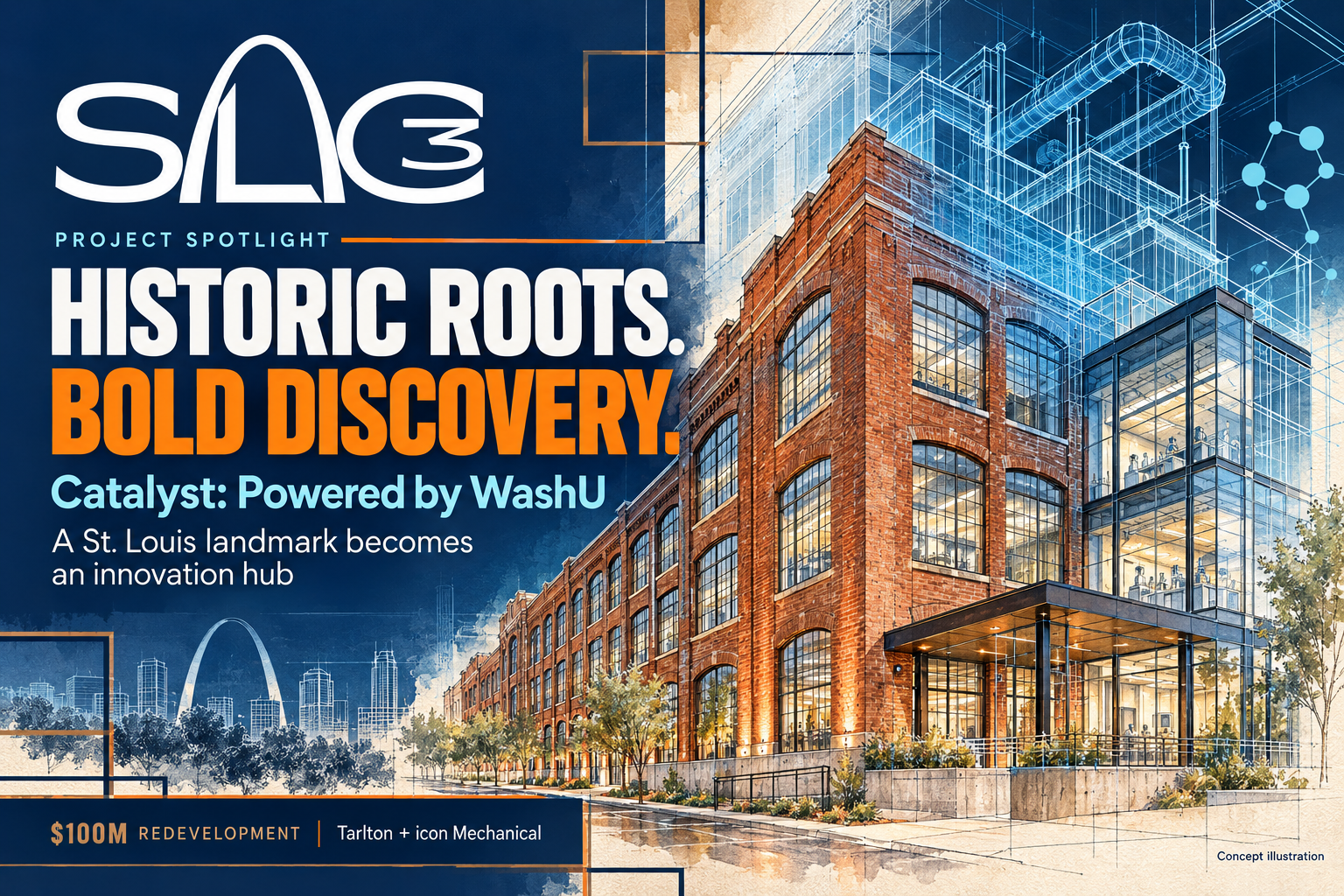
From Historic Landmark to Innovation Hub: Catalyst Powered by WashU Takes Shape in St. Louis | |
St. Louis redevelopment brings together historic preservation, advanced construction techniques, and the region’s growing bioscience industry.
A building with more than a century of history is being transformed into a center for scientific discovery in St. Louis.
Catalyst: Powered by WashU, a $100 million, 163,000-square-foot redevelopment of the former MERS Goodwill building, is bringing new purpose to a historic structure while creating space for cutting-edge bioscience research and innovation.
The ambitious project brings together St. Louis construction firms Tarlton and icon Mechanical, whose teams are navigating the challenges of modernizing a century-old building while preserving its architectural character.
Preserving History While Building for the Future
Originally constructed in 1919 for Standard Sanitary Manufacturing Co., the building later served as a plumbing manufacturing and supply warehouse before becoming home to MERS Goodwill from 1944 to 2019.
Today, developer BOBB LLC, an affiliate of Washington University, is leading its transformation into a modern research and innovation facility.
The redevelopment is particularly complex because of the building’s historic structure, limited construction footprint, and the specialized infrastructure required for laboratory operations.
Tarlton’s crews have installed new foundations as deep as 12 feet below the existing structure, carefully threading drilled piers and grade beams around original foundations.
The project also includes restoration of original brickwork, replacement of industrial windows, structural reinforcement, and a new addition featuring a landscaped courtyard and pedestrian-friendly gathering spaces.
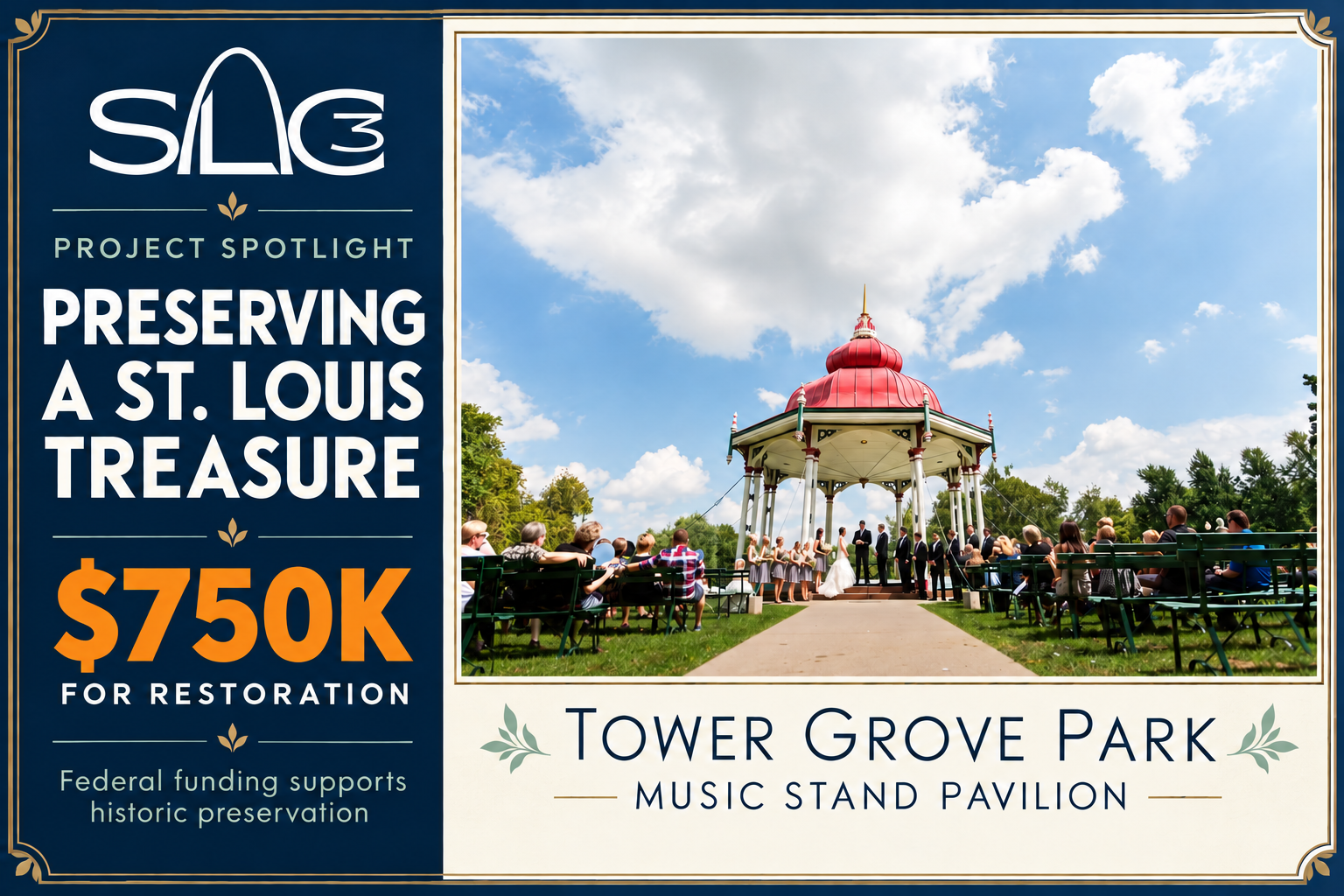
| | | Tower Grove Park Secures $750K for Historic Pavilion Restoration | |
Federal funding will support preservation efforts at one of St. Louis’ most treasured public landmarks.
A piece of St. Louis architectural history is receiving new attention as Tower Grove Park secures $750,000 in federal funding to support the restoration of one of its historic Victorian-era pavilions.
The investment represents another step toward preserving the architectural character of the 289-acre park, which has served as a gathering place for St. Louis residents and visitors for more than 150 years.
Preserving St. Louis’ Architectural Heritage
Established in 1868, Tower Grove Park is recognized for its distinctive Victorian architecture, landscaped gardens, and historic structures.
The park’s collection of ornate pavilions has long been among its most recognizable features, showcasing the craftsmanship and architectural styles of the late 19th century.
Restoring historic structures presents unique challenges for architects, engineers, and construction professionals. Projects often require specialized materials, traditional building techniques, and careful coordination to preserve original architectural details while addressing modern structural and safety requirements.
Investing in Historic Preservation
The $750,000 federal grant will help support restoration efforts aimed at protecting the pavilion’s historic character and extending its useful life.
Historic preservation projects frequently involve a combination of structural repairs, architectural restoration, and improvements designed to ensure continued public use.
For the construction industry, these projects highlight the importance of skilled tradespeople, restoration specialists, and collaborative planning in maintaining the region’s architectural landmarks.
Protecting Community Spaces for Future Generations
Tower Grove Park remains an important cultural and recreational destination in St. Louis, hosting community events, educational programming, and outdoor activities throughout the year.
Investments in historic preservation help ensure that these public spaces remain accessible and meaningful while maintaining the architectural features that make them unique.
As St. Louis continues to invest in its built environment, projects like this demonstrate how preservation and thoughtful construction can work together to protect the past while preparing community landmarks for the future.
Source: St. Louis Business Journal, October 27, 2026. Reporting on $750,000 in federal funding for historic pavilion restoration at Tower Grove Park.
| | | |
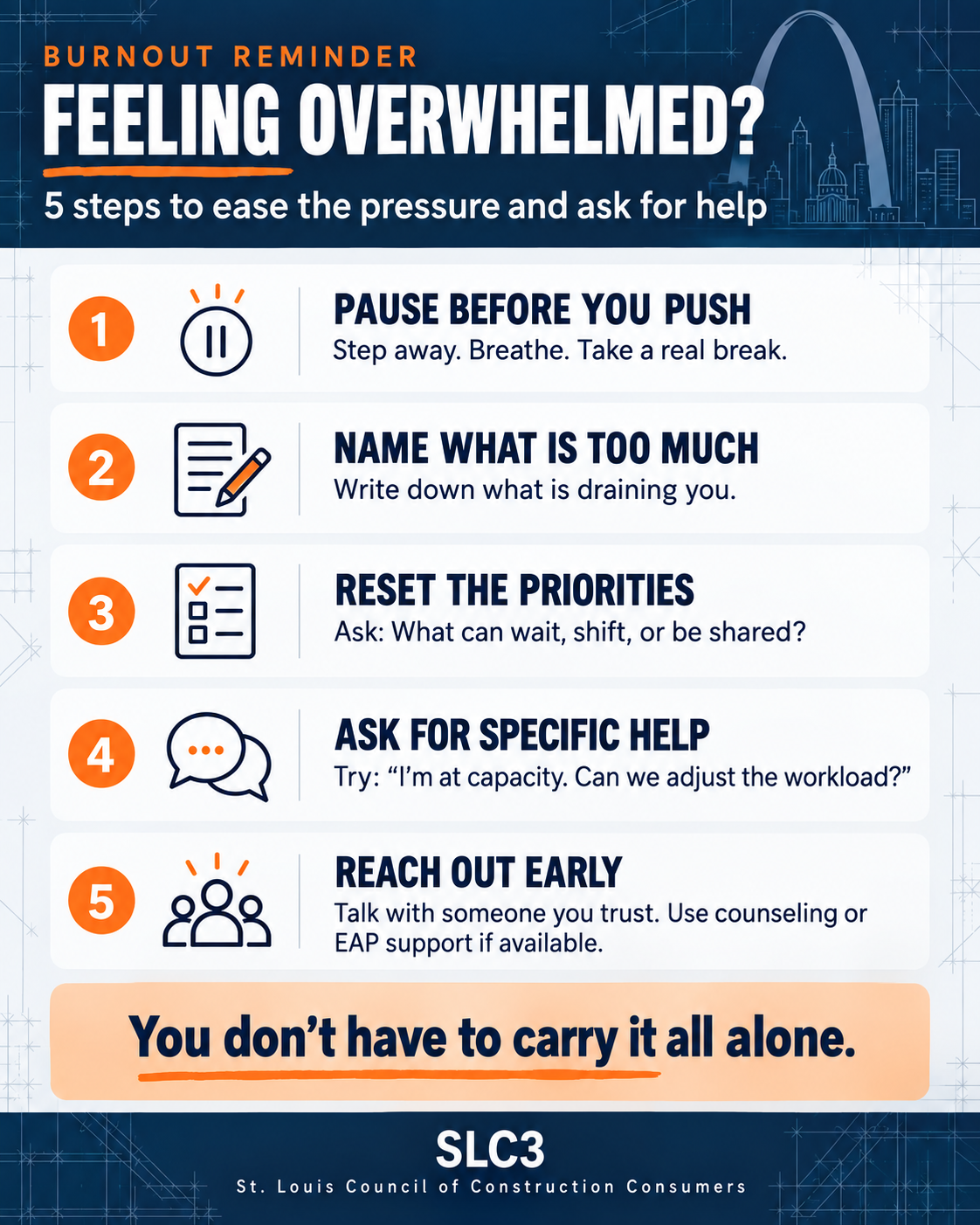
Leaders: What Can We Take Off Their Plate? | |
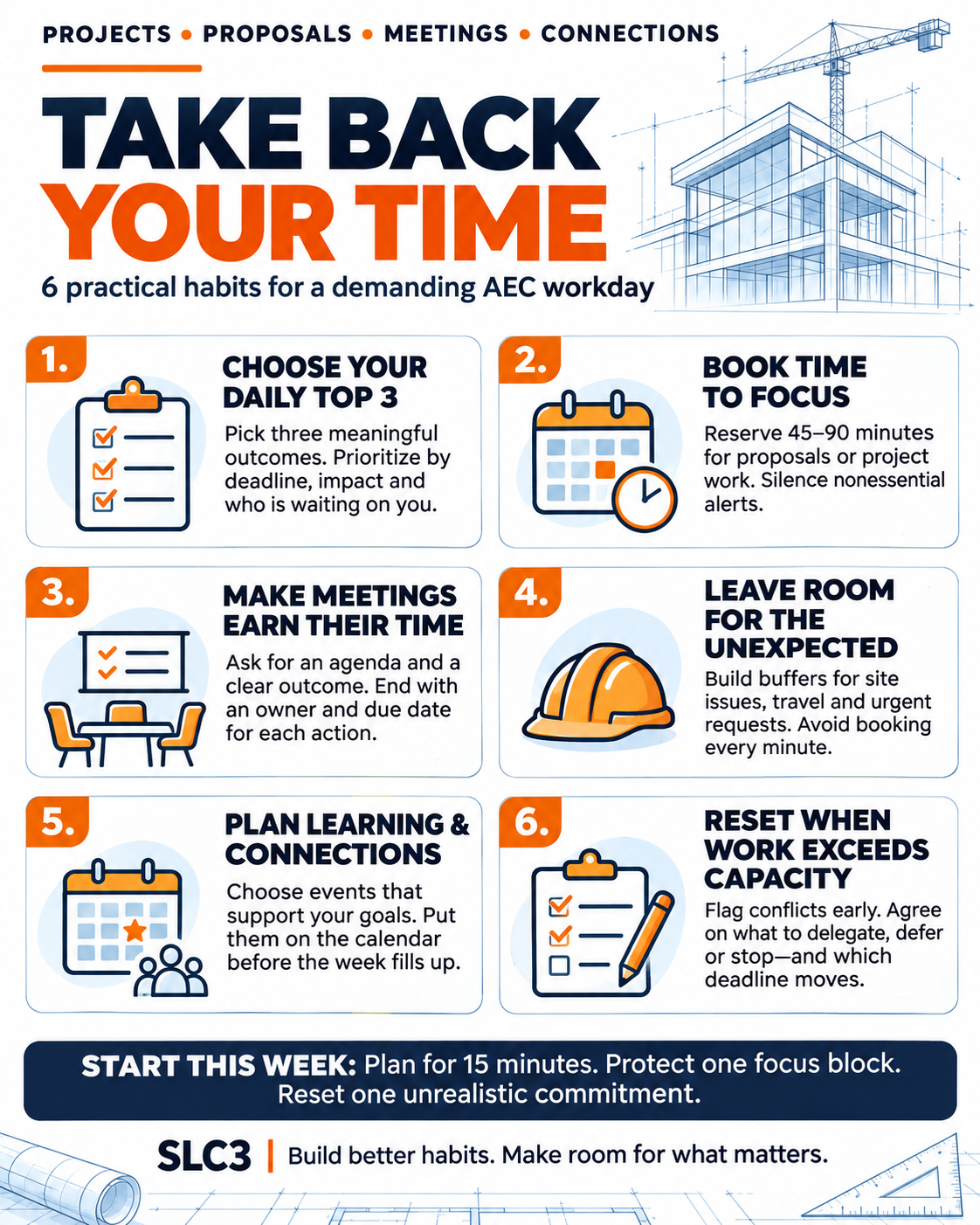
When someone on your team is overwhelmed, what’s our first instinct?
We may suggest better time management.
Delegate more.
Prioritize.
Set boundaries.
Take some time off.
Those can all be helpful.
But sometimes we’re asking the wrong question.
Instead of asking:
“How can you manage all of this better?”
Maybe we should ask:
“What can we take off your plate?”
Sometimes the Workload Really Is the Problem
Burnout isn’t always caused by poor time management.
Sometimes there is simply too much work.
This can become particularly challenging in AEC, where staffing shortages, compressed schedules, changing project demands, client expectations and deadlines can quickly create overload.
And your strongest performers may be the people least likely to tell you.
They’re dependable.
They figure things out.
They stay late.
They answer the email.
They take on the additional project.
And because they continue delivering, we assume they’re managing just fine.
Until they’re not.
Don’t Reward Competence With More Work
There’s an unfortunate pattern that happens in many workplaces:
The person who gets things done gets more things to do.
We trust them, so we give them another responsibility.
Then another.
Then another.
Eventually, your most dependable employee becomes your most overloaded employee.
Leaders need to pay attention not only to performance, but also to capacity.
Just because someone can handle something doesn’t mean they should continually be asked to.
Ask Better Questions
Instead of simply asking, “How are things going?” try getting more specific.
Ask:
What is taking more time than it should?
What are you doing that someone else could handle?
What deadline could realistically move?
What meeting could you stop attending?
What process are we doing simply because we’ve always done it?
And perhaps most importantly:
If we add this new priority, what should become less important?
That last question can change a team’s culture.
Try the Stop, Simplify, Delegate, Delay Exercise
When someone is overloaded, look at their responsibilities together and put them into four categories:
STOP — What doesn’t provide enough value to continue?
SIMPLIFY — What still needs to happen but doesn’t need to be this complicated?
DELEGATE — What could someone else own?
DELAY — What matters, but doesn’t need to happen now?
Not everything will fit neatly into one of these categories.
That’s okay.
Finding even one or two things can create breathing room.
| | | |
Owner Perspective Series | Week 8 | |
Innovation: Building Smarter, Not Just Faster
Innovation isn’t always about robotics, artificial intelligence, or the latest technology. Sometimes, it’s simply finding a better way to solve a problem.
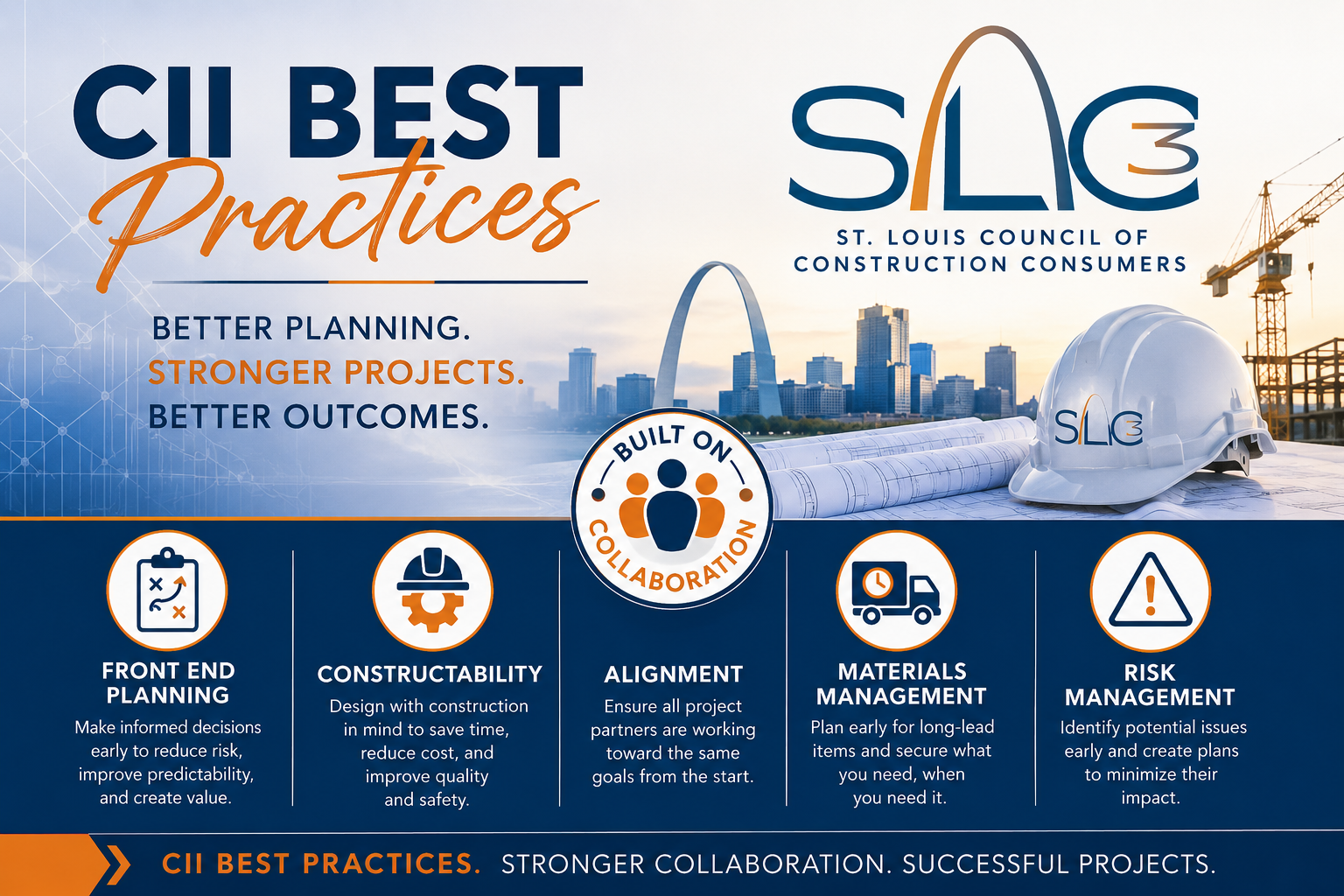
The Construction Industry Institute (CII) has long promoted innovation as a key driver of project performance because organizations that embrace new ideas are better equipped to improve safety, productivity, quality, and overall project outcomes.
Today’s construction environment demands innovation more than ever. Labor shortages, tighter budgets, aggressive schedules, and increasingly complex facilities require owners and project teams to think differently. The question is no longer, “Can we build it?” It’s “Is there a smarter way to build it?”
Innovation can take many forms:
Using prefabrication or modular construction to reduce field labor.
Leveraging digital modeling and reality capture to improve coordination.
Applying AI and data analytics to identify project risks earlier.
Implementing drones for site inspections and progress documentation.
Exploring alternative delivery methods that improve collaboration and decision-making.
The most successful organizations don’t adopt technology simply because it’s new—they evaluate whether it creates measurable value.
Innovation also requires a culture where people are encouraged to challenge traditional thinking. Some of the industry’s greatest improvements have come from project teams asking one simple question:
“Why have we always done it this way?”
| | | | CALL FOR COMMITTEE MEMBERS? TIME TO HELP... | | |
Much of the work we do is driven by member volunteers, and right now our committees could use a few more voices and helping hands. Committee service offers an opportunity to influence priorities, collaborate with peers, and support initiatives that impact the industry and our region. If you’re willing to get involved—even in a small way—we invite you to sign up.
| | | HELP US KEEP THE PICTURE CURRENT | | |
The construction and development landscape across the region continues to move quickly—and keeping our information accurate and relevant matters.
We’ve recently updated our construction and development listings to reflect new projects, changes in scope, and activity across the greater St. Louis area. These updates help ensure that our members have access to timely, useful insight into what’s being built, redeveloped, and planned throughout the region.
That said, no one has a better pulse on what’s happening than the people working in it every day. If you’re aware of a project that’s underway, planned, or evolving—or if you notice something that needs to be updated—we invite you to share it with us. Your input helps strengthen the resource for everyone.
Keeping this information current is a collaborative effort, and we appreciate your help in making it as accurate and valuable as possible.
| | |
Have something to share? Reach out anytime—we’re always glad to hear from you.
| | SEND US YOUR COMPANY UPDATES! | | |
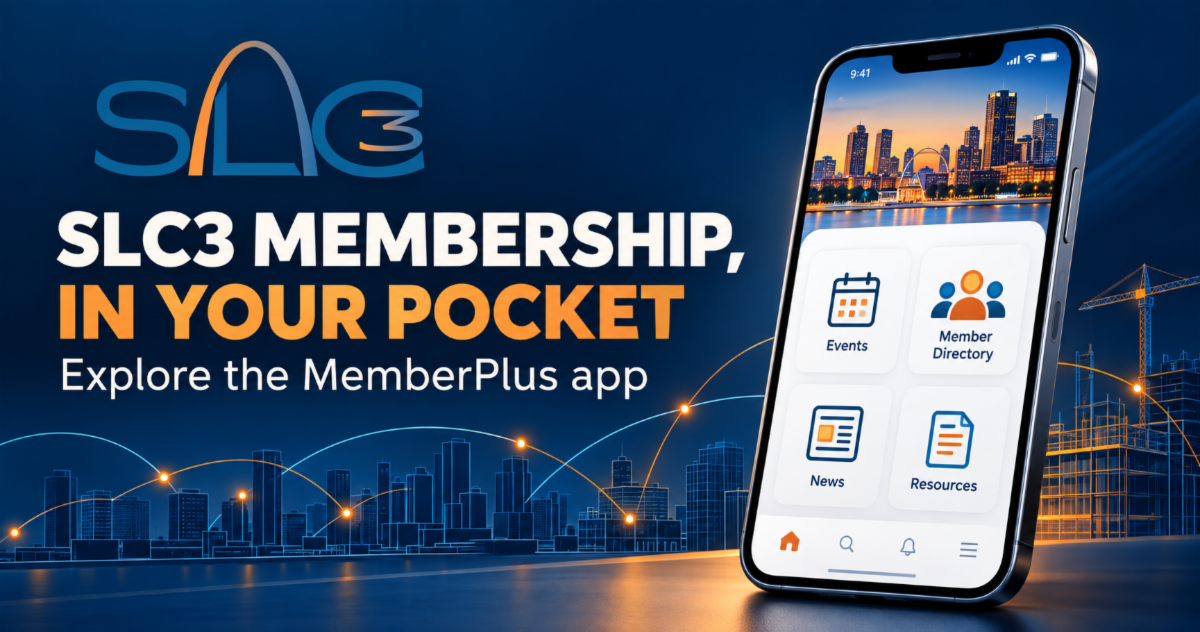
Your SLC3 Membership, in your Pocket
Stay connected wherever the workday takes you. With the free MemberPlus app, you can browse upcoming SLC3 events, register from your phone, catch up on news, find fellow members in the directory, and access member resources. You can also update your profile on the go.
Download MemberPlus from the Apple App Store or Google Play, then sign in with your existing InfoHub credentials. Your app access will match your InfoHub access.
| | |
SLC3 2026 Officers:
Michael Hargrave (BJC Health) - President
Vince Nutt, (BJC Health)- 1st Vice President
Mark Flannery (Bayer), 2nd Vice President
Tiffanie Toles, (Kwame Building Group)
Secretary
Danielle Thomas (Hazelwood SD), Treasurer
Frank Niemerg (Ameren), Immediate Past President
Kelly Jackson, Executive Director
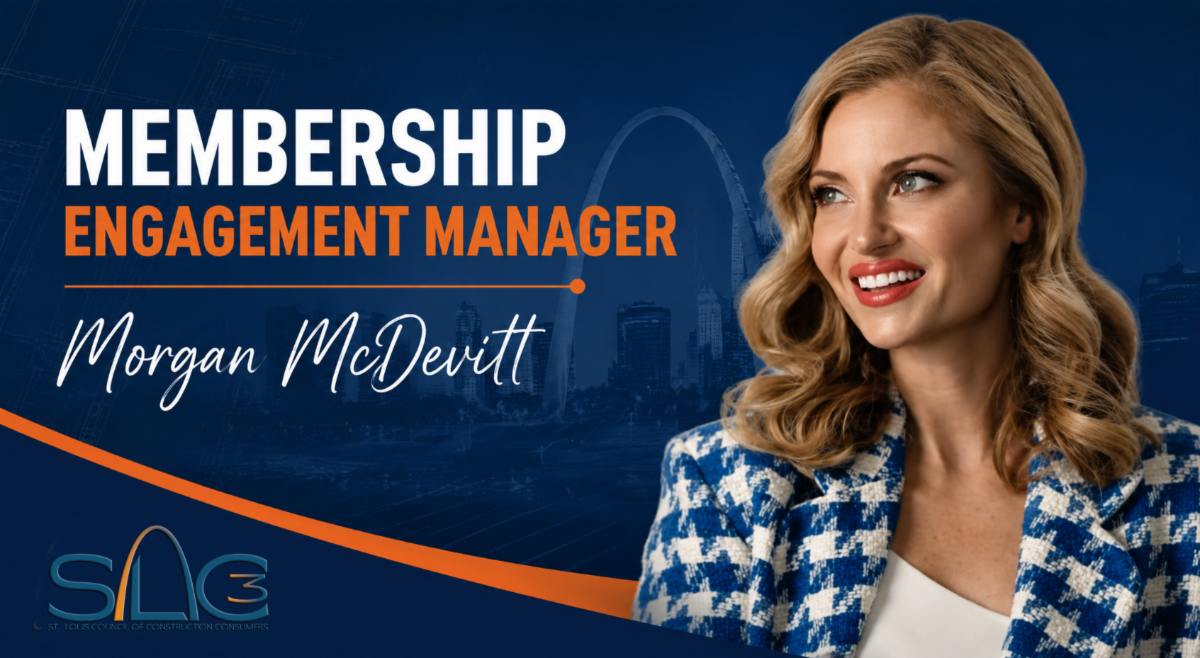
| If you are considering joining us, contact Morgan McDevitt about Membership. Don't miss our member-only activities and perks! | |
November: Did You Know?
Route 66 turns 100 this month! The famous highway received its official designation on November 11, 1926.
November 2026 marks its centennial—a fitting milestone for an industry that builds connections.
Missouri’s famous storyteller was a November baby. Samuel Langhorne Clemens—better known as Mark Twain—was born on November 30, 1835, in Florida, Missouri. His birthplace was a small, two-room cabin.
Why November 11 for Veterans Day? The date commemorates the World War I armistice, which took effect at the 11th hour of the 11th day of the 11th month in 1918. The observance was originally called Armistice Day.
Thanksgiving hasn’t always followed today’s calendar. Abraham Lincoln’s 1863 proclamation called for Thanksgiving on the last Thursday in November. Congress later established the fourth Thursday as the holiday—those are not always the same date!
November babies get two birthstones. Both topaz and citrine represent November. Although often associated with golden hues, topaz also comes in colors including blue and pink.
| |  | DON'T FORGET: If you are a member of the SLC3 you can access all our members in the InfoHub. Make sure to login and regularly check it out! | |
Looking to fill a position? Send us your roles and we will promote them!
WE SHARE POSTINGS FOR FREE TO THOUSANDS!
| | |
BRONZE SPONSORS
(WE SHOULD HAVE MORE SPONSORS HERE????)
| | |
St. Louis Council of Construction Consumers
301 Sovereign Ct, Suite 101, Ballwin, MO 63011
636.394.6200 | info@slccc.net | slccc.net
Staff:
Kelly Jackson // Executive Director
Morgan McDevitt // Membership Engagement Manager
| | CONNECT, INTERACT & SHARE WITH US! | | Please note unsubscribing from this communication will unsubscribe you from ALL communications from the SLC3. | | | | |