|
|
AgriSafe in Action Newsletter
March 2022 Edition
|
|
New Mental Health Training: FarmResponseSM
|
|
AgriSafe is pleased to announce the public release of FarmResponseSM, the newest of their professional development training. This training has been extensively reviewed and evaluated to provide an effective, engaging professional development that is on-demand for individuals wanting to learn more about agricultural mental stressors. FarmResponse is a 3.5-hour continuing education course developed by national experts from the AgriStress Response Network. AgriSafe’s FarmResponse course provides the full range of competencies necessary to provide appropriate mental healthcare for agricultural producers and their families. For more information or to register click here.
|
|
Talking Total Farmer Health® Podcast
|
|
|
|
The newest episode of Talking Total Farmer Health is out and we are talking about heirs’ property! In this episode, we talked with Tharlyn Fox and Veronica McClendon about the history behind heirs' property in the US, what it means legally, how it impacts families, and what the best methods are to prevent or handle heirs' property.
|
|
Rooted in Diversity: Native Americans |
|
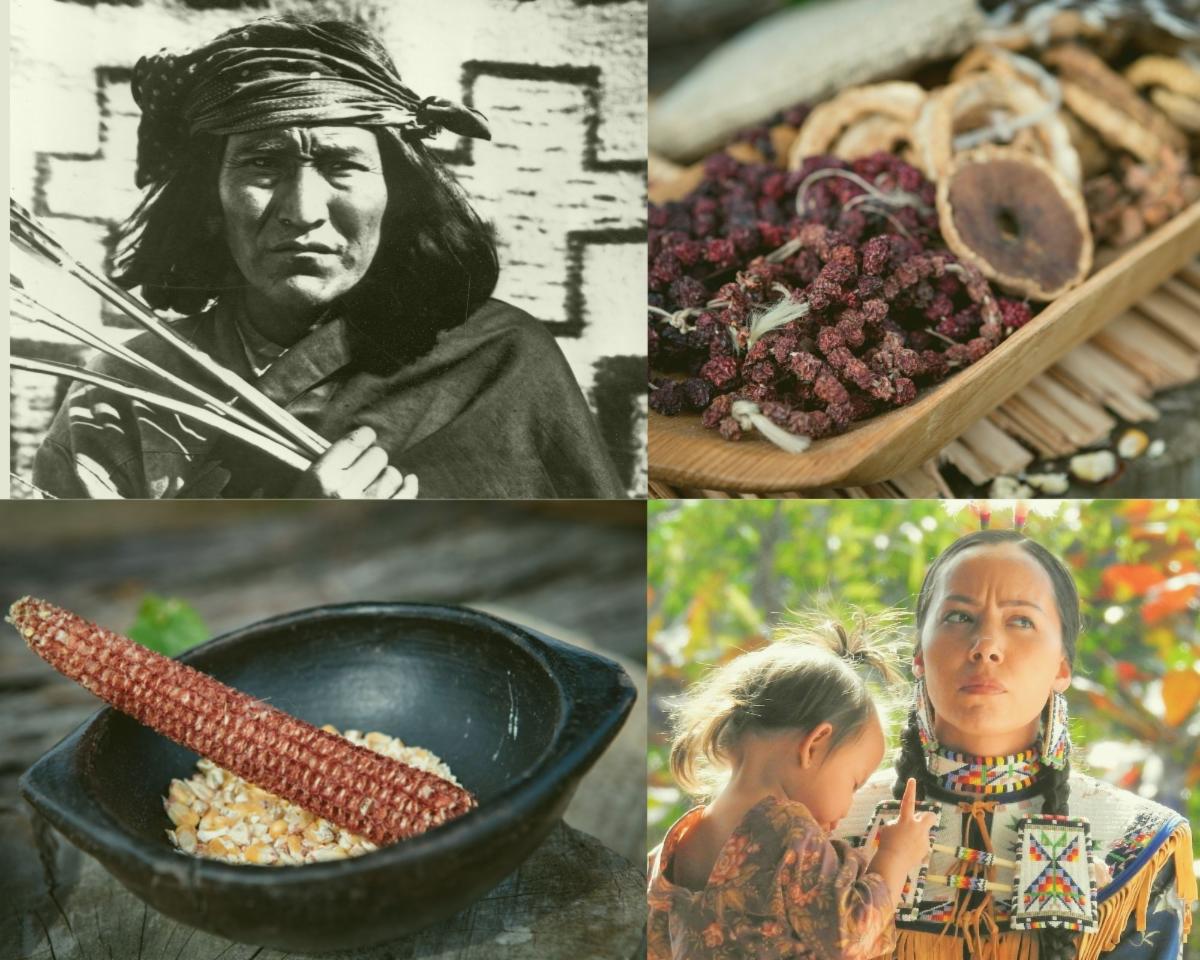
This month, AgriSafe would like to recognize how the sacrifices of Native American farmers have shaped today's agriculture. America’s agriculture industry would not be the same if it were not for the contributions of Native American farmers.
Did you know?
-
Native Americans were the first to learn to grow and use: potatoes (white and sweet), beans (14 varieties), corn, peanuts, pumpkins, tomatoes, squash, peppers, melons, sunflower seeds, popcorn, wild rice, cranberries, maple sugar and syrup, turkeys, clam bakes, pemmican, jerky, pineapple, avocado, tapioca, chocolate, chewing gum, and vanilla. (source)
- Native Americans were the first to learn to grow and use: tobacco, cotton, and rubber
-
60% of the present world’s food supply comes from Native American agriculture (primarily consisting of corn and potatoes). (source)
-
Countless Native American words for food have become part of the English language (chocolate, potato, and squash). (source)
-
Native Americans have contributed a great deal to farming methods. The white settlers in colonial America might have starved if they had not copied Native American farming methods. (source)
-
Native American healers pioneered pain relief. (source)
-
Native American women were primarily responsible for clearing the land and planting, cultivating, as well as harvesting their crops. They also developed a method for storing excess crops in jug-shaped pits for later use. (source)
-
Native Americans invented the technique of enriching the soil and piling it to build raised garden plots called chinampas on swampy land and in lakes. This technique paved the way for the technique of raised-bed farming. (source)
Resources designed specifically for Native Americans working in Agriculture:
Relevant news articles:
|
|
AgriSafe Webinar Opportunities |
|
Tools to Help Manage Financial Risk for Livestock Producers
April 12, 2022
12 PM - 1 PM CT
|
|
|
|
|
Promoting Peace of Mind by Addressing Heirs’ Property and Implementing Effective Succession Planning Strategies
The LIVE event occurred: March 15, 2022
|
|
March Health Spotlight:
Opioid Misuse, Prevention, and Awareness
|
|
Opioid misuse has been identified as a national public health crisis. AgriSafe has developed a series of trainings for healthcare professionals to help them better respond to the unique and often overlooked needs of people working in agriculture. The four webinars listed below are 1.0-hour each of continuing education, available through a partnership with the Midwest Center for Occupational Health and Safety:
-
Talking to Farmers About Pain
-
Assessment of Opioid Misuse Risk Among Farmers
- Safety-Sensitivity of Opioid Use in Agriculture
-
Using Naloxone to Reverse Opioid Overdose
Navigating the world of ergonomic pain in the agricultural industry is a balancing act for both healthcare providers and agricultural workers. Here are a few resources for clinic and patient educational use. (Note: The CDC's 2016 Guidelines are in the process of being updated and should be available later this spring!)
The Midwest Center for Occupational Health and Safety offers 0.1 CEU or 1.0 contact hours of participation. This course is eligible for 1.0 CPH Recertification Credits and is sponsored by the University of Minnesota School of Public Health, an approved provider of CPH Recertification Credits by the National Board of Public Health Examiners. The following groups of professionals have been able to use these CEUs in the past; Industrial Hygiene (CIH), Certified Public Health Professional(CPH), Certified Safety Professional (CSP), Nursing (RN, LPN), Social Work (LSW), Occupational Therapy (OT), Physical Therapy (PT), Audiology (ABA), and others. Please contact your accrediting agency regarding any questions about receiving credits.
|
|
Central Valley Ag's Young Farmers Conference |
|
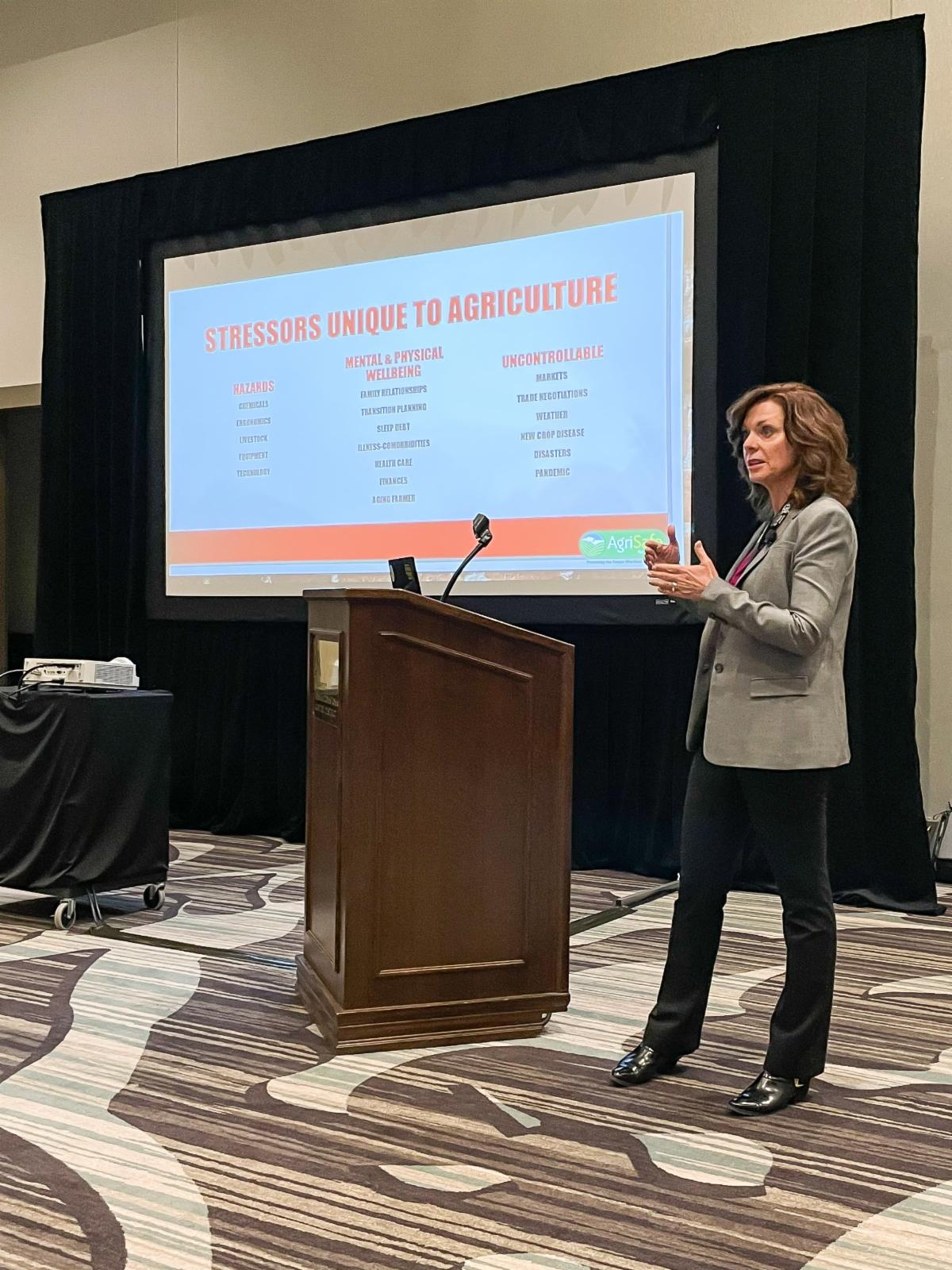
Recently, Dr. Tina Chasek (LIMHP, LADC, Associate Professor at the University of Nebraska Omaha) and Linda Emanuel (RN, Community Health Director at AgriSafe Network) presented to 100 young producers and spouses at Central Valley Ag's annual Young Producers Conference in Omaha, Nebraska. Their interactive session was on "Seasons Change, You Remain - Talking About Stress," where they shared specific stress identification related to agriculture as well as management strategies.
In addition, AgriSafe asked young producers what their primary stressors are. Here's their response: markets, finances, safety of kids and aging parents, keeping the farm legacy, weather, incomplete work projects, and the physical health of their family.
|
|
2022 Census of Agriculture |
|
Agricultural operations, large or small, are important to US agriculture. The National Agriculture Statistics Service (NASS) conducts a census of all agricultural operations every five years, in addition to other agricultural surveys. The last day to sign up for the census is June 30th, 2022. If you have never received a census and are new to NASS surveys, sign up to be counted today.
|
|
Upcoming Mental Health Workshops in Pennsylvania
If you’re an agriculture professional who works with livestock producers, join us for one of six mental health workshops happening across the state! You’ll gain specific training on how to navigate mental health issues in the farm community. These workshops are ideal for anyone who is in contact with livestock producers and is concerned about their mental wellness and overall well-being. Click here for more information!
|
|
Upcoming AgrAbility Webinar: March 29 @ 12PM CT
Wearable Assistive Technology for Agricultural Workers
In this session, wearable assistive technology (AT) for use in agricultural lifestyles will be discussed. Individuals working in farming, gardening, fishing, logging, and similar occupations can benefit from the use of AT to track their health and wellbeing and effectively manage their workload while increasing safety. Click here for more information!
|
|
National Ag Day
March 22nd, 2022 is National Ag Day, a time when producers, agricultural associations, corporations, universities, government agencies, and countless others across America gather to recognize and celebrate the abundance provided by American agriculture. Learn more about how to participate here.
|
|
|
|
|
|
|