Student Wellness Department
Project Prevent Grant
|
|
Funded by the Ohio Department of Education |
|
By the time you read this, you may already be two or three weeks into the start of the 2021-2022 school year. We hope the opening days have been filled with excitement, happy reunions, and the promise of a successful year ahead. This edition has excellent resources on several important topics, including suicide prevention, bullying prevention, and domestic violence.
As always, please reach out if we can support your school in developing or improving procedures and protocols pertaining to these or other areas.
The Student Wellness Department
|
|
Student Wellness Free Trainings
Tuesday, October 5, 2021 (Zoom)
9:00 AM - 12:00 PM
Tuesday, November 9, 2021
9:00 AM - 11:00 AM
45 min. online role-play simulation / self-paced & private
|
|
Outside Trainings
Virtual - Free
September 24, 2021, from 10:00 AM - 11:30 AM
Live virtual and pre-recorded sessions
October 14-15, 2021
Virtual
$50 registration fee
October 26, 27, & 28, 2021
|
|
Sources of Strength Ohio Network Leader RFP |
|
The Ohio Suicide Prevention Foundation and PreventionFIRST! are seeking partners to support the statewide rollout of Sources of Strength Ohio, an evidence-based suicide prevention program for elementary and secondary student populations. Awardees will recruit schools to participate in Sources of Strength, provide technical assistance to local programs, assist with program implementation, and liaison between local and state partners. Candidates do not need to be trained in Sources of Strength to apply but must earn provisional certification by end of the state fiscal year 2022.
Funding Period: October 4, 2021 – June 30, 2022
Issue Date: September 3, 2021
Proposal Submission Deadline: September 24, 2021
Award Amount: $15,000
Eligibility: Youth-led groups, not-for-profit organizations, schools, school partners, government organizations, and consultants. Must be trained as both an elementary coach and Sources of Strength provisional trainer by end of October 2021. Trainings at no cost will be held in October.
|
|
Ohio Department of Education: Student & Staff Well-Being |
|
Schools and districts play an essential role in supporting the needs of the whole child. Schools have the opportunity to provide a variety of protective factors in the lives of students. This toolkit (click here to view) is designed to explore the social, emotional, and behavioral considerations schools and districts may reflect upon. The following topics are included in the toolbox:
- Building and Sustaining Relationships
- Building Resiliency through Social and Emotional Learning
- Trauma-Sensitive Practices
- Suicide Awareness and Prevention
|
|
National Suicide Prevention Month |
|
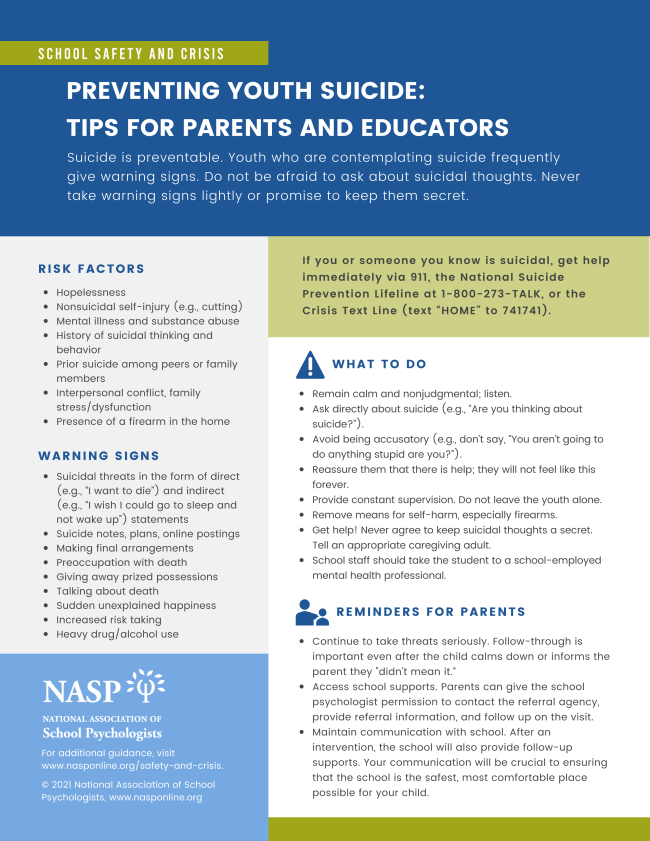
Schools serve as an ideal setting for suicide prevention efforts and it is critical for staff to develop comprehensive suicide protocols to protect at-risk students. When teachers and other staff are trained in recognizing the warning signs of suicidal ideation, as well as appropriate steps to take when confronted with those signs, a tragedy with irreversible consequences can be prevented.
|
|
Suicide is the leading cause of death among school-age youth. However, suicide is preventable. Youth who are contemplating suicide frequently provide warning signs of their distress. Parents, teachers, and friends are in a key position to pick up on these signs and get help. It is important not to take these warning signs lightly or promise to keep them secret. When all adults and students in the school community are committed to making suicide prevention a priority and are empowered to take the correct actions, we can help youth before they engage in behavior with devastating consequences.
|
|
According to the Centers for Disease Control, suicide is the third leading cause of death among persons aged 10-14 and the second among persons aged 15-34 years. In 2016, the suicide rate reached a 30-year high in America. In order to assist school districts in supporting students and families, OSBA has compiled research-based information regarding student suicide.
|
|
National Bullying Prevention Month |
|
Every child is entitled to feel safe in the classroom, hallways, or on the playground. As educators, you know first-hand that bullying negatively affects the atmosphere of the school and disrupts the learning environment. Student achievement suffers among both the students who are bullied and those who engage in bullying.
In an atmosphere where bullying is tolerated, teacher morale declines, which can interfere with discipline and learning. When students regularly witness bullying, they can begin to feel that the adults are not in control or are uncaring. And finally, parent confidence and trust in the school erodes when students experience bullying or are accused of bullying others.
|
|
Bullying can threaten students’ physical and emotional safety at school and can negatively impact their ability to learn. The best way to address bullying is to stop it before it starts. There are a number of things school staff can do to make schools safer and prevent bullying.
There are three roles in a bullying situation: the bully, the victim, or the witness to the bullying, sometimes called the bystander. Bullying can happen in and out of the classroom, during recess, field trips, sports, or over the Internet and social media outlets. In response to National Bullying Prevention Month, EducationWorld has created a list of videos, games, and books teachers can use to encourage their students to speak up or avoid bullying.
|
|
Domestic Violence Awareness Month |
|
Ohio Handle With Care is a collaborative cross-systems, trauma-informed strategy, aimed at ensuring that children exposed to adverse events receive appropriate interventions at school after a traumatic event. Handle With Care provides opportunities to build resilience through positive relationships
with teachers, and first responders.
For more information on implementing Handle with Care, please contact Heather Corcoran,
|
|
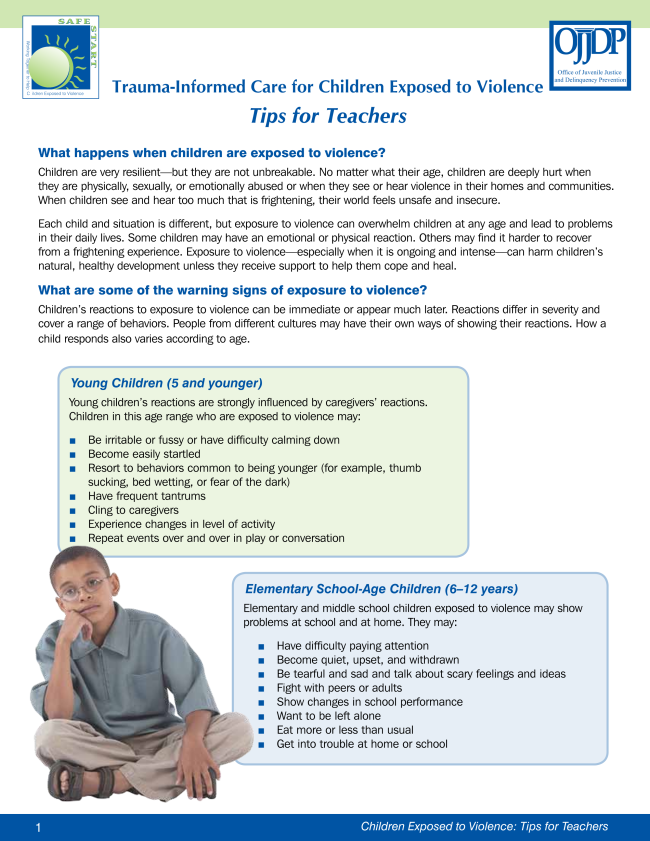
Children are very resilient—but they are not unbreakable. No matter what their age, children are deeply hurt when they are physically, sexually, or emotionally abused or when they see or hear violence in their homes and communities. When children see and hear too much that is frightening, their world feels unsafe and insecure.
The teacher’s first responsibility is to follow school policies and procedures and refer the child to specialized professionals such as the school social worker or psychologist.
|
|
In recent years, increased attention has been focused on children who witness violence between family members at home. Even when children are not directly injured by violence, exposure to violence in the home can contribute to behavioral, social, or emotional problems. In addition, research suggests that child maltreatment and domestic violence co-occur in an estimated 30 to 60 percent of cases.
|
|
OCD Awareness Week (October 10-16) |
|
For children who have obsessive-compulsive disorder, functioning in school can be complicated and very difficult. And for a teacher, it can be easy to misread the symptoms of OCD as oppositional behavior on the child’s part, or as ADHD. If teachers can recognize the behaviors associated with OCD, especially when a child is embarrassed and trying to hide their anxiety, they can help the student to receive treatment or make adjustments from unnecessary struggles, thereby clearing the way for them to learn successfully.
|
|
Before we can identify how OCD can manifest in the classroom we first need to understand it. According to statistics, at least 1 in 100 children are diagnosed with OCD. This means that about 8-10 kids in an average-sized elementary school struggle with this illness. Research indicates that OCD is one of the most common psychiatric illnesses affecting children and adolescents.
|
|
It is important to remember that anxiety/OCD is not a result of something that you, your student, or others did wrong. These are real mental health conditions, and there are real treatments that work. Students' lives do not have to be limited by anxiety/OCD.
|
|
In this Skills Corner, please find a testimony written by Katie Detwiler, School Counselor, with Kenston High School.
With the prevalence of a worldwide pandemic and social issues headlining the news on a daily basis, the past two years have been very stressful to many of our students and their families. As a result, school counselors have seen an increase in students who require mental health support, especially those requiring suicide intervention services. As a school counselor, a student may visit my office at any time to share their struggles and deepest thoughts, including thoughts of suicide. The way I react to the student is extremely pivotal for that child and their family, and I have to be prepared to handle the situation given a moment’s notice.
Part of the struggle that counselors face when a student expresses suicidal thoughts is separating the subjectivity in their statements from the objectivity. As counselors, we bring our own experiences and perspectives to the table, which can impact our perceptions. Therefore, it is vital to have an objective system in place when dealing with a serious threat, such as suicide.
Over the past year, the Kenston Local School District staff has collaborated with mental health specialists* to develop a Suicide Intervention Protocol. The protocol follows a logical series of steps, including 1) triaging a student and assessing risk and needs using the Columbia Screening Tool, 2) determining the level of risk based on assessment results and providing parent/guardian with the necessary information, 3) creating a safety contract with the student and parent, 4) continuing to communicate with family, and 5) setting up a re-entry/transition plan if hospitalization occurred. By using a research-based assessment tool, such as the Columbia Screening Tool, subjectivity on the part of the counselor is greatly lessened. Based on a series of questions, the screening tool rates the student as “Low Risk”, “Medium Risk”, or “High Risk”. In addition, the screener provides a recommended response protocol for each rating category so the counselor is equipped to guide the student and parent appropriately. This can prevent sending students to emergency services if they are not truly considered high risk. Overall, this systematic approach to suicide risk assessment has created a more streamlined process for staff members and provides families and support agencies with helpful information they can use in supporting the child.
*The Mental Health Specialist is a member of the Student Wellness Department at the Educational Service Center (ESC) of Northeast Ohio. The ESC of Northeast Ohio can offer support and guidance around District Suicide and Threat Protocols along with supporting the district’s implementation of HB 123, including consultation and team participation to assess underlying needs and explore services or supports.
|
|
House Bill 123:
The “Safety and Violence Education Students Act,” also known as the “SAVE Students Act,” took effect on March 24, 2021. Enacted as part of H.B. 123, the Act requires Ohio school districts to provide youth suicide awareness education and training and to implement threat mitigation efforts. The act outlines required expectations to be implemented between 2021-2024. For more information, CLICK THIS LINK.
The ESC of Northeast Ohio can offer support and guidance around District Suicide and Threat Protocols along with supporting the district’s implementation of HB 123, including consultation and team participation to assess underlying needs and explore services or supports. Please contact Denise Pietrzak at 216-525-2524 or denise.pietrzak@escneo.org.
|
Additional Resources:
-
Be Present Ohio is a website for teens and young adults focused on self-care skills for managing tough situations and tools for supporting friends.
-
Ohio Suicide Prevention Foundation provides programs and trainings to increase suicide awareness and prevention. Find information on the following trainings: QPR Gatekeeper Trainings for Suicide Prevention, Mental Health First Aid, Working Minds: Suicide Prevention in the Work Place
|
|
ADHD and Behavioral Interventions
The transition back to school from summer break is the perfect time to expand our resources and tools for supporting students with ADHD or Attention-Deficit/Hyperactivity Disorder. These students may experience a particularly difficult time transitioning back to a classroom setting and it is important to begin the year with support and strategies in place. Many great resources can be found here:
Try starting off by building in movement breaks, using organizational strategies such as color-coding materials, and/or increasing positive acknowledgment of expected behavior in the school setting.
|
Recent news in PBIS
The state has recently updated Ohio Revised Code to include many of the requirements previously outlined in House Bill 318.
In summary, Ohio law and rule requires districts:
1. To implement a positive behavior intervention and supports (PBIS) framework on a system-wide basis.
2. To provide PBIS professional development to all school personnel serving students in grades K-12 every 3 years.
For more information, please use the links below to access the detailed Ohio Revised Code:
|
|
Do you want to learn more about Ohio’s Revised Restraint and Seclusion?
CLICK THIS LINK for a YouTube video presentation (40:49 minutes) facilitated by Emily Jordan, Education Program Specialist, with the Office for Exceptional Children, and Deborah Turner, PBIS Coordinator, with the Office of Whole Child Supports, of the Ohio Department of Education.
|
|
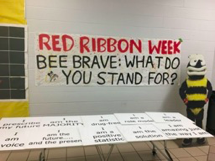
For this month’s spotlight feature, Brecksville-Broadview Heights City Schools discuss their involvement with Red Ribbon Week and how their district is a model of school and community collaboration. |
|
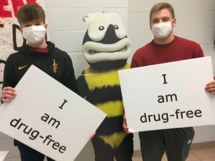
Red Ribbon Week, which is celebrated annually October 23-31, is the nation’s oldest and largest drug prevention awareness program. Many school districts use this week to encourage students to take a visible stand against drugs.
In the Brecksville-Broadview Heights (BBH) School District, Red Ribbon Week is a collaborative effort between students, school personnel, and the Community Awareness and Prevention Association (CAPA). CAPA is a non-profit organization that was founded in 1989 to prevent and intervene in drug and alcohol abuse in the BBH schools and communities. Their mission is to “work in collaboration with the Brecksville-Broadview Heights communities and school district to plan and implement strategies aimed at preventing and reducing youth substance use while encouraging healthy life choices.”
In keeping with this mission, Red Ribbon Week is designed to be an awareness campaign that spreads the messages of the dangers of drug use beyond the schools and into the broader BBH community. The goal is to get individuals within the schools and communities talking to one another and working together on activities that will build a sense of community and common purpose. The messaging places a strong emphasis on developing healthy social norms and behaviors that are positive and fun, thereby promoting positive mental health.
During Red Ribbon Week in 2020, youth leadership groups at the high school worked with CAPA to plan daily activities aimed at creating awareness about underage drinking, vaping, marijuana use, and mental health issues impacting youth. The week culminated with a Virtual Health and Wellness Fair that was promoted to students, staff, parents, and community members.
Additional Resources:
|
|
Throughout Ohio, you can text the keyword “4hope” to 741 741 to be connected to a trained Crisis Counselor. Data usage while texting the Crisis Text Line is free and the number will not appear on a phone bill with the mobile service carrier. People of all ages can use Crisis Text Line (www.crisistextline.org).
|
|
Educational Service Center of Northeast Ohio I www.escneo.org I 216-524-3000
|
|
|
|
|
|
|