|
As Black Business Month draws to a close, I write not simply to commemorate Black entrepreneurship, but to challenge New Jersey to confront what remains unfinished.
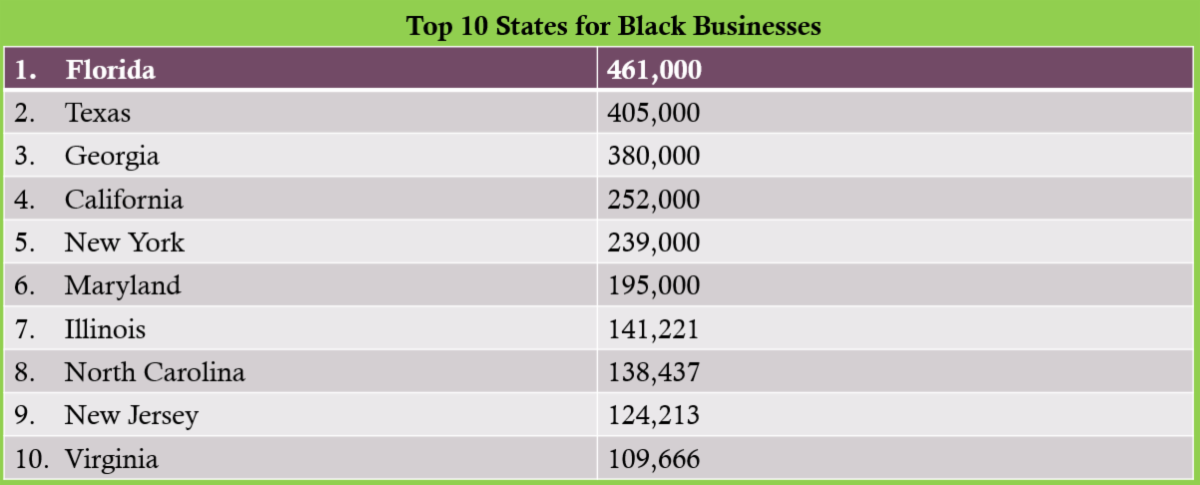
As President and CEO of the African American Chamber of Commerce of New Jersey (AACCNJ), I have the privilege of representing a community that has contributed immeasurably to the economic, civic and social fabric of this state. AACCNJ serves as a vanguard for approximately 1.2 million Black residents and more than 124,000 Black-owned businesses.
Our history is one of perseverance. Black Americans built businesses despite exclusion from capital, property ownership, education, employment opportunities and markets. From Reconstruction-era entrepreneurs to today's manufacturers, professional-service firms, retailers, contractors and innovators, Black business owners have created jobs, paid taxes, supported neighborhoods and strengthened New Jersey's economy.
Yet perseverance should never be confused with progress.
New Jersey's Black community represents substantial economic power. Nielsen data cited by AACCNJ estimates that Black consumers contribute approximately $56 billion in purchase value to New Jersey's economy. Our political participation has also been consequential. Black voters supported Governor Phil Murphy with approximately 94% of their vote in 2017, and AACCNJ has cited 96% support for its current governor Mikie Sherrill.
But political participation must translate into economic participation.
The evidence is difficult to ignore. New Jersey's 2024 Disparity Study found that Black-owned businesses received only 0.03%—approximately $3.3 million—of $11.3 billion in formal construction prime-contract dollars studied for 2015–2020. Black firms received just 13 construction prime contracts during that period. The study also documented significant underutilization of Black businesses relative to their availability in the marketplace.
This is not merely a Black-business issue. It is a New Jersey competitiveness issue.
When qualified businesses are unable to compete for public and private contracts, New Jersey loses potential jobs, investment, innovation and tax revenue. When families cannot build wealth through homeownership and entrepreneurship, economic mobility suffers. When barriers to capital, contracting and opportunity persist, poverty and unemployment become harder to overcome.
Consider the Project Labor Agreement (PLA) threshold. New Jersey's $5 million threshold dates to legislation enacted in 2002 and remains embedded in current law. Meanwhile, under presidents Biden and Trump the federal PLA threshold is $35 million. Moreover, the Port Authority of New York placed a $400 million PLA threshold on its JFK Airport expansion project; which was a 20 Billion Dollar Private Public venture. We should ask whether New Jersey's threshold remains appropriate for today's construction economy and whether it inadvertently limits opportunities for smaller and emerging contractors.
We should also examine policies affecting the cost of living and economic mobility, including the use of credit-based insurance scoring, education and occupation as proxies to determine auto insurance premiums; these variables can disproportionately burden households already facing wealth disparities.
|