|
|
|
|
|
Season's greetings to all! This will be our last newsletter of 2019 and it has been a pleasure to bring you so many exciting wines this year.
|
| |
|
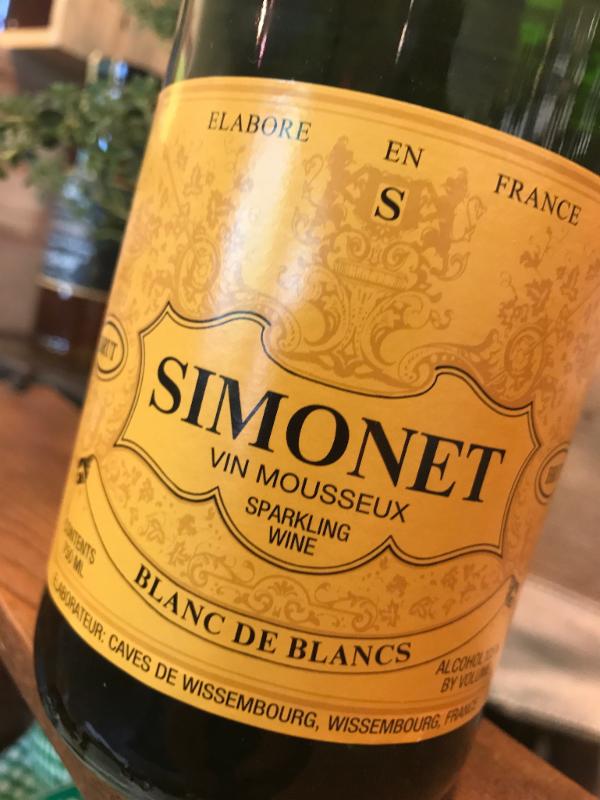
Simonet Brut "Blanc de Blancs"
$13 per bottle
|
In honor of the holidays, the features for this week are selected for maximizing your enjoyment, while you enjoy the holidays. Let's start with this lovely, inexpensive French sparkling wine, that is fantastic to drink by itself, or splash with a little OJ, cranberry juice or raspberry liqueur.
Simonet Brut is produced by a cooperative near the French wine region of Alsace. Although the vineyards of the area run along the banks of the Rhine river, the only grape used to make this wine is Chardonnay. It is produced using the Charmat method, similar to Prosecco, but is drier and more full bodied than most of those.
When you pop the cork on this little star and pour the first glass, the nose gives you a complex combination of fresh cut red apples, dried Anjou pears, lemon grass and a kiss of star anise. On the palate it is nicely balanced, with a mouth filling texture and moderate length. Serve by itself with eggs Benedict, seafood crepes or with pastry wrapped brie.
|
|
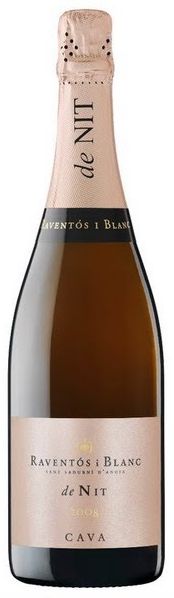
2016 Raventos i Blanc de Nit Conca del Riu Anoia (Rosé)
$26 per bottle
|
Like Simonet, this is a top seller and a staff favorite. In fact, for our money this Rosé is better than many true Rosé Champagnes, and less than half the price. Hypothetically this is Cava Rose but Pepe Raventos feels the appellation has been compromised by big producers, so he prefers to use the name of his sub-zone in Penedes, Spain, called Conca del Riu Anoia.
Raventós i Blanc is not only one of the most historic estates in Spain, but also an industry leader that is forcing change in an entire category.
It all started in 1497 when the Raventós i Blanc estate was formed.
Today it covers more than 300 acres of vineyards, woodlands and a lake in Sant Sadurní d'Anoia. Then in in 1872 Josep Raventós Fatjó made the first bottle-fermented wine in Spain, for the Codorníu family, but using native grapes from this estate.
Finally, in November 2012, the family decided to leave the DO Cava and create their own more strictly defined and geographically specific appellation: Conca del Riu Anoia. It was born to create wines coming from a single estate, a specific climate, native grape varieties and a rigorous, well-defined and respectful form of viticulture, in other words, a faithful reflection of where the wine comes from; the River Anoia Valley.
For their Rosé they use a classic combination of 48% Xarel-lo, 15% Macabeu, 32% Parrellada and 5% Monastrell.
Each variety is individually fermented in stainless steel tanks before the base wine is blended.
Then the combination is fermented and aged in the bottle for eighteen months before disgorgement.
At that point the Monastrell is added for color.
This wine explodes from the glass with notes of fresh strawberries and raspberries, sassafras, Thai basil and dried sage.
On the palate it is fairly chiseled and tight, with a good sense of mid-palate fruit that is framed by very firm, minerally edges and a long finish.
Serve with oysters on the half shell, caviar or ceviche.
|
2016 Gunlach Bundschu
Merlot
$32 per bottle
For six generations and over 160 years, this family has farmed their Rhinefarm estate vineyard at the crossroads of the Sonoma Valley, Carneros and Napa Valley appellations. Today they focus on making small lots of ultra-premium wines from this distinctive and historic property.
We hope you enjoy the video below.
|
|
|
| GUNDLACH BUNDSCHU // A Brief History of Merlot |
Gundlach Bundschu loves Somoma Merlot. During it's dark days following the movie "Sideways" (remember that classic one liner which sent ripples through the wine communities), this downtrodden grape had to valiantly defend itself for years. Well, it's back! And better than ever on Rhinefarm. This classic Bordeaux varietal is one of the most versatile that exists, it can grow under many different situations. It changes personality depending on whether it's grown in a warm climate or cold. Gundlach Bundschu has both climates on their estate where it enjoys spicy, red fruit and tannin from the cooler areas and the warmer areas offer black fruit flavors and lushness to the midpalate. These varied flavor profiles allow us a unique opportunity to create a rich, layered wine, much like a chef who has the universe of spices to create a vision. In the Sonoma Valley Merlot, no one characteristic or texture is dominant and they blend deliciously. These Merlots can age up to ten years quite gracefully.
|
|
|
 |
 |
|
|
|
|