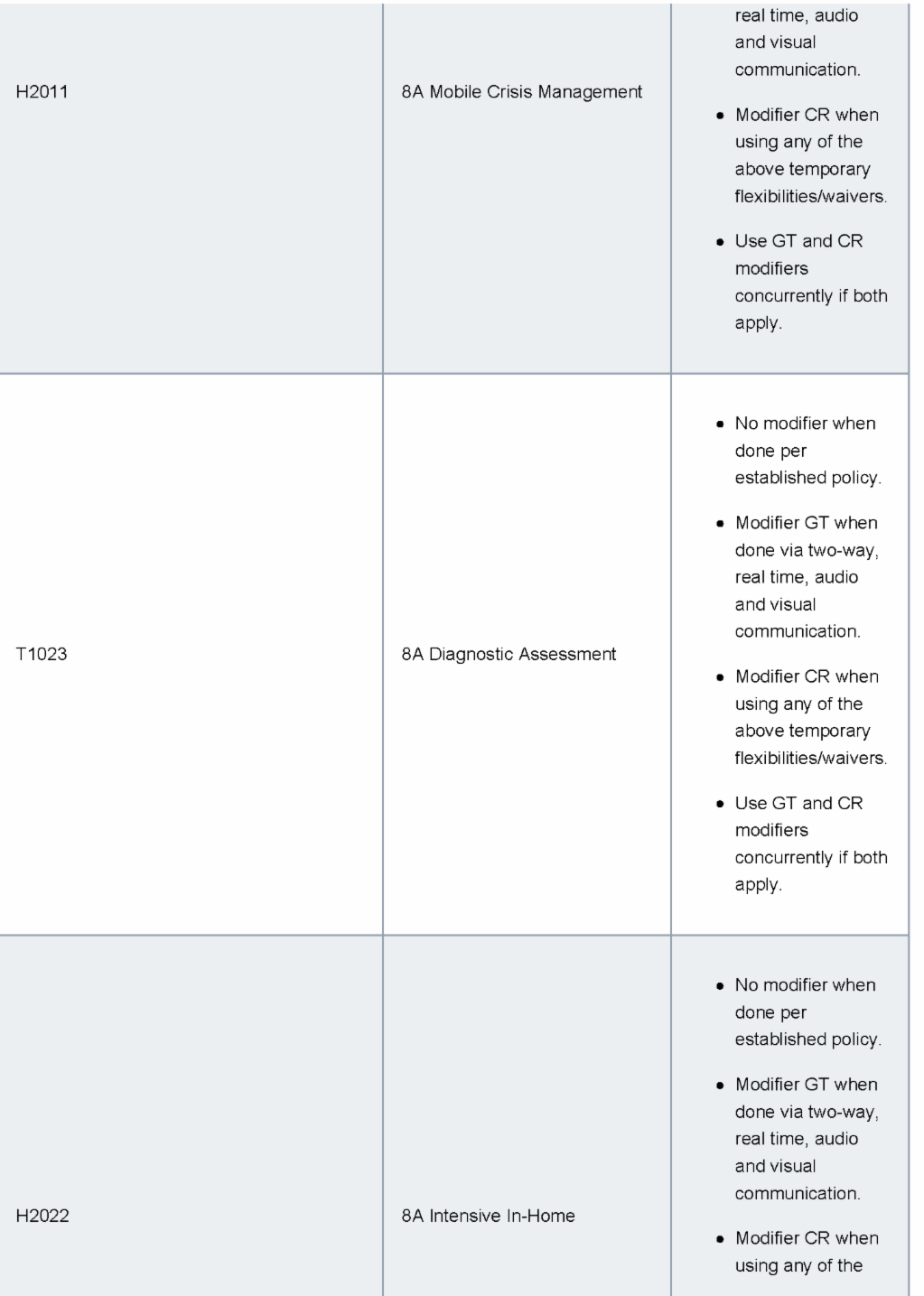
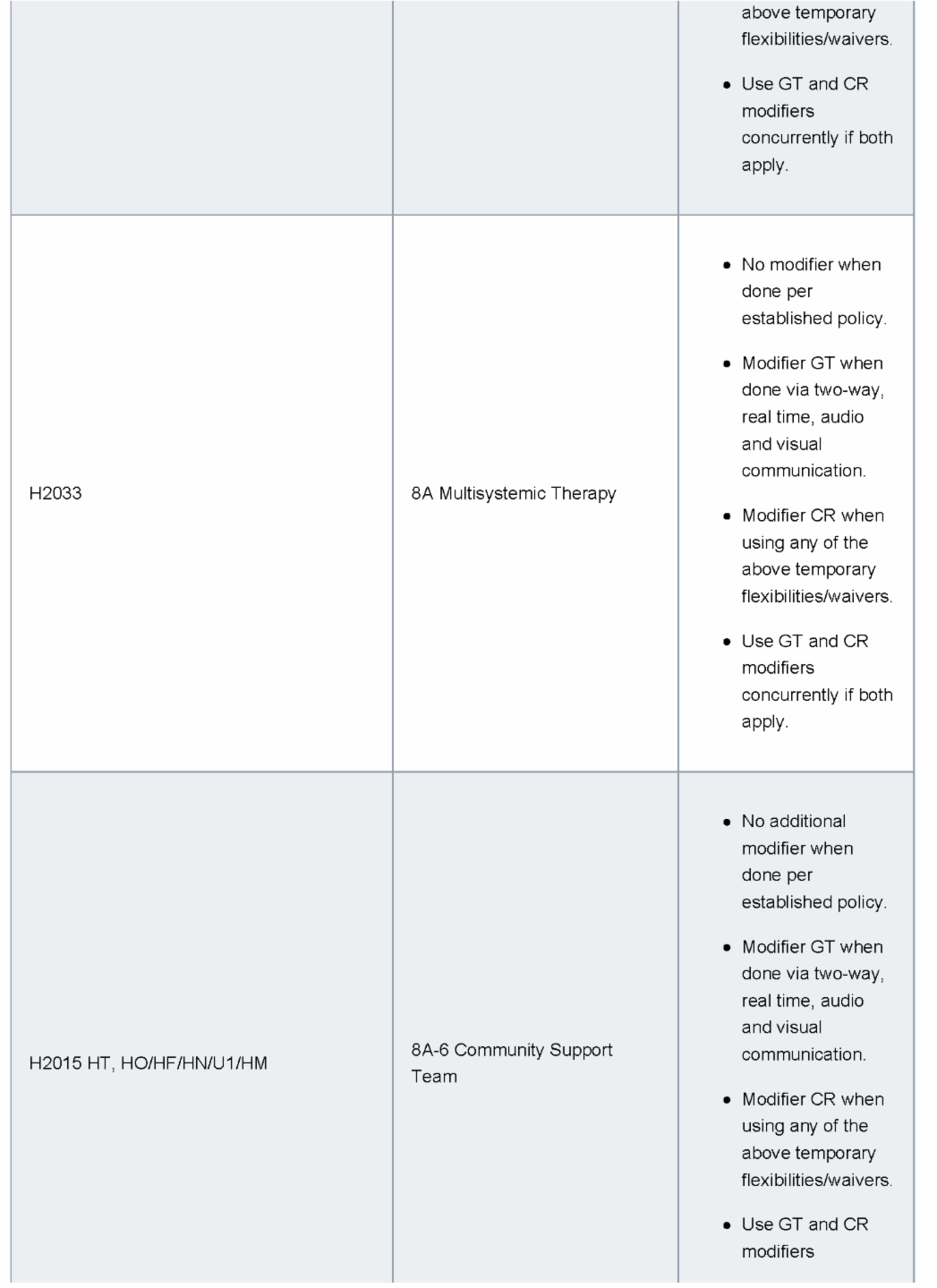
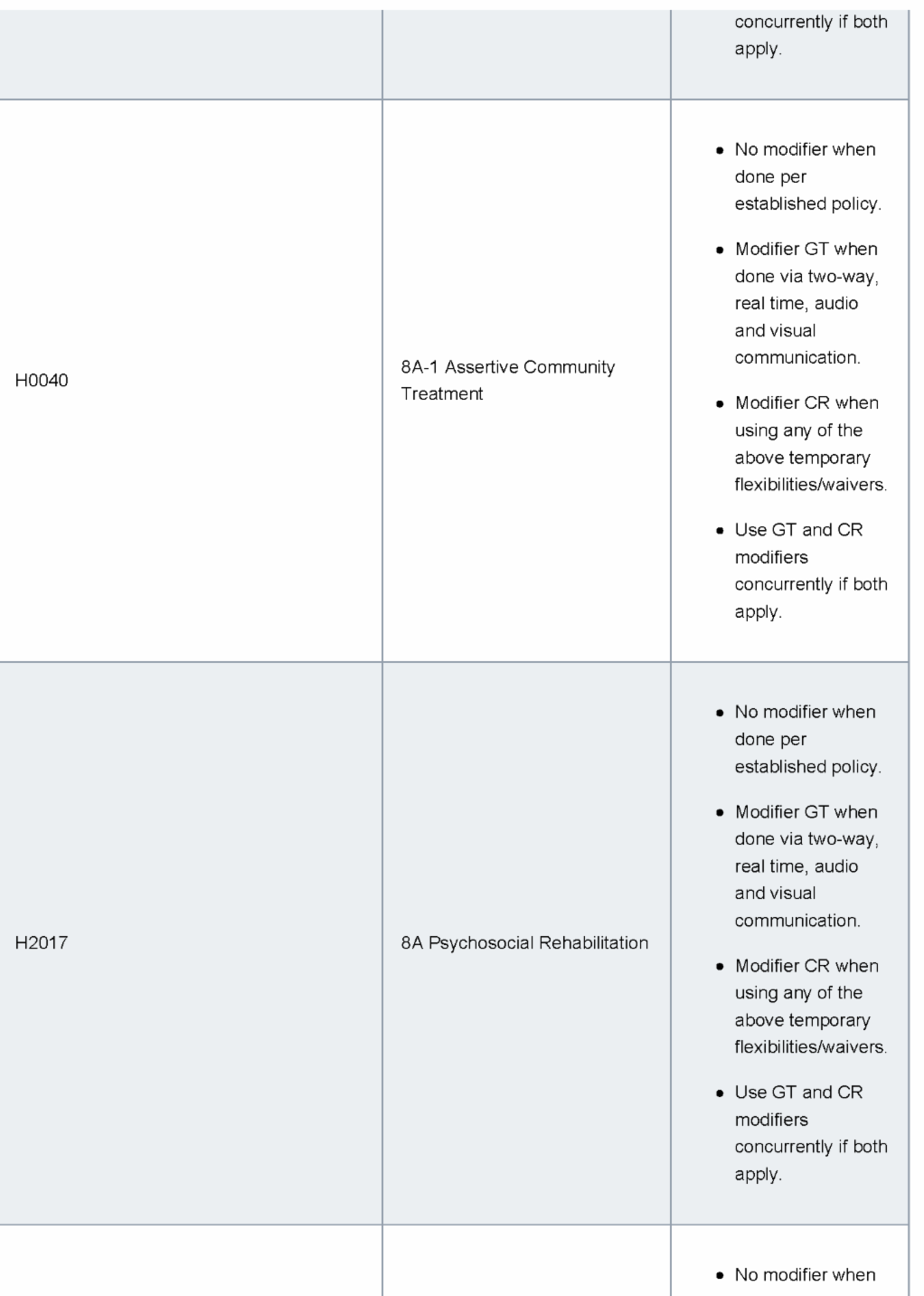
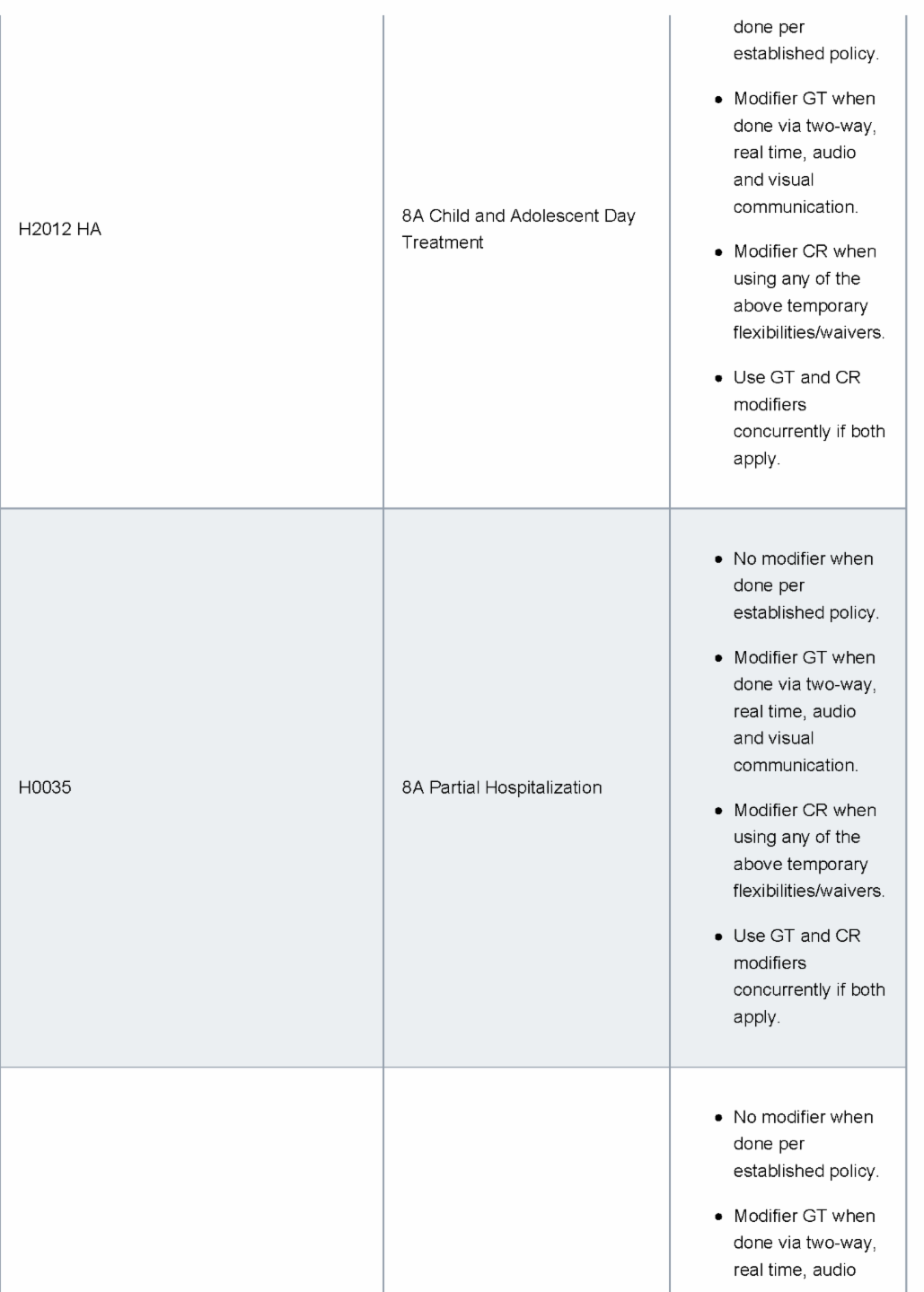
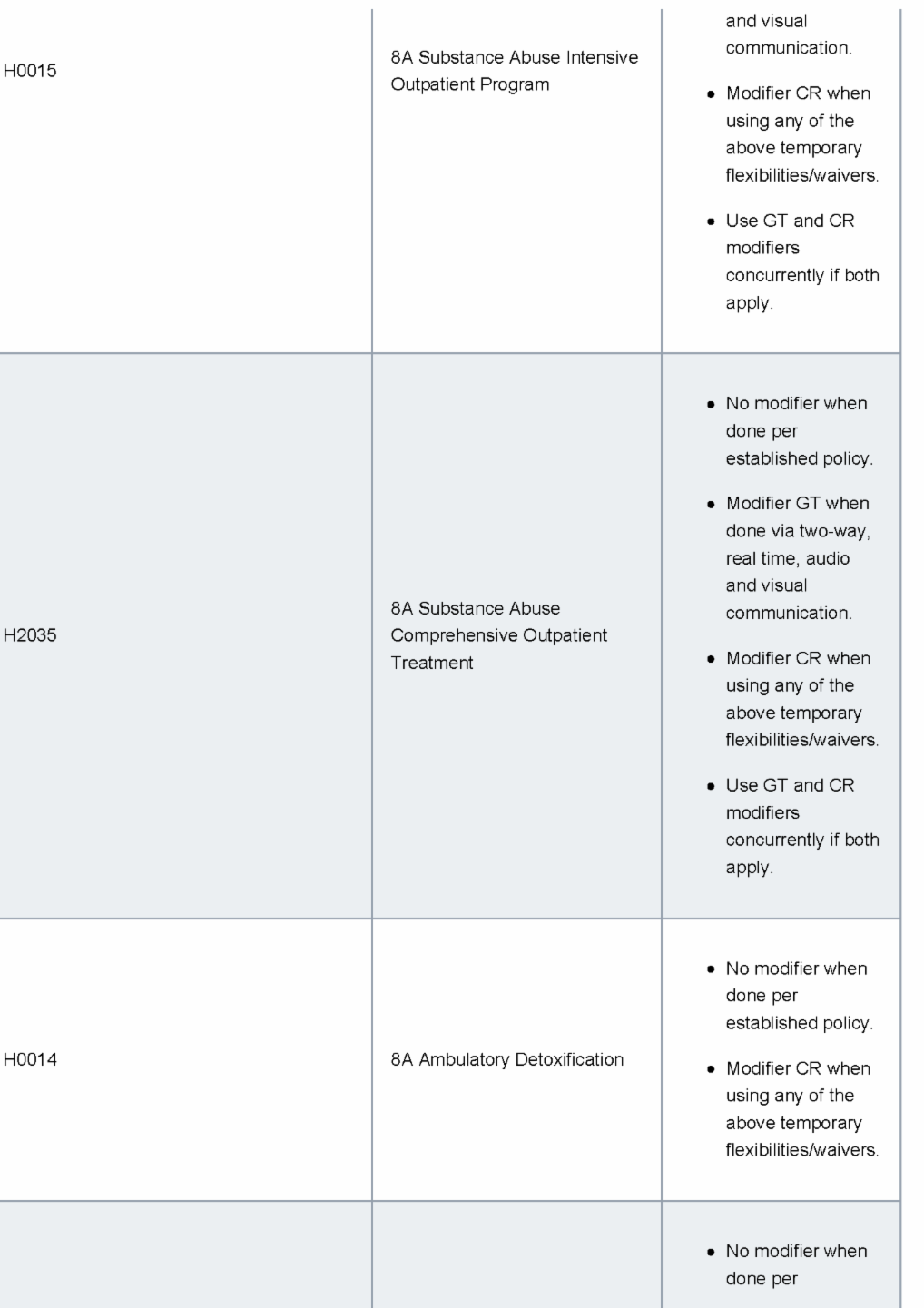
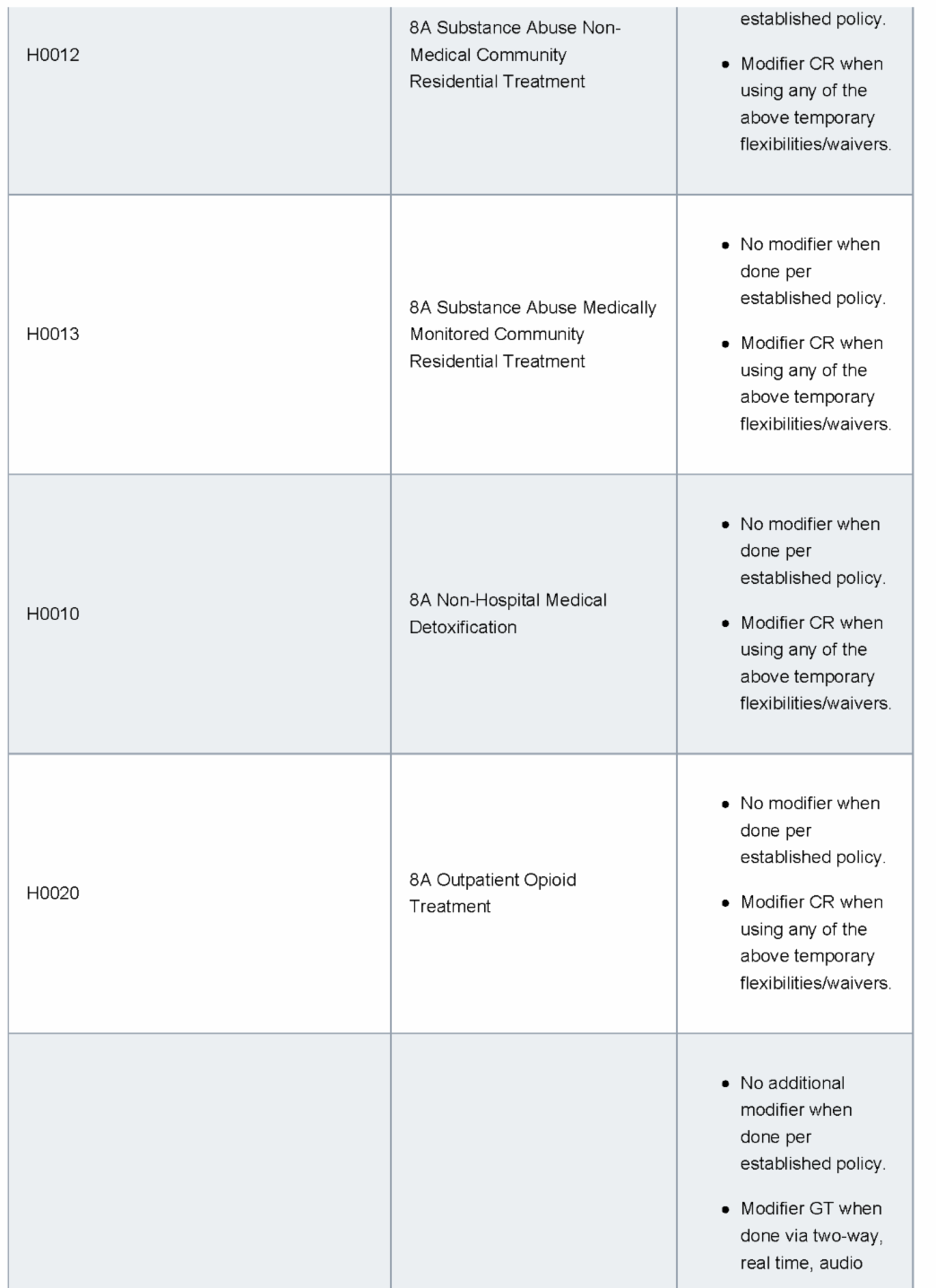
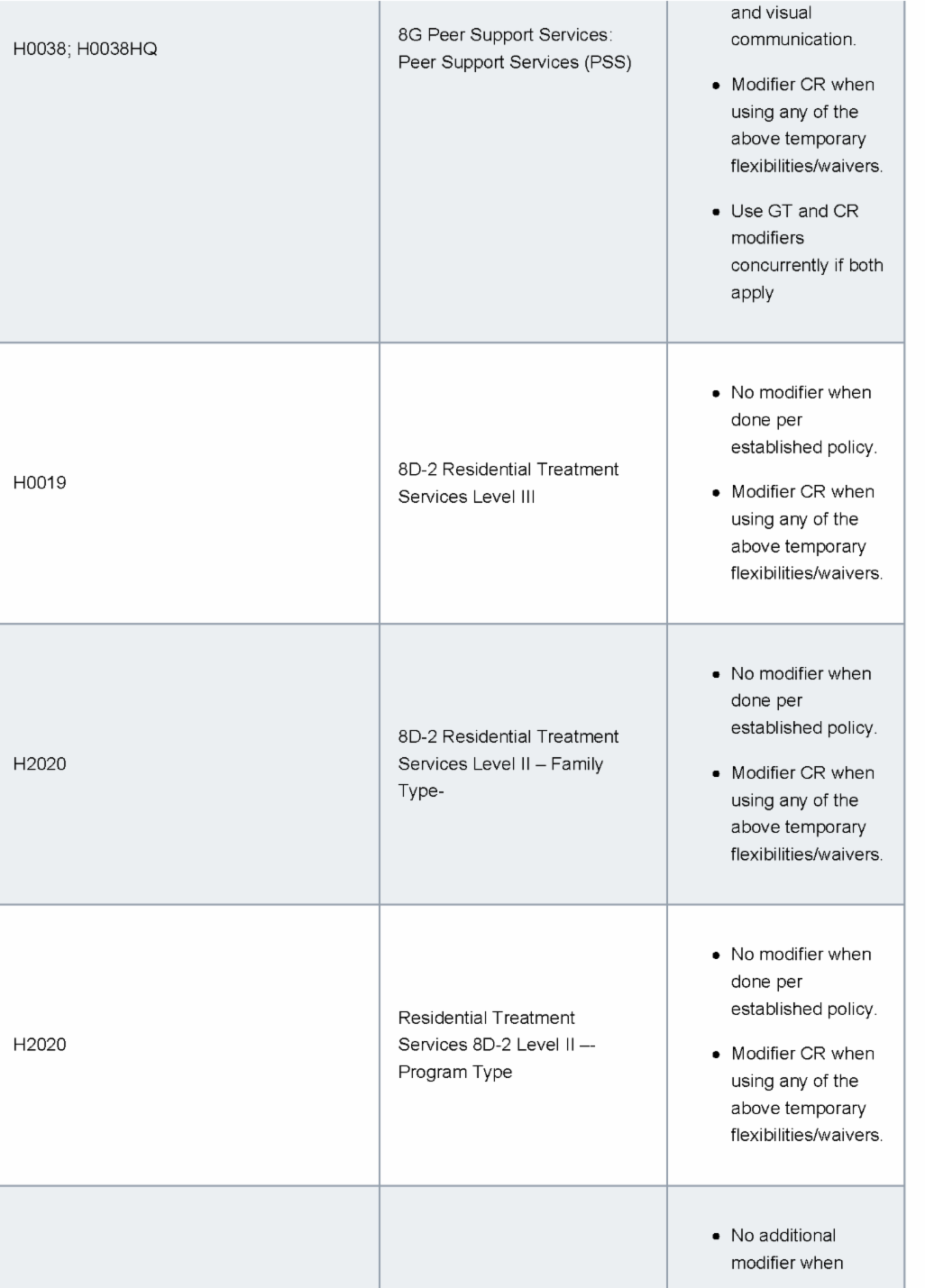
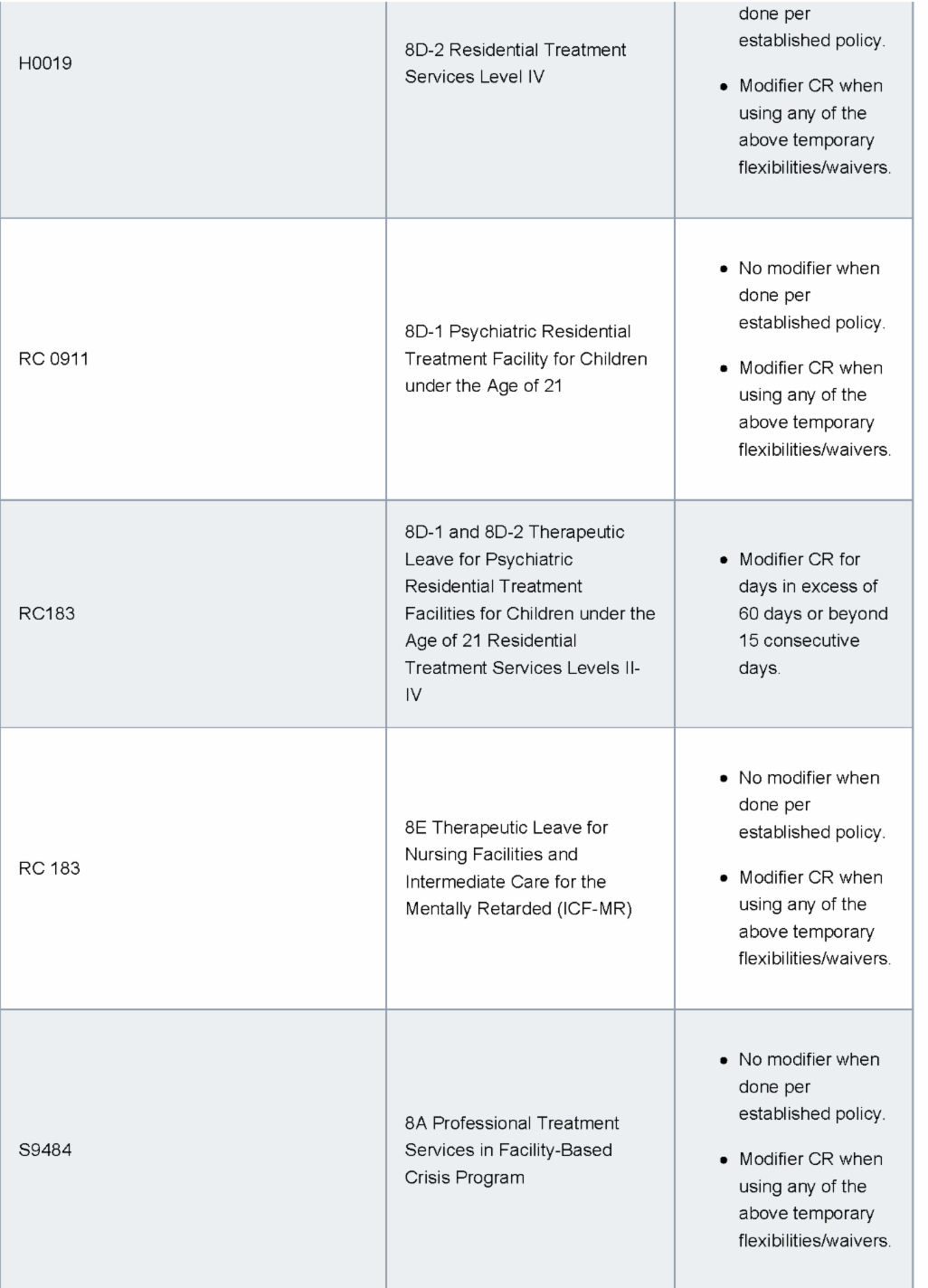
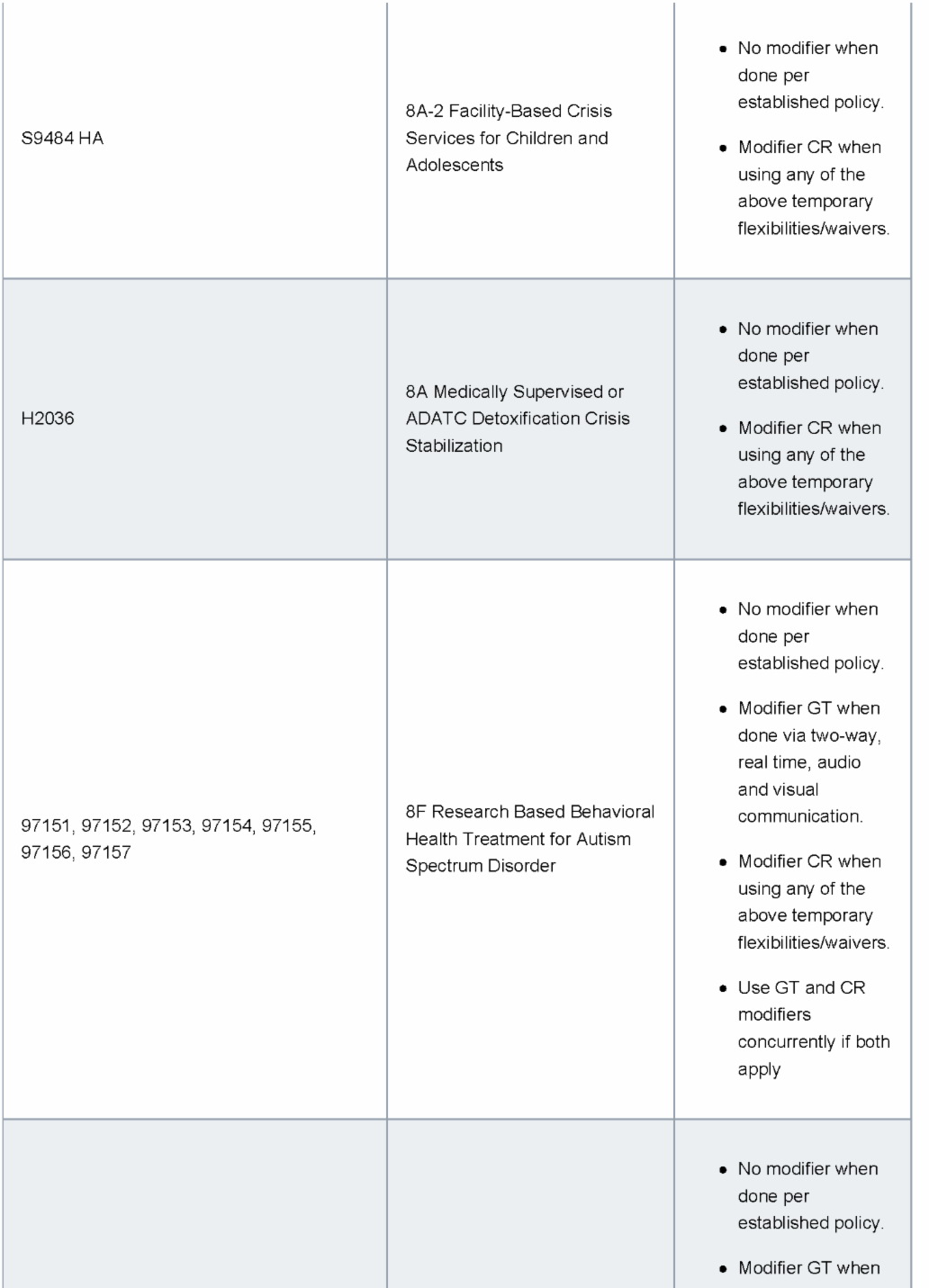
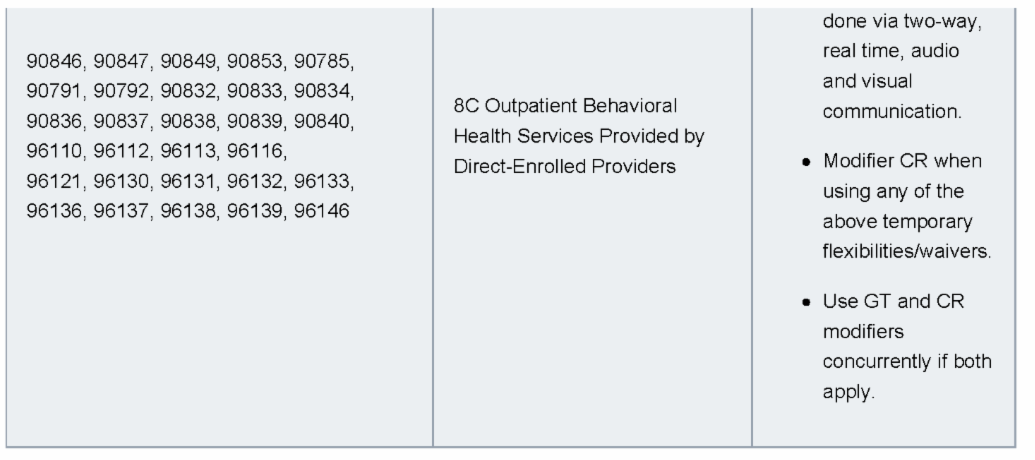
Effective April 16, 2020, NC Medicaid, in partnership with the DHHS Division of Mental Health, Developmental Disabilities and Substance Abuse Services (DMHDDSAS), is temporarily modifying its Behavioral Health and Intellectual and Developmental Disability Clinical Coverage Policies to better enable the delivery of care to NC Medicaid, NC Health Choice and State-funded individuals in response to the COVID-9 Pandemic.
These temporary changes are retroactive to March 10, 2020. and will end the earlier of the cancellation of the North Carolina state of emergency declaration or when the policy modification is rescinded. When the temporary modifications end, all prior service requirements will resume.
During the North Carolina declared state of emergency, services must continue to be provided at an intensity and quality that meet the needs of the individual, consistent with the individual's goals and the intended outcomes of the service. In addition, the service must be provided by staff at a ratio (as relevant) and with the expertise and scope necessary to meet the needs of each individual.
Throughout this bulletin, "telehealth" means two-way real-time interactive audio and video to provide care and services when participants are in different physical locations. Telehealth does not include telephonic provision of services; when telephonic provision is permitted, it is specifically noted below.
- Providers must ensure that services outlined in this bulletin can be safely and effectively delivered using telehealth or telephonic modalities.
- Providers must consider an individual's behavioral, physical and cognitive abilities to participate in services provided using telehealth or telephonic interventions.
- The individual's safety must be carefully considered for the complexity of the services provided. In situations where caregivers or facilitators are necessary to assist with the delivery of telehealth or telephonic services, their ability to assist and their safety should also be considered when the individual needs physical assistance.
- Delivery of services using telehealth or telephonic interventions must conform to professional standards including but not limited to ethical practice, scope of practice, and other relevant federal, state and institutional policies and requirements inc
- luding relevant Practice Acts and Licensing Board rules.
Supervision must continue to be provided per the applicable Clinical Coverage Policy but may be provided virtually as indicated below; virtual supervision includes real-time interactive two-way audio and video, as well as telephonic modes of communication. Supervision should be increased accordingly when provider staff do not receive relevant trainings that have been temporarily waived. Please note, staff trainings are only waived (as indicated below) if there are not opportunities to receive the specific training(s) virtually.
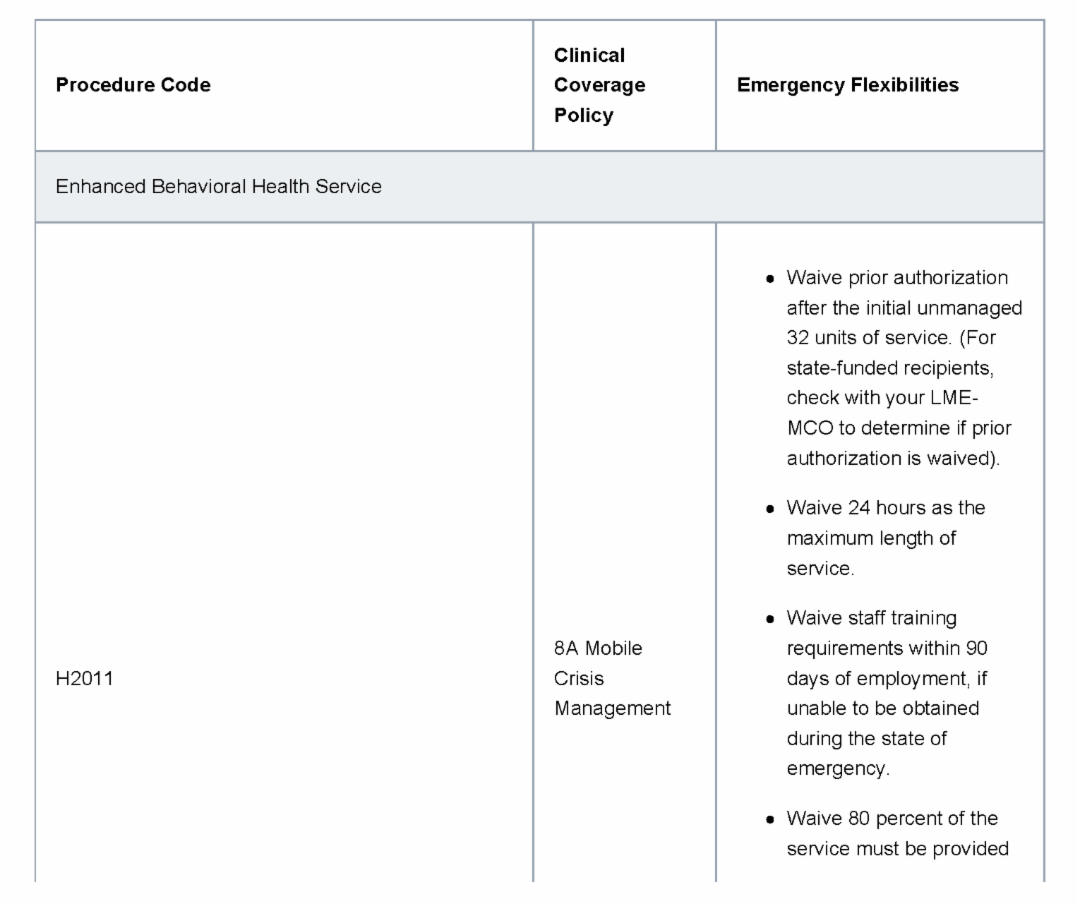
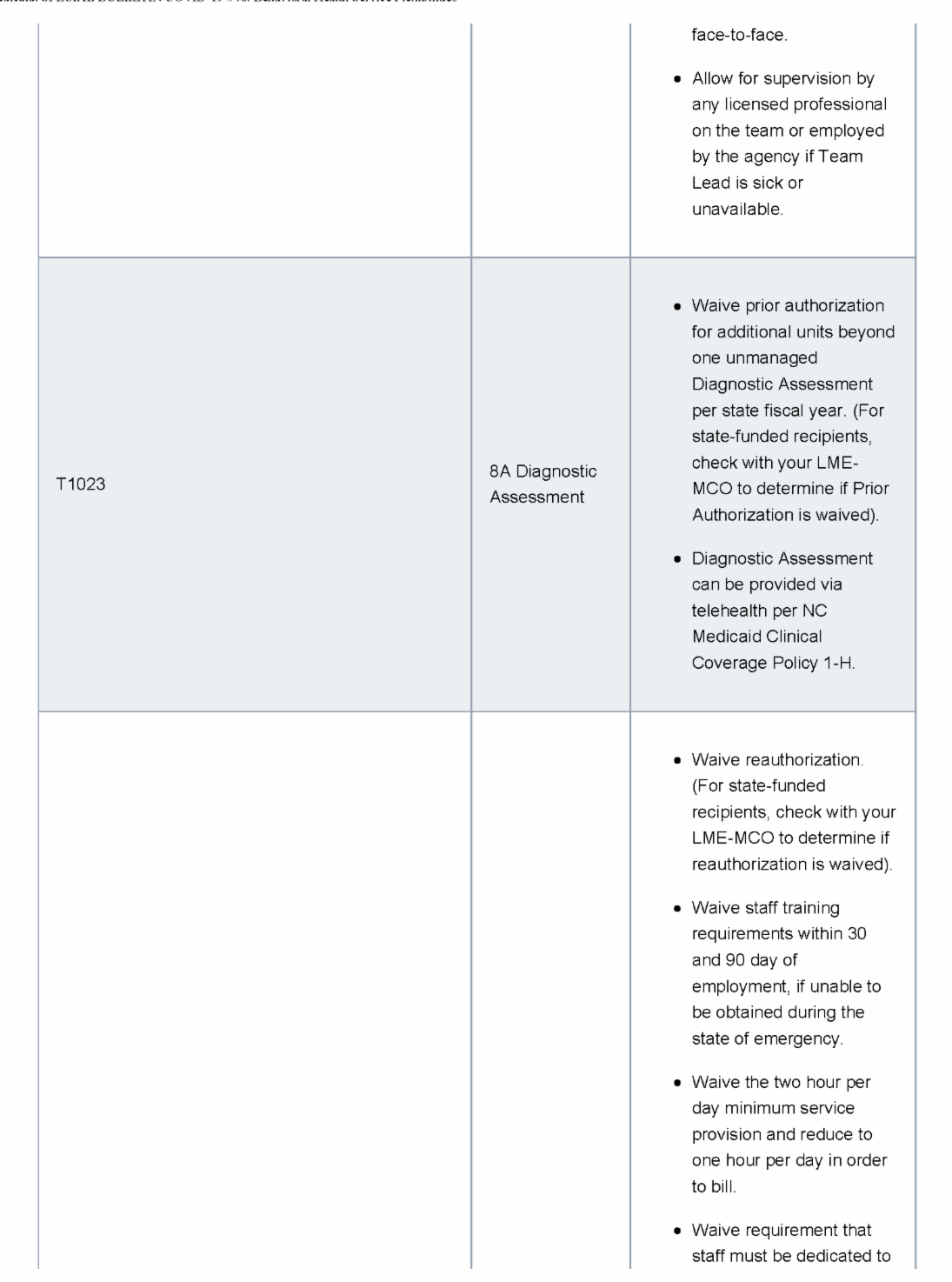
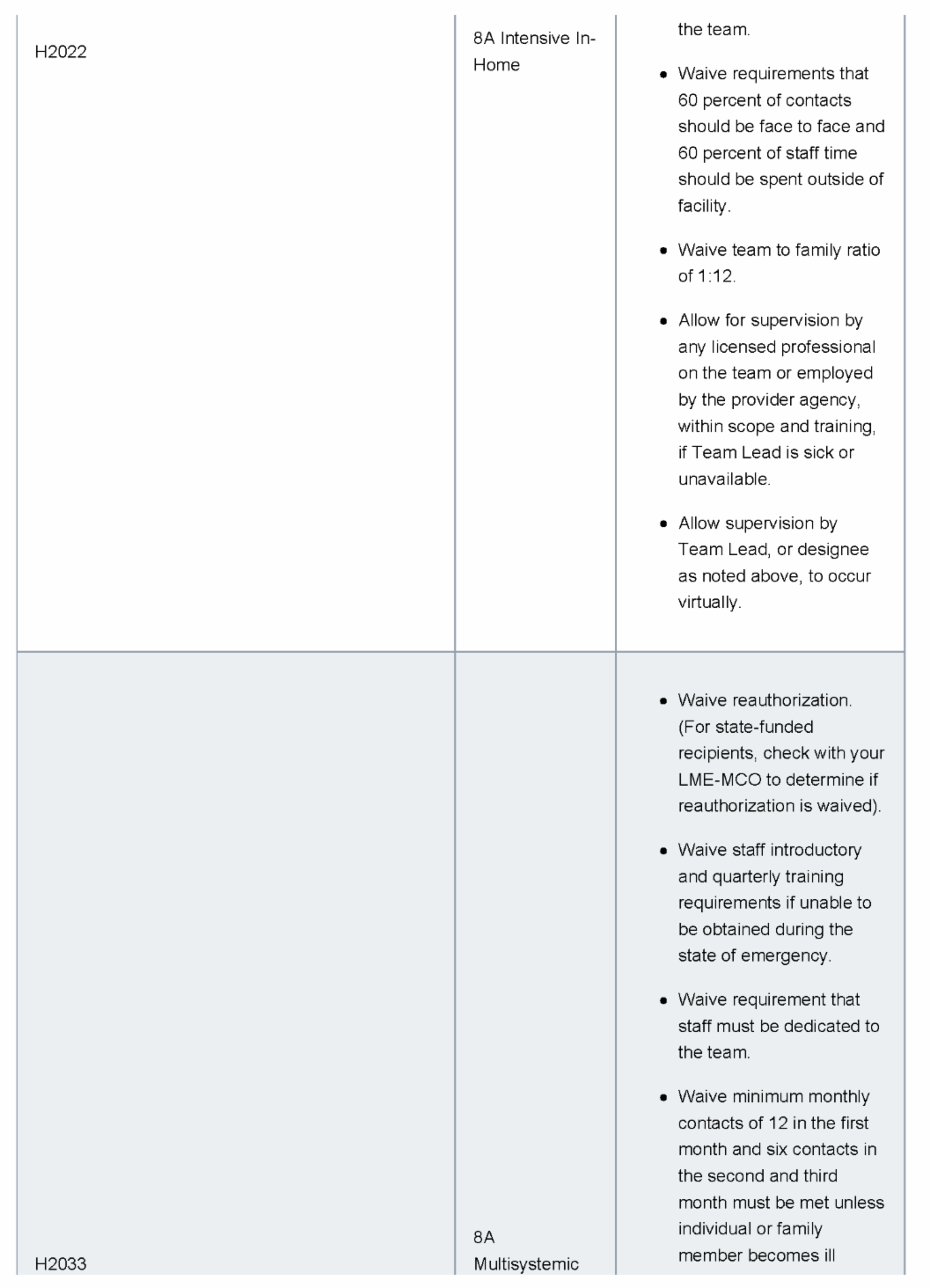
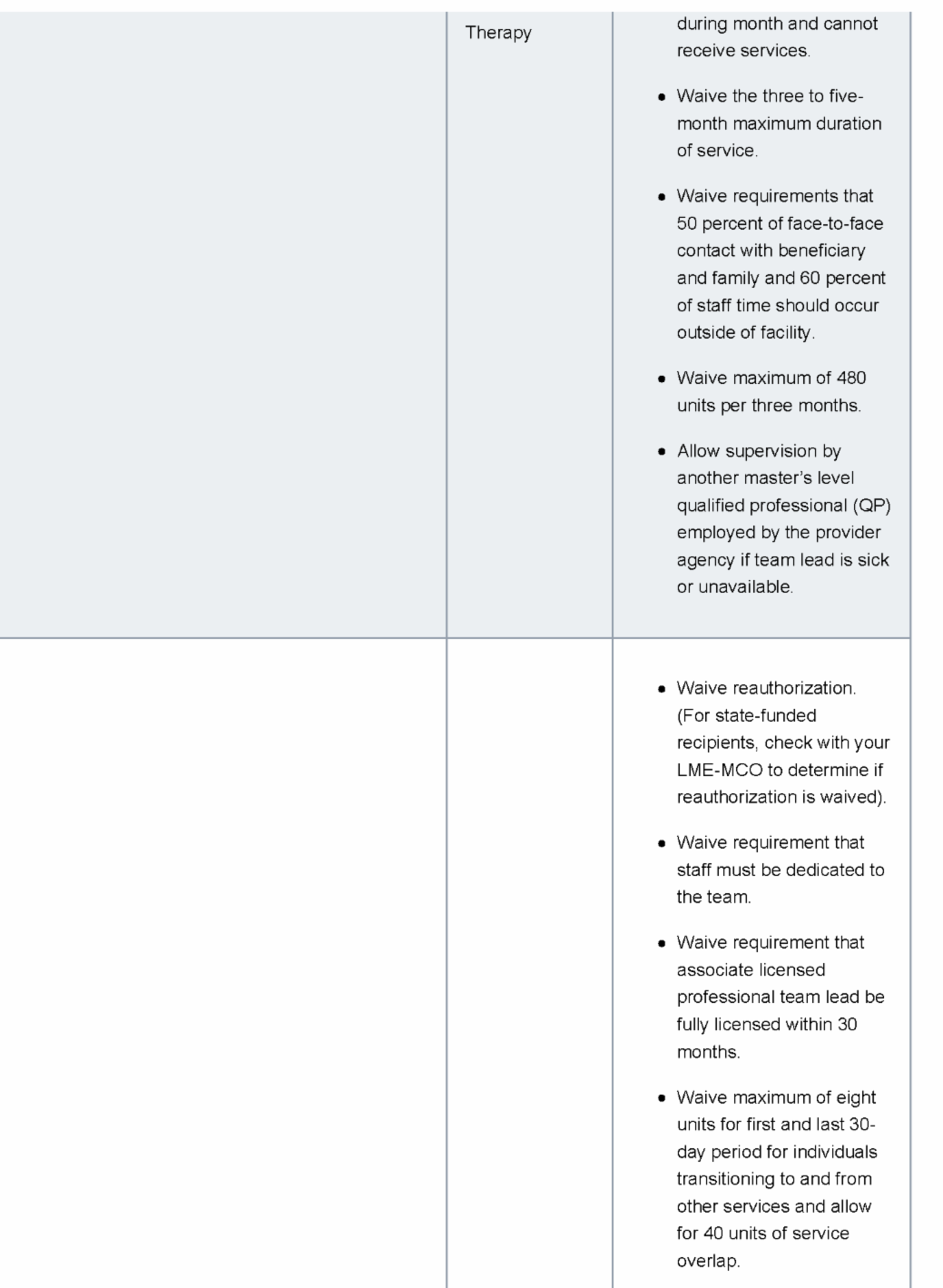
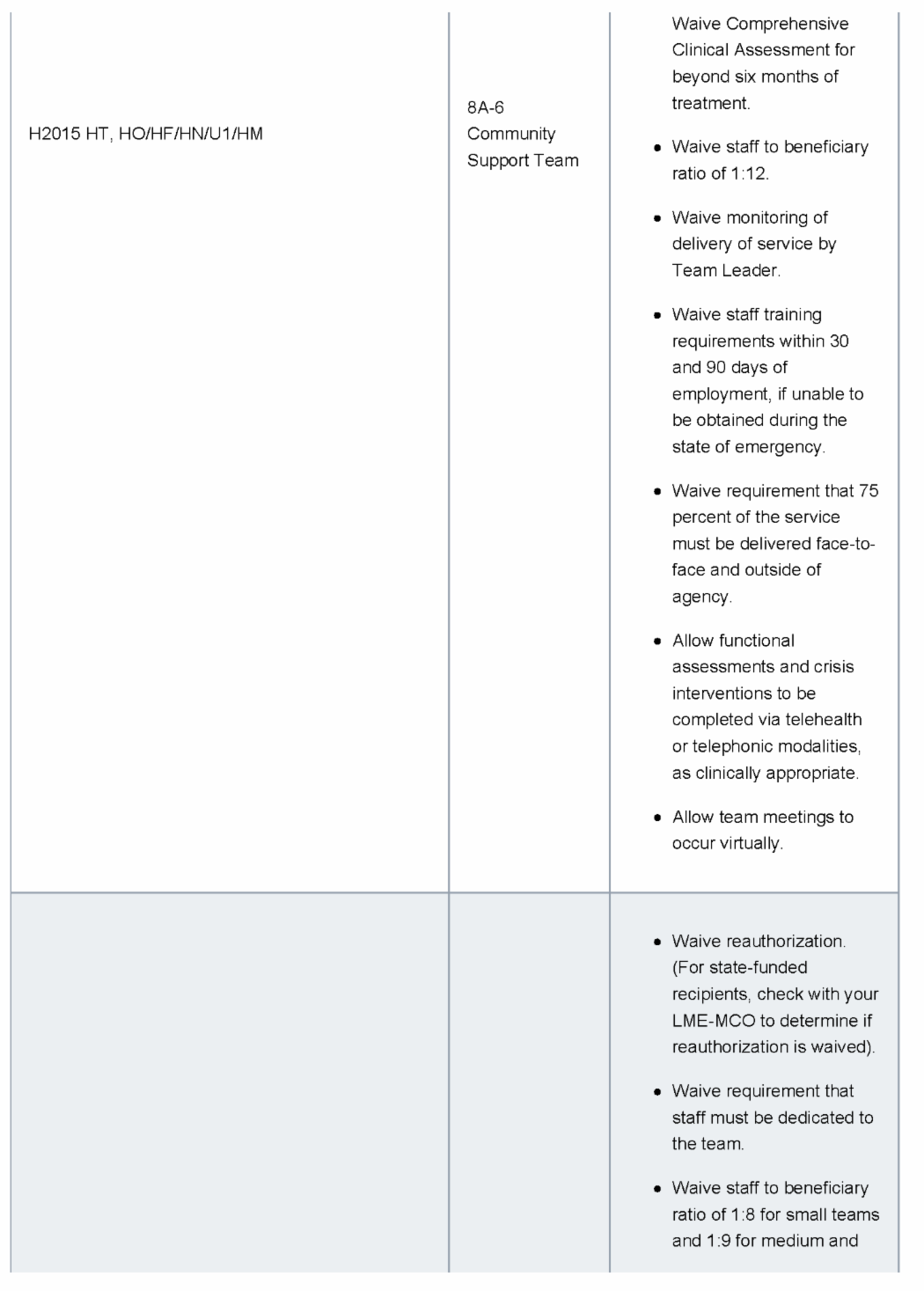
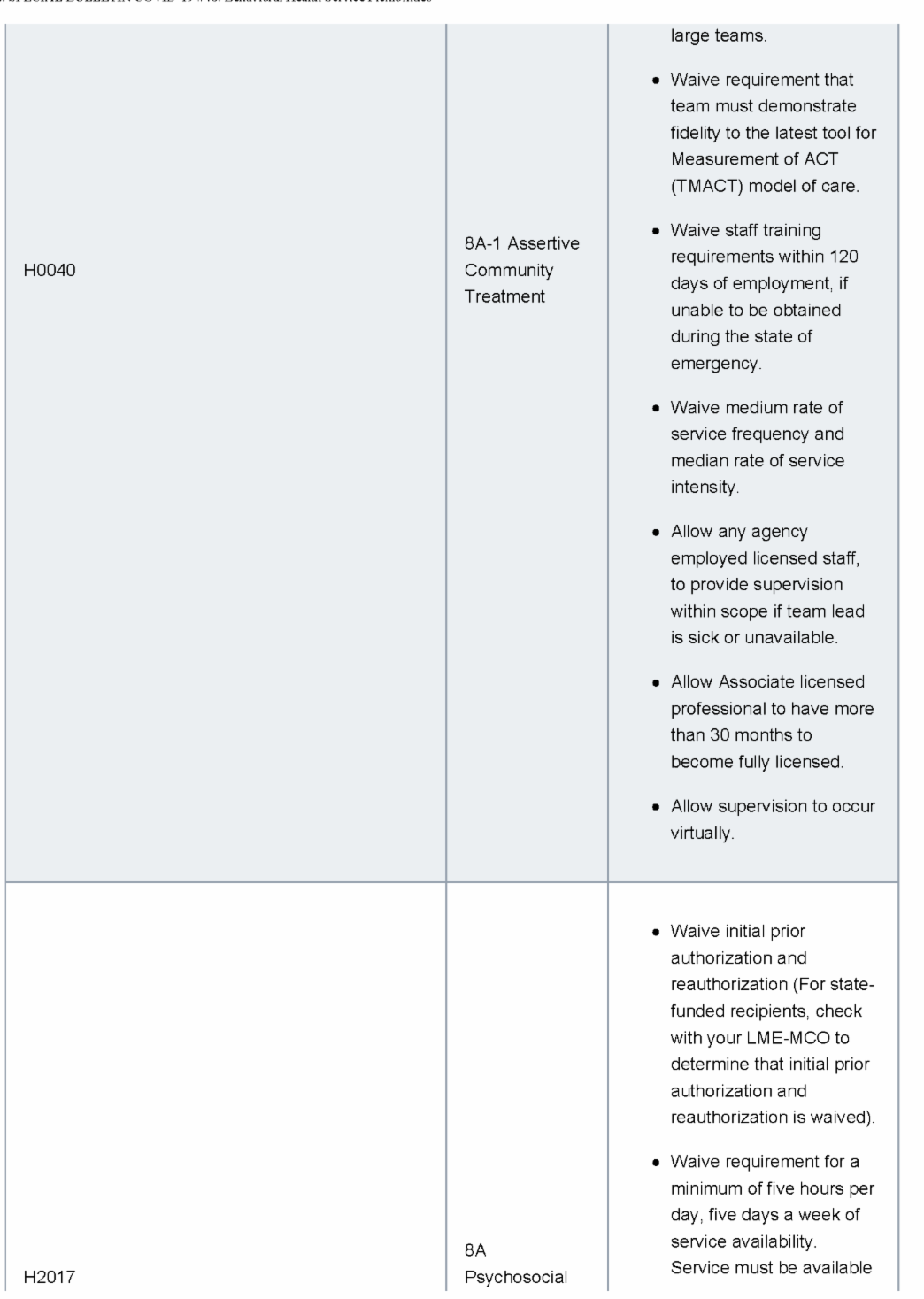
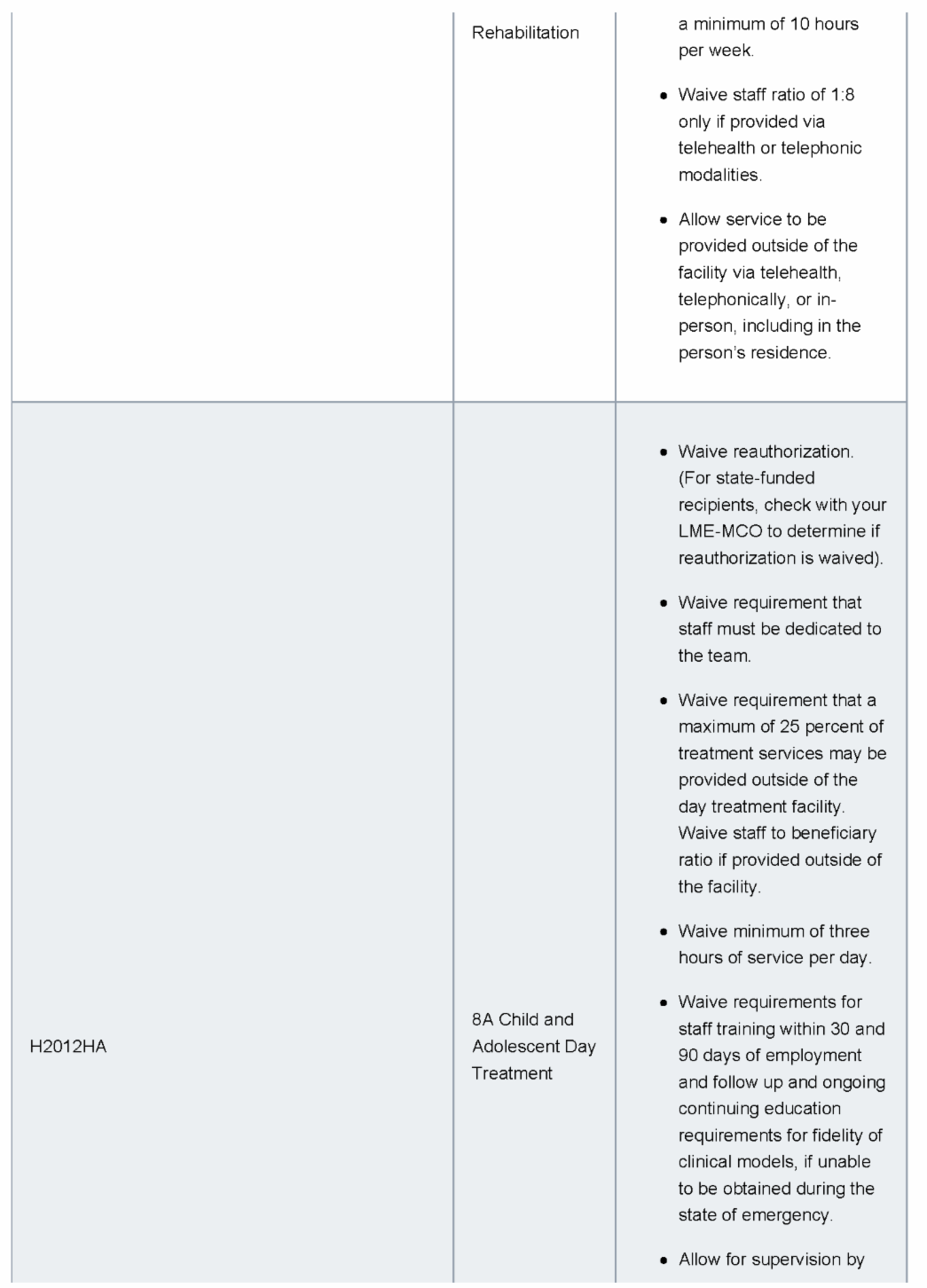
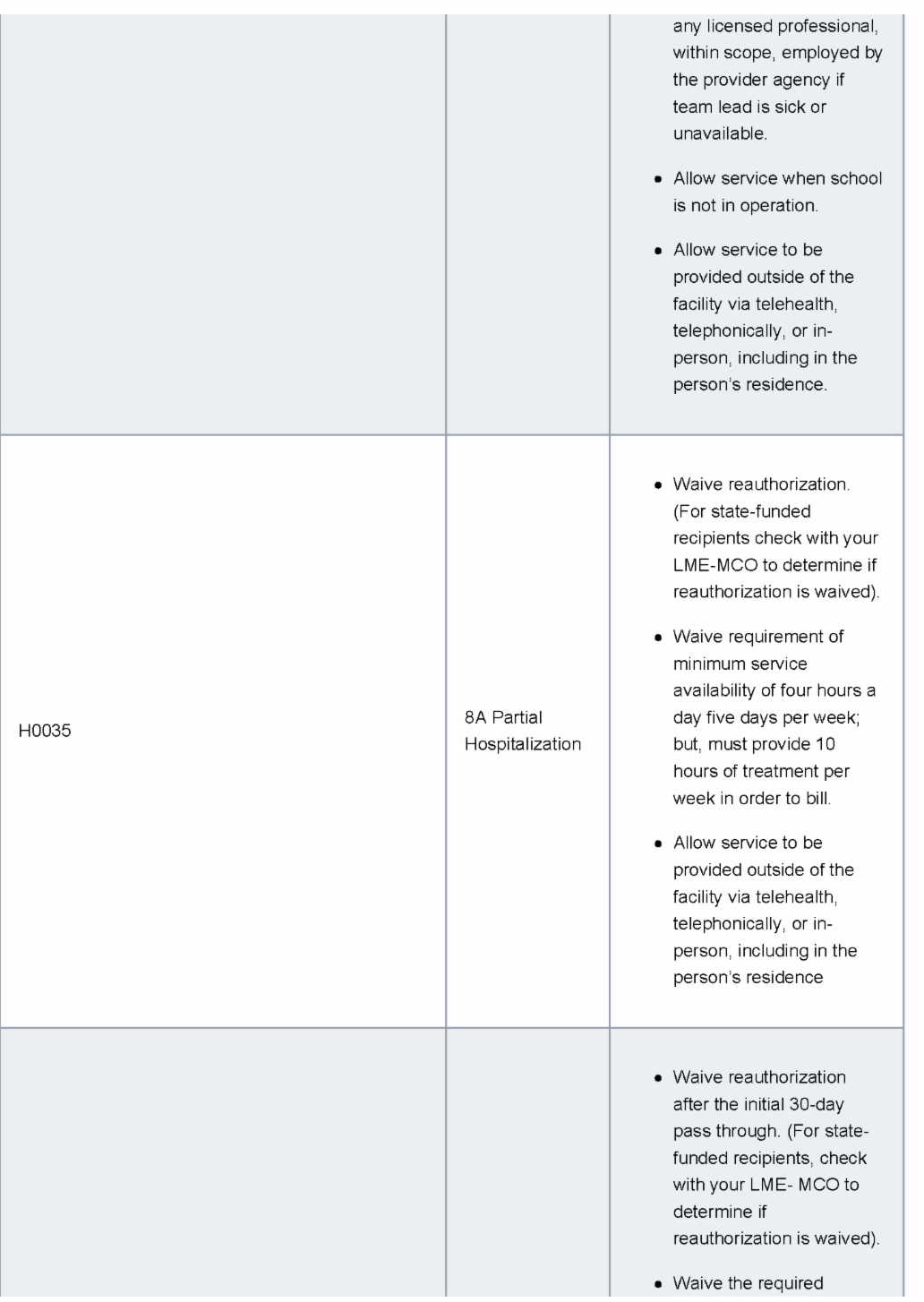
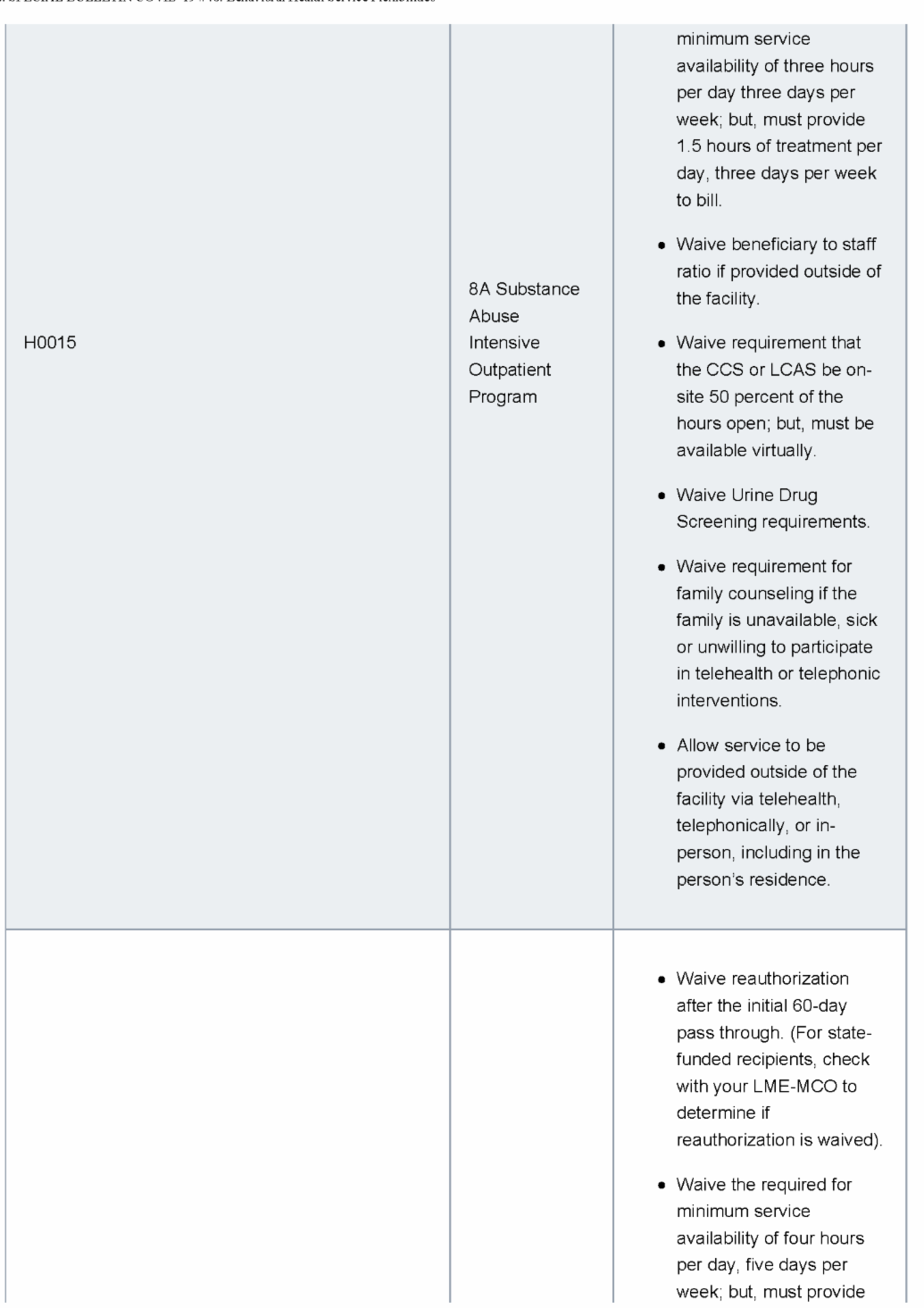
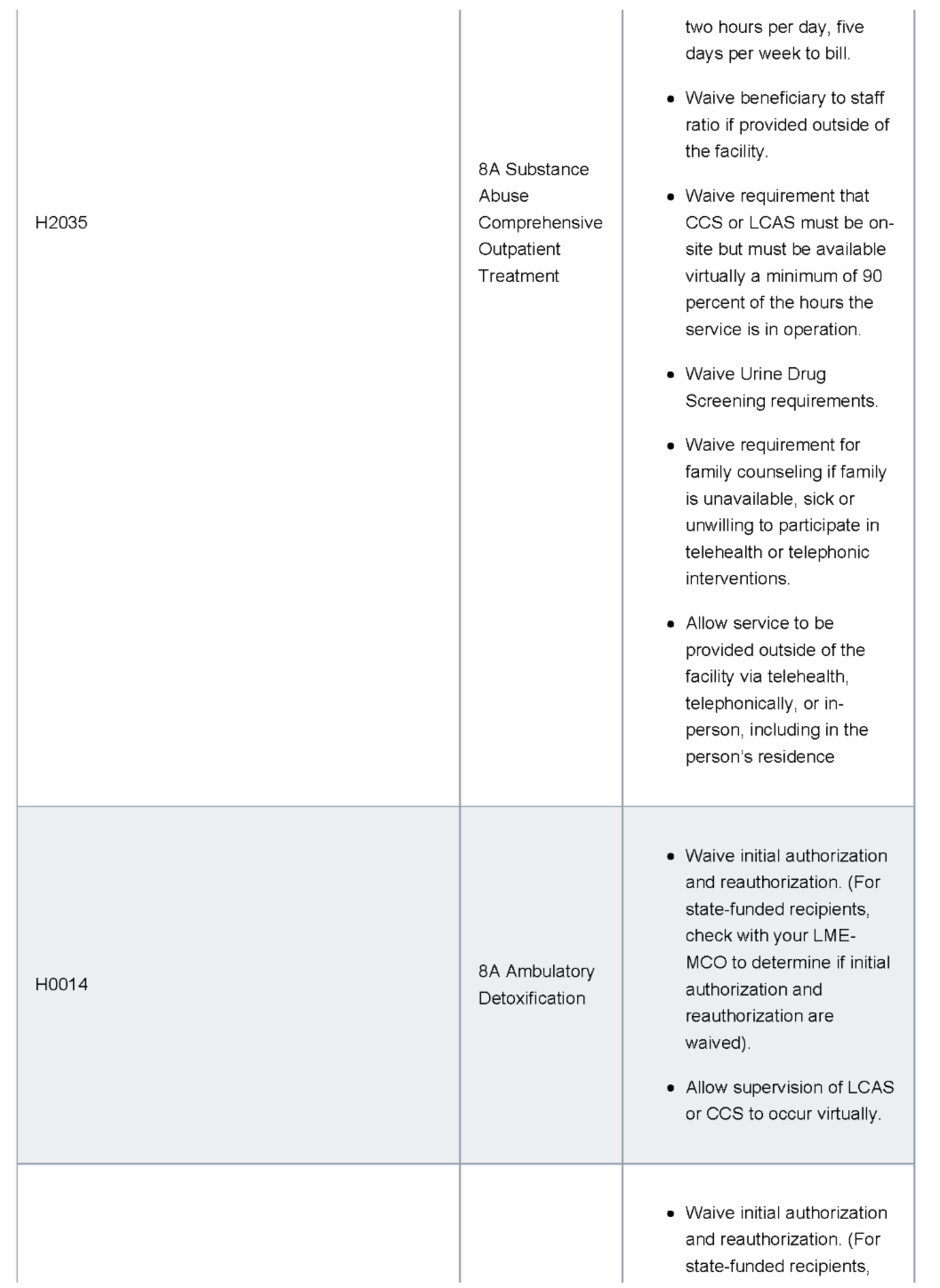
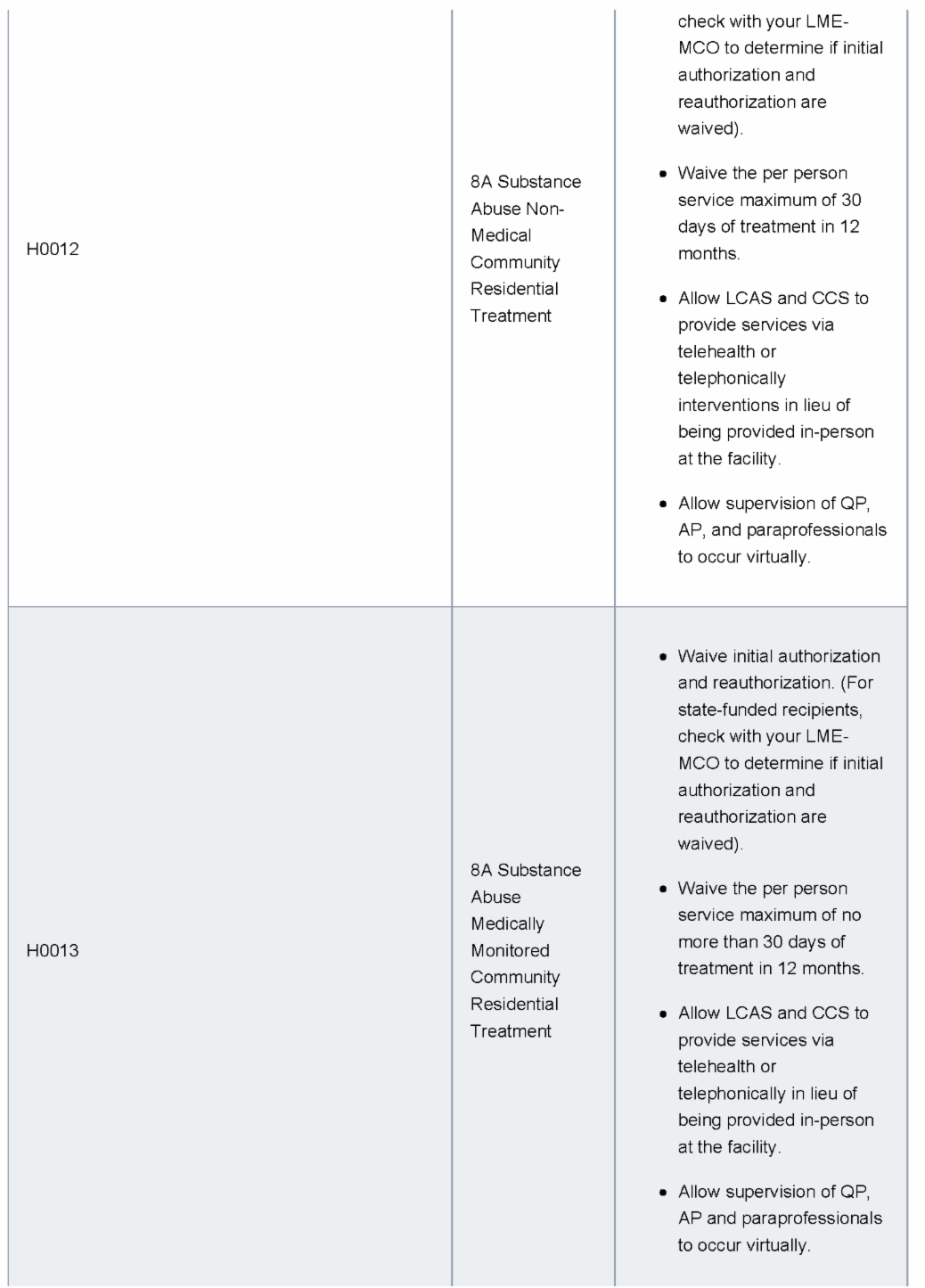
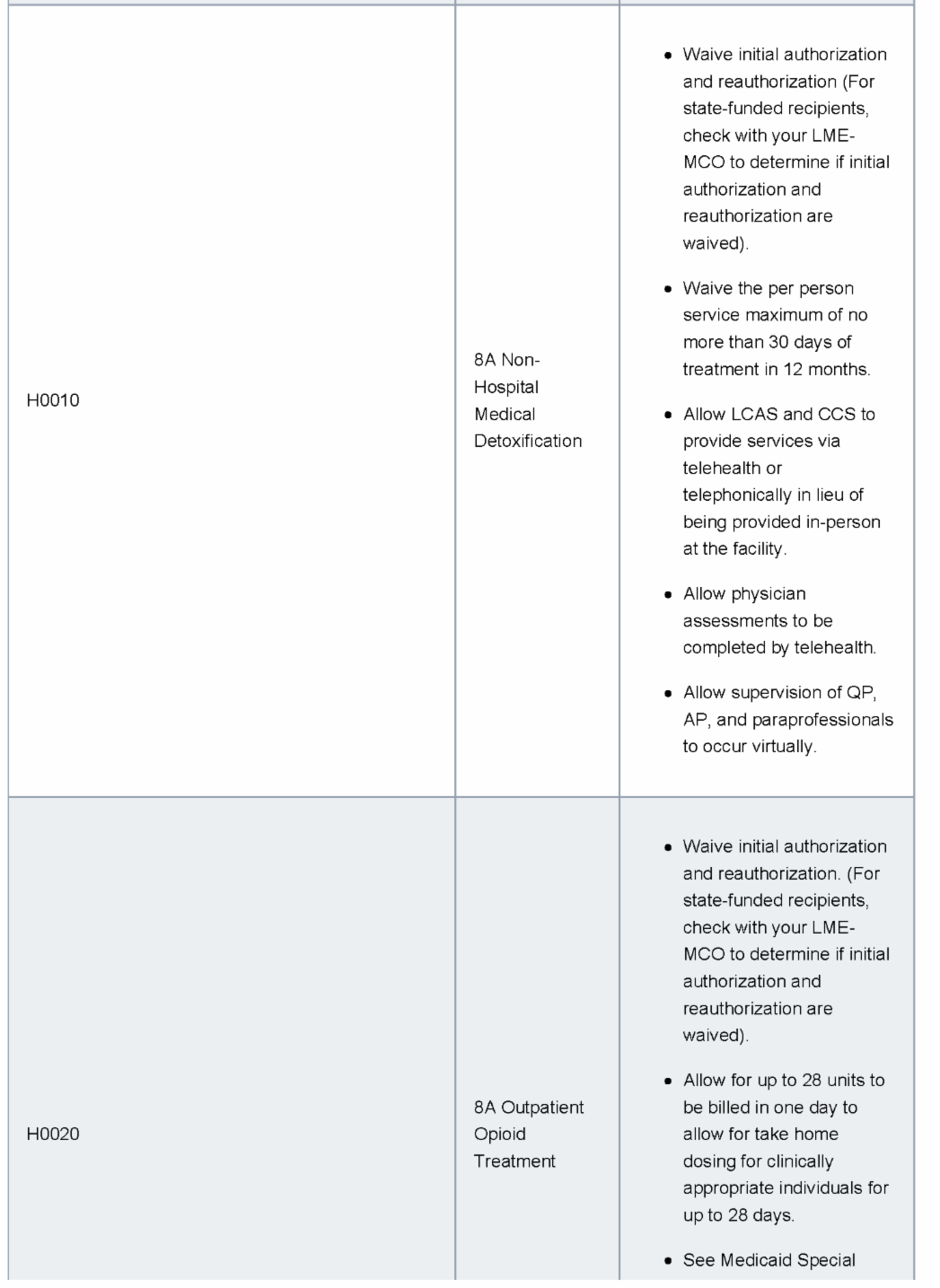
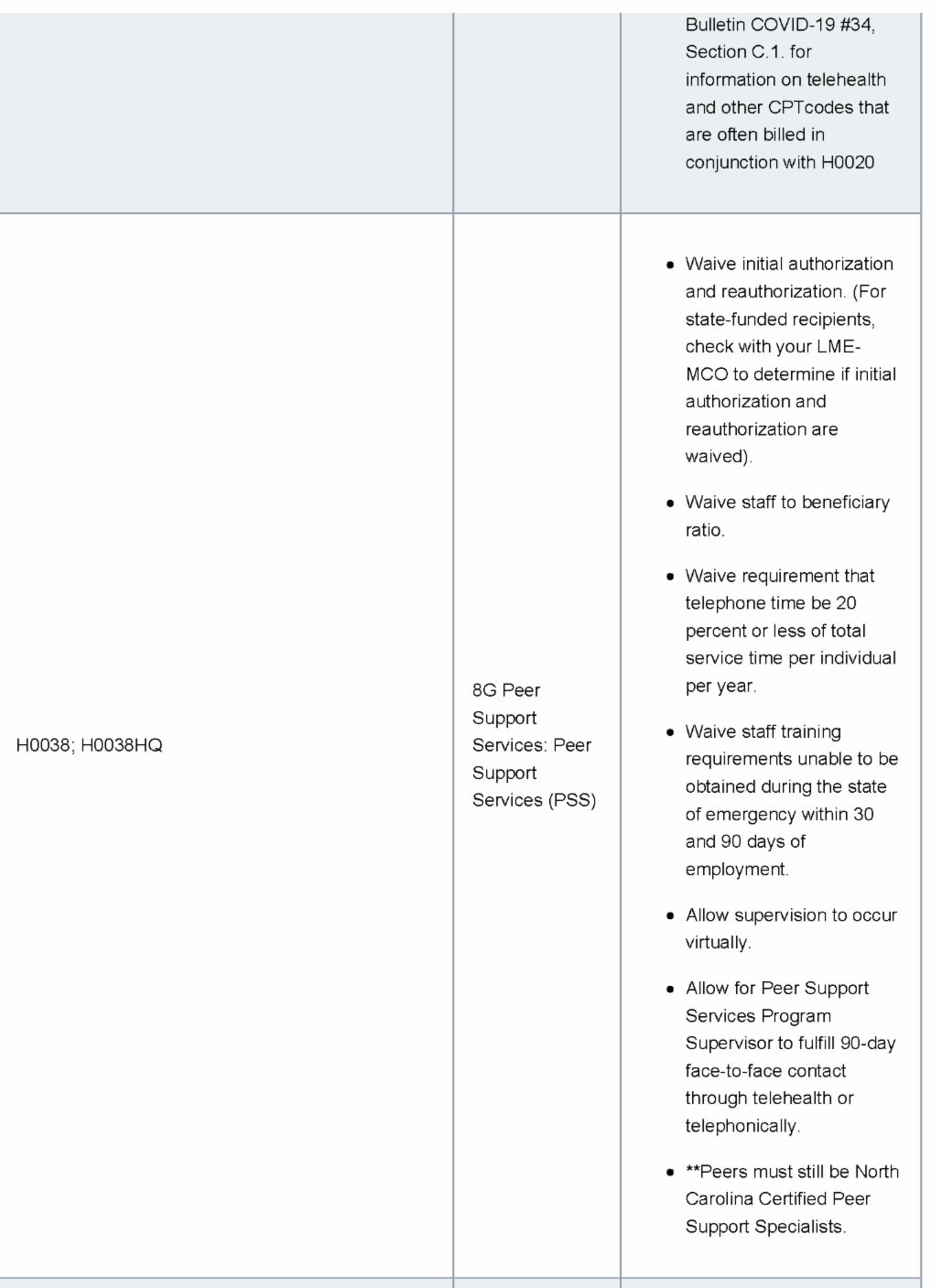
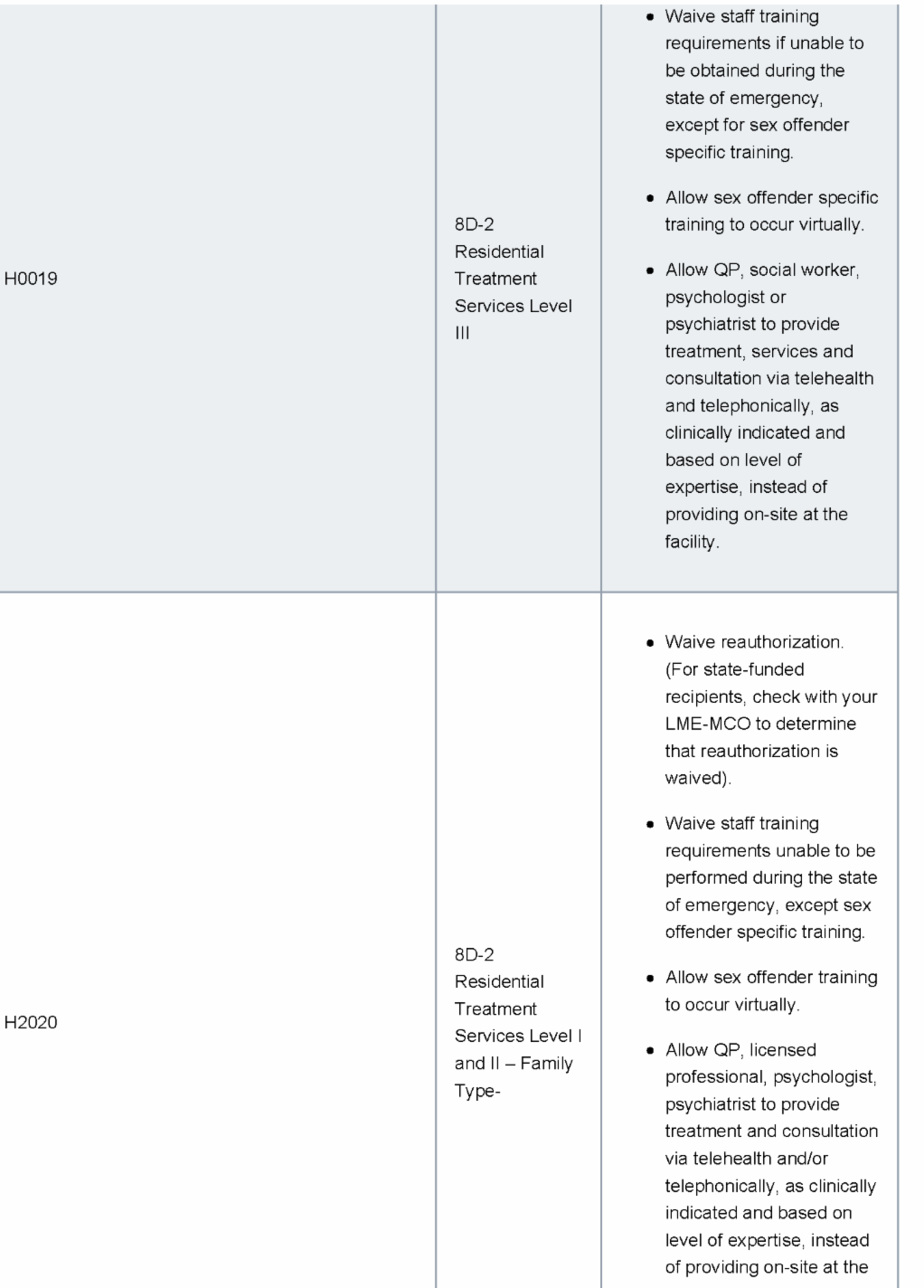
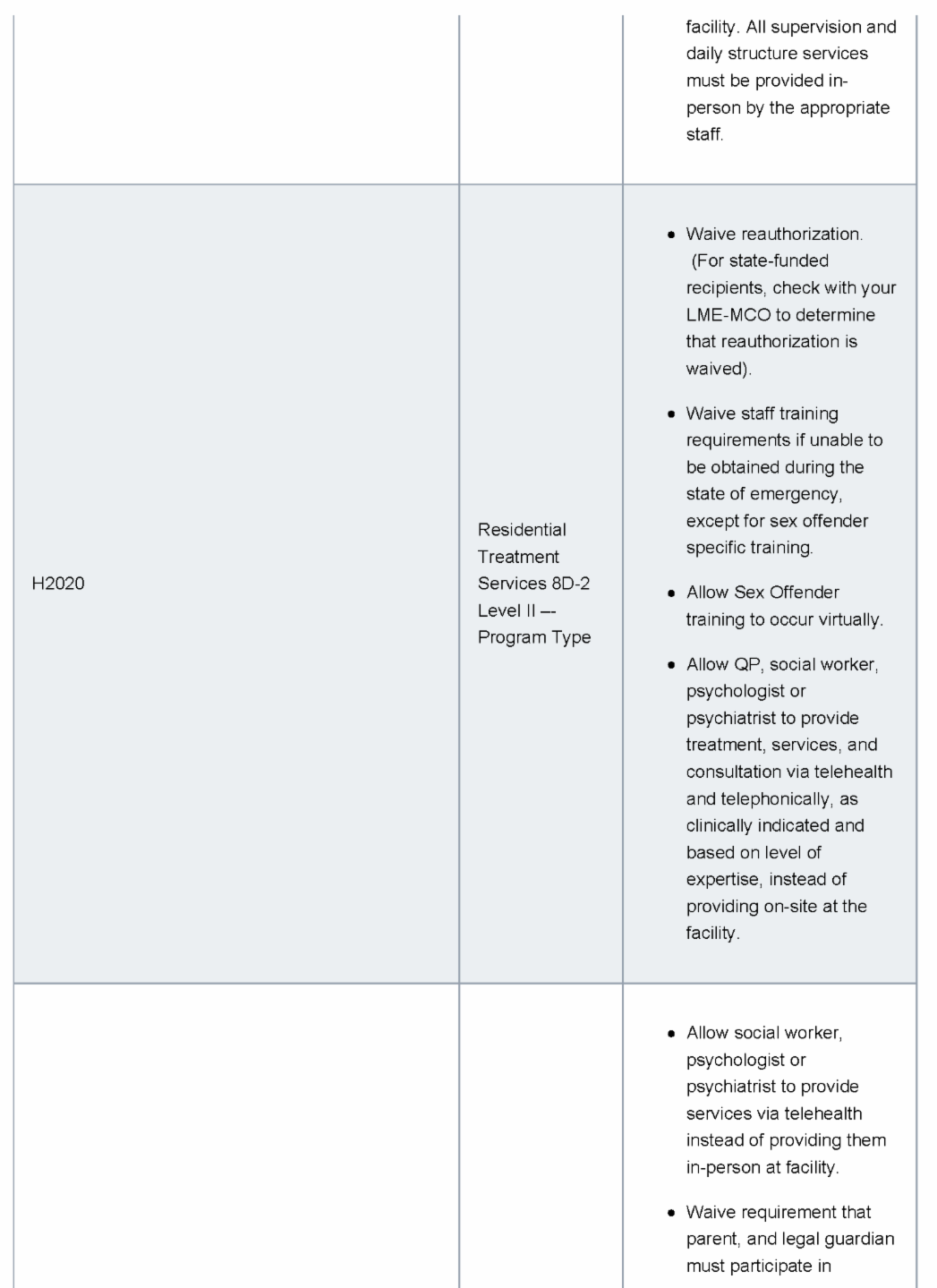
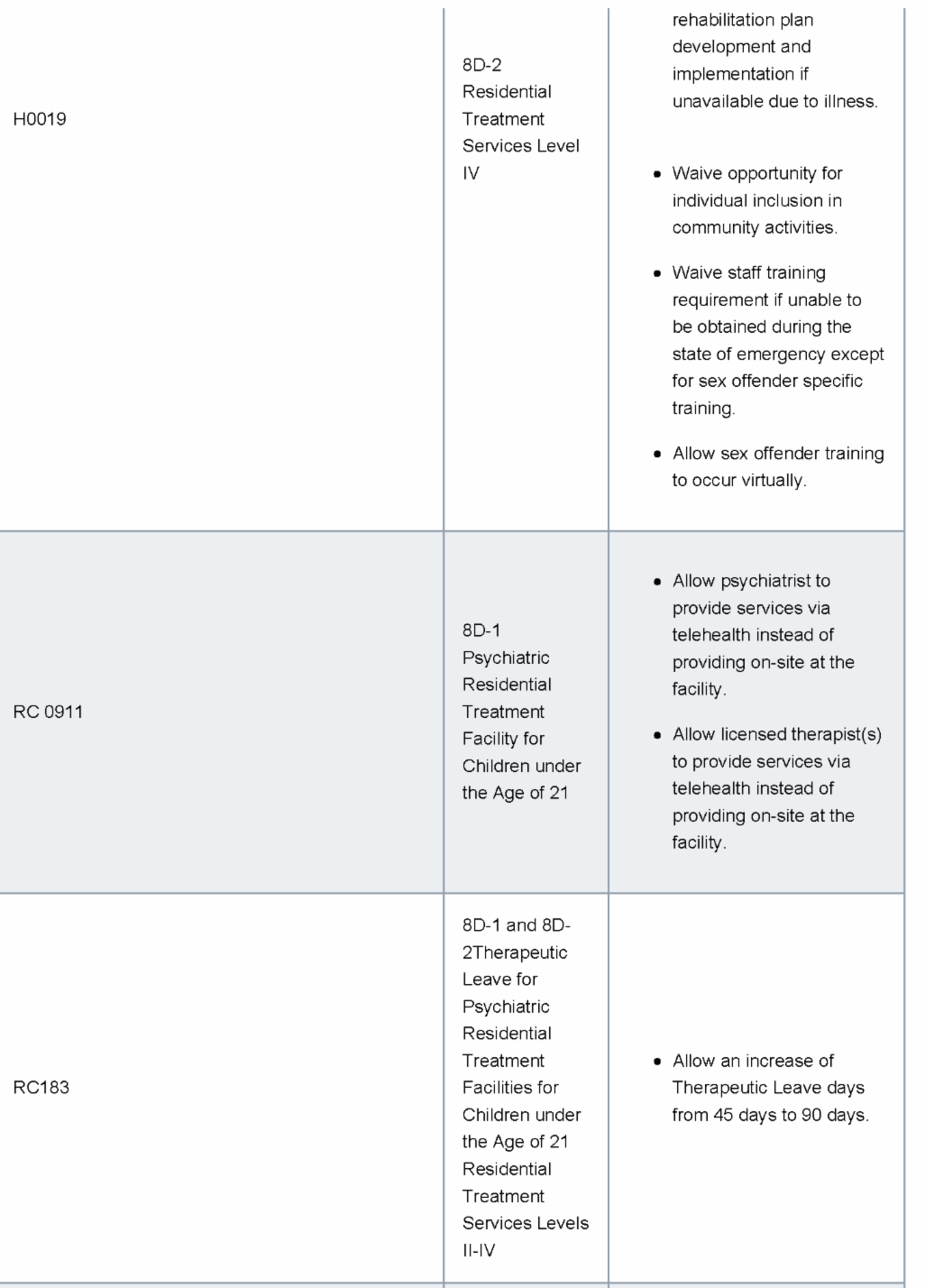
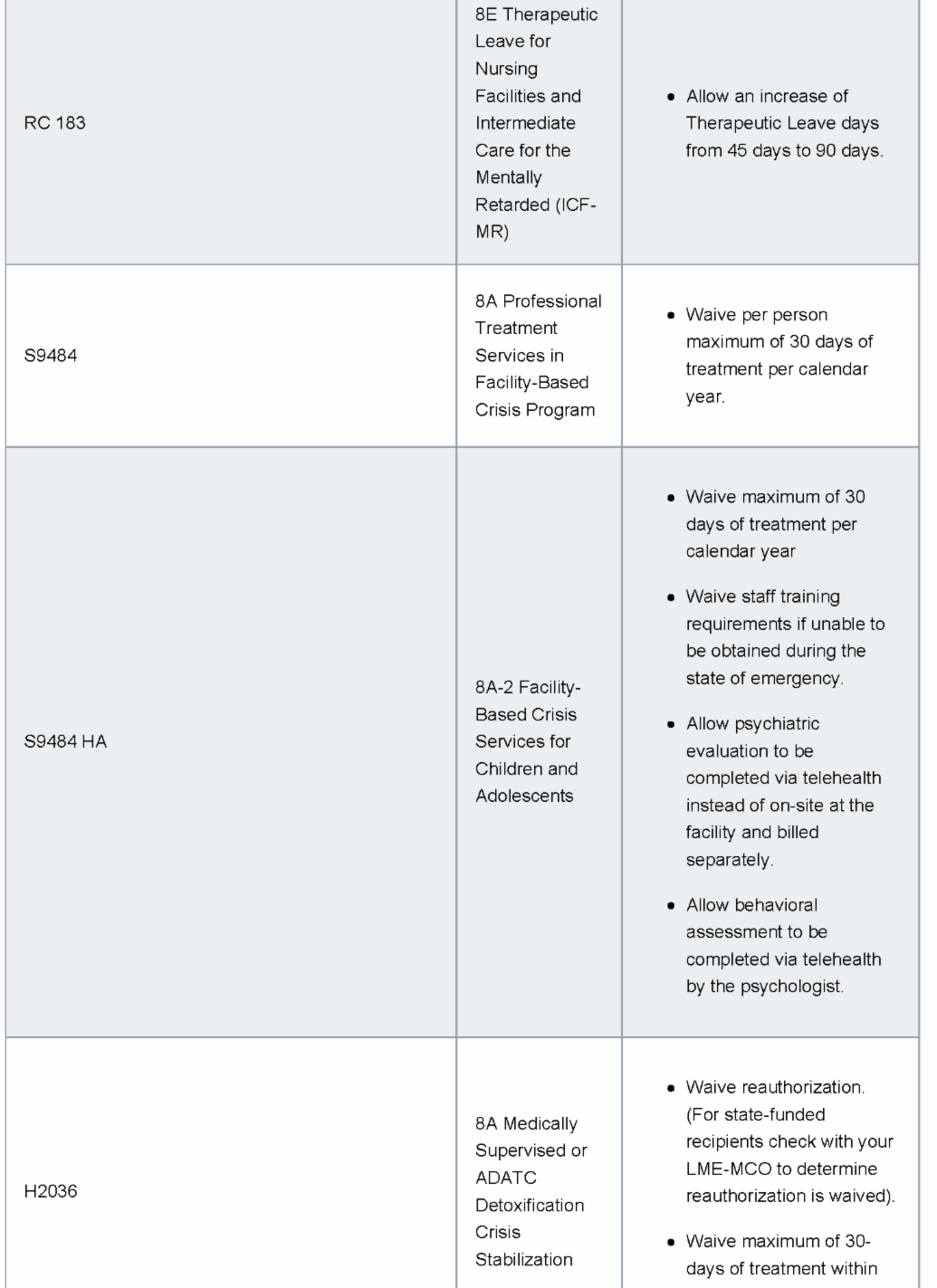
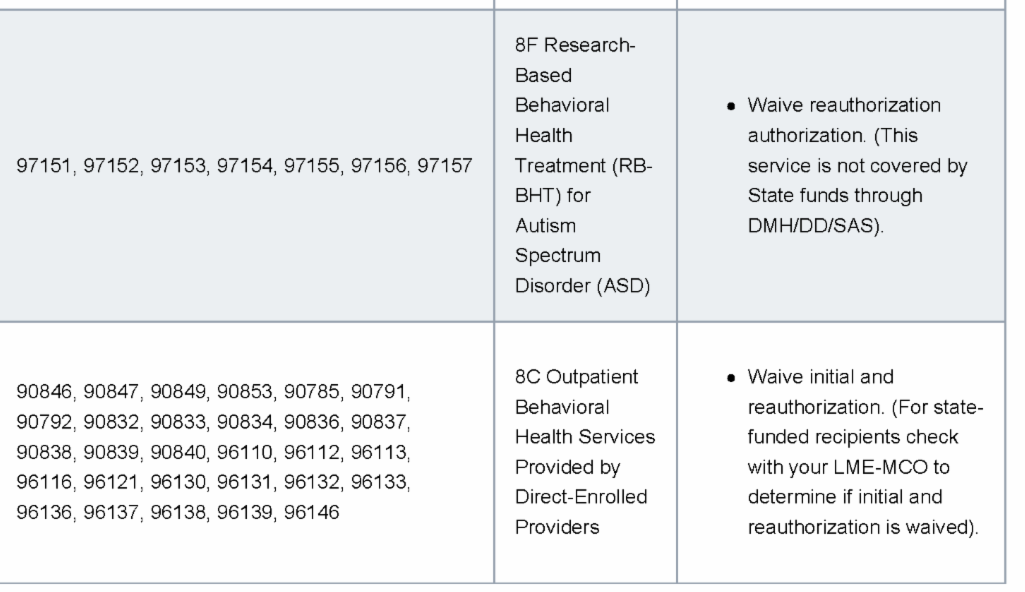
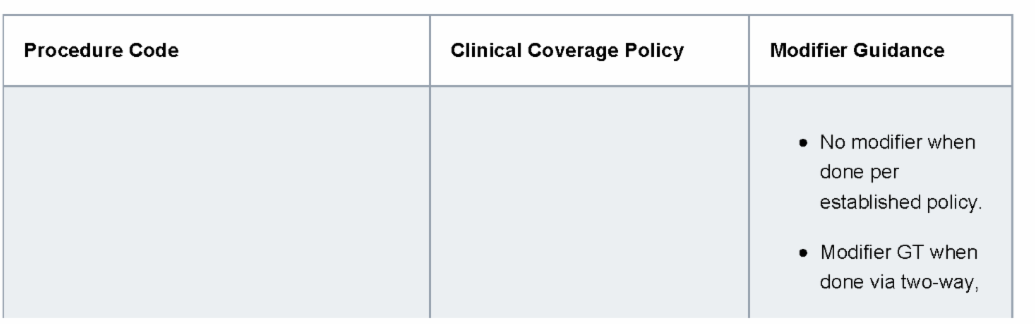
The following tables outline the allowed service flexibilities during this declared state of emergency.