What Was That? There It Goes! |
|
We are entering the spring migration season for birds on the move from their wintering grounds in the south to their nesting grounds in the north. In some cases, “north” is our own southeast Michigan neighborhoods, while others will fly all the way to the Arctic to raise families in the short summer, only to fly back south before the snow flies again.
|
|
Blackburnian Warbler by
Brian E. Small
|
|
Neotropical migrants, such as the wood warblers, are one bird group that gets people out on the trails. Sometimes called “the butterflies of the bird world,” many of these tiny birds are resplendent in brightly colored breeding plumage, particularly the males. Weighing no more than the coins in your pocket, they travel from South America, across the oceans, mountains, and human obstacles to reach their nesting destinations in North America, relying on migratory stopover sites, like the campus Environmental Study Area, to provide food, water, shelter, and space along their journey north! |
|
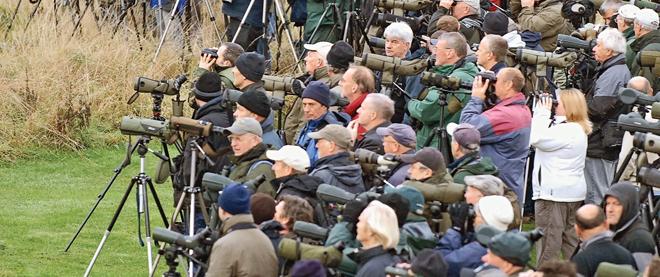
Incredibly, the main fuel for these epic journeys is insects. Stored body fat is like a full gas tank to fuel migration, and insects are pure protein—no bones about it. If your food doesn’t sit still, neither should you, if you want to fill your belly. Warbler watching can be intense when what you’ve sighted in your binoculars keeps moving, but this is spring migration!
(Paparazzi birders from NNP/North News)
|
|
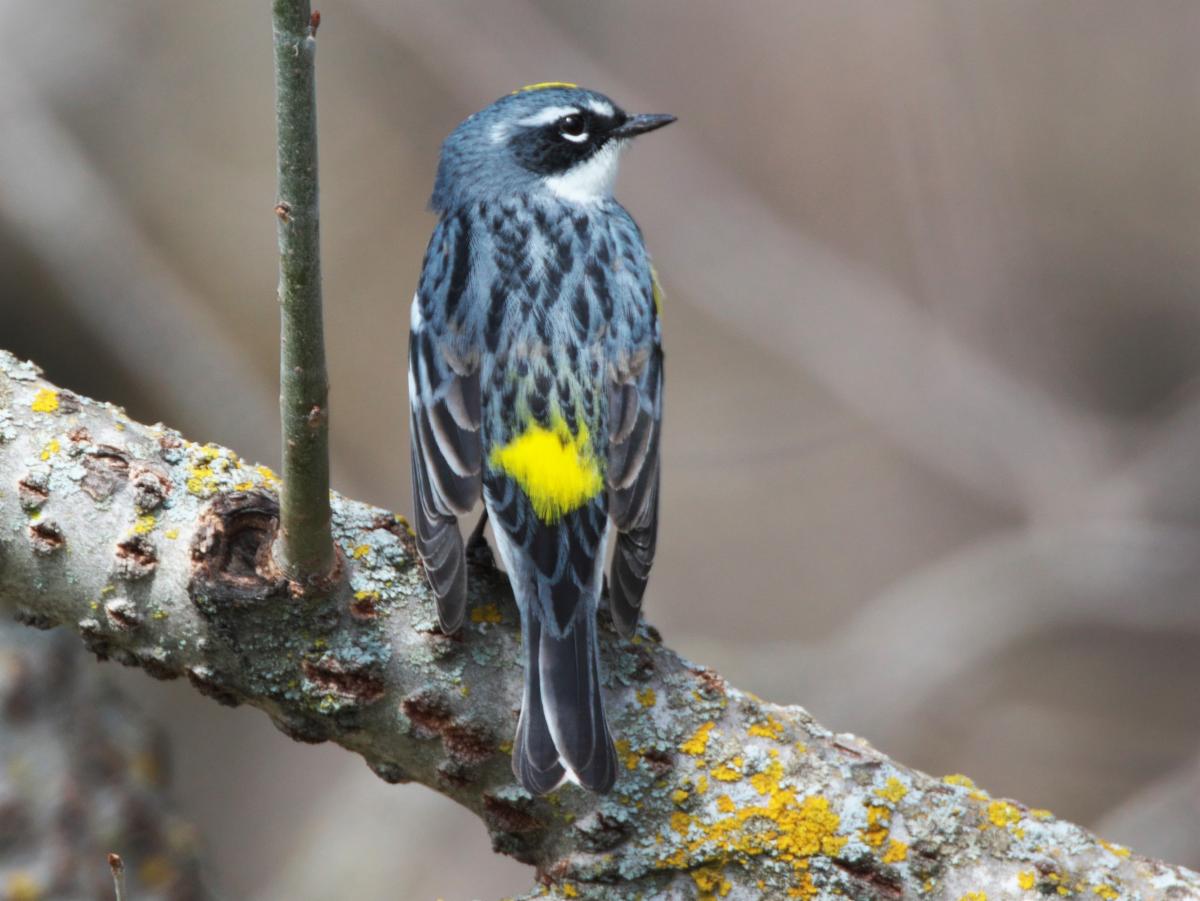
Yellow-rumped Warbler by Ed Harper |
|
Before the tidal wave of warblers and other constantly moving spring migrants arrives, let’s take a look at one of the earliest warbler arrivals: the Yellow-rumped Warbler (Setophaga coronate).
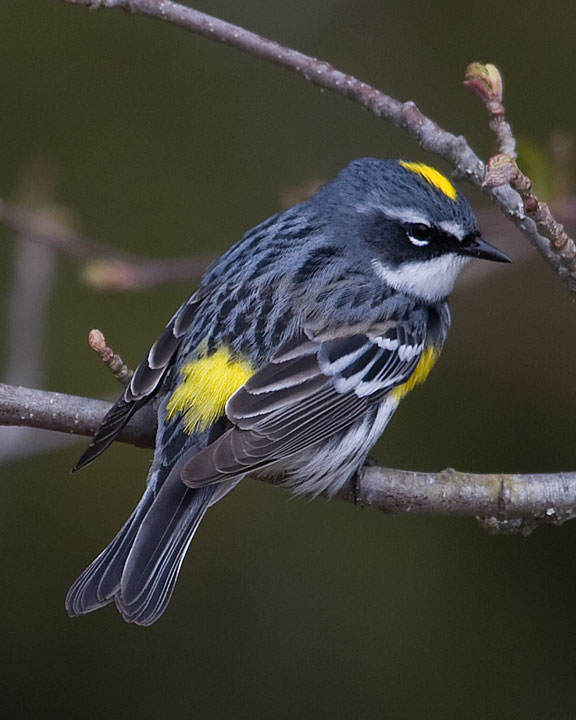
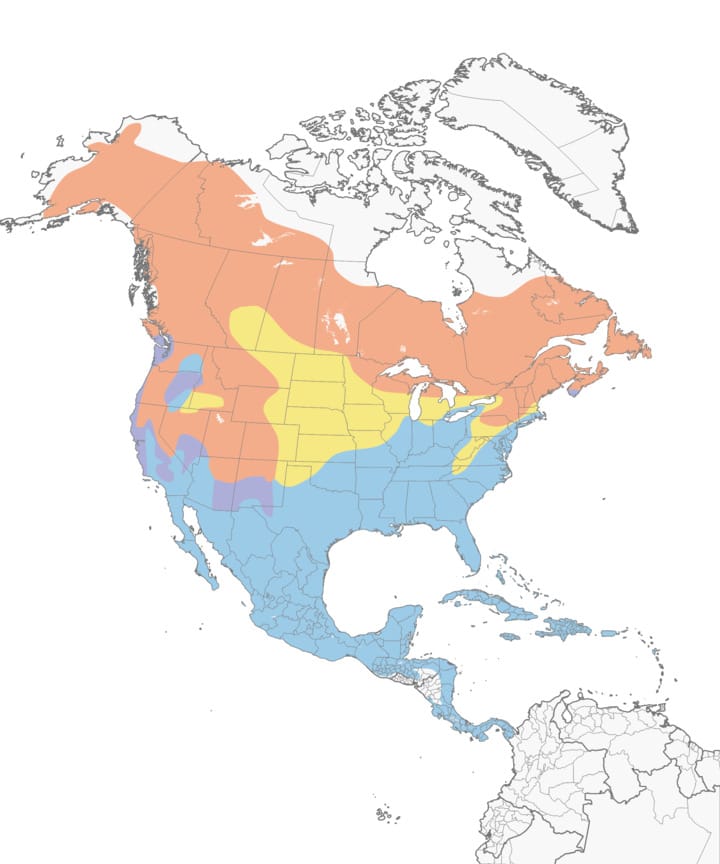
The yellow-rumped warbler has two distinct subspecies that used to be considered separate species: the "Myrtle" Warbler of the eastern U.S. and Canada's boreal forest, and "Audubon’s" Warbler of the mountainous west.
|
|
Both sexes of each subspecies sport lemon yellow accents on their sides and, of course, on their rumps. Intermediate forms occur where the two subspecies' breeding ranges overlap, such as in the Canadian Rockies. (Cornell)
|
|
Nicknamed “Butterbutts,” these little birds are “fairly large” for warblers. The ecological principle of Bergmann's Rule states that among mammals and birds, individuals of a particular species in colder areas tend to have greater body mass than individuals of the same species in warmer areas. Larger body mass allows yellow-rumps to conserve body heat.
Among the animal proteins on this warbler’s menu are insects, such as caterpillars, wasps, grasshoppers, gnats, aphids, beetles, as well as spiders. Sometimes they find these invertebrate morsels by plucking them out of spider webs and picking them off piles of manure.
|
|
|
The name “Myrtle Warbler” originates from the characteristic that they are the only warbler able to digest the waxes found in bayberries and wax myrtles. The ability to use these fruits, as well as juniper and poison ivy berries, allows them to winter farther north than other warblers, sometimes as far north as Newfoundland, Canada. (Audubon)
|
|
Yellow-rumped warblers are perhaps the most versatile foragers of all warblers. They're the warbler you're most likely to see fluttering out from a tree to catch flying insects. They're active, and you'll often see them sally out to catch insects in midair, sometimes on long flights. Look for that flashy lemon-yellow bullseye at the base of their tails!
We should begin to see these “early birds” in our region soon, and they provide good practice in anticipation of the overwhelming waves of other spring migrants to catch in May as they sweep through the tree canopies gleaning as many “six-legged steaks” as they can to acquire fat to fuel their travels.
Catch’em while you can--maybe on one of our Saturday morning bird walks!
|
|
Breaking News!!
They’re Baaaaack!
|
Have you missed our guided bird walks in May? Rick Simek has, and we’re so pleased to announce that the spring migrants aren’t the only thing that’s back!
Rick will be leading leisurely, guided bird walks through the Environmental Study Area each Saturday morning in May, from 8-10 AM.
We aren’t forgetting the spring ephemeral wildflowers. Guided wildflower walks are offered on May 7 and May 14, from 12-1:30 PM.
Meet inside the EIC prior to the walks. Binoculars are strongly recommended for the bird walks.
Please dress for the weather.
|
|
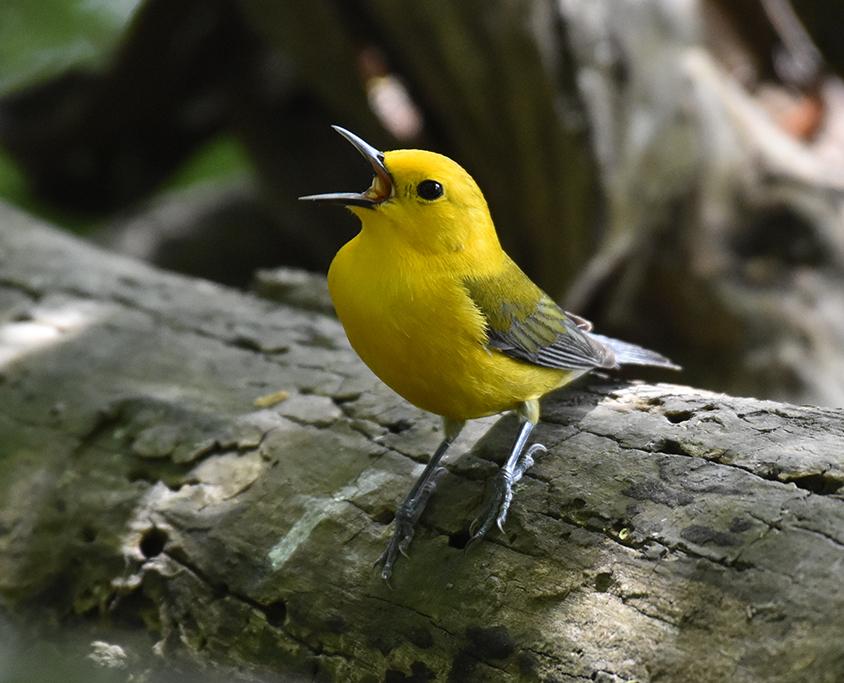
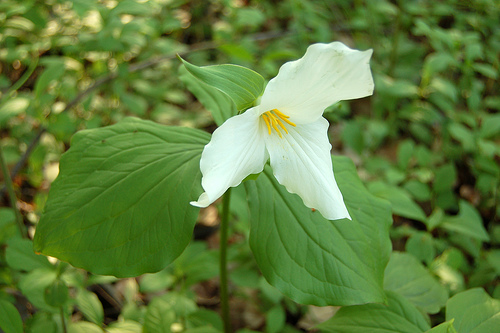
Prothonotary Warbler photo by Geoffrey Clarke; Large Flowered Trillium photo by Peter Black |
|
For more information, please call 313-593-5338. |
|
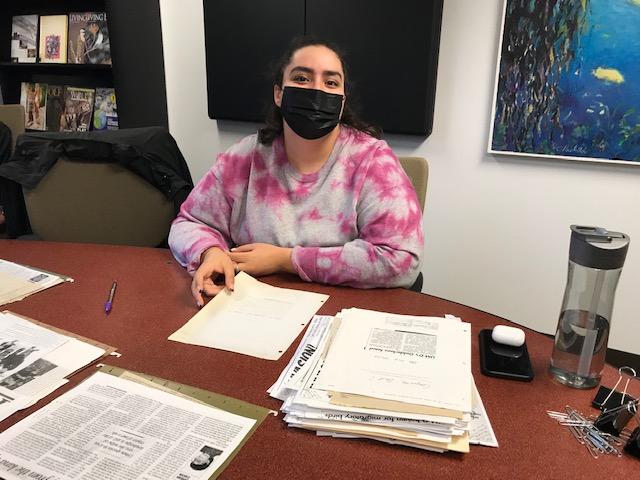
We are grateful that four students in Prof. Sheryl Edward's Class "Gen-Z and Civic Engagement" chose the EIC for their required volunteer hours. Mallory Luttrell (right), a Freshman in Psychology, and Azal Ali (below), a Junior in English, already finished their required hours.
They helped with organizing the EIC library so K-12 students could more easily access the books for their inquiry- based learning projects. They also were a great help in filling in some of the gaps in the digital EIC weather station records that Dr. Walters was analyzing with her students in her Global Climate Change class.
|
|
|
Mallory and Azal sifted through hand-written observations going back to 1975 to fill in some of the missing observations. Mallory found it really cool to learn how weather data was recorded differently during different times. Azal also helped with archiving historical documents. She said that she enjoyed learning about the history of the EIC. We extend a big Thank You to both of them.
|
|
Snoring into Spring
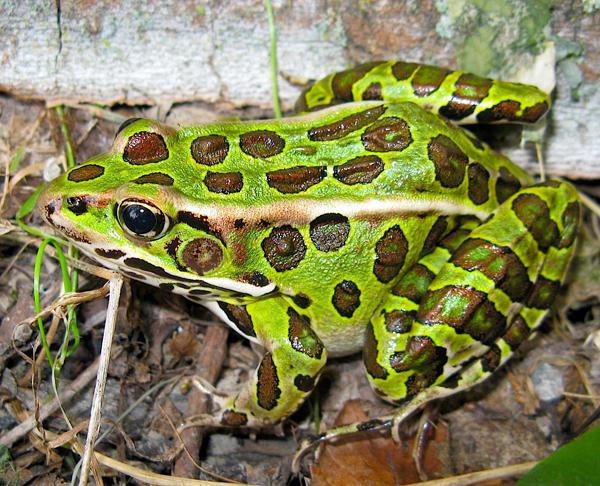
It’s not often that the sound of snoring indicates that the snorer is actually wide awake. However, the “snores” currently being heard from the lake and marsh in the Environmental Study Area (ESA) are emanating from the newly awakened population of Leopard Frogs (Rana pipiens). Photo by Joe Myers
Recently emerged from their overwintering hideaways immersed in the bottom muck of these aquatic habitats, the males are vocalizing to attract the females. If all goes well, mating will take place, eggs will be laid, thousands of tadpoles will soon hatch and enough of those will survive to adulthood to be able to sustain their population in the ESA. They’re doing their very best to ensure that happens.
So far so good, and then some. In a wonderful case of an amphibian species making a comeback in the ESA, Northern Leopard Frogs have increased their numbers over the past decade. Once virtually absent from the ESA, they are at present a common resident. Something happened to turn their survival tide for the better. We hope that continues.
The male Leopard Frogs are likely to be calling for the next few weeks. Warm days are best. They call during the day as well as at night, so a daytime walk along the Lakeside Trail is a good way to potentially listen in on this burst of spring, in frog form. The “snoring” can be rather quiet and a challenge to hear among other spring sounds in the ESA. To help you pick up on it, try practicing with this online recording from Friends of the Rouge.
Enjoy!
Rick Simek
|
|
Go Outside and Play!
Venturing outdoors and encountering nature is good for your health. Our trails are accessible daily from sunrise to sunset, so please visit our Environmental Study Area. Check out our Remote Learning Activities & Resources page for ideas to create a “Neighborhood Nature Journal” and “Family Nature Walk” activities!
|
|
|
Please stay safe, stay tuned, and stay engaged in learning activities while we eagerly wait for the opportunities to share experiences together. In the meantime, watch for our new online activities to satisfy your curiosity about the natural world. |
|
Please remember...
The EIC Environmental Study Area is open daily from sunrise to sunset. We would like to remind nature-goers that fishing on site is prohibited and to leave bikes and dogs at home because they cause disruption and stress to the EIC wildlife.
|
|
|
|
|
|
|
|