 |
|
Celebrating 24 years of Service to
Florida's Fishery Resource
|
|
|
 |
|
From the Crow's Nest
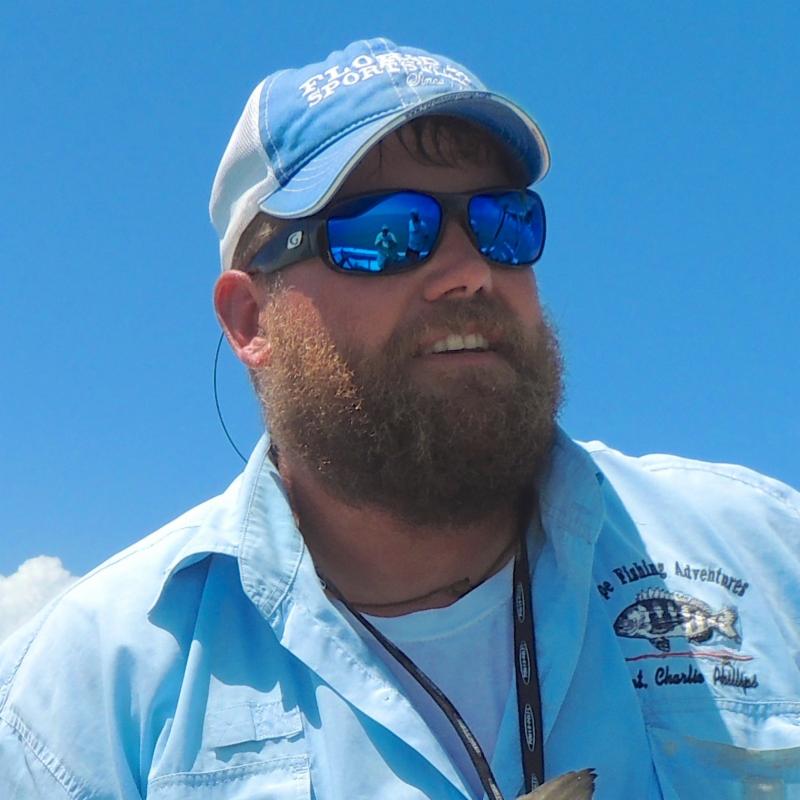
by FGA President, Captain Charlie Phillips
The crow's nest is the highest point on a vessel and used as a lookout point. As the president of Florida Guides Association (FGA) I plan to be on the lookout for hazards as well as opportunities that affect our organization. This column will be used to communicate my observations to you. Please feel free to share our newsletter with any of your friends that may also believe in our mission to protect Florida's fishery resource to the benefit of recreational angling.
_______________________________________________
Lessons Learned from Irma
I find that in life there are quite often lessons to be learned if we can only open our eyes and see what is right in front of us. For this months "From the Crow's Nest" article, a lesson I learned during Hurricane Irma is my topic for the month.
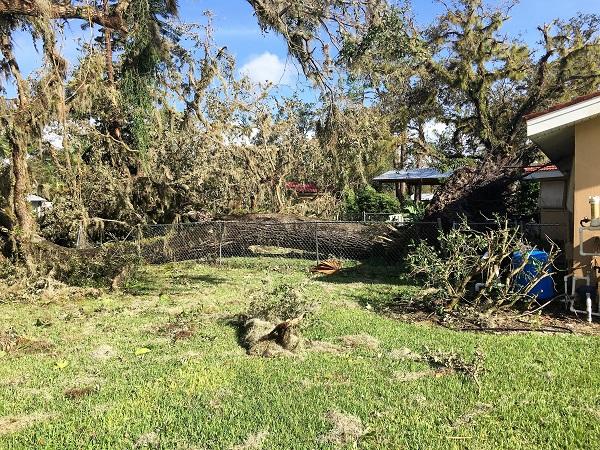
Irma roared into SW Florida on Sunday the 11th of September 2017, wreaking havoc and changing lives along the way. Laura and I evacuated our place in Everglades City, and came to our more secure home in Labelle to ride out the storm. We lost power that Sunday morning about 8 a.m. From that point on we read books, talked with each other, and watched the storm from the porch when it was safe to do so.
This was about a 13-hour event for us, as the wind and weather built and built thru the day gradually putting more strain on houses and trees that maybe not have felt that force in decades, if ever.
In our yard, we had several large oaks of a few different varieties. We had laurel oaks, live oaks and some massive white oaks. These big trees were always special to me for the history they had seen and the shade they provided Laura and me. They were special because of the shelter and habitat they provided for all the owls, squirrels, and other animals.
It was these different trees facing the storm winds that I learned a big lesson to remember.
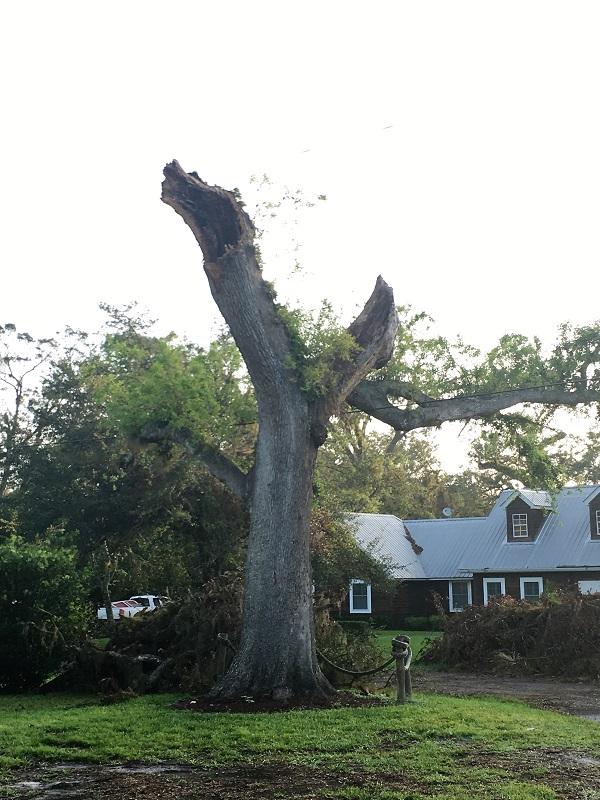
The first tree to go was the laurel oak, which I must say didn't surprise me. The laurel oak, has a tendency to look solid, and strong, but become hollow on the inside. Well that was exactly what happened here, and early in the day a strong gust came thru and broke the tree in half, exposing the hollow insides.
Only the live oak and the massive white oak remained. As the day went along, the live oak lost limb after limb and branch after branch. Scattering pieces of itself everywhere. The white oak, never moved, never budged just held its position in the winds. All day these two trees fought the weather their way. The white oak stood straight and strong and never budged. The live oak dropped limbs as it needed to.
About 6 p.m. we learned that our home in Labelle was going to get the right front eye wall winds. We were located about two miles from the eye, and we knew the weather was going to get intense as it passed. Laura and I buttoned up the doors and came inside to ride out the worst part and hoped for the best.
About 7 p.m. the eye passed just to the west of us and the weather got wicked, with severe winds roaring thru our area. We were so happy when, about 10 p.m., the eye was north of us. The storm died down very quickly, allowing us the opportunity to peek outside and see what we had left.
Walking outside I saw that the live oak by our bedroom window was still standing, though a little barer of limbs and leaves. It had survived the storm. Looking behind our kitchen window, I was stunned to find the massive white oak had uprooted and toppled over.
I instantly saw a lot of wisdom for myself and the Florida Guides Association as I stood there looking at those three trees that all faced Irma in different ways.
The laurel oak only appeared to be strong. In reality, it was just a hollow core with no substance, no real strength and it lost the fight first.
The mighty white oak never yielded, never swayed, it just stood strong and tried to face the winds head on, and it worked for a while. But eventually the strain was too much and the entire tree fell to the ground, leaving only a hole where it once stood.
The humble live oak lived to face another day. This tree is not the biggest, not the prettiest of what we had, but it survived by dropping limbs as it needed to. A strong core and solid root system kept the tree right where it wanted to be during everything Irma could throw at it.
Could not the Florida Guides Association, and really all of us in our personal lives, learn a lesson from the way these trees fought Irma and her winds? I most certainly think so. For me it's a great testament that being a hollow organization of no substance is not a path we can ever go down. Nor is being a professional organization that appears so very strong and so very tall and powerful, but never yields, never changes and never compromises. If that's a direction we go, then eventually the winds will come that are more powerful than us, and we will fall.
I believe that just like the live oak, we must be strong. We must stand proud and tall, but we must never be too proud to compromise, to bend and sway when we need to, so that we can live to see the next day. It's not always easy to do or even see, but if we open our eyes, and ensure we are always aware of the storms we face, we can guarantee the Florida Guides Association is here for many years to come.
I hope all of you fared well in Hurricane Irma, and though you may be facing challenges you come out of this stronger and more reliant than ever. This storm, like all the others before, and the ones that will follow, is the price we pay for living in paradise.
If we can be of service, let us know. The Florida Guides Association is always here to help and support. See y'all next month.
Capt. Charlie Phillips
|
|
IMPORTANT ENP MEETING RESCHEDULED
The Florida Guides Association, thru direct talks with the Everglades National Park (ENP), haD secured a meeting for Commercial Users of the ENP to discuss with park staff and leaders the impacts the proposed fee increases and collection of visitor passes will have on their small businesses.
This is the ONLY meeting that has been established for this communication so it's important to share this with any CUA holder who has an interest.
Because of Hurricane Irma the meeting has been put on hold until a yet to be determined date.
The Florida Guides Association encourages all FGA guide members to attend and help support our affected captains, when the meeting is rescheduled.
FGA will issue more information as it becomes available.
Capt. Charlie Phillips
President, FGA
|
|
|
Submit your favorite kids fishing picture and it may appear in a future issue of the newsletter. S
end your photo with the name of captain, angler, location, bait used any interesting side story and your contact info. Submissions must come from current FGA member guides.
|
|
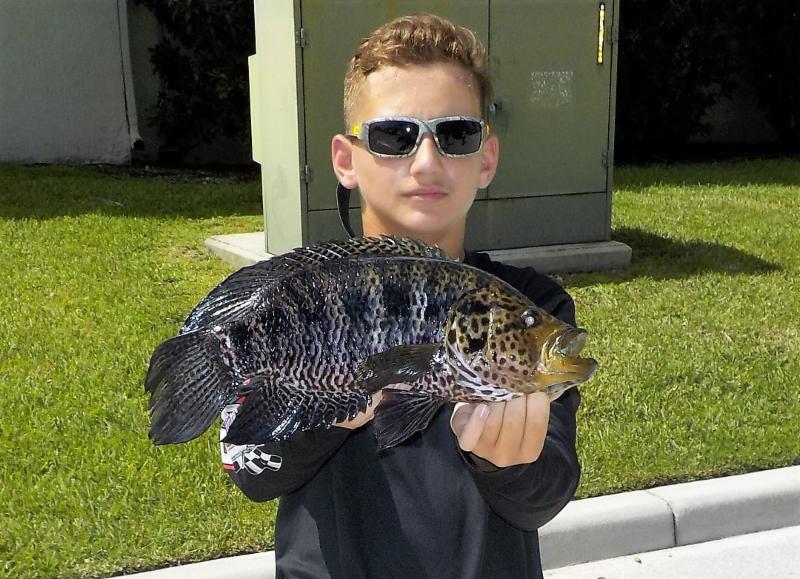
Florida 14-Year-Old Catches Record Jaguar Quapote
Florida Fish and Wildlife Conservation Commission (FWC) fisheries biologists certified a new state record jaguar guapote, weighing 2.78 pounds and measuring 16.7 inches long, caught by 14-year-old angler Jerry Martin from Miami. Martin was thrilled to catch his jaguar guapote in the Snapper Creek Canal (C-2) with live bait.
"When I caught it, I freaked out," said Martin. "I was excited because I knew it could be a state record."
Martin has never targeted jaguar guapote before, instead fishing most often for largemouth bass and peacock bass.
|
|
If you have questions regarding Charter Lakes Insurance call 800-879-2248 and talk to an agent.
www.charterlakes.com
|
|
Council Requests Allowing Harvest of Red Snapper
in 2017 and 2018
Process involves iAngler app
Members of the South Atlantic Fishery Management Council voted today to approve a request to NOAA Fisheries that would allow fishermen access to red snapper in federal waters in the South Atlantic beginning in mid-to late October this year. If approved by NOAA Fisheries, it will be the first time since 2014 that the red snapper fishery has been open in federal waters off the coasts of the Carolinas, Georgia, and the east coast of Florida.
The Council is requesting that NOAA Fisheries allow an interim annual catch limit (recreational and commercial) of 42,510 fish for 2017 via an emergency rule. The annual catch limit would allow for a recreational mini-season likely beginning the end of October, with approximately 6 to 12 days of fishing over a period of 3- day weekends.
The recreational bag limit would be 1 fish per person/day with no minimum size limit. Commercial harvest would be allowed with a 75-pound trip limit. The recreational sector is allocated 71.93% of the total catch limit. If the Council's request is approved, the number of days and specific dates of the recreational mini-season will be determined by NOAA Fisheries. A decision is expected in the coming weeks and will be announced by NOAA Fisheries.
Private recreational fishermen will also have an opportunity to report their catch information as part of a voluntary pilot project using the mobile iAngler tournament app. The free mobile app will allow fishermen to report their landings of red snapper, the number of fish released, depths fished, and other valuable information. Additional details will be publicized from the Council office as they become available.
|
|
Gone Coastal: Ways to help reef fish survive after barotrauma
by Melissa Crouch
|
|
|
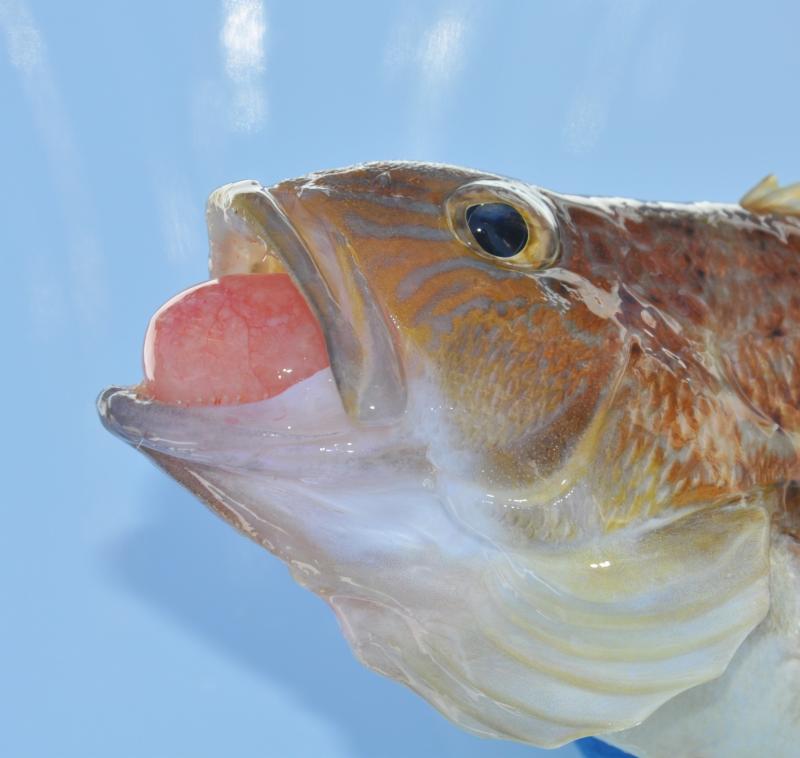
The stomach protruding from the mouth is one sign of barotrauma. |
If you've ever gone saltwater fishing in Florida, you are well aware of the variety of species that call these waters home. A popular target for Florida's saltwater anglers are reef fish such as snappers and groupers. These species are fun to catch and provide a great bottom-fishing experience for both novice and veteran anglers.
There's nothing like dropping my bait to the bottom and moments later having the bite of a lifetime. As I reel in my catch, the excitement of what this mystery fish could be begins to build.
But what if my mystery fish is out-of-season and must be released? There are steps I can take to ensure that I have a great day of fishing while conserving our fisheries.
If my catch has signs of barotrauma, I will need to take some specific steps before returning it to the water. Bulging eyes, a bloated belly, distended intestines and stomach protruding from the mouth are all signs of barotrauma, which occurs when fish with a swim bladder are pulled up from deep water (typically depths greater than 50 feet). The change in pressure can make gases in the swim bladder expand and, in some cases, cause it to burst. When a fish suffering from barotrauma is released, it is unable to swim back down to capture depth, making it difficult for the fish to survive the elements and avoid predators.
|
|
|
|
|
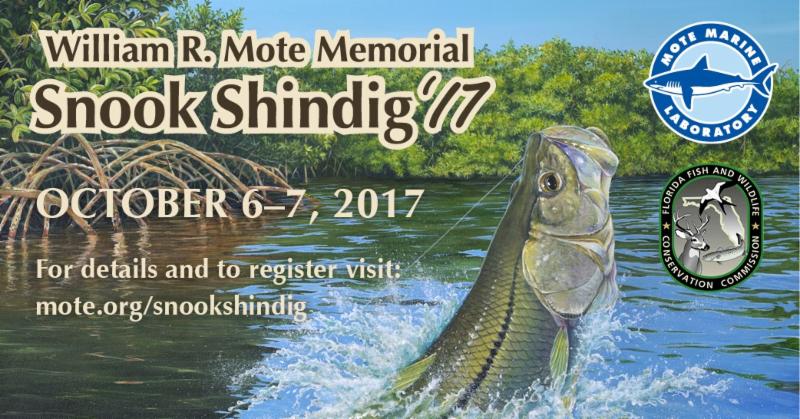
William R. Mote Memorial Snook Shindig
October 6-7, 2017
Don't let Mote's snook tournament be "the one that got away!" On October 6 and 7, 2017, anglers can join our William R. Mote Memorial Snook Shindig- a catch, sample and release tournament targeting snook released by scientists from Mote's Fisheries Ecology and Enhancement Program and our colleagues at Florida's Fish and Wildlife Conservation Commission.
Anglers of all ages can take home prizes (and new fish stories) in this tournament on Sarasota Bay. Participants will help Mote scientists find out how snook fare after being raised and released into the wild by Mote and FWC staff. We expect all anglers in the tournament to also comply with FWC Commission rules and regulations.
Interested in sponsoring? Contact Kate Knepper at
kknepper@mote.org
or 941-388-4441 ext 393 for more information.
The tournament will include:
Mandatory Captain's Meeting: 6 p.m. Oct. 6 at Mote's WAVE Center (former Sea Cinema), 1600 Ken Thompson Parkway on City Island, Sarasota
Fishing: 7 p.m. Oct. 6 - noon Oct. 7 along Sarasota Bay from Venice to Cortez
Awards Dinner: 5:30 p.m. Oct. 7 at Mote's WAVE Center (former Sea Cinema)
Pricing
$40 registration for adults (18 and older)
$50 registration for adults (18 and older) after Sept. 22
$20 registration fee for 17 and younger
$30 registration fee for 17 and younger after Sept. 22
$30 banquet only
Snook Shindig entry fee includes entry in the tournament, awards dinner, an event T-shirt, voluntary participation in raffles and lots of fun.
DISCLAIMER (Check box below): By registering for the Snook Shindig, I agree that my participation, and that of my team, will constitute ONLY ethical catch-and-release fishing, with each fish released as soon as possible after its data are recorded. At all times, I agree to abide by the Florida Fish and Wildlife Conservation Commission's regulations and best practices for fish handling along with all other applicable local, state and federal regulations.
Mote Marine Laboratory is an independent, nonprofit, 501(c)3 marine science and conservation institution. Mote reserves the right to refuse any registration application for any Mote event, at any time, as part of the process of ensuring a safe, beneficial and lawful event. Our research-focused tournaments prioritize lawful and respectful conduct toward marine species and their environment, along with excellent scientific supervision for meaningful data collection to benefit fisheries science, conservation and management.
|
|
Catch a Florida Memory in the Name of Conservation
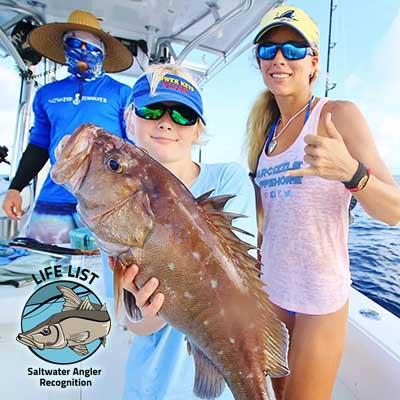
Through the FWCs Catch a Florida Memory program, anglers can earn prizes, recognition and bragging rights while supporting marine fisheries conservation. All they have to do is participate in one of the Florida Fish and Wildlife Conservation Commission's (FWC) Saltwater Angler Recognition Programs.
There are three basic programs:
|
|
|
|
|
Dr. Dean Grubbs holds sawfish pup right after its birth.
|
SAWFISH NEWS
by Tonya Wiley, Haven Worth Consulting
First-ever sawfish birth filmed in the wild
Sawfish are creatures of myth and legend, enormous shark-like rays with a huge rostrum bearing a row of formidable teeth protruding from each side. There are five species of sawfish in the world and all are considered Endangered or Critically Endangered in the IUCN Red List of Threatened Species.
Dr. Dean Grubbs (Associate Director of Research, Florida State University Coastal & Marine Laboratory) and his colleagues have been studying the critically endangered smalltooth sawfish in Florida and the Bahamas since 2010, conducting research to aid sawfish conservation efforts. Much of their work has been directed towards using surveys, satellite tagging, and tracking to determine where adult sawfish mate, where the females give birth, where important nurseries are, and to determine where sawfish are most likely to be vulnerable to captures as bycatch in different fisheries. During a recent expedition funded by the Save Our Seas Foundation to the remote island of Andros his team made a discovery that will have major implications for recovery of this charismatic species.
To set the stage, in 2003, smalltooth sawfish became the first native marine fish species listed as Endangered under the U.S. Endangered Species Act. Mangrove lined estuaries from Charlotte Harbor, Florida to Florida Bay in Everglades National Park have been designated as Critical Habitat for the species because these are the only areas where females were known to give birth and are thus critical to recovery of the species.
Though sawfish were known to occur in the Bahamas, it was unknown whether these sawfish were born in the Bahamas or perhaps were part of the Florida population.
Read more . . .
|
|
No more waiting!
Visit
FGAGEAR.com to order FGA shirts and hats. No need to wait for the next show where the FGA booth is set up.This site was set up to
provide an easier way for our members to get the gear they want, when they want it.
|
|
Time to Rally for the South's Pogy October 10 in Melbourne
|
|
|
Photo Capt. John McMurray |
This November the Atlantic States Marine Fisheries Commission (ASMFC) will make an important decision regarding the future of menhaden management - providing an historic opportunity to invest in the future of the resource and improve both fishing and ecosystem health. You can help - now - to make this rulemaking a success.
After several years in the making, the ASFMC has released menhaden
draft Amendment 3
for public comment. They will accept written comments until October 24 at 5pm. More importantly, the only menhaden public hearing in the South will be held October 10 6-8pm at the Town of Melbourne Beach Community Center, 507 Ocean Avenue, Melbourne Beach, Florida.
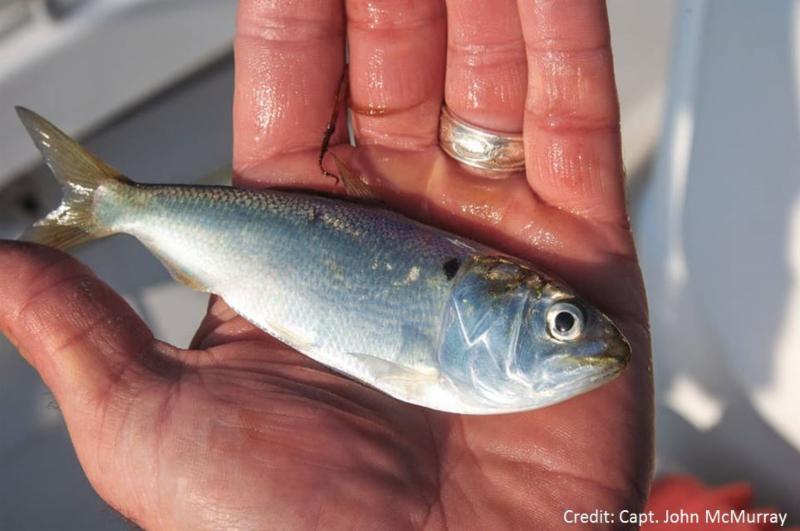
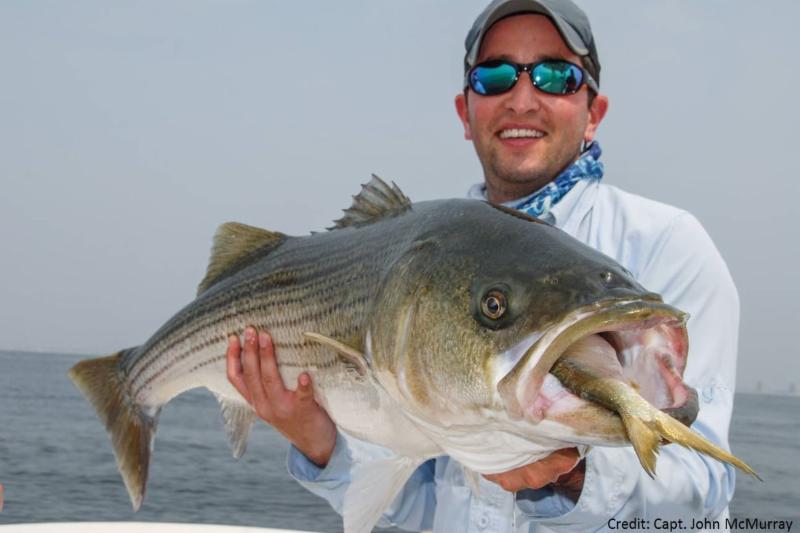
With strong encouragement, the Commission could decide to leave hundreds of millions more menhaden in the ocean to grow abundance from Florida to Maine and provide for predators, such as tarpon and king mackerel.
On the other hand, they are under pressure by commercial groups to stick with the current single-species approach which would likely take hundreds of millions more out of the ocean for fish meal, pet food, and other products. Issue 2.6 Reference Points - Option E of draft Amendment 3 is the option that gets us to the more sensible, 21st century approach as soon as possible. The preferred option enjoys broad support from national angling organizations, including CCA, IGFA, Wild Oceans, and the Teddy Roosevelt Conservation Partnership.
|
|
| Photo Capt. John McMurray |
Large public turnout at the hearing in Melbourne and written comments are crucial if we are to outweigh the influence of the industrial-scale menhaden fishery, which has already recruited hundreds of allies to menhaden hearings held in the north. Please bring yourself and your friends to this important event and state clearly your support for Issue 2.6 Option E.
Written comments should be submitted to
comments@asmfc.org
with the subject line "Draft Amd. 3."
|
|
|
Member Checklist
All FGA members should check their profile on the FGA Website and make any changes necessary to take advantage of the new search tools available to potential customers.
T
he Florida Guides Association website has uderngone some substantial changes. The initial changeover has been completed and it is
very important
that member guides login to their personal page and update their information.
The power of the new site will be a great asset for the FGA members and the viewers who wish to search for a guide that fits their specific requirements. For example, if someone wanted to look for a guide in Titusville that fished for redfish and trout with live bait they can search that combination of items and find all the guides that fit that scenario. Check out the
FGA website and try it out. It is awesome.
FGA guides can follow this link to a video that walks you through the process of updating your listing.
As we make these changes, we are working to modernize the page and have more pictures, and info for visitors to the site. I would like to encourage all FGA Guide members in good standing to please submit your best pictures of days on the water, with customers and great catches to me at
hopefishing@hotmail.com. We will be picking out pictures submitted to us to have on the website.
Thank you for your patience and please keep checking the website for changes. And, send me those pictures!!
Our website administrators can be contacted through the website at
bonfire-pr.com.
|
|
|
October 2017
|
|
Click the Title Links below to view the forecasts
|
|
|
Orlando Area and East Central Lagoon Coast Fishing Forecast
|
|
|
Treasure Coast Forecast
|
|
Southwest Florida Forecast
By Capt. Greg Stampe
r
|
|
Punta Gorda/Charlotte Harbor
By Capt. Michael Manis
|
|
|
|
All interested individuals may speak at workshops or meetings of the Florida Fish and Wildlife Conservation Commission (Commission) within the guidelines established by the Commission. To ensure the public's opportunity to be heard and the orderly conduct of the meeting, the Chairman reserves the right to establish a time for adjournment of the workshop or meeting, to limit the time for speakers, and to limit the time allotted for specific agenda items.
December 6-7, 2017, Okeechobee
|
|
|
|
|
Hurricane Irma |
FGA Happenings for September 2017
Hurricane Irma disrupted events for September. Best of luck to all affected by Mother Nature in their recovery efforts.
|
|
|
We hope you enjoy the newsletter
|
|
|
Capt. Charlie Phillips, President
Florida Guides Association
|
|
|
|
Please Visit Our Sponsors
|
|
|
|
| |
|
|
|
|